NSW, 법원이 반시위법 폐기 결정 내린 후 '인티파다 세계화' 구문 금지 신중해야, 법률 전문가 주장
NSW should think twice before banning ‘globalise the intifada’ after court struck down anti-protest law, legal expert says
뉴사우스웨일스 최고법원은 목요일 팔레스타인 행동단체(Palestine Action Group)와 블랙 코커스(Blak Caucas)의 손을 들어주며, 본디 해변 테러 공격 이후 도입되어 경찰이 시위를 제한할 권한을 부여한 반시위법을 폐기했다. 이 법은 2월 반헤르조그 집회도 제한할 수 있게 했다.
앤드루 벨 대법관과 줄리 워드, 스티븐 프리 판사를 포함한 항소법원 전원합의체는 사회적 응집력 보호를 위해 모든 시위를 억제하는 것이 암시된 헌법상 정치적 의사소통의 자유를 부당하게 부담시킨다고 판단했다.
판사들은 다른 사람들의 정치적 표현이 "불쾌하고, 선동적이며, 분열적"일 수 있다는 이유로 지역사회를 보호할 수 있고 보호해야 한다는 개념이 헌법상 정당하지 않다고 작성했다.
"특정 종류의 공공 논쟁을 억압하는 것은 정당한 목적을 위한 수단이 될 수 있지만, 그 자체로 정당한 목적이 될 수는 없다"고 그들은 작성했다.
1월, NSW 의회 조사위원회는 "인티파다 세계화" 구문을 증오, 괴롭힘, 협박 또는 폭력을 선동하는 데 사용될 때만 금지할 것을 권고했다. 이는 무조건적인 금지나 "강에서 바다까지(from the river to sea)"와 같은 구문 금지를 요구하는 데는 이르지 않았다. 크리스 민스 사무실은 금요일, 올해 초 도입된 퀸즐랜드의 해당 구문 금지가 어떻게 진행되는지에 따라 여전히 "인티파다 세계화" 구문을 불법화할 계획이라고 확인했다.
시드니 대학의 헌법 전문가 앤 트워미는 만약 자신이 민스 정부라면 "이 판결을 읽고 나서 특정 구호를 금지하는 입법을 추진하는 데 매우, 매우 꺼려질 것"이라고 말했다.
그녀는 이 판결이 다른 관할 구역에 있지만 퀸즐랜드의 "강에서 바다까지"와 "인티파다 세계화" 구문 금지에 도전하기 쉽게 만들 수도 있다고 말했다.
트워미는 이 판결이 NSW 정부의 유사한 이유로, 구호 금지를 포함해 연설이나 시위를 저지하려는 향후 시도가 "이 법원에서 통과되지 않을 것"을 의미할 가능성이 높다고 말했다.
"그것은 정치 구호 금지 시도와 더 많은 정치 시위 규제 시도에 확실히 파급 효과를 미칠 것이라고 생각한다. 실제로 폭력으로부터 보호하거나 지역사회를 보호하기 위한 목적이 아니라면 말이다"라고 그녀는 말했다.
목요일 판결 이후 트워미는 어떤 구호 금지도 폭력 위험을 막는 데 지향되어야 하며, 단순히 고통이나 모욕을 유발하기 때문이어서는 안 된다고 말했다.
"정부가 하려는 것이 단지 사람들이 화나는 것을 막거나, 사회적 응집력이라는 모호한 개념 때문이라면, 이 판결에 따르면 그것은 법을 정당화하기에 충분하지 않을 것"이라고 트워미는 말했다.
현재 폐기된 법은 NSW 경찰이 시위대를 기소하지 않도록 보호하는 주의 허가 스타일 시스템 사용을 방지했다.
이는 2월 초 이삭 헤르조그 이스라엘 대통령 방문에 대한 시위에서 폭력 사태가 발생하고 광범위한 경찰 부 misconduct 혐의에 대한 경찰 감시기관 조사가 촉발된 기간 동안 시드니 CBD 일부 지역에서 시행되었다.
법원의 판결은 지금까지 폭행, 저항, 모욕적 언어 사용 등 다양한 혐의로 기소된 26명의 시위대원에게 이것이 무엇을 의미할 수 있는지에 대한 의문을 제기했다.
호주 역사상 시민 자유의 가장 위대한 승리 중 하나로 이 승리를 축하하는 시위대를 대리하는 변호사 중 한 명인 마제드 케이르는 변호사들이 이제 경찰에 기소 철회를 신청할 수도 있다고 말했다.
"법원이 해석할 수 있지만, 이는 당일 밤 경찰이 직무와 권한 범위를 넘어 행동했을 수 있음을 의미할 수 있다. 왜냐하면 오늘 판결에 따라 그 권한은 위헌이었기 때문이다"라고 그는 말했다.
"나는 닉 한나(형사 변호사)가 법원 밖에서 그렇게 말했고, 나도 확실히 동의한다. 이것은 호주 역사상 시민권과 시민 자유의 가장 큰 승리 중 하나이다."
경찰은 자체적으로 기소를 철회할 수 있다. 가디언 오스트레일리아의 질문에 대해 NSW 경찰 대변인은 경찰이 판결을 검토하고 있다고 밝혔다.
레드퍼른 법률 센터의 감독 변호사 샘 리는 이 판결이 기소에 미치는 영향이 간단하지 않다고 말했다. 이는 Pard가 시행되지 않았다면 시위대가 잠재적으로 보호받았을 수 있는 경미한 범죄 혐의를 받지 않는 사람들이 있기 때문이다.
또 다른 복잡한 요인은 헤르조그 방문 기간 동안 해당 지역이 주요 행사 선포 지역으로 지정되어 경찰에게 확대된 이동 및 정지 수색 권한이 부여되었다는 것이다.
"기소 철회는 어떤 권한 하에서 기소되었는지에 따라 사례별로 이루어질 수 있다"고 리는 말했다.
그럼에도 불구하고 리는 이 판결이 광범위한 영향을 미칠 가능성이 높다고 말했다.
"나는 이것이 민스 정부가 행정권을 사용해 사람들의 시위 권리를 최소화하려는 능력에 제동을 거는 것이라고 생각한다"고 그녀는 말했다.
kimi-k2.5
568 tokens
$0.00120
11.3s
Another lawyer says ruling ‘puts brakes on the Minns government’s ability to use executive power to minimise people’s rights to protest’Get our breaking news email, free app or daily news podcastThe Minns government should think twice before imposing an outright ban on the phrase “globalise the intifada” in the wake of a landmark finding that could limit attempts to control speech and protests, a leading constitutional expert has said.New South Wales’ highest court ruled in favour of the Palestine Action Group and Blak Caucas on Thursday, striking down an anti-protest law introduced after the Bondi beach terror attack that gave police the power to restrict marches, including the anti-Herzog rally in February.
The Minns government should think twice before imposing an outright ban on the phrase “globalise the intifada” in the wake of a landmark finding that could limit attempts to control speech and protests, a leading constitutional expert has said.New South Wales’ highest court ruled in favour of the Palestine Action Group and Blak Caucas on Thursday, striking down an anti-protest law introduced after the Bondi beach terror attack that gave police the power to restrict marches, including the anti-Herzog rally in February.
The full bench of the court of appeal – which included chief justice Andrew Bell, and justices Julie Ward and Stephen Free – found discouraging all protests in order to protect social cohesion impermissibly burdened the implied constitutional right to freedom of political communication.
The justices wrote that the notion that the community can and should be protected from political expression by others because it might be “upsetting, inflammatory and divisive” wasn’t legitimate under the constitution.
“Suppressing public debate of certain kinds may be a means to a legitimate end, but it cannot be a legitimate end in itself,” they wrote.
In January, a NSW parliamentary inquiry recommended banning the phrase “globalise the intifada”, but only when it is used to incite hatred, harassment, intimidation or violence. It stopped short of calling for an unqualified ban or a ban on phrases such as “from the river to sea”. Chris Minns’ office confirmed on Friday he still planned to outlaw the phrase “globalise the intifada”, depending on how Queensland’s ban on the phrase, introduced earlier this year, played out.
Anne Twomey, a constitutional expert at the University of Sydney, said if she were the Minns government, “having read this judgment, I would be very, very reluctant to go ahead with legislation banning certain slogans”.
She said the judgment may also make it easier to challenge Queensland’s ban on the phrases “from the river to the sea” and “globalise the intifada”, even though the ban was in a different jurisdiction.
Twomey said the judgment likely meant any future attempts by the NSW government to stymie speech or protest for similar reasons, including banning slogans, “is not going to wash with this court”.
“I think that will certainly have flow-on effects for attempts to ban political slogans and also attempts to do more regulation of political protests, unless [the government] does it for a purpose of actually protecting from violence or protecting the community,” she said.
After Thursday’s judgment, Twomey said any slogan ban should be directed at stemming risks of violence, and not merely because it causes distress or offence.
“If what the government is trying to do is just to stop people being upset, or some sort of vague notion of social coherence, then under this judgment, that’s just not going to be sufficient to justify the law,” Twomey said.
The now-struck-down law prevented the use of the state’s permit-style system that protects protesters from being charged by NSW police when marching.
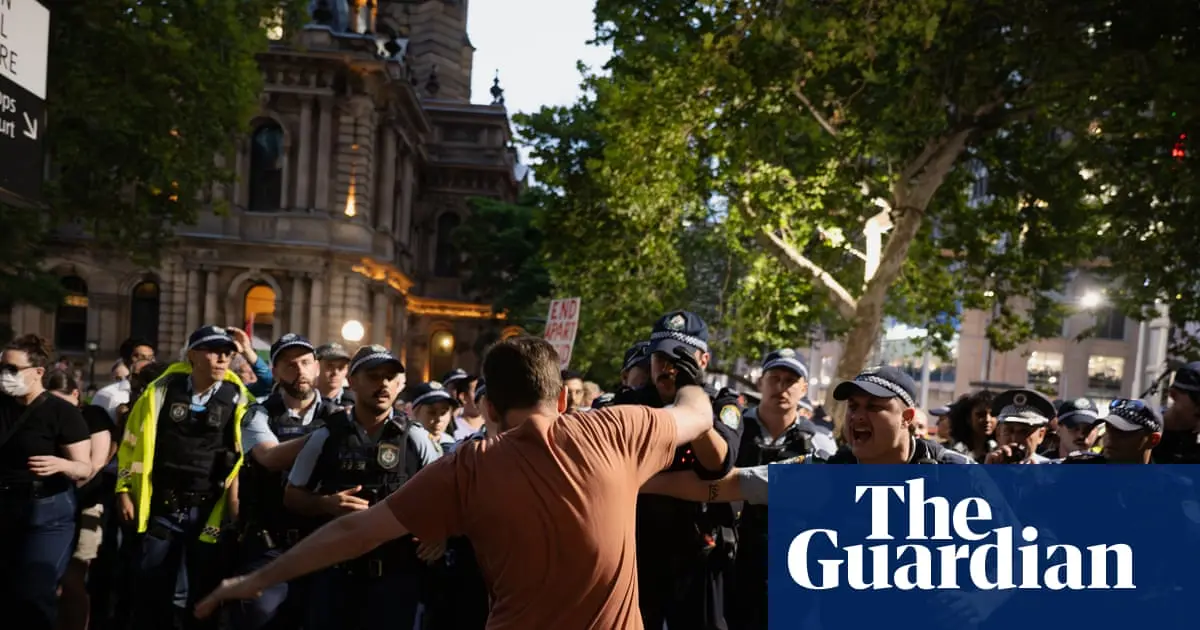
It was in place in parts of Sydney’s CBD during the rally against the Israeli president, Isaac Herzog’s visit in early February, which turned violent and triggered a police watchdog investigation into allegations of widespread police misconduct.
The court’s finding has raised questions over what this could mean for the 26 protesters who have so far been charged with various offences, including assaulting police, resisting arrest, and using offensive language.
Majed Kheir, one of the solicitors representing the protesters who is celebrating the win as one of the greatest victories for civil liberties in Australian history, said it was possible the lawyers may now make an application for police to withdraw the charges.
“It’s open to a court to interpret, but it may mean that police on the night were acting beyond the scope of their duties and their powers, because, in accordance with today’s judgment, those powers were unconstitutional,” he said.
“I think [criminal defence lawyer] Nick Hanna said it outside court, and I certainly agree, it is one of the biggest wins for civil rights and civil liberties in Australian history.”
Police can withdraw the charges of their own accord. In response to a question from Guardian Australia, a NSW police spokesperson said the force was working through the judgment.
Sam Lee, a supervising solicitor at Redfern Legal Centre, said the question of whether the judgment would impact the charges was not straightforward. This is due to a number of people not facing summary offences charges, which protesters would have potentially been protected from had the Pard not been in place.
Another complicating factor was that the area was placed under a major events declaration for the duration of Herzog’s visit, giving police expanded move-on and stop-and-search powers.
“[Withdrawing charges] could be based on a case-by-case basis, depending on what powers they were charged under,” Lee said.
Still, Lee said the judgment was likely to have far-reaching consequences.
“I think it puts brakes on the Minns government’s ability to use executive power to minimise people’s rights to protest,” she said.