최고급 초밥 레스토랑이 왜 우리를 지루하게 하고 돈을 낭비하게 할까?
Why Do the Top Sushi Restaurants Leave Us So Bored, and So Broke?
The New York Times
· 🇺🇸 New York, US
Ligaya Mishan
EN
2026-04-28 18:03
Translated
일본에서 시작된 빠르고 신나는 노동자 계층의 음식이 미국 도시에서는 부유한 식객을 위한 정교한 접대로 변모했다.
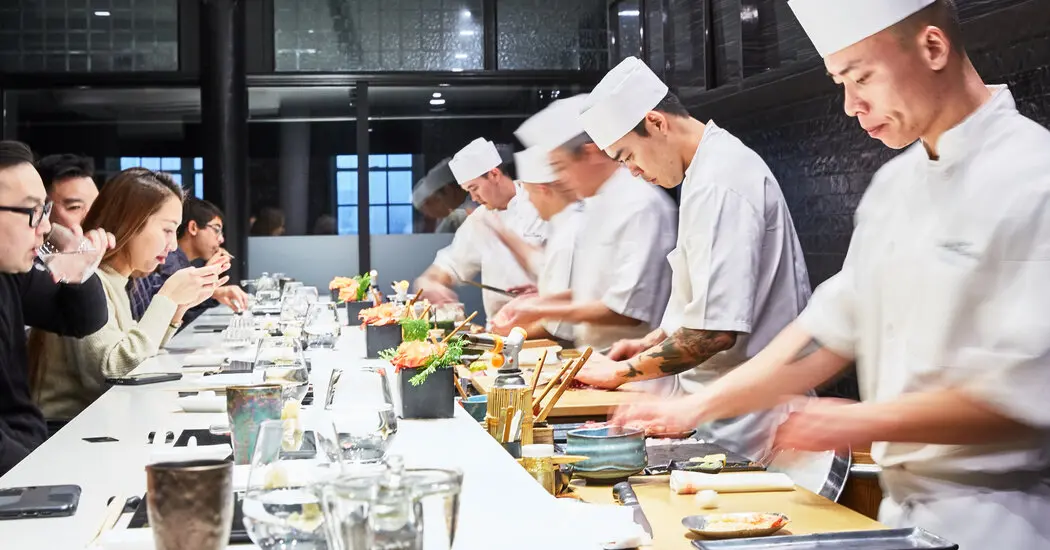
쉬, 쉬, 쉬. 대리석 카운터 위아래로 초밥 셰프들이 그들의 무기를 휘두르고 있다. 처음에는 스릴 있었다. 손 횃불의 파란 불길, F-16 전투기가 이륙하는 듯한 휙하는 소리. 다섯 번째가 되면 그것은 습관이 된다. 한 점 한 점의 생선이 불 아래로 지나가고, 맛은 더 이상 바다 맛이 아니라 연기 맛이 되고, 모든 것이 같은 맛이 된다.
1963년 뉴욕타임스 음식 편집자 크레이그 클레이본이 맨해튼의 새로운 일식당에 대해 쓴 칼럼에서 초밥은 "많은 미국 입맛에 너무 '기발한' 것으로 보일 수 있다"고 했다. 그 다음은 캘리포니아 롤이 나타났다. 이치로 마시타가 로스앤젤레스의 리틀 도쿄 지역에서 대중화했고, 할리우드 스타들과 영화사 경영진들이 20세기 폭스 스튜디오 건물 옆에 있던 오쇼 같은 초밥 바에 몰려들었다.
1987년 영화 '월스트리트'에서 젠기 많은 주식 중개인 역할을 하는 찰리 쉰은 펜트하우스의 니기리 만드는 기계에서 한 번에 쌀 공 8개를 빚어내고 있었다.
그 니기리 메이커는 다가올 일의 전조였을 수 있다. 장인정신보다 최적화와 화려함을 선호하는 금융 남성들에 의한 초밥의 점유, 미국 초밥 문화의 으스스한 벤하나화.
나는 초밥을 고요하고 초월적인 의식이라고 주장하는 것이 아니다. 우리가 아는 초밥은 19세기 에도(오늘날의 도쿄)의 거리에서 팔리는 노동자 계층의 음식으로 시작되었다. 내가 먹어본 최고의 초밥 중 일부는 로스앤젤레스의 작은 쇼핑센터에 있는 소박한 카운터에서였는데, 셰프는 한 점 한 점을 내려놓으며 때로는 신음 정도로만 말했고, 우리는 30분 안에 나왔다. (스시 이케를 아는 사람들을 위해 외쳐본다.)
이제 손 횃불이 밝혀지고, 가장 비싼 레스토랑에서는 이미 놀랄 정도로 높은 가격을 더 밀어올리기 위해 보충제의 다발이 있다. 맨해튼 어퍼 웨스트 사이드의 마사에서는 "셰프의 예약" 오마카세 기준으로 1인당 최대 1,200달러(세금과 주류 전)에 달한다.
웨스트 빌리지의 스시 나카자와에서는 A5 와규, 트러플(내가 상담한 일본의 음식 저술가는 향이 "방해가 될" 것 같다고 우려했다), 캐비어 위에 금박을 꼬집듯이 얹기, 그리고 크루그 샴페인과 킹키(가시 머리)의 페어링을 선택할 수 있다. 킹키는 드문 고급스러운 지방 생선으로 때로는 바다의 와규라고 불린다.
더 은폐적으로, 기묘한 회유의 기운이 스며들었다. 로워 맨해튼의 카운터에서의 최근 오마카세 식사는 거의 모두 대중이 좋아할 만한 것들이었다. 먼저 세 가지 종류의 연어 — 1980년대까지 초밥에 사용되지 않았던 생선인데, 노르웨이가 과잉 공급을 없애려고 일본에서 새로운 시장을 만들기 위해 로비했다(이것이 다시 더 친숙하고 명확한 버터 맛의 생선의 유혹으로 미국에서 초밥의 관객을 확대했을 수 있다). 그 다음 섬세한 달콤한 도미, 맛있는 잭과 자신의 지방에서 거의 녹는 참치.
각 한 입마다 나는 마치 까다로운 아이인 것처럼 먹여지고 있다는 불편한 감각이 있었다. 정말 무엇이 좋은지 알 수 없고 마음을 열 수도 없었다. 펀키한 것도 없었고 씹기 어려운 것도 없어서 멈춰서 "내가 뭘 먹고 있지?"라고 궁금해할 여유가 없었다.
지난 15년 동안 손님이 권력을 포기하고 셰프가 먹을 것을 결정하는 오마카세는 뉴욕, 로스앤젤레스, 마이애미, 댈러스 같은 주요 미국 도시에서 초밥의 주요 형태가 되었다. 이는 부분적으로 2011년 다큐멘터리 '지로 드림스 오브 스시'의 인기로 비롯되었는데, 이 영화는 도쿄의 지하철역 곁 지하 구석에서 자신의 기술을 연마하는 초밥 장인 오노 지로에 대한 송가이다.
고전적인 오마카세에서는 셰프가 그 순간에 즉흥적으로 행동하고, 톤을 조절하고, 심지어 당신이 어떤 사람인지 알아낼 여유가 있다. 요즘 뉴욕에서는 그 경험이 더 자주 일률적이다. 정해진 일련의 코스 — 기본적으로 테이스팅 메뉴 — 한 다스에서 20개 이상의 범위에서, 알레르기나 특히 까다로운 식객에 대한 수용 정도만 있으며, 종종 그마저도 없다. 최고급 레스토랑에서는 모두가 동시에 앉고 같은 순서로 마치 가장 우아한 식당에 있는 것처럼 먹여진다.
오마카세가 무언가를 요청하는 것이었던 때가 있었다. 나는 궁금하고 열려 있으며 무엇이든 시도할 의향이 있다고 말하는 방식이었다. 당신은 자발적으로 메뉴를 옆에 두고 운명에 몸을 맡겼다. 그것은 손으로 집어 먹는 것, 지시받지 않는 한 간장에 담그지 않는 것, 그리고 쌀에는 절대로 닿지 않게 생선의 매우 끝만 담그는 것을 배우는 규범의 일부였다.
내가 초밥을 먹는 초기에는 오마카세 식사를 처음부터 끝까지 사랑할 것이라고 기대하지 않았다. 필연적으로 내가 약간 덜 맛있다고 생각하는 조각들이 있었다. 거대한 조개는 극도로 고무 같았고, 더 기름진 생선들은 바다의 어두운 부분을 풍겼다. 그럼에도 불구하고 나는 먹었다. 뭔가 배울 수 있기를 희망하며 — 생선에 대해, 장인정신으로서의 초밥에 대해, 셰프의 마음의 구석진 부분에 대해.
당신은 여전히 뉴욕에서 당신을 가르칠 초밥야를 찾을 수 있다. 중도심부의 스시 쇼에서는 가격이 1인당 450달러부터 시작하는데, 나카자와 케이지는 에도마에 전통의 중심에 있는 보존 기술에 대한 학자의 무게감을 가져온다. 초밥 조각 사이에서 당신은 치즈까지 발효된 쌀 주변의 한 움큼의 절인 무, 또는 건조된 숭어 알과 청어 알인 가라수미와 카즈노코를 줄 수 있으며, 솔직하게 짠맛이 있고 쓴맛의 경계를 놀린다.
어퍼 이스트 사이드의 스시 노즈와 보우어리의 요시노의 세심한 예술성도 모범적이지만, 1인당 550달러의 스시 노즈와 요시노의 500달러의 비용이 식사의 균형을 왜곡할 수 있다고 우려한다. 너무 많은 오츠마미(작은 접시)가 시작 시 도착한다 — 내 방문에 노즈에서 6개, 요시노에서 7개 — 그리고 누적된 풍부함이 그렇게 많아서 두 레스토랑 모두에서 나는 첫 초밥이 도착하기 전에 배부름을 느꼈다. 이것은 더 많은 사케(즉, 구매)를 마시도록 권장하기 위한 것일까? 또는 당신이 당신의 돈을 받을 가치가 있다고 느끼도록 하기 위한 것일까?
모든 오마카세에는 호(arc)가 있다 — 해가 계절을 가지며, 시간 경과를 표시한다는 것처럼 — 그리고 이것은 확실히 초밥을 먹는 유일한 방법이 아니다. 나는 도쿄의 컨베이어 벨트로 운반된 훌륭한 식사를 했고, 한 주먹의 네기토로 롤로 만족했을 밤들이 있다.
하지만 오마카세를 요청할 때, 당신은 선택과 자신의 욕망을 포기한다. 당신은 카운터 건너편의 낯선 사람을 신뢰하고 말한다. 나에게 이야기해줘.
때로는 이야기가 개인적이다. 그랜드 센트럴 터미널 근처의 스시 야스다의 창립 셰프 야수다 나오미치(그 이후 일본으로 돌아갔다)는 자신이 "장어 전문가"가 되도록 훈련받았다고 나에게 말했고, 그 후 모든 처리 방식과 형태의 장어, 바다 장어와 담수 장어만 제공했다. 등뼈를 빠르게 구운 형태까지.
현재 문을 닫은 이스트 빌리지의 쥬얼 바코에서 나는 꿈틀거리는 자어린 장어가 가득한 샷잔을 받았고, 뼈 없이, 직접 마셨다. 마찬가지로 문을 닫은 쿠라는 몇 블록 떨어진 곳에서 셰프가 웃으며 웃는 동안 발효된 오징어 내장인 시오카라의 접시를 제시했다.
로스앤젤레스에서 셰프가 내 남편과 내가 뉴욕의 경쟁사 레스토랑의 단골이라는 것을 발견했을 때, 그는 갑자기 자르려고 했던 생선을 다시 경우에 집어넣고 가서 VIP들을 위해 숨겨둔 더 좋은 슬라브를 가져왔다. (만약 이것이 정말 전투였다면, 그는 이겼다.)
뭔가가 일어날 수 있다는 감각은 때때로 전염성이 있었다. 쥬얼 바코에서 한 밤 우리 옆 부부는 우리를 cabo에서의 주말로 달아나게 했다. (우리는 정중히 거절했다.) 몇 년 후 뉴욕의 15 이스트에서, 우리 아이가 태어난 후 첫 외출 밤에, 우리는 셰프 마사토 시미즈에 대한 경탄으로 우리 이웃과 유대감을 형성했다(현재 방콕에서 스시 마사토를 운영한다). 청구서가 오지 않았다. 이 새로운 친구들이 우리 식사 비용을 지불했다.
오늘날 대부분의 초밥야에서는 그런 놀라움이 없다. 대신에, 당신은 당신이 지불하는 것을 얻을 것이라고 확신한다. 순응적이고 도전하지 않는 생선, 가끔의 화려한 불꽃 표시와 요청에 따른 지위 상징의 장식. 즉, 당신이 원한다고 생각하는 것, 또는 세상이 당신이 원하기를 원하는 것. 셰프에게 고개를 끄덕이고 휴대폰을 만지작거린다. 무엇이 나올 것이든 아마도 맛있을 것이다. 하지만 그것은 또한 지루할 것이다.
리가야 미샨은 타임스의 수석 레스토랑 평론가이다.
1963년 뉴욕타임스 음식 편집자 크레이그 클레이본이 맨해튼의 새로운 일식당에 대해 쓴 칼럼에서 초밥은 "많은 미국 입맛에 너무 '기발한' 것으로 보일 수 있다"고 했다. 그 다음은 캘리포니아 롤이 나타났다. 이치로 마시타가 로스앤젤레스의 리틀 도쿄 지역에서 대중화했고, 할리우드 스타들과 영화사 경영진들이 20세기 폭스 스튜디오 건물 옆에 있던 오쇼 같은 초밥 바에 몰려들었다.
1987년 영화 '월스트리트'에서 젠기 많은 주식 중개인 역할을 하는 찰리 쉰은 펜트하우스의 니기리 만드는 기계에서 한 번에 쌀 공 8개를 빚어내고 있었다.
그 니기리 메이커는 다가올 일의 전조였을 수 있다. 장인정신보다 최적화와 화려함을 선호하는 금융 남성들에 의한 초밥의 점유, 미국 초밥 문화의 으스스한 벤하나화.
나는 초밥을 고요하고 초월적인 의식이라고 주장하는 것이 아니다. 우리가 아는 초밥은 19세기 에도(오늘날의 도쿄)의 거리에서 팔리는 노동자 계층의 음식으로 시작되었다. 내가 먹어본 최고의 초밥 중 일부는 로스앤젤레스의 작은 쇼핑센터에 있는 소박한 카운터에서였는데, 셰프는 한 점 한 점을 내려놓으며 때로는 신음 정도로만 말했고, 우리는 30분 안에 나왔다. (스시 이케를 아는 사람들을 위해 외쳐본다.)
이제 손 횃불이 밝혀지고, 가장 비싼 레스토랑에서는 이미 놀랄 정도로 높은 가격을 더 밀어올리기 위해 보충제의 다발이 있다. 맨해튼 어퍼 웨스트 사이드의 마사에서는 "셰프의 예약" 오마카세 기준으로 1인당 최대 1,200달러(세금과 주류 전)에 달한다.
웨스트 빌리지의 스시 나카자와에서는 A5 와규, 트러플(내가 상담한 일본의 음식 저술가는 향이 "방해가 될" 것 같다고 우려했다), 캐비어 위에 금박을 꼬집듯이 얹기, 그리고 크루그 샴페인과 킹키(가시 머리)의 페어링을 선택할 수 있다. 킹키는 드문 고급스러운 지방 생선으로 때로는 바다의 와규라고 불린다.
더 은폐적으로, 기묘한 회유의 기운이 스며들었다. 로워 맨해튼의 카운터에서의 최근 오마카세 식사는 거의 모두 대중이 좋아할 만한 것들이었다. 먼저 세 가지 종류의 연어 — 1980년대까지 초밥에 사용되지 않았던 생선인데, 노르웨이가 과잉 공급을 없애려고 일본에서 새로운 시장을 만들기 위해 로비했다(이것이 다시 더 친숙하고 명확한 버터 맛의 생선의 유혹으로 미국에서 초밥의 관객을 확대했을 수 있다). 그 다음 섬세한 달콤한 도미, 맛있는 잭과 자신의 지방에서 거의 녹는 참치.
각 한 입마다 나는 마치 까다로운 아이인 것처럼 먹여지고 있다는 불편한 감각이 있었다. 정말 무엇이 좋은지 알 수 없고 마음을 열 수도 없었다. 펀키한 것도 없었고 씹기 어려운 것도 없어서 멈춰서 "내가 뭘 먹고 있지?"라고 궁금해할 여유가 없었다.
지난 15년 동안 손님이 권력을 포기하고 셰프가 먹을 것을 결정하는 오마카세는 뉴욕, 로스앤젤레스, 마이애미, 댈러스 같은 주요 미국 도시에서 초밥의 주요 형태가 되었다. 이는 부분적으로 2011년 다큐멘터리 '지로 드림스 오브 스시'의 인기로 비롯되었는데, 이 영화는 도쿄의 지하철역 곁 지하 구석에서 자신의 기술을 연마하는 초밥 장인 오노 지로에 대한 송가이다.
고전적인 오마카세에서는 셰프가 그 순간에 즉흥적으로 행동하고, 톤을 조절하고, 심지어 당신이 어떤 사람인지 알아낼 여유가 있다. 요즘 뉴욕에서는 그 경험이 더 자주 일률적이다. 정해진 일련의 코스 — 기본적으로 테이스팅 메뉴 — 한 다스에서 20개 이상의 범위에서, 알레르기나 특히 까다로운 식객에 대한 수용 정도만 있으며, 종종 그마저도 없다. 최고급 레스토랑에서는 모두가 동시에 앉고 같은 순서로 마치 가장 우아한 식당에 있는 것처럼 먹여진다.
오마카세가 무언가를 요청하는 것이었던 때가 있었다. 나는 궁금하고 열려 있으며 무엇이든 시도할 의향이 있다고 말하는 방식이었다. 당신은 자발적으로 메뉴를 옆에 두고 운명에 몸을 맡겼다. 그것은 손으로 집어 먹는 것, 지시받지 않는 한 간장에 담그지 않는 것, 그리고 쌀에는 절대로 닿지 않게 생선의 매우 끝만 담그는 것을 배우는 규범의 일부였다.
내가 초밥을 먹는 초기에는 오마카세 식사를 처음부터 끝까지 사랑할 것이라고 기대하지 않았다. 필연적으로 내가 약간 덜 맛있다고 생각하는 조각들이 있었다. 거대한 조개는 극도로 고무 같았고, 더 기름진 생선들은 바다의 어두운 부분을 풍겼다. 그럼에도 불구하고 나는 먹었다. 뭔가 배울 수 있기를 희망하며 — 생선에 대해, 장인정신으로서의 초밥에 대해, 셰프의 마음의 구석진 부분에 대해.
당신은 여전히 뉴욕에서 당신을 가르칠 초밥야를 찾을 수 있다. 중도심부의 스시 쇼에서는 가격이 1인당 450달러부터 시작하는데, 나카자와 케이지는 에도마에 전통의 중심에 있는 보존 기술에 대한 학자의 무게감을 가져온다. 초밥 조각 사이에서 당신은 치즈까지 발효된 쌀 주변의 한 움큼의 절인 무, 또는 건조된 숭어 알과 청어 알인 가라수미와 카즈노코를 줄 수 있으며, 솔직하게 짠맛이 있고 쓴맛의 경계를 놀린다.
어퍼 이스트 사이드의 스시 노즈와 보우어리의 요시노의 세심한 예술성도 모범적이지만, 1인당 550달러의 스시 노즈와 요시노의 500달러의 비용이 식사의 균형을 왜곡할 수 있다고 우려한다. 너무 많은 오츠마미(작은 접시)가 시작 시 도착한다 — 내 방문에 노즈에서 6개, 요시노에서 7개 — 그리고 누적된 풍부함이 그렇게 많아서 두 레스토랑 모두에서 나는 첫 초밥이 도착하기 전에 배부름을 느꼈다. 이것은 더 많은 사케(즉, 구매)를 마시도록 권장하기 위한 것일까? 또는 당신이 당신의 돈을 받을 가치가 있다고 느끼도록 하기 위한 것일까?
모든 오마카세에는 호(arc)가 있다 — 해가 계절을 가지며, 시간 경과를 표시한다는 것처럼 — 그리고 이것은 확실히 초밥을 먹는 유일한 방법이 아니다. 나는 도쿄의 컨베이어 벨트로 운반된 훌륭한 식사를 했고, 한 주먹의 네기토로 롤로 만족했을 밤들이 있다.
하지만 오마카세를 요청할 때, 당신은 선택과 자신의 욕망을 포기한다. 당신은 카운터 건너편의 낯선 사람을 신뢰하고 말한다. 나에게 이야기해줘.
때로는 이야기가 개인적이다. 그랜드 센트럴 터미널 근처의 스시 야스다의 창립 셰프 야수다 나오미치(그 이후 일본으로 돌아갔다)는 자신이 "장어 전문가"가 되도록 훈련받았다고 나에게 말했고, 그 후 모든 처리 방식과 형태의 장어, 바다 장어와 담수 장어만 제공했다. 등뼈를 빠르게 구운 형태까지.
현재 문을 닫은 이스트 빌리지의 쥬얼 바코에서 나는 꿈틀거리는 자어린 장어가 가득한 샷잔을 받았고, 뼈 없이, 직접 마셨다. 마찬가지로 문을 닫은 쿠라는 몇 블록 떨어진 곳에서 셰프가 웃으며 웃는 동안 발효된 오징어 내장인 시오카라의 접시를 제시했다.
로스앤젤레스에서 셰프가 내 남편과 내가 뉴욕의 경쟁사 레스토랑의 단골이라는 것을 발견했을 때, 그는 갑자기 자르려고 했던 생선을 다시 경우에 집어넣고 가서 VIP들을 위해 숨겨둔 더 좋은 슬라브를 가져왔다. (만약 이것이 정말 전투였다면, 그는 이겼다.)
뭔가가 일어날 수 있다는 감각은 때때로 전염성이 있었다. 쥬얼 바코에서 한 밤 우리 옆 부부는 우리를 cabo에서의 주말로 달아나게 했다. (우리는 정중히 거절했다.) 몇 년 후 뉴욕의 15 이스트에서, 우리 아이가 태어난 후 첫 외출 밤에, 우리는 셰프 마사토 시미즈에 대한 경탄으로 우리 이웃과 유대감을 형성했다(현재 방콕에서 스시 마사토를 운영한다). 청구서가 오지 않았다. 이 새로운 친구들이 우리 식사 비용을 지불했다.
오늘날 대부분의 초밥야에서는 그런 놀라움이 없다. 대신에, 당신은 당신이 지불하는 것을 얻을 것이라고 확신한다. 순응적이고 도전하지 않는 생선, 가끔의 화려한 불꽃 표시와 요청에 따른 지위 상징의 장식. 즉, 당신이 원한다고 생각하는 것, 또는 세상이 당신이 원하기를 원하는 것. 셰프에게 고개를 끄덕이고 휴대폰을 만지작거린다. 무엇이 나올 것이든 아마도 맛있을 것이다. 하지만 그것은 또한 지루할 것이다.
리가야 미샨은 타임스의 수석 레스토랑 평론가이다.
처리 완료
7,479 tokens · $0.0216
기사 수집 완료 · 19:10
매체 피드에서 기사 메타데이터 수집
헤드라인 번역 완료 · 19:28
제목/요약 한국어 번역 (fetch 시점 inline)
claude-haiku-4-5-20251001
239 tokens
$0.00061
1.9s
본문 추출 완료
7,986자 추출 완료
본문 한국어 번역 완료 · 19:28
4,118자 번역 완료
claude-haiku-4-5-20251001
7,240 tokens
$0.02095
54.5s
지정학적 엔티티 추출 완료 · 19:28
8개 엔티티 추출 완료
지정학적 맥락 & R-Scanner
R-Scanner · 핫스팟
z=3.24
평소보다 훨씬 많은 매체가 집중 보도 중 — 기준: New York
(🇺🇸 US)
최근 6시간 53건
7일 평균 33.86건 / 6h
8개국 매체
11개 매체
본문에서 추출된 지명 (8)
위치 지도
지도 로딩 중…
같은 주제의 다른 기사 (최근 7일)
What began in Japan as a quick, exciting working-class meal has morphed in American cities into an elaborate pampering of the well-heeled diner.
Hiss, hiss, hiss. Up and down the marble counter, the sushi chefs are brandishing their weapons. The first time it’s a thrill, the blue gush of the hand torch, the whoosh like an F-16 fighter jet taking flight. The fifth time it’s a tic. Piece after piece of fish goes under the flame, until the flavor is more smoke than sea, until everything tastes the same.In a 1963 column about new Japanese restaurants in Manhattan, the New York Times food editor Craig Claiborne wrote that sushi “may seem a trifle too ‘far out’ for many American palates.” Then came the California roll, popularized by Ichiro Mashita in the Little Tokyo neighborhood of Los Angeles, and the flocking of Hollywood stars and studio heads to sushi bars like Osho, conveniently located next to the 20th Century Fox lot.
By 1987, Charlie Sheen, playing a whippersnapper stockbroker in the movie “Wall Street,” was churning out rice balls eight at a time from a home nigiri-making machine in his penthouse.
That nigiri-maker might have been an omen for what was to come: the co-opting of sushi by finance bros, favoring optimization and spectacle over craft, in an eerie Benihana-fication of the American sushi-ya.
I am not arguing for sushi as some serene, transcendent ritual. Sushi as we know it started out as working-class food sold in the streets of 19th-century Edo (today Tokyo). Some of the best sushi I’ve had was in strip malls in Los Angeles, at unadorned counters where the chef set down piece after piece with sometimes little more than a grunt, and we were out in half an hour. (Shout-out to Sushi Ike, for those who know.)
Now the hand torches flare and, at the most expensive restaurants, there’s a banker’s roll of supplements to pad out your meal and push the already astonishing prices even higher — up to $1,200 per person, pre-tax and pre-liquor, for the “chef’s reserve” omakase at Masa on the Upper West Side of Manhattan.
At Sushi Nakazawa in the West Village, you might have your choice of A5 Wagyu, truffles (a Japanese food writer I consulted expressed concern that the scent would be “distracting”), a tweezering of gold leaf over caviar and a pairing of Krug Champagne and kinki (thornyhead), a rare and opulently fatty fish sometimes called the Wagyu of the sea.
More insidiously, an odd note of appeasement has crept in. A recent omakase meal at a Lower Manhattan counter was almost all crowd-pleasers. First, three kinds of salmon — a fish not even used for sushi until the 1980s, when Norway, eager to offload an oversupply, lobbied to create a new market in Japan (which may in turn have expanded the audience for sushi in the United States, with the lure of a more familiar and straightforwardly buttery fish). Then delicate sweet snappers, luscious jacks and tuna close to liquefying in its own fat.
With each bite I had the nagging sense I was being spoon-fed, like a finicky child who couldn’t possibly know what’s really good or keep an open mind. There was nothing funky or chewy that might demand a pause to wonder: What am I eating?
In the past decade and a half, omakase, in which the guest cedes power and the chef decides what you eat, has become the dominant form of sushi in major American cities like New York, Los Angeles, Miami and Dallas. This stems in part from the popularity of the 2011 documentary “Jiro Dreams of Sushi,” a paean to the monastic virtuosity of the sushi master Jiro Ono, plying his craft in a basement nook off a subway station in Tokyo.
In classic omakase, a chef has leeway to improvise in the moment, modulate, maybe even figure out what kind of person you are. These days in New York, the experience is more often one-size-fits-all: a fixed series of courses — essentially, a tasting menu — ranging from a dozen to 20 or more, with accommodations only for allergies or a particularly querulous diner, and often not even then. At the highest-end spots, everyone sits down at the same time and is fed in the same order, as if at the most elegant of mess halls.
There was a time when omakase was something you asked for, a way of saying, I’m curious and open, willing to try anything. You voluntarily set aside the menu and gave yourself up to fate. It was part of a code you learned, along with picking up pieces by hand and not dipping them into soy sauce unless instructed to do so, and then only the very tip of the fish, never the rice.
In my early years of eating sushi, I didn’t expect to love an omakase meal from beginning to end. Inevitably there were pieces I found slightly less delightful: giant clam, profoundly rubbery, or the oilier fishes that smacked of murky parts of the sea. Nevertheless I ate them, hoping I would learn something — about fish, sushi as a craft, the corners of the chef’s mind.
You can still find sushi-yas in New York that will teach you. At Sushi Sho in Midtown, where prices start at $450 per person, Keiji Nakazawa brings a scholar’s gravity to the preservation techniques at the heart of the Edomae tradition. Between pieces of sushi, you might be given a pinch of pickled radish around rice fermented to the point of cheese, or karasumi and kazunoko, dried mullet and herring roe, frankly briny and teasing the edge of bitterness.
The meticulous artistry at Sushi Noz on the Upper East Side and Yoshino on the Bowery is exemplary as well, but I worry that the cost ($550 per person at Noz and $500 at Yoshino) may be skewing the balance of the meal. So many otsumami (small plates) arrive at the start — on my visits, six at Noz and seven at Yoshino — and of such cumulative richness, that at both restaurants I was full before the first sushi arrived. Is this to encourage more drinking (that is, buying) of sake, or to make sure you feel that you’re getting your money’s worth?
Every omakase has an arc — as a year has seasons, marking our passage through time — and this is certainly not the only way to eat sushi. I’ve had fine meals ferried by conveyor belt in Tokyo, and nights I would’ve been content with a fistful of negitoro rolls.
But when you ask for omakase, you relinquish choice and your own desires. You put your trust in the stranger across the counter, and say, tell me a story.
Sometimes the story is personal. Naomichi Yasuda, the founding chef of Sushi Yasuda, near Grand Central Terminal (who has since returned to Japan), once told me that he was trained to be an “eel man,” and then served me only eel, sea and freshwater, in every treatment and form, including the flash-fried spine.
At the now-shuttered Jewel Bako in the East Village, I was handed a shot glass full of squirming baby eels, boneless, to be drunk straight; the likewise shuttered Kura, a few blocks over, presented a saucer of shiokara, fermented squid viscera, while the chef laughed and laughed.
In Los Angeles, when a chef discovered that my husband and I were regulars at his rival’s restaurant in New York, he abruptly put the fish he was about to cut back in the case and went off to fetch a superior slab that he’d stashed away for V.I.P.s. (If this was indeed a battle, he won.)
The sense that anything could happen was sometimes contagious. One night at Jewel Bako, the couple next to us insisted we run off with them for a weekend in Cabo. (We politely declined.) A few years later, at 15 East in New York, on our first night out after our child was born, we bonded with our neighbors over our admiration for the chef Masato Shimizu (who now runs Sushi Masato in Bangkok). The bill never came. These new friends paid for our meal.
No such surprises await at most of today’s sushi-yas. Instead, you are assured that you will get what you pay for: pliant and unchallenging fish, occasional pyrotechnics and status-symbol frills on demand. Which is to say, what you think you want, or the world wants you to want. Nod to the chef; fiddle with your phone. Whatever comes will probably be delicious. It will also be boring.
Ligaya Mishan is a chief restaurant critic for The Times.