인도네시아 수도의 침입종 '청소 물고기' 급증으로 대규모 제거 작업 전개
Explosion of invasive 'janitor fish' sparks mass removal operation in Indonesia's capital
Associated Press
· 🇺🇸 New York, US
https://apnews.com/author/niniek-karmini
EN
2026-04-25 01:55
Translated
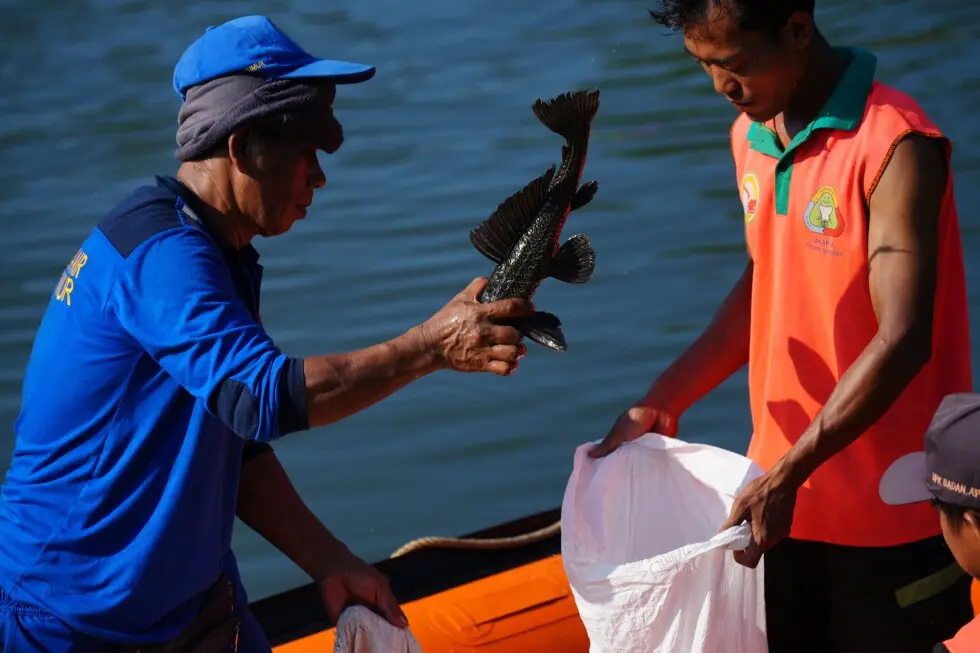
인도네시아 자카르타에서 2026년 4월 24일 금요일, 시 강, 운하 및 저수지에서 침입종을 제거하기 위한 캠페인 중 최근 포획한 청소 물고기를 죽이고 매장하기 전에 시 공무원들이 그물을 들어올린다. (AP Photo/Tatan Syuflana)
인도네시아의 수도 자카르타에서 금요일 주민, 시 공무원, 환경 자원봉사자들이 저수지 표면으로 침입종 물고기가 가득 찬 그물을 끌어올리며 "청소 물고기" 단속 작업에서 환호성이 터져나왔다.
당국은 자카르타 수로에서 최소 10톤(9미터톤)의 물고기를 제거하려고 노력하고 있으며, 관리들은 이 노력이 Ciliwung 강의 균형을 회복하고 수질에 대한 대중의 관심을 재새로이 할 것으로 기대하고 있다.
오염된 강에서 도시 중심부의 콘크리트 제방과 고층건물이 즐비한 운하에 이르기까지, 물고기의 어두운 형태들이 강 벽에 단단히 붙어 있다. 언뜻 보기에, 그들은 거의 선사시대처럼 보이며, 갑옷을 입은 몸이 탁한 수면 아래에서 둔한 갈색으로 반짝인다.
청소 물고기 또는 빨판입 메기로 알려진 학명으로 Pterygoplichthys이며 지역적으로 "sapu-sapu"로 불리는 이 물고기는 인도네시아 토종이 아니다. 수십 년 전 조류를 소비하는 능력 때문에 수족관용으로 수입되었으며, 나중에 방출되어 자카르타의 심하게 오염된 강에서 터전을 찾았다. 이 물고기는 최대 50센티미터(거의 20인치)까지 자랄 수 있으며 10-15년을 산다.
전문가들은 오랫동안 통제되지 않은 침입종 개체군이 특히 자카르타 같은 인구 밀집 도시 지역에서 담수 생태계를 불안정하게 할 수 있다고 경고해 왔다.
반둥 공과대학 생태학자 디안 로슬레인은 청소 물고기의 적응력이 매우 높아서 오염된 조건에서도 다른 종이 살 수 없을 때 생존할 수 있다고 말했다.
"따라서 이 물고기들은 물이 나쁜 상태에 있다는 생물학적 지표입니다"라고 그녀가 말했다.
Ciliwung 강은 한때 서부 자바의 산에서 맑은 물을 자카르타로 운반했다. 오늘날, 그것은 처리되지 않은 가정용 폐기물과 산업 유출을 운반하는 인구 밀집 지역을 흐른다. 콘크리트 벽이 강둑을 대체했다. 건조한 달 동안 물은 따뜻해지고 흐름이 느려진다 - 이는 토종 종보다 청소 물고기를 선호하는 조건이다, 로슬레인이 말했다.
자카르타 당국은 대규모 제거로 대응했으며, 도시 수로에서 청소 물고기를 목표로 삼았다. 캠페인은 지난주에 시작되었다.
자카르타 시장 프라모노 아눙이 명령한 정화 운동은 수도의 5개 행정 도시 모두에서 동시에 수행되었으며, 소방관, 재난 담당관 및 지역 주민을 포함한 수백 명의 인원이 참여했다. 그들은 지난 주 도시 전역에서 7톤 이상의 청소 물고기를 그물로 잡아 매장했다.
동부 자카르타의 Ciracas 지역에 있는 6미터 깊이(19피트 깊이)의 저수지에서 금요일 정화 작업은 시 공무원들이 약 320킬로그램(705파운드)의 물고기를 수집하면서 호기심 많은 군중들을 모았다.
꿈틀거리는 청소 물고기 더미들이 저수지를 따라 빨간 배럴을 채웠다 - 마침내 뭔가 행해지고 있다는 가시적인 증거였다.
"청소 물고기 개체군은 주목할 만한 수준으로 번식했으며 토종 종을 먹이로 삼고 있습니다"라고 금요일 정화 작업을 방문했을 때 동부 자카르타 시장 Munjirin이 기자들에게 말했다. "그 영향은 생태계 파괴를 넘어 강둑과 제방 벽에 구조적 손상을 일으킵니다."
많은 인도네시아인처럼 단일 이름을 사용하는 Munjirin은 조율된 작업이 종을 통제하기 위한 지속적인 노력의 시작이라고 말했으며, 추가 생태 손상을 방지하기 위해 정기적인 모니터링 및 제거가 계획되어 있다고 말했다.
그러나 그는 인도네시아 울레마 위원회(MUI)가 인지된 잔인함에 대한 우려를 제기한 후 모든 물고기가 매장 전에 죽을 것을 약속하며 프로그램 방법의 검토를 맹세했다.
정화를 지지하면서, MUI의 파트와 위원회는 청소 물고기를 산 채로 매장하는 것이 이슬람 교리에 담긴 동물 권리 위반이라고 경고했다.
당국은 다음에 무엇이 일어날지에 대해 여전히 신중하다. 청소 물고기가 일부 국가에서 식용이지만, 중금속 오염에 대한 우려는 자카르타에서 즉시 소비 승인을 받지 않을 것이라는 의미이다. 대신, 관리들은 물고기를 동물 사료 또는 비료로 처리하는 것을 포함한 대안을 모색하고 있다.
아눙은 정화 방법이 지정된 부지에서 매장하기 전에 물고기가 죽어야 하며, 강으로의 복귀나 거래를 차단하기 위해 위생 기준이 적용될 것이라고 말했다.
자카르타 시장은 매장된 청소 물고기가 천연 퇴비로 사용될 수 있으며 더 큰 경제적 이점을 생성하기 위해 물고기를 숯으로 변환하는 브라질의 모델을 채택할 것을 제안했다.
그러나 전문가들은 제거가 시작일 뿐이라고 경고한다. 폐수 관리를 개선하고 오염을 줄이지 않으면, 강은 같은 상태로 빠르게 돌아갈 수 있다.
"Ciliwung 강은 재활이 필요하며, 이것은 반드시 해결해야 할 우리의 주요 과제입니다"라고 로슬레인이 말했다. "근본 원인을 해결하지 않고 증상을 해결하는 것은 지속적인 해결책을 제공하지 않을 것입니다."
인도네시아의 수도 자카르타에서 금요일 주민, 시 공무원, 환경 자원봉사자들이 저수지 표면으로 침입종 물고기가 가득 찬 그물을 끌어올리며 "청소 물고기" 단속 작업에서 환호성이 터져나왔다.
당국은 자카르타 수로에서 최소 10톤(9미터톤)의 물고기를 제거하려고 노력하고 있으며, 관리들은 이 노력이 Ciliwung 강의 균형을 회복하고 수질에 대한 대중의 관심을 재새로이 할 것으로 기대하고 있다.
오염된 강에서 도시 중심부의 콘크리트 제방과 고층건물이 즐비한 운하에 이르기까지, 물고기의 어두운 형태들이 강 벽에 단단히 붙어 있다. 언뜻 보기에, 그들은 거의 선사시대처럼 보이며, 갑옷을 입은 몸이 탁한 수면 아래에서 둔한 갈색으로 반짝인다.
청소 물고기 또는 빨판입 메기로 알려진 학명으로 Pterygoplichthys이며 지역적으로 "sapu-sapu"로 불리는 이 물고기는 인도네시아 토종이 아니다. 수십 년 전 조류를 소비하는 능력 때문에 수족관용으로 수입되었으며, 나중에 방출되어 자카르타의 심하게 오염된 강에서 터전을 찾았다. 이 물고기는 최대 50센티미터(거의 20인치)까지 자랄 수 있으며 10-15년을 산다.
전문가들은 오랫동안 통제되지 않은 침입종 개체군이 특히 자카르타 같은 인구 밀집 도시 지역에서 담수 생태계를 불안정하게 할 수 있다고 경고해 왔다.
반둥 공과대학 생태학자 디안 로슬레인은 청소 물고기의 적응력이 매우 높아서 오염된 조건에서도 다른 종이 살 수 없을 때 생존할 수 있다고 말했다.
"따라서 이 물고기들은 물이 나쁜 상태에 있다는 생물학적 지표입니다"라고 그녀가 말했다.
Ciliwung 강은 한때 서부 자바의 산에서 맑은 물을 자카르타로 운반했다. 오늘날, 그것은 처리되지 않은 가정용 폐기물과 산업 유출을 운반하는 인구 밀집 지역을 흐른다. 콘크리트 벽이 강둑을 대체했다. 건조한 달 동안 물은 따뜻해지고 흐름이 느려진다 - 이는 토종 종보다 청소 물고기를 선호하는 조건이다, 로슬레인이 말했다.
자카르타 당국은 대규모 제거로 대응했으며, 도시 수로에서 청소 물고기를 목표로 삼았다. 캠페인은 지난주에 시작되었다.
자카르타 시장 프라모노 아눙이 명령한 정화 운동은 수도의 5개 행정 도시 모두에서 동시에 수행되었으며, 소방관, 재난 담당관 및 지역 주민을 포함한 수백 명의 인원이 참여했다. 그들은 지난 주 도시 전역에서 7톤 이상의 청소 물고기를 그물로 잡아 매장했다.
동부 자카르타의 Ciracas 지역에 있는 6미터 깊이(19피트 깊이)의 저수지에서 금요일 정화 작업은 시 공무원들이 약 320킬로그램(705파운드)의 물고기를 수집하면서 호기심 많은 군중들을 모았다.
꿈틀거리는 청소 물고기 더미들이 저수지를 따라 빨간 배럴을 채웠다 - 마침내 뭔가 행해지고 있다는 가시적인 증거였다.
"청소 물고기 개체군은 주목할 만한 수준으로 번식했으며 토종 종을 먹이로 삼고 있습니다"라고 금요일 정화 작업을 방문했을 때 동부 자카르타 시장 Munjirin이 기자들에게 말했다. "그 영향은 생태계 파괴를 넘어 강둑과 제방 벽에 구조적 손상을 일으킵니다."
많은 인도네시아인처럼 단일 이름을 사용하는 Munjirin은 조율된 작업이 종을 통제하기 위한 지속적인 노력의 시작이라고 말했으며, 추가 생태 손상을 방지하기 위해 정기적인 모니터링 및 제거가 계획되어 있다고 말했다.
그러나 그는 인도네시아 울레마 위원회(MUI)가 인지된 잔인함에 대한 우려를 제기한 후 모든 물고기가 매장 전에 죽을 것을 약속하며 프로그램 방법의 검토를 맹세했다.
정화를 지지하면서, MUI의 파트와 위원회는 청소 물고기를 산 채로 매장하는 것이 이슬람 교리에 담긴 동물 권리 위반이라고 경고했다.
당국은 다음에 무엇이 일어날지에 대해 여전히 신중하다. 청소 물고기가 일부 국가에서 식용이지만, 중금속 오염에 대한 우려는 자카르타에서 즉시 소비 승인을 받지 않을 것이라는 의미이다. 대신, 관리들은 물고기를 동물 사료 또는 비료로 처리하는 것을 포함한 대안을 모색하고 있다.
아눙은 정화 방법이 지정된 부지에서 매장하기 전에 물고기가 죽어야 하며, 강으로의 복귀나 거래를 차단하기 위해 위생 기준이 적용될 것이라고 말했다.
자카르타 시장은 매장된 청소 물고기가 천연 퇴비로 사용될 수 있으며 더 큰 경제적 이점을 생성하기 위해 물고기를 숯으로 변환하는 브라질의 모델을 채택할 것을 제안했다.
그러나 전문가들은 제거가 시작일 뿐이라고 경고한다. 폐수 관리를 개선하고 오염을 줄이지 않으면, 강은 같은 상태로 빠르게 돌아갈 수 있다.
"Ciliwung 강은 재활이 필요하며, 이것은 반드시 해결해야 할 우리의 주요 과제입니다"라고 로슬레인이 말했다. "근본 원인을 해결하지 않고 증상을 해결하는 것은 지속적인 해결책을 제공하지 않을 것입니다."
처리 완료
5,223 tokens · $0.0131
기사 수집 완료 · 01:55
매체 피드에서 기사 메타데이터 수집
헤드라인 번역 완료 · 02:01
제목/요약 한국어 번역 (fetch 시점 inline)
claude-haiku-4-5-20251001
120 tokens
$0.00027
1.2s
본문 추출 완료
8,380자 추출 완료
본문 한국어 번역 완료 · 02:01
2,483자 번역 완료
claude-haiku-4-5-20251001
5,103 tokens
$0.01285
26.0s
지정학적 엔티티 추출 완료 · 02:01
7개 엔티티 추출 완료
지정학적 맥락 & R-Scanner
R-Scanner · 평상
z=0.34
일상적인 보도 수준 — 기준: Jakarta
(🇮🇩 ID)
최근 6시간 1건
7일 평균 0.57건 / 6h
1개국 매체
1개 매체
본문에서 추출된 지명 (7)
위치 지도
지도 로딩 중…
같은 주제의 다른 기사 (최근 7일)
Municipal workers kill recently caught janitor fish before burying them during a campaign to remove the invasive species from the city’s rivers, canals and water reservoirs, in Jakarta, Indonesia, Friday, April 24, 2026. (AP Photo/Tatan Syuflana)
Municipal workers unload sacks of recently caught janitor fish to be killed and buried during a campaign to remove the invasive species from the city’s rivers, canals and water reservoirs, in Jakarta, Indonesia, Friday, April 24, 2026. (AP Photo/Tatan Syuflana)
A municipal worker pours water on a recently caught janitor fish before killing and burying them during a campaign to remove the invasive species from the city’s rivers, canals and water reservoirs, in Jakarta, Indonesia, Friday, April 24, 2026.(AP Photo/Tatan Syuflana)
A municipal workers holds up a janitor fish he catches during a campaign to remove the invasive species from the city’s rivers, canals and water reservoirs, in Jakarta, Indonesia, Friday, April 24, 2026.(AP Photo/Tatan Syuflana)
Municipal workers catch a janitor fish during a campaign to remove the invasive species from the city’s rivers, canals and water reservoirs, in Jakarta, Indonesia, Friday, April 24, 2026.(AP Photo/Tatan Syuflana)
Municipal workers kill recently caught janitor fish before burying them during a campaign to remove the invasive species from the city’s rivers, canals and water reservoirs, in Jakarta, Indonesia, Friday, April 24, 2026. (AP Photo/Tatan Syuflana)
Municipal workers kill recently caught janitor fish before burying them during a campaign to remove the invasive species from the city’s rivers, canals and water reservoirs, in Jakarta, Indonesia, Friday, April 24, 2026. (AP Photo/Tatan Syuflana)
Municipal workers unload sacks of recently caught janitor fish to be killed and buried during a campaign to remove the invasive species from the city’s rivers, canals and water reservoirs, in Jakarta, Indonesia, Friday, April 24, 2026. (AP Photo/Tatan Syuflana)
Municipal workers unload sacks of recently caught janitor fish to be killed and buried during a campaign to remove the invasive species from the city’s rivers, canals and water reservoirs, in Jakarta, Indonesia, Friday, April 24, 2026. (AP Photo/Tatan Syuflana)
A municipal worker pours water on a recently caught janitor fish before killing and burying them during a campaign to remove the invasive species from the city’s rivers, canals and water reservoirs, in Jakarta, Indonesia, Friday, April 24, 2026.(AP Photo/Tatan Syuflana)
A municipal worker pours water on a recently caught janitor fish before killing and burying them during a campaign to remove the invasive species from the city’s rivers, canals and water reservoirs, in Jakarta, Indonesia, Friday, April 24, 2026.(AP Photo/Tatan Syuflana)
A municipal workers holds up a janitor fish he catches during a campaign to remove the invasive species from the city’s rivers, canals and water reservoirs, in Jakarta, Indonesia, Friday, April 24, 2026.(AP Photo/Tatan Syuflana)
A municipal workers holds up a janitor fish he catches during a campaign to remove the invasive species from the city’s rivers, canals and water reservoirs, in Jakarta, Indonesia, Friday, April 24, 2026.(AP Photo/Tatan Syuflana)
Municipal workers catch a janitor fish during a campaign to remove the invasive species from the city’s rivers, canals and water reservoirs, in Jakarta, Indonesia, Friday, April 24, 2026.(AP Photo/Tatan Syuflana)
Municipal workers catch a janitor fish during a campaign to remove the invasive species from the city’s rivers, canals and water reservoirs, in Jakarta, Indonesia, Friday, April 24, 2026.(AP Photo/Tatan Syuflana)
JAKARTA, Indonesia (AP) — Cheers broke out in Indonesia’s capital on Friday as residents, city workers and environmental volunteers hauled bulging nets of invasive fish to the surface of a reservoir in an operation to crack down on “janitor fish.”
Authorities are seeking to remove at least 10 tons (9 metric tons) of the fish from Jakarta’s waterways, an effort officials hope will restore balance to the Ciliwung River and renew public attention on water quality.
From the polluted river to the concrete embankments and skyscraper-lined canals of the city’s heart, the dark shapes of the fish cling tightly to the river walls. At first glance, they appear almost prehistoric, with armored bodies gleaming a dull brown beneath the murky surface.
Janitor fish, or suckermouth catfish, known scientifically as Pterygoplichthys and locally as “sapu-sapu,” aren’t native to Indonesia. Imported decades ago for aquariums because of their ability to consume algae, they were later released and found a home in Jakarta’s heavily polluted rivers. The fish can grow up to 50 centimeters (nearly 20 inches) and live for 10-15 years.
Experts have long warned that unchecked populations of invasive species can destabilize freshwater ecosystems, particularly in densely populated urban areas like Jakarta.
Dian Rosleine, an ecologist from the Bandung Institute of Technology, said that the adaptability of janitor fish is very high, so that even in polluted conditions, it can survive when other species can’t.
“So, these fish are biological indicators that the water is in poor condition,” she said.
The Ciliwung once carried clear water from the mountains of West Java into Jakarta. Today, it flows through dense neighborhoods, carrying untreated household waste and industrial runoff. Concrete walls replaced riverbanks. During dry months, the water warms and slows — conditions that favor janitor fish over native species, Rosleine said.
Jakarta authorities have responded with mass removals, targeting the janitor fish in city waterways. The campaign began last week.
The cleanup drive, ordered by Jakarta Gov. Pramono Anung, was carried out simultaneously in all five administrative cities of the capital, involving hundreds of personnel, including firefighters, disaster officers and local residents. They have netted and buried more than seven tons of janitor fish across the city within a week.
The cleanup on Friday at a 6-meter-deep (19-foot-deep) reservoir in East Jakarta’s Ciracas neighborhood drew curious crowds as city workers collected about 320 kilograms (705 pounds) of the fish.
Piles of wriggling janitor fish filled red barrels along the reservoir — tangible proof that something, at last, was being done.
“The janitor fish populations have reproduced at a notable level while also feeding on native species,” East Jakarta’s mayor, Munjirin, told reporters when visiting Friday’s cleanup. “The impact extends beyond ecosystem destruction, contributing to structural damage to riverbank and embankment walls.”
Munjirin, who like many Indonesians uses a single name, said that the coordinated operation marks the beginning of a sustained effort to control the species, with regular monitoring and removal planned to prevent further ecological damage.
However, he vowed a review of the program’s method after the Indonesian Ulema Council, or MUI, raised concerns over perceived cruelty, pledging that all fish will be dead before burial.
While endorsing the cleanup, MUI’s fatwa commission warned that burying the janitor fish alive amounts to a violation of animal rights enshrined in Islamic teaching.
Authorities are still cautious about what happens next. As janitor fish are edible in some countries, concerns over heavy metal contamination mean they won’t be immediately approved for consumption in Jakarta. Instead, officials are exploring alternatives, including processing the fish into animal feed or fertilizer.
Anung said that the cleanup method will require the fish to be dead before burial at designated sites, with hygiene standards applied to block their return to rivers or trade.
The Jakarta governor noted that buried janitor fish can serve as natural compost and suggested adopting Brazil’s model, where the fish are turned into charcoal to generate greater economic benefits.
Yet experts caution that removal is only a beginning. Without improving wastewater management and reducing pollution, the river could quickly return to the same condition.
“The Ciliwung River requires rehabilitation, our major challenge that must be addressed,” Rosleine said. “Addressing the symptoms without tackling the root causes will not provide a lasting solution.”
Municipal workers unload sacks of recently caught janitor fish to be killed and buried during a campaign to remove the invasive species from the city’s rivers, canals and water reservoirs, in Jakarta, Indonesia, Friday, April 24, 2026. (AP Photo/Tatan Syuflana)
A municipal worker pours water on a recently caught janitor fish before killing and burying them during a campaign to remove the invasive species from the city’s rivers, canals and water reservoirs, in Jakarta, Indonesia, Friday, April 24, 2026.(AP Photo/Tatan Syuflana)
A municipal workers holds up a janitor fish he catches during a campaign to remove the invasive species from the city’s rivers, canals and water reservoirs, in Jakarta, Indonesia, Friday, April 24, 2026.(AP Photo/Tatan Syuflana)
Municipal workers catch a janitor fish during a campaign to remove the invasive species from the city’s rivers, canals and water reservoirs, in Jakarta, Indonesia, Friday, April 24, 2026.(AP Photo/Tatan Syuflana)
Municipal workers kill recently caught janitor fish before burying them during a campaign to remove the invasive species from the city’s rivers, canals and water reservoirs, in Jakarta, Indonesia, Friday, April 24, 2026. (AP Photo/Tatan Syuflana)
Municipal workers kill recently caught janitor fish before burying them during a campaign to remove the invasive species from the city’s rivers, canals and water reservoirs, in Jakarta, Indonesia, Friday, April 24, 2026. (AP Photo/Tatan Syuflana)
Municipal workers unload sacks of recently caught janitor fish to be killed and buried during a campaign to remove the invasive species from the city’s rivers, canals and water reservoirs, in Jakarta, Indonesia, Friday, April 24, 2026. (AP Photo/Tatan Syuflana)
Municipal workers unload sacks of recently caught janitor fish to be killed and buried during a campaign to remove the invasive species from the city’s rivers, canals and water reservoirs, in Jakarta, Indonesia, Friday, April 24, 2026. (AP Photo/Tatan Syuflana)
A municipal worker pours water on a recently caught janitor fish before killing and burying them during a campaign to remove the invasive species from the city’s rivers, canals and water reservoirs, in Jakarta, Indonesia, Friday, April 24, 2026.(AP Photo/Tatan Syuflana)
A municipal worker pours water on a recently caught janitor fish before killing and burying them during a campaign to remove the invasive species from the city’s rivers, canals and water reservoirs, in Jakarta, Indonesia, Friday, April 24, 2026.(AP Photo/Tatan Syuflana)
A municipal workers holds up a janitor fish he catches during a campaign to remove the invasive species from the city’s rivers, canals and water reservoirs, in Jakarta, Indonesia, Friday, April 24, 2026.(AP Photo/Tatan Syuflana)
A municipal workers holds up a janitor fish he catches during a campaign to remove the invasive species from the city’s rivers, canals and water reservoirs, in Jakarta, Indonesia, Friday, April 24, 2026.(AP Photo/Tatan Syuflana)
Municipal workers catch a janitor fish during a campaign to remove the invasive species from the city’s rivers, canals and water reservoirs, in Jakarta, Indonesia, Friday, April 24, 2026.(AP Photo/Tatan Syuflana)
Municipal workers catch a janitor fish during a campaign to remove the invasive species from the city’s rivers, canals and water reservoirs, in Jakarta, Indonesia, Friday, April 24, 2026.(AP Photo/Tatan Syuflana)
JAKARTA, Indonesia (AP) — Cheers broke out in Indonesia’s capital on Friday as residents, city workers and environmental volunteers hauled bulging nets of invasive fish to the surface of a reservoir in an operation to crack down on “janitor fish.”
Authorities are seeking to remove at least 10 tons (9 metric tons) of the fish from Jakarta’s waterways, an effort officials hope will restore balance to the Ciliwung River and renew public attention on water quality.
From the polluted river to the concrete embankments and skyscraper-lined canals of the city’s heart, the dark shapes of the fish cling tightly to the river walls. At first glance, they appear almost prehistoric, with armored bodies gleaming a dull brown beneath the murky surface.
Janitor fish, or suckermouth catfish, known scientifically as Pterygoplichthys and locally as “sapu-sapu,” aren’t native to Indonesia. Imported decades ago for aquariums because of their ability to consume algae, they were later released and found a home in Jakarta’s heavily polluted rivers. The fish can grow up to 50 centimeters (nearly 20 inches) and live for 10-15 years.
Experts have long warned that unchecked populations of invasive species can destabilize freshwater ecosystems, particularly in densely populated urban areas like Jakarta.
Dian Rosleine, an ecologist from the Bandung Institute of Technology, said that the adaptability of janitor fish is very high, so that even in polluted conditions, it can survive when other species can’t.
“So, these fish are biological indicators that the water is in poor condition,” she said.
The Ciliwung once carried clear water from the mountains of West Java into Jakarta. Today, it flows through dense neighborhoods, carrying untreated household waste and industrial runoff. Concrete walls replaced riverbanks. During dry months, the water warms and slows — conditions that favor janitor fish over native species, Rosleine said.
Jakarta authorities have responded with mass removals, targeting the janitor fish in city waterways. The campaign began last week.
The cleanup drive, ordered by Jakarta Gov. Pramono Anung, was carried out simultaneously in all five administrative cities of the capital, involving hundreds of personnel, including firefighters, disaster officers and local residents. They have netted and buried more than seven tons of janitor fish across the city within a week.
The cleanup on Friday at a 6-meter-deep (19-foot-deep) reservoir in East Jakarta’s Ciracas neighborhood drew curious crowds as city workers collected about 320 kilograms (705 pounds) of the fish.
Piles of wriggling janitor fish filled red barrels along the reservoir — tangible proof that something, at last, was being done.
“The janitor fish populations have reproduced at a notable level while also feeding on native species,” East Jakarta’s mayor, Munjirin, told reporters when visiting Friday’s cleanup. “The impact extends beyond ecosystem destruction, contributing to structural damage to riverbank and embankment walls.”
Munjirin, who like many Indonesians uses a single name, said that the coordinated operation marks the beginning of a sustained effort to control the species, with regular monitoring and removal planned to prevent further ecological damage.
However, he vowed a review of the program’s method after the Indonesian Ulema Council, or MUI, raised concerns over perceived cruelty, pledging that all fish will be dead before burial.
While endorsing the cleanup, MUI’s fatwa commission warned that burying the janitor fish alive amounts to a violation of animal rights enshrined in Islamic teaching.
Authorities are still cautious about what happens next. As janitor fish are edible in some countries, concerns over heavy metal contamination mean they won’t be immediately approved for consumption in Jakarta. Instead, officials are exploring alternatives, including processing the fish into animal feed or fertilizer.
Anung said that the cleanup method will require the fish to be dead before burial at designated sites, with hygiene standards applied to block their return to rivers or trade.
The Jakarta governor noted that buried janitor fish can serve as natural compost and suggested adopting Brazil’s model, where the fish are turned into charcoal to generate greater economic benefits.
Yet experts caution that removal is only a beginning. Without improving wastewater management and reducing pollution, the river could quickly return to the same condition.
“The Ciliwung River requires rehabilitation, our major challenge that must be addressed,” Rosleine said. “Addressing the symptoms without tackling the root causes will not provide a lasting solution.”