입양아동들이 '영원한 가정'을 약속받았으나 영리 기관에 갇혀 있다
Adopted and Locked Away: Kids promised 'forever homes' instead confined in for-profit institutions
Associated Press
· 🇺🇸 New York, US
https://apnews.com/author/claire-galofaro
EN
2026-04-28 22:20
Translated
Associated Press의 조사에 따르면 '문제청소년' 산업으로 알려진 영리 주거 치료 센터들이 입양아동들을 대상으로 삼고 있으며, 이들 아동은 학대와 억압적인 환경에 노출되어 있다.
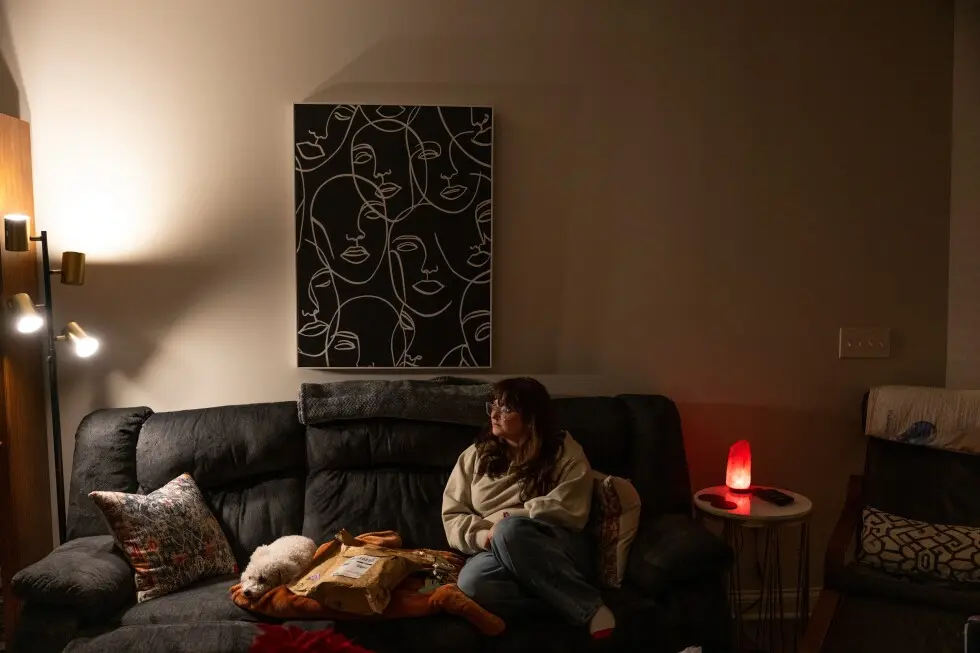
케이트는 2025년 12월 10일 수요일 켄터키의 자신의 아파트에서 인물사진을 촬영했다. (AP Photo/Michael Swensen)
그녀는 13세였고 어둠을 두려워했을 때 자신의 입양 부모에게 치유를 도와줄 것이라고 약속한 주거 치료 센터에 도착했다 - 자신의 생모가 누구인지, 왜 자신을 버렸는지 알지 못하는 고통으로부터의 치유.
케이트는 기숙사 방에 야간등을 꽂았다. 다른 시설에서 성폭행을 당한 이후로 그것이 필요했다고 그녀는 말했다.
그녀의 룸메이트가 그것을 껐다. 그녀는 공황 상태에 빠졌다. 그녀는 뛰어갔다가 웅크리고 앉아 흐느껴 울었다. 세 명의 직원이 그녀를 따라갔다 - 그녀를 위로하기 위해 그렇게 케이트는 생각했다.
대신에 그들은 그녀의 얼굴을 카펫에 처박았다고 그녀는 말했다. "OIC" - "훈육 통제 불가" 상태라고 외치면서. 약 1시간 동안이라고 케이트는 말했고, 그들은 그녀를 누르고 있었다 - 한 명이 각 팔에, 세 번째 사람이 다리를 잡고 있었다.
케이트는 사춘기의 대부분을 제도에 갇혀 있게 되었다 - 성인이 되어 스스로 나올 수 있을 때까지. 유타 시설은 "문제청소년 산업"으로 알려진 규제가 미흡한 영리 주거 치료 센터, 야생 프로그램, 기숙학교의 광범위한 네트워크에서 세 번째 정거장이었다.
Associated Press의 조사에 따르면 반항적인 부유층 청소년들을 위한 강경 기숙학교로 알려진 사업이 다른 인구통계학적 특성을 가진 사람들을 목표로 삼고 있다: 입양아동들. 전문가들은 미국 어린이의 2%에 불과한 입양아동들이 주거 치료에 있는 사람들의 약 25-40%를 차지한다고 말한다.
Associated Press의 조사에 따르면 반항적인 청소년들을 위한 강경 기숙학교로 알려진 사업이 다른 인구 집단을 목표로 삼고 있다: 입양아동들. 입양아동들은 주거 치료에 있는 사람들의 약 25-40%를 차지한다. (AP Video: Mary Conlon; Serginho Roosblad; Austin Johnson; Sally Ho. Animations: Marshall Ritzel)
입양아동들은 자신들이 "그림자 고아원" 시스템에 얽혀 있다고 AP에 말했다. 여기서 아이들은 입양이 그들을 구하기로 되어 있던 바로 그 운명을 마주한다 - '영원한 가정'이라고 약속받았지만 대신 억압적이고 때로는 학대적인 시설에, 어떤 경우는 수년 동안 수용된다.
월 최대 $20,000를 청구하면서, 이러한 많은 시설들은 입양 아동들을 위해 반응성 애착 장애(종종 RAD라고 불림)로 치료할 것이라고 광고한다. 그들은 절망적인 입양 부모들을 위한 해결책을 제공한다고 주장하면서, 아이의 행동 문제는 양육자와의 연결 실패에서 비롯되었으며, 멀리 있는 치료에서 애착을 배울 수 있다고 주장한다.
그러나 전문가들은 이러한 시설에 갇힌 대부분의 청소년들은 거의 확실하게 RAD를 가지고 있지 않으며, 그들이 그렇다 하더라도 제공되는 치료는 그것을 고칠 수 없다고 말한다.
AP는 프로그램 참가자와 그들의 가족, 전직 직원, 공무원, 변호사 및 전문가들과 대화를 나누었으며, 입양아동들이 회사의 불안정한 기록에도 불구하고 왜 그리고 어떻게 그러한 시설에 들어가게 되는지 검토하기 위해 수백 개의 정부 및 사업 기록을 획득했다.
경찰 보고서는 9세 어린이부터 시설 내에서 폭력, 혼란, 자해 및 성폭행을 경험하거나 목격한다는 것을 보여준다. 입양아동과 입양 부모들은 아이들이 입원했을 때보다 더 트라우마를 입은 채로 떠났다고 말했다 - 만약 그들이 떠났다면 말이다. 어떤 아이들은 안전함을 유지할 것이라고 약속한 시설 내에서 사망했다.
AP가 발견한 바에 따르면 아이들은 몸수색을 당하고, 정기적으로 억제되고, 육체 노동으로 처벌받는다. 부모를 포함한 외부 세계와의 소통은 제한되고 엄격하게 모니터링된다.
많은 사람들이 그것을 감옥처럼 느껴진다고 말했다. 단, 그들은 어떤 범죄로도 유죄 판결을 받지 않았으며, 선고를 받지 않았으며, 판사가 그들의 감금을 모니터링하지 않는다. 부모만이 보통 자녀를 멀리 보내기로 결정하고 얼마나 오래일지를 결정한다.
AP의 글로벌 조사팀에 연락하기: [email protected]. 안전하고 기밀의 통신을 위해서는 무료 Signal 앱 +1 (202) 281-8604를 사용하세요.
AP는 성폭행의 피해자라고 주장하는 사람들을 일반적으로 식별하지 않기 때문에 케이트의 이름만 사용하고 있다. 그녀가 12세일 때, 그녀는 첫 번째 주거 센터에서 밤 중간에 다른 소녀에게 성폭행을 당했다고 말한다.
그녀는 4년 전 18세일 때 치료에서 스스로 퇴소했지만, 2017년 밤에 대해 이야기할 때도 지금까지 운다 - 그녀는 "숨을 쉴 수 없다"고 비명을 지르면서 지면에 눌렸다고 말한다 - 콧물이 코에서 쏟아졌다. 결국 그녀는 침묵했다. 지쳤다고 그녀는 말했다. 그리고 그녀는 풀려났다. 그녀는 야간등 없이 침대에 갔다.
그녀는 그곳에서 또 다시 2년을 살았다.
"우리는 항상 두려움 속에 있었다"고 그녀는 말했다.
켄터키 부부에 의해 입양된 케이트는 자신의 생모 가족을 알고 싶어 했고 그들의 부재에 분개했다. 그녀는 때로 폭력적으로 반항했다. 그녀는 법적 문제가 없었고, 약물을 하지 않았으나, 그녀는 부모 입장에서 어려운 아이였다는 것을 안다.
그녀는 우울증, 불안증, 그리고 삼발모증(즉, 모발심인성탈모증)으로 고생했다 - 그녀의 머리를 뽑도록 이끈 정신과 질환.
케이트의 부모들은 답을 찾아 나섰다. 많은 입양 부모들처럼, 그들은 RAD에 대해 배웠을 때 답을 찾은 것 같다고 생각했다.
이 진단은 초기 생활에서 너무 방치되어 양육자와의 유대에 어려움을 겪는 어린 아이들을 위한 것이라고 말했다. 펜 스테이트의 아동 보호 센터에서 정신 건강 프로그램을 운영하는 심리학자 브라이언 앨런이 말했다.
원래는 그토록 직원이 부족해서 아기들이 거의 안겨지지 않고 애정을 받지 못했던 해외 고아원의 감금 영향을 설명했다고 앨런은 말했다. 오늘날, 정신 질환의 진단 및 통계 매뉴얼 - DSM이라고 불리는 정신 질환 목록 - 은 그렇게 위축되어 방치되지 않을 때 안위를 추구하지 않는 아이들에게 적용된다고 말한다. DSM은 진단이 극히 드물며 5세 이하의 아이들에게 적용된다고 명시한다 - 작을 때 방치를 받고 나중에 잘못 행동하는 더 나이 많은 아이들이 아니라.
케이트는 아기로서 육체적 박탈을 경험하지 않았다. 그녀의 입양 어머니는 그녀가 태어났을 때 방에 있었고 바로 그녀를 집으로 데려갔다고 그녀는 말했다. 그러나 일단 그녀가 주거 치료에 도착하자, 프로그램 치료사들은 그녀의 부모들에게 반응성 애착 장애를 소개했다.
앨런이 말했듯이, 이것은 행동 문제가 있는 거의 모든 입양 전청소년 또는 청소년에게 RAD를 적용하는 것은 흔한 오해이다. 앨런의 클리닉은 치료를 위해 가져온 100명의 입양 및 위탁 아동을 연구했다. 그들 중 약 40%가 RAD로 진단을 받았으나, 그들의 연구에 따르면 일단의 기준에도 맞지 않는 사람은 없었다.
더 광범위한 정의의 일부 옹호자들은 그것이 아이들을 조종적이고 위험하게 만든다고 말하며, 순종 기반 치료로 교정되어야 한다고 말한다. 그것은 앨런에 따르면 오해이거나 진단의 의도적인 왜곡이다.
앨런은 DSM이 RAD를 그 목록에서 삭제해야 한다고 주장한다. 진단은 너무 "타락했다"고 그는 말했으며, 그것은 연구된 진단 (예를 들어, 외상 후 스트레스 장애 또는 반항성 장애)으로 더 잘 도움을 받을 수 있는 입양 아동들을 악마화하고 있다.
"우리는 절대로 그러한 종류의 무거운 손, 순종 중심, 부트 캠프 종류의 것들을 하지 말아야 한다"고 앨런은 말했다. "그 같은 경험적이거나 이론적인 근거가 없다."
그러나 많은 시설들이 RAD 치료를 광고한다.
"당신은 빠른 결과와 답을 찾는 정말로 두려워하는 부모들을 가지고 있다"고 말했다. 심리학자이자 샌프란시스코 캘리포니아 대학의 가족 치료 프로그램 이사인 슬로언 노바는 1980년대 남한에서 입양되었으며 청소년으로 치료 시설에 들어갔다.
"종종 발생하는 것은 이 과장된 약속, 주거 치료 센터에서 오는 매우 유혹적인 약속이다"고 노바는 말했다. "그래서 그것은 거의 믿기에는 너무 좋은 것처럼 들린다."
유타의 유인타 아카데미는 승마 치료를 연습하면서, 그들의 딸이 동물과 연결되는 방법을 배우면 그들은 사람들과 연결되는 법을 배울 수 있다고 부모들에게 말한다. 케이트가 그곳을 떠날 때쯤이면, 그녀는 자신들이 훈련시킨 말들처럼 느껴졌다고 그녀는 말했다: 부러졌다.
"나는 감정이 없었다"고 그녀는 말했다. "나는 로봇이었다."
그곳의 소녀들은 의문을 제기하지 않고 중립적인 표정으로 하라는 대로 하도록 요구받았다 - 한숨도, 찡그린 얼굴도, 울음도 없이, 그녀는 말했다. 규칙을 어기면 그들은 몇 시간 동안 칫솔로 바닥을 무릎으로 문지르거나 100도 열에서 밖에 나가 갈퀴질을 하거나 하루 종일 잡초를 뽑아야 했다고 그녀는 말했다. 새로 뽑힌 잡초의 냄새는 여전히 그녀를 아프게 한다.
유인타는 학대 혐의로 여러 소송을 직면하고 있는 회사인 Family Help & Wellness가 운영하는 15개 이상의 시설 중 하나이다. FHW는 그러한 주장과 관련된 부정행위를 부인했다.
FHW는 이 이야기의 주장을 설명하는 상세한 질문 목록에 응답하지 않았으며, 유인타의 관리자들도 의견 요청에 응하지 않았다.
AP에 제출한 성명서에서, 모회사는 자신의 프로그램이 독립적으로 운영되며, 회사가 자금 지원과 지원을 제공하는 동안 시설들이 "임상 모델, 입원 결정 및 일상 관리"를 결정하고 지역 라이선스 법률 및 규정을 준수한다고 말했다. 회사는 산업 규제를 강화하기 위한 입법을 지원하며 감시를 강화하고 진화하는 모범 사례에 맞는 관리 품질 개선을 약속한다고 말했다.
"모든 젊은 사람과 가족의 안전, 복지 및 장기 성공이 우리의 우선순위입니다"라고 그것은 성명서에 썼다. "우리는 이것이 증가하는 공적 관심과 정밀 조사의 영역이라는 것을 인식한다. 이해할 수 있게도, 젊은 생명에 대한 실제 영향을 고려할 때."
판돈은 엄청나게 높다: 지난 2년간 회사의 2개 시설이 아이들이 사망한 후 폐쇄되었다.
편집자 주 - 이 이야기는 자살에 대한 논의를 포함한다. 당신이나 당신이 아는 누군가가 도움이 필요하면, 미국의 전국 자살 및 위기 생명선을 +1 (202) 281-8604로 전화하거나 문자로 이용할 수 있다. 988lifeline.org에서 온라인 채팅도 있다.
Trails Carolina는 2024년에 폐쇄되었다 - 12세 소년이 질식했고 주가 그것의 라이선스를 취소한 후. Asheville Academy는 케이트가 또한 참석했으며, 작년에 폐쇄되었다. 노스 캐롤라이나 보건 인적 자원부는 두 소녀가 자살로 사망한 후 입원을 중단했다고 기관은 말했으며, 시설은 며칠 후 라이선스를 포기했다.
FHW의 유인타 아카데미는 열려 있다. 작년에 16세 소녀의 부모에 의해 제기된 소송은 "비인간적" 처벌을 주장했다: 한 소녀는 다른 학생들 사이에 장벽을 만들기 위해 허리 주위에 훌라후프를 묶도록 하였다. 직원들은 소녀들의 머리를 깎겠다고 위협했다.
소송은 유인타의 처벌적 문화가 24세 직원이 그들의 딸을 기르고 강간하도록 했다고 주장했다. 그녀는 그녀가 그곳에서 불편함을 표현한 후 처벌받는 다른 소녀들을 봤기 때문에 아무도 말하지 않았다고 소송에서 말한다. 몇 년 후, 그 직원은 온라인에서 아이 행세를 한 경찰관인 실제로 12세 소녀를 만나기 위해 시도하는 것으로 유죄를 인정했다 - 섹스를 위해서. 시설은 아직 주장에 법원에서 응답하지 않았다.
케이트가 참석한 4개 프로그램 중 유인타는 그녀를 가장 상처 입힌 것이었다고 그녀는 말했다. 그곳에서 그녀는 생각하지 않는 것을 배웠다.
"그들은 개성의 모든 종류를 벗겨낼 것이다"고 그녀는 말했다. "그들은 당신이 그 부분이 나쁘다는 것을 확신시킨다. 그 부분은 독성이 있다. 그것은 건강하지 못하다. 그것은 작동하지 않으며, 당신은 그것을 제거해야 한다."
케이트는 2025년 12월 10일 수요일 켄터키의 자신의 아파트에서 인물사진을 촬영했다. (AP Photo/Michael Swensen)
케이트는 2025년 12월 10일 수요일 켄터키의 자신의 아파트에서 인물사진을 촬영했다. (AP Photo/Michael Swensen)
결국 그녀는 복종했다. 그녀는 모범 학생이 되었다 - "세뇌되었다"고 그녀는 말했다. 그녀는 다음 아이들의 물결을 위해 프로그램을 고려하는 부모들에게 투어를 주도하도록 선택되었다.
고통받는 입양아동에게서 벌 수 있는 많은 돈이 있다. AP는 입양 관련 문제를 구체적으로 광고하는 최소 80개의 사적 시설을 발견했다.
더 광범위한 산업은 유타에서 태어났으며 거기에 집중되어 있으나, 시설은 전국의 시골 지역사회에서 열렸다.
연방 추적이 없으므로, 아무도 프로그램의 수 또는 그들 내에 얼마나 많은 아이들이 있는지를 모른다. 옹호 비영리 11:11 미디어 임팩트는 호텔 상속녀 파리스 힐튼이 이끌고 있고, 그녀는 그러한 시설에서 경험한 학대에 대해 주 및 연방 입법자들 앞에서 증언했으며, 2021년에 산업이 연 최대 200,000명의 아이들을 등록시킨다고 추정했다. 부모의 유일한 판단력으로 개별적으로 배치된 50,000명 포함.
이러한 많은 사업들은 역사적으로 기독교 교리에 뿌리를 둔 행동 수정 접근 방식을 가진 소규모 운영으로 시작했다고 전문가들은 말했다. 오늘날, 상당한 이익의 약속과 고민하는 아이들의 끝없는 공급으로 끌린 공적 및 사적 자본 회사들이 센터를 인수하고 치료를 상업화하고 있다.
산업은 더 이상 부유한 부모들의 수표에만 의존하지 않는다. COVID-19 팬데믹은 더 양당적 정치 지원 청소년 정신 건강 자금을 촉발했으며, 의료, 아동 복지, 소년 정의 및 학교 시스템을 통해 공중 납세자 달러를 활용하는 프로그램을 강화했다.
그 신뢰할 수 있는 돈의 흐름은 투자자들이 "이러한 시장에 위험 없이" 들어가도록 한다고 말했다. 의료를 추적하는 금융 서비스 회사 스테파노스의 분석가 라즈 쿠마르가 말했다.
건강한 20% 이익 마진을 약속하면서, 주거 치료 센터들은 직원 비용을 최소화하고 아이들의 관리 기간을 최대화함으로써 돈을 버는 것이라고 쿠마르는 말했다. 그것은 전문가들이 말했듯이, 더 쉽다. 왜냐하면 요양원 같은 다른 입원 의료 환경과 비교하여 규제가 매우 적기 때문이다.
공개 거래 회사인 아카디아 헬스케어는 그것이 사업을 지배하게 됨에 따라 정밀 조사를 받고 있다. FHW와 Embark Behavioral Health 같은 덜 알려진 단체들은 종종 공개적으로 내부 작업을 공개할 필요가 없는 사적 자본 회사들로 지원을 받는다. 그 투자자 그룹들은 의견 요청에 응하지 않았다.
사적 자본의 빠른 이익 초점은 특히 문제가 있다고 말했다. 그 조직을 위해 2022년 보고서를 연구한 아일린 오그래디는 watchdog 조직 사적 자본 이해 관계자 프로젝트이다. 그녀는 문제의 시설들이 종종 새로운 이름 아래 다시 열린다는 것을 발견했으며, 이는 그들을 추적하기 더 어렵게 하고 소송에 대해 덜 책임이 있도록 한다.
예를 들어, Aspen Education Group은 한때 Bain Capital로 지원받는 동안 주거 치료에서 주도적 플레이어였으며, 그것은 세계 최대의 사적 투자 회사 중 하나이며, 의견 요청에 거절을 거부했다. Aspen은 학대 및 소송의 주장에 따라 많은 자산을 매각했다. 아카디아 헬스케어는 인터뷰 요청에 응하지 않았으며, FHW가 일부를 인수했다.
2014년에, FHW는 Aspen의 Island View Residential Treatment Center in Syracuse, Utah를 Elevations로 리브랜딩했으며, 이는 "입양 및 애착 문제"를 특기로 나열한다.
문제가 뒤따랐다. AP는 그 자산에 대한 경찰 데이터를 획득했다: 2025년 혼자 Elevations에 대한 167개의 Syracuse 경찰부 사건들이 있었다 - Island View의 소유권 동안 200 년 사이의 총계보다 더 많은.
그녀는 13세였고 어둠을 두려워했을 때 자신의 입양 부모에게 치유를 도와줄 것이라고 약속한 주거 치료 센터에 도착했다 - 자신의 생모가 누구인지, 왜 자신을 버렸는지 알지 못하는 고통으로부터의 치유.
케이트는 기숙사 방에 야간등을 꽂았다. 다른 시설에서 성폭행을 당한 이후로 그것이 필요했다고 그녀는 말했다.
그녀의 룸메이트가 그것을 껐다. 그녀는 공황 상태에 빠졌다. 그녀는 뛰어갔다가 웅크리고 앉아 흐느껴 울었다. 세 명의 직원이 그녀를 따라갔다 - 그녀를 위로하기 위해 그렇게 케이트는 생각했다.
대신에 그들은 그녀의 얼굴을 카펫에 처박았다고 그녀는 말했다. "OIC" - "훈육 통제 불가" 상태라고 외치면서. 약 1시간 동안이라고 케이트는 말했고, 그들은 그녀를 누르고 있었다 - 한 명이 각 팔에, 세 번째 사람이 다리를 잡고 있었다.
케이트는 사춘기의 대부분을 제도에 갇혀 있게 되었다 - 성인이 되어 스스로 나올 수 있을 때까지. 유타 시설은 "문제청소년 산업"으로 알려진 규제가 미흡한 영리 주거 치료 센터, 야생 프로그램, 기숙학교의 광범위한 네트워크에서 세 번째 정거장이었다.
Associated Press의 조사에 따르면 반항적인 부유층 청소년들을 위한 강경 기숙학교로 알려진 사업이 다른 인구통계학적 특성을 가진 사람들을 목표로 삼고 있다: 입양아동들. 전문가들은 미국 어린이의 2%에 불과한 입양아동들이 주거 치료에 있는 사람들의 약 25-40%를 차지한다고 말한다.
Associated Press의 조사에 따르면 반항적인 청소년들을 위한 강경 기숙학교로 알려진 사업이 다른 인구 집단을 목표로 삼고 있다: 입양아동들. 입양아동들은 주거 치료에 있는 사람들의 약 25-40%를 차지한다. (AP Video: Mary Conlon; Serginho Roosblad; Austin Johnson; Sally Ho. Animations: Marshall Ritzel)
입양아동들은 자신들이 "그림자 고아원" 시스템에 얽혀 있다고 AP에 말했다. 여기서 아이들은 입양이 그들을 구하기로 되어 있던 바로 그 운명을 마주한다 - '영원한 가정'이라고 약속받았지만 대신 억압적이고 때로는 학대적인 시설에, 어떤 경우는 수년 동안 수용된다.
월 최대 $20,000를 청구하면서, 이러한 많은 시설들은 입양 아동들을 위해 반응성 애착 장애(종종 RAD라고 불림)로 치료할 것이라고 광고한다. 그들은 절망적인 입양 부모들을 위한 해결책을 제공한다고 주장하면서, 아이의 행동 문제는 양육자와의 연결 실패에서 비롯되었으며, 멀리 있는 치료에서 애착을 배울 수 있다고 주장한다.
그러나 전문가들은 이러한 시설에 갇힌 대부분의 청소년들은 거의 확실하게 RAD를 가지고 있지 않으며, 그들이 그렇다 하더라도 제공되는 치료는 그것을 고칠 수 없다고 말한다.
AP는 프로그램 참가자와 그들의 가족, 전직 직원, 공무원, 변호사 및 전문가들과 대화를 나누었으며, 입양아동들이 회사의 불안정한 기록에도 불구하고 왜 그리고 어떻게 그러한 시설에 들어가게 되는지 검토하기 위해 수백 개의 정부 및 사업 기록을 획득했다.
경찰 보고서는 9세 어린이부터 시설 내에서 폭력, 혼란, 자해 및 성폭행을 경험하거나 목격한다는 것을 보여준다. 입양아동과 입양 부모들은 아이들이 입원했을 때보다 더 트라우마를 입은 채로 떠났다고 말했다 - 만약 그들이 떠났다면 말이다. 어떤 아이들은 안전함을 유지할 것이라고 약속한 시설 내에서 사망했다.
AP가 발견한 바에 따르면 아이들은 몸수색을 당하고, 정기적으로 억제되고, 육체 노동으로 처벌받는다. 부모를 포함한 외부 세계와의 소통은 제한되고 엄격하게 모니터링된다.
많은 사람들이 그것을 감옥처럼 느껴진다고 말했다. 단, 그들은 어떤 범죄로도 유죄 판결을 받지 않았으며, 선고를 받지 않았으며, 판사가 그들의 감금을 모니터링하지 않는다. 부모만이 보통 자녀를 멀리 보내기로 결정하고 얼마나 오래일지를 결정한다.
AP의 글로벌 조사팀에 연락하기: [email protected]. 안전하고 기밀의 통신을 위해서는 무료 Signal 앱 +1 (202) 281-8604를 사용하세요.
AP는 성폭행의 피해자라고 주장하는 사람들을 일반적으로 식별하지 않기 때문에 케이트의 이름만 사용하고 있다. 그녀가 12세일 때, 그녀는 첫 번째 주거 센터에서 밤 중간에 다른 소녀에게 성폭행을 당했다고 말한다.
그녀는 4년 전 18세일 때 치료에서 스스로 퇴소했지만, 2017년 밤에 대해 이야기할 때도 지금까지 운다 - 그녀는 "숨을 쉴 수 없다"고 비명을 지르면서 지면에 눌렸다고 말한다 - 콧물이 코에서 쏟아졌다. 결국 그녀는 침묵했다. 지쳤다고 그녀는 말했다. 그리고 그녀는 풀려났다. 그녀는 야간등 없이 침대에 갔다.
그녀는 그곳에서 또 다시 2년을 살았다.
"우리는 항상 두려움 속에 있었다"고 그녀는 말했다.
켄터키 부부에 의해 입양된 케이트는 자신의 생모 가족을 알고 싶어 했고 그들의 부재에 분개했다. 그녀는 때로 폭력적으로 반항했다. 그녀는 법적 문제가 없었고, 약물을 하지 않았으나, 그녀는 부모 입장에서 어려운 아이였다는 것을 안다.
그녀는 우울증, 불안증, 그리고 삼발모증(즉, 모발심인성탈모증)으로 고생했다 - 그녀의 머리를 뽑도록 이끈 정신과 질환.
케이트의 부모들은 답을 찾아 나섰다. 많은 입양 부모들처럼, 그들은 RAD에 대해 배웠을 때 답을 찾은 것 같다고 생각했다.
이 진단은 초기 생활에서 너무 방치되어 양육자와의 유대에 어려움을 겪는 어린 아이들을 위한 것이라고 말했다. 펜 스테이트의 아동 보호 센터에서 정신 건강 프로그램을 운영하는 심리학자 브라이언 앨런이 말했다.
원래는 그토록 직원이 부족해서 아기들이 거의 안겨지지 않고 애정을 받지 못했던 해외 고아원의 감금 영향을 설명했다고 앨런은 말했다. 오늘날, 정신 질환의 진단 및 통계 매뉴얼 - DSM이라고 불리는 정신 질환 목록 - 은 그렇게 위축되어 방치되지 않을 때 안위를 추구하지 않는 아이들에게 적용된다고 말한다. DSM은 진단이 극히 드물며 5세 이하의 아이들에게 적용된다고 명시한다 - 작을 때 방치를 받고 나중에 잘못 행동하는 더 나이 많은 아이들이 아니라.
케이트는 아기로서 육체적 박탈을 경험하지 않았다. 그녀의 입양 어머니는 그녀가 태어났을 때 방에 있었고 바로 그녀를 집으로 데려갔다고 그녀는 말했다. 그러나 일단 그녀가 주거 치료에 도착하자, 프로그램 치료사들은 그녀의 부모들에게 반응성 애착 장애를 소개했다.
앨런이 말했듯이, 이것은 행동 문제가 있는 거의 모든 입양 전청소년 또는 청소년에게 RAD를 적용하는 것은 흔한 오해이다. 앨런의 클리닉은 치료를 위해 가져온 100명의 입양 및 위탁 아동을 연구했다. 그들 중 약 40%가 RAD로 진단을 받았으나, 그들의 연구에 따르면 일단의 기준에도 맞지 않는 사람은 없었다.
더 광범위한 정의의 일부 옹호자들은 그것이 아이들을 조종적이고 위험하게 만든다고 말하며, 순종 기반 치료로 교정되어야 한다고 말한다. 그것은 앨런에 따르면 오해이거나 진단의 의도적인 왜곡이다.
앨런은 DSM이 RAD를 그 목록에서 삭제해야 한다고 주장한다. 진단은 너무 "타락했다"고 그는 말했으며, 그것은 연구된 진단 (예를 들어, 외상 후 스트레스 장애 또는 반항성 장애)으로 더 잘 도움을 받을 수 있는 입양 아동들을 악마화하고 있다.
"우리는 절대로 그러한 종류의 무거운 손, 순종 중심, 부트 캠프 종류의 것들을 하지 말아야 한다"고 앨런은 말했다. "그 같은 경험적이거나 이론적인 근거가 없다."
그러나 많은 시설들이 RAD 치료를 광고한다.
"당신은 빠른 결과와 답을 찾는 정말로 두려워하는 부모들을 가지고 있다"고 말했다. 심리학자이자 샌프란시스코 캘리포니아 대학의 가족 치료 프로그램 이사인 슬로언 노바는 1980년대 남한에서 입양되었으며 청소년으로 치료 시설에 들어갔다.
"종종 발생하는 것은 이 과장된 약속, 주거 치료 센터에서 오는 매우 유혹적인 약속이다"고 노바는 말했다. "그래서 그것은 거의 믿기에는 너무 좋은 것처럼 들린다."
유타의 유인타 아카데미는 승마 치료를 연습하면서, 그들의 딸이 동물과 연결되는 방법을 배우면 그들은 사람들과 연결되는 법을 배울 수 있다고 부모들에게 말한다. 케이트가 그곳을 떠날 때쯤이면, 그녀는 자신들이 훈련시킨 말들처럼 느껴졌다고 그녀는 말했다: 부러졌다.
"나는 감정이 없었다"고 그녀는 말했다. "나는 로봇이었다."
그곳의 소녀들은 의문을 제기하지 않고 중립적인 표정으로 하라는 대로 하도록 요구받았다 - 한숨도, 찡그린 얼굴도, 울음도 없이, 그녀는 말했다. 규칙을 어기면 그들은 몇 시간 동안 칫솔로 바닥을 무릎으로 문지르거나 100도 열에서 밖에 나가 갈퀴질을 하거나 하루 종일 잡초를 뽑아야 했다고 그녀는 말했다. 새로 뽑힌 잡초의 냄새는 여전히 그녀를 아프게 한다.
유인타는 학대 혐의로 여러 소송을 직면하고 있는 회사인 Family Help & Wellness가 운영하는 15개 이상의 시설 중 하나이다. FHW는 그러한 주장과 관련된 부정행위를 부인했다.
FHW는 이 이야기의 주장을 설명하는 상세한 질문 목록에 응답하지 않았으며, 유인타의 관리자들도 의견 요청에 응하지 않았다.
AP에 제출한 성명서에서, 모회사는 자신의 프로그램이 독립적으로 운영되며, 회사가 자금 지원과 지원을 제공하는 동안 시설들이 "임상 모델, 입원 결정 및 일상 관리"를 결정하고 지역 라이선스 법률 및 규정을 준수한다고 말했다. 회사는 산업 규제를 강화하기 위한 입법을 지원하며 감시를 강화하고 진화하는 모범 사례에 맞는 관리 품질 개선을 약속한다고 말했다.
"모든 젊은 사람과 가족의 안전, 복지 및 장기 성공이 우리의 우선순위입니다"라고 그것은 성명서에 썼다. "우리는 이것이 증가하는 공적 관심과 정밀 조사의 영역이라는 것을 인식한다. 이해할 수 있게도, 젊은 생명에 대한 실제 영향을 고려할 때."
판돈은 엄청나게 높다: 지난 2년간 회사의 2개 시설이 아이들이 사망한 후 폐쇄되었다.
편집자 주 - 이 이야기는 자살에 대한 논의를 포함한다. 당신이나 당신이 아는 누군가가 도움이 필요하면, 미국의 전국 자살 및 위기 생명선을 +1 (202) 281-8604로 전화하거나 문자로 이용할 수 있다. 988lifeline.org에서 온라인 채팅도 있다.
Trails Carolina는 2024년에 폐쇄되었다 - 12세 소년이 질식했고 주가 그것의 라이선스를 취소한 후. Asheville Academy는 케이트가 또한 참석했으며, 작년에 폐쇄되었다. 노스 캐롤라이나 보건 인적 자원부는 두 소녀가 자살로 사망한 후 입원을 중단했다고 기관은 말했으며, 시설은 며칠 후 라이선스를 포기했다.
FHW의 유인타 아카데미는 열려 있다. 작년에 16세 소녀의 부모에 의해 제기된 소송은 "비인간적" 처벌을 주장했다: 한 소녀는 다른 학생들 사이에 장벽을 만들기 위해 허리 주위에 훌라후프를 묶도록 하였다. 직원들은 소녀들의 머리를 깎겠다고 위협했다.
소송은 유인타의 처벌적 문화가 24세 직원이 그들의 딸을 기르고 강간하도록 했다고 주장했다. 그녀는 그녀가 그곳에서 불편함을 표현한 후 처벌받는 다른 소녀들을 봤기 때문에 아무도 말하지 않았다고 소송에서 말한다. 몇 년 후, 그 직원은 온라인에서 아이 행세를 한 경찰관인 실제로 12세 소녀를 만나기 위해 시도하는 것으로 유죄를 인정했다 - 섹스를 위해서. 시설은 아직 주장에 법원에서 응답하지 않았다.
케이트가 참석한 4개 프로그램 중 유인타는 그녀를 가장 상처 입힌 것이었다고 그녀는 말했다. 그곳에서 그녀는 생각하지 않는 것을 배웠다.
"그들은 개성의 모든 종류를 벗겨낼 것이다"고 그녀는 말했다. "그들은 당신이 그 부분이 나쁘다는 것을 확신시킨다. 그 부분은 독성이 있다. 그것은 건강하지 못하다. 그것은 작동하지 않으며, 당신은 그것을 제거해야 한다."
케이트는 2025년 12월 10일 수요일 켄터키의 자신의 아파트에서 인물사진을 촬영했다. (AP Photo/Michael Swensen)
케이트는 2025년 12월 10일 수요일 켄터키의 자신의 아파트에서 인물사진을 촬영했다. (AP Photo/Michael Swensen)
결국 그녀는 복종했다. 그녀는 모범 학생이 되었다 - "세뇌되었다"고 그녀는 말했다. 그녀는 다음 아이들의 물결을 위해 프로그램을 고려하는 부모들에게 투어를 주도하도록 선택되었다.
고통받는 입양아동에게서 벌 수 있는 많은 돈이 있다. AP는 입양 관련 문제를 구체적으로 광고하는 최소 80개의 사적 시설을 발견했다.
더 광범위한 산업은 유타에서 태어났으며 거기에 집중되어 있으나, 시설은 전국의 시골 지역사회에서 열렸다.
연방 추적이 없으므로, 아무도 프로그램의 수 또는 그들 내에 얼마나 많은 아이들이 있는지를 모른다. 옹호 비영리 11:11 미디어 임팩트는 호텔 상속녀 파리스 힐튼이 이끌고 있고, 그녀는 그러한 시설에서 경험한 학대에 대해 주 및 연방 입법자들 앞에서 증언했으며, 2021년에 산업이 연 최대 200,000명의 아이들을 등록시킨다고 추정했다. 부모의 유일한 판단력으로 개별적으로 배치된 50,000명 포함.
이러한 많은 사업들은 역사적으로 기독교 교리에 뿌리를 둔 행동 수정 접근 방식을 가진 소규모 운영으로 시작했다고 전문가들은 말했다. 오늘날, 상당한 이익의 약속과 고민하는 아이들의 끝없는 공급으로 끌린 공적 및 사적 자본 회사들이 센터를 인수하고 치료를 상업화하고 있다.
산업은 더 이상 부유한 부모들의 수표에만 의존하지 않는다. COVID-19 팬데믹은 더 양당적 정치 지원 청소년 정신 건강 자금을 촉발했으며, 의료, 아동 복지, 소년 정의 및 학교 시스템을 통해 공중 납세자 달러를 활용하는 프로그램을 강화했다.
그 신뢰할 수 있는 돈의 흐름은 투자자들이 "이러한 시장에 위험 없이" 들어가도록 한다고 말했다. 의료를 추적하는 금융 서비스 회사 스테파노스의 분석가 라즈 쿠마르가 말했다.
건강한 20% 이익 마진을 약속하면서, 주거 치료 센터들은 직원 비용을 최소화하고 아이들의 관리 기간을 최대화함으로써 돈을 버는 것이라고 쿠마르는 말했다. 그것은 전문가들이 말했듯이, 더 쉽다. 왜냐하면 요양원 같은 다른 입원 의료 환경과 비교하여 규제가 매우 적기 때문이다.
공개 거래 회사인 아카디아 헬스케어는 그것이 사업을 지배하게 됨에 따라 정밀 조사를 받고 있다. FHW와 Embark Behavioral Health 같은 덜 알려진 단체들은 종종 공개적으로 내부 작업을 공개할 필요가 없는 사적 자본 회사들로 지원을 받는다. 그 투자자 그룹들은 의견 요청에 응하지 않았다.
사적 자본의 빠른 이익 초점은 특히 문제가 있다고 말했다. 그 조직을 위해 2022년 보고서를 연구한 아일린 오그래디는 watchdog 조직 사적 자본 이해 관계자 프로젝트이다. 그녀는 문제의 시설들이 종종 새로운 이름 아래 다시 열린다는 것을 발견했으며, 이는 그들을 추적하기 더 어렵게 하고 소송에 대해 덜 책임이 있도록 한다.
예를 들어, Aspen Education Group은 한때 Bain Capital로 지원받는 동안 주거 치료에서 주도적 플레이어였으며, 그것은 세계 최대의 사적 투자 회사 중 하나이며, 의견 요청에 거절을 거부했다. Aspen은 학대 및 소송의 주장에 따라 많은 자산을 매각했다. 아카디아 헬스케어는 인터뷰 요청에 응하지 않았으며, FHW가 일부를 인수했다.
2014년에, FHW는 Aspen의 Island View Residential Treatment Center in Syracuse, Utah를 Elevations로 리브랜딩했으며, 이는 "입양 및 애착 문제"를 특기로 나열한다.
문제가 뒤따랐다. AP는 그 자산에 대한 경찰 데이터를 획득했다: 2025년 혼자 Elevations에 대한 167개의 Syracuse 경찰부 사건들이 있었다 - Island View의 소유권 동안 200 년 사이의 총계보다 더 많은.
처리 완료
158 tokens · $0.0004
기사 수집 완료 · 22:20
매체 피드에서 기사 메타데이터 수집
헤드라인 번역 완료 · 22:36
제목/요약 한국어 번역 (fetch 시점 inline)
claude-haiku-4-5-20251001
158 tokens
$0.00042
1.7s
본문 추출 완료
26,463자 추출 완료
본문 한국어 번역 완료 · 22:36
7,886자 번역 완료
지정학적 엔티티 추출 완료 · 22:36
8개 엔티티 추출 완료
지정학적 맥락 & R-Scanner
R-Scanner · 핫스팟
z=2.86
평소보다 훨씬 많은 매체가 집중 보도 중 — 기준: Kentucky
(🇺🇸 US)
최근 6시간 43건
7일 평균 27.68건 / 6h
11개국 매체
14개 매체
본문에서 추출된 지명 (8)
Kentucky
🇺🇸
Utah
🇺🇸
United States
🇺🇸
North Carolina
🇺🇸
Syracuse
🇺🇸
Asheville
🇺🇸
South Korea
🇰🇷
San Francisco
🇺🇸
위치 지도
지도 로딩 중…
같은 주제의 다른 기사 (최근 7일)
Kate poses for a portrait in her apartment in Kentucky, Wednesday, Dec. 10, 2025. (AP Photo/Michael Swensen)
She was 13 years old and scared of the dark when she arrived at a residential treatment center that had promised her adoptive parents it would help her heal — from the pain of not knowing who her mother was or why she’d given her away.
Kate plugged in a night light in the dorm room. She had needed one since she was sexually assaulted at another facility, she said.
Her roommate turned it off. She panicked. She ran and then curled into a ball, heaving, weeping. Three employees followed her — to comfort her, Kate thought.
Instead, they threw her face first into the carpet, she said, yelling that she was “OIC” — “out of instructional control.” For what seemed like an hour, they held her down, Kate said, one on each arm, the third holding her legs.
Kate would be institutionalized for most of her adolescence — until she could sign herself out as an adult. The Utah facility was her third stop in a sprawling network of loosely regulated, for-profit residential treatment centers, wilderness programs and boarding schools that’s become known as the “troubled teen industry.”
An Associated Press investigation finds that a business known for tough-love boarding schools for rebellious, rich teenagers has also set its sights on a different demographic: adopted kids. Experts say adoptees, only 2% of American children, account for an estimated 25-40% of those in residential treatment.
An Associated Press investigation finds a business known for tough-love boarding schools for rebellious teenagers has set its sights on a different demographic: adopted kids. Adoptees account for an estimated 25-40% of those in residential treatment. (AP Video: Mary Conlon; Serginho Roosblad; Austin Johnson; Sally Ho. Animations: Marshall Ritzel)
Adoptees told the AP they believe they’ve been enmeshed in a shadow orphanage system where children end up with the very fate that adoption was supposed to spare them — promised ‘forever homes’ but institutionalized instead, some for years, in oppressive and sometimes abusive facilities.
Charging as much as $20,000 a month, many of these facilities promise in their marketing pitches to treat adopted children for reactive attachment disorder, often called RAD. They offer a salve for desperate adoptive parents, claiming the child’s behavioral problems are caused by a pathological failure to connect with their caregivers, and they can learn to attach in faraway treatment.
But experts say most teenagers confined in these facilities almost certainly don’t have RAD, and that the treatment offered wouldn’t fix it even if they did.
The AP interviewed dozens of program attendees and their families, former employees, public officials, attorneys and experts, and obtained hundreds of government and business records to examine why and how adopted kids land in such facilities despite the companies’ disturbing track records.
Police reports reveal children as young as 9 experience or witness violence, chaos, self-harm and sexual abuse inside facilities. Adoptees and adoptive parents said children left more traumatized than when they arrived — if, that is, they ever left. Some have died inside the facilities that promised they would keep them safe.
Children are strip-searched, regularly restrained and punished with manual labor, the AP found. Communication with the outside world, including their parents, is limited and tightly monitored.
Many said it felt like prison, except they had not been convicted of any crime, they have no sentence and no judge monitors their confinement. Parents alone usually decide to send their children away and for how long.
Contact AP’s global investigative team at [email protected]. For secure and confidential communications, use the free Signal app +1 (202) 281-8604.
The AP is using only Kate’s first name because it does not typically identify people who say they are victims of sexual assault. When she was 12, she says, she was assaulted by another girl in the middle of the night at her first residential center.
She finally checked herself out of treatment four years ago, when she was 18, but she cries even now as she recounts the night in 2017 when she says she was held to the ground, screaming “I can’t breathe” as snot poured from her nose. Eventually, she went silent, exhausted, she said, and she was released. She went to bed, without a night light.
She lived in that place for another two years.
“We were afraid all of the time,” she said.
Adopted by a Kentucky couple, Kate longed to know her birth family, and resented their absence. She lashed out, sometimes violently. She was never in trouble with the law, she didn’t do drugs, but she knows she was a difficult child to parent.
She struggled with depression, anxiety and trichotillomania, a psychiatric condition that led her to pull out her hair.
Kate’s parents went looking for answers. Like many adoptive parents, they thought they found them when they learned about RAD.
The diagnosis is meant for young children who were so neglected in early life that they struggle to bond with caregivers, said Brian Allen, a psychologist who runs the mental health program at Penn State’s Center for the Protection of Children.
It originally described the effects of confinement in orphanages abroad that were so understaffed that babies were rarely held and received no affection, Allen said. Today, the Diagnostic and Statistical Manual of Mental Disorders — the catalog of mental illnesses known as the DSM — says it applies to children who’ve become so withdrawn, they seek no comfort when they are distressed or scared. The DSM specifies the diagnosis is extremely rare and applies to children under 5 — not older children who suffer neglect when small and misbehave years later.
Kate experienced no physical deprivation as a baby. Her adoptive mother was in the room when she was born and took her home right away, she said. But once she arrived in residential treatment, program therapists introduced her parents to reactive attachment disorder.
That’s a common misinterpretation, Allen said, to apply RAD to virtually any adopted preteen or teenager with behavioral challenges. Allen’s clinic studied 100 adopted and foster children brought in for treatment. Around 40% of them had been diagnosed with RAD, but not a single one fit the criteria, their study found.
Some proponents of the wider definition say it makes children manipulative and dangerous, and they must be corrected with obedience-based therapies. That, Allen said, is either a misunderstanding or an intentional bastardization of the diagnosis.
Allen argues the DSM should delete RAD from its listings. The diagnosis has been too “corrupted,” he said, and it is demonizing adopted children who could be better served by researched diagnoses like post-traumatic stress disorder or oppositional defiant disorder, for which there are studied treatments.
“We should absolutely not be doing those types of heavy-handed, obedience-focused, boot camp kinds of things,” Allen said. “There’s no empirical or theoretical basis for that.”
Yet many facilities advertise treatment for RAD.
“You have really fearful parents who are seeking rapid results and answers,” said Sloan Nova, a psychologist and director of a family therapy program at the University of California in San Francisco, who was adopted from South Korea in the 1980s and ended up in a treatment facility as a teenager.
“Often what sweeps in is this overpromise, a very seductive promise from residential treatment centers,” Nova said. “So it just sounds almost too good to be true.”
Uinta Academy in Utah practices equine therapy, telling parents that if their daughters can learn to connect with animals, they can learn to connect with people. By the time Kate left there, she said, she felt like the horses they’d trained: broken.
“I had no feelings,” she said. “I was a robot.”
The girls there were required to do what they were told without question, with a neutral expression on their faces — no sighing, no frowning, no crying, she said. Break the rules and they had to scrub the floor on their knees with a toothbrush for hours or go outside in 100-degree heat, rake moldy hay or pull weeds all day, she said. The smell of freshly pulled weeds still makes her sick.
Uinta is one of more than a dozen facilities across the country operated by Family Help & Wellness, a company which faces multiple lawsuits alleging abuse. FHW has denied wrongdoing in connection to those claims.
FHW did not respond to a detailed list of questions outlining the allegations in this story, and Uinta’s administrators did not respond to requests for comment.
In a statement to the AP, the parent company said its programs are independently operated, and the company provides funding and support while the facilities determine “clinical models, admissions decisions and day-to-day care” and abide by local licensing laws and regulations. The company said it supports legislation to tighten industry regulations and is committed to strengthening oversight and improving quality of care that aligns with evolving best practices.
“The safety, well-being, and long-term success of every young person and family are our priority,” it wrote in a statement. “We recognize this is an area of increasing public attention and scrutiny, understandably so, given the real impact on young lives.”
The stakes are extraordinarily high: In the last two years, two of the company’s properties shuttered after children died there.
EDITOR’S NOTE — This story includes discussion of suicide. If you or someone you know needs help, the national suicide and crisis lifeline in the U.S. is available by calling or texting 988. There is also an online chat at 988lifeline.org.
Trails Carolina closed in 2024 after a 12-year-old boy suffocated and the state revoked its license. Asheville Academy, which Kate also attended, closed last year. North Carolina’s Department of Health and Human Services suspended admissions after two girls died by suicide, the agency said, and the facility surrendered its license days later.
FHW’s Uinta Academy remains open. A lawsuit filed against it last year by a 16-year-old girl’s parents alleged “dehumanizing” punishments: A girl was made to strap a hula hoop around her waist to create a barrier between her and other students. Staff threatened to shave girls’ heads.
The suit alleged Uinta’s punitive culture allowed a 24-year-old employee to groom and rape their daughter. She says in the lawsuit that she didn’t tell anyone because she’d seen other girls punished after expressing discomfort with what happened to them there. Years later, that staffer pleaded guilty to trying to meet a 12-year-old girl — in reality, a police officer who posed as a child online — for sex. The facility has not yet responded in court to the allegations.
Of the four programs Kate attended, Uinta was the one that scarred her the most, she said. It was where she learned not to think.
“They’d strip away any sort of individuality,” she said. “They convince you that part of you is bad, that part is toxic, it’s unhealthy, it’s non-working and you have to get rid of it.”
Kate poses for a portrait in her apartment in Kentucky Wednesday, December 10, 2025. (AP Photo/Michael Swensen)
Kate poses for a portrait in her apartment in Kentucky Wednesday, December 10, 2025. (AP Photo/Michael Swensen)
Eventually, she submitted. She became a model student — “brainwashed,” she said. She was selected to give tours to parents considering the program for the next wave of children.
There’s a lot of money to be made from adopted children in distress. The AP found at least 80 private facilities that specifically advertise they treat adoption-related issues.
The broader industry was born in Utah and remains concentrated there, but facilities have opened in rural communities across the country.
There is no federal tracking, so no one knows the number of programs or how many children are housed within them. The advocacy nonprofit 11:11 Media Impact, led by hotel heiress Paris Hilton, who has testified before state and federal legislators about abuse she experienced in such facilities, estimated in 2021 that the industry enrolls as many as 200,000 kids each year, including 50,000 placed privately at the sole discretion of their parents.
Many of these businesses started as small operations, with behavioral modification approaches historically rooted in Christian teachings, experts said. Today, public and private equity companies drawn to the promise of significant profits and an endless supply of struggling kids have been acquiring centers and commercializing treatment.
The industry no longer relies exclusively on the checkbooks of wealthy parents. The COVID-19 pandemic prompted more bipartisan political support for youth mental health funding, bolstering programs that tap public taxpayer dollars via healthcare, child welfare, juvenile justice and school systems.
That reliable money flow allows investors to go “into these markets risk free,” said Raj Kumar, an analyst at the financial services firm Stephens who tracks healthcare.
Promising a healthy 20% in profit margins, residential treatment centers make money based on minimizing staffing costs and maximizing how long kids are in care, Kumar said. That’s easier to do, experts said, because there are so few regulations compared to other inpatient healthcare settings such as nursing homes.
The publicly traded company Acadia Healthcare has been scrutinized as it has come to dominate the business. Lesser known entities like FHW and Embark Behavioral Health are often backed by private equity firms, which aren’t required to disclose their inner workings publicly. Those investor groups didn’t respond for comment.
Private equity’s focus on fast profits is especially troublesome, said Eileen O’Grady, who researched the industry for a 2022 report for the watchdog organization Private Equity Stakeholder Project. She found problematic facilities often reopen under new names, which makes them harder to track and less accountable to litigation.
Aspen Education Group, for example, was once a leading player in residential treatment while backed by Bain Capital, one of the world’s largest private investment firms, which has declined to comment. Aspen sold off many properties following allegations of abuse and lawsuits. Acadia Healthcare, which didn’t respond to interview requests, and FHW picked some of them up.
In 2014, FHW rebranded Aspen’s Island View Residential Treatment Center in Syracuse, Utah, as Elevations, which lists “adoption and attachment issues” as a specialty.
Trouble followed. The AP obtained police data for the property: There were 167 Syracuse Police Department cases for Elevations in 2025 alone — more than the total during Island View’s ownership between 2005 and 2014.
O’Grady said ongoing problems at facilities like that show that the business model and treatment philosophy are “fundamentally at odds.”
“All of that is kind of the predictable outcome when you pair this intensely profit-driven and untransparent business model with a service like residential behavioral health treatment,” O’Grady said.
In North Carolina, FHW has shifted the facades of its troubled sites, including a facility called Solstice East. That facility was rebranded as Magnolia Mill in 2024, and then merged with Asheville Academy the same year that center was shut down, according to a lawsuit filed in December by four former program attendees.
An excerpt from a lawsuit filed by four former program attendees at North Carolina facilities operated by Family Help & Wellness. (AP Illustration/Marshall Ritzel)
They sued the company alleging “systematic abuse, neglect, exploitation and forced labor” at Solstice East and Trails Carolina. The lawsuit claimed there was a web of LLCs that shielded the investors and owners involved, alleging such residential programs “operate as cash machines for private equity firms and investors who operate the facilities through layers of management companies.”
The company in March sought to dismiss the case, arguing that the plaintiffs were legally sent there by their parents. The company said it was “offering structured program environments governed by rules, supervision, and behavioral expectations,” court documents show.
It defended what it described as “routine program discipline and behavioral accountability mechanisms” — inherent, it said, in residential treatment settings.
Christy Nelson, a special education teacher, said she tried to report her concerns about the Missouri treatment facility where she worked to everyone she could think of: its corporate owner, state regulators, legislators. Nothing ever came of it, she said.
There were too few workers to keep the kids safe, she said, and kids bullied and abused each other. It was so chaotic, they could barely teach, she said. Kids spent most of their time with young, low-paid front-line employees with dismal training in mental healthcare.
The facility, Change Academy at Lake of the Ozarks, or Calo Programs, which is owned by Embark Behavioral Health, advertises as “the nation’s first adoption-specific family treatment center.”
“I started to feel like improvements were never happening and that real change wasn’t ever going to happen,” Nelson told AP. “It was extremely dysfunctional, dangerous.”
Calo sent AP statements, saying that it upholds a high standard of accountability and takes seriously its responsibilities to report any allegation of abuse. Additionally, it wrote that all new staff complete at least 40 hours of orientation before working directly with children, and said their “program completion rates and outcomes reflect the strength and effectiveness” of their approach.
“Our students arrive in crisis — many presenting with self-harm, suicidality, and aggression…Calo serves the students and families that other programs and providers have given up on,” the company said in a statement. “Calo operates under rigorous, continuous external oversight given the complexity of our population and the breadth of our funding sources — which span Medicaid, commercial insurance, adoption subsidy, school district funding, and private pay.”
Calo also said that it investigated and addressed “directly and in good faith” the concerns raised by Nelson and a second teacher that company officials “thought were valid.”
Nelson said she quit and brought her accusations to a congressional investigation into the industry, led by U.S. Sen. Ron Wyden of Oregon. The report was entitled, “Warehouses of Neglect.”
It described how in facilities across the country, chronic understaffing led to improper physical restraints, a lack of mental healthcare and rampant physical, sexual and emotional abuse.
The industry, the report found, functions more like confinement for kids in trouble, rather than places where vulnerable children find healing.
Zoie Albers poses for a portrait in Piperton, Tenn., on Saturday, Jan. 17, 2026. (AP Photo/George Walker IV)
Zoie Albers poses for a portrait in Piperton, Tenn., on Saturday, Jan. 17, 2026. (AP Photo/George Walker IV)
Zoie Albers had never been in trouble. She was never defiant.
Adopted from a Chinese orphanage at nearly 2 years old, her parents brought her home to Tennessee. By 9, she was tormented by thoughts about how she had been given up for adoption.
Zoie started harming herself. Her parents tried doctors, different schools, sports, church, medication, hospitals — and finally, a residential treatment center in Utah called Three Points Center, which was exclusively for adoptees and operated a second facility in North Carolina.
“We wanted some place that was nurturing and caring and that would help her and respect her and just help her accept herself,” said her mother, Leslie, “and that was what they purported to do.”
Leslie Albers wipes tears as she recounts her daughter’s struggle with mental health issues Saturday, Jan. 17, 2026, in Piperton, Tenn. (AP Photo/George Walker IV)
Leslie Albers wipes tears as she recounts her daughter’s struggle with mental health issues Saturday, Jan. 17, 2026, in Piperton, Tenn. (AP Photo/George Walker IV)
Within Zoie’s first week there she watched the staff slam a boy to the ground, screaming, she said. She told the AP that the other kids tried to comfort her. Don’t worry, they’d said: This happens all the time, this is normal here.
“I don’t think this is normal, I don’t think this is OK,” she remembers thinking.
Zoie Albers reads through a journal at her home Saturday, Jan. 17, 2026, in Piperton, Tenn. (AP Photo/George Walker IV)
Zoie Albers reads through a journal at her home Saturday, Jan. 17, 2026, in Piperton, Tenn. (AP Photo/George Walker IV)
For the next nine months, Zoie said, she was careful to be as quiet and compliant as possible. Children were restrained all around her, she said. There was constant chaos. Everyone was yelling all the time.
Any child could “call a group” on someone else, which meant that person had to sit quietly as the other children told them what they don’t like, Zoie said. At the end, she claimed that the targeted child had to “take accountability.”
One girl was simultaneously restrained and shamed, she said. The girl had tried to run away and a male employee twisted her arms behind her back and pulled her to the ground, Zoie said, holding her straddled between his legs for 45 minutes while the other girls berated her for being stupid enough to run away.
Once, Zoie was unconsciously picking at scabs from self-harming. Someone called “a group” on her, she said. For more than a half hour, she said, she cried as the other girls told her she was “attention-seeking” and selfish.
She had to agree, she said, to make it stop.
Not long after Zoie left, in 2022, Three Points Center’s license was put on conditional status for, among other things, violating a Utah law that prohibits “cruel, severe, unusual or unnecessary” punishment.
The facility shuttered last year. Its founder, Norm Thibault, declined to comment for this story. He moved on to another program that treats adoption issues in young adults.
Some facilities shut down after children die there. Some don’t.
He and his older brother, Yabi, had had a hard childhood in Ethiopia. This is the story Yabi tells: an abusive, alcoholic father and a mother who fled. Life on the streets. A new beginning — Biruk was 7 and Yabi 11 when they were brought to the Chicago suburbs by their new parents.
Yabi said Biruk was curious, he read everything: novels, history, the Guinness Book of World Records. He cared about all creatures, including ants. He liked to watch them march along in their lines and got upset when their parents called the exterminator.
Biruk arrived at Discovery Ranch in Utah in April 2024 to be treated for depression, suicidal tendencies and trauma.
Blaine Baily and Biruk shared a bunk bed, Biruk on top and Blaine on the bottom, and they became as close as brothers, said Blaine, who is also adopted.
Blaine said Biruk was positive and outgoing, but routinely punished. He told his parents he was tackled and put in a choke hold, according to a lawsuit his family filed. The facility denied that in court. They took his books away as punishment, the lawsuit alleged. He lost his privilege to sit on furniture and had to sit on the floor.
On Nov. 5, 2024, Biruk was found dead hanging from a belt, tied to a post on the bunk bed.
The family lawsuit says that the facility started Biruk on a new medication for depression on Oct. 18 that came with the caution: “WARNING: SUICIDAL THOUGHTS AND BEHAVIORS” in kids and young adults.
On Nov. 1, he met with his therapist again and said he wanted to kill himself, the family wrote in their lawsuit. Discovery Ranch denied in court documents that it had been warned Biruk was actively suicidal. The school did not respond to requests for comment, sent via email and voice message left for its director; attorneys representing the school in litigation also did not reply.
The Utah Department of Health and Human Services conducted an investigation into Biruk’s death. It cited Discovery Ranch for compromising the safety of its children, failing to supervise him and not following its own suicide prevention policy. Discovery Ranch was fined $10,300.
The state temporarily barred the facility from taking any more children, which lasted just a few months.
Biruk’s death wasn’t the facility’s only infraction. Licensing records obtained by the AP show the state repeatedly issued the facility warnings: There was the employee who admitted punching a child in the stomach. There was the incident where two employees took hold of a child on the campus where the students raised calves. A third staffer stuck two fingers into the child’s mouth.
“How does that cows--- taste?” the staffer allegedly demanded.
The Associated Press obtained inspection reports from Utah's Department of Health and Human Services. (AP Animation/Marshall Ritzel)
Discovery Ranch was allowed to resume normal operations after passing two follow-up inspections.
Biruk’s adoptive parents recently settled their lawsuit, signed a non-disparagement agreement and said they could not talk about what happened to their son. Discovery Ranch has defended its reputation: It filed a lawsuit in January against a mother who reported to the state of California and posted online that her son was abused there, demanding $5 million because the facility claims her allegations were false or misleading.
Blaine, Biruk’s friend, remained at Discovery Ranch for several weeks after the death of the boy everyone called “B.” Until he left, he slept in the same bed where his friend died.
“Every night,” he said, “all I could envision was him hanging from that bed post.”
This photo shows Biruk Silvers with his adoptive father, Joshua, in Michigan in 2022. (via AP)
This photo shows Biruk Silvers with his adoptive father, Joshua, in Michigan in 2022. (via AP)
Galofaro reported from Kentucky and Tennessee. Ho reported from California, Missouri and Washington.
The Associated Press receives support from the Public Welfare Foundation for reporting focused on juvenile justice. The AP is solely responsible for all content.
She was 13 years old and scared of the dark when she arrived at a residential treatment center that had promised her adoptive parents it would help her heal — from the pain of not knowing who her mother was or why she’d given her away.
Kate plugged in a night light in the dorm room. She had needed one since she was sexually assaulted at another facility, she said.
Her roommate turned it off. She panicked. She ran and then curled into a ball, heaving, weeping. Three employees followed her — to comfort her, Kate thought.
Instead, they threw her face first into the carpet, she said, yelling that she was “OIC” — “out of instructional control.” For what seemed like an hour, they held her down, Kate said, one on each arm, the third holding her legs.
Kate would be institutionalized for most of her adolescence — until she could sign herself out as an adult. The Utah facility was her third stop in a sprawling network of loosely regulated, for-profit residential treatment centers, wilderness programs and boarding schools that’s become known as the “troubled teen industry.”
An Associated Press investigation finds that a business known for tough-love boarding schools for rebellious, rich teenagers has also set its sights on a different demographic: adopted kids. Experts say adoptees, only 2% of American children, account for an estimated 25-40% of those in residential treatment.
An Associated Press investigation finds a business known for tough-love boarding schools for rebellious teenagers has set its sights on a different demographic: adopted kids. Adoptees account for an estimated 25-40% of those in residential treatment. (AP Video: Mary Conlon; Serginho Roosblad; Austin Johnson; Sally Ho. Animations: Marshall Ritzel)
Adoptees told the AP they believe they’ve been enmeshed in a shadow orphanage system where children end up with the very fate that adoption was supposed to spare them — promised ‘forever homes’ but institutionalized instead, some for years, in oppressive and sometimes abusive facilities.
Charging as much as $20,000 a month, many of these facilities promise in their marketing pitches to treat adopted children for reactive attachment disorder, often called RAD. They offer a salve for desperate adoptive parents, claiming the child’s behavioral problems are caused by a pathological failure to connect with their caregivers, and they can learn to attach in faraway treatment.
But experts say most teenagers confined in these facilities almost certainly don’t have RAD, and that the treatment offered wouldn’t fix it even if they did.
The AP interviewed dozens of program attendees and their families, former employees, public officials, attorneys and experts, and obtained hundreds of government and business records to examine why and how adopted kids land in such facilities despite the companies’ disturbing track records.
Police reports reveal children as young as 9 experience or witness violence, chaos, self-harm and sexual abuse inside facilities. Adoptees and adoptive parents said children left more traumatized than when they arrived — if, that is, they ever left. Some have died inside the facilities that promised they would keep them safe.
Children are strip-searched, regularly restrained and punished with manual labor, the AP found. Communication with the outside world, including their parents, is limited and tightly monitored.
Many said it felt like prison, except they had not been convicted of any crime, they have no sentence and no judge monitors their confinement. Parents alone usually decide to send their children away and for how long.
Contact AP’s global investigative team at [email protected]. For secure and confidential communications, use the free Signal app +1 (202) 281-8604.
The AP is using only Kate’s first name because it does not typically identify people who say they are victims of sexual assault. When she was 12, she says, she was assaulted by another girl in the middle of the night at her first residential center.
She finally checked herself out of treatment four years ago, when she was 18, but she cries even now as she recounts the night in 2017 when she says she was held to the ground, screaming “I can’t breathe” as snot poured from her nose. Eventually, she went silent, exhausted, she said, and she was released. She went to bed, without a night light.
She lived in that place for another two years.
“We were afraid all of the time,” she said.
Adopted by a Kentucky couple, Kate longed to know her birth family, and resented their absence. She lashed out, sometimes violently. She was never in trouble with the law, she didn’t do drugs, but she knows she was a difficult child to parent.
She struggled with depression, anxiety and trichotillomania, a psychiatric condition that led her to pull out her hair.
Kate’s parents went looking for answers. Like many adoptive parents, they thought they found them when they learned about RAD.
The diagnosis is meant for young children who were so neglected in early life that they struggle to bond with caregivers, said Brian Allen, a psychologist who runs the mental health program at Penn State’s Center for the Protection of Children.
It originally described the effects of confinement in orphanages abroad that were so understaffed that babies were rarely held and received no affection, Allen said. Today, the Diagnostic and Statistical Manual of Mental Disorders — the catalog of mental illnesses known as the DSM — says it applies to children who’ve become so withdrawn, they seek no comfort when they are distressed or scared. The DSM specifies the diagnosis is extremely rare and applies to children under 5 — not older children who suffer neglect when small and misbehave years later.
Kate experienced no physical deprivation as a baby. Her adoptive mother was in the room when she was born and took her home right away, she said. But once she arrived in residential treatment, program therapists introduced her parents to reactive attachment disorder.
That’s a common misinterpretation, Allen said, to apply RAD to virtually any adopted preteen or teenager with behavioral challenges. Allen’s clinic studied 100 adopted and foster children brought in for treatment. Around 40% of them had been diagnosed with RAD, but not a single one fit the criteria, their study found.
Some proponents of the wider definition say it makes children manipulative and dangerous, and they must be corrected with obedience-based therapies. That, Allen said, is either a misunderstanding or an intentional bastardization of the diagnosis.
Allen argues the DSM should delete RAD from its listings. The diagnosis has been too “corrupted,” he said, and it is demonizing adopted children who could be better served by researched diagnoses like post-traumatic stress disorder or oppositional defiant disorder, for which there are studied treatments.
“We should absolutely not be doing those types of heavy-handed, obedience-focused, boot camp kinds of things,” Allen said. “There’s no empirical or theoretical basis for that.”
Yet many facilities advertise treatment for RAD.
“You have really fearful parents who are seeking rapid results and answers,” said Sloan Nova, a psychologist and director of a family therapy program at the University of California in San Francisco, who was adopted from South Korea in the 1980s and ended up in a treatment facility as a teenager.
“Often what sweeps in is this overpromise, a very seductive promise from residential treatment centers,” Nova said. “So it just sounds almost too good to be true.”
Uinta Academy in Utah practices equine therapy, telling parents that if their daughters can learn to connect with animals, they can learn to connect with people. By the time Kate left there, she said, she felt like the horses they’d trained: broken.
“I had no feelings,” she said. “I was a robot.”
The girls there were required to do what they were told without question, with a neutral expression on their faces — no sighing, no frowning, no crying, she said. Break the rules and they had to scrub the floor on their knees with a toothbrush for hours or go outside in 100-degree heat, rake moldy hay or pull weeds all day, she said. The smell of freshly pulled weeds still makes her sick.
Uinta is one of more than a dozen facilities across the country operated by Family Help & Wellness, a company which faces multiple lawsuits alleging abuse. FHW has denied wrongdoing in connection to those claims.
FHW did not respond to a detailed list of questions outlining the allegations in this story, and Uinta’s administrators did not respond to requests for comment.
In a statement to the AP, the parent company said its programs are independently operated, and the company provides funding and support while the facilities determine “clinical models, admissions decisions and day-to-day care” and abide by local licensing laws and regulations. The company said it supports legislation to tighten industry regulations and is committed to strengthening oversight and improving quality of care that aligns with evolving best practices.
“The safety, well-being, and long-term success of every young person and family are our priority,” it wrote in a statement. “We recognize this is an area of increasing public attention and scrutiny, understandably so, given the real impact on young lives.”
The stakes are extraordinarily high: In the last two years, two of the company’s properties shuttered after children died there.
EDITOR’S NOTE — This story includes discussion of suicide. If you or someone you know needs help, the national suicide and crisis lifeline in the U.S. is available by calling or texting 988. There is also an online chat at 988lifeline.org.
Trails Carolina closed in 2024 after a 12-year-old boy suffocated and the state revoked its license. Asheville Academy, which Kate also attended, closed last year. North Carolina’s Department of Health and Human Services suspended admissions after two girls died by suicide, the agency said, and the facility surrendered its license days later.
FHW’s Uinta Academy remains open. A lawsuit filed against it last year by a 16-year-old girl’s parents alleged “dehumanizing” punishments: A girl was made to strap a hula hoop around her waist to create a barrier between her and other students. Staff threatened to shave girls’ heads.
The suit alleged Uinta’s punitive culture allowed a 24-year-old employee to groom and rape their daughter. She says in the lawsuit that she didn’t tell anyone because she’d seen other girls punished after expressing discomfort with what happened to them there. Years later, that staffer pleaded guilty to trying to meet a 12-year-old girl — in reality, a police officer who posed as a child online — for sex. The facility has not yet responded in court to the allegations.
Of the four programs Kate attended, Uinta was the one that scarred her the most, she said. It was where she learned not to think.
“They’d strip away any sort of individuality,” she said. “They convince you that part of you is bad, that part is toxic, it’s unhealthy, it’s non-working and you have to get rid of it.”
Kate poses for a portrait in her apartment in Kentucky Wednesday, December 10, 2025. (AP Photo/Michael Swensen)
Kate poses for a portrait in her apartment in Kentucky Wednesday, December 10, 2025. (AP Photo/Michael Swensen)
Eventually, she submitted. She became a model student — “brainwashed,” she said. She was selected to give tours to parents considering the program for the next wave of children.
There’s a lot of money to be made from adopted children in distress. The AP found at least 80 private facilities that specifically advertise they treat adoption-related issues.
The broader industry was born in Utah and remains concentrated there, but facilities have opened in rural communities across the country.
There is no federal tracking, so no one knows the number of programs or how many children are housed within them. The advocacy nonprofit 11:11 Media Impact, led by hotel heiress Paris Hilton, who has testified before state and federal legislators about abuse she experienced in such facilities, estimated in 2021 that the industry enrolls as many as 200,000 kids each year, including 50,000 placed privately at the sole discretion of their parents.
Many of these businesses started as small operations, with behavioral modification approaches historically rooted in Christian teachings, experts said. Today, public and private equity companies drawn to the promise of significant profits and an endless supply of struggling kids have been acquiring centers and commercializing treatment.
The industry no longer relies exclusively on the checkbooks of wealthy parents. The COVID-19 pandemic prompted more bipartisan political support for youth mental health funding, bolstering programs that tap public taxpayer dollars via healthcare, child welfare, juvenile justice and school systems.
That reliable money flow allows investors to go “into these markets risk free,” said Raj Kumar, an analyst at the financial services firm Stephens who tracks healthcare.
Promising a healthy 20% in profit margins, residential treatment centers make money based on minimizing staffing costs and maximizing how long kids are in care, Kumar said. That’s easier to do, experts said, because there are so few regulations compared to other inpatient healthcare settings such as nursing homes.
The publicly traded company Acadia Healthcare has been scrutinized as it has come to dominate the business. Lesser known entities like FHW and Embark Behavioral Health are often backed by private equity firms, which aren’t required to disclose their inner workings publicly. Those investor groups didn’t respond for comment.
Private equity’s focus on fast profits is especially troublesome, said Eileen O’Grady, who researched the industry for a 2022 report for the watchdog organization Private Equity Stakeholder Project. She found problematic facilities often reopen under new names, which makes them harder to track and less accountable to litigation.
Aspen Education Group, for example, was once a leading player in residential treatment while backed by Bain Capital, one of the world’s largest private investment firms, which has declined to comment. Aspen sold off many properties following allegations of abuse and lawsuits. Acadia Healthcare, which didn’t respond to interview requests, and FHW picked some of them up.
In 2014, FHW rebranded Aspen’s Island View Residential Treatment Center in Syracuse, Utah, as Elevations, which lists “adoption and attachment issues” as a specialty.
Trouble followed. The AP obtained police data for the property: There were 167 Syracuse Police Department cases for Elevations in 2025 alone — more than the total during Island View’s ownership between 2005 and 2014.
O’Grady said ongoing problems at facilities like that show that the business model and treatment philosophy are “fundamentally at odds.”
“All of that is kind of the predictable outcome when you pair this intensely profit-driven and untransparent business model with a service like residential behavioral health treatment,” O’Grady said.
In North Carolina, FHW has shifted the facades of its troubled sites, including a facility called Solstice East. That facility was rebranded as Magnolia Mill in 2024, and then merged with Asheville Academy the same year that center was shut down, according to a lawsuit filed in December by four former program attendees.
An excerpt from a lawsuit filed by four former program attendees at North Carolina facilities operated by Family Help & Wellness. (AP Illustration/Marshall Ritzel)
They sued the company alleging “systematic abuse, neglect, exploitation and forced labor” at Solstice East and Trails Carolina. The lawsuit claimed there was a web of LLCs that shielded the investors and owners involved, alleging such residential programs “operate as cash machines for private equity firms and investors who operate the facilities through layers of management companies.”
The company in March sought to dismiss the case, arguing that the plaintiffs were legally sent there by their parents. The company said it was “offering structured program environments governed by rules, supervision, and behavioral expectations,” court documents show.
It defended what it described as “routine program discipline and behavioral accountability mechanisms” — inherent, it said, in residential treatment settings.
Christy Nelson, a special education teacher, said she tried to report her concerns about the Missouri treatment facility where she worked to everyone she could think of: its corporate owner, state regulators, legislators. Nothing ever came of it, she said.
There were too few workers to keep the kids safe, she said, and kids bullied and abused each other. It was so chaotic, they could barely teach, she said. Kids spent most of their time with young, low-paid front-line employees with dismal training in mental healthcare.
The facility, Change Academy at Lake of the Ozarks, or Calo Programs, which is owned by Embark Behavioral Health, advertises as “the nation’s first adoption-specific family treatment center.”
“I started to feel like improvements were never happening and that real change wasn’t ever going to happen,” Nelson told AP. “It was extremely dysfunctional, dangerous.”
Calo sent AP statements, saying that it upholds a high standard of accountability and takes seriously its responsibilities to report any allegation of abuse. Additionally, it wrote that all new staff complete at least 40 hours of orientation before working directly with children, and said their “program completion rates and outcomes reflect the strength and effectiveness” of their approach.
“Our students arrive in crisis — many presenting with self-harm, suicidality, and aggression…Calo serves the students and families that other programs and providers have given up on,” the company said in a statement. “Calo operates under rigorous, continuous external oversight given the complexity of our population and the breadth of our funding sources — which span Medicaid, commercial insurance, adoption subsidy, school district funding, and private pay.”
Calo also said that it investigated and addressed “directly and in good faith” the concerns raised by Nelson and a second teacher that company officials “thought were valid.”
Nelson said she quit and brought her accusations to a congressional investigation into the industry, led by U.S. Sen. Ron Wyden of Oregon. The report was entitled, “Warehouses of Neglect.”
It described how in facilities across the country, chronic understaffing led to improper physical restraints, a lack of mental healthcare and rampant physical, sexual and emotional abuse.
The industry, the report found, functions more like confinement for kids in trouble, rather than places where vulnerable children find healing.
Zoie Albers poses for a portrait in Piperton, Tenn., on Saturday, Jan. 17, 2026. (AP Photo/George Walker IV)
Zoie Albers poses for a portrait in Piperton, Tenn., on Saturday, Jan. 17, 2026. (AP Photo/George Walker IV)
Zoie Albers had never been in trouble. She was never defiant.
Adopted from a Chinese orphanage at nearly 2 years old, her parents brought her home to Tennessee. By 9, she was tormented by thoughts about how she had been given up for adoption.
Zoie started harming herself. Her parents tried doctors, different schools, sports, church, medication, hospitals — and finally, a residential treatment center in Utah called Three Points Center, which was exclusively for adoptees and operated a second facility in North Carolina.
“We wanted some place that was nurturing and caring and that would help her and respect her and just help her accept herself,” said her mother, Leslie, “and that was what they purported to do.”
Leslie Albers wipes tears as she recounts her daughter’s struggle with mental health issues Saturday, Jan. 17, 2026, in Piperton, Tenn. (AP Photo/George Walker IV)
Leslie Albers wipes tears as she recounts her daughter’s struggle with mental health issues Saturday, Jan. 17, 2026, in Piperton, Tenn. (AP Photo/George Walker IV)
Within Zoie’s first week there she watched the staff slam a boy to the ground, screaming, she said. She told the AP that the other kids tried to comfort her. Don’t worry, they’d said: This happens all the time, this is normal here.
“I don’t think this is normal, I don’t think this is OK,” she remembers thinking.
Zoie Albers reads through a journal at her home Saturday, Jan. 17, 2026, in Piperton, Tenn. (AP Photo/George Walker IV)
Zoie Albers reads through a journal at her home Saturday, Jan. 17, 2026, in Piperton, Tenn. (AP Photo/George Walker IV)
For the next nine months, Zoie said, she was careful to be as quiet and compliant as possible. Children were restrained all around her, she said. There was constant chaos. Everyone was yelling all the time.
Any child could “call a group” on someone else, which meant that person had to sit quietly as the other children told them what they don’t like, Zoie said. At the end, she claimed that the targeted child had to “take accountability.”
One girl was simultaneously restrained and shamed, she said. The girl had tried to run away and a male employee twisted her arms behind her back and pulled her to the ground, Zoie said, holding her straddled between his legs for 45 minutes while the other girls berated her for being stupid enough to run away.
Once, Zoie was unconsciously picking at scabs from self-harming. Someone called “a group” on her, she said. For more than a half hour, she said, she cried as the other girls told her she was “attention-seeking” and selfish.
She had to agree, she said, to make it stop.
Not long after Zoie left, in 2022, Three Points Center’s license was put on conditional status for, among other things, violating a Utah law that prohibits “cruel, severe, unusual or unnecessary” punishment.
The facility shuttered last year. Its founder, Norm Thibault, declined to comment for this story. He moved on to another program that treats adoption issues in young adults.
Some facilities shut down after children die there. Some don’t.
He and his older brother, Yabi, had had a hard childhood in Ethiopia. This is the story Yabi tells: an abusive, alcoholic father and a mother who fled. Life on the streets. A new beginning — Biruk was 7 and Yabi 11 when they were brought to the Chicago suburbs by their new parents.
Yabi said Biruk was curious, he read everything: novels, history, the Guinness Book of World Records. He cared about all creatures, including ants. He liked to watch them march along in their lines and got upset when their parents called the exterminator.
Biruk arrived at Discovery Ranch in Utah in April 2024 to be treated for depression, suicidal tendencies and trauma.
Blaine Baily and Biruk shared a bunk bed, Biruk on top and Blaine on the bottom, and they became as close as brothers, said Blaine, who is also adopted.
Blaine said Biruk was positive and outgoing, but routinely punished. He told his parents he was tackled and put in a choke hold, according to a lawsuit his family filed. The facility denied that in court. They took his books away as punishment, the lawsuit alleged. He lost his privilege to sit on furniture and had to sit on the floor.
On Nov. 5, 2024, Biruk was found dead hanging from a belt, tied to a post on the bunk bed.
The family lawsuit says that the facility started Biruk on a new medication for depression on Oct. 18 that came with the caution: “WARNING: SUICIDAL THOUGHTS AND BEHAVIORS” in kids and young adults.
On Nov. 1, he met with his therapist again and said he wanted to kill himself, the family wrote in their lawsuit. Discovery Ranch denied in court documents that it had been warned Biruk was actively suicidal. The school did not respond to requests for comment, sent via email and voice message left for its director; attorneys representing the school in litigation also did not reply.
The Utah Department of Health and Human Services conducted an investigation into Biruk’s death. It cited Discovery Ranch for compromising the safety of its children, failing to supervise him and not following its own suicide prevention policy. Discovery Ranch was fined $10,300.
The state temporarily barred the facility from taking any more children, which lasted just a few months.
Biruk’s death wasn’t the facility’s only infraction. Licensing records obtained by the AP show the state repeatedly issued the facility warnings: There was the employee who admitted punching a child in the stomach. There was the incident where two employees took hold of a child on the campus where the students raised calves. A third staffer stuck two fingers into the child’s mouth.
“How does that cows--- taste?” the staffer allegedly demanded.
The Associated Press obtained inspection reports from Utah's Department of Health and Human Services. (AP Animation/Marshall Ritzel)
Discovery Ranch was allowed to resume normal operations after passing two follow-up inspections.
Biruk’s adoptive parents recently settled their lawsuit, signed a non-disparagement agreement and said they could not talk about what happened to their son. Discovery Ranch has defended its reputation: It filed a lawsuit in January against a mother who reported to the state of California and posted online that her son was abused there, demanding $5 million because the facility claims her allegations were false or misleading.
Blaine, Biruk’s friend, remained at Discovery Ranch for several weeks after the death of the boy everyone called “B.” Until he left, he slept in the same bed where his friend died.
“Every night,” he said, “all I could envision was him hanging from that bed post.”
This photo shows Biruk Silvers with his adoptive father, Joshua, in Michigan in 2022. (via AP)
This photo shows Biruk Silvers with his adoptive father, Joshua, in Michigan in 2022. (via AP)
Galofaro reported from Kentucky and Tennessee. Ho reported from California, Missouri and Washington.
The Associated Press receives support from the Public Welfare Foundation for reporting focused on juvenile justice. The AP is solely responsible for all content.