왜 한국은 제대로 된 우주 영화를 만들지 못하는가?
Why can't Korea make a decent space movie?
The Korea Herald
· 🇰🇷 Seoul, KR
Moon Ki-hoon
EN
2026-04-16 15:11
Translated
먹방 스타 쯔양, 첫 단독 TV 쇼 진행
'프로젝트 헤일 메리'가 한국 박스오피스를 천천히 오르고 있는 가운데, 목표를 놓친 국산 우주 오페라 10년사를 돌아본다
아마존 MGM의 2억 5천만 달러 우주 어드벤처 '프로젝트 헤일 메리'는 한국 박스오피스를 뒤흔들고 있는 것은 아니지만, 꾸준한 성적을 내고 있다.
목요일 기준으로 이 영화는 3월 18일 개봉 이후 210만 관객을 끌어모았으며, 입소문이 꾸준한 상승세를 이끌고 있다. 한국의 로튼토마토에 해당하는 왓챠피디아에서 5점 만점에 4.0점을 받은 것은 한국에서 상업 영화로는 드문 점수이며, 소셜 미디어에서도 전반적으로 따뜻한 반응을 얻고 있다.
이 영화는 지난해 'F1'이 이례적으로 긴 상영 기간 동안 560만 관객을 모은 것과 같은 느린 불타오름 궤적을 그릴 가능성이 있다.
이는 한국 영화 팬들이 오랫동안 물어온 질문을 다시 끌어낸다: 왜 우리는 스스로 우주 영화를 만들지 못하는가?
장르를 넘나드는 한국 엔터테인먼트의 거물은 시대극 서사시, 로맨틱 멜로, 갱스터 영화, 좀비 스릴러, 아트하우스 도발작 등 무엇이든 해낼 수 있음을 거듭 입증해왔다. 하지만 우주는 한국 영화계가 아직 성공하지 못한 유일한 장르다.
지금까지의 국산 우주 영화는 모두 기대에 미치지 못했으며, 그 정도는 제각각이었다. 이런 기록은 생각보다 깊이 있다.
'승리호'(2021)
이 스타 캐스팅의 넷플릭스 블록버스터는 문을 활짝 열기로 되어 있었다. 조성희 감독의 240억 원(1,630만 달러) 제작비 영화는 처음부터 한국 최초의 진정한 우주 블록버스터로 알려졌으며, 송중기, 김태리, 유해진, 진선규로 구성된 캐스팅도 그에 걸맞았다.
하지만 처음부터 험난한 길이었다. 코로나19가 터진 후 개봉이 두 차례 미뤄졌고, 결국 극장을 건너뛰어 넷플릭스에서 첫 선을 보였다. 돌이켜보면 그것이 아마 자비였을 것이다—부풀린 제작비와 그 뒤 따른 미지근한 혹은 엇갈린 평가를 고려할 때, 어차피 극장에서 손익분기점을 넘기는 계산이 어려웠을 것이라는 것이 일반적인 평가다.
기대를 뛰어넘은 것이 있다면 바로 영상미였다. 한국 최초의 시도치고 '승리호'는 설득력 있는 낡은 우주 정크선 미학, 화성을 식민지화하는 대기업이 지배하는 그럴듯한 노후한 궤도 디스토피아, 그리고 국산 영화가 이 영역에서도 할 수 있음을 증명하는 충분한 세트피스 폭발 연출을 선보였다.
문제는 영상미를 제외한 모든 것이었다. 평론가들은 시나리오에 집중했는데, 이는 '가디언즈 오브 갤럭시', '카우보이 비밥' 및 기타 여러 SF 디스토피아에서 뜯어낸 누더기 작품이었다는 평가를 받았다. 이런 재활용된 요소들은 긴 설명 장면과 도로시라는 이름의 무기화된 아동 로봇을 둘러싼 쓸데없이 감미로운 부녀 서브플롯으로 채워져 있었다.
신용할 만한 점은, 이 영화가 한국의 메마른 SF 영역을 위한 유망한 첫걸음으로 평가받았다는 것이다—비록 평론가들은 영화 자체에 대해서는 그리 친절하지 않았지만. 넷플릭스에서 16개국 1위로 데뷔하고 개봉 주에 80개 지역에서 플랫폼 일일 차트 1위를 차지하는 등 나쁘지 않은 성적을 거두었다.
많은 이들이 기억하지 못하지만, '부산행'의 연상호 감독이 사실상 한국 좀비 영화를 창시한 그 감독이 한때 사이보그 SF에 도전했다. 또 다른 넷플릭스 작품인 이 영화는 아마도 고 강수연의 마지막 스크린 연기로 더 잘 기억될 것이다. 그녀는 개봉 몇 달 전 55세의 나이로 세상을 떠났다. 엔딩 크레딧에 그녀를 위한 헌정이 있으며, 그 주변의 영화가 더 나았으면 하는 바람이 들게 한다.
'정이'는 22세기 황무지를 배경으로 하며, 인류가 궤도 보호소로 이주했고 그중 일부가 도적 공화국으로 분열되어 나머지와 전쟁 중인 세계관을 그린다. 이런 배경 속에서 연구팀은 전설적인 용병의 뇌를 전투 안드로이드에 복제하려 한다. 의무적인 설명—내전, 뇌 복제 대기업, AI 무기 프로그램—에 의존하는 설정으로, 어느 것도 충분히 구체화되지 않아 설득력이 없다.
세련된 안드로이드 액션을 보러 온 관객들은 영화가 결코 감정적 공감을 얻지 못하는 모녀 유대에 집착하는 것에 금세 거부감을 느꼈다. 그리고 이 영화가 이전 히트작에서 얼마나 많이 차용했는지는 고통스러울 정도로 분명했다: 미학에서는 '고스트 인 더 쉘', 윤리적 토대에서는 '아이, 로봇'과 '엘리시움', 중앙 갈등이 반복된 시뮬레이션을 통해 전개되는 방식에서는 '소스 코드'를 빌렸다.
99분의 짧은 러닝타임으로 보기는 쉬웠고, 넷플릭스 시청 수치는 강력한 것으로 알려졌다. 하지만 비평적 반응은 국내외 모두 끔찍했으며, 로튼토마토 46%, IMDb 5.4점을 기록했다.
'더 문'(2023)
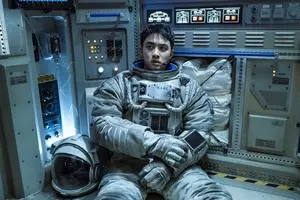
그리고 가장 큰 재앙이 찾아왔다. '더 문'은 멀티플렉스가 관객을 다시 끌어들이기 위해 고군분투하던 팬데믹 후 시기 한국 최고가 블록버스터 중 하나였다. '신과함께' 시리즈 두 편(합계 2,600만 관객)으로 큰돈을 번 김용화 감독은 280억 원을 들여 한국판 달 구조 영화를 만들었고, 10년간 가장 큰 흥행 참패 중 하나를 안겼다. 손익분기점 640만 명에 비해 고작 51만 관객을 끌어모았다.
한국 상업 영화는 오래전부터 눈물 유발 장르와 밀당을 해왔지만, '더 문'은 그 다이얼을 미친 듯이 돌렸다. 고립된 우주비행사에 관한 긴장감 넘치는 생존 스릴러가 되어야 할 것이, 매 플롯 포인트가 눈물을 짜내기 위해 역설계된 지속적인 눈물 호소로 변질되었다. 설경구와 도경수는 할 수 있는 한 최선을 다했지만, 시나리오는 그들에게 아무런 도움도 주지 않았다.
전체 사태를 더 부끄럽게 만든 것은 감독의 반응이었다. 8월 3일 상영 후 행사에서, 영화가 뚜렷하게 망가지는 모습을 보이며 김 감독은 관객에게 "한국 관객들은 아직 SF에 익숙하지 않다"며 "문화가 과학과 기술을 더 존중하게 되면 더 위대한 우주 영화로 돌아오겠다"고 약속했다.
소규모 화면에서의 우주 배경 이야기 시도도 크게 나아지지 않았다. 배두나와 공유가 출연한 넷플릭스의 '고요의 바다'(2021)는 미지근한 평가를 받았다—대형 스크린 동료들처럼 완전한 실패는 아니었지만, 많은 이들이 '에이리언'과 '인터스텔라'에서 따온 느린 전개와 익숙한 구성에 문제를 제기했다.
이민호와 공효진의 tvN 시리즈 '별들에게 물어봐'는 우주정거장을 관광객으로 방문하는 산부인과 의사에 관한 이야기로, 훨씬 더 나빴다. 평균 시청률 2.4%를 기록하며 힘겹게 마무리되었고, 엉뚱한 우주정거장 섹스 신들로 주로 기억된다.
그렇다면 문제는 무엇인가?
실패에 대한 기본적인 설명은 돈이었다. 한국의 예산은 할리우드를 따라갈 수 없으며, 우주 영화는 스펙터클에 따라 성패가 갈린다는 논리다. '마션'은 1억 800만 달러가 들었다; '더 문'은 그것의 약 4분의 1 수준이었다.
하지만 자세히 보면, 이 주장은 성립하지 않는다. 이 영화들의 VFX 작업은 대체로 결점이 아닌 강점으로 꼽혔다. 도구는 있다; 없었던 것은 작동 가능한 시나리오였다.
"솔직히 한국이 SF를 못 만드는 것이 아니다"라고 오랜 영화 평론가 김봉석이 말했다. "화면에서 강한 데자뷔를 느낀다; 새로운 것이 뛰쳐나오지 않는다. 요즘 관객이 극장에 나오려면 눈에 띄는 것을 제공해야 하는데, 한국 SF는 그렇게 하지 못하고 있다."
또 다른 영화 평론가 윤성은은 '승리호'를 대표적인 사례로 꼽았다.
"진정한 로컬 감수성 없이, 설득력 있는 감정적 고리 없이 할리우드 대잔치다"라고 그녀는 말했다. "반면 '프로젝트 헤일 메리'는 지금 이 순간의 무언가를 건드린다—인종을 넘어, 종을 넘어, 심지어 AI를 넘어 함께 해야 한다는 생각을 말이다."
둘 다 같은 근본적인 문제로 돌아갔다: 글쓰기.
"CG와 효과가 문제가 아니다. 시나리오가 문제다"라고 윤이 말했다. "구멍이 있는 시나리오, 너무 야심 찬 시나리오, SF가 진지해야 한다는 생각"
그리고 멜로드라마 문제가 있다. 한국 우주 영화들은 같은 감정적 버튼—전사한 동료들, 상실한 가족들—에 손을 뻗어 너무 세게 눌러왔다. "'승리호'는 부녀 관계가 있었다. '정이'는 모녀 관계가 있었다. 거의 똑같다"라고 윤이 말했다. "SF는 더 시의적절한 감수성과 우주적 설정의 기이함을 융합해야 한다. '프로젝트 헤일 메리'는 그렇게 한다."
SF 전문 팟캐스트를 진행하는 영화 평론가 강지우도 비슷한 지적을 했다. "한국 SF는 표면—스펙터클, 그래픽, 외관—에 집착해왔다"라고 그녀는 말했다. "껍데기는 SF였지만, 안의 내용은 신선하지 않았다."
그렇다고 밝은 부분이 없는 것은 아니다. 한국의 SF 문학계는 조용히 호황을 누리고 있으며, 김초엽, 천선란 등 새 세대 작가들이 잘 평가받는 풍부한 작품 목록을 구축하고 있으며, 그중 많은 것이 각색하기에 적합하다. 김 작가의 '스펙트럼'은 영화 버전으로 준비 중이고, '지구 끝의 온실'은 시리즈로 개발 중이다.
"원작 소재 부족은 아니라고 생각한다. 소설은 있다"라고 김 평론가가 말했다. "업계가 대중 관객에게 어필하는 것으로 각색하는 데 게을러왔다."
"몇 년 안에 도달할 것이라고 생각한다"라고 윤이 말했다. "성공 사례 하나만 있으면 된다. 지금까지 모든 것이 망했으니, 벤치마크할 것이 없다."
아마존 MGM의 2억 5천만 달러 우주 어드벤처 '프로젝트 헤일 메리'는 한국 박스오피스를 뒤흔들고 있는 것은 아니지만, 꾸준한 성적을 내고 있다.
목요일 기준으로 이 영화는 3월 18일 개봉 이후 210만 관객을 끌어모았으며, 입소문이 꾸준한 상승세를 이끌고 있다. 한국의 로튼토마토에 해당하는 왓챠피디아에서 5점 만점에 4.0점을 받은 것은 한국에서 상업 영화로는 드문 점수이며, 소셜 미디어에서도 전반적으로 따뜻한 반응을 얻고 있다.
이 영화는 지난해 'F1'이 이례적으로 긴 상영 기간 동안 560만 관객을 모은 것과 같은 느린 불타오름 궤적을 그릴 가능성이 있다.
이는 한국 영화 팬들이 오랫동안 물어온 질문을 다시 끌어낸다: 왜 우리는 스스로 우주 영화를 만들지 못하는가?
장르를 넘나드는 한국 엔터테인먼트의 거물은 시대극 서사시, 로맨틱 멜로, 갱스터 영화, 좀비 스릴러, 아트하우스 도발작 등 무엇이든 해낼 수 있음을 거듭 입증해왔다. 하지만 우주는 한국 영화계가 아직 성공하지 못한 유일한 장르다.
지금까지의 국산 우주 영화는 모두 기대에 미치지 못했으며, 그 정도는 제각각이었다. 이런 기록은 생각보다 깊이 있다.
'승리호'(2021)
이 스타 캐스팅의 넷플릭스 블록버스터는 문을 활짝 열기로 되어 있었다. 조성희 감독의 240억 원(1,630만 달러) 제작비 영화는 처음부터 한국 최초의 진정한 우주 블록버스터로 알려졌으며, 송중기, 김태리, 유해진, 진선규로 구성된 캐스팅도 그에 걸맞았다.
하지만 처음부터 험난한 길이었다. 코로나19가 터진 후 개봉이 두 차례 미뤄졌고, 결국 극장을 건너뛰어 넷플릭스에서 첫 선을 보였다. 돌이켜보면 그것이 아마 자비였을 것이다—부풀린 제작비와 그 뒤 따른 미지근한 혹은 엇갈린 평가를 고려할 때, 어차피 극장에서 손익분기점을 넘기는 계산이 어려웠을 것이라는 것이 일반적인 평가다.
기대를 뛰어넘은 것이 있다면 바로 영상미였다. 한국 최초의 시도치고 '승리호'는 설득력 있는 낡은 우주 정크선 미학, 화성을 식민지화하는 대기업이 지배하는 그럴듯한 노후한 궤도 디스토피아, 그리고 국산 영화가 이 영역에서도 할 수 있음을 증명하는 충분한 세트피스 폭발 연출을 선보였다.
문제는 영상미를 제외한 모든 것이었다. 평론가들은 시나리오에 집중했는데, 이는 '가디언즈 오브 갤럭시', '카우보이 비밥' 및 기타 여러 SF 디스토피아에서 뜯어낸 누더기 작품이었다는 평가를 받았다. 이런 재활용된 요소들은 긴 설명 장면과 도로시라는 이름의 무기화된 아동 로봇을 둘러싼 쓸데없이 감미로운 부녀 서브플롯으로 채워져 있었다.
신용할 만한 점은, 이 영화가 한국의 메마른 SF 영역을 위한 유망한 첫걸음으로 평가받았다는 것이다—비록 평론가들은 영화 자체에 대해서는 그리 친절하지 않았지만. 넷플릭스에서 16개국 1위로 데뷔하고 개봉 주에 80개 지역에서 플랫폼 일일 차트 1위를 차지하는 등 나쁘지 않은 성적을 거두었다.
많은 이들이 기억하지 못하지만, '부산행'의 연상호 감독이 사실상 한국 좀비 영화를 창시한 그 감독이 한때 사이보그 SF에 도전했다. 또 다른 넷플릭스 작품인 이 영화는 아마도 고 강수연의 마지막 스크린 연기로 더 잘 기억될 것이다. 그녀는 개봉 몇 달 전 55세의 나이로 세상을 떠났다. 엔딩 크레딧에 그녀를 위한 헌정이 있으며, 그 주변의 영화가 더 나았으면 하는 바람이 들게 한다.
'정이'는 22세기 황무지를 배경으로 하며, 인류가 궤도 보호소로 이주했고 그중 일부가 도적 공화국으로 분열되어 나머지와 전쟁 중인 세계관을 그린다. 이런 배경 속에서 연구팀은 전설적인 용병의 뇌를 전투 안드로이드에 복제하려 한다. 의무적인 설명—내전, 뇌 복제 대기업, AI 무기 프로그램—에 의존하는 설정으로, 어느 것도 충분히 구체화되지 않아 설득력이 없다.
세련된 안드로이드 액션을 보러 온 관객들은 영화가 결코 감정적 공감을 얻지 못하는 모녀 유대에 집착하는 것에 금세 거부감을 느꼈다. 그리고 이 영화가 이전 히트작에서 얼마나 많이 차용했는지는 고통스러울 정도로 분명했다: 미학에서는 '고스트 인 더 쉘', 윤리적 토대에서는 '아이, 로봇'과 '엘리시움', 중앙 갈등이 반복된 시뮬레이션을 통해 전개되는 방식에서는 '소스 코드'를 빌렸다.
99분의 짧은 러닝타임으로 보기는 쉬웠고, 넷플릭스 시청 수치는 강력한 것으로 알려졌다. 하지만 비평적 반응은 국내외 모두 끔찍했으며, 로튼토마토 46%, IMDb 5.4점을 기록했다.
'더 문'(2023)
그리고 가장 큰 재앙이 찾아왔다. '더 문'은 멀티플렉스가 관객을 다시 끌어들이기 위해 고군분투하던 팬데믹 후 시기 한국 최고가 블록버스터 중 하나였다. '신과함께' 시리즈 두 편(합계 2,600만 관객)으로 큰돈을 번 김용화 감독은 280억 원을 들여 한국판 달 구조 영화를 만들었고, 10년간 가장 큰 흥행 참패 중 하나를 안겼다. 손익분기점 640만 명에 비해 고작 51만 관객을 끌어모았다.
한국 상업 영화는 오래전부터 눈물 유발 장르와 밀당을 해왔지만, '더 문'은 그 다이얼을 미친 듯이 돌렸다. 고립된 우주비행사에 관한 긴장감 넘치는 생존 스릴러가 되어야 할 것이, 매 플롯 포인트가 눈물을 짜내기 위해 역설계된 지속적인 눈물 호소로 변질되었다. 설경구와 도경수는 할 수 있는 한 최선을 다했지만, 시나리오는 그들에게 아무런 도움도 주지 않았다.
전체 사태를 더 부끄럽게 만든 것은 감독의 반응이었다. 8월 3일 상영 후 행사에서, 영화가 뚜렷하게 망가지는 모습을 보이며 김 감독은 관객에게 "한국 관객들은 아직 SF에 익숙하지 않다"며 "문화가 과학과 기술을 더 존중하게 되면 더 위대한 우주 영화로 돌아오겠다"고 약속했다.
소규모 화면에서의 우주 배경 이야기 시도도 크게 나아지지 않았다. 배두나와 공유가 출연한 넷플릭스의 '고요의 바다'(2021)는 미지근한 평가를 받았다—대형 스크린 동료들처럼 완전한 실패는 아니었지만, 많은 이들이 '에이리언'과 '인터스텔라'에서 따온 느린 전개와 익숙한 구성에 문제를 제기했다.
이민호와 공효진의 tvN 시리즈 '별들에게 물어봐'는 우주정거장을 관광객으로 방문하는 산부인과 의사에 관한 이야기로, 훨씬 더 나빴다. 평균 시청률 2.4%를 기록하며 힘겹게 마무리되었고, 엉뚱한 우주정거장 섹스 신들로 주로 기억된다.
그렇다면 문제는 무엇인가?
실패에 대한 기본적인 설명은 돈이었다. 한국의 예산은 할리우드를 따라갈 수 없으며, 우주 영화는 스펙터클에 따라 성패가 갈린다는 논리다. '마션'은 1억 800만 달러가 들었다; '더 문'은 그것의 약 4분의 1 수준이었다.
하지만 자세히 보면, 이 주장은 성립하지 않는다. 이 영화들의 VFX 작업은 대체로 결점이 아닌 강점으로 꼽혔다. 도구는 있다; 없었던 것은 작동 가능한 시나리오였다.
"솔직히 한국이 SF를 못 만드는 것이 아니다"라고 오랜 영화 평론가 김봉석이 말했다. "화면에서 강한 데자뷔를 느낀다; 새로운 것이 뛰쳐나오지 않는다. 요즘 관객이 극장에 나오려면 눈에 띄는 것을 제공해야 하는데, 한국 SF는 그렇게 하지 못하고 있다."
또 다른 영화 평론가 윤성은은 '승리호'를 대표적인 사례로 꼽았다.
"진정한 로컬 감수성 없이, 설득력 있는 감정적 고리 없이 할리우드 대잔치다"라고 그녀는 말했다. "반면 '프로젝트 헤일 메리'는 지금 이 순간의 무언가를 건드린다—인종을 넘어, 종을 넘어, 심지어 AI를 넘어 함께 해야 한다는 생각을 말이다."
둘 다 같은 근본적인 문제로 돌아갔다: 글쓰기.
"CG와 효과가 문제가 아니다. 시나리오가 문제다"라고 윤이 말했다. "구멍이 있는 시나리오, 너무 야심 찬 시나리오, SF가 진지해야 한다는 생각"
그리고 멜로드라마 문제가 있다. 한국 우주 영화들은 같은 감정적 버튼—전사한 동료들, 상실한 가족들—에 손을 뻗어 너무 세게 눌러왔다. "'승리호'는 부녀 관계가 있었다. '정이'는 모녀 관계가 있었다. 거의 똑같다"라고 윤이 말했다. "SF는 더 시의적절한 감수성과 우주적 설정의 기이함을 융합해야 한다. '프로젝트 헤일 메리'는 그렇게 한다."
SF 전문 팟캐스트를 진행하는 영화 평론가 강지우도 비슷한 지적을 했다. "한국 SF는 표면—스펙터클, 그래픽, 외관—에 집착해왔다"라고 그녀는 말했다. "껍데기는 SF였지만, 안의 내용은 신선하지 않았다."
그렇다고 밝은 부분이 없는 것은 아니다. 한국의 SF 문학계는 조용히 호황을 누리고 있으며, 김초엽, 천선란 등 새 세대 작가들이 잘 평가받는 풍부한 작품 목록을 구축하고 있으며, 그중 많은 것이 각색하기에 적합하다. 김 작가의 '스펙트럼'은 영화 버전으로 준비 중이고, '지구 끝의 온실'은 시리즈로 개발 중이다.
"원작 소재 부족은 아니라고 생각한다. 소설은 있다"라고 김 평론가가 말했다. "업계가 대중 관객에게 어필하는 것으로 각색하는 데 게을러왔다."
"몇 년 안에 도달할 것이라고 생각한다"라고 윤이 말했다. "성공 사례 하나만 있으면 된다. 지금까지 모든 것이 망했으니, 벤치마크할 것이 없다."
처리 완료
119 tokens · $0.0002
기사 수집 완료 · 15:11
매체 피드에서 기사 메타데이터 수집
헤드라인 번역 완료 · 15:26
제목/요약 한국어 번역 (fetch 시점 inline)
kimi-k2.5
119 tokens
$0.00020
2.4s
본문 추출 완료
9,308자 추출 완료
본문 한국어 번역 완료 · 15:26
4,486자 번역 완료
지정학적 엔티티 추출 완료 · 15:26
3개 엔티티 추출 완료
지정학적 맥락 & R-Scanner
R-Scanner · 평상
z=-0.96
일상적인 보도 수준 — 기준: Korea
(🇰🇷 KR)
최근 6시간 10건
7일 평균 13.68건 / 6h
5개국 매체
5개 매체
본문에서 추출된 지명 (3)
위치 지도
지도 로딩 중…
같은 주제의 다른 기사 (최근 7일)
Mukbang star Tzuyang to headline first solo TV show
As 'Project Hail Mary' slowly climbs the Korean box office, a look back at a decade of home-grown space operas that missed their mark"Project Hail Mary," the $250 million Amazon MGM space adventure starring Ryan Gosling, isn't exactly tearing up the Korean box office, but it's definitely holding its own.
As of Thursday, the film has pulled in 2.1 million admissions since its March 18 release, and word of mouth is keeping it humming along. A 4.0 out of 5 on Watchapedia, Korea's Rotten Tomatoes equivalent, is a rare score for a commercial film here, and social media chatter has been warm across the board.
The film may well be on course for the kind of slow-burn trajectory that carried last year's "F1" to 5.6 million admissions over an unusually long theatrical run.
Which raises a question Korean film fans have been asking for a while now: Why can't we make a space movie ourselves?
The genre-hopping juggernaut that is Korean entertainment has proven time and again it can pull off just about anything: period epics, romantic melodramas, gangster pictures, zombie thrillers, arthouse provocations, you name it. But space is the one genre the industry has yet to succeed in.
Every homegrown space movie so far has come up short, some more so than others. The track record runs deeper than you'd think.
"Space Sweepers" (2021)
This star-studded Netflix blockbuster was meant to blow the doors open. Director Jo Sung-hee's 24-billion-won ($16.3 million) production was billed as Korea's first bona fide space blockbuster from the jump, and the cast — Song Joong-ki, Kim Tae-ri, Yoo Hae-jin and Jin Seon-kyu — certainly looked the part.
But the road was rocky from the outset. After COVID-19 hit, its release was pushed back twice before it skipped theaters altogether for a Netflix premiere. In hindsight, that was probably a mercy — given the bloated price tag and the tepid-to-mixed reviews that followed, the general consensus is that the break-even math would have been rough in theaters anyway.
One thing that did exceed expectations was the look of the thing. For a first-of-its-kind effort, "Space Sweepers" delivered a convincingly grimy space-junker aesthetic, a plausibly decrepit orbital dystopia presided over by a megacorp colonizing Mars, and enough set-piece pyrotechnics to prove that homegrown films could play in this sandbox.
The trouble was everything around the visuals. Critics zeroed in on the script, which was by all accounts a patchwork stitched together from "Guardians of the Galaxy," "Cowboy Bebop" and other assorted sci-fi dystopias. All those recycled bits were padded out with lengthy exposition dumps and a saccharine father-daughter subplot involving a weaponized child-robot named Dorothy.
To its credit, the film was credited as a promising first step for Korea's barren sci-fi landscape — though reviewers had less kind things to say about the movie itself. It did perform fine on Netflix, debuting at No. 1 in 16 countries and topping the platform's daily charts in 80 territories in its opening week.
Not many remember that Yeon Sang-ho, the "Train to Busan" auteur who essentially invented the Korean zombie film, once took a swing at cyborg sci-fi. Another Netflix release, the film is perhaps better remembered now as the final screen performance of the late Kang Soo-yeon, who died at 55 just months before its premiere. There's a dedication to her in the end credits, and you wish the film around it were better.
"Jung_E" is set in a 22nd-century wasteland where humanity has migrated to orbital shelters, some of which have splintered off into a rogue republic that is now at war with the rest. Against that backdrop, a research team attempts to clone the brain of a legendary mercenary into a combat android. It's a setup that runs largely on dutiful exposition — civil wars, brain-cloning conglomerates, AI weapons programs — none of it fleshed out enough to land.
Viewers who came in for the slickly choreographed android action were quickly put off by the film's hammering emphasis on a mother-daughter bond that never earns its pathos. And it was painfully obvious how much the film borrowed from earlier hits: "Ghost in the Shell" in its aesthetics, "I, Robot" and "Elysium" in whatever ethical scaffolding it gestures toward, "Source Code" in how its central conflict cycles through repeated simulations.
At a trim 99 minutes, the film was easy enough to sit through, and Netflix viewing numbers were reportedly strong. Critical reception, however, was abysmal both locally and abroad: a 46 percent score on Rotten Tomatoes and a 5.4 on IMDb.
"The Moon" (2023)
Then came the biggest disaster of the bunch. "The Moon" was one of the priciest blockbusters of Korea's post-pandemic years, when multiplexes were still struggling to coax audiences back. Kim Yong-hwa, who had raked in some serious cash with both "Along with the Gods" films (a combined 26 million tickets sold), spent 28 billion won on a Korean moon-rescue picture and walked away with one of the decade's loudest duds. It drew just 510,000 admissions against a 6.4 million break-even threshold.
Korean commercial cinema has a long-running flirtation with the tearjerker, but "The Moon" cranked that dial to the point of insanity. What should've been a taut survival thriller about a stranded astronaut turned into a sustained appeal for waterworks, with every plot beat reverse-engineered to wring out your tears. Sul Kyung-gu and Doh Kyung-soo did what they could; the script did them no favors.
What made the whole episode more embarrasing was the director's response. At an Aug. 3 post-screening event, with the film visibly tanking, Kim told the audience that "Korean viewers still aren't quite at home with sci-fi," and promised to "return with an even greater space movie once the culture comes to respect science and technology more."
Attempts at space-set stories on the small screen haven't fared much better. Netflix's "The Silent Sea" (2021), starring Bae Doona and Gong Yoo, drew mixed reviews — not an outright bust like some of its big-screen counterparts, but many took issue with its plodding pace and familiar beats lifted from "Alien" and "Interstellar."
"When the Stars Gossip," the Lee Min-ho and Gong Hyo-jin tvN series about a gynecologist who visits a space station as a tourist, fared considerably worse. It limped to a 2.4 percent average rating and is mostly remembered for some out-of-left-field space-station sex scenes.
So what's the problem?
The go-to explanation for the failures has been money. Korean budgets can't touch Hollywood's, the reasoning goes, and space movies live or die by spectacle. "The Martian" cost $108 million; "The Moon" came in at roughly a quarter of that.
But upon closer look, the case doesn't hold up. The VFX work on these films has, for the most part, been cited as a strength rather than a flaw. The tools are there; what hasn't been there is a workable script.
"Honestly, it's not that Korea can't make sci-fi," said Kim Bong-seok, a longtime film critic. "On screen, you get this strong sense of deja vu; nothing new jumps out. For audiences to bother showing up at a theater these days, a film has to offer something that catches the eye right away, and Korean sci-fi hasn't been doing that."
Yoon Sung-eun, another film critic, pointed to "Space Sweepers" as a telling case in point.
"It's a Hollywood mash-up without any real local sensibility, without a convincing emotional hook," she said. "'Project Hail Mary,' on the other hand, taps into something of the moment — this idea that we need to come together across race, across species, even across AI."
Both kept coming back to the same fundamental problem: the writing.
"CG and effects aren't the issue. It's the script," Yoon said. "Scripts with holes, or too much ambition, or this idea that sci-fi has to be self-serious"
Then there's the melodrama problem. Korean space pictures have tended to reach for the same emotional button — fallen crewmates, bereaved families — and lean on it too hard. "'Space Sweepers' had the father-daughter thing. 'Jung_E' had the mother-daughter thing. Practically identical," Yoon said. "Sci-fi should fuse more timely sensibilities with the strangeness of a cosmic setting. 'Project Hail Mary' does that."
Kang Ji-woo, a film critic who hosts a podcast dedicated to sci-fi, made a similar point. "Korean sci-fi has been fixated on the surface — spectacle, graphics, the look," she said. "The shell has been sci-fi, but the material inside just hasn't been fresh."
That said, there are bright spots still. Korea's sci-fi literary scene has been quietly booming, with a new generation of writers including Kim Cho-yeop and Cheon Seon-ran building a deep catalog of well-regarded material, much of it ripe for adaptation. Kim's "Spectrum" is slated for a film version; her "Greenhouse at the End of the Earth" is being developed as a series.
"I don't think it's a shortage of source material. The novels are there," said Kim the film critic. "The industry has been lazy about adapting them into something that plays to a mass audience."
"I think we'll get there in a few years," Yoon said. "We just need one success story. Everything so far has flopped, so there's nothing to benchmark against."