트럼프의 향정신성약물 행정명령, 대부분 상징적 의미라고 전문가들 분석
Trump psychedelics order largely symbolic, analysts say
The Guardian
· 🇬🇧 London, GB
Hannah Harris Green
EN
2026-04-24 21:00
Translated
향정신성약물 치료 접근성을 가속화하려는 행정명령이 높은 관심에도 불구하고 제한적인 법적 영향력을 미칠 가능성이 높다는 전문가들의 분석
트럼프 행정부는 이달 초 "심각한 정신질환"을 가진 사람들을 위한 향정신성약물 의약품 접근성을 가속화하기 위한 행정명령을 발표했지만, 전문가들은 이 명령이 법적으로보다는 상징적 의미에서 더 큰 차이를 만들 가능성이 높다고 말하고 있습니다.
행정명령은 "정책입안자들과 의료계는 오랫동안 미국의 자살과 심각한 정신질환 발생률의 부담을 해결하기 위해 고심해왔다"고 기술하고 있으며, 일부 사람들이 현재 이용 가능한 치료법에 반응하지 않는다고 명시하고 있습니다.
행정명령은 향정신성약물 의약품에 대한 접근성을 가속화하기 위한 조항들을 나열하고 있습니다. 여기에는 재향군인부와의 부처 간 협력을 통한 데이터 공유 및 임상시험 참여 증대, 그리고 불법 향정신성약물이 FDA 승인을 받는 경우 시기 적절한 재지정이 포함됩니다.
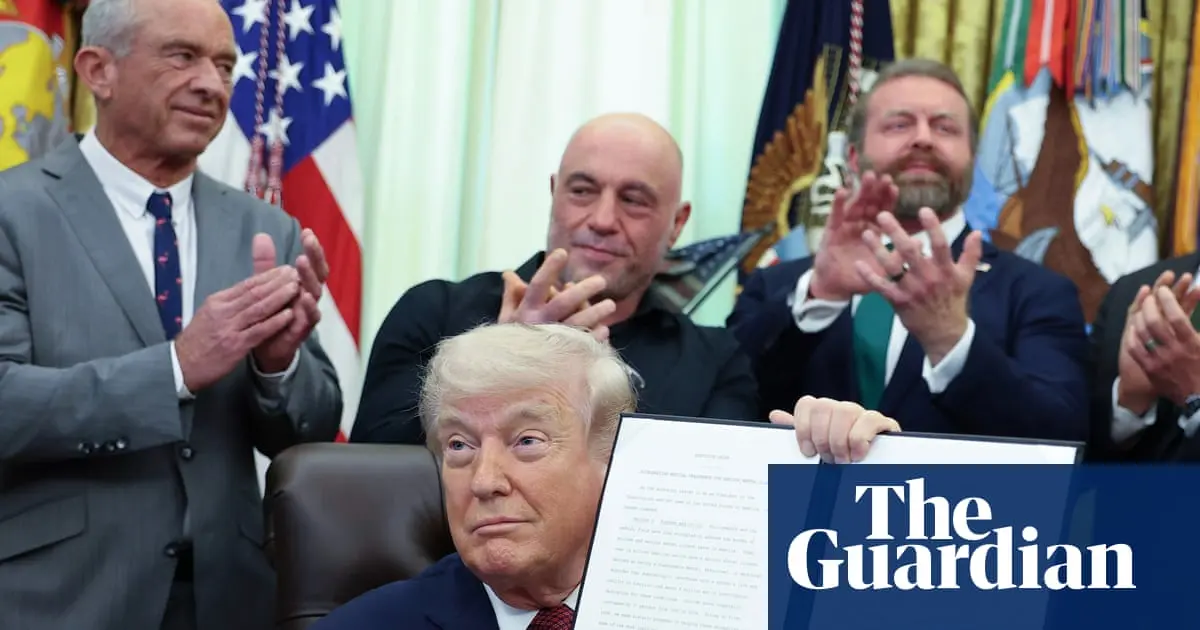
플로리다주립대학교 법학 교수이자 하버드 법대 페트리-플롬 센터의 향정신성약물 프로젝트 선임 연구원인 메이슨 마크스는 행정명령의 구체적인 조항들이 "약간의 최소한의 영향"만 미칠 가능성이 높지만, "전반적인 행정명령 자체는 단순히 상징적 가치 측면에서 상당히 큰 영향을 미칠 수 있다"고 말했습니다. 마크스는 팟캐스터 조 로건과 전직 네이비씰 마커스 러트렐을 포함한 기자회견 등 많은 언론 활동과 함께 행정명령이 발표되었다고 지적했습니다.
"대통령이 이렇게 공개적인 방식으로 향정신성약물 연구를 홍보하는 것은 매우 드문 일입니다"라고 마크스가 말했습니다. 기자회견에서 로건은 자신과 대통령 사이의 문자 대화가 행정명령을 영감을 주었다고 말했습니다.
마약정책연맹의 마약시장 및 법적 규제 담당 이사인 캣 패커는 이 행정명령이 "행정부에 영향을 미치는 사람이 누구인지"를 알려주는 신호라고 말했으며, 향정신성약물에 대한 공화당의 지지가 확대되고 있으며 선출직 공무원, 러트렐과 같은 재향군인 옹호자, 그리고 로건과 같이 "대통령과 가까운 고위 공인"을 포함한다고 지적했습니다.
"연방정부가 향정신성약물 연구 및 접근성을 진지하게 받아들이고 있다는 것은 반가운 신호입니다"라고 패커가 말했으며, 향정신성약물 의약품을 일부 공화당인들 사이에서 더 인기 있게 만든 것처럼 보이는 같은 틀이 법적 변화의 혜택을 받는 사람들을 제한할 수도 있다고 주의했습니다.
패커는 계속하여 "행정부는 명백히 더 광범위한 권리 기반 또는 비범죄화 접근 방식보다는 의료화되고 재향군인 중심의 틀에 기대고 있습니다. 트럼프 행정부가 지속적으로 투자를 중단한 의료 접근성, 지역사회 기반 치료, 주택에 대한 지속적인 투자 없이는 미국의 정신 건강 위기를 진정으로 해결할 수 없습니다"라고 말했습니다.
트럼프는 12월에 대마초를 스케줄 I에서 스케줄 III 물질로 재지정할 것을 지시하는 유사한 행정명령을 발표했으며, 이는 연구 제한을 제거할 뿐만 아니라 잠재적으로 판매에 따른 일부 세금 부담을 완화할 것입니다. 바이든 행정부는 2022년에 재지정 과정을 시작했었습니다.
4년이 지나고 두 명의 대통령의 지지에도 불구하고, 톰 블란시 대리 검찰총장은 이번 주에야 법무부가 재지정 약속을 부분적으로 이행할 것이라고 발표했습니다. 그는 목요일 X에 올린 게시물에서 법무부가 "대마초를 완전히 재지정하기 위해 새로운 신속 청문회를 명령하고" 있으며, "FDA 승인 대마초와 주 면허 대마초를 스케줄 I에서 스케줄 III로 즉시 재지정"한다고 작성했습니다. FDA 승인 부분은 다소 무의미한데, FDA 승인을 받은 것이라면 정의상 스케줄 I이 아니기 때문입니다. 스케줄 I 약물은 "인정된 의료 용도가 없기" 때문입니다.
"대마초 재지정과 관련해서 이미 일부 제도적 저항의 증거가 있습니다. 트럼프 대통령 자신이 행정부의 일부가 과정을 지연시켜왔다고 제안했습니다. 이는 DEA가 역사적으로 대마초 재지정 노력에 저항해온 현실을 반영하고 있을 가능성이 높습니다"라고 패커가 말했습니다.
마크스는 그 감정에 공감하며 "향정신성약물 행정명령이 다르다고 생각하는 이유는 백악관에서 그 어떤 것도 본 적이 없기 때문입니다"라고 말했습니다.
향정신성약물 행정명령이 더 유망한 몇 가지 다른 이유들이 있습니다. 대마초 행정명령이 하나의 필수 조항인 재지정을 가지고 있었던 반면, 이것은 패커가 말한 것처럼 주(State) 수준의 연구 자금 조성과 같은 더 직접적인 지시들을 포함하고 있습니다. 또한 마크스가 말한 것처럼 "FDA가 이에 매우 개방적이라는 점은 의심의 여지가 없습니다. 우리는 소수의 향정신성약물에 대한 FDA 승인을 잠재적으로 볼 수 있는 직전 상황에 있습니다. 나는 그 시간을 1-3년 범위 어딘가에 두겠습니다." 과정에서 진행 중인 약물에는 치료 저항성 우울증을 위한 사일로사이빈이 포함됩니다.
이 약물들이 이미 승인에 가까우므로 행정명령의 일부 요소는 어느 정도 무의미합니다. 예를 들어, 행정명령이 성공적으로 3상 임상시험을 완료한 모든 약물을 재지정하도록 DEA에 지시하지만, 마크스는 그들이 이미 90일 이내에 이를 수행할 의무가 있다고 지적했습니다. "그것보다 더 빠를 수는 없습니다"라고 마크스가 말했습니다.
행정명령은 또한 FDA의 안전 검토 과정이 가속화되어야 함을 나타냅니다. 마크스는 이 조항이 검토자들이 과정을 가속화하기 위해 AI를 사용하도록 요구할 것이라는 우려를 가지고 있으며, 이는 부작용 발생을 놓칠 수 있습니다. 향정신성약물 임상시험은 이미 부작용 보고 실패에 대해 정밀 조사를 받고 있습니다.
"문제는 무언가를 놓치면, 약물이 시장에 나온 후 부작용이 발생하면, 약물을 회수해야 할 수도 있으며, 이는 끔찍한 시나리오이고, 이는 정말로 모든 것을 뒤로 물러나게 합니다"라고 마크스가 말했습니다.
패커는 동의하며 "더 빠른 검토와 확대된 연구는 긍정적일 수 있지만, 엄격한 증거, 강력한 환자 보호, 그리고 더 광범위한 공중 보건 접근 방식과 함께할 때만 가능합니다. 또한 이 물질들이 약속을 담고 있지만, 만병통치약이 아니라는 점을 주목하는 것도 중요합니다"라고 말했습니다.
행정명령은 "정책입안자들과 의료계는 오랫동안 미국의 자살과 심각한 정신질환 발생률의 부담을 해결하기 위해 고심해왔다"고 기술하고 있으며, 일부 사람들이 현재 이용 가능한 치료법에 반응하지 않는다고 명시하고 있습니다.
행정명령은 향정신성약물 의약품에 대한 접근성을 가속화하기 위한 조항들을 나열하고 있습니다. 여기에는 재향군인부와의 부처 간 협력을 통한 데이터 공유 및 임상시험 참여 증대, 그리고 불법 향정신성약물이 FDA 승인을 받는 경우 시기 적절한 재지정이 포함됩니다.
플로리다주립대학교 법학 교수이자 하버드 법대 페트리-플롬 센터의 향정신성약물 프로젝트 선임 연구원인 메이슨 마크스는 행정명령의 구체적인 조항들이 "약간의 최소한의 영향"만 미칠 가능성이 높지만, "전반적인 행정명령 자체는 단순히 상징적 가치 측면에서 상당히 큰 영향을 미칠 수 있다"고 말했습니다. 마크스는 팟캐스터 조 로건과 전직 네이비씰 마커스 러트렐을 포함한 기자회견 등 많은 언론 활동과 함께 행정명령이 발표되었다고 지적했습니다.
"대통령이 이렇게 공개적인 방식으로 향정신성약물 연구를 홍보하는 것은 매우 드문 일입니다"라고 마크스가 말했습니다. 기자회견에서 로건은 자신과 대통령 사이의 문자 대화가 행정명령을 영감을 주었다고 말했습니다.
마약정책연맹의 마약시장 및 법적 규제 담당 이사인 캣 패커는 이 행정명령이 "행정부에 영향을 미치는 사람이 누구인지"를 알려주는 신호라고 말했으며, 향정신성약물에 대한 공화당의 지지가 확대되고 있으며 선출직 공무원, 러트렐과 같은 재향군인 옹호자, 그리고 로건과 같이 "대통령과 가까운 고위 공인"을 포함한다고 지적했습니다.
"연방정부가 향정신성약물 연구 및 접근성을 진지하게 받아들이고 있다는 것은 반가운 신호입니다"라고 패커가 말했으며, 향정신성약물 의약품을 일부 공화당인들 사이에서 더 인기 있게 만든 것처럼 보이는 같은 틀이 법적 변화의 혜택을 받는 사람들을 제한할 수도 있다고 주의했습니다.
패커는 계속하여 "행정부는 명백히 더 광범위한 권리 기반 또는 비범죄화 접근 방식보다는 의료화되고 재향군인 중심의 틀에 기대고 있습니다. 트럼프 행정부가 지속적으로 투자를 중단한 의료 접근성, 지역사회 기반 치료, 주택에 대한 지속적인 투자 없이는 미국의 정신 건강 위기를 진정으로 해결할 수 없습니다"라고 말했습니다.
트럼프는 12월에 대마초를 스케줄 I에서 스케줄 III 물질로 재지정할 것을 지시하는 유사한 행정명령을 발표했으며, 이는 연구 제한을 제거할 뿐만 아니라 잠재적으로 판매에 따른 일부 세금 부담을 완화할 것입니다. 바이든 행정부는 2022년에 재지정 과정을 시작했었습니다.
4년이 지나고 두 명의 대통령의 지지에도 불구하고, 톰 블란시 대리 검찰총장은 이번 주에야 법무부가 재지정 약속을 부분적으로 이행할 것이라고 발표했습니다. 그는 목요일 X에 올린 게시물에서 법무부가 "대마초를 완전히 재지정하기 위해 새로운 신속 청문회를 명령하고" 있으며, "FDA 승인 대마초와 주 면허 대마초를 스케줄 I에서 스케줄 III로 즉시 재지정"한다고 작성했습니다. FDA 승인 부분은 다소 무의미한데, FDA 승인을 받은 것이라면 정의상 스케줄 I이 아니기 때문입니다. 스케줄 I 약물은 "인정된 의료 용도가 없기" 때문입니다.
"대마초 재지정과 관련해서 이미 일부 제도적 저항의 증거가 있습니다. 트럼프 대통령 자신이 행정부의 일부가 과정을 지연시켜왔다고 제안했습니다. 이는 DEA가 역사적으로 대마초 재지정 노력에 저항해온 현실을 반영하고 있을 가능성이 높습니다"라고 패커가 말했습니다.
마크스는 그 감정에 공감하며 "향정신성약물 행정명령이 다르다고 생각하는 이유는 백악관에서 그 어떤 것도 본 적이 없기 때문입니다"라고 말했습니다.
향정신성약물 행정명령이 더 유망한 몇 가지 다른 이유들이 있습니다. 대마초 행정명령이 하나의 필수 조항인 재지정을 가지고 있었던 반면, 이것은 패커가 말한 것처럼 주(State) 수준의 연구 자금 조성과 같은 더 직접적인 지시들을 포함하고 있습니다. 또한 마크스가 말한 것처럼 "FDA가 이에 매우 개방적이라는 점은 의심의 여지가 없습니다. 우리는 소수의 향정신성약물에 대한 FDA 승인을 잠재적으로 볼 수 있는 직전 상황에 있습니다. 나는 그 시간을 1-3년 범위 어딘가에 두겠습니다." 과정에서 진행 중인 약물에는 치료 저항성 우울증을 위한 사일로사이빈이 포함됩니다.
이 약물들이 이미 승인에 가까우므로 행정명령의 일부 요소는 어느 정도 무의미합니다. 예를 들어, 행정명령이 성공적으로 3상 임상시험을 완료한 모든 약물을 재지정하도록 DEA에 지시하지만, 마크스는 그들이 이미 90일 이내에 이를 수행할 의무가 있다고 지적했습니다. "그것보다 더 빠를 수는 없습니다"라고 마크스가 말했습니다.
행정명령은 또한 FDA의 안전 검토 과정이 가속화되어야 함을 나타냅니다. 마크스는 이 조항이 검토자들이 과정을 가속화하기 위해 AI를 사용하도록 요구할 것이라는 우려를 가지고 있으며, 이는 부작용 발생을 놓칠 수 있습니다. 향정신성약물 임상시험은 이미 부작용 보고 실패에 대해 정밀 조사를 받고 있습니다.
"문제는 무언가를 놓치면, 약물이 시장에 나온 후 부작용이 발생하면, 약물을 회수해야 할 수도 있으며, 이는 끔찍한 시나리오이고, 이는 정말로 모든 것을 뒤로 물러나게 합니다"라고 마크스가 말했습니다.
패커는 동의하며 "더 빠른 검토와 확대된 연구는 긍정적일 수 있지만, 엄격한 증거, 강력한 환자 보호, 그리고 더 광범위한 공중 보건 접근 방식과 함께할 때만 가능합니다. 또한 이 물질들이 약속을 담고 있지만, 만병통치약이 아니라는 점을 주목하는 것도 중요합니다"라고 말했습니다.
처리 완료
5,337 tokens · $0.0155
기사 수집 완료 · 21:30
매체 피드에서 기사 메타데이터 수집
헤드라인 번역 완료 · 21:41
제목/요약 한국어 번역 (fetch 시점 inline)
claude-haiku-4-5-20251001
503 tokens
$0.00147
4.2s
본문 추출 완료
5,718자 추출 완료
본문 한국어 번역 완료 · 21:41
2,920자 번역 완료
claude-haiku-4-5-20251001
4,834 tokens
$0.01398
31.0s
지정학적 엔티티 추출 완료 · 21:41
3개 엔티티 추출 완료
지정학적 맥락 & R-Scanner
R-Scanner · 핫스팟
z=3.14
평소보다 훨씬 많은 매체가 집중 보도 중 — 기준: United States
(🇺🇸 US)
최근 6시간 105건
7일 평균 77.25건 / 6h
11개국 매체
14개 매체
본문에서 추출된 지명 (3)
위치 지도
지도 로딩 중…
같은 주제의 다른 기사 (최근 7일)
Executive order to speed access to psychedelic treatments likely to have limited legal impact despite high-profile pushThe Trump administration issued an executive order earlier this month to accelerate access to psychedelic medication for people with “serious mental illnesses,” but experts say the order is more likely to make a difference symbolically than legally.“Policymakers and the medical field have long struggled to address the burden of suicide and serious mental illness rates in America,” the order reads, noting that some people do not respond to available treatments.
The Trump administration issued an executive order earlier this month to accelerate access to psychedelic medication for people with “serious mental illnesses,” but experts say the order is more likely to make a difference symbolically than legally.“Policymakers and the medical field have long struggled to address the burden of suicide and serious mental illness rates in America,” the order reads, noting that some people do not respond to available treatments.
The order then lists provisions to accelerate access to psychedelic medications, including inter-agency collaboration with the Department of Veterans Affairs to share data and increase clinical trial participation, and timely rescheduling in the case that an illegal psychedelic receives FDA approval.
Mason Marks, a law professor at Florida State University and senior fellow for psychedelic projects at Harvard Law’s Petrie-Flom Center, said that while the concrete provisions of the order will likely have only “some minimal impact”, he added that “the overall order itself could have a pretty significant impact, just in terms of its symbolic value.” Marks noted that the order came with a lot of fanfare, including a press conference with Joe Rogan, a podcaster, and Marcus Luttrell, a former Navy Seal.
“It’s quite unusual for a president to be promoting psychedelic research in such a public way,” Marks said. During the conference, Rogan said that a text conversation between himself and the president inspired the executive order.
Cat Packer, director of drug markets and legal regulation at Drug Policy Alliance, said the order is also a signal of “who is influencing the administration”, noting that Republican support for psychedelics is expanding and includes elected officials, veteran advocates like Luttrell and “high-profile public figures with proximity to the president”, like Rogan.
“It’s a welcome sign that the federal government is taking psychedelic research and access seriously,” Packer said, before cautioning that the same framing that seems to have made psychedelic medications more popular with some Republicans could also limit who benefits from legal changes.
Packer continued: “The administration is clearly leaning into a medicalized, veteran-centered framework, rather than a broader rights-based or anti-criminalization approach. Without sustained investments in healthcare access, community-based treatment, and housing–resources the Trump administration has continued to divest from–we cannot truly address America’s mental health crisis.”
Trump issued a similar executive order in December directing that cannabis be reclassified from a schedule I to a schedule III substance, which would remove restrictions on research as well as potentially easing some of the tax burdens that come with selling it. The Biden administration had initiated the rescheduling process in 2022.
Even after four years, and the support of two presidents, the acting attorney general, Todd Blanche, only just announced this week that the Department of Justice would be partially delivering on the promise to reschedule. In his X post announcing the change on Thursday, he wrote the DoJ is “ordering a new, expedited hearing..to fully reschedule marijuana”, and “Immediately rescheduling FDA-approved marijuana and state-licensed marijuana from Schedule I to Schedule IIl”. The FDA-approved part is a bit nonsensical, since anything FDA-approved is by definition not schedule I, as schedule I drugs have “no accepted medical use”.
“There’s already been some evidence of institutional resistance when it comes to cannabis rescheduling. President Trump himself has suggested that parts of his administration have stalled the process–likely reflecting the reality that the DEA has historically resisted efforts to reschedule marijuana,” Packer said.
Marks echoed that sentiment: “The reason I think the psychedelic order is different is that we haven’t seen anything from the White House.”
There are a few other reasons that the psychedelics order is more promising. While the cannabis order had one essential provision – rescheduling, this one includes more straightforward directives, Packer said, like funding state-level research. Plus, Marks said, “there’s no question the FDA is very open to this. We are on the cusp of seeing FDA approval potentially for a handful of psychedelics. I would put that somewhere in the 1–3 year range.” Drugs that are far along in the process include psilocybin for treatment resistant depression.
That these drugs are already close to approval render some elements of the order somewhat meaningless. For example, while the order directs the DEA to reschedule any drug that successfully completes a Phase 3 trial, Marks pointed out that they are already obligated to do that within 90 days. “You can’t get much faster than that,” Marks said.
The order also indicates that the FDA’s safety review process should be accelerated. Marks is concerned this provision will require reviewers to employ AI to help accelerate the process, which could lead to missed adverse events. Psychedelic clinical trials have already come under scrutiny for failing to report adverse events.
“The problem is that if they miss something, and then some adverse event crops up, after the drug is out in the market, it might have to be recalled, and that’s a horrible scenario, it really sets back everything,” Marks said.
Packer agreed, saying: “Faster review and expanded research can be positive, but only if they are paired with rigorous evidence, strong patient protections, and a broader public-health approach. It’s also important to note that while these substances hold promise, they are not a panacea.”