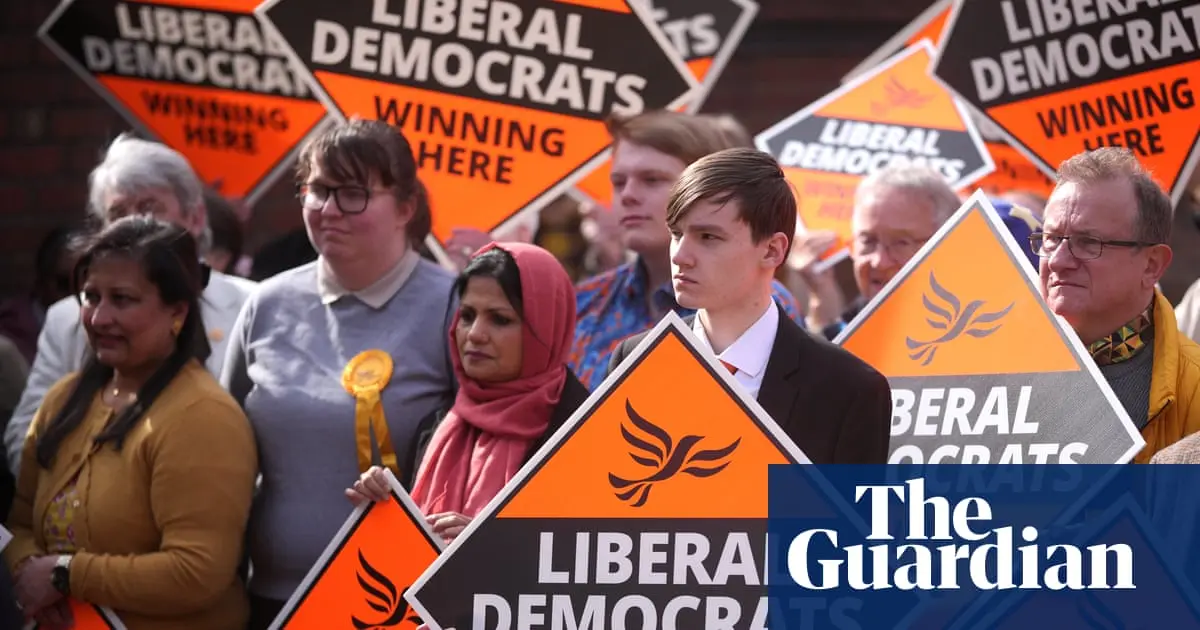
영국 지방선거에서 자유민주당이 최대 정당이 될 수 있을까?
Could Lib Dems become the biggest party in English local government?
이것은 당의 지도자 에드 데이비와 그의 팀을 위한 여러 역설 중 하나일 뿐이다. 그들은 많은 전국 여론조사에서 5위이며, 2024년 이후 거의 변하지 않은 지지율을 보이고 있다. 하지만 자유민주당 지도부는 낙관적이며, 영국 정치가 이제 너무나 다르고 분열되어 헤드라인 여론조사를 거의 무관하게 만든다고 확신하고 있다.
한 고위 자유민주당 인사는 "많은 사람들이 상황이 어떻게 진행되고 있는지 잘못 읽고 있는 것 같다. 우리는 일부 답을 가지고 있다고 생각한다"고 말했다.
어떤 의미에서 이러한 야심은 익숙하다. 예상치 못한 상황 변화가 없는 한, 자유민주당은 전례 없는 8번 연속 지방선거에서 의원 총 수를 증가시킬 것이다.
당의 특히 좋은 밤과 보수당의 막대한 손실은 자유민주당이 케미 배디노흐의 당을 능가하는 결과로 이어질 수 있다. 노동당이 매우 부진하면 2위가 1위가 될 가능성이 있다.
한 당 전략가는 "이번에 반드시 예상하는 것은 아니다. 앞으로 1년 또는 2년 내에 가능성이 높다. 하지만 개혁 영국에 대한 모든 소동에도 불구하고 해마다 우리는 조용히 이득을 보고 있다. 이것은 거북이와 토끼의 이야기다"라고 말했다.
순수한 지표를 넘어 자유민주당의 성공을 측정하는 두 가지 주요 기준이 있을 것이다. 첫 번째는 2024년에 보수당에서 수십 개의 의회 의석을 차지한 "파란 벽" 지역에서의 통합 또는 진전이다. 한 자유민주당 하원의원은 "서리 같은 지역에서 우리는 보수당에 대해 일을 끝낼 수 있다는 것을 보여주고 싶다"고 말했다.
또 다른 하원의원은 "나는 이를 선거적 대나무라고 부른다. 나는 여전히 보수주의자들에게 둘러싸여 있지만, 우리는 빠르게 확산되고 있다"고 말했다.
다른 기준은 최근 몇 년간 자유민주당에게 덜 유망한 터전이었던 버밍엄과 프레스턴 같은 의회에서의 이득이다.
자유민주당 전략가들은 엄격한 유권자 타게팅과 한 계획자가 말한 바와 같이 "점점 더 분열된 정치 체계의 소음을 자르는" 능력을 바탕으로 한 캠페인 모델을 테스트하기를 원하는 것은 후자의 범주에서다.
지방선거를 위해, 이는 때때로 개혁 영국과 유사한 소매 정책(예: 이란 전쟁으로 인한 생활비를 돕기 위해 연료세를 10펜스 인하하라는 요구), 그리고 특히 트럼프에 대한 나이젤 파라주의 친밀함을 대조하는 니젤 파라주에 대한 끊임없는 공격을 결합한 것에 기초하고 있다.
당은 이제 역사상 가장 큰 디지털 광고 프로그램을 실행 중이며, 대부분은 파라주를 겨냥하고 트럼프에 대한 그의 지지를 데이비의 미국 대통령을 비판하려는 반복적인 의지와 대조하고 있다.
한 자유민주당 하원의원은 "이란은 진정한 영향력을 미쳤다. 포트홀에 대해 불평하다가 전쟁과 트럼프에 대한 그들의 우려로 직접 전환하는 사람을 만나는 것은 드물지 않다.
"또한 당신이 문을 두드린 곳에서 사람들이 개혁 영국을 제외한 누구든 이기기를 원한다고 말하는 사람들의 수가 정말 주목할 만하다. 파라주는 정말 양극화를 야기한다"고 말했다.
이 현상은 주로 다음 총선을 목표로 하지만 5월 7일에 초기 시도를 하는 전략의 중심이다. 방대한 양의 내부 여론조사에 기초하여, 자유민주당은 약 절반의 유권자가 자신의 지역에서 개혁 영국을 저지하기 위해 필요한 모든 것을 할 것이라는 기초 위에서 작동하고 있다.
한 고위 자유민주당 인사는 "우리는 이전에 본 적이 없는 방식으로 엄청난 수준의 전술적 투표를 보고 있다"고 말했다. 이것은 당이 그들을 확실히 투표할 사람들에 대한 여론조사에 대해 이완되고, 아마도 전술적으로 이를 고려할 수 있는 사람들에게 더 집중하는 이유를 설명한다.
약 4분의 1의 유권자가 강력한 개혁 영국 지지자로 간주되고 있다. 한 자유민주당 관리자가 말한 "모든 것을 태우고 처음부터 시작하라"는 부문으로, 또 다른 4분의 1은 정부에 불만족하고 정체된 소득을 가졌지만 어디로 가야 할지 불확실하다.
이것이 소비자 정책을 중심으로 한 소매 정책의 혼합과 자유민주당, 특히 데이비를 그들의 우려를 이해할 수 있지만 개혁 영국과 함께 오는 짐이나 불화가 없는 것으로 제시하는 캠페인이 목표로 삼는 곳이다.
한 고위 자유민주당 인사는 "우리는 이미 반-개혁 성향의 50%를 추구할 필요가 없다. 거의 다른 것에도 불구하고 전술적으로 투표할 것이다. 2019년에 우리는 이 사람들만으로 이기려고 시도했고 처참하게 졌다. 여론조사 숫자를 높이고 의석을 잃는 것은 쉽다"고 말했다.
그러나 이것은 최대한 부분적인 테스트가 될 것이다. 지방선거는 총선이 아니다. 투표율이 낮고, 많은 유권자들은 개혁 영국이 관리하는 의회가 그들의 쓰레기를 수거하는 것보다 파라주가 다우닝 스트리트에 있다는 생각에 대해 덜 걱정한다.
하지만 자유민주당의 선거 지상 게임이 5개 정당 싸움에서 여전히 작동하는지, 그리고 일부 하원의원들 사이에서 불평을 촉발한 데이비의 성과가 그 당의 강점 밖에서 브랜드를 확장할 야심과 카리스마를 가지고 있는지 여부를 포함하여 교훈이 있을 것이다.
지금까지 분위기는 희망적이다. 한 하원의원은 "할 일이 더 있지만 우리는 올바른 궤도에 가까워지고 있다. 경제에 대한 일부 이동은 긍정적이다"고 말했다.
하지만 2당제가 무너진 것처럼 보이고 유권자 충성도가 기억이 되어버린 상황에서, 모든 예측은 주의를 요한다. 이것은 모두에게 새로운 영역이다.
한 하원의원은 "나는 문을 두드렸고 한 남자가 영국 복구에 투표하고 싶다고 말했다"고 말했다. 루퍼트 로우가 이끄는 개혁 영국보다 훨씬 더 우파에 위치한 신생 정당을 언급하면서. "그들이 여기에 서 있지 않다고 말했을 때 그는 '음, 아마도 당신이 겠네요'라고 말했다. 그것은 처음이었다."
claude-haiku-4-5-20251001
656 tokens
$0.00187
4.2s
claude-haiku-4-5-20251001
5,288 tokens
$0.01519
35.1s
With voter loyalty a distant memory, the Lib Dems’ cost of living policies and criticism of Trump could gain them ground It has been an election buildup dominated by the rise of Reform UK and the Greens, and the contrasting woes of Labour and the Tories. But there is a chance that on 8 May the Liberal Democrats, largely ignored in recent weeks, could wake up as the biggest party in English local government.This is just one of several paradoxes for the party’s leader, Ed Davey, and his team. They are fifth in many national polls, with a rating barely changed from 2024. But Lib Dem bosses are sanguine, convinced that UK politics is now so different, so atomised, to make headline polling almost irrelevant.
It has been an election buildup dominated by the rise of Reform UK and the Greens, and the contrasting woes of Labour and the Tories. But there is a chance that on 8 May the Liberal Democrats, largely ignored in recent weeks, could wake up as the biggest party in English local government.This is just one of several paradoxes for the party’s leader, Ed Davey, and his team. They are fifth in many national polls, with a rating barely changed from 2024. But Lib Dem bosses are sanguine, convinced that UK politics is now so different, so atomised, to make headline polling almost irrelevant.
One senior Lib Dem said: “A lot of people seem to be misreading the way things are going. We think we have some of the answers.”
In one sense, the ambitions are familiar. Barring an unexpected change of fortunes, the Lib Dems will increase their total number of councillors for an unprecedented eighth set of local elections in a row.
A particularly good night for the party, plus heavy losses for the Conservatives, could result in the Lib Dems overtaking Kemi Badenoch’s party. If Labour fared very badly, there is an outside chance this second place could become first.
One party strategist said: “It’s not something we’re necessarily expecting this time – it’s more likely in a year or two. But for all the fuss about Reform, year after year we are quietly making gains. It’s the tortoise and the hare.”
Beyond the raw metrics there will be two main gauges of success for the Lib Dems. The first is consolidation or progress in “blue wall” areas where they took dozens of parliamentary seats from the Conservatives in 2024. “In places like Surrey we want to show we can finish the job on the Tories,” as one Lib Dem MP put it.
“I call it electoral bamboo,” another MP said. “I’m still surrounded by Conservatives, but we are spreading out quickly.”
The other gauge, which feels less certain, would be gains on councils which, in recent years, have been less promising ground for the Lib Dems, such as Birmingham and Preston.
It is the latter category where Lib Dem strategists hope to test out a campaigning model based on a mixture of rigorous voter targeting and being able to, as one planner put it, “cut through the noise” of an increasingly fragmented political system.
For the local elections, this is based around occasionally Reform-adjacent retail policies, such as a demand to cut fuel duty by 10p to help with costs from the Iran war, coupled with relentless attacks on Nigel Farage, particularly his closeness to Donald Trump.
The party is now running its biggest-ever programme of digital adverts, most targeting Farage, contrasting his support for Trump with Davey’s repeated willingness to criticise the US president.
“Iran has had real cut-through,” one Lib Dem MP said. “It’s not uncommon to have someone complain about potholes and then switch directly to the war and their worries about Trump.
“It is also really notable the number of doors you knock on where people say they are desperate for anyone except Reform to win. Farage is really polarising.”
This phenomenon is central to a strategy aimed mainly at the next general election but getting an initial try-out on 7 May. Based on huge amounts of internal polling, the Lib Dems are working on the basis that about half of voters will do whatever is necessary to block Reform in their local area.
One senior Lib Dem said: “We are seeing huge, huge, levels of tactical voting, in a way we haven’t seen before.” It is this context that makes the party relaxed about polling about who will definitely vote for them, and to focus more on those who would consider it, perhaps tactically.
With about a quarter of voters seen as strongly pro-Reform – the “burn everything down and start again” sector, as one Lib Dem official put it – another quarter are frustrated with the government and flatlining incomes, but uncertain where to go.
This is where campaigning is aimed, based on a mixture of retail policies centred on the cost of living and presenting the Lib Dems, particularly Davey, as able to understand their worries but without the baggage or discord that comes with Reform.
One senior Lib Dem said: “We don’t need to chase the 50% who are already anti-Reform. They will vote tactically regardless of almost anything else. In 2019 we tried to win just with these people and got hammered. It’s easy to boost polling numbers and lose seats.”
This will, however, at most be a partial test. Local elections are not general elections: turnout is lower, and many voters are less worried about a Reform-run council collecting their bins than the idea of Farage in Downing Street.
But there will be lessons to uncover, including whether the Lib Dems’ electoral ground game still works in a five-party battle, and if Davey, whose performance has prompted some grumblings among MPs, has the ambition and charisma to expand the party’s brand outside its strongholds.
Thus far, the mood feels hopeful. “There is more work to do, but we are getting towards being on the right track,” one MP said. “Some of the movement on economy is positive.”
But with the two-party system seemingly smashed and voter loyalty a memory, all predications come with caveats. This is new ground for everyone.
“I knocked on a door and a man said he wanted to vote for Restore Britain,” one MP said, referring to the Rupert Lowe-led start-up party that sits even further to the right than Reform. “When I told him they aren’t standing here he said: ‘Well, it’s probably you then.’ That was a first.”