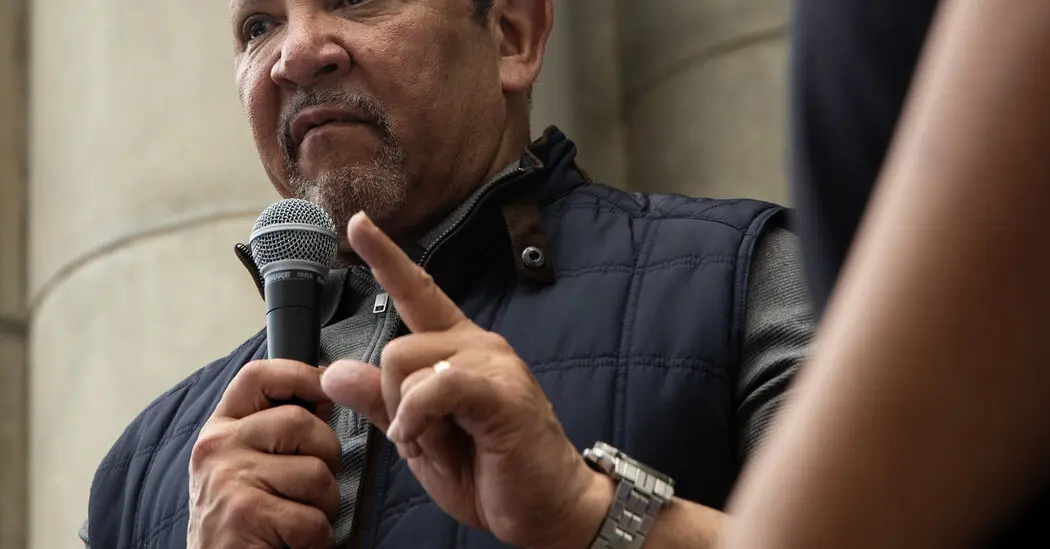
민권 지도자들, 선거권 판결을 '배신'으로 평가
Civil rights leaders see the voting rights ruling as a ‘betrayal.’
The New York Times
· 🇺🇸 New York, US
Audra D. S. Burch
EN
2026-04-30 06:44
Translated
지도자와 활동가들은 대법원 판결이 흑인 미국인에게 공정한 대표성을 부여하기 위한 수십 년간의 노력을 해제할 가능성이 있다고 말했습니다.
Abbie VanSickle, Nicholas Corasaniti, Emily Cochrane
대법원은 수요일 루이지애나주의 선거 지도를 무효화했고, 이에 따라 획기적인 민권법에 타격을 가했으며 다른 주들이 향후 수년간 선거에 영향을 미칠 수 있는 방식으로 의회 지도를 다시 그릴 수 있는 문을 열었습니다.
이념적 노선을 따라 6-3으로 갈린 이 판결이 여러 주에서 치열하게 벌어진 선거구 재획정 싸움 속에서 11월 중간선거에 어떤 영향을 미칠지는 불명확하지만, 여러 주가 11월 선거를 위해 새로운 의회 지도를 그릴 준비를 하고 있습니다. 이 판결은 2028년 대선 이후 미래 선거를 위해 남부 전역에 새로운 공화당 선거구를 만들 가능성이 높습니다.
플로리다주 의회는 대법원의 판결 후 몇 시간 내에 공화당에 유리한 새로운 지도를 승인했고, 남부 전역의 주 관계자들은 11월 선거에 효력을 발생할 지도 변경을 추진할 것이라는 신호를 보냈습니다.
판결에서 대법원의 보수 다수파는 입법자들이 새로운 흑인 다수 선거구를 그릴 때 인종을 사용했을 때 법을 위반했다고 주장했습니다. 소수파를 위해 작성한 Samuel A. Alito Jr. 판사는 대법원이 선거권법을 유지했지만 루이지애나의 새로운 선거구가 헌법의 평등 보호 조항을 위반했다고 말했습니다.
다수파는 이 판결이 선거권법의 핵심 원칙을 보존했다고 주장했지만, 대법원의 진보 진영은 불복의견에서 판사들이 획기적인 민권법을 해체하기 위한 최종 단계를 취했다고 주장했습니다.
다음은 알아야 할 다른 사항입니다:
판결: Samuel Alito 판사는 다수파를 위해 작성하면서 판사들이 의회 선거구를 그릴 때 인종 사용을 평가하기 위해 법원이 참고하는 40년 된 틀을 업데이트하고 있다고 말했습니다. Elena Kagan 판사는 대법원의 보수 다수파가 선거권법을 훼손했다고 비난했습니다. 대법원 판결을 여기서 읽어보세요.
공화당의 반응: 백악관과 다른 공화당원들은 이 판결을 환영했으며, 트럼프 대통령의 대변인은 "미국 유권자들을 위한 완전하고 총체적인 승리"라고 선언했습니다. 남부 전역의 주 관계자들이 이 판결을 얼마나 빨리 활용할 수 있을지 고려했을 때, 공화당이 국가의 선거구 재획정 싸움에서 다시 우위를 점했다는 것은 의심의 여지가 없었습니다.
민주당의 반응: 민주당원, 민권운동의 베테랑, 그리고 대법원의 진보 판사들은 이를 획기적인 민권법인 1965년 선거권법의 추가 약화로 봤습니다. 살해된 민권 지도자의 아들인 Martin Luther King III는 이 판결을 "평등한 정의의 약속으로부터의 계속된 퇴보를 반영하는 도덕적 판단"이라고 불렀습니다.
정치적 영향: 이 판결은 중간선거를 앞두고 공화당의 운에 개선을 가져올 것입니다. 이점이 얼마나 큰지는 여러 요소에 따라 달라집니다.
새로운 지도: 판결 후 몇 시간 후, 플로리다 의회는 공화당에 주의 의회 대표단에서 최대 4개의 새로운 의석을 줄 수 있는 새로운 지도를 승인했습니다. 몇몇 다른 주들은 이 판결을 사용하여 선거 지도를 다시 그릴 것으로 예상됩니다.
선거권법: 1965년 선거권법이란 무엇이며, 어떻게 나타나게 되었으며, 왜 일부 주에서는 자체 버전을 가지고 있습니까?
Audra D. S. Burch
선거권법의 상승과 하락을 봐온 일부 민권 지도자들에게 수요일의 대법원의 판결은 수십 년간의 정치적 진전의 갑작스러운 종말처럼 느껴졌습니다.
비록 대법원의 보수 다수파가 문제의 조항인 Section 2를 폐지하지는 않았지만, 진보 판사들은 이 판결이 미국 역사에서 가장 중요한 민권법 중 하나를 효과적으로 무의미하게 만들었다고 주장했습니다.
지도자들과 활동가들은 이 판결이 흑인 미국인에게 공정한 대표성을 부여하기 위한 수십 년간의 노력을 해제할 가능성이 있다고 말했습니다. 그들은 이 판결에 대한 최선의 대응이 올가을 중간선거에서 소수 민족 유권자들의 사상 최고의 투표율이 될 것이라고 말했습니다.
민권 단체인 National Urban League의 회장 Marc Morial은 "솔직히 이것은 배신처럼 느껴집니다"라고 말했습니다.
다수파 의견에서 Samuel A. Alito Jr. 판사는 대법원이 획기적인 법을 유지했지만 루이지애나가 선거권법을 준수하기 위해 두 번째 흑인 다수 선거구를 만들었을 때(이 사건의 대상) 헌법의 평등 보호 조항을 위반했다고 썼습니다.
1965년 법의 통과 후, 주 입법자들은 특히 남부에서 백인이 아닌 유권자가 대다수를 차지하는 수많은 선거구를 만들어 그들이 자신의 선택의 후보자를 선출할 수 있게 했습니다.
그러나 Alito 판사는 특히 남부에서의 "광대한 사회 변화"가 그러한 고려사항을 더 이상 필요하지 않게 만들었다고 주장했습니다.
몇 년 또는 수십 년 전에 발생한 차별과 특정 "현재의 불평등"은 현재 "훨씬 더 적은 가중치"를 받을 자격이 있다고 그는 다수파를 위해 썼습니다.
Morial은 그러한 추론이 2026년 사람들의 실제 경험의 현실을 반영하지 않는다고 말했습니다.
"남부의 인종적으로 양극화된 투표가 실재할 때, 인종 자산 격차, 교육 성취 격차, 건강 결과 격차가 실재할 때, 고용에서의 차별 청구가 여전히 만연할 때는 비논리적입니다"라고 그는 말했습니다.
판결의 영향은 여전히 불명확하지만 활동가들은 이미 걱정하고 있습니다.
루이지애나주 배턴루주의 활동가 Press Robinson은 주의 이전 의회 지도에 이의를 제기하는 데 관여했으며, 판결이 의회를 훨씬 능가하는 결과를 낳을 수 있다고 우려했습니다. "판사, 학교 위원회 위원, 시의원 — 상관없이 모두에게 영향을 미칠 것입니다"라고 그는 수요일 기자회견에서 기자들에게 말했습니다.
남캐롤라이나주에서 인종 차별 시기에 자랐던 Robinson은 루이지애나주를 통제하는 공화당원들(거의 모든 다른 남부 주에서도)이 지역 수준에서 시작하여 정치 지형을 공격적으로 재편성하고 흑인 대표성을 제거할 것이라고 예측했습니다.
"지역 및 주 수준의 많은 우리의 선출직 공무원이 사라질 것이고, 우리는 이 나라에서 노예제도가 불법으로 선언된 시대로 돌아갈 것입니다"라고 Robinson은 덧붙였습니다. "이 나라는 그 시간을 벗어나 발전하기를 원하지 않는 것 같습니다."
이념적 노선을 따라 갈린 판사들은 루이지애나의 투표 지도가 위헌적 인종 선거구 조작이라고 판단했습니다.
트럼프 대통령은 선거권법을 약화시킨 대법원 판결을 소셜 미디어 게시물로 칭찬했으며, 이것이 "의도적인 인종 차별에 대한 보호"라는 "원래 의도"로 민권법을 돌려놓았다고 주장했습니다. 올해 초 Trump는 시간 기자들과의 인터뷰에서 "백인들이 민권 시대에 통과된 인종 소수 보호로 인해 매우 나쁜 대우를 받았다"고 말했습니다.
하원의 4명의 흑인 공화당원 중 한 명이자 주지사 후보인 플로리다주 대표 Byron Donalds는 이 판결을 "헌법을 위한 주요 승리"라고 불렀습니다. 소셜 미디어에서 그는 "민주당원들은 흑인 대표성에 신경 쓰지 않습니다. 그들은 민주당 대표성만을 신경 쓴다"는 성명을 추가했습니다.
Power Coalition for Equity and Justice의 전무 이사 Ashley Shelton은 "대표성이 없이 시민의식이란 무엇입니까?"라고 물었습니다.
"내가 정책을 형성할 수 없다면, 내가 경험한 이 나라의 경험을 가진 나를 닮은 사람이 아무도 없다면, 그 누가 실제로 이 나라의 흑인과 갈색 유권자의 경험을 다루고 반영하는 정책을 만드는가?"
루이지애나의 원래 지도의 위헌성에 이의를 제기하는 것을 도왔던 Ashley Shelton은 인터뷰에서 "이것은 루이지애나 의회 의석에 관한 사건이 아닙니다. 이것은 정부의 모든 수준에서 기회 선거구가 보호될 것인지 아닌지에 관한 것이었습니다"라고 말했습니다.
테네시주 9번 의회 지구의 민주당 예비선거에 출마 중인 주 대표 Justin J. Pearson은 수요일의 대법원 판결이 "파괴적이지만 놀랍지는 않은 판결"이라고 말했습니다.
보수 다수파의 판사들은, 그는 "Edmund Pettus Bridge에서 흘린 피를 무효화하려고 시도하고 있으며, Medgar Evers와 같은 사람들의 죽음과 우리가 지금 있는 곳에 도달하기 위해 고통받고 죽은 많은 다른 사람들의 죽음입니다. 여전히 극도로 불평등합니다."
남부가 흑인 유권자의 취급에 있어 개선되었다는 제안은 충분하여 선거권법을 더욱 약화시킬 것입니다. 일부 흑인 민주당원들을 화나게 했습니다.
테네시 상원의 민주당 지도자인 주 상원의원 Raumesh Akbari는 "명확히 하고 싶습니다. 이것은 정치, 교육, 주택, 보건 의료 접근 또는 전문 세계에 대해 이야기하든, 남부에서 대부분의 유색인종이 가진 경험이 아닙니다"라고 말했습니다. 그녀는 "이것은 완전히 일반인과 그들의 경험과 접촉이 끊어진 대법원의 결과이며, 이것은 오도되고 부정확합니다"고 덧붙였습니다.
미시시피 의회는 대법원의 인종적으로 그려진 정치 지도를 훼손한 수요일 판결에 따라 행동할 첫 번째 주 중 하나가 될 것입니다. 주 의사당의 입법자들은 대법원의 새로운 규칙에 따라 선출된 사법부 지구를 다시 그리기 위해 움직이고 있습니다.
금요일에 공화당 주지사 Tate Reeves는 21일 내에 특별 세션을 소집하여 주의 사법부 지도를 다루겠다고 발표했습니다. 그 지도의 재작성은 대법원의 루이지애나의 미국 하원 지도에 대한 판결이 나올 때까지 보류되었습니다.
대법원은 수요일에 그 하원 지도가 위헌이라고 판단했고, Reeves는 입법자들이 "이러한" 사법부 선거구를 그을 헌법적으로 인정된 권리를 사용할 수 있을 것이라고 말했습니다.
기존의 사법부 선거구 선은 소수 민족 유권자의 선택 대표를 선출할 능력을 약화시킨다고 말하는 흑인 유권자 그룹에 의해 성공적으로 이의를 제기했습니다. 그러나 의회 선거구, 사법부 및 지역 선거구를 그을 권한을 가진 입법부는 올해 초 폐회되기 전에 사법부 지도에 대해 행동하지 않았습니다.
이제 주의 민주당원들은 특별 세션에서 나올 것이 무엇인지 우려하고 있습니다.
미시시피 민주당의 회장 Cheikh Taylor는 "우리의 지도부가 흑인 투표권의 경계를 시험할 첫 번째 기회는 그들이 그것을 하는 것입니다 — 그들은 심지어 다른 방식으로 행동합니다"고 말했습니다. Taylor는 "오늘의 판결은 그들의 마음을 바꾸지 않았습니다. 그것은 그들에게 허락을 주었습니다"라고 덧붙였습니다.
"문제는 내가 의회에서 또 다른 날을 봉사하는가가 아닙니다"라고 이 사건의 중심에 있는 선거구의 대표 Cleo Fields는 말했습니다. "진정한 문제는 나와 같은 사람이 의회에서 봉사할 기회를 가질 것인가입니다."
저는 방금 이 대법원 사건의 중심에 있는 그의 루이지애나 의회 선거구를 가진 대표 Cleo Fields와의 전화를 마쳤습니다. 이것은 필드가 자신의 선거구가 국가의 최고 법원에 의해 폐기되는 것을 본 것이 두 번째입니다. 1990년대에 그것이 발생했습니다. "나는 내가 떠난 것과 같은 조건 하에서 의회로 복귀하게 될 줄은 결코 상상하지 못했습니다"라고 그는 말했습니다. "오늘 추진력은 더욱 반선거권 및 보수적 견해로 향하고 있습니다. 하지만 내일은 그럴 수도 있고, 아마도 그럴 것입니다."
Laurel Rosenhall
새크라멘토에서 보도
대법원의 선거권법에 대한 판결이 남부에서 흑인 유권자가 대표되는 방식에 상당한 변화를 초래할 것으로 예상되는 반면, 인구 중 큰 비중을 차지하는 국가의 일부 지역에서 라틴 아메리카인과 아시아 미국인이 대표되는 방식에도 영향을 미칠 수 있습니다.
캘리포니아에서 선거권법은 라틴 아메리카 유권자의 권력 구축에 도구적이었습니다. 1970년대부터 수많은 라틴 아메리카 지도자를 선출한 라틴 아메리카 다수 선거구를 그리는 데 사용되었으며, 연방 수준에서 지역 수준까지 이전에 라틴 아메리카인에게 폐쇄되었던 정부 체계에 라틴 아메리카인을 가져왔습니다. 오늘날 라틴 아메리카 정치인들은 캘리포니아 주 의회의 거의 3분의 1의 의석을 차지하고 있으며 그 의회 대표단의 4분의 1 이상을 차지하고 있습니다.
텍사스, 일리노이, 뉴욕, 애리조나도 라틴 아메리카 다수 선거구를 그리기 위해 선거권법을 사용했다고 Mexican American Legal Defense and Educational Fund의 회장 Thomas A. Saenz는 말했습니다.
"그것은 정말 라틴 아메리카 대표성을 위한 게임 체인저였습니다"라고 그는 말했습니다.
캘리포니아에서, 선거권법의 약화는 라틴 아메리카인들을 위한 대표성을 크게 변경할 가능성이 낮다고 Saenz는 말했습니다. 라틴 아메리카인이 주 인구의 41%라는 큰 비중을 차지하기 때문에 라틴 아메리카 다수 선거구는 인종 의식적인 선거구 조작 없이도 캘리포니아에 존재할 것입니다.
오늘날 라틴 아메리카 유권자는 주의 52개 의회 선거구 중 16개에서 대다수를 차지하고 있으며, 120개 주 입법 선거구 중 27개를 차지하고 있습니다. 또 다른 8개의 의회 선거구에서 그들은 캘리포니아 공공 정책 연구소의 분석에 따라 선거에 영향을 미칠 수 있을 만큼 충분히 큰 30% 이상의 인구를 구성합니다.
"나는 Callais의 영향이 캘리포니아에서 상당히 제한될 가능성이 있다고 생각합니다"라고 Saenz는 말했습니다. 대법원이 수요일에 판결한 경우인 Louisiana v. Callais를 지칭하면서.
이 이야기는 캘리포니아 인구의 17%를 차지하는 아시아 미국인의 경우 달을 수 있다고 민권 조직인 Asian Americans Advancing Justice의 회장 John C. Yang은 말했습니다.
인구는 최근 들어 선거권법을 사용하여 다수 아시아 미국인 선거구를 그릴 수 있을 만큼 충분히 커졌습니다. 오늘날 캘리포니아의 120개 주 입법 선거구 중 하나는 아시아 미국인 유권자를 권한을 부여하기 위해 그려졌습니다. 그리고 그 그룹은 주의 52개 의회 선거구 중 6개에서 영향력 있는 것으로 간주됩니다.
대법원의 판결은 아시아 미국인의 정치권이 인구 성장이 그들에게 더 많은 영향력을 주기 시작했을 때 약화될 수 있습니다.
"우리는 우리의 선택의 대표자를 선출할 수 있고, 우리의 커뮤니티에서 더 많이 선출할 수 있는 중요한 질량의 지점에 도달하고 있습니다"라고 Yang은 말했습니다. "그리고 그 권리가 우리에게서 빼앗기고 있습니다."
대법원의 판결이 캘리포니아 정치에 영향을 미칠 수 있는 가장 중요한 방법 중 하나는 지역 수준에서라고 UCLA의 법학 교수인 Richard L. Hasen은 말했습니다.
캘리포니아는 많은 도시와 학교 위원회가 전체 관할권이 아닌 근처 지구별로 대표자를 선출하도록 요구해온 연방 선거권법을 기반으로 한 주 법이 있습니다. 많은 커뮤니티에서, 주 법은 동네에서의 캠프 활동이 도시 전역 캠프보다 비용이 적게 들기 때문에 비백인 유권자가 지역 정부에 다양한 대표자를 선출하도록 이끌었습니다.
대법원의 판결은 캘리포니아 선거권법에 의해 그들을 그릴 수밖에 없었던 장소의 선거구에 이의를 제기하는 소송의 문을 열 수 있습니다. Hasen은 이러한 이의 제기가 최근 몇 년 동안 자신의 지도자들이 선출되는 방식을 변경하도록 소송에 의해 강압받은 남캘리포니아 도시인 Palmdale과 Santa Monica에서 먼저 올 수 있을 것으로 예상한다고 말했습니다.
"이것을 과장하는 것은 불가능합니다..."
대법원은 수요일 루이지애나주의 선거 지도를 무효화했고, 이에 따라 획기적인 민권법에 타격을 가했으며 다른 주들이 향후 수년간 선거에 영향을 미칠 수 있는 방식으로 의회 지도를 다시 그릴 수 있는 문을 열었습니다.
이념적 노선을 따라 6-3으로 갈린 이 판결이 여러 주에서 치열하게 벌어진 선거구 재획정 싸움 속에서 11월 중간선거에 어떤 영향을 미칠지는 불명확하지만, 여러 주가 11월 선거를 위해 새로운 의회 지도를 그릴 준비를 하고 있습니다. 이 판결은 2028년 대선 이후 미래 선거를 위해 남부 전역에 새로운 공화당 선거구를 만들 가능성이 높습니다.
플로리다주 의회는 대법원의 판결 후 몇 시간 내에 공화당에 유리한 새로운 지도를 승인했고, 남부 전역의 주 관계자들은 11월 선거에 효력을 발생할 지도 변경을 추진할 것이라는 신호를 보냈습니다.
판결에서 대법원의 보수 다수파는 입법자들이 새로운 흑인 다수 선거구를 그릴 때 인종을 사용했을 때 법을 위반했다고 주장했습니다. 소수파를 위해 작성한 Samuel A. Alito Jr. 판사는 대법원이 선거권법을 유지했지만 루이지애나의 새로운 선거구가 헌법의 평등 보호 조항을 위반했다고 말했습니다.
다수파는 이 판결이 선거권법의 핵심 원칙을 보존했다고 주장했지만, 대법원의 진보 진영은 불복의견에서 판사들이 획기적인 민권법을 해체하기 위한 최종 단계를 취했다고 주장했습니다.
다음은 알아야 할 다른 사항입니다:
판결: Samuel Alito 판사는 다수파를 위해 작성하면서 판사들이 의회 선거구를 그릴 때 인종 사용을 평가하기 위해 법원이 참고하는 40년 된 틀을 업데이트하고 있다고 말했습니다. Elena Kagan 판사는 대법원의 보수 다수파가 선거권법을 훼손했다고 비난했습니다. 대법원 판결을 여기서 읽어보세요.
공화당의 반응: 백악관과 다른 공화당원들은 이 판결을 환영했으며, 트럼프 대통령의 대변인은 "미국 유권자들을 위한 완전하고 총체적인 승리"라고 선언했습니다. 남부 전역의 주 관계자들이 이 판결을 얼마나 빨리 활용할 수 있을지 고려했을 때, 공화당이 국가의 선거구 재획정 싸움에서 다시 우위를 점했다는 것은 의심의 여지가 없었습니다.
민주당의 반응: 민주당원, 민권운동의 베테랑, 그리고 대법원의 진보 판사들은 이를 획기적인 민권법인 1965년 선거권법의 추가 약화로 봤습니다. 살해된 민권 지도자의 아들인 Martin Luther King III는 이 판결을 "평등한 정의의 약속으로부터의 계속된 퇴보를 반영하는 도덕적 판단"이라고 불렀습니다.
정치적 영향: 이 판결은 중간선거를 앞두고 공화당의 운에 개선을 가져올 것입니다. 이점이 얼마나 큰지는 여러 요소에 따라 달라집니다.
새로운 지도: 판결 후 몇 시간 후, 플로리다 의회는 공화당에 주의 의회 대표단에서 최대 4개의 새로운 의석을 줄 수 있는 새로운 지도를 승인했습니다. 몇몇 다른 주들은 이 판결을 사용하여 선거 지도를 다시 그릴 것으로 예상됩니다.
선거권법: 1965년 선거권법이란 무엇이며, 어떻게 나타나게 되었으며, 왜 일부 주에서는 자체 버전을 가지고 있습니까?
Audra D. S. Burch
선거권법의 상승과 하락을 봐온 일부 민권 지도자들에게 수요일의 대법원의 판결은 수십 년간의 정치적 진전의 갑작스러운 종말처럼 느껴졌습니다.
비록 대법원의 보수 다수파가 문제의 조항인 Section 2를 폐지하지는 않았지만, 진보 판사들은 이 판결이 미국 역사에서 가장 중요한 민권법 중 하나를 효과적으로 무의미하게 만들었다고 주장했습니다.
지도자들과 활동가들은 이 판결이 흑인 미국인에게 공정한 대표성을 부여하기 위한 수십 년간의 노력을 해제할 가능성이 있다고 말했습니다. 그들은 이 판결에 대한 최선의 대응이 올가을 중간선거에서 소수 민족 유권자들의 사상 최고의 투표율이 될 것이라고 말했습니다.
민권 단체인 National Urban League의 회장 Marc Morial은 "솔직히 이것은 배신처럼 느껴집니다"라고 말했습니다.
다수파 의견에서 Samuel A. Alito Jr. 판사는 대법원이 획기적인 법을 유지했지만 루이지애나가 선거권법을 준수하기 위해 두 번째 흑인 다수 선거구를 만들었을 때(이 사건의 대상) 헌법의 평등 보호 조항을 위반했다고 썼습니다.
1965년 법의 통과 후, 주 입법자들은 특히 남부에서 백인이 아닌 유권자가 대다수를 차지하는 수많은 선거구를 만들어 그들이 자신의 선택의 후보자를 선출할 수 있게 했습니다.
그러나 Alito 판사는 특히 남부에서의 "광대한 사회 변화"가 그러한 고려사항을 더 이상 필요하지 않게 만들었다고 주장했습니다.
몇 년 또는 수십 년 전에 발생한 차별과 특정 "현재의 불평등"은 현재 "훨씬 더 적은 가중치"를 받을 자격이 있다고 그는 다수파를 위해 썼습니다.
Morial은 그러한 추론이 2026년 사람들의 실제 경험의 현실을 반영하지 않는다고 말했습니다.
"남부의 인종적으로 양극화된 투표가 실재할 때, 인종 자산 격차, 교육 성취 격차, 건강 결과 격차가 실재할 때, 고용에서의 차별 청구가 여전히 만연할 때는 비논리적입니다"라고 그는 말했습니다.
판결의 영향은 여전히 불명확하지만 활동가들은 이미 걱정하고 있습니다.
루이지애나주 배턴루주의 활동가 Press Robinson은 주의 이전 의회 지도에 이의를 제기하는 데 관여했으며, 판결이 의회를 훨씬 능가하는 결과를 낳을 수 있다고 우려했습니다. "판사, 학교 위원회 위원, 시의원 — 상관없이 모두에게 영향을 미칠 것입니다"라고 그는 수요일 기자회견에서 기자들에게 말했습니다.
남캐롤라이나주에서 인종 차별 시기에 자랐던 Robinson은 루이지애나주를 통제하는 공화당원들(거의 모든 다른 남부 주에서도)이 지역 수준에서 시작하여 정치 지형을 공격적으로 재편성하고 흑인 대표성을 제거할 것이라고 예측했습니다.
"지역 및 주 수준의 많은 우리의 선출직 공무원이 사라질 것이고, 우리는 이 나라에서 노예제도가 불법으로 선언된 시대로 돌아갈 것입니다"라고 Robinson은 덧붙였습니다. "이 나라는 그 시간을 벗어나 발전하기를 원하지 않는 것 같습니다."
이념적 노선을 따라 갈린 판사들은 루이지애나의 투표 지도가 위헌적 인종 선거구 조작이라고 판단했습니다.
트럼프 대통령은 선거권법을 약화시킨 대법원 판결을 소셜 미디어 게시물로 칭찬했으며, 이것이 "의도적인 인종 차별에 대한 보호"라는 "원래 의도"로 민권법을 돌려놓았다고 주장했습니다. 올해 초 Trump는 시간 기자들과의 인터뷰에서 "백인들이 민권 시대에 통과된 인종 소수 보호로 인해 매우 나쁜 대우를 받았다"고 말했습니다.
하원의 4명의 흑인 공화당원 중 한 명이자 주지사 후보인 플로리다주 대표 Byron Donalds는 이 판결을 "헌법을 위한 주요 승리"라고 불렀습니다. 소셜 미디어에서 그는 "민주당원들은 흑인 대표성에 신경 쓰지 않습니다. 그들은 민주당 대표성만을 신경 쓴다"는 성명을 추가했습니다.
Power Coalition for Equity and Justice의 전무 이사 Ashley Shelton은 "대표성이 없이 시민의식이란 무엇입니까?"라고 물었습니다.
"내가 정책을 형성할 수 없다면, 내가 경험한 이 나라의 경험을 가진 나를 닮은 사람이 아무도 없다면, 그 누가 실제로 이 나라의 흑인과 갈색 유권자의 경험을 다루고 반영하는 정책을 만드는가?"
루이지애나의 원래 지도의 위헌성에 이의를 제기하는 것을 도왔던 Ashley Shelton은 인터뷰에서 "이것은 루이지애나 의회 의석에 관한 사건이 아닙니다. 이것은 정부의 모든 수준에서 기회 선거구가 보호될 것인지 아닌지에 관한 것이었습니다"라고 말했습니다.
테네시주 9번 의회 지구의 민주당 예비선거에 출마 중인 주 대표 Justin J. Pearson은 수요일의 대법원 판결이 "파괴적이지만 놀랍지는 않은 판결"이라고 말했습니다.
보수 다수파의 판사들은, 그는 "Edmund Pettus Bridge에서 흘린 피를 무효화하려고 시도하고 있으며, Medgar Evers와 같은 사람들의 죽음과 우리가 지금 있는 곳에 도달하기 위해 고통받고 죽은 많은 다른 사람들의 죽음입니다. 여전히 극도로 불평등합니다."
남부가 흑인 유권자의 취급에 있어 개선되었다는 제안은 충분하여 선거권법을 더욱 약화시킬 것입니다. 일부 흑인 민주당원들을 화나게 했습니다.
테네시 상원의 민주당 지도자인 주 상원의원 Raumesh Akbari는 "명확히 하고 싶습니다. 이것은 정치, 교육, 주택, 보건 의료 접근 또는 전문 세계에 대해 이야기하든, 남부에서 대부분의 유색인종이 가진 경험이 아닙니다"라고 말했습니다. 그녀는 "이것은 완전히 일반인과 그들의 경험과 접촉이 끊어진 대법원의 결과이며, 이것은 오도되고 부정확합니다"고 덧붙였습니다.
미시시피 의회는 대법원의 인종적으로 그려진 정치 지도를 훼손한 수요일 판결에 따라 행동할 첫 번째 주 중 하나가 될 것입니다. 주 의사당의 입법자들은 대법원의 새로운 규칙에 따라 선출된 사법부 지구를 다시 그리기 위해 움직이고 있습니다.
금요일에 공화당 주지사 Tate Reeves는 21일 내에 특별 세션을 소집하여 주의 사법부 지도를 다루겠다고 발표했습니다. 그 지도의 재작성은 대법원의 루이지애나의 미국 하원 지도에 대한 판결이 나올 때까지 보류되었습니다.
대법원은 수요일에 그 하원 지도가 위헌이라고 판단했고, Reeves는 입법자들이 "이러한" 사법부 선거구를 그을 헌법적으로 인정된 권리를 사용할 수 있을 것이라고 말했습니다.
기존의 사법부 선거구 선은 소수 민족 유권자의 선택 대표를 선출할 능력을 약화시킨다고 말하는 흑인 유권자 그룹에 의해 성공적으로 이의를 제기했습니다. 그러나 의회 선거구, 사법부 및 지역 선거구를 그을 권한을 가진 입법부는 올해 초 폐회되기 전에 사법부 지도에 대해 행동하지 않았습니다.
이제 주의 민주당원들은 특별 세션에서 나올 것이 무엇인지 우려하고 있습니다.
미시시피 민주당의 회장 Cheikh Taylor는 "우리의 지도부가 흑인 투표권의 경계를 시험할 첫 번째 기회는 그들이 그것을 하는 것입니다 — 그들은 심지어 다른 방식으로 행동합니다"고 말했습니다. Taylor는 "오늘의 판결은 그들의 마음을 바꾸지 않았습니다. 그것은 그들에게 허락을 주었습니다"라고 덧붙였습니다.
"문제는 내가 의회에서 또 다른 날을 봉사하는가가 아닙니다"라고 이 사건의 중심에 있는 선거구의 대표 Cleo Fields는 말했습니다. "진정한 문제는 나와 같은 사람이 의회에서 봉사할 기회를 가질 것인가입니다."
저는 방금 이 대법원 사건의 중심에 있는 그의 루이지애나 의회 선거구를 가진 대표 Cleo Fields와의 전화를 마쳤습니다. 이것은 필드가 자신의 선거구가 국가의 최고 법원에 의해 폐기되는 것을 본 것이 두 번째입니다. 1990년대에 그것이 발생했습니다. "나는 내가 떠난 것과 같은 조건 하에서 의회로 복귀하게 될 줄은 결코 상상하지 못했습니다"라고 그는 말했습니다. "오늘 추진력은 더욱 반선거권 및 보수적 견해로 향하고 있습니다. 하지만 내일은 그럴 수도 있고, 아마도 그럴 것입니다."
Laurel Rosenhall
새크라멘토에서 보도
대법원의 선거권법에 대한 판결이 남부에서 흑인 유권자가 대표되는 방식에 상당한 변화를 초래할 것으로 예상되는 반면, 인구 중 큰 비중을 차지하는 국가의 일부 지역에서 라틴 아메리카인과 아시아 미국인이 대표되는 방식에도 영향을 미칠 수 있습니다.
캘리포니아에서 선거권법은 라틴 아메리카 유권자의 권력 구축에 도구적이었습니다. 1970년대부터 수많은 라틴 아메리카 지도자를 선출한 라틴 아메리카 다수 선거구를 그리는 데 사용되었으며, 연방 수준에서 지역 수준까지 이전에 라틴 아메리카인에게 폐쇄되었던 정부 체계에 라틴 아메리카인을 가져왔습니다. 오늘날 라틴 아메리카 정치인들은 캘리포니아 주 의회의 거의 3분의 1의 의석을 차지하고 있으며 그 의회 대표단의 4분의 1 이상을 차지하고 있습니다.
텍사스, 일리노이, 뉴욕, 애리조나도 라틴 아메리카 다수 선거구를 그리기 위해 선거권법을 사용했다고 Mexican American Legal Defense and Educational Fund의 회장 Thomas A. Saenz는 말했습니다.
"그것은 정말 라틴 아메리카 대표성을 위한 게임 체인저였습니다"라고 그는 말했습니다.
캘리포니아에서, 선거권법의 약화는 라틴 아메리카인들을 위한 대표성을 크게 변경할 가능성이 낮다고 Saenz는 말했습니다. 라틴 아메리카인이 주 인구의 41%라는 큰 비중을 차지하기 때문에 라틴 아메리카 다수 선거구는 인종 의식적인 선거구 조작 없이도 캘리포니아에 존재할 것입니다.
오늘날 라틴 아메리카 유권자는 주의 52개 의회 선거구 중 16개에서 대다수를 차지하고 있으며, 120개 주 입법 선거구 중 27개를 차지하고 있습니다. 또 다른 8개의 의회 선거구에서 그들은 캘리포니아 공공 정책 연구소의 분석에 따라 선거에 영향을 미칠 수 있을 만큼 충분히 큰 30% 이상의 인구를 구성합니다.
"나는 Callais의 영향이 캘리포니아에서 상당히 제한될 가능성이 있다고 생각합니다"라고 Saenz는 말했습니다. 대법원이 수요일에 판결한 경우인 Louisiana v. Callais를 지칭하면서.
이 이야기는 캘리포니아 인구의 17%를 차지하는 아시아 미국인의 경우 달을 수 있다고 민권 조직인 Asian Americans Advancing Justice의 회장 John C. Yang은 말했습니다.
인구는 최근 들어 선거권법을 사용하여 다수 아시아 미국인 선거구를 그릴 수 있을 만큼 충분히 커졌습니다. 오늘날 캘리포니아의 120개 주 입법 선거구 중 하나는 아시아 미국인 유권자를 권한을 부여하기 위해 그려졌습니다. 그리고 그 그룹은 주의 52개 의회 선거구 중 6개에서 영향력 있는 것으로 간주됩니다.
대법원의 판결은 아시아 미국인의 정치권이 인구 성장이 그들에게 더 많은 영향력을 주기 시작했을 때 약화될 수 있습니다.
"우리는 우리의 선택의 대표자를 선출할 수 있고, 우리의 커뮤니티에서 더 많이 선출할 수 있는 중요한 질량의 지점에 도달하고 있습니다"라고 Yang은 말했습니다. "그리고 그 권리가 우리에게서 빼앗기고 있습니다."
대법원의 판결이 캘리포니아 정치에 영향을 미칠 수 있는 가장 중요한 방법 중 하나는 지역 수준에서라고 UCLA의 법학 교수인 Richard L. Hasen은 말했습니다.
캘리포니아는 많은 도시와 학교 위원회가 전체 관할권이 아닌 근처 지구별로 대표자를 선출하도록 요구해온 연방 선거권법을 기반으로 한 주 법이 있습니다. 많은 커뮤니티에서, 주 법은 동네에서의 캠프 활동이 도시 전역 캠프보다 비용이 적게 들기 때문에 비백인 유권자가 지역 정부에 다양한 대표자를 선출하도록 이끌었습니다.
대법원의 판결은 캘리포니아 선거권법에 의해 그들을 그릴 수밖에 없었던 장소의 선거구에 이의를 제기하는 소송의 문을 열 수 있습니다. Hasen은 이러한 이의 제기가 최근 몇 년 동안 자신의 지도자들이 선출되는 방식을 변경하도록 소송에 의해 강압받은 남캘리포니아 도시인 Palmdale과 Santa Monica에서 먼저 올 수 있을 것으로 예상한다고 말했습니다.
"이것을 과장하는 것은 불가능합니다..."
처리 완료
201 tokens · $0.0005
기사 수집 완료 · 10:30
매체 피드에서 기사 메타데이터 수집
헤드라인 번역 완료 · 10:46
제목/요약 한국어 번역 (fetch 시점 inline)
claude-haiku-4-5-20251001
201 tokens
$0.00051
2.4s
본문 추출 완료
41,781자 추출 완료
본문 한국어 번역 완료 · 10:46
7,524자 번역 완료
지정학적 엔티티 추출 완료 · 10:46
8개 엔티티 추출 완료
지정학적 맥락 & R-Scanner
R-Scanner · 핫스팟
z=4.24
평소보다 훨씬 많은 매체가 집중 보도 중 — 기준: Louisiana
(🇺🇸 US)
최근 6시간 50건
7일 평균 27.39건 / 6h
10개국 매체
11개 매체
본문에서 추출된 지명 (8)
Louisiana
🇺🇸
South
🇺🇸
Florida
🇺🇸
Mississippi
🇺🇸
California
🇺🇸
Tennessee
🇺🇸
Baton Rouge
🇺🇸
Sacramento
🇺🇸
위치 지도
지도 로딩 중…
같은 주제의 다른 기사 (최근 7일)
Leaders and activists said a Supreme Court ruling had the potential to unravel decades of work toward giving Black Americans fair representation.
Abbie VanSickleNicholas Corasaniti and Emily CochraneThe Supreme Court on Wednesday struck down a voting map in Louisiana, and with it dealt a blow to a landmark civil rights law and opened the door for other states to redraw their congressional maps in ways that could affect elections for years to come.
It is unclear how the decision, which split 6-3 along ideological lines, will impact November’s midterm elections amid redistricting battles that have raged in multiple states, but several are moving to draw new congressional maps in time. The decision is likely to create new Republican districts across the South for future elections, for the presidential election in 2028 and beyond.
Florida’s legislature approved a new Republican-friendly map within hours of the court’s ruling, and state officials across the South signaled they would pursue changes to their maps that would take effect in time for elections in November.
In its ruling, the Supreme Court’s conservative majority held that lawmakers had violated the law when they used race when drawing up a new majority-Black district. Justice Samuel A. Alito Jr., writing for the majority, said that the court had kept intact the Voting Rights Act but that Louisiana’s new district violated the equal protection clause of the Constitution.
The majority asserted that the opinion preserved a central tenet of the Voting Rights Act, but the court’s liberal wing, in dissent, argued that the justices had taken the final step to dismantle the landmark civil rights law.
Here’s what else to know:
The opinion: Writing for the majority, Justice Samuel Alito said that the justices were updating the 40-year-old framework that courts look to for evaluating the use of race in drawing congressional districts. Justice Elena Kagan accused the court’s conservative majority of gutting the Voting Rights Act. Read the court’s decision here.
Republican reaction: The White House and other Republicans hailed the ruling, with a spokeswoman for President Trump declaring it “complete and total victory for American voters.” As officials in states across the South considered how quickly they could take advantage of the decision, there was little doubt that Republicans had seized back the edge in the nation’s redistricting battle.
Democratic reaction: Democrats, veterans of the civil rights movement and the Supreme Court’s liberal justices viewed it as further weakening the Voting Rights Act of 1965, a landmark civil rights law. Martin Luther King III, the son of the slain civil rights leader, called the ruling “a moral indictment that reflects a continued retreat from the promise of equal justice.”
Political impact: The decision will improve Republicans’ fortunes ahead of the midterm elections. How big of an advantage depends on a variety of factors.
New maps: Hours after the ruling, Florida’s legislature approved a new map that could give Republicans as many as four new seats in the state’s congressional delegation. A handful of other states are expected to use the decision to redraw their voting maps.
Voting rights act: What is the Voting Rights Act of 1965, how did it come to be, and why do some states have their own versions?
Audra D. S. Burch
For some civil rights leaders who have watched what they describe as the rise and fall of the Voting Rights Act over time, the Supreme Court’s decision on Wednesday felt like an abrupt end to decades of political progress.
Though the court’s conservative majority did not strike down the provision in question, known as Section 2, liberal justices argued the decision effectively hollowed out one of the most important civil rights laws in American history.
The leaders and activists said the ruling had the potential to unravel decades of work toward giving Black Americans fair representation. The best response to the ruling, they said, would be record turnout among minority voters in this fall’s midterm elections.
“To be honest, this feels like a betrayal,” said Marc Morial, president of the National Urban League, a civil rights group.
In the majority opinion, Justice Samuel A. Alito Jr. wrote that the court had kept the landmark law intact but that Louisiana had violated the equal protection clause of the constitution when it created a second majority-Black district — the subject of the case — to comply with the Voting Rights Act.
After the law’s passage in 1965, state lawmakers created a number of districts, particularly in the South, where nonwhite voters make up the majority, allowing them to elect the candidates of their choice.
But Justice Alito argued that “vast social change,” particularly in the South, made such considerations no longer necessary.
Discrimination that occurred years or decades ago, as well as certain “present-day disparities,” are “entitled to much less weight” now, he wrote for the majority.
Mr. Morial said that such reasoning did not reflect the realities of people’s lived experiences in 2026.
“That’s illogical when racially polarized voting in the South is real; when the racial wealth gap, the educational achievement gap and health outcome gaps are real, when discrimination claims in employment are still rampant,” he said.
The impact of the decision is still unclear, but activists are already worried.
Press Robinson, an activist in Baton Rouge, La., who was involved in challenging earlier congressional maps in the state, said he feared the ruling could have ramifications far beyond Congress. “Judges, school board members, councilmen — doesn’t matter, it will affect them all,” he told reporters in a news conference on Wednesday.
Mr. Robinson, who grew up in South Carolina during segregation, predicted that the Republicans who control the government in Louisiana — and in nearly every other Southern state — would move aggressively to reshape the political landscape from the local level up, wiping out Black representation.
“Many of our elected officials at the local and the state level will disappear, and we’ll be back to where we were at the time that slavery was declared illegal in this country,” Mr. Robinson added. “This country doesn’t seem to want to advance beyond that time.”
The justices, split along ideological lines, found that Louisiana’s voting map was an unconstitutional racial gerrymander.
President Trump praised the Supreme Court decision that weakened the Voting Rights Act in a social media post, arguing that it returned the civil rights legislation to “its Original Intent, which was to protect against intentional Racial Discrimination.” Earlier this year, Trump told Times reporters in an interview that “white people were very badly treated” as a result of protections for racial minorities passed in the civil rights era.
Representative Byron Donalds of Florida, one of four Black Republicans in the House and a candidate for governor, called the decision “a major win for the Constitution.” In a statement on social media, he added, “The Democrats do not care about black representation. They only care about Democrat representation.”
Ashley Shelton, the executive Director of the Power Coalition for Equity and Justice, asked, “without representation, what is citizenship?”
“If I can’t shape the policy, if I don’t have anybody that looks like me and has the experiences of this country as I experienced them, then who is actually making policies that address and reflect the experience of Black and brown voters in this country?”
Ashley Shelton, who helped challenged the constitutionality of Louisiana’s original maps over its dilution of the Black vote, said in an interview said that “this isn’t a case about a Louisiana congressional seat. This was about whether or not opportunity districts at every level of government would be protected.”
State Representative Justin J. Pearson, a Democrat running in the primary for Tennessee’s Ninth Congressional District, said Wednesday’s Supreme Court ruling was “a devastating decision, but is also unsurprising.”
The justices in the court’s conservative majority, he said, “are trying to invalidate the blood that was spilled on the Edmund Pettus Bridge, the deaths of folks like Medgar Evers and many others who suffered and died in order for us to get to the place that we are now, where things are still woefully unequal.”
The suggestion that the South has improved in its treatment of Black voters, enough to warrant diluting the Voting Rights Act even further, rankled some Black Democrats.
“I want to be crystal clear — that is not the experience that most people of color have in the South, whether we’re talking about politics, education, housing, access to health care or the professional world,” said State Senator Raumesh Akbari, the Democratic leader in the Tennessee Senate. She added that it is “misguided and incorrect, and it is the consequences of having a Supreme Court that is completely out of touch with the average American and their experience.”
The Mississippi legislature will be among the first to act under the Supreme Court’s ruling Wednesday that undermined racially drawn political maps, as lawmakers in the state capitol move to redraw elected judicial districts under the high court’s new rules.
On Friday, Gov. Tate Reeves, a Republican, announced he would call a special session in 21 days to address the state’s judicial maps. The redrawing of those maps had been put on hold pending the Supreme Court’s decision on U.S. House maps in Louisiana.
The court found those House maps unconstitutional on Wednesday, and Mr. Reeves said legislators would be able “to use their constitutionally recognized right to draw these” judicial districts.
The existing judicial district lines had been successfully challenged by a group of Black voters who said they diluted minority voters’ ability to elect a representative of their choice. But the legislature, which has the authority to draw districts for congressional, judicial and local elections, did not act on the judicial maps before they adjourned earlier this year.
Now Democrats in the state fear what will come out of the special session.
“The first chance our leadership gets to start testing the boundaries of Black voting power, they take it — they don’t even pretend otherwise,” said Cheikh Taylor, the chairman of the Mississippi Democratic Party. Mr. Taylor added, “Today’s decision did not change their minds. It gave them permission.”
“The issue is not whether I serve another day in Congress,” said Representative Cleo Fields, whose district is at the center of today’s case. “The real issue is, will a person like me have the opportunity to serve in Congress.”
I just got off the phone with Representative Cleo Fields, whose Louisiana congressional district is at the center of this Supreme Court case. It is the second time Fields has seen his district thrown out by the nation’s highest court: It happened previously in the 1990s. “I never imagined that I would end up coming back to Congress under the same conditions that I left,” he said. “Today the pendulum is swinging more towards anti-voting rights and conservative views. But tomorrow it may, and it probably will, change.”
Laurel Rosenhall
Reporting from Sacramento
While the Supreme Court’s decision on the Voting Rights Act is expected to lead to significant changes in how Black voters are represented in the South, it could also affect how Latino and Asian Americans are represented in parts of the country where they comprise a large share of the electorate.
In California, the Voting Rights Act has been instrumental in building power for Latino voters. It was used to draw Latino-majority districts that have elected numerous Latino leaders since the 1970s, bringing Latinos into government systems that had previously been closed to them, from the federal level on down. Today, Latino politicians hold nearly one-third of the seats in California’s State Legislature and make up more than a quarter of its congressional delegation.
Texas, Illinois, New York and Arizona have also used the Voting Rights Act to draw Latino-majority districts, said Thomas A. Saenz, president of the Mexican American Legal Defense and Educational Fund.
“It has really been a game changer for Latino representation,” he said.
In California, the weakening of the Voting Rights Act is unlikely to drastically change representation for Latinos, Mr. Saenz said. Latinos make up such a large share of the state’s population, 41 percent, that Latino-majority districts will still exist in California, even without race-conscious gerrymandering.
Today, Latino voters are the majority in 16 of the state’s 52 congressional districts, and 27 of 120 state legislative districts. In another eight congressional districts, they make up at least 30 percent of the population, making them large enough to influence an election, according to an analysis by the Public Policy Institute of California.
“I think the impact of Callais is likely to be pretty muted in California,” Mr. Saenz said, referring to the case the Supreme Court decided on Wednesday, Louisiana v. Callais.
The story could be different for Asian Americans, who make up 17 percent of California’s population, said John C. Yang, president of Asian Americans Advancing Justice, a civil rights organization.
The population has only recently become large enough to be able to use the Voting Rights Act to draw majority-Asian American districts. Today, one of California’s 120 state legislative districts is drawn to empower Asian American voters. And the group is considered influential in six of the state’s 52 congressional districts.
The Supreme Court’s decision could weaken Asian Americans’ political power just as their population growth was beginning to give them more clout.
“We are getting to a point of critical mass where we can elect a representative more of our choice, more from our community,” Mr. Yang said. “And yet that right is being taken away from us.”
One of the most significant ways the court’s decision could affect California politics is at the local level, said Richard L. Hasen, a law professor at the University of California, Los Angeles.
California has a state law based on the federal Voting Rights Act that has required many cities and school boards to elect representatives by neighborhood districts, instead of across the entire jurisdiction. In many communities, the state law has led to nonwhite voters electing diverse representatives to local government because campaigning in a neighborhood is less expensive than running across an entire city.
The court’s decision could open the door for lawsuits, challenging districts in places that were forced to draw them by the California Voting Rights Act, Mr. Hasen said. He said he expected that challenges could come first in Palmdale and Santa Monica, Southern California cities that were forced by litigation in recent years to change the way their leaders are elected.
“It’s impossible to overstate the significance of this decision,” Mr. Hasen said. “It’s an earthquake in American politics.”
Louisiana, where today’s case originated, faces a very short window to redraw its congressional maps in time for the November elections.
“My lawyers are currently analyzing the opinion,” said Nancy Landry, the Louisiana secretary of state. “We are limited in what we can say at this time as this continues to be active litigation, with the case remanded for proceedings back to the Western District.”
The Florida Legislature gave final approval on Wednesday to an aggressive new map of the state’s congressional districts sought by Gov. Ron DeSantis, a Republican. The map could give his party as many as four new seats, improving its chances of keeping control of Congress in the November midterm elections.
The votes happened hours after the Supreme Court issued a long-awaited decision on the landmark 1965 Voting Rights Act, weakening the law. Mr. DeSantis, predicting such an outcome in recent months, used it as the main justification to redraw the state’s map, despite little interest from state lawmakers in doing so.
The redrawn districts would eliminate four Democratic-held seats — one in the Tampa area, one in the Orlando area, and two in the Fort Lauderdale area — effectively slashing the number of Democratic-leaning seats in half. Florida has 28 congressional districts; seven are held by Democrats after an eighth Democrat resigned last week.
Democrats have decried the mid-decade redistricting as a power grab by Republicans doing the bidding of President Trump, who faces sagging polling numbers as the midterms approach.
Several voting rights groups plan to challenge the map in court once Mr. DeSantis signs it into law. Their arguments are likely to center on a provision in the Florida Constitution that effectively bans partisan gerrymandering.
The Supreme Court decision found that Louisiana lawmakers had unconstitutionally relied on race when they drew a 2024 congressional map to create a majority-Black district. The decision came as Florida lawmakers were discussing the proposed map in Tallahassee. State senators took an hourlong break to read the decision. State representatives raced to vote, with the tally ending up 83-28 along party lines, Republicans in favor and Democrats against. Republicans hold supermajorities in the State House and Senate.
As the vote began, State Representative Angie Nixon, a Jacksonville Democrat who is running for U.S. Senate, protested on the House floor.
“It is out of order!” she yelled through a bullhorn. “You are violating the Constitution!”
State senators later approved the map 21-17, mostly along party lines, though four Republicans voted against it.
One of them, State Senator Jennifer Bradley of Fleming Island, south of Jacksonville, had said on Tuesday that she could not accept a central argument from the governor’s office: that the map no longer needed to comply with the state’s ban on partisan gerrymandering.
“I can’t do it,” Ms. Bradley said of supporting the map. “It’s just unconstitutional.”
The Florida Constitution effectively bans partisan gerrymandering under the Fair Districts amendments, which voters passed in 2010. But lawyers for Mr. DeSantis said that the state no longer needs to comply with those amendments, citing a Florida Supreme Court ruling last year.
In that ruling, the conservative-leaning court found that using race as a consideration in drawing maps under Fair Districts violated constitutional equal protection guarantees. The governor’s lawyers argued this week that because the court invalidated the race provision of Fair Districts, then all of its provisions, including the one banning partisan gerrymandering, should be rendered moot.
Nikki Fried, the chairwoman of the Florida Democratic Party, called that argument “asinine.” The court, she said in an interview, had a chance to overturn all of Fair Districts but chose not to do so.
Mr. DeSantis has appointed six of the seven justices on the Florida Supreme Court.
The governor called state lawmakers into a special redistricting session this week but did not release his proposed map until Monday, a day before the session began. That gave lawmakers extraordinarily little time to consider the map. A typical redistricting process involves months of extensive hearings and many possible maps, including some drawn by lawmakers.
On Tuesday, in committee hearings filled by dozens of voters who opposed the map, lawmakers grilled Jason Poreda, the top DeSantis aide who drew it.
He said he had started working on the map two weeks ago and did not finish until this past weekend. Mr. Poreda also acknowledged that the partisan breakdown of congressional districts was one of the factors that he considered in drawing the new map.
“Not using race, and not having to adhere to the Fair Districts Amendment, the entire suite of redistricting criteria that are available to other states I used here, including partisan data,” he said.
He called the map “race neutral,” a characterization that Democrats rejected. They pointed to how Black and Puerto Rican communities would be split into more than one district in several parts of the state, diluting their political power.
Since the map was released, congressional candidates have been declaring which new district they intend to run for. Florida holds its primaries in August.
Republican state lawmakers chose not to participate in the debate about the map before Wednesday’s votes. The Republican state senator who sponsored the bill, Don Gaetz of Crestview, in the Panhandle, said he disagreed with the governor’s aides that the ban on partisan gerrymandering should not apply, but put forward the map anyway.
Mr. Gaetz insisted that elections are unpredictable and that the map might not result in gains for his party.
“I am not persuaded that this map is necessarily beneficial to the Republican Party,” he said.
Nick Corasaniti contributed reporting from New York.
Reporting from Washington
Just last week, when Virginia voters adopted a new congressional map intended to elect Democrats in 10 of the state’s 11 U.S. House districts, it seemed that Democrats had taken the advantage in the coast-to-coast redistricting fight President Trump instigated in Texas last summer.
Things have quickly shifted back in Republicans’ favor.
Major developments in Washington and Florida mean that Republicans now appear poised to net more seats in the 2026 congressional redistricting battle, even as the party faces a grim political environment.
The Supreme Court’s ruling on Wednesday to further weaken the Voting Rights Act — which will have far-reaching implications for American elections beyond the midterms — could prompt Louisiana to eliminate one or two Democratic seats. The decision came as Florida Republicans, led by Gov. Ron DeSantis, passed a new map meant to flip four Democratic House seats.
It remains unclear how many seats Republicans may end up gaining through redistricting. That figure will depend on whether a handful of Republican-led states rush to redraw their maps before the midterms, on potential legal challenges and on the eventual political environment in November, which could upend cartographers’ plans. But as of now, Republicans appear to have gained an edge in a handful of seats.
Here is what has happened in each state that has adopted or is in the process of redrawing congressional maps:
Texas: Texas Republicans started the unusual mid-decade redistricting fight last summer after Mr. Trump applied public pressure on lawmakers to draw a new map. After a brief interlude when Democratic state legislators fled the state to deny Republicans a quorum, Republican lawmakers passed, and Gov. Greg Abbott approved, new maps that were meant to shift five House seats away from Democrats. Whether Republicans can claim all five depends on the party’s fortunes in November.
Missouri: The state’s Republican-run legislature and Gov. Mike Kehoe drew new congressional districts in September that eliminated a Democratic district based in Kansas City.
North Carolina: Republican lawmakers redrew the Democratic-leaning First Congressional District in northeastern North Carolina and turned it into a seat that a Republican is likely to win.
Ohio: Ohio lawmakers in October redrew a congressional map that had delivered 10 of 15 House seats to Republicans so that the G.O.P. is likely to take 12 districts in the midterms.
California: In the first Democratic pushback to Republican redistricting efforts, California voters in November passed a referendum to enact a map designed to shift five Republican-held seats to Democrats in this year’s elections.
Utah: The state’s courts in November struck down Utah’s all-Republican congressional map and adopted a map likely to deliver one Democratic seat based in Salt Lake City, out of the state’s four overall.
Virginia: Virginia voters in April narrowly approved changes to the State Constitution that allowed legislators to enact a new map designed to give Democrats as many as 10 of the state’s 11 House seats, up from the six they now control. Republicans are challenging the map in state courts.
Florida: Gov. Ron DeSantis on Monday introduced new maps aimed at shifting up to four Democratic-held House seats to Republicans. On Wednesday, both chambers of the Florida Legislature passed his proposal.
Louisiana: The Supreme Court’s decision invalidated Louisiana’s congressional map that included two likely Democratic districts. For now, it is unclear if, when or how state lawmakers will amend their map before Louisiana’s primary elections, which are scheduled for May 16.
Still more Republican-run states could alter their maps, though time is running out before the midterm elections. Southern states like Georgia that have seats affected by the high court’s decision have already begun early voting. Mississippi and Texas already held their 2026 primaries.
At a Capitol Hill news conference held by the Congressional Black Caucus, the House Democratic leader, Hakeem Jeffries, reiterated a claim made by the C.B.C.’s leader, Representative Yvette D. Clarke, that the Supreme Court is “illegitimate.” Jeffries also tied the court’s decision to an overall effort by the Trump administration to roll back initiatives like those promoting diversity, equity and inclusion.
“This isn’t even really the Roberts court, it’s the Trump court,” said Jeffries, a New York Democrat. “And what we would expect from the Trump court is an effort to continue their scheme to suppress the vote and rig the midterm election and beyond.”
The Florida Senate voted, 21 to 17, to give final approval to an aggressive new map of the state’s congressional districts. The redrawn map could give Republicans up to four additional seats in Congress. Four Republican state senators joined Democrats in voting against the proposal.
The new map now goes to Gov. Ron DeSantis, a Republican, whose office drew it up.
Former President Barack Obama said in a statement that Wednesday’s voting rights decision was the work of a Supreme Court that “seems intent on abandoning its vital role in ensuring equal participation in our democracy and protecting the rights of minority groups.”
Obama said “such setbacks can be overcome” but only if “citizens across the country who cherish our democratic ideals continue to mobilize and vote in record numbers” in the midterms and in lower-profile elections.
South Carolina is in the middle of closely contested Republican primary battle for governor. Today’s ruling has prompted a wave of jubilant statements from several leading candidates, such as Lt. Gov. Pamela Evette and Alan Wilson, the state attorney general. Evette and other candidates urged the state to get rid of its sole majority-minority district represented by James E. Clyburn, saying it was time to give President Trump all of South Carolina’s congressional seats. About a quarter of the state’s population is Black.
The sweep and impact of the Supreme Court’s decision on the Voting Rights Act may remain uncertain, but the one state clearly affected, Louisiana, faces a very short window to redraw its congressional maps for 2026.
Early voting is set to begin on Saturday, ahead of a May 16 primary date that has captured national attention, as Senator Bill Cassidy, a Republican who voted in 2021 to convict President Trump after his second impeachment, tries to stave off two challengers from his right.
The Supreme Court’s 6-3 decision on Wednesday that Louisiana lawmakers had illegally used race to draw a new majority-Black House district in 2024 appeared unambiguous about the state’s current map. But it came four days before the first ballots in Louisiana were to be cast.
Nancy Landry, the secretary of state, said that her office’s lawyers were reviewing the opinion. The state’s attorney general, Liz Murrill, said on Wednesday she believed the Legislature had time to act on a new map. But, she told reporters, “Obviously, those are decisions that need to be made very quickly.”
Louisiana is one of the few states whose legislature is still in session, and a handful of bills had pre-emptively been filed that would allow for a new congressional map to be debated and approved.
But Representative Cleo Fields, a Democrat whose district was at the center of the ruling, warned against moving to redraw the maps ahead of the November elections. He pledged “to evaluate all available legislative responses to this ruling and to restore the full protections,” an indication that any quick move to draw him out of the House would yield a court challenge.
What happens next is not clear. A spokeswoman for Gov. Jeff Landry, a Republican, did not immediately respond to a request for comment about quick redistricting, though in a statement, the governor did say, “The Supreme Court has affirmed what we have said for years: Drawing districts for political reasons is the states’ prerogative, not a federal civil-rights violation.”
Beyond Mr. Fields’s district, Republicans could also move to dilute the state’s other majority-Black district, a New Orleans-area seat held by Representative Troy Carter, a Democrat.
Mr. Carter acknowledged “they may” try to redraw the map in the coming days. But he guessed that doing so in Louisiana may not be possible with elections so near.
“The governor has made it very clear that he’s in lock step with President Trump,” said Mr. Carter, alluding to the president’s campaign to pressure Republican-held states to conduct rare mid-decade redistricting, which kicked off a bipartisan gerrymandering war that spread from Texas to California to Missouri, North Carolina, Virginia and, on Wednesday, Florida.
The uncertainties surrounding the breadth of the high court’s decision haven’t stopped politicians and strategists from starting pressure campaigns to get the ball rolling in other Southern states. Some of those states would have to call their legislatures back to consider drawing new districts. And at least two, Mississippi and North Carolina, have already held their primaries for Congress.
Senator Marsha Blackburn, a Tennessee Republican and the front-runner to be the state’s next governor, called on her party to redraw the lone remaining Democratic district in Tennessee, which is centered in the majority-Black city of Memphis. She pledged that as governor, she would “do everything I can to make this map a reality.”
In response to questions about a new map, Speaker Cameron Sexton of Tennessee said “we are reviewing the recent opinion as I have conversations with the White House and other individuals.”
In Georgia, another candidate for governor, Rick Jackson, called on lawmakers to add redistricting to an expected special session later this year, although Georgia’s May 19 primaries are just three days after Louisiana’s. Early voting began in Georgia on Monday.
With its primaries on June 9, South Carolina has a little more time, and Lt. Gov. Pamela Evette, battling in a crowded Republican primary for governor in the state, declared it time “to end the Democratic stronghold on the 6th Congressional District,” a majority-minority district long held by Representative Jim Clyburn, a Black Democrat.
A competitor of hers in the Republican primary, Representative Ralph Norman, agreed. Mr. Clyburn’s district was already gerrymandered by the Republican-dominated legislature to pack Black voters from Charleston with Black voters from Columbia, in a play by Republicans to shore up the coastal First District of South Carolina, which had swung between Democratic and Republican representatives.
Mr. Norman said on Wednesday the legislature should now break up the state’s last Democratic district.
“With a Republican supermajority, we have the ability to end this kind of gerrymandering and restore balance,” he said in a statement.
And in Alabama, where a federal court had imposed a congressional map, Representative Barry Moore, a Republican campaigning for a Senate seat being vacated by Tommy Tuberville’s run for governor, called on the legislature to “redraw these districts the right way, fair, constitutional and representative of our communities.”
The chart below shows the state of play, before the Supreme Court’s ruling, of the unusual mid-decade redistricting wars.
Note: Data updated on April 27. Ashley Cai/The New York Times
The battle began last year with Texas lawmakers heeding President Trump’s call to redraw their maps to add more Republican-leaning seats in the upcoming midterms. Seven states, including Texas, have since adopted new maps this election cycle.
Before the court’s ruling, the number of seats Republicans stood to net seemed more modest than what was initially expected. More states, as my colleagues have pointed out, could have time to redraw their maps, although how many will try before their primaries is yet unclear.
Mayor Randall Woodfin of Birmingham, Ala., a Democrat, said in a statement that “civil rights laws don’t survive because they’re written on paper. They survive because people fight for them, generation after generation.”
“The people who tried to keep our grandparents from voting are not finished,” he added. “Neither are we.”
Zolan Kanno-Youngs
President Trump told reporters in the Oval Office that he had yet to see the Supreme Court’s decision on the Voting Rights Act, though the White House already issued a statement celebrating the ruling. Trump sounded indifferent on whether states in the South should redraw their voting maps in the wake of the decision.
“Generally, I would think that they would want to do it,” Trump said. He added that it may help some states while it would not make a difference for others.
In response to questions about whether Tennessee would redraw its congressional map to eliminate a majority-Black district in Memphis, the state house speaker, Cameron Sexton, demurred. “We are reviewing the recent opinion as I have conversations with the White House and other individuals,” he said.
Alabama’s attorney general promised the state would act quickly to “ensure that our congressional maps reflect the will of the people, not a racial quota system the Constitution forbids.”
“The court rightly acknowledged that the South has made extraordinary progress, and that laws designed for a different era do not reflect the present reality,” said Steve Marshall, the top prosecutor, who recently saw his state tangle with federal courts over the Voting Rights Act.
The Voting Rights Act of 1965, one of the most momentous pieces of civil rights legislation in the United States, was passed almost 100 years after the 15th Amendment prohibited racial discrimination in voting in the wake of the Civil War.
The bill, championed by Black activists and signed by Lyndon B. Johnson, a white president from a segregated state, culminated decades of activism by those who fought for voting rights in a country scarred by slavery.
Here’s what to know about it.
Even after the 15th Amendment was ratified in 1870, Black people in the South during the Jim Crow era faced intimidation that prevented them from voting, including poll taxes, literacy tests and crusades of violence.
The Voting Rights Act, signed by Johnson during the height of the civil rights movement, was meant to enforce the rights that were protected by the Constitution.
Provisions of the law helped thousands of voters get to the polls, and for the first time since Reconstruction gave Black citizens in the South a significant voice in their government.
At the time the law was passed, only one-third of eligible Black voters were registered in the states where voting was the most difficult, compared with two-thirds of white people, according to the Justice Department.
One section of the act required several Southern states with histories of discrimination to obtain federal permission before changing voter laws. Those states included Alabama, Georgia, Louisiana, Mississippi, South Carolina, and Virginia and many counties of North Carolina.
The measure also prevents voter discrimination based on the language they speak, and provides protections for blind, disabled and illiterate voters. The Justice Department has called the law the “most successful piece of civil rights legislation ever adopted by the United States Congress.”
Congress has extended the Voting Rights Act several times, but there have been many legal challenges as well.
In 2013, the Supreme Court dealt a sharp blow to the law with its ruling in Shelby County v. Holder, a case filed by an Alabama county near Birmingham. The court ruled 5 to 4 that states could change election laws without federal approval, which contributed to a wave of voting restrictions from Republican-led states.
On Wednesday, the Supreme Court ruled 6 to 3 to strike down a voting map in Louisiana, finding that lawmakers had illegally used race when drawing it, further weakening the act.
It is unclear how today’s ruling will affect November’s midterm elections. Some Republican officials appear eager to move quickly. One interesting state to monitor is Alabama. There, federal judges ordered the state to stick with its congressional map — which has two majority-Black districts — through 2030.
But only yesterday, Senator Tommy Tuberville, a Republican now running for governor, wrote an op-ed urging the state’s attorney general to file a motion to vacate that 2030 injunction “the moment” the Supreme Court ruled. If the motion is successful, Tuberville said, a special session could be called and the legislature could authorize a congressional special election this year.
It is unclear if state officials would be eager to follow through on Tuberville’s plan. Mail-in voting has already begun ahead of the state’s May 16 primary, potentially creating legal obstacles to drawing a new map this year. Still, he appeared animated, writing on X on Wednesday: “LET’S GO!”
Gov. Jeff Landry of Louisiana just issued a statement, but it does not address the question of whether the state will move to redraw maps before the November elections. “The Supreme Court has affirmed what we have said for years: drawing districts for political reasons is the States’ prerogative, not a federal civil-rights violation,” Landry said. “Federal judges cannot force a State to engage in race-based redistricting, and plaintiffs can no longer repackage partisan disagreements as Voting Rights Act cases.”
Press Robinson, one of the residents involved in mounting the legal challenge to Louisiana’s congressional maps, said the ruling could have sweeping ramifications beyond Congress. “Judges, school board members, councilmen — doesn’t matter, it will affect them all,” he told reporters in a news conference on Wednesday.
“Many of our elected officials at the local and the state level will disappear and we’ll be back to where we were at the time that slavery was declared illegal in this country,” he added. “This country doesn’t seem to want to advance beyond that time.”
In terms of when Louisiana will redraw its map, which was at the center of the case, the state’s attorney general, Liz Murrill, is deferring to the legislature. But she said that she believed it to be possible for the legislature to act and pass a new congressional map before the November midterm elections.
She said she, like many others, was surprised that the court’s opinion came at the end of April, rather than in June toward the end of its term. “We’re grateful to have it now,” she said, noting that decisions on Louisiana’s voting map now needed to be made “very quickly.”
Attorney General Liz Murrill of Louisiana, speaking to reporters, said that the ruling “empowers legislators to do the job that the federal constitution always directed legislatures to do.” She added that the ruling will “curb federal judges from being able to superimpose their own policy choices and their own fact finding over that of legislatures.”
The first test of the breadth of the Supreme Court’s decision on the Voting Rights Act could come not in Republican-led states that want to do away with districts but in Democrat-led states that want to protect them.
Ten states led by Democrats have enacted their own laws aimed at strengthening minority representation as they braced for a potential weakening of the federal Voting Rights Act. Gov. Wes Moore of Maryland signed his state’s law just on Tuesday.
What happens next is far from certain. State Voting Rights Act laws wouldn’t automatically or suddenly be rendered moot, said Kareem Crayton, a vice president at the Brennan Center for Justice, a nonpartisan think tank focused on voting rights issues. But they could be challenged.
“The decision doesn’t directly address state V.R.A.s, but the language may create some uncertainties for some statutes,” Mr. Crayton said. “I’d expect a few efforts to test how broadly the court will apply this rather-cramped view about what anti-discrimination laws are permissible.”
The 10 states that have their own version of the Voting Rights Act are California, Colorado, Connecticut, Illinois, Maryland, Minnesota, New York, Oregon, Virginia and Washington, according to the National Conference of State Legislatures. Seven states have passed laws since 2021, according to the Voting Rights Lab.
Of course, doing away with majority-minority districts could have a partisan upside for Democrats in some states controlled by Democrats. Extending districts now concentrated in cities like New York and Chicago into far suburbs could dilute minority representation, but at the same time, such maps could do away with Republican districts in Democratic states.