중국의 과거를 종이로 재건하다
[ANN] Rebuilding China's past with paper
The Korea Herald
· 🇰🇷 Seoul, KR
Korea Herald
EN
2026-05-01 09:20
Translated
베이징 (차이나데일리/ANN) -- 1929년, 시푸취안이라는 젊은 중국 학생이 독일 베를린 공과대학의 박사 학위 심사 위원회 앞에 섰다.
위원회가 그에게 공학박사 학위를 수여했을 때, 그는 독일 박사 학위를 취득한 가장 초기의 중국 건축가 중 한 명이 되었다.
그의 연구를 위해 시는 베를린의 민족학박물관에 있는 청나라(1644-1911) 건축 모형 3개를 공부했다. 이들은 정교하고 복잡했으며, 완전히 종이로 만들어졌다. 탕양(唐样)으로 알려진 이 모형들은 한때 청나라 궁정 장인들이 황제들에게 한 장의 벽돌도 놓기 전에 그들의 무덤이 어떻게 보일 것인지를 보여주기 위해 사용되었다.
시는 그것들을 자세히 살펴보았다. 그는 모형에 붙여진 작은 노란 종이 조각에 쓰인 작은 중국 글자를 읽었다. 그는 치수, 재료, 건설 기술을 기록했다.
"이 모형들 자체가 완전히 축척대로 만들어진 것은 아니지만, 측정값, 수치, 용어, 재료에 대한 매우 상세한 정보를 제공한다"고 그가 관찰했다.
"그 정보는 많은 노란 조각들에 쓰여 있고 모형의 해당 부분에 붙여져 있다. 이 조각들로부터, 두 개의 모형이 동치황제의 황후들의 무덤을 위해 설계되었다는 것이 명확하다."
그 후 거의 1세기 동안 연구는 조용했다가 5년 전 중국과 독일의 새로운 세대 학생들이 시가 남긴 곳부터 다시 시작했다.
그들의 연구 대상은 시가 검토했던 바로 그것들이었다: 청나라 황실 지하궁전의 탕양 모형 2개 -- 하나는(황후의 묘지) 베이징에 기반을 두고 있는 칭화대학의 수집품에 보관되어 있고, 다른 하나는(황제의 묘지, 이전에 잘못 식별됨) 베를린의 민족학박물관에 있다.
대륙으로 분리되고 대부분 잊혀진 이 두 모형은 두 나라의 젊은 건축 학생들을 연결하는 예상치 못한 다리가 되었다.
2021년, 칭화대학 건축학부와 베를린공과대학 건축 및 도시 역사학부의 학생들은 시간대, 언어, 문화적 배경을 넘어 나란히 일하기 시작했다. 그들은 연구 노트를 공유하고, 과학 데이터를 비교하고, 방문을 교환했다.
중국 학생들은 청나라 공예와 문화유산 보존에 대한 깊은 지식을 가져왔고, 독일 학생들은 이 종이 모형이 서방의 르네상스 건축 모형과 어떻게 비교되는지에 대해 예상치 못한 질문을 던지며 신선한 시각을 가져왔다.
함께 그들은 모형을 X선 촬영하여 숨겨진 내부 구조를 드러냈고, 현미경 아래에서 안료, 종이, 접착제를 분석했다.
그들은 오랫동안 지속된 잘못된 식별을 수정했고 베를린 모형이 10대 청나라 황제 동치의 회릉묘에 속한다는 것을 증명했다. 이전에, 그 모형은 11대 청나라 황제 광서의 중릉묘에 속하는 것으로 여겨졌다.
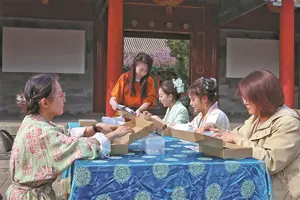
가장 주목할 만하게, 독일 학생들은 회릉 지하궁전 탕양의 실제 크기의 물리적 복제본을 자신의 손으로 만들었고, 마치 이미지인 것처럼 노란 조각들의 각 중국 글자를 신중하게 "그렸다".
이 모든 작업 -- 과학 데이터, 수정된 역사, 손으로 만든 복제본, 교차 문화적 우정 -- 은 이제 베이징의 공왕부박물관에서 5월 5일까지 진행 중인 "대화 재현 상속 -- 중국과 독일 학생들의 탕양 모형 공동 연구에 관한 다큐멘터리 전시"에 전시되고 있다.
전시회는 4개 섹션 -- 기원, 탐험, 복제, 유산 -- 으로 나뉘어 있으며, 이 중독 파트너십의 전체 호를 기록하고 있으며, 시의 1929년 박사 논문까지 추적하고 있다.
현재 전시회는 2025년 9월에 공왕부박물관에서 열린 이전 쇼케이스를 직접 기반으로 한다. "모형에서 걸작으로: 종이 인쇄 모형의 유산 추적"이라는 제목의 전시회는 72개의 원본 탕양과 6개의 새로 만들어진 모형을 선보였다.
2025년 전시회가 탕양 뒤의 문화 및 설계 철학에 초점을 맞춘 반면, 2026년 전시회는 젊은 사람들의 눈을 통해 과학적 재구성과 교차 문화적 협력으로 렌즈를 옮긴다.
"탕양은 고대 중국에서 사용된 주로 종이로 만든 건축 모형의 한 종류이다"라고 공왕부박물관의 전시 공동 큐레이터이자 직원인 린유썬이 설명한다. "목재와 같은 다른 재료도 사용되었다."
이름은 제조 과정에서 비롯되었는데, 장인들이 뜨거운 다리미를 사용하여 지붕 부품을 모양지었기 때문에 탕(다리미질하다)과 양(모형)이다. 그 기능은 오늘날의 3D 렌더링과 유사했다.
"장인들이 그것을 완성한 후, 통치자들은 건물의 형태와 설계를 볼 수 있었다"고 린은 말한다.
"그것은 숫자와 그림을 포함한 추상적 개념을 의사결정자가 명확하게 이해할 수 있는 실질적인 것으로 변환하는 매체였다"고 그는 덧붙인다.
전시회에서 가장 즐거운 세부 사항 중 하나는 시가 그의 박사 논문에서 설명한 바로 그 노란 조각들을 포함한다.
베를린 학생들이 만든 복제본에서, 노란 조각들은 그들의 필기로 덮여있었다.
"솔직히 말해서, 그들의 중국어는 아마도 초급 수준일 것이다. 하지만 그 다소 소박한 붓놀림에서, 당신은 실제로 탕양과 전통 중국 공예에 대한 그들의 진정한 관심을 볼 수 있다"고 린은 말한다.
그 협력은 또한 중국과 독일 학생들이 같은 대상에 어떻게 다르게 접근했는지를 드러냈다.
칭화대학 학생들은 탕양을 문화유산으로 보는 경향이 있는 반면, 베를린 학생들의 눈에는 그것은 건축 모형이라고 그는 덧붙인다.
칭화대학 건축학부의 또 다른 공동 큐레이터이자 졸업생인 웬웬은 탕양이 중국과 독일 모두에서 상대적으로 틈새 분야라고 말한다.
"따라서 대부분의 학생들에게 그것은 새롭고 흥미로운 것이었다. 그들은 진정으로 호기심이 있었다"고 그녀는 지적한다.
독일 측은 원래의 탕양 모형을 가지고 있었지만, 심층적인 연구 능력이 부족했다.
"우리가 참여하기 전에, 그들은 기본적인 문서화를 했지만, 더 깊은 연구는 하지 않았다. 시푸취안 이후, 거의 아무것도 하지 않았다"고 웬은 지적한다.
한편 칭화대학은 2019년 이후 자신의 탕양 수집품을 체계적으로 기록하고 분석하고 있었다.
"우리는 다양한 과학 방법을 사용했으며, 내부 지지 구조를 보기 위해 X선을 촬영했다. 우리는 미시적 단면 분석과 편광 현미경을 사용하여 안료, 종이 유형, 접착제, 공예를 분석했다"고 웬은 말한다.
이 기술들은 베를린 박물관의 탕양 모형에 적용되었으며, 모형을 움직일 수 없었기 때문에 일부 제한이 있었다.
그럼에도 불구하고, 협력은 새로운 문을 열었다.
"이 프로젝트를 통해 많은 독일 학생들이 탕양이 연구할 가치가 있는 분야라는 것을 배웠다고 말하는 것이 공정할 것이다"고 웬은 말한다. 양측은 이제 더 깊고 장기적인 협력을 논의하고 있다.
전시회 자체는 거의 완전히 젊은 사람들에 의해 만들어졌다는 점에서 이례적이다.
"이 전시관에서, 우리는 '나의 공간, 당신의 규칙'이라고 불리는 큐레이션 접근 방식을 가지고 있다"고 린은 말한다.
큐레이터 팀의 평균 나이는 30세 미만이다. 여기에는 공왕부박물관의 주니어 직원, 칭화대학의 학생, 베를린공과대학의 학생들이 포함된다.
손으로 쓴 노트, 손으로 그린 삽화, 질문 답변 게시판, 비디오 인터뷰가 방들을 가득 채우고 있으며, 문화유산의 무게 뒤의 깊이를 멋지게 균형 잡는 청년스러운 가벼움을 반영하고 있다. 전시회를 산책하는 것은 활발한 프레젠테이션 중인 대학 교실로 들어가는 것 같은 기분이 든다.
"우리는 오늘날 젊은 사람들, 특히 서로 다른 나라의 젊은 사람들이 탕양을 어떻게 보는지를 보여주기를 원했다"고 린은 말한다.
21세기에 훨씬 더 고급 모델링 소프트웨어와 그림이 있을 때 탕양을 모두 공부해야 하는 이유에 대해 묻는 질문에, 웬은 탕양이 여전히 두 가지 뚜렷한 방식으로 가치를 보유하고 있다고 강조한다.
"첫째, 그것은 문화유산이다. 그것은 그 시대의 특정한 사회적, 역사적 조건을 기록하므로, 다른 유물과 마찬가지로 연구할 가치가 있다"고 그녀는 말한다.
또한, 그녀는 그것을 고대 중국 건축 설계에 대한 창으로 간주한다.
"우리가 정말로 하는 일은 탕양을 사용하여 고대인들이 어떻게 집을 지었는지, 어떻게 건물을 설계했는지, 그리고 이 구조 뒤의 사람들이 어떻게 살았고 그들의 날들을 어떻게 보냈는지를 보는 것이다"고 그녀는 말한다.
위원회가 그에게 공학박사 학위를 수여했을 때, 그는 독일 박사 학위를 취득한 가장 초기의 중국 건축가 중 한 명이 되었다.
그의 연구를 위해 시는 베를린의 민족학박물관에 있는 청나라(1644-1911) 건축 모형 3개를 공부했다. 이들은 정교하고 복잡했으며, 완전히 종이로 만들어졌다. 탕양(唐样)으로 알려진 이 모형들은 한때 청나라 궁정 장인들이 황제들에게 한 장의 벽돌도 놓기 전에 그들의 무덤이 어떻게 보일 것인지를 보여주기 위해 사용되었다.
시는 그것들을 자세히 살펴보았다. 그는 모형에 붙여진 작은 노란 종이 조각에 쓰인 작은 중국 글자를 읽었다. 그는 치수, 재료, 건설 기술을 기록했다.
"이 모형들 자체가 완전히 축척대로 만들어진 것은 아니지만, 측정값, 수치, 용어, 재료에 대한 매우 상세한 정보를 제공한다"고 그가 관찰했다.
"그 정보는 많은 노란 조각들에 쓰여 있고 모형의 해당 부분에 붙여져 있다. 이 조각들로부터, 두 개의 모형이 동치황제의 황후들의 무덤을 위해 설계되었다는 것이 명확하다."
그 후 거의 1세기 동안 연구는 조용했다가 5년 전 중국과 독일의 새로운 세대 학생들이 시가 남긴 곳부터 다시 시작했다.
그들의 연구 대상은 시가 검토했던 바로 그것들이었다: 청나라 황실 지하궁전의 탕양 모형 2개 -- 하나는(황후의 묘지) 베이징에 기반을 두고 있는 칭화대학의 수집품에 보관되어 있고, 다른 하나는(황제의 묘지, 이전에 잘못 식별됨) 베를린의 민족학박물관에 있다.
대륙으로 분리되고 대부분 잊혀진 이 두 모형은 두 나라의 젊은 건축 학생들을 연결하는 예상치 못한 다리가 되었다.
2021년, 칭화대학 건축학부와 베를린공과대학 건축 및 도시 역사학부의 학생들은 시간대, 언어, 문화적 배경을 넘어 나란히 일하기 시작했다. 그들은 연구 노트를 공유하고, 과학 데이터를 비교하고, 방문을 교환했다.
중국 학생들은 청나라 공예와 문화유산 보존에 대한 깊은 지식을 가져왔고, 독일 학생들은 이 종이 모형이 서방의 르네상스 건축 모형과 어떻게 비교되는지에 대해 예상치 못한 질문을 던지며 신선한 시각을 가져왔다.
함께 그들은 모형을 X선 촬영하여 숨겨진 내부 구조를 드러냈고, 현미경 아래에서 안료, 종이, 접착제를 분석했다.
그들은 오랫동안 지속된 잘못된 식별을 수정했고 베를린 모형이 10대 청나라 황제 동치의 회릉묘에 속한다는 것을 증명했다. 이전에, 그 모형은 11대 청나라 황제 광서의 중릉묘에 속하는 것으로 여겨졌다.
가장 주목할 만하게, 독일 학생들은 회릉 지하궁전 탕양의 실제 크기의 물리적 복제본을 자신의 손으로 만들었고, 마치 이미지인 것처럼 노란 조각들의 각 중국 글자를 신중하게 "그렸다".
이 모든 작업 -- 과학 데이터, 수정된 역사, 손으로 만든 복제본, 교차 문화적 우정 -- 은 이제 베이징의 공왕부박물관에서 5월 5일까지 진행 중인 "대화 재현 상속 -- 중국과 독일 학생들의 탕양 모형 공동 연구에 관한 다큐멘터리 전시"에 전시되고 있다.
전시회는 4개 섹션 -- 기원, 탐험, 복제, 유산 -- 으로 나뉘어 있으며, 이 중독 파트너십의 전체 호를 기록하고 있으며, 시의 1929년 박사 논문까지 추적하고 있다.
현재 전시회는 2025년 9월에 공왕부박물관에서 열린 이전 쇼케이스를 직접 기반으로 한다. "모형에서 걸작으로: 종이 인쇄 모형의 유산 추적"이라는 제목의 전시회는 72개의 원본 탕양과 6개의 새로 만들어진 모형을 선보였다.
2025년 전시회가 탕양 뒤의 문화 및 설계 철학에 초점을 맞춘 반면, 2026년 전시회는 젊은 사람들의 눈을 통해 과학적 재구성과 교차 문화적 협력으로 렌즈를 옮긴다.
"탕양은 고대 중국에서 사용된 주로 종이로 만든 건축 모형의 한 종류이다"라고 공왕부박물관의 전시 공동 큐레이터이자 직원인 린유썬이 설명한다. "목재와 같은 다른 재료도 사용되었다."
이름은 제조 과정에서 비롯되었는데, 장인들이 뜨거운 다리미를 사용하여 지붕 부품을 모양지었기 때문에 탕(다리미질하다)과 양(모형)이다. 그 기능은 오늘날의 3D 렌더링과 유사했다.
"장인들이 그것을 완성한 후, 통치자들은 건물의 형태와 설계를 볼 수 있었다"고 린은 말한다.
"그것은 숫자와 그림을 포함한 추상적 개념을 의사결정자가 명확하게 이해할 수 있는 실질적인 것으로 변환하는 매체였다"고 그는 덧붙인다.
전시회에서 가장 즐거운 세부 사항 중 하나는 시가 그의 박사 논문에서 설명한 바로 그 노란 조각들을 포함한다.
베를린 학생들이 만든 복제본에서, 노란 조각들은 그들의 필기로 덮여있었다.
"솔직히 말해서, 그들의 중국어는 아마도 초급 수준일 것이다. 하지만 그 다소 소박한 붓놀림에서, 당신은 실제로 탕양과 전통 중국 공예에 대한 그들의 진정한 관심을 볼 수 있다"고 린은 말한다.
그 협력은 또한 중국과 독일 학생들이 같은 대상에 어떻게 다르게 접근했는지를 드러냈다.
칭화대학 학생들은 탕양을 문화유산으로 보는 경향이 있는 반면, 베를린 학생들의 눈에는 그것은 건축 모형이라고 그는 덧붙인다.
칭화대학 건축학부의 또 다른 공동 큐레이터이자 졸업생인 웬웬은 탕양이 중국과 독일 모두에서 상대적으로 틈새 분야라고 말한다.
"따라서 대부분의 학생들에게 그것은 새롭고 흥미로운 것이었다. 그들은 진정으로 호기심이 있었다"고 그녀는 지적한다.
독일 측은 원래의 탕양 모형을 가지고 있었지만, 심층적인 연구 능력이 부족했다.
"우리가 참여하기 전에, 그들은 기본적인 문서화를 했지만, 더 깊은 연구는 하지 않았다. 시푸취안 이후, 거의 아무것도 하지 않았다"고 웬은 지적한다.
한편 칭화대학은 2019년 이후 자신의 탕양 수집품을 체계적으로 기록하고 분석하고 있었다.
"우리는 다양한 과학 방법을 사용했으며, 내부 지지 구조를 보기 위해 X선을 촬영했다. 우리는 미시적 단면 분석과 편광 현미경을 사용하여 안료, 종이 유형, 접착제, 공예를 분석했다"고 웬은 말한다.
이 기술들은 베를린 박물관의 탕양 모형에 적용되었으며, 모형을 움직일 수 없었기 때문에 일부 제한이 있었다.
그럼에도 불구하고, 협력은 새로운 문을 열었다.
"이 프로젝트를 통해 많은 독일 학생들이 탕양이 연구할 가치가 있는 분야라는 것을 배웠다고 말하는 것이 공정할 것이다"고 웬은 말한다. 양측은 이제 더 깊고 장기적인 협력을 논의하고 있다.
전시회 자체는 거의 완전히 젊은 사람들에 의해 만들어졌다는 점에서 이례적이다.
"이 전시관에서, 우리는 '나의 공간, 당신의 규칙'이라고 불리는 큐레이션 접근 방식을 가지고 있다"고 린은 말한다.
큐레이터 팀의 평균 나이는 30세 미만이다. 여기에는 공왕부박물관의 주니어 직원, 칭화대학의 학생, 베를린공과대학의 학생들이 포함된다.
손으로 쓴 노트, 손으로 그린 삽화, 질문 답변 게시판, 비디오 인터뷰가 방들을 가득 채우고 있으며, 문화유산의 무게 뒤의 깊이를 멋지게 균형 잡는 청년스러운 가벼움을 반영하고 있다. 전시회를 산책하는 것은 활발한 프레젠테이션 중인 대학 교실로 들어가는 것 같은 기분이 든다.
"우리는 오늘날 젊은 사람들, 특히 서로 다른 나라의 젊은 사람들이 탕양을 어떻게 보는지를 보여주기를 원했다"고 린은 말한다.
21세기에 훨씬 더 고급 모델링 소프트웨어와 그림이 있을 때 탕양을 모두 공부해야 하는 이유에 대해 묻는 질문에, 웬은 탕양이 여전히 두 가지 뚜렷한 방식으로 가치를 보유하고 있다고 강조한다.
"첫째, 그것은 문화유산이다. 그것은 그 시대의 특정한 사회적, 역사적 조건을 기록하므로, 다른 유물과 마찬가지로 연구할 가치가 있다"고 그녀는 말한다.
또한, 그녀는 그것을 고대 중국 건축 설계에 대한 창으로 간주한다.
"우리가 정말로 하는 일은 탕양을 사용하여 고대인들이 어떻게 집을 지었는지, 어떻게 건물을 설계했는지, 그리고 이 구조 뒤의 사람들이 어떻게 살았고 그들의 날들을 어떻게 보냈는지를 보는 것이다"고 그녀는 말한다.
처리 완료
6,608 tokens · $0.0193
기사 수집 완료 · 09:20
매체 피드에서 기사 메타데이터 수집
헤드라인 번역 완료 · 09:35
제목/요약 한국어 번역 (fetch 시점 inline)
claude-haiku-4-5-20251001
104 tokens
$0.00023
1.1s
본문 추출 완료
8,367자 추출 완료
본문 한국어 번역 완료 · 09:35
3,944자 번역 완료
claude-haiku-4-5-20251001
6,504 tokens
$0.01902
41.7s
지정학적 엔티티 추출 완료 · 09:35
8개 엔티티 추출 완료
지정학적 맥락 & R-Scanner
R-Scanner · 평상
z=-0.89
일상적인 보도 수준 — 기준: Beijing
(🇨🇳 CN)
최근 6시간 1건
7일 평균 2.71건 / 6h
1개국 매체
1개 매체
본문에서 추출된 지명 (8)
Beijing
🇨🇳
China
🇨🇳
Berlin
🇩🇪
Germany
🇩🇪
Tsinghua University
🇨🇳
Technical University of Berlin
🇩🇪
Prince Kung's Palace Museum
🇨🇳
Ethnological Museum of Berlin
🇩🇪
위치 지도
지도 로딩 중…
같은 주제의 다른 기사 (최근 7일)
BEIJING (China Daily/ANN) -- In 1929, a young Chinese student named Xi Fuquan stood before a doctoral examination committee at the Technical University of Berlin, Germany.
When they granted him his Doctor of Engineering degree, he became one of the earliest Chinese architects to earn a German doctorate.
For his research, Xi studied three Qing Dynasty (1644-1911) architectural models at the Ethnological Museum of Berlin. They were delicate, intricate, and entirely made of paper. Known as tangyang, these models were once used by Qing court artisans to show emperors what their tombs would look like before a single brick was laid.
Xi examined them closely. He read the tiny Chinese characters written on small yellow slips of paper pasted onto the models. He recorded dimensions, materials, and construction techniques.
"These models themselves are not made entirely to scale, but they provide extremely detailed information about measurements, numbers, terminology, and materials," he observed.
"That information is written on many yellow slips and pasted onto the corresponding parts of the models. From these slips, it is clear that two of the models were designed for the tombs of Emperor Tongzhi's consorts."
Then, for nearly a century, the research had been quiet until five years ago when a new generation of students from both China and Germany picked up where Xi left off.
The objects of their study were the very same ones Xi had examined: two tangyang models of Qing Dynasty imperial underground palaces -- one (the mausoleum of an empress) held in the Beijing-based Tsinghua University's collection, the other (an emperor's mausoleum, previously misidentified) at the Ethnological Museum of Berlin.
These two models, separated by continents and largely forgotten, became the unlikely bridge connecting young architecture students from the two countries.
In 2021, students from Tsinghua University's School of Architecture and Technical University of Berlin's department of architecture and urban history began working side by side across time zones, languages, and cultural backgrounds. They shared research notes, compared scientific data, and exchanged visits.
The Chinese students brought deep knowledge of Qing Dynasty craftsmanship and cultural heritage conservation, while the German students brought fresh eyes, asking unexpected questions about how these paper models compared to Renaissance architectural models from the West.
Together, they X-rayed the models to reveal hidden internal structures, and analyzed pigments, papers, and adhesives under microscopes.
They corrected a long-standing misidentification and proved that the Berlin model belonged to the 10th Qing emperor Tongzhi's Huiling Mausoleum. Previously, the model was considered to be the 11th Qing emperor Guangxu's Chongling Mausoleum.
Most remarkably, the German students built a full-scale physical replica of the Huiling underground palace tangyang with their own hands, carefully "drawing" each Chinese character on the yellow slips as if they were images.
All of this work -- the scientific data, the corrected history, the handmade replica, the cross-cultural friendship -- is now on display at the ongoing Dialogue Reproducing Inheritance -- A Documentary Exhibition of the Collaborative Research on Tangyang Model Undertaken by Students from China and Germany, which runs at the Prince Kung's Palace Museum in Beijing until May 5.
The exhibition is divided into four sections -- Origin, Exploration, Replication, and Heritage -- and documents the full arc of this Sino-German partnership, tracing it to Xi's dissertation in 1929.
The current exhibition builds directly on a previous showcase held at the Prince Kung's Palace Museum in September 2025. Titled From Model to Masterpiece: Tracing the Legacy of Ironed Paper Models, the exhibition featured 72 original tangyang alongside six newly crafted models.
While the 2025 exhibition focused on the cultural and design philosophies behind tangyang, the 2026 exhibition shifts the lens to scientific reconstruction and cross-cultural collaboration, told through the eyes of young people.
"Tangyang is a type of architectural model mostly made of paper that was used in ancient China," explains Lin Yucen, a co-curator of the exhibition and a staff member at the Prince Kung's Palace Museum. "Other materials such as wood were also used."
The name comes from the manufacturing process, in which artisans used a hot iron to shape the roof components, hence tang (to iron) and yang (model). Its function was similar to today's 3D renderings.
"After the artisans finished making it, the rulers could see the form and design of the building," Lin says.
"It was a medium that transformed abstract concepts, including numbers and drawings, into something tangible that the decision-maker could clearly understand," he adds.
One of the most delightful details in the exhibition involves those yellow slips -- the very same ones Xi described in his dissertation.
On the replica created by the Berlin students, the yellow slips were covered by their handwriting.
"To be honest, their Chinese is probably at a beginner level. But in those somewhat naive brushstrokes, you can actually see their genuine interest in tangyang and in traditional Chinese craftsmanship," Lin says.
The collaboration also revealed how differently Chinese and German students approached the same object.
Tsinghua University students tend to see tangyang as a cultural relic, while in the eyes of the Berlin students, it is an architectural model, he adds.
Wen Wen, another co-curator of the exhibition and a graduate of Tsinghua University's School of Architecture, says tangyang is a relatively niche field, both in China and Germany.
"So for most students, it was something new and interesting. They were genuinely curious," she notes.
The German side had the original tangyang models, but they lacked the capacity for in-depth research.
"Before we got involved, they had done basic documentation, but no deeper research. After Xi Fuquan, very little had been done," Wen points out.
Tsinghua University, on the other hand, had been systematically documenting and analyzing its own tangyang collection since 2019.
"We used a range of scientific methods, and took X-rays to see the internal support structures. We used microscopic cross-section analysis and polarized light microscopy to analyze pigments, paper types, adhesives, and craftsmanship," Wen says.
These techniques were applied to the Berlin museum's tangyang models, with some limitations, because the models couldn't be moved.
Still, the collaboration opened new doors.
"It's fair to say that through this project, many German students learned that tangyang is a field worth studying," Wen says. Both sides are now discussing deeper, long-term cooperation.
The exhibition itself is unusual in that it was almost entirely created by young people.
"In this exhibition hall, we have a curation approach called ‘My Space, Your Rules,'" says Lin, the co-curator.
The curatorial team has an average age under 30. It includes junior staff members from the Prince Kung's Palace Museum, students from Tsinghua University, and students from the Technical University of Berlin.
Handwritten notes, hand-drawn illustrations, Q&A boards, and video interviews fill the rooms, reflecting a youthful lightness that nicely balances out the profundity behind the cultural relic's weight. Walking through the exhibition feels like stepping into a university classroom during a lively presentation.
"We wanted to show how young people today, especially young people from different countries, look at tangyang," Lin says.
When asked about why tangyang should be studied at all in the 21st century, when there is much more advanced modeling software and drawings, Wen emphasizes that tangyang still holds value in two distinct ways.
"First, it is a cultural relic. It records certain social and historical conditions of its time, so it's worth studying like any other artifact," she says.
Additionally, she considers it a window into ancient Chinese architectural design.
"What we're really doing is using tangyang to see how ancient people built houses, how they designed buildings, and how the people behind these structures lived and spent their days," she says.
When they granted him his Doctor of Engineering degree, he became one of the earliest Chinese architects to earn a German doctorate.
For his research, Xi studied three Qing Dynasty (1644-1911) architectural models at the Ethnological Museum of Berlin. They were delicate, intricate, and entirely made of paper. Known as tangyang, these models were once used by Qing court artisans to show emperors what their tombs would look like before a single brick was laid.
Xi examined them closely. He read the tiny Chinese characters written on small yellow slips of paper pasted onto the models. He recorded dimensions, materials, and construction techniques.
"These models themselves are not made entirely to scale, but they provide extremely detailed information about measurements, numbers, terminology, and materials," he observed.
"That information is written on many yellow slips and pasted onto the corresponding parts of the models. From these slips, it is clear that two of the models were designed for the tombs of Emperor Tongzhi's consorts."
Then, for nearly a century, the research had been quiet until five years ago when a new generation of students from both China and Germany picked up where Xi left off.
The objects of their study were the very same ones Xi had examined: two tangyang models of Qing Dynasty imperial underground palaces -- one (the mausoleum of an empress) held in the Beijing-based Tsinghua University's collection, the other (an emperor's mausoleum, previously misidentified) at the Ethnological Museum of Berlin.
These two models, separated by continents and largely forgotten, became the unlikely bridge connecting young architecture students from the two countries.
In 2021, students from Tsinghua University's School of Architecture and Technical University of Berlin's department of architecture and urban history began working side by side across time zones, languages, and cultural backgrounds. They shared research notes, compared scientific data, and exchanged visits.
The Chinese students brought deep knowledge of Qing Dynasty craftsmanship and cultural heritage conservation, while the German students brought fresh eyes, asking unexpected questions about how these paper models compared to Renaissance architectural models from the West.
Together, they X-rayed the models to reveal hidden internal structures, and analyzed pigments, papers, and adhesives under microscopes.
They corrected a long-standing misidentification and proved that the Berlin model belonged to the 10th Qing emperor Tongzhi's Huiling Mausoleum. Previously, the model was considered to be the 11th Qing emperor Guangxu's Chongling Mausoleum.
Most remarkably, the German students built a full-scale physical replica of the Huiling underground palace tangyang with their own hands, carefully "drawing" each Chinese character on the yellow slips as if they were images.
All of this work -- the scientific data, the corrected history, the handmade replica, the cross-cultural friendship -- is now on display at the ongoing Dialogue Reproducing Inheritance -- A Documentary Exhibition of the Collaborative Research on Tangyang Model Undertaken by Students from China and Germany, which runs at the Prince Kung's Palace Museum in Beijing until May 5.
The exhibition is divided into four sections -- Origin, Exploration, Replication, and Heritage -- and documents the full arc of this Sino-German partnership, tracing it to Xi's dissertation in 1929.
The current exhibition builds directly on a previous showcase held at the Prince Kung's Palace Museum in September 2025. Titled From Model to Masterpiece: Tracing the Legacy of Ironed Paper Models, the exhibition featured 72 original tangyang alongside six newly crafted models.
While the 2025 exhibition focused on the cultural and design philosophies behind tangyang, the 2026 exhibition shifts the lens to scientific reconstruction and cross-cultural collaboration, told through the eyes of young people.
"Tangyang is a type of architectural model mostly made of paper that was used in ancient China," explains Lin Yucen, a co-curator of the exhibition and a staff member at the Prince Kung's Palace Museum. "Other materials such as wood were also used."
The name comes from the manufacturing process, in which artisans used a hot iron to shape the roof components, hence tang (to iron) and yang (model). Its function was similar to today's 3D renderings.
"After the artisans finished making it, the rulers could see the form and design of the building," Lin says.
"It was a medium that transformed abstract concepts, including numbers and drawings, into something tangible that the decision-maker could clearly understand," he adds.
One of the most delightful details in the exhibition involves those yellow slips -- the very same ones Xi described in his dissertation.
On the replica created by the Berlin students, the yellow slips were covered by their handwriting.
"To be honest, their Chinese is probably at a beginner level. But in those somewhat naive brushstrokes, you can actually see their genuine interest in tangyang and in traditional Chinese craftsmanship," Lin says.
The collaboration also revealed how differently Chinese and German students approached the same object.
Tsinghua University students tend to see tangyang as a cultural relic, while in the eyes of the Berlin students, it is an architectural model, he adds.
Wen Wen, another co-curator of the exhibition and a graduate of Tsinghua University's School of Architecture, says tangyang is a relatively niche field, both in China and Germany.
"So for most students, it was something new and interesting. They were genuinely curious," she notes.
The German side had the original tangyang models, but they lacked the capacity for in-depth research.
"Before we got involved, they had done basic documentation, but no deeper research. After Xi Fuquan, very little had been done," Wen points out.
Tsinghua University, on the other hand, had been systematically documenting and analyzing its own tangyang collection since 2019.
"We used a range of scientific methods, and took X-rays to see the internal support structures. We used microscopic cross-section analysis and polarized light microscopy to analyze pigments, paper types, adhesives, and craftsmanship," Wen says.
These techniques were applied to the Berlin museum's tangyang models, with some limitations, because the models couldn't be moved.
Still, the collaboration opened new doors.
"It's fair to say that through this project, many German students learned that tangyang is a field worth studying," Wen says. Both sides are now discussing deeper, long-term cooperation.
The exhibition itself is unusual in that it was almost entirely created by young people.
"In this exhibition hall, we have a curation approach called ‘My Space, Your Rules,'" says Lin, the co-curator.
The curatorial team has an average age under 30. It includes junior staff members from the Prince Kung's Palace Museum, students from Tsinghua University, and students from the Technical University of Berlin.
Handwritten notes, hand-drawn illustrations, Q&A boards, and video interviews fill the rooms, reflecting a youthful lightness that nicely balances out the profundity behind the cultural relic's weight. Walking through the exhibition feels like stepping into a university classroom during a lively presentation.
"We wanted to show how young people today, especially young people from different countries, look at tangyang," Lin says.
When asked about why tangyang should be studied at all in the 21st century, when there is much more advanced modeling software and drawings, Wen emphasizes that tangyang still holds value in two distinct ways.
"First, it is a cultural relic. It records certain social and historical conditions of its time, so it's worth studying like any other artifact," she says.
Additionally, she considers it a window into ancient Chinese architectural design.
"What we're really doing is using tangyang to see how ancient people built houses, how they designed buildings, and how the people behind these structures lived and spent their days," she says.