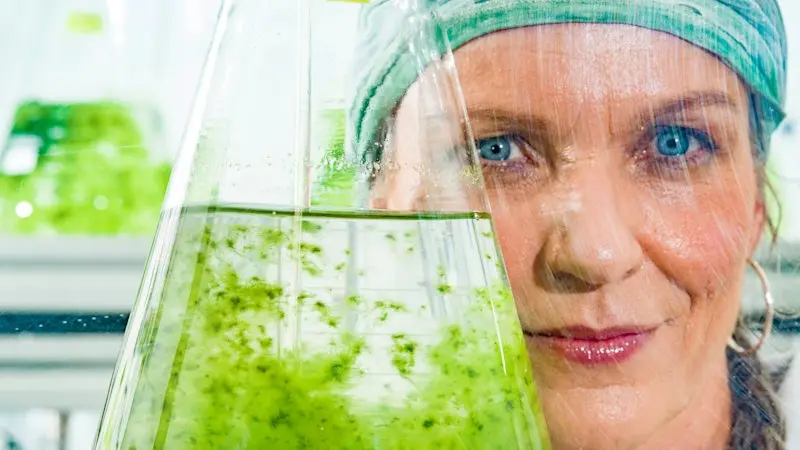
과학자가 실험실의 기계에 의해 두피가 벗겨졌다. 그리고 그녀의 해초 연구가 상처를 치유하는 데 도움이 되었다
A scientist was scalped by a machine in her lab. Then her own seaweed research helped mend the wound
Sydney Morning Herald
· 🇦🇺 Sydney, AU
Tim Elliott
EN
2026-04-25 04:00
Translated
해양생물학자 피아 윈버그는 오랫동안 비료에서 식량 등에 이르기까지 해초의 풍부한 특성을 알고 있었다. 그리고 끔찍한 실험실 사고 이후, 그것은 심지어 그녀 자신의 피부를 구하는 데도 도움이 되었다.
2019년 2월 초, 해양생물학자 피아 윈버그는 NSW 남해안에 있는 해초 공장에서 분자 여과 장치라고 불리는 기계를 점검하고 있었다. 당시 혼자였던 윈버그는 화상 전문가 피오나 우드 교수와 협력하여 상처 치유에 사용할 수 있는 해초에서 추출한 젤을 개발하는 프로젝트를 진행 중이었다. 그녀는 "우리가 한 첫 번째 배치였기 때문에 정말 흥분했던 것 같다"고 말한다.
여과 장치는 고압에서 일련의 막을 통해 펌프질하여 해초 추출물의 분자를 분리하고 정제하도록 설계되었다. 펌프에 전력을 공급하는 구동축은 지면 거의 바로 위에 있었고 분당 2000회전으로 회전하고 있었다. 구동축은 금속 하우징으로 덮여 있었고 펌프와 단지 2밀리미터 너비의 작은 간격으로 분리되어 있었다. 강력한 장비였지만 윈버그는 여러 번 그것을 작동시켜 본 적이 있었다. 그녀는 또한 안전 모자, 고글, 헤어넷을 착용하고 있었다.
어느 순간 윈버그는 밸브를 돌려 펌프를 끄려고 했다. 손잡이 끝의 손잡이가 떨어져서 구동축 아래로 굴러갔다. 그녀는 손과 무릎으로 내려가 그것을 집어올리기 위해 손을 뻗었다. 어떻게 된 일인지 그녀의 머리가 금속 하우징에 빨려들어가 구동축에 감겼다. 두피의 뒷부분이 떨어져 나갔으며, 그 지름이 20센티미터인 원형으로 대략 디저트 접시 정도의 크기였고, 그 아래의 두개골을 노출시켰다.
"내 기억이 멈췄다"고 그녀는 기억한다. "다음으로 내가 아는 것은 나는 무릎을 꿇고 있었고, 내 머리가 마치 머리브러시에 엉켜 있는 것처럼 무언가에 감긴 것처럼 느껴져 좌절하고 있었다는 것이다. 그러면 내 손을 보았고 '내 손이 왜 빨개?'라고 생각했다. 그들은 그냥 피로 덮여 있었다."
다행히 구동축은 회전을 멈추었다. 일어나면서 윈버그는 자신의 두피를 기계에서 꺼내 산업 단지 앞으로 약 80미터를 걸어가서 자신의 사무실이 있는 곳으로 가서 직원에게 구급차를 부르도록 요청했다. "이상한 점은 고통이 없었다는 것이다"라고 그녀는 말한다.
윈버그와 이제 얼음 주머니에 담겨 있는 분리된 두피는 헬리콥터로 시드니의 세인트 조지 병원으로 이송되었고, 그녀는 급히 수술실로 옮겨졌다. "의사들이 두피를 다시 붙이려고 했지만 혈관에 너무 많은 손상이 있었다"고 윈버그는 말한다. 대신, 다음 18개월 동안 의사들은 천천히 그녀의 머리 왼쪽의 피부를 늘려서 손상된 지붕 위의 방수포처럼 부상 위로 당겨져 스테이플러로 고정될 수 있는 지점까지 늘렸다.
흥미롭게도, 두피 벗기기는 그녀에게 트라우마를 남기지 않았다. 사실, 윈버그는 그것을 연구 개발을 위한 독특한 기회로 보았다. "매일 아침과 밤, 나는 내 해초 보습제를 내 머리에 바른다"고 그녀는 말한다. "그것은 흉터를 최소화하는 데 도움이 되었다."
이 사고는 쉽게 그녀를 죽일 수 있었다: 윈버그는 2.5리터의 혈액을 잃었으며, 이는 생존 가능성의 한계였다. 그녀가 죽지 않은 사실은 그녀와 그녀의 가족뿐만 아니라 당신, 나, 그리고 지구에도 다행스러운 일이다. 왜냐하면 오늘날 55세의 윈버그는 세계 최고의 해초 과학자 중 한 명이기 때문이다. 그녀는 호주에서 거의 모든 사람보다 해초에 대해 더 많은 것을 이해하고 있으며, 그들의 분자 구성부터 그들의 생활 방식과 DNA에 이르기까지 알고 있다.
하지만 그녀가 다른 모든 해초보다 더 잘 알고 있는 매우 특별한 해초가 있다. 호주에만 고유한 해초로, 기후 변화를 해결하면서 지속 가능한 식량 원천이 되고 최첨단 생의학 보조물이 될 수 있는 거의 연금술적 약속을 담고 있다. 이는 윈버그의 지난 15년 동안 거의 모든 깨어 있는 순간을 흡수한 해초이고, 그녀가 거의 죽었던 날에 작업 중이던 해초이다. 그녀는 그것을 '종 84'라고 부른다.
편의상 윈버그에게 꼬리표를 붙이고 싶지만, 월트 휘트먼을 빌려 말하자면, 그녀는 다양성을 포함하고 있다: 그녀는 해양 과학자, 해초 농부, 학자이자 기업가, 환경 운동가이자 고급 화장품 및 부티크 콤부차의 공급자이다. 그녀는 순진한 히피이자 상업적 배신자라고 불렸다. 고인이 된 과학 저널리스트 겸 진행자 마이클 몰슬리는 그녀의 연구를 칭찬했다. ABC는 그녀를 호주의 주요 과학자 중 한 명으로 지명했다. 울롱공 대학교 지능형 폴리머 연구소의 이사인 고든 월리스 교수는 "나는 이 분야의 많은 사람들과 이야기했지만 그녀와 같은 사람을 만난 적이 없다"고 말한다.
오늘, 그러나 그녀는 본질적으로 내 여행 가이드이다. 추운 아침이고 윈버그는 나를 프린스 하이웨이 위로 운전하고 있으며, 콘졸라 국립공원의 남은 열대 우림을 통해 구불거리면서 그녀의 해초 보육원과 처리 시설로 향하고 있다. 원래 스웨덴에서 온 윈버그는 크고 호리호한 체형이며, 눈은 북유럽 원에서 거의 볼 수 없는 파란색 음영이고 길게 땋은 머리띠를 가지고 있다. 그녀는 부상 부위 위에 스카프를 쓰고 있지만, 필요성보다는 습관적으로 그렇게 한다. "나는 실제로 두피가 벗겨진 곳에 머리가 자라났다"고 그녀는 말한다. "하지만 나는 사고 후 스카프를 쓰기 시작했고, 정말 유지 보수가 적다. 더 이상 드라이기가 필요 없다!"
보육원은 큰 창고에 있고, 해초 재배 이상을 한다. 벤치 위에 현미경이 있는 작은 실험실이 있고 화학물질로 가득 찬 찬장이 있으며, 시설 뒤쪽에는 윈버그가 해초 젤을 추출하고 정제하는 데 사용하는 포도주 양조장에서 전용한 일련의 강철 통이 있는 처리 영역이 있다. 보육원 자체는 해초가 페트리 접시와 비커에서 단일 세포에서 배양되는 작은 온도 조절 공간이다.
종 84는 해변에서 볼 수 있는 가죽 같은 다시마가 아니다. 그것은 조류이다: 진한 녹색 진흙의 작은 덩어리들. 덩어리들이 더 커지면서, 그들은 높이 1미터, 너비 1미터인 플라스틱 욕조에 옮겨진다. 욕조의 물은 이끼 같은 녹색이고 모호하게 늪 같다: 얇은 검은 튜브를 통해 산소가 공급되어, 그것은 소용돌이치고 맥베스의 마녀들의 양조처럼 버블버블한다. 해초는 엄청난 속도로 성장하며 매주 무게가 3배가 된다. 수확하면 엉킨 머리카락처럼 문자열 시트로 나와 무지개색의 녹색이다.
하지만 그것이 먹는 것 – 질소와 CO2 – 이 그것을 따로 떨어뜨리는 것이다. "용해된 질소와 CO2는 바다를 죽이고 있다"고 윈버그는 설명한다. "그들은 조류 번식, 산성화 및 산소 결핍을 일으킨다."
바다의 과잉 질소의 주요 원천은 농업 유출, 하수 및 음식 폐기물이다. 질소 비료는 그레이트 배리어 리프에 대한 손상의 주요 원인으로 생각되고 애들레이드 해안 외에 조류 번식에 중대한 기여자이다. 태즈매니아에서 연어 양식장의 물고기 배설물에서 용해된 질소는 맥쿼리 항구에서 야생동물을 위협하고 죽은 지역을 만들고 있다. 한편, 과잉 CO2는 해양 산성화의 주요 원인이며, 이는 해양 종의 생식 주기에 영향을 미치고 먹이 연쇄를 방해한다. 산성화는 수중에 있기 때문에 그 영향이 대부분 눈에 띄지 않으므로 "기후 변화의 사악한 쌍둥이"라고 불려왔다.
해초는 이러한 과정에 대응한다. 자연적으로 질소를 흡수하고 단백질로 전환시키며, 예를 들어 초밥과 함께 나오는 김 등이 있다. 동시에 물에서 CO2를 제거하고 육지 식물이 광합성을 할 때처럼 산소로 전환한다. 중국 황해 수산물 연구소의 2013년 연구에서는 대형 갈색 다시마의 농장이 산동 반도의 수산양식 중심지인 상고우 만의 산성화를 감소시켰음을 보여주었다. 그리고 2025년 덴마크 환경 및 에너지 센터를 위해 오르후스 대학에서 발표한 연구에 따르면, 한 피요르드에서 근해 다시마 양식은 헥타르당 연간 질산염 102킬로그램을 물에서 제거했으며, 이는 200~300킬로그램의 질소 비료에 해당한다.
그 의미는 깊다. 윈버그는 수십 년간 산림 및 농업에 의해 산소 결핍된 발트해를 해초로 대부분 복구할 수 있다고 믿는다. 캘리포니아 대학 과학자들에 따르면, 해초 농장은 또한 1미터 미만의 깊이에서 많은 부분이 죽은 미국의 멕시코 만을 고칠 수 있다. 수확하면, 해초는 비료 또는 식량으로 사용할 수 있다. (해초는 또한 바이오 연료로 변환될 수 있지만, 이 과정은 아직 비용 효과적이지 않다.) 해초는 단열이나 시멘트와의 천연 결합제 역할을 하는 것처럼 더 탄소 집약적인 제품을 대체할 수 있다면 추가로 배출량을 줄일 수 있다.
해초는 윈버그의 집착이지만 그녀는 우회적인 방식으로 그것에 도달했다. 1970년 스톡홀름에서 태어난 그녀는 4살 때 호주로 이사했을 때 아버지 라르스가 시드니에서 통신 엔지니어로 일하게 되었다. 윈버그는 동부 교외에 있는 선택적 학교인 시드니 여고에 다녔다. 표면적으로, 모든 것이 잘 되어 보였다: 주말에는 가족이 해변에 가서 피아는 호랑이불과 불가사리에 매료된 바위 웅덩이에서 몇 시간을 놀 것이다.
"하지만 내 아버지는 어려운 사람이었다"고 윈버그는 나라왈리의 나라왈리에 있는 2층 1980년대 나무판자 집인 그녀의 집에서 나에게 말한다. "그는 공개적으로 파티의 삶이었고, 정말 재미있고 유쾌했지만 개인적으로 그는 자신의 아이들을 놓으면서 정말 좋았고 그들이 흙이라고 말하고 기분 나쁘게 하는 데 좋았다."
시드니에서 자라면서 윈버그는 이상화된 스웨덴에 대해 갈증을 느꼈다. "나는 내가 어디서 왔는지 찾고 싶었다"고 그녀는 말한다. 졸업 후 그녀는 모아둔 돈을 사용해서 돌아갔다. "나는 정말 그것을 포용했다; 나는 눈과 추위를 사랑했다." 1990년에 그녀는 노르웨이와의 국경 근처 훈드피엘렛 스키 리조트에서 T자형 리프트를 작동하는 일을 얻었다. 다음 해, 그녀는 스톡홀름 대학교에서 해양 지과학 학위를 시작했다. 이 과정은 글로벌 시스템에 중점을 두었다: 영양분과 분자의 행성 흐름, 그리고 해양 환경의 상호 연결성. "그들은 스웨덴에서 모든 과학을 함께 연결하여 더 넓은 이해를 제공하는 것이 좋다"고 그녀는 설명한다. "그것이 지속 가능성 및 생태발자국과 같은 아이디어가 나오는 곳이다."
스톡홀름에서 윈버그는 동료 학생인 anders Auer라는 전직 전문 스노우보더와 사귀기 시작했으며, 그 학생을 Hundfjället에서 간략히 만났다. "피아는 항상 매우 동기가 부여되고 집중했다"고 오어는 경제학과 통계학을 공부하고 있었다고 말한다. "그녀는 깊이 있게 배우기 위해 그곳에 있었지, 단지 학위와 직업을 얻기 위해서가 아니었다." (34년 후, 그 부부는 여전히 함께 있으며, 두 명의 성인 딸이 있다.)
1996년 학위를 마친 후 윈버그는 해양 시스템 생태학 석사 학위를 시작했다. "그것은 수산 양식이 세계를 구할 것이라고 했던 블루 혁명의 시기였다"고 그녀는 말한다. "하지만 그들은 그것을 너무 잘못 했고 많은 생태계를 손상시켰다." 예를 들어 스리랑카는 새우 양식에 많이 투자했으며 특히 심각하게 대처했다. "그들은 그냥 맹그로브를 삽질했고, 많은 새우 양식장을 지었고 모든 유출수를 해안 생태계에 방출했다. 질소가 가득 찬 그 물은 새우 양식장을 계속 실행하기 위해 다시 펌프질했다. 그것은 화장실을 주방 싱크에 배관하는 것과 같다." 많은 새우 양식장이 질병에 걸렸다. "산업이 자살하고 있었다."
1996년 윈버그는 스리랑카에 가서 콜롬보 북쪽의 풋탈람 석호 근처 시험 농장을 포함한 가능한 해결책을 연구했다. 여기서 어부들은 일련의 연못을 포함하는 식물 보존 시스템을 구현했다. "폐수는 새끼 물고기와 틸라피아가 먹는 연못으로 들어갔다. 그러면 물이 홍합이 더 미세한 입자를 먹는 홍합 연못으로 흘렀고, 그 다음에 해초가 용해된 영양분을 흡수하는 해초 연못으로 흘렀다."
통합 다중영양 수산양식(IMTA)이라고 불리는 이 시스템은 작동하고 있는 것처럼 보였다. "해초는 질소, 인, 이산화탄소를 흡수하고 물을 다시 산소화했으며, 그러면 새우에게 돌려보낼 수 있었다." 해초가 해결책이라고 그녀는 깨달았다. "그것은 최종 지점이었고, 줄의 끝이었다. 그것은 모든 낭비를 없애고 그것을 음식으로 바꾸는 유일한 것이었다."
해초는 물 아래에 자라기 때문에, 물론 해변에 밀려났을 때를 제외하고는 거의 눈에 띄지 않으며, 그 경우 대부분의 사람들은 그것을 피하는 경향이 있다. 하지만 해초는 프롤래트이다. 빨강, 갈색, 초록색의 3가지 주요 유형이 있으며 세계적으로 12,000종이 있으며, 액화 귤을 닮은 스펀지 같은 레오더시아 디포르미스부터 수천 킬로미터 길이의 파동하는 다시마 숲까지 다양하다.
해초는 오래 되었다: 한 녹색 해초 종은 모든 육지 식물의 조상이며, 그 화석화된 유해는 10억 년 전으로 거슬러 올라간다. 또한 매우 영양가 있을 수 있다: 인간은 수천 년 동안 해초를 먹었으며, 특히 아시아에서는 섬유, 요오드 및 항염증 특성으로 인해 가치가 있다. 2025년에 글로벌 해초 산업은 시장 조사 회사 포춘 비즈니스 인사이트에 따르면 미화 197억 9천만 달러(약 280억 달러)로 평가되었다.
스리랑카 이후, 해초는 윈버그의 매력이 되었지만 그녀는 실제 환경에서 그것을 구현하는 방법이 불확실했다. 그런 다음 2001년 스웨덴의 얼어붙은 겨울에서 휴식을 원하면서, 그녀, 오어, 그리고 아기 딸 사스키아는 호주로 이사했다. 그들은 나라왈리의 집을 샀는데, 이것은 몇 년 전에 휴일에 방문했던 곳이고 사랑에 빠졌던 곳이다. 해변은 길고 깔끔했으며 우뚝 솟은 잇몸 나무가 있었다; 많은 집들은 섬유 오두막이었다. 가장 가까운 도시인 울라둘라는 1930년대 이탈리아 이민자들이 설립한 어업을 가진 작고 졸린 마을이었다.
오늘날 나라왈리와 인접한 몰리무크 해변은 인기 있는 관광지이다; 몰리무크는 2009년 유명 셰프 릭 스테인이 여기에 레스토랑을 개설했을 때 명성을 얻었다. "하지만 피아와 내가 2000년대 초반 처음 여기 만났을 때, 그 지역은 훨씬 덜 부유했다"고 윈버그의 오랜 친구이자 지역 교사인 아만다 핀들리는 말한다. "그곳은 우리 아이들이 모든 거리에서 누군가를 알고 있던 그런 종류의 장소였다."
윈버그와 오어는 흥미로운 시간에 도착했다. NSW 정부는 남획을 해결하기 위해 노력하면서 인근 제르비스 베이에 보호된 해양 공원을 설립했다. 당연히 울라둘라의 어부들은 그것을 그들의 생활 방식에 대한 위협으로 보았다. 공원 출범을 연구하기 위해 울롱공 대학교에서 박사 장학금을 받은 윈버그는 중간에 갇혔다. "어부들과 해양 공원 대표 사이의 회의는 꽤 공격적이었다"고 그녀는 말한다. "나는 심지어 [고위 해양 공원 직원]이 사망 위협을 받았다는 것을 들었다."
그녀는 그 도시가 과도 산업을 살펴봐야 한다고 믿었다. "어부들이 대안이 필요했다"고 그녀는 말한다. 2008년에, 그녀는 폐기된 4헥타르 이상의 탱크와 연못을 물고기와 해초를 재배하는 해양 기술 공원으로 변경할 것을 제안했다. "그것은 지역 주민들을 위한 계시였다"고 당시 지역 의회에서 활동하고 있던 핀들리는 말한다. "이것은 4세대 어촌이고 완전한 두뇌인 이 여자가 나타났고, '당신은 더 이상 그렇게 할 필요가 없다! 우리는 여기서 수산양식을 할 수 있다!'는 식이었다."
여과 장치는 고압에서 일련의 막을 통해 펌프질하여 해초 추출물의 분자를 분리하고 정제하도록 설계되었다. 펌프에 전력을 공급하는 구동축은 지면 거의 바로 위에 있었고 분당 2000회전으로 회전하고 있었다. 구동축은 금속 하우징으로 덮여 있었고 펌프와 단지 2밀리미터 너비의 작은 간격으로 분리되어 있었다. 강력한 장비였지만 윈버그는 여러 번 그것을 작동시켜 본 적이 있었다. 그녀는 또한 안전 모자, 고글, 헤어넷을 착용하고 있었다.
어느 순간 윈버그는 밸브를 돌려 펌프를 끄려고 했다. 손잡이 끝의 손잡이가 떨어져서 구동축 아래로 굴러갔다. 그녀는 손과 무릎으로 내려가 그것을 집어올리기 위해 손을 뻗었다. 어떻게 된 일인지 그녀의 머리가 금속 하우징에 빨려들어가 구동축에 감겼다. 두피의 뒷부분이 떨어져 나갔으며, 그 지름이 20센티미터인 원형으로 대략 디저트 접시 정도의 크기였고, 그 아래의 두개골을 노출시켰다.
"내 기억이 멈췄다"고 그녀는 기억한다. "다음으로 내가 아는 것은 나는 무릎을 꿇고 있었고, 내 머리가 마치 머리브러시에 엉켜 있는 것처럼 무언가에 감긴 것처럼 느껴져 좌절하고 있었다는 것이다. 그러면 내 손을 보았고 '내 손이 왜 빨개?'라고 생각했다. 그들은 그냥 피로 덮여 있었다."
다행히 구동축은 회전을 멈추었다. 일어나면서 윈버그는 자신의 두피를 기계에서 꺼내 산업 단지 앞으로 약 80미터를 걸어가서 자신의 사무실이 있는 곳으로 가서 직원에게 구급차를 부르도록 요청했다. "이상한 점은 고통이 없었다는 것이다"라고 그녀는 말한다.
윈버그와 이제 얼음 주머니에 담겨 있는 분리된 두피는 헬리콥터로 시드니의 세인트 조지 병원으로 이송되었고, 그녀는 급히 수술실로 옮겨졌다. "의사들이 두피를 다시 붙이려고 했지만 혈관에 너무 많은 손상이 있었다"고 윈버그는 말한다. 대신, 다음 18개월 동안 의사들은 천천히 그녀의 머리 왼쪽의 피부를 늘려서 손상된 지붕 위의 방수포처럼 부상 위로 당겨져 스테이플러로 고정될 수 있는 지점까지 늘렸다.
흥미롭게도, 두피 벗기기는 그녀에게 트라우마를 남기지 않았다. 사실, 윈버그는 그것을 연구 개발을 위한 독특한 기회로 보았다. "매일 아침과 밤, 나는 내 해초 보습제를 내 머리에 바른다"고 그녀는 말한다. "그것은 흉터를 최소화하는 데 도움이 되었다."
이 사고는 쉽게 그녀를 죽일 수 있었다: 윈버그는 2.5리터의 혈액을 잃었으며, 이는 생존 가능성의 한계였다. 그녀가 죽지 않은 사실은 그녀와 그녀의 가족뿐만 아니라 당신, 나, 그리고 지구에도 다행스러운 일이다. 왜냐하면 오늘날 55세의 윈버그는 세계 최고의 해초 과학자 중 한 명이기 때문이다. 그녀는 호주에서 거의 모든 사람보다 해초에 대해 더 많은 것을 이해하고 있으며, 그들의 분자 구성부터 그들의 생활 방식과 DNA에 이르기까지 알고 있다.
하지만 그녀가 다른 모든 해초보다 더 잘 알고 있는 매우 특별한 해초가 있다. 호주에만 고유한 해초로, 기후 변화를 해결하면서 지속 가능한 식량 원천이 되고 최첨단 생의학 보조물이 될 수 있는 거의 연금술적 약속을 담고 있다. 이는 윈버그의 지난 15년 동안 거의 모든 깨어 있는 순간을 흡수한 해초이고, 그녀가 거의 죽었던 날에 작업 중이던 해초이다. 그녀는 그것을 '종 84'라고 부른다.
편의상 윈버그에게 꼬리표를 붙이고 싶지만, 월트 휘트먼을 빌려 말하자면, 그녀는 다양성을 포함하고 있다: 그녀는 해양 과학자, 해초 농부, 학자이자 기업가, 환경 운동가이자 고급 화장품 및 부티크 콤부차의 공급자이다. 그녀는 순진한 히피이자 상업적 배신자라고 불렸다. 고인이 된 과학 저널리스트 겸 진행자 마이클 몰슬리는 그녀의 연구를 칭찬했다. ABC는 그녀를 호주의 주요 과학자 중 한 명으로 지명했다. 울롱공 대학교 지능형 폴리머 연구소의 이사인 고든 월리스 교수는 "나는 이 분야의 많은 사람들과 이야기했지만 그녀와 같은 사람을 만난 적이 없다"고 말한다.
오늘, 그러나 그녀는 본질적으로 내 여행 가이드이다. 추운 아침이고 윈버그는 나를 프린스 하이웨이 위로 운전하고 있으며, 콘졸라 국립공원의 남은 열대 우림을 통해 구불거리면서 그녀의 해초 보육원과 처리 시설로 향하고 있다. 원래 스웨덴에서 온 윈버그는 크고 호리호한 체형이며, 눈은 북유럽 원에서 거의 볼 수 없는 파란색 음영이고 길게 땋은 머리띠를 가지고 있다. 그녀는 부상 부위 위에 스카프를 쓰고 있지만, 필요성보다는 습관적으로 그렇게 한다. "나는 실제로 두피가 벗겨진 곳에 머리가 자라났다"고 그녀는 말한다. "하지만 나는 사고 후 스카프를 쓰기 시작했고, 정말 유지 보수가 적다. 더 이상 드라이기가 필요 없다!"
보육원은 큰 창고에 있고, 해초 재배 이상을 한다. 벤치 위에 현미경이 있는 작은 실험실이 있고 화학물질로 가득 찬 찬장이 있으며, 시설 뒤쪽에는 윈버그가 해초 젤을 추출하고 정제하는 데 사용하는 포도주 양조장에서 전용한 일련의 강철 통이 있는 처리 영역이 있다. 보육원 자체는 해초가 페트리 접시와 비커에서 단일 세포에서 배양되는 작은 온도 조절 공간이다.
종 84는 해변에서 볼 수 있는 가죽 같은 다시마가 아니다. 그것은 조류이다: 진한 녹색 진흙의 작은 덩어리들. 덩어리들이 더 커지면서, 그들은 높이 1미터, 너비 1미터인 플라스틱 욕조에 옮겨진다. 욕조의 물은 이끼 같은 녹색이고 모호하게 늪 같다: 얇은 검은 튜브를 통해 산소가 공급되어, 그것은 소용돌이치고 맥베스의 마녀들의 양조처럼 버블버블한다. 해초는 엄청난 속도로 성장하며 매주 무게가 3배가 된다. 수확하면 엉킨 머리카락처럼 문자열 시트로 나와 무지개색의 녹색이다.
하지만 그것이 먹는 것 – 질소와 CO2 – 이 그것을 따로 떨어뜨리는 것이다. "용해된 질소와 CO2는 바다를 죽이고 있다"고 윈버그는 설명한다. "그들은 조류 번식, 산성화 및 산소 결핍을 일으킨다."
바다의 과잉 질소의 주요 원천은 농업 유출, 하수 및 음식 폐기물이다. 질소 비료는 그레이트 배리어 리프에 대한 손상의 주요 원인으로 생각되고 애들레이드 해안 외에 조류 번식에 중대한 기여자이다. 태즈매니아에서 연어 양식장의 물고기 배설물에서 용해된 질소는 맥쿼리 항구에서 야생동물을 위협하고 죽은 지역을 만들고 있다. 한편, 과잉 CO2는 해양 산성화의 주요 원인이며, 이는 해양 종의 생식 주기에 영향을 미치고 먹이 연쇄를 방해한다. 산성화는 수중에 있기 때문에 그 영향이 대부분 눈에 띄지 않으므로 "기후 변화의 사악한 쌍둥이"라고 불려왔다.
해초는 이러한 과정에 대응한다. 자연적으로 질소를 흡수하고 단백질로 전환시키며, 예를 들어 초밥과 함께 나오는 김 등이 있다. 동시에 물에서 CO2를 제거하고 육지 식물이 광합성을 할 때처럼 산소로 전환한다. 중국 황해 수산물 연구소의 2013년 연구에서는 대형 갈색 다시마의 농장이 산동 반도의 수산양식 중심지인 상고우 만의 산성화를 감소시켰음을 보여주었다. 그리고 2025년 덴마크 환경 및 에너지 센터를 위해 오르후스 대학에서 발표한 연구에 따르면, 한 피요르드에서 근해 다시마 양식은 헥타르당 연간 질산염 102킬로그램을 물에서 제거했으며, 이는 200~300킬로그램의 질소 비료에 해당한다.
그 의미는 깊다. 윈버그는 수십 년간 산림 및 농업에 의해 산소 결핍된 발트해를 해초로 대부분 복구할 수 있다고 믿는다. 캘리포니아 대학 과학자들에 따르면, 해초 농장은 또한 1미터 미만의 깊이에서 많은 부분이 죽은 미국의 멕시코 만을 고칠 수 있다. 수확하면, 해초는 비료 또는 식량으로 사용할 수 있다. (해초는 또한 바이오 연료로 변환될 수 있지만, 이 과정은 아직 비용 효과적이지 않다.) 해초는 단열이나 시멘트와의 천연 결합제 역할을 하는 것처럼 더 탄소 집약적인 제품을 대체할 수 있다면 추가로 배출량을 줄일 수 있다.
해초는 윈버그의 집착이지만 그녀는 우회적인 방식으로 그것에 도달했다. 1970년 스톡홀름에서 태어난 그녀는 4살 때 호주로 이사했을 때 아버지 라르스가 시드니에서 통신 엔지니어로 일하게 되었다. 윈버그는 동부 교외에 있는 선택적 학교인 시드니 여고에 다녔다. 표면적으로, 모든 것이 잘 되어 보였다: 주말에는 가족이 해변에 가서 피아는 호랑이불과 불가사리에 매료된 바위 웅덩이에서 몇 시간을 놀 것이다.
"하지만 내 아버지는 어려운 사람이었다"고 윈버그는 나라왈리의 나라왈리에 있는 2층 1980년대 나무판자 집인 그녀의 집에서 나에게 말한다. "그는 공개적으로 파티의 삶이었고, 정말 재미있고 유쾌했지만 개인적으로 그는 자신의 아이들을 놓으면서 정말 좋았고 그들이 흙이라고 말하고 기분 나쁘게 하는 데 좋았다."
시드니에서 자라면서 윈버그는 이상화된 스웨덴에 대해 갈증을 느꼈다. "나는 내가 어디서 왔는지 찾고 싶었다"고 그녀는 말한다. 졸업 후 그녀는 모아둔 돈을 사용해서 돌아갔다. "나는 정말 그것을 포용했다; 나는 눈과 추위를 사랑했다." 1990년에 그녀는 노르웨이와의 국경 근처 훈드피엘렛 스키 리조트에서 T자형 리프트를 작동하는 일을 얻었다. 다음 해, 그녀는 스톡홀름 대학교에서 해양 지과학 학위를 시작했다. 이 과정은 글로벌 시스템에 중점을 두었다: 영양분과 분자의 행성 흐름, 그리고 해양 환경의 상호 연결성. "그들은 스웨덴에서 모든 과학을 함께 연결하여 더 넓은 이해를 제공하는 것이 좋다"고 그녀는 설명한다. "그것이 지속 가능성 및 생태발자국과 같은 아이디어가 나오는 곳이다."
스톡홀름에서 윈버그는 동료 학생인 anders Auer라는 전직 전문 스노우보더와 사귀기 시작했으며, 그 학생을 Hundfjället에서 간략히 만났다. "피아는 항상 매우 동기가 부여되고 집중했다"고 오어는 경제학과 통계학을 공부하고 있었다고 말한다. "그녀는 깊이 있게 배우기 위해 그곳에 있었지, 단지 학위와 직업을 얻기 위해서가 아니었다." (34년 후, 그 부부는 여전히 함께 있으며, 두 명의 성인 딸이 있다.)
1996년 학위를 마친 후 윈버그는 해양 시스템 생태학 석사 학위를 시작했다. "그것은 수산 양식이 세계를 구할 것이라고 했던 블루 혁명의 시기였다"고 그녀는 말한다. "하지만 그들은 그것을 너무 잘못 했고 많은 생태계를 손상시켰다." 예를 들어 스리랑카는 새우 양식에 많이 투자했으며 특히 심각하게 대처했다. "그들은 그냥 맹그로브를 삽질했고, 많은 새우 양식장을 지었고 모든 유출수를 해안 생태계에 방출했다. 질소가 가득 찬 그 물은 새우 양식장을 계속 실행하기 위해 다시 펌프질했다. 그것은 화장실을 주방 싱크에 배관하는 것과 같다." 많은 새우 양식장이 질병에 걸렸다. "산업이 자살하고 있었다."
1996년 윈버그는 스리랑카에 가서 콜롬보 북쪽의 풋탈람 석호 근처 시험 농장을 포함한 가능한 해결책을 연구했다. 여기서 어부들은 일련의 연못을 포함하는 식물 보존 시스템을 구현했다. "폐수는 새끼 물고기와 틸라피아가 먹는 연못으로 들어갔다. 그러면 물이 홍합이 더 미세한 입자를 먹는 홍합 연못으로 흘렀고, 그 다음에 해초가 용해된 영양분을 흡수하는 해초 연못으로 흘렀다."
통합 다중영양 수산양식(IMTA)이라고 불리는 이 시스템은 작동하고 있는 것처럼 보였다. "해초는 질소, 인, 이산화탄소를 흡수하고 물을 다시 산소화했으며, 그러면 새우에게 돌려보낼 수 있었다." 해초가 해결책이라고 그녀는 깨달았다. "그것은 최종 지점이었고, 줄의 끝이었다. 그것은 모든 낭비를 없애고 그것을 음식으로 바꾸는 유일한 것이었다."
해초는 물 아래에 자라기 때문에, 물론 해변에 밀려났을 때를 제외하고는 거의 눈에 띄지 않으며, 그 경우 대부분의 사람들은 그것을 피하는 경향이 있다. 하지만 해초는 프롤래트이다. 빨강, 갈색, 초록색의 3가지 주요 유형이 있으며 세계적으로 12,000종이 있으며, 액화 귤을 닮은 스펀지 같은 레오더시아 디포르미스부터 수천 킬로미터 길이의 파동하는 다시마 숲까지 다양하다.
해초는 오래 되었다: 한 녹색 해초 종은 모든 육지 식물의 조상이며, 그 화석화된 유해는 10억 년 전으로 거슬러 올라간다. 또한 매우 영양가 있을 수 있다: 인간은 수천 년 동안 해초를 먹었으며, 특히 아시아에서는 섬유, 요오드 및 항염증 특성으로 인해 가치가 있다. 2025년에 글로벌 해초 산업은 시장 조사 회사 포춘 비즈니스 인사이트에 따르면 미화 197억 9천만 달러(약 280억 달러)로 평가되었다.
스리랑카 이후, 해초는 윈버그의 매력이 되었지만 그녀는 실제 환경에서 그것을 구현하는 방법이 불확실했다. 그런 다음 2001년 스웨덴의 얼어붙은 겨울에서 휴식을 원하면서, 그녀, 오어, 그리고 아기 딸 사스키아는 호주로 이사했다. 그들은 나라왈리의 집을 샀는데, 이것은 몇 년 전에 휴일에 방문했던 곳이고 사랑에 빠졌던 곳이다. 해변은 길고 깔끔했으며 우뚝 솟은 잇몸 나무가 있었다; 많은 집들은 섬유 오두막이었다. 가장 가까운 도시인 울라둘라는 1930년대 이탈리아 이민자들이 설립한 어업을 가진 작고 졸린 마을이었다.
오늘날 나라왈리와 인접한 몰리무크 해변은 인기 있는 관광지이다; 몰리무크는 2009년 유명 셰프 릭 스테인이 여기에 레스토랑을 개설했을 때 명성을 얻었다. "하지만 피아와 내가 2000년대 초반 처음 여기 만났을 때, 그 지역은 훨씬 덜 부유했다"고 윈버그의 오랜 친구이자 지역 교사인 아만다 핀들리는 말한다. "그곳은 우리 아이들이 모든 거리에서 누군가를 알고 있던 그런 종류의 장소였다."
윈버그와 오어는 흥미로운 시간에 도착했다. NSW 정부는 남획을 해결하기 위해 노력하면서 인근 제르비스 베이에 보호된 해양 공원을 설립했다. 당연히 울라둘라의 어부들은 그것을 그들의 생활 방식에 대한 위협으로 보았다. 공원 출범을 연구하기 위해 울롱공 대학교에서 박사 장학금을 받은 윈버그는 중간에 갇혔다. "어부들과 해양 공원 대표 사이의 회의는 꽤 공격적이었다"고 그녀는 말한다. "나는 심지어 [고위 해양 공원 직원]이 사망 위협을 받았다는 것을 들었다."
그녀는 그 도시가 과도 산업을 살펴봐야 한다고 믿었다. "어부들이 대안이 필요했다"고 그녀는 말한다. 2008년에, 그녀는 폐기된 4헥타르 이상의 탱크와 연못을 물고기와 해초를 재배하는 해양 기술 공원으로 변경할 것을 제안했다. "그것은 지역 주민들을 위한 계시였다"고 당시 지역 의회에서 활동하고 있던 핀들리는 말한다. "이것은 4세대 어촌이고 완전한 두뇌인 이 여자가 나타났고, '당신은 더 이상 그렇게 할 필요가 없다! 우리는 여기서 수산양식을 할 수 있다!'는 식이었다."
처리 완료
12,431 tokens · $0.0361
기사 수집 완료 · 04:16
매체 피드에서 기사 메타데이터 수집
헤드라인 번역 완료 · 04:29
제목/요약 한국어 번역 (fetch 시점 inline)
claude-haiku-4-5-20251001
294 tokens
$0.00079
2.6s
본문 추출 완료
23,996자 추출 완료
본문 한국어 번역 완료 · 04:29
7,276자 번역 완료
claude-haiku-4-5-20251001
12,137 tokens
$0.03533
88.1s
지정학적 엔티티 추출 완료 · 04:29
8개 엔티티 추출 완료
지정학적 맥락 & R-Scanner
R-Scanner · 평상
z=-2.15
일상적인 보도 수준 — 기준: Australia
(🇦🇺 AU)
최근 6시간 12건
7일 평균 22.39건 / 6h
1개국 매체
1개 매체
본문에서 추출된 지명 (8)
Australia
🇦🇺
NSW South Coast
🇦🇺
Sydney
🇦🇺
Jervis Bay
🇦🇺
Great Barrier Reef
🇦🇺
Baltic Sea
🇸🇪
Gulf of Mexico
🇺🇸
Sweden
🇸🇪
위치 지도
지도 로딩 중…
같은 주제의 다른 기사 (최근 7일)
Marine biologist Pia Winberg has long known the bountiful properties of seaweed, from fertiliser to food and beyond. And after a horrific lab accident, it even helped save her own skin.
You have reached your maximum number of saved items.Remove items from your saved list to add more.
Early one morning in February 2019, marine biologist Pia Winberg was in her seaweed factory, on the NSW South Coast, checking on a piece of machinery called a molecular-filtration unit. Winberg, who was alone at the time, was working on a project in collaboration with Professor Fiona Wood, the burns specialist, to develop a gel, extracted from seaweed, that could be used in wound healing. “I remember being so excited, because it was the first batch that we had done,” she tells me.
The filtration unit was designed to separate and purify molecules in the seaweed extract by pumping it through a series of membranes at high pressure. Powering the pump, sitting almost at ground-level, was a drive shaft spinning at 2000 revolutions per minute. The drive shaft was encased in a metal housing, separated from the pump by a tiny gap, just two millimetres wide. It was a powerful piece of equipment, but Winberg had operated it many times before. She was also wearing a safety cap, goggles and a hair-net.
At some stage – Winberg is blurry on the details – she went to switch off the pump by turning a valve. The knob on the end of the handle popped off and rolled under the drive shaft. She got down on her hands and knees and reached to retrieve it. Somehow, her hair got sucked into the metal housing and wrapped around the drive shaft. It tore off the back of her scalp, a circle of skin 20 centimetres in diameter, roughly the size of a dessert plate, exposing the skull beneath.
“My memory stopped,” she recalls now. “The next thing I know I’m on my knees and I’m frustrated because my hair feels like it’s tangled in something, like coiled in a hairbrush. Then I looked at my hands and I went, ‘Why are my hands red?’ They were just covered in blood.”
Fortunately, the drive shaft had stopped spinning. Getting to her feet, Winberg extracted her scalp from the machine and began walking with it, in her hand, some 80 metres to the front of the industrial estate where she had an office. There, she asked one of her staff to call an ambulance. “The strange thing is that there was no pain,” she says.
Winberg and her detached scalp, now in a bag of ice, were then flown by helicopter to St George Hospital in Sydney, where she was rushed into surgery. “They tried to reattach the scalp but there had been too much -damage to the blood vessels,” says Winberg. Instead, over the course of the next 18 months, doctors slowly stretched the skin on the left side of her head to the point where it could be pulled across and stapled over the injury, like a tarpaulin on a damaged roof.
Curiously, the scalping left her with no trauma. Indeed, Winberg saw it as a unique opportunity for some R&D. “Every morning and night, I put my seaweed moisturiser on my head,” she tells me. “It helped minimise the scarring.”
The accident could easily have killed her: Winberg lost 2.5 litres of blood, which is at the outer limit of survivability. The fact she didn’t die is fortunate, not only for her and her family, but for you, me and the planet, because today Winberg is, at the age of 55, one of the world’s leading seaweed scientists. She understands more about seaweeds than almost anyone in Australia, from their molecular make-up to their sex lives and DNA.
But there is one very special seaweed that she knows better than all the others. It’s a seaweed, unique to Australia, that holds almost alchemic promise to address climate change while becoming a sustainable food source and cutting-edge biomedical aid. It is a seaweed that has absorbed virtually every waking moment of Winberg’s life for the past 15 years; the seaweed she was working on the day she almost died. She calls it species 84.
FOR THE sake of ease, I’d like to be able to give Winberg a label. But to borrow from Walt Whitman, she contains multitudes: she is a marine scientist, a seaweed farmer, an academic and entrepreneur, an environmental activist and purveyor of high-end cosmetics and boutique kombucha. She has been called both a naive hippie and a commercial sellout. The late science journalist and presenter Michael Mosley lauded her research. The ABC named her one of Australia’s top scientists. “I haven’t come across someone like her, and I’ve spoken to lots of people in this space,” says Professor Gordon Wallace, director of the Intelligent Polymer Research Institute at the University of Wollongong.
Today, however, she’s essentially my tour guide. It’s a nippy morning and Winberg is driving me up the Princes Highway, winding through remnant rainforest in Conjola National Park en route to her seaweed nursery and processing plant. Originally from Sweden, Winberg is tall and lean, with eyes a shade of blue rarely seen outside the Nordic circle and a long, plaited ponytail. She wears a headscarf over the site of her injury, though more out of habit than necessity. “I actually have hair where the scalping happened,” she tells me. “But I started wearing a scarf after the accident, and it’s really low-maintenance. No more blow-dries!”
The nursery, which is in a large warehouse on a light industrial estate, does more than grow seaweed. There is a small laboratory here, with microscopes on benches and cupboards full of chemicals and, at the rear of the facility, a processing area with a series of steel vats, repurposed from a winery, that Winberg uses to extract and purify her -seaweed gel. The nursery itself is a small, temperature-controlled space where the -seaweed is cultured from a single cell in Petri dishes and glass beakers.
Species 84 isn’t the leathery kelp you see at the beach. It’s an algae: small globs of dark green mush. As the globs grow bigger, they are transferred into plastic tubs a metre high and a metre wide. The water in the tubs is mossy-green and vaguely swampy: fed with oxygen via thin black tubes, it swirls about, burbling and burping like the witches’ brew in Macbeth. The seaweed grows at a fearsome rate, tripling its weight each week. When it’s harvested, it comes out in stringy sheets, like matted hair, and is iridescent green.
But it’s what it eats – nitrogen and CO2 – that really sets it apart. “Dissolved nitrogen and CO2 are killing the oceans,” Winberg explains. “They cause algal blooms, acidification and deoxygenation.”
The main sources of excess nitrogen in the ocean are agricultural run-off, sewage and food waste. Nitrogen fertilisers are thought to be the main cause of damage to the Great Barrier Reef and a major contributor to the algal blooms off the coast of Adelaide. In Tasmania, dissolved nitrogen from fish faeces at salmon farms is threatening wildlife and creating dead zones at Macquarie Harbour. Excess CO2, meanwhile, is the main driver of ocean acidification, which affects marine species’ reproduction cycles and disrupts the food chain. Acidification has been called “the evil twin of climate change” since, being underwater, its effects go largely unnoticed.
Seaweed counteracts these processes. It naturally absorbs nitrogen and turns it into protein, including, for example, the nori that comes with your sushi. At the same time, it takes CO2 out of the water and turns it into oxygen, just as land plants do when they photosynthesise. A 2013 study by the Yellow Sea Fisheries Research Institute, in China, showed that farms of large brown kelp decreased acidification in Sanggou Bay, an aquaculture hub on the Shandong Peninsula. And research published by Aarhus University for the Danish Centre of Environment and Energy in 2025 found that, in one fjord, offshore kelp farming removed 102 kilograms of nitrate from the water – the equivalent of 200 to 300 kilograms of nitrogen fertiliser – per hectare, per year.
The implications are profound. Winberg believes the Baltic Sea, deoxygenated for decades by forestry and agriculture, could be largely remediated with seaweed. According to scientists at the University of California, seaweed farms could also help fix the US Gulf of Mexico, large parts of which are dead in depths of less than a metre. Once harvested, the seaweed can be used as fertiliser or food. (Seaweed can also be turned into biofuel, but the process is not yet cost-effective.) Seaweeds could further reduce emissions if they replace more carbon-intensive products such as insulation, or act as natural binding agents with cement.
SEAWEED IS Winberg’s obsession, but she came to it in a roundabout way. Born in Stockholm in 1970, she moved to Australia at the age of four when her father, Lars, got work in Sydney as a telecommunications -engineer. Winberg attended Sydney Girls High, a selective school in the eastern suburbs. On the surface, all appeared well: on weekends the family would go to the beach, where Pia would play for hours in the rockpools, transfixed by the periwinkles and starfish.
“But my father was a difficult person,” Winberg tells me at her home, a two-storey 1980s weatherboard in Narrawallee, four hours’ drive south of Sydney. “He was the life of the party, very fun and jovial in public, but in private he was really good at putting his kids down and saying they were dirt and making you feel bad.”
Growing up in Sydney, Winberg pined for an idealised Sweden. “I wanted to find where I came from,” she says. After she graduated, she used money she had saved up to go back. “I really embraced it; I loved the snow and the cold.” In 1990, she got a job operating a T-bar lift at the ski resort at Hundfjället, near the border with Norway. The following year, she started a degree in marine geosciences at the University of Stockholm. The course focused on global systems: the planetary flow of nutrients and molecules, and the interconnectedness of the marine environment. “They are good in Sweden at linking all the sciences together to provide a broader understanding,” she explains. “That’s where ideas like sustainability and ecological footprints come from.”
In Stockholm, Winberg began dating a fellow student, Anders Auer, a former professional snowboarder whom she had met briefly at Hundfjället. “Pia was always very motivated and focused,” says Auer, who was studying economics and statistics. “She was there to learn deeply, not just get a degree and a job.” (Thirty-four years later, the couple are still together, and have two adult daughters.)
After finishing her degree in 1996, Winberg began a master’s in marine systems ecology. “It was the period of the Blue Revolution, when aquaculture was going to save the world,” she says. “But they did it so badly, and it damaged so many ecosystems.” Sri Lanka, for instance, had invested heavily in prawn farming and fared particularly badly. “They just shovelled down mangroves, built lots of prawn farms and released all the effluent into the coastal ecosystem. That water, which was full of nitrogen, was then pumped back in to keep the prawn farms running. It’s like plumbing your toilet to the kitchen sink.” Many prawn farms became diseased. “The industry was killing itself.”
In 1996, Winberg went to Sri Lanka to research possible solutions, including at a trial farm near Puttalam Lagoon, north of the capital, Colombo. Here, the fishermen had implemented a permaculture system involving a series of ponds. “The wastewater went into a pond where it was eaten by milk fish and tilapia. The water then flowed into a mussel pond, where the mussels ate up the finer particles, and then it flowed into a seaweed pond, where the seaweed took up the dissolved nutrients.”
The system, called integrated multi-trophic aquaculture (IMTA), seemed to be working. “The seaweed absorbed the nitrogen, phosphorus and carbon dioxide, and reoxygenated the water, which you could then put back to the prawns.” Seaweed, she realised, was the solution. “It was the final point, the end of the line. It was the one thing that took all the waste away and turned it into food.”
BECAUSE IT grows underwater, seaweed goes largely unnoticed unless, of course, it’s washed up on the beach, in which case most people tend to avoid it. But seaweed is prolific. There are three main types – red, brown and green – and 12,000 species worldwide, from the squishy Leathesia difformis, which resembles nothing so much as a deliquescing mandarin, to undulant kelp forests thousands of kilometres long.
Seaweed is old: one green seaweed species is the ancestor of all land plants; its fossilised remains date back one billion years. It can also be highly nutritious: humans have eaten seaweed for thousands of years, particularly in Asia, where it’s valued for its fibre, iodine and anti-inflammatory properties. In 2025, the global seaweed industry was valued at $US19.79 billion (about $28 billion), according to market research company Fortune Business Insights.
After Sri Lanka, seaweed became a fascination for Winberg, but she was unsure how to implement it in a real-world setting. Then, in 2001, seeking respite from Sweden’s freezing winters, she, Auer, and their baby daughter, Saskia, moved to Australia. They bought a house in Narrawallee, which they had visited on holiday, years before, and fallen in love with. The beach was long and untrammelled and backed by towering gums; many of the houses were fibro shacks. The nearest town, Ulladulla, was small and sleepy, with a fishing industry that had been founded in the 1930s by Italian immigrants.
Today, Narrawallee and its neighbouring beach, Mollymook, are popular tourist spots; Mollymook gained renown, in 2009, when celebrity chef Rick Stein launched a restaurant here. “But when Pia and I first met here in the early 2000s, the area was much less bougie,” says Amanda Findley, a local teacher and long-time friend of Winberg. “It was the kind of place where our kids knew someone in every street.”
Winberg and Auer had arrived at an interesting time. The NSW government, in an effort to address overfishing, had just established a protected marine park in nearby Jervis Bay. Not surprisingly, the fishermen in Ulladulla saw it as a threat to their way of life. Winberg, who had been awarded a PhD scholarship at the University of Wollongong to study the park’s rollout, was caught in the middle. “The meetings between fishermen and marine park representatives got pretty aggressive,” she says. “I even heard that one [senior marine park employee] got a death threat.”
She believed the town needed to look at transitional industries. “The fishermen needed alternatives,” she says. In 2008, she proposed repurposing the town’s decommissioned sewage works – more than four -hectares of abandoned tanks and ponds – into a marine technology park to cultivate fish and seaweed. “It was a revelation for the locals,” says Findley, who was then serving on the local council. “This is a four-generation fishing town, and along comes this woman, a total brainbox, who was like, ‘You don’t have to do that any more! We can do aquaculture here!’ ”
Winberg made a presentation to the council, outlining the project’s potential to create jobs and meet the emerging market in seaweed products. The next day, however, a prominent Liberal councillor suggested that Winberg’s proposal was actually part of a Greens party “anti-sports” agenda. “It was bizarre,” says Winberg. “They said I was trying to take land away from the local AFL club, which had wanted to use the site for a football field. But we could have had an aquaculture park and a football field.”
“It was a total beat-up,” Findley says. “There were a couple [of local politicians] doing whatever it took to get re-elected and get their faces on the front pages of The Milton Ulladulla Times. They thought they could get the votes of the local football people by whipping them up over nothing.”
In the end, the proposal was rejected. “I was naive about how politics really worked,” says Winberg. Today, the old treatment plant remains undeveloped. “Anders and I walked up there the other day. It’s a scary minefield of graffiti, all overgrown. It’s tragic.”
SWEDEN IS a small country, with a population of just 10.5 million. But it has produced some famously big thinkers. Alfred Nobel (of Nobel Prize fame) was Swedish. So was Anders Celsius, inventor of the temperature scale. It was a Swedish scientist, Svante Arrhenius, who first recognised, in research published in 1896, that carbon dioxide traps heat in the earth’s atmosphere – the phenomenon now called the greenhouse effect. “I sat in the same lecture hall at Stockholm University where Arrhenius taught as a professor in the 1800s,” says Winberg.
Winberg is still very Swedish. Many of the books in her home are in Swedish, and the downstairs bathroom includes a proper Swedish sauna. She moves with grace and calm, and has a uniquely Scandinavian -disposition for problem-solving. “Pia has a good understanding about the big picture with respect to challenges that humanity is facing,” says Associate Professor Max Troell, program director of the aquaculture and -sustainable seafood program at the Beijer Institute of Ecological Economics in Stockholm. “And she is very committed to making her work part of the solutions.”
In 2009, the University of Wollongong established a marine and freshwater research centre in Nowra and made Winberg the director. She and her team of PhD students began a comprehensive stocktake of Australian seaweeds, analysing their DNA and nutritional profiles, and their ability to absorb nitrogen. It was painstaking work: there are 1500 seaweeds native to Australia – 14,000 if you include all the algaes – some of which are so closely related that even experts in particular species have a hard time telling them apart. But one species stood out: a type of sea lettuce, unique to Australia, that grew in the intertidal zone, usually in temperate waters, similar to what fishermen sometimes call “green weed”.
“It was exceptional,” she says. “It had good reproduction control, good B¹². It was robust and easy to handle, and its shape gave it more surface area, which maximised nitrogen uptake, which made it really high in protein. It also grew extremely fast: twice to 10 times faster than most other seaweeds.” It was the 84th seaweed the team had analysed, so they called it “species 84”.
Winberg’s university work involved other projects: she collaborated on sustainability with local oyster growers and with the abalone industry in Tasmania. But she also had her own ideas, which she longed to put into -practice. So in 2014, she left the university and started her own company, Venus Shell Systems. “Ideas have to have commercial viability, otherwise you’re living on research grants. I wanted to make ecological solutions happen through economic systems.”
Winberg began employing some of her former students to develop different opportunities, most of which revolved around species 84. The “magic seaweed’, as she describes it, had extraordinary potential as a food source, thanks to its protein, fibre and omega-3 fatty acids. (One of her products, an additive called PhycoTein, won the award for the most innovative protein food source at the International Food Expo in London in 2024.) The efficiency with which species 84 produces protein means that it’s carbon negative: for every kilogram of seaweed produced, it uses up 1.5 kilograms of CO2. This means that it has the potential to displace more carbon-intensive food sources, such as wheat and meat production.
As Winberg continued analysing species 84, other uses began to emerge. In 2016, she started working with Gordon Wallace, executive research director of the Australian Research Council’s Centre of Excellence for Electromaterials Science, on a gel she had extracted from the seaweed. Their research showed that the gel contained a molecule that mimicked hyaluronic acid, a naturally occurring sugar that has an extraordinary ability to retain moisture. “It meant that the seaweed molecules interacted very effectively with living skin cells,” Wallace tells me. “They stop the shrinkage of the wound, and so mitigate scarring.” The gel could also be used as a bio-ink – a fluid substance infused with live cells – and moulded by a 3-D printer to fit the shape of virtually any wound. “It’s unusual to get a molecule that ticks all those boxes,” he explains. “In fact, we don’t have another one.”
In 2023, Winberg, Wallace and the burns specialist Fiona Wood managed to recreate human skin tissue in a lab at the University of Wollongong. Next year, they are set to begin trials aimed at regenerating fully functional skin on humans.
ALL THIS cost money. Winberg mortgaged her house to fund the research with Wallace. Fortunately, the seaweed fed on free ingredients, including nitrogen-laden waste from a nearby cheese factory and a mushroom farm. (Winberg later built a pilot farm beside the Manildra food refinery in Nowra. “Manildra makes E10 fuel and most of the gin in the southern hemisphere. That process produces natural carbon dioxide, which they let us use.“) But the hard infrastructure – the pipes, pumps, and tanks – cost hundreds of thousands of dollars. Winberg estimates she has so far spent $3 million just on equipment.
To fund the operation, she began selling seaweed cosmetics and food products. (The seaweed is dried, milled and added to foods such as pasta and granola.) But she also engaged investors, both here and overseas. The money kept her afloat but it put her in a difficult position. “Science is all about not knowing and finding out,” she says, “but corporates want certainty and fast rewards.” She found herself in an awkward position. “My academic colleagues thought I’d gone to the dark side for going into business and the businesspeople thought I was a geek who didn’t understand business.”
Moreover, dealing with investors was unexpectedly time-consuming. “We would go out to dinner with them,” Anders says. “I’d go, ‘No, that guy is dodgy’ or ‘No, he seems OK.’ ” Some were crooks, others were pretenders. “One guy said he wanted to fund me because he could drive around in a green Kombi and tell everyone he was a seaweed farmer,” Winberg says. “And this was a grown man.”
In the end, she turned to crowdfunding. The company has done three crowd equity raises since 2023, and now has 1550 shareholders, most of whom seem motivated less by the money than by the values. “I wanted to back Pia because I believe in what she’s doing,” says local woman Lisa Selbie, who teaches biotech at Johns Hopkins University and at the University of NSW. “It’s about sustainability, the environment, and science.”
The focus now is on building scale. In March 2024, Winberg partnered with marine services company SeaO2 Nanno to build an inland seaweed farm near Ballina, on the NSW North Coast. The farm, which is the first of its kind in Australia, uses six cultivation pools, some as long as 300 metres. The seaweed is fed on nitrogen waste from a nearby sugar refinery; in time, it will pump run-off from neighbouring farms, including from the local macadamia industry, directly into the ponds. “It’s better to intercept the waste water before it goes into the ocean,” she explains. “By mid-2026, the farm should be producing 300 tonnes of the seaweed a year, and using up 450 tonnes of CO2.”
Ultimately, Winberg would like to see seaweed farms up and down the coast, like lungs for the ocean, sucking up nitrogen and CO2 and pumping out oxygen and clean water. “And it doesn’t have to be my seaweed. We are just one model of a seaweed farm. We’re viable, but others can be, too.”
Winberg likes to tell people that seaweed can save the world. “They go, ‘Yeah, right.’ But it can happen,” she says. “It’ll just take time.”
Get the best of Good Weekend delivered to your inbox every Saturday morning.
Inside the world of ABC chair Kim WilliamsThe Ipswich schoolboy turned $6 million manMichelle Payne’s rise to the top was swift – then came stalkers, the agony and the heartbreak