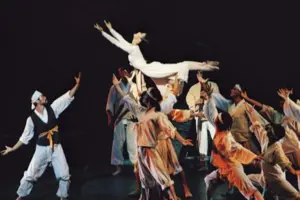
유니버설 발레단이 '심청'을 한국 고전으로 만든 방법
What Universal Ballet did right to make 'Shim Chung' a Korean classic
The Korea Herald
· 🇰🇷 Seoul, KR
Hwang Dong-hee
EN
2026-04-29 14:00
Translated
창단 40주년을 맞이한 발레단이 한국 창작 발레의 선구자로서의 유산을 되돌아봄
"고전"이 되는 것은 순간이 아니라 과정이다. 수정, 실패, 복귀의 길고 불균등한 축적이다. 우리가 지금 고전이라고 여기는 많은 작품들도 성숙해지기 위해 시간이 필요했다. '백조의 호수'는 1877년 초연 당시 혹평을 받았으며, 재작업을 거친 후에야 정전으로 인정되었다. 1892년 초연된 '호두까기 인형'도 비슷한 냉담한 반응을 받다가 나중에 계절의 고전으로 자리 잡았다. 발레와 모든 공연 예술에서 지속성은 시간이 지나면서 얻어진다.
이제 한국에서 자생적으로 만들어진 작품이 그러한 전통에 동참하고 있다. 유니버설 발레단이 창작하고 1986년 초연된 '심청'이 올해 40주년을 맞이했다. 금요일부터 일요일까지 5회 공연을 위해 재초연되는 이 작품은 광범위하게 한국 창작 발레의 이정표로 평가받고 있다. 이 작품은 10여 개국 40개 도시 이상에서 공연되었으며, 안무, 무대 장치, 의상이 지속적으로 진화해왔다. 무엇보다 그 의미는 뚜렷이 한국적인 서사에 있다.
유니버설 발레단의 예술감독 줄리아 문은 한국헤럴드와의 인터뷰에서 "창작부터 레거시가 되기까지, 고전이 되는 것을 보는 것은 정말 보람찬 일이다. 모든 이 세월 동안 작품을 돌봐올 수 있어 자랑스럽고 매우 충만하다"고 말했다. 문은 1986년 초연 당시 주역을 맡았다.
"오페라에는 일본 문화를 담은 '나비 부인'과 중국 문화를 담은 '투란도트'가 있다. 발레에는 스페인의 풍취를 담은 '돈키호테'와 인도 문화를 반영한 '라 바야데르'가 있다. '왜 한국 문화는 안 될까?'라는 질문이 '심청'의 시작이었다"고 그녀는 말했다.
여행할 수 있는 이야기로부터의 출발
발레단의 창립 예술감독 아드리엔 델라스는 1976년 한국에 도착해 무용수들을 밑바닥부터 키워올렸다. 1980년대 중반에 이르러 그녀는 시야를 넓히기 시작했다.
"해외에 나가려면 자신만의 색깔이 필요하다"는 그녀의 말은 거의 우연히 한 서점에서 한국 민간설화 '심청' 이야기를 집어 들면서 현실이 되었다. 효의 윤리와 감정적 명확성, 원형적 구조는 그녀의 눈에 "발레를 위한 완벽한 소재"였다.
이야기는 출생 직후 어머니를 잃고 맹인 아버지를 위해 자신을 희생하는 어린 소녀를 따른다. 절에 제공된 쌀 300포대가 아버지의 눈을 회복시킬 것이라는 약속에, 심청은 인신공양의 일부로 보내지기에 동의한다. 그녀는 바다에 던져지지만, 그녀의 효심에 감동한 용왕이 그녀를 연꽃 위에 타고 인간세계로 돌려보낸 후 구해진다. 그녀는 용왕과 사랑에 빠지고 나중에 아버지와도 재회한다.
발레단과 함께 성장하다
'심청'이 초연되었을 때, 문은 한국의 발레 무대가 여전히 "매우 미흡했으며" 기반시설이 부족하고 발레단을 운영하는 데 필요한 것에 대한 이해가 제한적이었다고 회상했다.
"시간이 지나면서 발레단이 성숙해지자 작품도 성숙해졌다. '심청'은 발레단과 함께 성장했으며, 회사와 함께 진화했다"고 문은 말했다. "우리는 지속적으로 작품을 수정하고 정제해왔다."
40년에 걸쳐 후임 예술감독들은 자신들의 터치를 덧붙였으며, 새로운 안무, 구조적 개정, 시각적 정제를 기여했으며 더욱 명확하게 한국식 궁중 요소들을 통합했다.
음악과 디자인은 중추적인 역할을 했다. 한때 세 명의 작곡가에게 나뉘었던 악보는 1988년 케빈 배버 피카드 하에 통합되어 발레에 더 큰 응집력과 규모를 부여했다. 의상도 시각적 대비를 강화하고 작품의 미학적 정체성을 심화시키기 위해 진화했다.
문은 또한 왕비 후보들이 전통 한국 예식 복장을 입고 궁중무용을 추는 장면을 추가하여 안무로 기여했으며, 이는 발레의 뚜렷이 한국적인 정체성을 강조하는 순간이다.
문은 '심청'이 오늘날 무대에서 지금까지 가장 강력한 버전이라고 확신한다.
오데트가 아니라, 지젤도 아니라, 심청
결국 모든 것은 드라마와 그것이 담은 감정으로 귀결된다.
대부분의 고전 발레에서 중앙의 남녀 한 쌍과 그들의 로맨스나 비극이 서사를 닻으로 삼는다.
여기서 남성 주역은 각 막마다 바뀐다. 선장에서 해룡 용왕으로, 용왕에서 왕으로 — 심청이 혼자서 이야기 전체를 이끌어가야 한다.
"따라서 그녀는 발레 전체를 관통해야 한다. 강한 배우가 아니면 관객을 사로잡기가 매우 어렵다."
그녀는 무용수들에게 이 작품을 "드라마 발레"로 접근하도록 자주 상기시키며, 그곳에서 표현은 손끝, 머리의 회전, 시선을 통해 전달되어야 한다고 말한다.
그러한 감정적 명확성은 문화적 장벽을 초월한다고 그녀는 말했다.
"해외 투어할 때 처음에는 어려움을 느낄 수 있다. '효'라는 개념은 순수하게 한국적이다"라고 그녀는 말했다. "하지만 감정은 소통한다. 재회 장면까지 가면, 국적에 상관없이 관객들이 눈물을 흘린다."
무용수들에게도 이 역할은 특별한 무게를 가진다. 지젤이나 오데트가 아니라, 뚜렷이 한국적인 여주인공이다.
"이제 한국 문화에 익숙하지 않은 사람은 거의 없다. 나는 이 작품이 지속되기를, '백조의 호수'처럼 오래도록 레퍼토리에 남기를 바란다."
발레는 제16회 한국발레축제를 개막하며, 서울예술센터를 포함한 주요 공연장에서 6월 21일까지 일련의 공연을 펼칠 예정이다.
이제 한국에서 자생적으로 만들어진 작품이 그러한 전통에 동참하고 있다. 유니버설 발레단이 창작하고 1986년 초연된 '심청'이 올해 40주년을 맞이했다. 금요일부터 일요일까지 5회 공연을 위해 재초연되는 이 작품은 광범위하게 한국 창작 발레의 이정표로 평가받고 있다. 이 작품은 10여 개국 40개 도시 이상에서 공연되었으며, 안무, 무대 장치, 의상이 지속적으로 진화해왔다. 무엇보다 그 의미는 뚜렷이 한국적인 서사에 있다.
유니버설 발레단의 예술감독 줄리아 문은 한국헤럴드와의 인터뷰에서 "창작부터 레거시가 되기까지, 고전이 되는 것을 보는 것은 정말 보람찬 일이다. 모든 이 세월 동안 작품을 돌봐올 수 있어 자랑스럽고 매우 충만하다"고 말했다. 문은 1986년 초연 당시 주역을 맡았다.
"오페라에는 일본 문화를 담은 '나비 부인'과 중국 문화를 담은 '투란도트'가 있다. 발레에는 스페인의 풍취를 담은 '돈키호테'와 인도 문화를 반영한 '라 바야데르'가 있다. '왜 한국 문화는 안 될까?'라는 질문이 '심청'의 시작이었다"고 그녀는 말했다.
여행할 수 있는 이야기로부터의 출발
발레단의 창립 예술감독 아드리엔 델라스는 1976년 한국에 도착해 무용수들을 밑바닥부터 키워올렸다. 1980년대 중반에 이르러 그녀는 시야를 넓히기 시작했다.
"해외에 나가려면 자신만의 색깔이 필요하다"는 그녀의 말은 거의 우연히 한 서점에서 한국 민간설화 '심청' 이야기를 집어 들면서 현실이 되었다. 효의 윤리와 감정적 명확성, 원형적 구조는 그녀의 눈에 "발레를 위한 완벽한 소재"였다.
이야기는 출생 직후 어머니를 잃고 맹인 아버지를 위해 자신을 희생하는 어린 소녀를 따른다. 절에 제공된 쌀 300포대가 아버지의 눈을 회복시킬 것이라는 약속에, 심청은 인신공양의 일부로 보내지기에 동의한다. 그녀는 바다에 던져지지만, 그녀의 효심에 감동한 용왕이 그녀를 연꽃 위에 타고 인간세계로 돌려보낸 후 구해진다. 그녀는 용왕과 사랑에 빠지고 나중에 아버지와도 재회한다.
발레단과 함께 성장하다
'심청'이 초연되었을 때, 문은 한국의 발레 무대가 여전히 "매우 미흡했으며" 기반시설이 부족하고 발레단을 운영하는 데 필요한 것에 대한 이해가 제한적이었다고 회상했다.
"시간이 지나면서 발레단이 성숙해지자 작품도 성숙해졌다. '심청'은 발레단과 함께 성장했으며, 회사와 함께 진화했다"고 문은 말했다. "우리는 지속적으로 작품을 수정하고 정제해왔다."
40년에 걸쳐 후임 예술감독들은 자신들의 터치를 덧붙였으며, 새로운 안무, 구조적 개정, 시각적 정제를 기여했으며 더욱 명확하게 한국식 궁중 요소들을 통합했다.
음악과 디자인은 중추적인 역할을 했다. 한때 세 명의 작곡가에게 나뉘었던 악보는 1988년 케빈 배버 피카드 하에 통합되어 발레에 더 큰 응집력과 규모를 부여했다. 의상도 시각적 대비를 강화하고 작품의 미학적 정체성을 심화시키기 위해 진화했다.
문은 또한 왕비 후보들이 전통 한국 예식 복장을 입고 궁중무용을 추는 장면을 추가하여 안무로 기여했으며, 이는 발레의 뚜렷이 한국적인 정체성을 강조하는 순간이다.
문은 '심청'이 오늘날 무대에서 지금까지 가장 강력한 버전이라고 확신한다.
오데트가 아니라, 지젤도 아니라, 심청
결국 모든 것은 드라마와 그것이 담은 감정으로 귀결된다.
대부분의 고전 발레에서 중앙의 남녀 한 쌍과 그들의 로맨스나 비극이 서사를 닻으로 삼는다.
여기서 남성 주역은 각 막마다 바뀐다. 선장에서 해룡 용왕으로, 용왕에서 왕으로 — 심청이 혼자서 이야기 전체를 이끌어가야 한다.
"따라서 그녀는 발레 전체를 관통해야 한다. 강한 배우가 아니면 관객을 사로잡기가 매우 어렵다."
그녀는 무용수들에게 이 작품을 "드라마 발레"로 접근하도록 자주 상기시키며, 그곳에서 표현은 손끝, 머리의 회전, 시선을 통해 전달되어야 한다고 말한다.
그러한 감정적 명확성은 문화적 장벽을 초월한다고 그녀는 말했다.
"해외 투어할 때 처음에는 어려움을 느낄 수 있다. '효'라는 개념은 순수하게 한국적이다"라고 그녀는 말했다. "하지만 감정은 소통한다. 재회 장면까지 가면, 국적에 상관없이 관객들이 눈물을 흘린다."
무용수들에게도 이 역할은 특별한 무게를 가진다. 지젤이나 오데트가 아니라, 뚜렷이 한국적인 여주인공이다.
"이제 한국 문화에 익숙하지 않은 사람은 거의 없다. 나는 이 작품이 지속되기를, '백조의 호수'처럼 오래도록 레퍼토리에 남기를 바란다."
발레는 제16회 한국발레축제를 개막하며, 서울예술센터를 포함한 주요 공연장에서 6월 21일까지 일련의 공연을 펼칠 예정이다.
처리 완료
4,596 tokens · $0.0129
기사 수집 완료 · 14:00
매체 피드에서 기사 메타데이터 수집
헤드라인 번역 완료 · 14:15
제목/요약 한국어 번역 (fetch 시점 inline)
claude-haiku-4-5-20251001
106 tokens
$0.00022
1.6s
본문 추출 완료
5,387자 추출 완료
본문 한국어 번역 완료 · 14:15
2,499자 번역 완료
claude-haiku-4-5-20251001
4,490 tokens
$0.01264
29.2s
지정학적 엔티티 추출 완료 · 14:15
6개 엔티티 추출 완료
지정학적 맥락 & R-Scanner
R-Scanner · 핫스팟
z=3.57
평소보다 훨씬 많은 매체가 집중 보도 중 — 기준: Korea
(🇰🇷 KR)
최근 6시간 23건
7일 평균 10.75건 / 6h
4개국 매체
4개 매체
본문에서 추출된 지명 (6)
위치 지도
지도 로딩 중…
같은 주제의 다른 기사 (최근 7일)
Marking 40th anniversary, troupe reflects on legacy as pioneer of Korean creative ballet
Becoming a "classic" is less a moment than a process — a long, uneven accumulation of revisions, failures and returns. Many of the works we now consider classics also required time to mature. "Swan Lake" was dismissed at its 1877 premiere and only entered the canon after years of reworking; "The Nutcracker," first staged in 1892, met a similarly chilly reception before becoming a seasonal staple. In ballet, as in all performing arts, endurance is earned over time.
Now, in Korea, a homegrown work is staking its own claim to that lineage. "Shim Chung," created by Universal Ballet and having its premiere in 1986, turns 40 this year. Revived this week for five performances from Friday to Sunday, it is widely regarded as a landmark of Korean creative ballet — a work that has traveled to more than a dozen countries and some 40 cities, while steadily evolving in choreography, staging, sets and costumes. Above all, its significance lies in its distinctly Korean narrative.
"To take a production from birth to legacy, to see it become a classic, is really rewarding. I'm just proud and it's very fulfilling to be able to care for a production for all these years," said Julia H. Moon, general director of Universal Ballet, in an interview with The Korea Herald. Moon also danced the title role at the ballet's 1986 premiere.
"In opera, there is 'Madame Butterfly' and 'Turandot' — works that bring Japanese and Chinese culture into the language of opera. In ballet, there is 'Don Quixote' with its Spanish flair, and 'La Bayadere,' which draws on Indian culture. The question 'Why not Korean culture?' was really the beginning of 'Shim Chung,'" she said.
Beginning with story that could travel
The company's founding artistic director, Adrienne Dellas, arrived in Korea in 1976 and spent years building dancers from the ground up. By the mid-1980s, she was looking outward.
"If you are going to go abroad, you need your own colors," she would say. The breakthrough came, almost incidentally, in a bookshop when she picked up the Korean folktale of filial devotion. The idea of "hyo" — the Korean ethic of filial piety — along with its emotional clarity and archetypal structure, made it, in her eyes, "a perfect vehicle for a ballet."
The story follows a young girl who sacrifices herself for her blind father after losing her mother at birth. Promised that 300 sacks of rice offered to a temple will restore his sight, Shim Chung agrees to be sent away as part of a human tribute. She is thrown into the sea, but is saved after the Sea Dragon King, moved by her devotion, returns her to the human world in a lotus. She falls in love with the king and later reunites with her father as well.
Growing with the company
When "Shim Chung" premiered, Moon recalled that Korea's ballet scene was still "very primitive," with little infrastructure and limited understanding of what it takes to run a ballet company.
"Over time, as the company matured, so did the production. 'Shim Chung' grew with us, evolving alongside the company," said Moon. "We have continuously revised and refined the work."
Over four decades, successive artistic directors layered the production with their own touches, contributing new choreography, structural revisions and visual refinements while incorporating more explicitly Korean court elements.
Music and design proved pivotal. A score once divided among three composers was unified in 1988 under Kevin Barber Pickard, giving the ballet greater cohesion and scale. Costumes, too, evolved to sharpen visual contrasts and deepen the work's aesthetic identity.
Moon also contributed choreographically, adding a scene in which royal consort candidates, dressed in traditional Korean ceremonial robes, perform a court dance — a moment that underscores the ballet's distinctly Korean identity.
Moon is confident that "Shim Chung" onstage today is the strongest version yet.
Not Odette, not Giselle, but Shim Chung
In the end, everything comes down to the drama and the emotion it carries.
In most classical ballets, a central male-female pair and their romance or tragedy anchor the narrative.
Here, the male lead shifts with each act — from the ship's captain to the Underwater Dragon King to the King — leaving Shim Chung to carry the story alone.
"So she has to thread the entire ballet. If you are not a strong actor, it is very difficult to hold the audience."
She often reminds dancers to approach the work as a "drama ballet," where expression must travel through the fingertips, the turn of the head and the gaze.
That emotional clarity, she said, transcends cultural barriers.
"When we tour abroad, you can sense some confusion at first. The idea of "hyo" (filial devotion) is uniquely Korean," she said. "But emotion communicates. By the reunion scene, audiences, regardless of nationality, are in tears."
For dancers, too, the role carries a particular weight: not Giselle or Odette, but a distinctly Korean heroine.
"Now, there's hardly anyone who isn't familiar with Korean culture. I hope this work can endure — like 'Swan Lake' — and remain in the repertoire for years to come."
The ballet will open the 16th Korea Ballet Festival, launching a series of performances through June 21 at major venues including the Seoul Arts Center.
Becoming a "classic" is less a moment than a process — a long, uneven accumulation of revisions, failures and returns. Many of the works we now consider classics also required time to mature. "Swan Lake" was dismissed at its 1877 premiere and only entered the canon after years of reworking; "The Nutcracker," first staged in 1892, met a similarly chilly reception before becoming a seasonal staple. In ballet, as in all performing arts, endurance is earned over time.
Now, in Korea, a homegrown work is staking its own claim to that lineage. "Shim Chung," created by Universal Ballet and having its premiere in 1986, turns 40 this year. Revived this week for five performances from Friday to Sunday, it is widely regarded as a landmark of Korean creative ballet — a work that has traveled to more than a dozen countries and some 40 cities, while steadily evolving in choreography, staging, sets and costumes. Above all, its significance lies in its distinctly Korean narrative.
"To take a production from birth to legacy, to see it become a classic, is really rewarding. I'm just proud and it's very fulfilling to be able to care for a production for all these years," said Julia H. Moon, general director of Universal Ballet, in an interview with The Korea Herald. Moon also danced the title role at the ballet's 1986 premiere.
"In opera, there is 'Madame Butterfly' and 'Turandot' — works that bring Japanese and Chinese culture into the language of opera. In ballet, there is 'Don Quixote' with its Spanish flair, and 'La Bayadere,' which draws on Indian culture. The question 'Why not Korean culture?' was really the beginning of 'Shim Chung,'" she said.
Beginning with story that could travel
The company's founding artistic director, Adrienne Dellas, arrived in Korea in 1976 and spent years building dancers from the ground up. By the mid-1980s, she was looking outward.
"If you are going to go abroad, you need your own colors," she would say. The breakthrough came, almost incidentally, in a bookshop when she picked up the Korean folktale of filial devotion. The idea of "hyo" — the Korean ethic of filial piety — along with its emotional clarity and archetypal structure, made it, in her eyes, "a perfect vehicle for a ballet."
The story follows a young girl who sacrifices herself for her blind father after losing her mother at birth. Promised that 300 sacks of rice offered to a temple will restore his sight, Shim Chung agrees to be sent away as part of a human tribute. She is thrown into the sea, but is saved after the Sea Dragon King, moved by her devotion, returns her to the human world in a lotus. She falls in love with the king and later reunites with her father as well.
Growing with the company
When "Shim Chung" premiered, Moon recalled that Korea's ballet scene was still "very primitive," with little infrastructure and limited understanding of what it takes to run a ballet company.
"Over time, as the company matured, so did the production. 'Shim Chung' grew with us, evolving alongside the company," said Moon. "We have continuously revised and refined the work."
Over four decades, successive artistic directors layered the production with their own touches, contributing new choreography, structural revisions and visual refinements while incorporating more explicitly Korean court elements.
Music and design proved pivotal. A score once divided among three composers was unified in 1988 under Kevin Barber Pickard, giving the ballet greater cohesion and scale. Costumes, too, evolved to sharpen visual contrasts and deepen the work's aesthetic identity.
Moon also contributed choreographically, adding a scene in which royal consort candidates, dressed in traditional Korean ceremonial robes, perform a court dance — a moment that underscores the ballet's distinctly Korean identity.
Moon is confident that "Shim Chung" onstage today is the strongest version yet.
Not Odette, not Giselle, but Shim Chung
In the end, everything comes down to the drama and the emotion it carries.
In most classical ballets, a central male-female pair and their romance or tragedy anchor the narrative.
Here, the male lead shifts with each act — from the ship's captain to the Underwater Dragon King to the King — leaving Shim Chung to carry the story alone.
"So she has to thread the entire ballet. If you are not a strong actor, it is very difficult to hold the audience."
She often reminds dancers to approach the work as a "drama ballet," where expression must travel through the fingertips, the turn of the head and the gaze.
That emotional clarity, she said, transcends cultural barriers.
"When we tour abroad, you can sense some confusion at first. The idea of "hyo" (filial devotion) is uniquely Korean," she said. "But emotion communicates. By the reunion scene, audiences, regardless of nationality, are in tears."
For dancers, too, the role carries a particular weight: not Giselle or Odette, but a distinctly Korean heroine.
"Now, there's hardly anyone who isn't familiar with Korean culture. I hope this work can endure — like 'Swan Lake' — and remain in the repertoire for years to come."
The ballet will open the 16th Korea Ballet Festival, launching a series of performances through June 21 at major venues including the Seoul Arts Center.