'우리는 그들이 우리를 죽일 것 같아서 공포에 떨었습니다': 미국 보트 충돌에서 살아남은 어부들이 증언하다
‘We were terrified they were going to kill us’: fishers who survived US boat strike speak out
The Guardian
· 🇬🇧 London, GB
Harriet Barber in Guayaquil
EN
2026-04-21 20:00
Translated
에콰도르 어선 승무원들이 트럼프의 '마약 테러리스트' 전쟁의 피해자로서의 고난을 설명합니다. 미국 군사 작전의 첫 번째 증언
오후 4시, 태평양 위로 빛이 부드러워지고 있었고, 돈 마카 호의 승무원들은 긴 날의 검은 다랭이와 날개다랭이 어획을 마치고 있었다. 선창 아래에서 분위기는 어업 하루가 마감되는 익숙한 리듬으로 안정되었다.
"우리는 그냥 일하고 있었고 마지막 트롤선의 귀환을 기다리고 있었습니다"라고 어부 중 한 명인 조니 세바스찬 팔라시오스가 가디언에 말했다. "모든 것이 완벽하게 괜찮았습니다."
갑자기 폭발이 보트를 관통했다. "갑작스러운 충격이 있었습니다 - 펑! 드론에서 나왔습니다"라고 그는 말했다.
폭발은 배를 찢어 유리를 산산조각 내고 여러 승무원을 다치게 했다. "위층으로 달려올라가서 배가 파괴된 것을 봤습니다... 온 배가 완전히 벌거벗겨져 있었습니다"라고 그는 말했다.
에콰도르 어부 그룹이 이중 드론 공격으로 피격되고 미국 깃발이 달린 순찰선의 군인들에 의해 총으로 위협받으며 억류되었다고 설명했으며, 이는 남미 해역의 소위 약물 밀수 보트에 대한 도널드 트럼프의 군사화된 캠페인의 피해자들의 드문 첫 번째 증언이다.
9월에 공격이 시작된 이후 미국 군사 공습으로 카리브해와 태평양에서 최소 178명이 사망했다고 라틴아메리카 워싱턴 사무소(Wola)의 집계에 따르면 나타났다.
미국은 어떤 선박도 약물 밀수에 관여했다는 증거를 제시하지 않았으며, 법적 전문가와 인권 단체들은 공격이 즉각적인 위협을 드러내지 않는 민간인을 대상으로 하는 것으로 보이므로 법적 절차 없는 살해에 해당한다고 말한다. 백악관은 살인이 합법적이라고 주장한다.
35톤의 어선인 돈 마카는 6척의 소형 보트와 함께 작동했으며 갈라파고스 제도에서 북서쪽으로 약 200마일 떨어진 곳에 있었을 때 3월 26일에 사라졌다. 약 1주일 앞서 에콰도르 남서부의 항구 도시 만타에서 출발했는데, 이곳은 해당 국가의 '마약 전쟁' 에스컬레이션의 초점이 되었다.
20명의 승무원들은 모두 산 마테오, 산타 마리아니타, 하라미호를 포함한 인근 지역 출신으로 어획 중 공격받았다고 주장한다.
그날 일찍이 그들은 미국 색상의 군사 선박을 봤지만 별로 신경 쓰지 않았다. "그들이 우리에게 신호를 보내지 않았으므로 우리는 계속 낚시를 했습니다"라고 팔라시오스는 말했다.
첫 번째 드론 공격은 보트의 선수를 맞혔고, 두 번째는 안테나를 맞혀 모든 통신을 끊었다고 그는 말했다.
폭발의 잔해가 승무원들을 휩쓸었다. 어부 중 한 명인 27세의 에릭 파브리시오 코엘로 살토스는 폭발로 청력과 시력이 모두 손상되었다고 말했다. "폭발을 들었을 때 고막이 끔찍하게 터졌습니다... 나는 파편으로 인한 피로 뒤덮여 있었습니다"라고 그는 라디오 콘택토에 말했다.
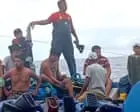
어부들은 폭발 후 드론이 계속 머리 위에서 맴돌면서 또 다른 공격을 두려워했다고 주장한다. 공격 후의 모습을 담은 휴대전화 영상은 배의 선미에 모여 있는 공포에 떨어하는 승무원들을 보여주며 경보음이 울리고 있고 한 명이 흰 셔츠를 흔들고 있다. 한 남자가 코에서 피를 닦아내고 있는 것으로 보인다.
곧 승무원들은 미국 순찰선에 의해 접근받았고 승선하도록 명령받았다고 주장한다.
팔라시오스는 순찰선에 타서 승무원들의 휴대전화를 압수받았고 공격의 대부분의 사진과 영상이 삭제되었다고 말한다.
승무원들이 순찰선에 타자 미국 인원은 어선에 올라타 승무원들의 음식과 맥주를 훔쳤다고 팔라시오스는 말했다.
팔라시오스가 돈 마카를 돌아봤을 때 이미 불타고 있었다. "우리는 배가 타는 것을 봤습니다"라고 그는 말했다.
순찰선의 승무원들은 서로 영어로 말했고 에콰도르인들을 다루기 위해 번역사를 사용했다. "우리가 미국 순찰선에 도착한 순간부터 그들은 우리에게 총을 겨누고 '들어와, 들어와'라고 소리를 질렀습니다"라고 54세의 팔라시오스는 말했다. "그들은 우리를 수갑으로 묶고 우리 머리에 후드를 씌우고 우리를 밀었습니다. 우리는 그들이 우리를 죽일 것 같아서 공포에 떨었습니다."
승무원들의 계정에 따르면 그들은 미국 선박에서 몇 시간 동안 억류된 후 엘살바도르 순찰선으로 이송되었고 며칠 더 바다에서 보낸 후 결국 엘살바도르에 도착했으며, 군사 기지로 옮겨져 심문을 받았다. 나중에 그들은 이민 당국에 인계되어 유엔 보호소로 옮겨졌다.
집에서 그들의 가족들은 사라짐과 관련하여 공식 정보의 침묵과 부재로 좌절하며 절망적인 수색을 했다. 어부들은 결국 에콰도르로 귀국했으며 무혐의로 석방되었다.
"감사합니다 우리가 살았습니다! 그들이 우리에게 한 것은 매우 잔인했습니다"라고 팔라시오스는 말했으며 미국 인원이 공격을 설명하거나 정당화하려는 시도를 하지 않았다고 주장했다.
"그들은 우리가 어부라는 것을 알았습니다. 엘살바도르 당국도 일이 아주 나쁘게 처리되었다고 말했습니다."
국방부와 백악관은 의견 요청에 응답하지 않았다. 미국 남방사령부는 제시된 사건들 중 "미국 정부 인원의 관여에 관한 제공할 정보가 없다"고 말했다.
승무원들을 대리하는 변호사는 그들의 계정이 국제법의 심각한 위반을 가리킨다고 말한다.
"미국 선박이 그들을 가로챘고 억지로 승선을 시켰습니다. 그들이 억류되자 그들의 어선이 폭파되었습니다"라고 인권 위원회(CDH)의 변호사 페르난도 바스티아스 로바요는 말했다. "그들은 자의적으로 후드를 쓰고 나중에 엘살바도르 해안에 버려졌습니다. 억류 뒤따른 비밀 억류는 강제 실종을 구성합니다.
"그것은 심리적 고문의 한 형태였으며, 당신의 인생에 정말로 무엇이 일어날지 모르면서 얼굴을 덮고 있었습니다"라고 그는 덧붙였다.
바스티아스 로바요는 에콰도르와 미국 당국 모두로부터 공식 대응이 없었다고 말했다.
이 주장들은 동태평양의 약물 밀수 경로에 대한 다국적 단속이 강화되는 와중에 나온다.
"9월 초부터 우리는 49건의 공격을 집계했습니다"라고 Wola의 국방 감시 담당 이사인 아담 아이작슨은 말했다. "보트의 수는 더 높으며, 일부 사건은 여러 선박을 포함하기 때문에 우리의 사망자 집계는 178명입니다. 4월 11일과 15일 사이에만 5건의 공격이 있었습니다."
트럼프는 상황을 라틴 아메리카 카르텔과의 "무장 충돌"로 표현했으며 미국으로의 약물 흐름을 줄이기 위해 이러한 작업이 필요하다고 주장했다. 미국은 자신의 작업이 확립된 밀수 경로를 따라 이동하는 의심되는 밀수인을 대상으로 한다고 주장했다.
그러나 행정부는 살해된 자들이 "마약 테러리스트"라는 주장을 뒷받침할 제한된 증거를 발표했으며, 작업의 합법성에 대한 열띤 논쟁을 촉발했다.
아이작슨은 미국이 더 강한 억제력이 필요하다고 주장하는 동안 "실제로는 모든 종류의 법을 위반하고 단순 혐의로 사람들을 죽이는 것을 의미한다"고 말했다.
"대응은 항상, 항상, 항상 정보가 마약 밀수를 가리킨다는 것입니다. 그들은 다른 것을 제공하지 않습니다. 그들은 거의 약물을 식별하지 않으며, 거의 그들이 함께 일할 것으로 의심되는 무장 단체를 식별하지 않으며, 물에서 회수된 약물의 증거는 없습니다"라고 아이작슨은 말했다.
팔라시오스는 경험이 그에게 마약과의 전쟁의 전제 자체에 의문을 품게 했다고 말했다. "모든 대통령들은 약물 밀수와 조직 범죄와 싸우고 있다고 주장합니다. 그러나 그들은 실제로 아무것도 하지 않았습니다. 그들은 그렇게 보이려고 하려고 할 뿐입니다 - 대신 우리 어부들과 같은 무죄한 사람들을 학대하고 있습니다"라고 그는 말했다.
바스티아스 로바요는 변호사들이 3개월 동안 실종된 또 다른 에콰도르 어선인 피오렐라의 사라짐도 조사하고 있다고 말했으며, 그 위에는 8명이 탑승했다. 유엔 강제 실종 위원회에 불만 사항이 접수되었다.
아이작슨은 다른 공격과 달리 돈 마카의 승무원들이 사살 사건의 피해자는 아닌 것으로 보이지만 공격이 "절대적으로 조사받아야 한다"고 말했다.
"그 보트에 약물이 없었다면, 그것은 현재 사람들을 죽이기 위해 사용되고 있는 미국 정보에 대해 엄청나게 민망한 '거짓 긍정'입니다. 질문이 없습니다"라고 그는 말했다.
팔라시오스는 승무원이 약물 밀수에 관여했다는 주장을 거부했으며, 그 주장을 뒷받침할 증거가 있었다면 체포되어 기소되었을 것이라고 주장했다. "우리가 불법적인 것을 운반했다면 우리는 여기에 있지 않을 것입니다"라고 그는 말했다. "우리는 미국에 있고 감옥에 있을 것입니다."
돈 마카의 승무원들에게 경험은 오래된 트라우마를 남겼다.
"밤 중간에 겁을 먹습니다. 나는 잘 잠을 잘 수 없습니다. 내 귀는 여전히 아픕니다"라고 팔라시오스는 말했다. "나는 그것이 나에게 끝이라고 생각합니다. 나는 낚시를 그만두었습니다. 거기로 돌아가는 것은 불가능합니다. 나는 그들이 우리를 죽일 것 같다고 생각했습니다."
다른 승무원들은 보복을 두려워하여 공개적으로 말하기를 거부했다고 팔라시오스는 말했다. "그들은 일어난 일로 우리를 죽일까봐 두려워합니다."
"우리는 그냥 일하고 있었고 마지막 트롤선의 귀환을 기다리고 있었습니다"라고 어부 중 한 명인 조니 세바스찬 팔라시오스가 가디언에 말했다. "모든 것이 완벽하게 괜찮았습니다."
갑자기 폭발이 보트를 관통했다. "갑작스러운 충격이 있었습니다 - 펑! 드론에서 나왔습니다"라고 그는 말했다.
폭발은 배를 찢어 유리를 산산조각 내고 여러 승무원을 다치게 했다. "위층으로 달려올라가서 배가 파괴된 것을 봤습니다... 온 배가 완전히 벌거벗겨져 있었습니다"라고 그는 말했다.
에콰도르 어부 그룹이 이중 드론 공격으로 피격되고 미국 깃발이 달린 순찰선의 군인들에 의해 총으로 위협받으며 억류되었다고 설명했으며, 이는 남미 해역의 소위 약물 밀수 보트에 대한 도널드 트럼프의 군사화된 캠페인의 피해자들의 드문 첫 번째 증언이다.
9월에 공격이 시작된 이후 미국 군사 공습으로 카리브해와 태평양에서 최소 178명이 사망했다고 라틴아메리카 워싱턴 사무소(Wola)의 집계에 따르면 나타났다.
미국은 어떤 선박도 약물 밀수에 관여했다는 증거를 제시하지 않았으며, 법적 전문가와 인권 단체들은 공격이 즉각적인 위협을 드러내지 않는 민간인을 대상으로 하는 것으로 보이므로 법적 절차 없는 살해에 해당한다고 말한다. 백악관은 살인이 합법적이라고 주장한다.
35톤의 어선인 돈 마카는 6척의 소형 보트와 함께 작동했으며 갈라파고스 제도에서 북서쪽으로 약 200마일 떨어진 곳에 있었을 때 3월 26일에 사라졌다. 약 1주일 앞서 에콰도르 남서부의 항구 도시 만타에서 출발했는데, 이곳은 해당 국가의 '마약 전쟁' 에스컬레이션의 초점이 되었다.
20명의 승무원들은 모두 산 마테오, 산타 마리아니타, 하라미호를 포함한 인근 지역 출신으로 어획 중 공격받았다고 주장한다.
그날 일찍이 그들은 미국 색상의 군사 선박을 봤지만 별로 신경 쓰지 않았다. "그들이 우리에게 신호를 보내지 않았으므로 우리는 계속 낚시를 했습니다"라고 팔라시오스는 말했다.
첫 번째 드론 공격은 보트의 선수를 맞혔고, 두 번째는 안테나를 맞혀 모든 통신을 끊었다고 그는 말했다.
폭발의 잔해가 승무원들을 휩쓸었다. 어부 중 한 명인 27세의 에릭 파브리시오 코엘로 살토스는 폭발로 청력과 시력이 모두 손상되었다고 말했다. "폭발을 들었을 때 고막이 끔찍하게 터졌습니다... 나는 파편으로 인한 피로 뒤덮여 있었습니다"라고 그는 라디오 콘택토에 말했다.
어부들은 폭발 후 드론이 계속 머리 위에서 맴돌면서 또 다른 공격을 두려워했다고 주장한다. 공격 후의 모습을 담은 휴대전화 영상은 배의 선미에 모여 있는 공포에 떨어하는 승무원들을 보여주며 경보음이 울리고 있고 한 명이 흰 셔츠를 흔들고 있다. 한 남자가 코에서 피를 닦아내고 있는 것으로 보인다.
곧 승무원들은 미국 순찰선에 의해 접근받았고 승선하도록 명령받았다고 주장한다.
팔라시오스는 순찰선에 타서 승무원들의 휴대전화를 압수받았고 공격의 대부분의 사진과 영상이 삭제되었다고 말한다.
승무원들이 순찰선에 타자 미국 인원은 어선에 올라타 승무원들의 음식과 맥주를 훔쳤다고 팔라시오스는 말했다.
팔라시오스가 돈 마카를 돌아봤을 때 이미 불타고 있었다. "우리는 배가 타는 것을 봤습니다"라고 그는 말했다.
순찰선의 승무원들은 서로 영어로 말했고 에콰도르인들을 다루기 위해 번역사를 사용했다. "우리가 미국 순찰선에 도착한 순간부터 그들은 우리에게 총을 겨누고 '들어와, 들어와'라고 소리를 질렀습니다"라고 54세의 팔라시오스는 말했다. "그들은 우리를 수갑으로 묶고 우리 머리에 후드를 씌우고 우리를 밀었습니다. 우리는 그들이 우리를 죽일 것 같아서 공포에 떨었습니다."
승무원들의 계정에 따르면 그들은 미국 선박에서 몇 시간 동안 억류된 후 엘살바도르 순찰선으로 이송되었고 며칠 더 바다에서 보낸 후 결국 엘살바도르에 도착했으며, 군사 기지로 옮겨져 심문을 받았다. 나중에 그들은 이민 당국에 인계되어 유엔 보호소로 옮겨졌다.
집에서 그들의 가족들은 사라짐과 관련하여 공식 정보의 침묵과 부재로 좌절하며 절망적인 수색을 했다. 어부들은 결국 에콰도르로 귀국했으며 무혐의로 석방되었다.
"감사합니다 우리가 살았습니다! 그들이 우리에게 한 것은 매우 잔인했습니다"라고 팔라시오스는 말했으며 미국 인원이 공격을 설명하거나 정당화하려는 시도를 하지 않았다고 주장했다.
"그들은 우리가 어부라는 것을 알았습니다. 엘살바도르 당국도 일이 아주 나쁘게 처리되었다고 말했습니다."
국방부와 백악관은 의견 요청에 응답하지 않았다. 미국 남방사령부는 제시된 사건들 중 "미국 정부 인원의 관여에 관한 제공할 정보가 없다"고 말했다.
승무원들을 대리하는 변호사는 그들의 계정이 국제법의 심각한 위반을 가리킨다고 말한다.
"미국 선박이 그들을 가로챘고 억지로 승선을 시켰습니다. 그들이 억류되자 그들의 어선이 폭파되었습니다"라고 인권 위원회(CDH)의 변호사 페르난도 바스티아스 로바요는 말했다. "그들은 자의적으로 후드를 쓰고 나중에 엘살바도르 해안에 버려졌습니다. 억류 뒤따른 비밀 억류는 강제 실종을 구성합니다.
"그것은 심리적 고문의 한 형태였으며, 당신의 인생에 정말로 무엇이 일어날지 모르면서 얼굴을 덮고 있었습니다"라고 그는 덧붙였다.
바스티아스 로바요는 에콰도르와 미국 당국 모두로부터 공식 대응이 없었다고 말했다.
이 주장들은 동태평양의 약물 밀수 경로에 대한 다국적 단속이 강화되는 와중에 나온다.
"9월 초부터 우리는 49건의 공격을 집계했습니다"라고 Wola의 국방 감시 담당 이사인 아담 아이작슨은 말했다. "보트의 수는 더 높으며, 일부 사건은 여러 선박을 포함하기 때문에 우리의 사망자 집계는 178명입니다. 4월 11일과 15일 사이에만 5건의 공격이 있었습니다."
트럼프는 상황을 라틴 아메리카 카르텔과의 "무장 충돌"로 표현했으며 미국으로의 약물 흐름을 줄이기 위해 이러한 작업이 필요하다고 주장했다. 미국은 자신의 작업이 확립된 밀수 경로를 따라 이동하는 의심되는 밀수인을 대상으로 한다고 주장했다.
그러나 행정부는 살해된 자들이 "마약 테러리스트"라는 주장을 뒷받침할 제한된 증거를 발표했으며, 작업의 합법성에 대한 열띤 논쟁을 촉발했다.
아이작슨은 미국이 더 강한 억제력이 필요하다고 주장하는 동안 "실제로는 모든 종류의 법을 위반하고 단순 혐의로 사람들을 죽이는 것을 의미한다"고 말했다.
"대응은 항상, 항상, 항상 정보가 마약 밀수를 가리킨다는 것입니다. 그들은 다른 것을 제공하지 않습니다. 그들은 거의 약물을 식별하지 않으며, 거의 그들이 함께 일할 것으로 의심되는 무장 단체를 식별하지 않으며, 물에서 회수된 약물의 증거는 없습니다"라고 아이작슨은 말했다.
팔라시오스는 경험이 그에게 마약과의 전쟁의 전제 자체에 의문을 품게 했다고 말했다. "모든 대통령들은 약물 밀수와 조직 범죄와 싸우고 있다고 주장합니다. 그러나 그들은 실제로 아무것도 하지 않았습니다. 그들은 그렇게 보이려고 하려고 할 뿐입니다 - 대신 우리 어부들과 같은 무죄한 사람들을 학대하고 있습니다"라고 그는 말했다.
바스티아스 로바요는 변호사들이 3개월 동안 실종된 또 다른 에콰도르 어선인 피오렐라의 사라짐도 조사하고 있다고 말했으며, 그 위에는 8명이 탑승했다. 유엔 강제 실종 위원회에 불만 사항이 접수되었다.
아이작슨은 다른 공격과 달리 돈 마카의 승무원들이 사살 사건의 피해자는 아닌 것으로 보이지만 공격이 "절대적으로 조사받아야 한다"고 말했다.
"그 보트에 약물이 없었다면, 그것은 현재 사람들을 죽이기 위해 사용되고 있는 미국 정보에 대해 엄청나게 민망한 '거짓 긍정'입니다. 질문이 없습니다"라고 그는 말했다.
팔라시오스는 승무원이 약물 밀수에 관여했다는 주장을 거부했으며, 그 주장을 뒷받침할 증거가 있었다면 체포되어 기소되었을 것이라고 주장했다. "우리가 불법적인 것을 운반했다면 우리는 여기에 있지 않을 것입니다"라고 그는 말했다. "우리는 미국에 있고 감옥에 있을 것입니다."
돈 마카의 승무원들에게 경험은 오래된 트라우마를 남겼다.
"밤 중간에 겁을 먹습니다. 나는 잘 잠을 잘 수 없습니다. 내 귀는 여전히 아픕니다"라고 팔라시오스는 말했다. "나는 그것이 나에게 끝이라고 생각합니다. 나는 낚시를 그만두었습니다. 거기로 돌아가는 것은 불가능합니다. 나는 그들이 우리를 죽일 것 같다고 생각했습니다."
다른 승무원들은 보복을 두려워하여 공개적으로 말하기를 거부했다고 팔라시오스는 말했다. "그들은 일어난 일로 우리를 죽일까봐 두려워합니다."
처리 완료
7,312 tokens · $0.0212
기사 수집 완료 · 20:15
매체 피드에서 기사 메타데이터 수집
헤드라인 번역 완료 · 16:55
제목/요약 한국어 번역 (fetch 시점 inline)
kimi-k2.5
0 tokens
$0.00000
0.4s
본문 추출 완료
8,633자 추출 완료
본문 한국어 번역 완료 · 16:55
4,278자 번역 완료
claude-haiku-4-5-20251001
7,312 tokens
$0.02124
49.5s
지정학적 엔티티 추출 완료 · 16:55
8개 엔티티 추출 완료
지정학적 맥락 & R-Scanner
R-Scanner · 평상
z=-0.57
일상적인 보도 수준 — 기준: Ecuador
(🇪🇨 EC)
최근 6시간 0건
7일 평균 0.75건 / 6h
0개국 매체
0개 매체
본문에서 추출된 지명 (8)
Ecuador
🇪🇨
United States
🇺🇸
Galápagos Islands
🇪🇨
Manta
🇪🇨
Pacific Ocean
El Salvador
🇸🇻
South America
Caribbean Sea
위치 지도
지도 로딩 중…
같은 주제의 다른 기사 (최근 7일)
An Ecuadorian fishing crew describe their ordeal as victims of Trump’s purported war on ‘narcoterrorists’By 4pm, the light was softening over the Pacific, and the crew of the Don Maca were finishing a long day hauling in lines of swordfish and albacore. Down in the hold, the mood had settled into the familiar rhythm of a fishing day drawing to a close.“We were just working, waiting for the last trawler to return,” Jhonny Sebastián Palacios, one of the fishers, told the Guardian. “Everything was perfectly fine.”
By 4pm, the light was softening over the Pacific, and the crew of the Don Maca were finishing a long day hauling in lines of swordfish and albacore. Down in the hold, the mood had settled into the familiar rhythm of a fishing day drawing to a close.“We were just working, waiting for the last trawler to return,” Jhonny Sebastián Palacios, one of the fishers, told the Guardian. “Everything was perfectly fine.”
From nowhere, an explosion ripped through the boat. “There was a sudden crash – boom! It came from a drone,” he said.
The blast tore through the vessel, shattering glass, and injuring several crew members. “I ran upstairs and saw the boat destroyed … The whole ship was stripped bare,” he said.
A group of Ecuadorian fishers have described how they were attacked in a double drone strike and then detained at gunpoint by soldiers on a US-flagged patrol vessel, in a rare first-hand account by victims of Donald Trump’s militarized campaign against alleged drug-trafficking boats off South America.
At least 178 people have been killed in US military airstrikes in the Caribbean and Pacific since the offensive began in September, according to a tally by the Washington Office on Latin America (Wola).
The US has provided no evidence that any of the vessels were involved in drug trafficking, and legal experts and rights groups say the attacks amount to extrajudicial killings as they apparently target civilians who do not pose any immediate threat. The White House insists the killings are lawful.
The Don Maca, a 35-ton fishing vessel which worked with six smaller boats, was approximately 200 miles north-west of the Galápagos Islands, when it disappeared on 26 March. About a week earlier, it had departed from Manta, a port city in south-western Ecuador that has become a focal point in the country’s escalating “war on drugs”.
Its 20 crewmen, all from nearby communities including San Mateo, Santa Marianita and Jaramijó, insist they were fishing when they were attacked.
Earlier that day they had seen a military vessel flying US colours, but thought nothing of it. “They did not signal to us, so we just carried on fishing,” said Palacios.
The first drone strike hit the bow of the boat, and the second hit the antenna, knocking out all communications, he said.
Debris from the explosion raked through the crew. One of the fishers, Erick Fabricio Coello Saltos, 27, said his hearing and his vision were both damaged in the blast. “When I heard an explosion, my eardrums ruptured terribly ... I was covered in blood from the shrapnel,” he told Radio Contacto.
The fishers claim drones continued to circle overhead after the blasts, leaving them fearing another strike. Mobile phone footage of the aftermath of the attack shows the terrified crew huddled at the stern of the ship, with an alarm sounding as one of them waves a white shirt. One man appears to be wiping blood from his nose.
Shortly afterwards, the crew say they were approached by a US patrol boat, and were ordered to board.
Palacios says that when onboard the patrol vessel, the crew’s phones were confiscated and most photos and videos of the attacks wiped.
Once the men were on the patrol boat, the US personnel boarded the fishing boat and stole the crew’s food and the beer, Palacios said.
When Palacios looked back at the Don Maca, it was already in flames. “We saw the ship burn,” he said.
The crew of the patrol boat spoke English to each other, and used a translator to address the Ecuadorians. “From the moment we arrived on the US patrol boat, they were pointing guns at us, shouting, ‘Get in, get in,’” said Palacios, 54. “They handcuffed us, put hoods over our heads and pushed us around. We were terrified they were going to kill us.”
According to the crew’s account, they were held for several hours by the US vessel before being transferred to a Salvadorian patrol boat and, after several more days at sea, eventually to El Salvador, where they were taken to a military base and questioned. Later they were handed over to immigration authorities and taken to a United Nations shelter.
Back home, their families conducted a desperate search, frustrated by the silence and lack of official information surrounding their disappearance. The fishers were eventually returned to Ecuador, where they were released without charge.
“Thank God we’re alive! What they did to us was very cruel,” said Palacios, who alleged that the US personnel never attempted to explain or justify the attack.
“They knew we were fishermen. Even the Salvadorian authorities told us things had been handled very badly.”
The Pentagon and the White House did not respond to requests for comment. US Southern Command said it had “no information to provide regarding any US government personnel involvement in any of the incidents” laid out.
A lawyer representing the crew says their account pointed to serious violations of international law.
“A US vessel intercepted them and forced them aboard. Once they were detained, their fishing boat was blown up,” said Fernando Bastias Robayo, a lawyer with the Human Rights Council (CDH). “They were arbitrarily hooded and later abandoned on the Salvadorian coast. Any apprehension followed by incommunicado detention constitutes an enforced disappearance.
“It was a form of psychological torture, not knowing what’s really going to happen to your life and having your face covered,” he adds.
Bastias Robayo said there had been no official response from either Ecuadorian or US authorities.
The claims come amid an intensifying multinational crackdown on drug-trafficking routes in the eastern Pacific.
“Since early September we’ve counted 49 attacks,” said Adam Isacson, director for defence oversight at Wola. “The number of boats is higher, because some incidents involve multiple vessels, and our tally of the dead stands at 178. There were five attacks between 11 and 15 April alone.”
Trump has described the situation as an “armed conflict” with Latin American cartels, arguing that such operations are needed to curb the flow of drugs into the United States. The US has insisted its operations are aimed at suspected traffickers moving along established smuggling routes.
However, the administration has released limited evidence to support its claims that those killed were “narcoterrorists”, prompting heated debate over the legality of the operations.
Isacson said that while the US argues it needs a stronger deterrent, “in practice [that] means violating all manner of law and killing people on mere suspicion”.
“The response is always, always, always that intelligence points to narcotrafficking. They don’t offer anything else. They never identify the drug, almost never identify the armed group they suspect them to be working with, and there is never any evidence of drugs being recovered in the water,” Isacson said.
Palacios said the experience had left him questioning the very premise of the war on drugs. “All the presidents claim they’re fighting drug trafficking and organised crime. But they’ve never actually done anything. They’re just trying to make it look like they are – and instead are mistreating innocent people like us fishermen,” he said.
Bastias Robayo says lawyers are also investigating the disappearance of another Ecuadorian fishing vessel, the Fiorella, which has been missing for three months with eight people onboard. A complaint has been filed with the UN Committee on Enforced Disappearances.
Isacson said that unlike in other attacks, the crew of the Don Maca did not appear to have been the victims of a shoot-to-kill incident, but said the attack should “absolutely be investigated”.
“If there were no drugs aboard those boats, it’s a hugely embarrassing ‘false positive’ for US intelligence at a time when that intelligence is being used to kill people, no questions asked,” he said.
Palacios rejected any suggestion the crew were involved in drug trafficking, arguing that if there had been any evidence to support that claim, they would have been arrested and charged. “If we had been carrying something illegal, we wouldn’t be here,” he said. “We’d be in the United States, in jail.”
For the crew of the Don Maca, the experience has left lasting trauma.
“I get scared in the middle of the night. I can’t sleep well. My ears still hurt,” Palacios said. “I think that’s it for me. I’m done with fishing. Going back out there is impossible. I thought they were going to kill us.”
Other crew members have declined to speak publicly, citing fears of reprisal, said Palacios. “They’re afraid someone will kill us for what happened.”