BKE 옆 상징적인 위성 안테나 2기, 미래 인프라를 위해 철거
Two iconic satellite dishes along BKE dismantled for future infrastructure
The Straits Times
· 🇸🇬 Singapore, SG
Shintaro Tay, Ng Keng Gene
EN
2026-04-15 22:25
Translated
두 위성 안테나는 1980년대에 건설되었다.
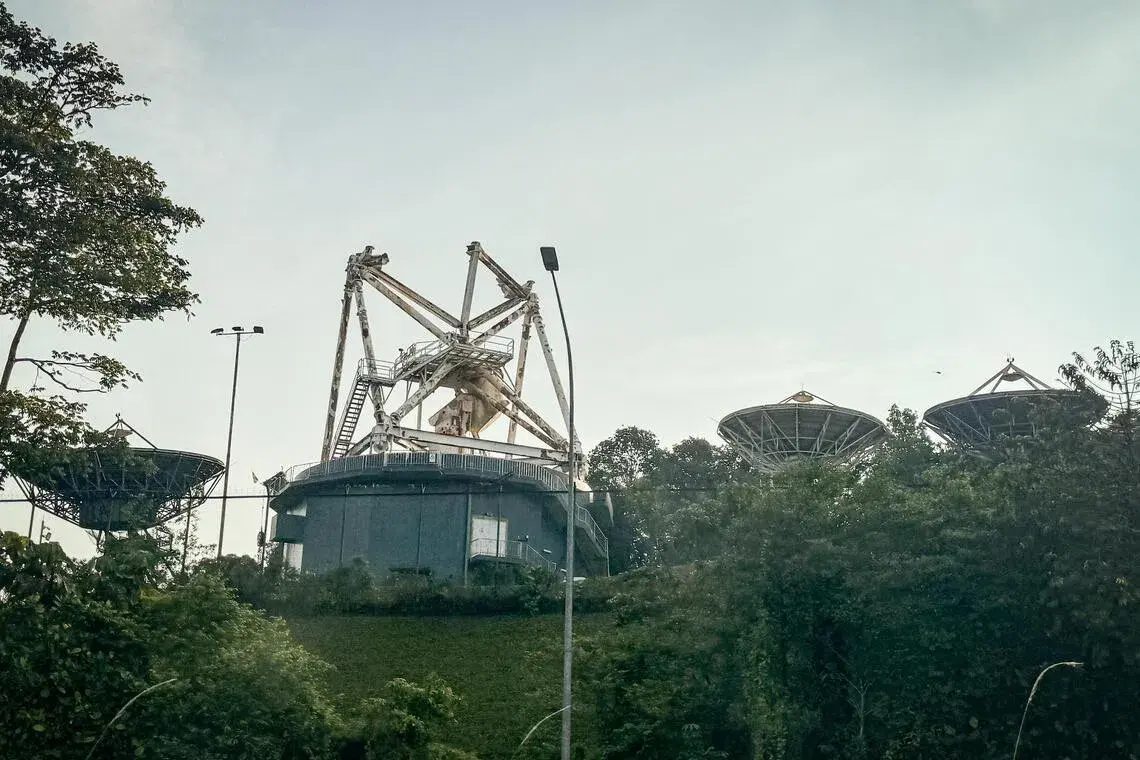
4월 13일 촬영된 부킷 티마 위성 지구국 접시 안테나 구조물.
사진: 더 스트레이츠 타임스 신타로 타이
2026년 4월 15일 21:25 발행
2026년 4월 15일 21:25 수정
싱가포르 – BKE를 따라 운행하는 운전자들은 거의 40년 동안 라이플 레인지 로드 인근의 상징적인 위성 접시 안테나 2기가 철거된 것을 눈치챘을 것이다.
싱텔 대변인은 4월 15일 위성 안테나가 부킷 티마 위성 지구국에 더 이상 없으며, 철거 작업이 2026년 1분기에 시작되었다고 확인했다.
대변인은 "기업과 고객의 진화하는 연결성 요구를 지원할 미래 인프라를 위해 철거되었다"고 밝혔다.
그는 레거시 위성의 국제 트래픽을 지원하기 위해 1980년대에 건설된 이 안테나들이 철거될 때 더 이상 사용되지 않고 있었다고 덧붙였다.
대변인은 "철거로 인해 어떤 서비스나 고객도 영향을 받지 않았다"고 말했다.
부킷 티마 위성 지구국은 싱가포르의 국제 통신 트래픽 용량을 늘리기 위해 1987년에 공식 개장했다. 1971년에 개장한 센토사의 최초 지구국은 공간 부족으로 추가 안테나를 수용할 수 없었다.
철거된 두 접시 안테나는 직경 32m와 21m로, 해당 지구국에서 가장 오래된 것들이었다.
32m 안테나만이 개장 시 설치되어 있었고, 21m 접시 안테나는 1988년에 추가되었다.
57세의 웡 문 충 씨는 부킷 티마 지역을 자주 지나다니며 위성 접시가 철거된 것에 놀라움을 표했다. 그는 어린 시절 처음 이것들을 보고 "SF 영화 속의 무언가 같다"고 생각했다고 회상했다.
웡 씨는 "이것들은 싱가포르의 초기 글로벌 통신 야망을 반영하며, 기술이 더 물리적이고 기념비적인 존재감을 가졌던 시대의 유물과도 같다"고 말했다.
"항상 거기 있을 것이라고 생각하는 것들 중 하나다. 없어질 때까지 말이다. 철거는 씁쓸한 느낌을 준다. 변화는 불가피하지만, 우리 중 많은 이들이 자라온 풍경의 작지만 의미 있는 부분을 잃어가는 것이기도 하다."
위성 접시는 지구 궤도를 도는 위성에서 전송된 신호를 수신하며, 이는 지상국에서 전송된 신호를 중계한다. 이를 통해 생중계 같은 서비스가 가능하다.
라이플 레인지 로드 부지는 공항과의 거리, 그리고 낮은 전파 간섭 수준 때문에 선정되었다.
안테나 지구국은 여러 기술적 이정표에서 역할을 해왔다. 2010년에는 국경일 퍼레이드의 3D 방송을 지원하며, 위성을 통해 콘텐츠를 처리하고 포맷하고 전송하여 싱텔의 전 mioTV 플랫폼으로 보냈다.
수년에 걸쳐 이 접시들은 원격 신문 인쇄, 은행 및 금융 데이터 전송, 이미지 전송을 포함한 고속 통신 서비스도 지원했다.
신타로 타이는 더 스트레이츠 타임스의 사진기자이다.
응 켕 진은 더 스트레이츠 타임스의 기자로, 토지 이용, 도시 계획, 문화유산 관련 이슈를 보도한다.
사진: 더 스트레이츠 타임스 신타로 타이
2026년 4월 15일 21:25 발행
2026년 4월 15일 21:25 수정
싱가포르 – BKE를 따라 운행하는 운전자들은 거의 40년 동안 라이플 레인지 로드 인근의 상징적인 위성 접시 안테나 2기가 철거된 것을 눈치챘을 것이다.
싱텔 대변인은 4월 15일 위성 안테나가 부킷 티마 위성 지구국에 더 이상 없으며, 철거 작업이 2026년 1분기에 시작되었다고 확인했다.
대변인은 "기업과 고객의 진화하는 연결성 요구를 지원할 미래 인프라를 위해 철거되었다"고 밝혔다.
그는 레거시 위성의 국제 트래픽을 지원하기 위해 1980년대에 건설된 이 안테나들이 철거될 때 더 이상 사용되지 않고 있었다고 덧붙였다.
대변인은 "철거로 인해 어떤 서비스나 고객도 영향을 받지 않았다"고 말했다.
부킷 티마 위성 지구국은 싱가포르의 국제 통신 트래픽 용량을 늘리기 위해 1987년에 공식 개장했다. 1971년에 개장한 센토사의 최초 지구국은 공간 부족으로 추가 안테나를 수용할 수 없었다.
철거된 두 접시 안테나는 직경 32m와 21m로, 해당 지구국에서 가장 오래된 것들이었다.
32m 안테나만이 개장 시 설치되어 있었고, 21m 접시 안테나는 1988년에 추가되었다.
57세의 웡 문 충 씨는 부킷 티마 지역을 자주 지나다니며 위성 접시가 철거된 것에 놀라움을 표했다. 그는 어린 시절 처음 이것들을 보고 "SF 영화 속의 무언가 같다"고 생각했다고 회상했다.
웡 씨는 "이것들은 싱가포르의 초기 글로벌 통신 야망을 반영하며, 기술이 더 물리적이고 기념비적인 존재감을 가졌던 시대의 유물과도 같다"고 말했다.
"항상 거기 있을 것이라고 생각하는 것들 중 하나다. 없어질 때까지 말이다. 철거는 씁쓸한 느낌을 준다. 변화는 불가피하지만, 우리 중 많은 이들이 자라온 풍경의 작지만 의미 있는 부분을 잃어가는 것이기도 하다."
위성 접시는 지구 궤도를 도는 위성에서 전송된 신호를 수신하며, 이는 지상국에서 전송된 신호를 중계한다. 이를 통해 생중계 같은 서비스가 가능하다.
라이플 레인지 로드 부지는 공항과의 거리, 그리고 낮은 전파 간섭 수준 때문에 선정되었다.
안테나 지구국은 여러 기술적 이정표에서 역할을 해왔다. 2010년에는 국경일 퍼레이드의 3D 방송을 지원하며, 위성을 통해 콘텐츠를 처리하고 포맷하고 전송하여 싱텔의 전 mioTV 플랫폼으로 보냈다.
수년에 걸쳐 이 접시들은 원격 신문 인쇄, 은행 및 금융 데이터 전송, 이미지 전송을 포함한 고속 통신 서비스도 지원했다.
신타로 타이는 더 스트레이츠 타임스의 사진기자이다.
응 켕 진은 더 스트레이츠 타임스의 기자로, 토지 이용, 도시 계획, 문화유산 관련 이슈를 보도한다.
처리 완료
2,344 tokens · $0.0045
기사 수집 완료 · 22:26
매체 피드에서 기사 메타데이터 수집
헤드라인 번역 완료 · 22:31
제목/요약 한국어 번역 (fetch 시점 inline)
kimi-k2.5
125 tokens
$0.00021
3.2s
본문 추출 완료
3,016자 추출 완료
본문 한국어 번역 완료 · 22:31
1,384자 번역 완료
kimi-k2.5
2,219 tokens
$0.00430
51.6s
지정학적 엔티티 추출 완료 · 22:31
3개 엔티티 추출 완료
지정학적 맥락 & R-Scanner
R-Scanner · 평상
z=-2.61
일상적인 보도 수준 — 기준: Singapore
(🇸🇬 SG)
최근 6시간 0건
7일 평균 7.71건 / 6h
0개국 매체
0개 매체
본문에서 추출된 지명 (3)
위치 지도
지도 로딩 중…
같은 주제의 다른 기사 (최근 7일)
The two satellite antennas were built in the 1980s.
The structure of a dish antenna at Bukit Timah Satellite Earth Station, pictured on April 13.ST PHOTO: SHINTARO TAY
Published Apr 15, 2026, 09:25 PM
Updated Apr 15, 2026, 09:25 PM
SINGAPORE – Motorists travelling along BKE may have noticed that two iconic satellite dishes, a fixture near Rifle Range Road for almost four decades, have been dismantled.
A Singtel spokesperson confirmed on April 15 that the satellite antennas are no longer at the Bukit Timah Satellite Earth Station, adding that removal works started in the first quarter of 2026.
“They have been removed to make way for future infrastructure that will support the evolving connectivity needs of enterprises and customers,” the spokesperson said.
Built in the 1980s to support international traffic on legacy satellites, the antennas were no longer in use when they were removed, he added.
“No services or customers were affected by their removal,” said the spokesperson.
The Bukit Timah Satellite Earth Station was officially opened in 1987 to increase Singapore’s international telecommunications traffic capacity. The first earth station on Sentosa, which opened in 1971, could not accommodate additional antennas due to limited space.
The two dish antennas that were removed, measuring 32m and 21m in diameter, were the oldest at the station.
Only one dish – the 32m antenna – was in place when the station opened, while the 21m dish was added in 1988.
Mr Wong Mun Chong, 57, who often passes the Bukit Timah area, was surprised that the satellite dishes had been removed. He first saw them in his younger days and recalled thinking they looked “like something out of a sci-fi scene”.
“They reflect Singapore’s early ambitions in global communications, almost like relics of a time when technology had a more physical, monumental presence,” Mr Wong said.
“It’s one of those things you assume will always be there until it isn’t. Their removal feels bittersweet. Change is inevitable, but we’re also losing a small yet meaningful piece of landscape many of us grew up with.”
Satellite dishes receive signals beamed from satellites orbiting the Earth, which in turn relay signals transmitted from ground stations. This enables services such as live telecasts.
The Rifle Range Road site was chosen for its distance from the airport, as well as its low levels of radio frequency interference.
The antenna station has played a role in several technological milestones. In 2010, it supported the 3D broadcast of the National Day Parade, processing, formatting and transmitting content via satellite to Singtel’s former mioTV platform.
Over the years, the dishes have also supported high-speed communication services, including remote newspaper printing, banking and financial data transfers, as well as the transmission of images.
Shintaro Tay is a photojournalist at The Straits Times.
Ng Keng Gene is a correspondent at The Straits Times, reporting on issues relating to land use, urban planning and heritage.
Singapore history