남아프리카공화국: March and March 운동, 요하네스버그에서 남아프리카공화국의 익숙한 반이민 시위 반복
South Africa: March and March Repeats South Africa's Familiar Anti-Migrant Script in Joburg
AllAfrica
· 🇿🇦 Cape Town, ZA
Jan Bornman
EN
2026-04-30 15:55
Translated
March and March 운동은 가우텡의 거리에서는 새로운 조직이지만, 그들의 메시지는 그렇지 않다.
최근 몇 년간 시민 조직으로 표현되는 일련의 단체들이 요하네스버그와 프리토리아의 거리를 행진했으며, 유사한 주장과 비난을 제기했다. 최근의 Operation Dudula에서부터 Put South Africans First, Fiyela Movement, All Truck Drivers Foundation 및 이전의 다른 단체들까지. 이름은 바뀌고, 지도자는 바뀌고, 슬로건은 다시 포장되지만, 메시지는 여전히 익숙하다.
수요일에 요하네스버그를 행진한 그룹의 내러티브는 요하네스버그 지하철 경찰청과 이전에 합의한 경로를 따르지 않았으며, 동일한 스크립트를 반복했다: 범죄자로 표현된 미등록 이민자, 마약과 범죄에 책임이 있는 외국인, 이민자의 법적 지위는 실제 구별보다는 남아프리카공화국 출신이 아닌 누구에 대한 적대감의 편리한 구실로 취급됨.
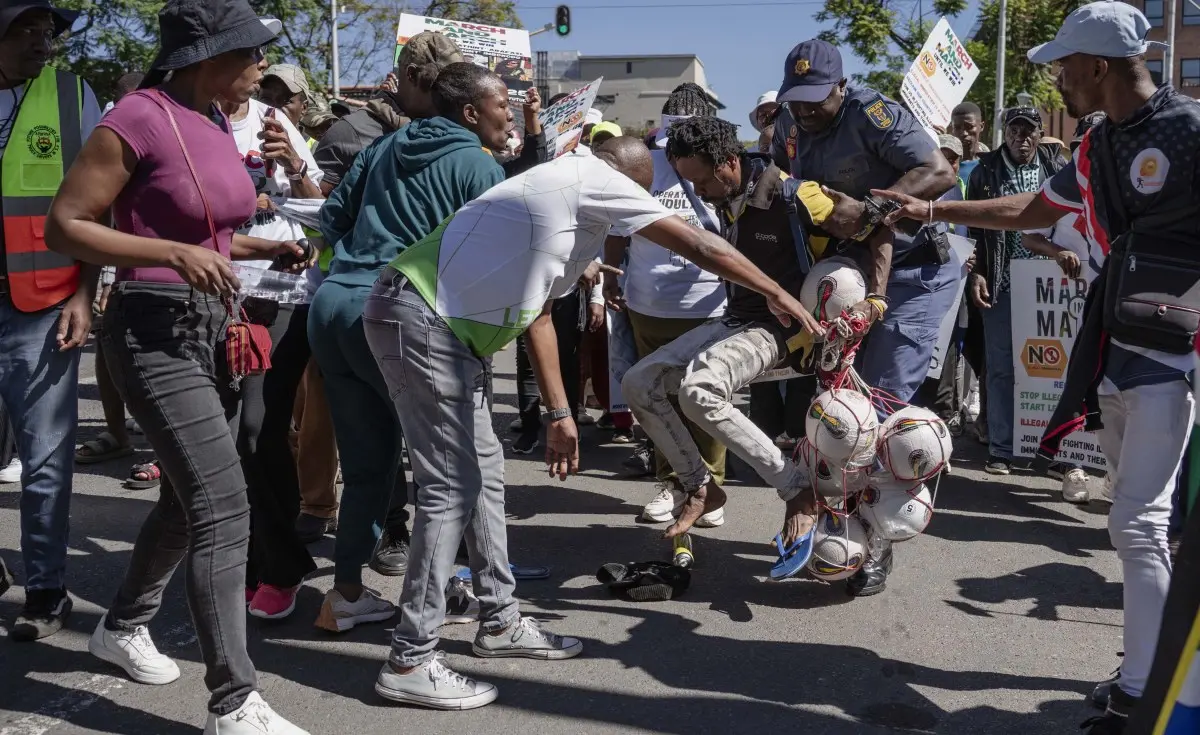
남아프리카공화국에서 12년을 산 카메룬의 50세 이민자 Walters Nkan은 수요일 Ngizwe Mchunu와 Nkosikhona "Phakelumthakathi" Ndabandaba가 이끄는 그룹의 일부인 가면을 쓴 남자들로부터 머리를 곤봉으로 맞으며 처음으로 그 적대감에 직면했다.
스프링복 서포터 저지를 입고 Braamfontein의 자신의 누나가 일하는 장소를 방문 중이던 Nkan은 외국인이라고 비난하는 남자 그룹에 의해 겨냥당했다. "우리는 오늘 그들이 시위를 하고 있다는 것을 알았지만, 그들이 거기에 올 줄은 몰랐다"고 맞은 후 피를 흘리는 Nkan은 눈에 띄게 놀라며 말했다.
"그들은 계속 '넌 외국인이야, 외국인이야, 외국인이야'라고 외쳤다. 그러다가 나를 때리기 시작했다. 그들은 당신이나 당신이 말하는 것을 상관하지 않는다. 그들은 당신이 여기서 온 게 아니라는 걸 알면 그냥 공격한다"고 Nkan은 나중에 말했다.
그룹은 Newtown의 Mary Fitzgerald Square에서 출발하여 Braamfontein을 천천히 통과하면서 수가 증가했으며, 앞에 있던 사람들 - 반팔이고 전통 줄루 무기를 가진 - 이 Hillbrow로 가는 경로를 결정하면서 한동안 멈췄다.
뒤를 따르는 것은 March and March Movement 지지자들과 ActionSA 및 MK Party를 포함한 정당의 사람들, 그리고 Operation Dudula 및 Fiyela 운동과 같은 다른 단체들이었다. Mchunu, Ndabandaba 및 다른 반팔 남자들과 함께 앞에서 걷는 여러 남자가 엉덩이에 총을 차고 있는 것이 목격되었다. 한 남자는 Braamfontein에서 잠시 자신의 총을 빼내어 건물을 향해 겨눴다.
요하네스버그 지하철 경찰청 대변인 Superintendent Xolani Fihla는 원래 계획된 경로가 따르지 않았음을 인정했지만 우리 도시 뉴스에 "군중의 크기, 자발적인 장애물 또는 안전 병목 현상과 같은 예측 불가능한 요소"라고 말했다.
"경찰과 지역 기관으로서, 우리는 일반적으로 엄격한 경로 집행보다 공공 안전을 우선시한다. 군중이 다른 방향으로 움직이기 시작하면, 경찰관들은 종종 교통 관리와 분쟁 예방으로 회전하여 큰 이동 집단을 특정 거리로 강제로 돌려보내려는 시도를 하지 않는다. 이는 때때로 긴장을 고조시킬 수 있다"고 그는 말했다.
Fihla는 또한 법이 시위나 행진 중 무기 소유를 "엄격히 금지"한다고 덧붙였다. "법 집행의 도전은 고긴장 환경에서 이러한 항목의 안전한 몰수이다"라고 그는 말했다.
그룹은 Hillbrow를 통과했으며, 측면 거리 및 아파트 블록의 옆 사람들에 대한 정기적인 놀림과 위협 외에는 추가 사건이 없었다. 그들은 Twist Street 아래로 내려갔고, Wanderers 택시 승강장을 지나 Jeppe의 Rahima Moosa Street의 Ethiopian Quarter로 향했으며, 대부분의 상점은 이미 문을 닫고 있었다.
여기서 또 다른 사람이 그룹의 일부에 의해 겨냥당했으며 맞았고, 그 다음 그들은 다시 Marshalltown으로 돌아가 Gauteng Legislature로 향했다. 그룹이 입법부에 도착했을 때, 그들은 March and March Movement의 지도자 Jacinta Ngobese-Zuma 및 ActionSA 지도자 Herman Mashaba와 같은 다른 저명한 사람들과 함께했다.
가우텡 총리 Panyaza Lesufi는 그룹을 만나고 그들의 공식 서한을 받기 위해 그곳에 있었다. 그는 나중에 그룹으로부터 야유를 받았으며, 그들에게 감사를 표했다. Mchunu와 Ndabandaba는 입법부에서 많은 사람들을 이끌어내어 Marshalltown을 통과했다.
Marshall Street 아래로 Jeppestown을 향해 이동하는 군중의 아이러니는 그들이 도시가 최근 내부 도시 공동 생활을 홍보하고 인증하기 위해 성공적인 활성화를 개최한 곳에서 한 거리 떨어져 있었기 때문에 분명했다. 그룹은 Jules Street와 Gus Street 모서리의 Gilfillan Park에 도달할 때까지 계속 움직였고, 그곳에서 흩어졌다.
그룹의 일부는 목요일 아침에 다시 모여 Hillbrow로 돌아올 계획이라고 말했다.
Wits-Oxford Mobility Governance Lab (MGL)의 공동 이사인 Professor Loren Landau는 여전히 이민 문제를 시위 또는 자경단으로 바꾸려는 남아프리카공화국 소수민족이라고 생각했지만, March and March와 같은 단체의 최근 행동은 낙인 찍기와 집단 행동이 통제되지 않도록 허용하는 위험을 보여주었다.
"내가 말할 수 있는 것은 국가 차원의 실업률과 범죄율을 살펴볼 때, 그들이 이민자 존재와 밀접하게 대응하지 않는다는 것이다. 시골 Eastern Cape와 Northern Cape는 거의 직업이 없지만 이민자도 거의 없다"고 그는 말했다.
"물론 이민자들은 범죄를 저지르지만, 다른 누구보다 많지는 않다. 그들이 체포되는 대부분의 것은 이민 위반과 관련이 있다"고 그는 덧붙였으며, 남아프리카공화국에서 살고 일하는 누구든 소득세 및 부가세와 같은 다양한 세금을 통해 국가에 기여하고 있다는 점에 주목했다.
이 기사는 요하네스버그 주민들을 위해 봉사하는 비영리 뉴스룸인 Our City News에 의해 작성되었다.
최근 몇 년간 시민 조직으로 표현되는 일련의 단체들이 요하네스버그와 프리토리아의 거리를 행진했으며, 유사한 주장과 비난을 제기했다. 최근의 Operation Dudula에서부터 Put South Africans First, Fiyela Movement, All Truck Drivers Foundation 및 이전의 다른 단체들까지. 이름은 바뀌고, 지도자는 바뀌고, 슬로건은 다시 포장되지만, 메시지는 여전히 익숙하다.
수요일에 요하네스버그를 행진한 그룹의 내러티브는 요하네스버그 지하철 경찰청과 이전에 합의한 경로를 따르지 않았으며, 동일한 스크립트를 반복했다: 범죄자로 표현된 미등록 이민자, 마약과 범죄에 책임이 있는 외국인, 이민자의 법적 지위는 실제 구별보다는 남아프리카공화국 출신이 아닌 누구에 대한 적대감의 편리한 구실로 취급됨.
남아프리카공화국에서 12년을 산 카메룬의 50세 이민자 Walters Nkan은 수요일 Ngizwe Mchunu와 Nkosikhona "Phakelumthakathi" Ndabandaba가 이끄는 그룹의 일부인 가면을 쓴 남자들로부터 머리를 곤봉으로 맞으며 처음으로 그 적대감에 직면했다.
스프링복 서포터 저지를 입고 Braamfontein의 자신의 누나가 일하는 장소를 방문 중이던 Nkan은 외국인이라고 비난하는 남자 그룹에 의해 겨냥당했다. "우리는 오늘 그들이 시위를 하고 있다는 것을 알았지만, 그들이 거기에 올 줄은 몰랐다"고 맞은 후 피를 흘리는 Nkan은 눈에 띄게 놀라며 말했다.
"그들은 계속 '넌 외국인이야, 외국인이야, 외국인이야'라고 외쳤다. 그러다가 나를 때리기 시작했다. 그들은 당신이나 당신이 말하는 것을 상관하지 않는다. 그들은 당신이 여기서 온 게 아니라는 걸 알면 그냥 공격한다"고 Nkan은 나중에 말했다.
그룹은 Newtown의 Mary Fitzgerald Square에서 출발하여 Braamfontein을 천천히 통과하면서 수가 증가했으며, 앞에 있던 사람들 - 반팔이고 전통 줄루 무기를 가진 - 이 Hillbrow로 가는 경로를 결정하면서 한동안 멈췄다.
뒤를 따르는 것은 March and March Movement 지지자들과 ActionSA 및 MK Party를 포함한 정당의 사람들, 그리고 Operation Dudula 및 Fiyela 운동과 같은 다른 단체들이었다. Mchunu, Ndabandaba 및 다른 반팔 남자들과 함께 앞에서 걷는 여러 남자가 엉덩이에 총을 차고 있는 것이 목격되었다. 한 남자는 Braamfontein에서 잠시 자신의 총을 빼내어 건물을 향해 겨눴다.
요하네스버그 지하철 경찰청 대변인 Superintendent Xolani Fihla는 원래 계획된 경로가 따르지 않았음을 인정했지만 우리 도시 뉴스에 "군중의 크기, 자발적인 장애물 또는 안전 병목 현상과 같은 예측 불가능한 요소"라고 말했다.
"경찰과 지역 기관으로서, 우리는 일반적으로 엄격한 경로 집행보다 공공 안전을 우선시한다. 군중이 다른 방향으로 움직이기 시작하면, 경찰관들은 종종 교통 관리와 분쟁 예방으로 회전하여 큰 이동 집단을 특정 거리로 강제로 돌려보내려는 시도를 하지 않는다. 이는 때때로 긴장을 고조시킬 수 있다"고 그는 말했다.
Fihla는 또한 법이 시위나 행진 중 무기 소유를 "엄격히 금지"한다고 덧붙였다. "법 집행의 도전은 고긴장 환경에서 이러한 항목의 안전한 몰수이다"라고 그는 말했다.
그룹은 Hillbrow를 통과했으며, 측면 거리 및 아파트 블록의 옆 사람들에 대한 정기적인 놀림과 위협 외에는 추가 사건이 없었다. 그들은 Twist Street 아래로 내려갔고, Wanderers 택시 승강장을 지나 Jeppe의 Rahima Moosa Street의 Ethiopian Quarter로 향했으며, 대부분의 상점은 이미 문을 닫고 있었다.
여기서 또 다른 사람이 그룹의 일부에 의해 겨냥당했으며 맞았고, 그 다음 그들은 다시 Marshalltown으로 돌아가 Gauteng Legislature로 향했다. 그룹이 입법부에 도착했을 때, 그들은 March and March Movement의 지도자 Jacinta Ngobese-Zuma 및 ActionSA 지도자 Herman Mashaba와 같은 다른 저명한 사람들과 함께했다.
가우텡 총리 Panyaza Lesufi는 그룹을 만나고 그들의 공식 서한을 받기 위해 그곳에 있었다. 그는 나중에 그룹으로부터 야유를 받았으며, 그들에게 감사를 표했다. Mchunu와 Ndabandaba는 입법부에서 많은 사람들을 이끌어내어 Marshalltown을 통과했다.
Marshall Street 아래로 Jeppestown을 향해 이동하는 군중의 아이러니는 그들이 도시가 최근 내부 도시 공동 생활을 홍보하고 인증하기 위해 성공적인 활성화를 개최한 곳에서 한 거리 떨어져 있었기 때문에 분명했다. 그룹은 Jules Street와 Gus Street 모서리의 Gilfillan Park에 도달할 때까지 계속 움직였고, 그곳에서 흩어졌다.
그룹의 일부는 목요일 아침에 다시 모여 Hillbrow로 돌아올 계획이라고 말했다.
Wits-Oxford Mobility Governance Lab (MGL)의 공동 이사인 Professor Loren Landau는 여전히 이민 문제를 시위 또는 자경단으로 바꾸려는 남아프리카공화국 소수민족이라고 생각했지만, March and March와 같은 단체의 최근 행동은 낙인 찍기와 집단 행동이 통제되지 않도록 허용하는 위험을 보여주었다.
"내가 말할 수 있는 것은 국가 차원의 실업률과 범죄율을 살펴볼 때, 그들이 이민자 존재와 밀접하게 대응하지 않는다는 것이다. 시골 Eastern Cape와 Northern Cape는 거의 직업이 없지만 이민자도 거의 없다"고 그는 말했다.
"물론 이민자들은 범죄를 저지르지만, 다른 누구보다 많지는 않다. 그들이 체포되는 대부분의 것은 이민 위반과 관련이 있다"고 그는 덧붙였으며, 남아프리카공화국에서 살고 일하는 누구든 소득세 및 부가세와 같은 다양한 세금을 통해 국가에 기여하고 있다는 점에 주목했다.
이 기사는 요하네스버그 주민들을 위해 봉사하는 비영리 뉴스룸인 Our City News에 의해 작성되었다.
처리 완료
4,915 tokens · $0.0138
기사 수집 완료 · 15:55
매체 피드에서 기사 메타데이터 수집
헤드라인 번역 완료 · 16:07
제목/요약 한국어 번역 (fetch 시점 inline)
claude-haiku-4-5-20251001
139 tokens
$0.00033
1.6s
본문 추출 완료
5,913자 추출 완료
본문 한국어 번역 완료 · 16:07
3,121자 번역 완료
claude-haiku-4-5-20251001
4,776 tokens
$0.01349
29.3s
지정학적 엔티티 추출 완료 · 16:07
8개 엔티티 추출 완료
지정학적 맥락 & R-Scanner
R-Scanner · 상승
z=1.41
평소보다 보도량이 증가 추세 — 기준: South Africa
(🇿🇦 ZA)
최근 6시간 8건
7일 평균 4.64건 / 6h
1개국 매체
2개 매체
본문에서 추출된 지명 (8)
South Africa
🇿🇦
Johannesburg
🇿🇦
Gauteng
🇿🇦
Pretoria
🇿🇦
Hillbrow
🇿🇦
Eastern Cape
🇿🇦
Northern Cape
🇿🇦
Cameroon
🇨🇲
위치 지도
지도 로딩 중…
같은 주제의 다른 기사 (최근 7일)
The March and March Movement may be new to the streets of Gauteng, but its message is not.
In recent years, a succession of groups framed as civic organisations have walked through the streets of Johannesburg and Pretoria with similar claims and accusations. From Operation Dudula most recently to Put South Africans First, the Fiyela Movement, the All Truck Drivers Foundation and other groups before them. The names change, the leaders change and the slogans are repackaged, but the message remains familiar.
On Wednesday, the group's narrative as they marched through Johannesburg - which didn't follow the route that was agreed upon earlier with the Johannesburg Metro Police Department - repeated the same script: undocumented migrants cast as criminals, foreign nationals blamed for drugs and crime and the legal status of migrants treated less as a real distinction and more as a convenient cover for hostility toward anyone not from South Africa.
Walters Nkan, a 50-year-old migrant from Cameroon who has lived in South Africa for 12 years, was the first to face that hostility on Wednesday when he was beaten and struck over the head with a knobkierrie by masked men who were part of the group led by Ngizwe Mchunu and Nkosikhona "Phakelumthakathi" Ndabandaba.
Nkan, who was wearing a Springbok supporters jersey and visiting his sister at the place where she worked in Braamfontein, was accosted by a group of men who accused him of being a foreigner. "We knew they were protesting today, but we didn't know they were coming there," a visibly stunned Nkan said after he was struck and bleeding from the head.
"They were just shouting 'you're a foreigner, foreigner, foreigner.' Then they started beating me. They don't care about you or what you are saying. They just attack you if they know you're not from here," Nkan said later.
The group grew in numbers as they made their way from Mary Fitzgerald Square in Newtown and slowly snaked through Braamfontein, where it paused for a while as those in the front - shirtless and with traditional Zulu weapons - were deciding on the route to follow to and through Hillbrow.
Following in tow were March and March Movement supporters and people from political parties, including ActionSA and the MK Party, as well as other groups such as Operation Dudula and the Fiyela movement. A number of men walking in the front with Mchunu, Ndabandaba, and other shirtless men could be seen with firearms on their hips. One man briefly pulled his firearm in Braamfontein and pointed it toward a building.
Superintendent Xolani Fihla, spokesperson for the Johannesburg Metro Police Department, acknowledged that the original, planned route was not followed but told Our City News that "unpredictable factors, such as the size of the crowd, spontaneous obstructions, or safety bottlenecks, can sometimes cause the lead group to divert".
"As the police and local agencies, we generally prioritise public safety over strict route enforcement. If a crowd begins to move in a different direction, officers often pivot to managing traffic and preventing conflict rather than attempting to force a large, moving mass of people back onto a specific street, which can sometimes escalate tension," he said.
Fihla also added that the law "strictly prohibits the possession" of weapons during a protest or march. "The challenge for law enforcement is the safe confiscation of these items in a high-tension environment," he said.
The group made its way through Hillbrow without any further incidents, except for the regular taunting and intimidation of onlookers from side streets and apartment blocks. They made their way down Twist Street, past the Wanderers taxi rank towards the Ethiopian Quarter on Rahima Moosa Street in Jeppe, where most of the shops were already shuttered.
Another person here was accosted and struck by some in the group before they carried on moving back towards Marshalltown again and making their way to the Gauteng Legislature. Once the group arrived at the legislature, they were joined by other prominent people such as the leader of the March and March Movement, Jacinta Ngobese-Zuma and ActionSA leader Herman Mashaba.
Gauteng Premier Panyaza Lesufi was there to meet the group and to receive their memorandum. He was later booed by the group as he thanked them. Mchunu and Ndabandaba then led a large group of people away from the legislature and through Marshalltown.
The irony of the crowd moving down Marshall Street towards Jeppestown was palpable as they were one street from where the City recently held a successful activation to promote and endorse inner-city communal life. The group carried on until they reached Gilfillan Park on the corners of Jules Street and Gus Street in Jeppestown before they dispersed.
Some of the group said they were planning to gather again on Thursday morning and return to Hillbrow.
Professor Loren Landau, co-director of the Wits-Oxford Mobility Governance Lab (MGL), said he still believed it was a minority of South Africans who were willing to turn their issues with migration into protest or vigilantism, but the recent action by groups such as March and March showed the danger of allowing scapegoating and collective action to go unchecked.
"What I can say is that when we look at unemployment rates and crime rates at a national level, they do not correspond closely to immigrant presence. The rural Eastern Cape and Northern Cape have almost no jobs but also almost no immigrants," he said.
"Of course, immigrants commit crimes, but no more so than anyone else. Most of what they're arrested for has to do with immigration offenses," he added, noting that anyone living and working in South Africa was contributing to the country through various taxes such as income tax and VAT.
This story is produced by Our City News, a non-profit newsroom that serves the people of Johannesburg
In recent years, a succession of groups framed as civic organisations have walked through the streets of Johannesburg and Pretoria with similar claims and accusations. From Operation Dudula most recently to Put South Africans First, the Fiyela Movement, the All Truck Drivers Foundation and other groups before them. The names change, the leaders change and the slogans are repackaged, but the message remains familiar.
On Wednesday, the group's narrative as they marched through Johannesburg - which didn't follow the route that was agreed upon earlier with the Johannesburg Metro Police Department - repeated the same script: undocumented migrants cast as criminals, foreign nationals blamed for drugs and crime and the legal status of migrants treated less as a real distinction and more as a convenient cover for hostility toward anyone not from South Africa.
Walters Nkan, a 50-year-old migrant from Cameroon who has lived in South Africa for 12 years, was the first to face that hostility on Wednesday when he was beaten and struck over the head with a knobkierrie by masked men who were part of the group led by Ngizwe Mchunu and Nkosikhona "Phakelumthakathi" Ndabandaba.
Nkan, who was wearing a Springbok supporters jersey and visiting his sister at the place where she worked in Braamfontein, was accosted by a group of men who accused him of being a foreigner. "We knew they were protesting today, but we didn't know they were coming there," a visibly stunned Nkan said after he was struck and bleeding from the head.
"They were just shouting 'you're a foreigner, foreigner, foreigner.' Then they started beating me. They don't care about you or what you are saying. They just attack you if they know you're not from here," Nkan said later.
The group grew in numbers as they made their way from Mary Fitzgerald Square in Newtown and slowly snaked through Braamfontein, where it paused for a while as those in the front - shirtless and with traditional Zulu weapons - were deciding on the route to follow to and through Hillbrow.
Following in tow were March and March Movement supporters and people from political parties, including ActionSA and the MK Party, as well as other groups such as Operation Dudula and the Fiyela movement. A number of men walking in the front with Mchunu, Ndabandaba, and other shirtless men could be seen with firearms on their hips. One man briefly pulled his firearm in Braamfontein and pointed it toward a building.
Superintendent Xolani Fihla, spokesperson for the Johannesburg Metro Police Department, acknowledged that the original, planned route was not followed but told Our City News that "unpredictable factors, such as the size of the crowd, spontaneous obstructions, or safety bottlenecks, can sometimes cause the lead group to divert".
"As the police and local agencies, we generally prioritise public safety over strict route enforcement. If a crowd begins to move in a different direction, officers often pivot to managing traffic and preventing conflict rather than attempting to force a large, moving mass of people back onto a specific street, which can sometimes escalate tension," he said.
Fihla also added that the law "strictly prohibits the possession" of weapons during a protest or march. "The challenge for law enforcement is the safe confiscation of these items in a high-tension environment," he said.
The group made its way through Hillbrow without any further incidents, except for the regular taunting and intimidation of onlookers from side streets and apartment blocks. They made their way down Twist Street, past the Wanderers taxi rank towards the Ethiopian Quarter on Rahima Moosa Street in Jeppe, where most of the shops were already shuttered.
Another person here was accosted and struck by some in the group before they carried on moving back towards Marshalltown again and making their way to the Gauteng Legislature. Once the group arrived at the legislature, they were joined by other prominent people such as the leader of the March and March Movement, Jacinta Ngobese-Zuma and ActionSA leader Herman Mashaba.
Gauteng Premier Panyaza Lesufi was there to meet the group and to receive their memorandum. He was later booed by the group as he thanked them. Mchunu and Ndabandaba then led a large group of people away from the legislature and through Marshalltown.
The irony of the crowd moving down Marshall Street towards Jeppestown was palpable as they were one street from where the City recently held a successful activation to promote and endorse inner-city communal life. The group carried on until they reached Gilfillan Park on the corners of Jules Street and Gus Street in Jeppestown before they dispersed.
Some of the group said they were planning to gather again on Thursday morning and return to Hillbrow.
Professor Loren Landau, co-director of the Wits-Oxford Mobility Governance Lab (MGL), said he still believed it was a minority of South Africans who were willing to turn their issues with migration into protest or vigilantism, but the recent action by groups such as March and March showed the danger of allowing scapegoating and collective action to go unchecked.
"What I can say is that when we look at unemployment rates and crime rates at a national level, they do not correspond closely to immigrant presence. The rural Eastern Cape and Northern Cape have almost no jobs but also almost no immigrants," he said.
"Of course, immigrants commit crimes, but no more so than anyone else. Most of what they're arrested for has to do with immigration offenses," he added, noting that anyone living and working in South Africa was contributing to the country through various taxes such as income tax and VAT.
This story is produced by Our City News, a non-profit newsroom that serves the people of Johannesburg