라디오 타이소 운동 전통은 하루를 시작하는 간단하면서도 역동적인 방법
Radio Taiso exercise tradition is a simple yet dynamic way to start the day
Associated Press
· 🇺🇸 New York, US
https://apnews.com/author/stephen-wade
EN
2026-04-25 20:55
Translated
일본이 아침을 깨우는 방식이다. 라디오 타이소(Radio Taiso) — 영어로는 운동 라디오(Exercise Radio) — 는 하루를 시작하는 간단하면서도 역동적인 방법이다. AP의 스티븐 웨이드가 도쿄에서 자세히 설명한다.
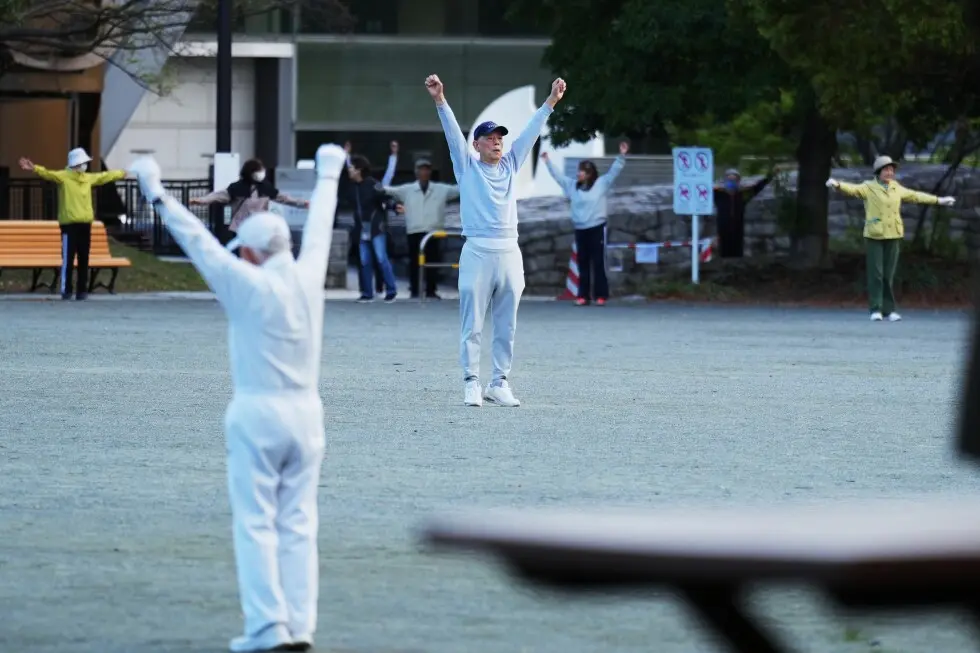
도쿄의 공원에서 월요일 2026년 4월 6일 사람들이 라디오의 음악과 지도를 들으며 스트레칭 운동을 하고 있다. (AP 사진/히로 코마에)
도쿄(AP) — 일본이 아침을 깨우는 방식이다. 라디오 타이소(Radio Taiso) — 영어로는 운동 라디오(Exercise Radio) — 는 하루를 시작하는 간단하면서도 역동적인 방법이다.
일본 라디오는 매일 아침 6시 30분에 음악을 방송하며 맨손체조 기본 지도를 함께 제공하고, 수백만 명이 이 안무에 참여한다: 공원, 직장, 학교 — 그리고 집에서.
라디오 타이소는 거의 100년의 역사를 가지고 있으며, 1928년에 공식적으로 도입되었고 히로히토 황제의 즉위와 일치한다. 이 전통이 지속되는 이유는 이 운동들이 모든 연령과 능력에 적합하며 쉽게 접근할 수 있기 때문이다.
기본 운동 동작들을 말한다: 하늘을 향해 팔을 뻗어 몸을 풀기, 몸통을 비틀기, 엉덩이에서 구부리기, 팔을 흔들고 어깨를 풀기, 또는 제자리에서 뛰기나 달리기.
운동자들은 원하는 만큼 힘들게 할 수 있으며, 부드러운 피아노 멜로디의 리듬에 맞춰 단 10분이면 모두 끝난다. 일본은 지구상에서 가장 오래 사는 인구를 가진 국가 중 하나이며, 이 의식은 신체적, 사회적 웰빙을 증진하는 것으로 인정받고 있다.
관심이 있다면 YouTube에서 영어와 다른 언어로 된 라디오 타이소 루틴을 찾을 수 있다.
서 있거나 앉아서 할 수 있는 약 12가지 기본 동작이 있다. 아이디어는 계속 움직이는 것이며, 프로그램이 아침 일찍 실행되지만, 많은 열심팬들이 나중에 하루 중에 반복한다.
루틴은 약간 더 어려워지는 세 가지 3분 세그먼트(그렇게 많지는 않지만)로 구성된다. 대부분의 라디오 타이소 추종자들은 시퀀스를 외우고 있지만, 초보자들도 참여할 수 있고 빨리 루틴을 습득할 수 있다. 장비가 필요하지 않다.
프로그램은 팔 운동으로 시작한다 — 팔 들기, 팔 원형 운동 및 팔 측면으로 스트레칭. 이것은 허리에서 구부리기와 허리에서 비틀기로 이어진다.
어깨 들기가 몇 가지 작은 점프 운동과 제자리 행진 동작과 함께 포함된다. 그 과정에서 목 운동, 가슴을 스트레칭하는 동작 및 다리 힘을 위한 작은 스쿼트를 추가한다.
각 동작은 긴장을 풀고, 숨을 쉬고, 천천히 들숨과 날숨을 하라는 지시와 함께 4~8회 반복된다.
미에코 고바야시는 88세이며 도쿄 동부 지역의 광활한 키바 공원(Kiba Park)에 거의 매일 간다. 여기서 큰 그룹이 빠짐없이 모인다.
"추우거나 비오는 날씨이면 가지 않습니다"라고 그녀는 말했다. "몸을 움직임으로써 기분이 좋아집니다."
그녀와 77세의 친구 요시코 나가오(Yoshiko Nagao)는 공원에 매일 가는 사람들 중 일부가 혼자 살고 있으며, 이것이 중요한 사회적 닻이라고 말했다 — 특히 노인들에게.
"운동 후 산책을 하면서 웃고 수다를 떠는 것도 좋습니다"라고 나가오가 덧붙였다. "우리는 설날에도 옵니다."
겐지 이구치(Kenji Iguchi)는 83세이다 — 그는 60세로 보일 것이다 — 그리고 그는 약 20년 동안 정기적인 참석자이다.
"주로 제 나이 때문에 무릎과 등을 위한 것입니다"라고 이구치가 말했다.
"어차피 오전 5시에 일어납니다"라고 그는 덧붙였다. "나는 라디오 타이소 세션 전에 산책 한 바퀴를 하기 위해 약 6시경 공원에 옵니다. 대부분의 얼굴이 낯익고, 여기에 와서 그들과 모이는 것도 제가 기대하는 것 중 하나입니다."
일본은 세계에서 가장 오래 사는 인구를 가진 국가 중 하나이며, 이는 식단, 의료 체계 및 노인들이 활동적이도록 장려하는 생활 방식에 기인한다. 평균 기대 수명은 약 85세이며, 홍콩만이 약간 더 높은 것으로 보고된다. 비교하면 미국의 기대 수명은 약 79세이다.
일본 정부는 지난해 말 100세 이상의 일본인이 99,763명이 살아 있다고 발표했으며, 이는 55년 연속 신기록이다. 내역은 여성 87,784명(88%)과 남성 11,979명(12%)이다. 일본은 인구에 비해 가장 많은 백세인을 보유한 기록을 보유하고 있으며, 인구는 약 1억 2,200만 명이다.
라디오 타이소는 100년 전 메트로폴리탄 생명 보험회사(Metropolitan Life Insurance Co.)가 후원하는 유사한 미국 라디오 프로그램에서 영감을 받았다. 일본 라디오 타이소 연맹(Japan Radio Taiso Federation)은 우정부 관리들이 1920년대에 미국을 방문했으며 이 개념을 가지고 일본으로 돌아왔다고 말한다.
10년 안에 수백만 명이 참여했다. 연맹은 프로그램이 팜플렛을 배포하고 훈련 세션을 조직한 우정 노동자들에 의해 주도되었다고 말한다.
일본은 1945년 제2차 세계대전 패배 후 미국의 점령 하에 있었으며, 운동은 금지되었다 — 주로 집단으로 수행되었기 때문이다. 연맹은 이 관행이 "전체주의적"으로 보였으며 군국주의 냄새가 날 가능성이 있다고 말한다.
집단 운동은 1951년에 재개되었으며, 미국 점령이 1952년에 끝나면서 대중의 요청에 의해 지원되었다.
연맹의 2023년 조사에 따르면, 일본의 2,000만 명 이상이 주당 최소 1회 이상 라디오 타이소 세션을 수련한다.
라디오 타이소는 많은 해외 국가에서 인기를 얻었으며, 특히 일본인이 일본 이외의 지역에서 가장 큰 인구를 가진 브라질에서 그러하다.
마유코 오노(Mayuko Ono)와 마리 야마구치(Mari Yamaguchi)가 도쿄에서 이 보고서에 기여했다.
AP의 웰빙 커버리지 팔로우(Be Well coverage) — 웰빙의 모든 측면에 초점을 맞춤 — https://apnews.com/hub/be-well
도쿄의 공원에서 월요일 2026년 4월 6일 사람들이 라디오의 음악과 지도를 들으며 스트레칭 운동을 하고 있다. (AP 사진/히로 코마에)
도쿄(AP) — 일본이 아침을 깨우는 방식이다. 라디오 타이소(Radio Taiso) — 영어로는 운동 라디오(Exercise Radio) — 는 하루를 시작하는 간단하면서도 역동적인 방법이다.
일본 라디오는 매일 아침 6시 30분에 음악을 방송하며 맨손체조 기본 지도를 함께 제공하고, 수백만 명이 이 안무에 참여한다: 공원, 직장, 학교 — 그리고 집에서.
라디오 타이소는 거의 100년의 역사를 가지고 있으며, 1928년에 공식적으로 도입되었고 히로히토 황제의 즉위와 일치한다. 이 전통이 지속되는 이유는 이 운동들이 모든 연령과 능력에 적합하며 쉽게 접근할 수 있기 때문이다.
기본 운동 동작들을 말한다: 하늘을 향해 팔을 뻗어 몸을 풀기, 몸통을 비틀기, 엉덩이에서 구부리기, 팔을 흔들고 어깨를 풀기, 또는 제자리에서 뛰기나 달리기.
운동자들은 원하는 만큼 힘들게 할 수 있으며, 부드러운 피아노 멜로디의 리듬에 맞춰 단 10분이면 모두 끝난다. 일본은 지구상에서 가장 오래 사는 인구를 가진 국가 중 하나이며, 이 의식은 신체적, 사회적 웰빙을 증진하는 것으로 인정받고 있다.
관심이 있다면 YouTube에서 영어와 다른 언어로 된 라디오 타이소 루틴을 찾을 수 있다.
서 있거나 앉아서 할 수 있는 약 12가지 기본 동작이 있다. 아이디어는 계속 움직이는 것이며, 프로그램이 아침 일찍 실행되지만, 많은 열심팬들이 나중에 하루 중에 반복한다.
루틴은 약간 더 어려워지는 세 가지 3분 세그먼트(그렇게 많지는 않지만)로 구성된다. 대부분의 라디오 타이소 추종자들은 시퀀스를 외우고 있지만, 초보자들도 참여할 수 있고 빨리 루틴을 습득할 수 있다. 장비가 필요하지 않다.
프로그램은 팔 운동으로 시작한다 — 팔 들기, 팔 원형 운동 및 팔 측면으로 스트레칭. 이것은 허리에서 구부리기와 허리에서 비틀기로 이어진다.
어깨 들기가 몇 가지 작은 점프 운동과 제자리 행진 동작과 함께 포함된다. 그 과정에서 목 운동, 가슴을 스트레칭하는 동작 및 다리 힘을 위한 작은 스쿼트를 추가한다.
각 동작은 긴장을 풀고, 숨을 쉬고, 천천히 들숨과 날숨을 하라는 지시와 함께 4~8회 반복된다.
미에코 고바야시는 88세이며 도쿄 동부 지역의 광활한 키바 공원(Kiba Park)에 거의 매일 간다. 여기서 큰 그룹이 빠짐없이 모인다.
"추우거나 비오는 날씨이면 가지 않습니다"라고 그녀는 말했다. "몸을 움직임으로써 기분이 좋아집니다."
그녀와 77세의 친구 요시코 나가오(Yoshiko Nagao)는 공원에 매일 가는 사람들 중 일부가 혼자 살고 있으며, 이것이 중요한 사회적 닻이라고 말했다 — 특히 노인들에게.
"운동 후 산책을 하면서 웃고 수다를 떠는 것도 좋습니다"라고 나가오가 덧붙였다. "우리는 설날에도 옵니다."
겐지 이구치(Kenji Iguchi)는 83세이다 — 그는 60세로 보일 것이다 — 그리고 그는 약 20년 동안 정기적인 참석자이다.
"주로 제 나이 때문에 무릎과 등을 위한 것입니다"라고 이구치가 말했다.
"어차피 오전 5시에 일어납니다"라고 그는 덧붙였다. "나는 라디오 타이소 세션 전에 산책 한 바퀴를 하기 위해 약 6시경 공원에 옵니다. 대부분의 얼굴이 낯익고, 여기에 와서 그들과 모이는 것도 제가 기대하는 것 중 하나입니다."
일본은 세계에서 가장 오래 사는 인구를 가진 국가 중 하나이며, 이는 식단, 의료 체계 및 노인들이 활동적이도록 장려하는 생활 방식에 기인한다. 평균 기대 수명은 약 85세이며, 홍콩만이 약간 더 높은 것으로 보고된다. 비교하면 미국의 기대 수명은 약 79세이다.
일본 정부는 지난해 말 100세 이상의 일본인이 99,763명이 살아 있다고 발표했으며, 이는 55년 연속 신기록이다. 내역은 여성 87,784명(88%)과 남성 11,979명(12%)이다. 일본은 인구에 비해 가장 많은 백세인을 보유한 기록을 보유하고 있으며, 인구는 약 1억 2,200만 명이다.
라디오 타이소는 100년 전 메트로폴리탄 생명 보험회사(Metropolitan Life Insurance Co.)가 후원하는 유사한 미국 라디오 프로그램에서 영감을 받았다. 일본 라디오 타이소 연맹(Japan Radio Taiso Federation)은 우정부 관리들이 1920년대에 미국을 방문했으며 이 개념을 가지고 일본으로 돌아왔다고 말한다.
10년 안에 수백만 명이 참여했다. 연맹은 프로그램이 팜플렛을 배포하고 훈련 세션을 조직한 우정 노동자들에 의해 주도되었다고 말한다.
일본은 1945년 제2차 세계대전 패배 후 미국의 점령 하에 있었으며, 운동은 금지되었다 — 주로 집단으로 수행되었기 때문이다. 연맹은 이 관행이 "전체주의적"으로 보였으며 군국주의 냄새가 날 가능성이 있다고 말한다.
집단 운동은 1951년에 재개되었으며, 미국 점령이 1952년에 끝나면서 대중의 요청에 의해 지원되었다.
연맹의 2023년 조사에 따르면, 일본의 2,000만 명 이상이 주당 최소 1회 이상 라디오 타이소 세션을 수련한다.
라디오 타이소는 많은 해외 국가에서 인기를 얻었으며, 특히 일본인이 일본 이외의 지역에서 가장 큰 인구를 가진 브라질에서 그러하다.
마유코 오노(Mayuko Ono)와 마리 야마구치(Mari Yamaguchi)가 도쿄에서 이 보고서에 기여했다.
AP의 웰빙 커버리지 팔로우(Be Well coverage) — 웰빙의 모든 측면에 초점을 맞춤 — https://apnews.com/hub/be-well
처리 완료
5,147 tokens · $0.0139
기사 수집 완료 · 20:55
매체 피드에서 기사 메타데이터 수집
헤드라인 번역 완료 · 21:06
제목/요약 한국어 번역 (fetch 시점 inline)
claude-haiku-4-5-20251001
111 tokens
$0.00025
0.9s
본문 추출 완료
6,722자 추출 완료
본문 한국어 번역 완료 · 21:06
2,894자 번역 완료
claude-haiku-4-5-20251001
5,036 tokens
$0.01362
28.1s
지정학적 엔티티 추출 완료 · 21:06
6개 엔티티 추출 완료
지정학적 맥락 & R-Scanner
R-Scanner · 평상
z=-3.32
일상적인 보도 수준 — 기준: Japan
(🇯🇵 JP)
최근 6시간 0건
7일 평균 11.93건 / 6h
0개국 매체
0개 매체
본문에서 추출된 지명 (6)
위치 지도
지도 로딩 중…
같은 주제의 다른 기사 (최근 7일)
This is how Japan wakes up. It’s called Radio Taiso — Exercise Radio in English — a simple yet dynamic way to start the day. The AP’s Stephen Wade explains more from Tokyo.
People perform a stretching exercise while listening to music and guidance from radio at a public park in Tokyo, Monday, April 6, 2026. (AP Photo/Hiro Komae)
People perform a stretching exercise while listening to music and guidance from radio at a public park in Tokyo, Monday, April 6, 2026. (AP Photo/Hiro Komae)
People perform a stretching exercise while listening to music and guidance from radio at a public park in Tokyo, Monday, April 6, 2026. (AP Photo/Hiro Komae)
This is how Japan wakes up. It’s called Radio Taiso — Exercise Radio in English — a simple yet dynamic way to start the day. The AP’s Stephen Wade explains more from Tokyo.
People perform a stretching exercise while listening to music and guidance from radio at a public park in Tokyo, Monday, April 6, 2026. (AP Photo/Hiro Komae)
People perform a stretching exercise while listening to music and guidance from radio at a public park in Tokyo, Monday, April 6, 2026. (AP Photo/Hiro Komae)
People perform a stretching exercise while listening to music and guidance from radio at a public park in Tokyo, Monday, April 6, 2026. (AP Photo/Hiro Komae)
People perform a stretching exercise while listening to music and guidance from radio at a public park in Tokyo, Monday, April 6, 2026. (AP Photo/Hiro Komae)
People perform a stretching exercise while listening to music and guidance from radio at a public park in Tokyo, Monday, April 6, 2026. (AP Photo/Hiro Komae)
People perform a stretching exercise while listening to music and guidance from radio at a public park in Tokyo, Monday, April 6, 2026. (AP Photo/Hiro Komae)
TOKYO (AP) — This is how Japan wakes up. It’s called Radio Taiso — Exercise Radio in English — a simple yet dynamic way to start the day.
Japanese radio plays music every morning at 6:30 to accompany basic instructions for calisthenics, and millions perform in the choreography: in parks, workplaces, schools — and at home.
Radio Taiso has an almost 100-year history, formally introduced in 1928 and coinciding with the enthronement of Emperor Hirohito. The tradition endures because the exercises are suitable for all ages and capabilities, and easily accessible.
We’re talking about basic exercise movements: reach to the sky to limber up, twist at the torso, bend at the hips, swing the arms and get the shoulders loose, or jump or run in place.
Exercisers can make it as strenuous as they wish, and it’s over in just 10 minutes, all done to the rhythm of a soft piano melody. Japan has one of the longest-lived populations on Earth, and this ritual is credited for promoting physical and social well-being.
If you’re interested you can find Radio Taiso routines on YouTube in English and in other languages.
There are about a dozen basic moves that can be done standing or seated. The idea is to keep moving and, though the program runs early in the morning, many devotees repeat it on their own later in the day.
The routine features a trio of three-minute segments that get slightly more difficult — but not much. Most Radio Taiso followers know the sequences by heart, but beginners can join in and quickly pick up the routines. No equipment is needed.
The program begins with arms exercises — lifting the arms, circling the arms and stretching the arms side-to-side. It’s followed by bending from the waist and twisting at the waist.
Shoulder raises are incorporated with a few mini-jumping exercises and marching-in place moves. Along the way you add in neck exercises, moves to stretch the chest and small squats for leg power.
Each movement is repeated four to eight times with instructions throughout to relax, breathe, and inhale and exhale slowly.
Mieko Kobayashi is 88 and goes to Kiba Park — an expansive layout in the east Tokyo area — almost every day, where a large group gathers without fail.
“If it’s cold or raining, I don’t go,” she said. “By moving my body, I feel better.”
She and her 77-year-old friend, Yoshiko Nagao, said that some who go to the park daily live alone, and this is an important social anchor — particularly for the elderly.
“Laughing and chatting while taking a walk after (the exercise) is also good,” Nagao added. “We come even on New Year’s Day.”
Kenji Iguchi is 83 — he’d pass for 60 — and he’s been a regular for about 20 years.
“It’s for my joints, mainly the knees and back, because of my age,” Iguchi said.
“I get up a 5 a.m. anyway,” he added. “I come to the park about 6 and do a round of walking ahead of the Radio Taiso session. Most of the faces are familiar, and coming here and getting together with them is also one of the things I look forward to.”
Japan has one of the world’s longest-lived populations, attributed to its diet, healthcare system and a lifestyle that encourages the elderly to be active. The average life expectancy is about 85, and only Hong Kong is reported to be slightly higher. By comparison, the United States life expectancy is about 79.
The Japanese government announced late last year that 99,763 people were alive in Japan at 100 or more, a new national record for the 55th straight year. The breakdown was 87,784 female (88%) and 11,979 male (12%). Japan holds the record for the most centenarians relative to its population, which is about 122 million.
Radio Taiso was inspired a century ago by a similar radio program in the United States sponsored by the Metropolitan Life Insurance Co. The Japan Radio Taiso Federation says officials of the postal ministry visited the United States in the 1920s and returned to Japan with the concept.
Within a decade, millions were participating. The federation says the program was led by postal workers who distributed pamphlets and organized training sessions.
Japan was under United States occupation after its defeat in 1945 in World War II, and the exercises were banned — largely because they were done in groups. The federation says the practice was seen as “totalitarian” with a possible air of militarism.
The group exercise were resumed in 1951, backed by popular demand as the American occupation ended in 1952.
According to a 2023 survey by the federation, more than 20 million people in Japan practiced a Radio Taiso session at least once a week.
Radio Taiso has caught on in many countries abroad, most notably in Brazil, which has the largest population of people of Japanese decent living outside Japan.
Mayuko Ono and Mari Yamaguchi in Tokyo contributed to this report.
Follow AP’s Be Well coverage, focusing on all aspects of wellness, at https://apnews.com/hub/be-well
People perform a stretching exercise while listening to music and guidance from radio at a public park in Tokyo, Monday, April 6, 2026. (AP Photo/Hiro Komae)
People perform a stretching exercise while listening to music and guidance from radio at a public park in Tokyo, Monday, April 6, 2026. (AP Photo/Hiro Komae)
People perform a stretching exercise while listening to music and guidance from radio at a public park in Tokyo, Monday, April 6, 2026. (AP Photo/Hiro Komae)
This is how Japan wakes up. It’s called Radio Taiso — Exercise Radio in English — a simple yet dynamic way to start the day. The AP’s Stephen Wade explains more from Tokyo.
People perform a stretching exercise while listening to music and guidance from radio at a public park in Tokyo, Monday, April 6, 2026. (AP Photo/Hiro Komae)
People perform a stretching exercise while listening to music and guidance from radio at a public park in Tokyo, Monday, April 6, 2026. (AP Photo/Hiro Komae)
People perform a stretching exercise while listening to music and guidance from radio at a public park in Tokyo, Monday, April 6, 2026. (AP Photo/Hiro Komae)
People perform a stretching exercise while listening to music and guidance from radio at a public park in Tokyo, Monday, April 6, 2026. (AP Photo/Hiro Komae)
People perform a stretching exercise while listening to music and guidance from radio at a public park in Tokyo, Monday, April 6, 2026. (AP Photo/Hiro Komae)
People perform a stretching exercise while listening to music and guidance from radio at a public park in Tokyo, Monday, April 6, 2026. (AP Photo/Hiro Komae)
TOKYO (AP) — This is how Japan wakes up. It’s called Radio Taiso — Exercise Radio in English — a simple yet dynamic way to start the day.
Japanese radio plays music every morning at 6:30 to accompany basic instructions for calisthenics, and millions perform in the choreography: in parks, workplaces, schools — and at home.
Radio Taiso has an almost 100-year history, formally introduced in 1928 and coinciding with the enthronement of Emperor Hirohito. The tradition endures because the exercises are suitable for all ages and capabilities, and easily accessible.
We’re talking about basic exercise movements: reach to the sky to limber up, twist at the torso, bend at the hips, swing the arms and get the shoulders loose, or jump or run in place.
Exercisers can make it as strenuous as they wish, and it’s over in just 10 minutes, all done to the rhythm of a soft piano melody. Japan has one of the longest-lived populations on Earth, and this ritual is credited for promoting physical and social well-being.
If you’re interested you can find Radio Taiso routines on YouTube in English and in other languages.
There are about a dozen basic moves that can be done standing or seated. The idea is to keep moving and, though the program runs early in the morning, many devotees repeat it on their own later in the day.
The routine features a trio of three-minute segments that get slightly more difficult — but not much. Most Radio Taiso followers know the sequences by heart, but beginners can join in and quickly pick up the routines. No equipment is needed.
The program begins with arms exercises — lifting the arms, circling the arms and stretching the arms side-to-side. It’s followed by bending from the waist and twisting at the waist.
Shoulder raises are incorporated with a few mini-jumping exercises and marching-in place moves. Along the way you add in neck exercises, moves to stretch the chest and small squats for leg power.
Each movement is repeated four to eight times with instructions throughout to relax, breathe, and inhale and exhale slowly.
Mieko Kobayashi is 88 and goes to Kiba Park — an expansive layout in the east Tokyo area — almost every day, where a large group gathers without fail.
“If it’s cold or raining, I don’t go,” she said. “By moving my body, I feel better.”
She and her 77-year-old friend, Yoshiko Nagao, said that some who go to the park daily live alone, and this is an important social anchor — particularly for the elderly.
“Laughing and chatting while taking a walk after (the exercise) is also good,” Nagao added. “We come even on New Year’s Day.”
Kenji Iguchi is 83 — he’d pass for 60 — and he’s been a regular for about 20 years.
“It’s for my joints, mainly the knees and back, because of my age,” Iguchi said.
“I get up a 5 a.m. anyway,” he added. “I come to the park about 6 and do a round of walking ahead of the Radio Taiso session. Most of the faces are familiar, and coming here and getting together with them is also one of the things I look forward to.”
Japan has one of the world’s longest-lived populations, attributed to its diet, healthcare system and a lifestyle that encourages the elderly to be active. The average life expectancy is about 85, and only Hong Kong is reported to be slightly higher. By comparison, the United States life expectancy is about 79.
The Japanese government announced late last year that 99,763 people were alive in Japan at 100 or more, a new national record for the 55th straight year. The breakdown was 87,784 female (88%) and 11,979 male (12%). Japan holds the record for the most centenarians relative to its population, which is about 122 million.
Radio Taiso was inspired a century ago by a similar radio program in the United States sponsored by the Metropolitan Life Insurance Co. The Japan Radio Taiso Federation says officials of the postal ministry visited the United States in the 1920s and returned to Japan with the concept.
Within a decade, millions were participating. The federation says the program was led by postal workers who distributed pamphlets and organized training sessions.
Japan was under United States occupation after its defeat in 1945 in World War II, and the exercises were banned — largely because they were done in groups. The federation says the practice was seen as “totalitarian” with a possible air of militarism.
The group exercise were resumed in 1951, backed by popular demand as the American occupation ended in 1952.
According to a 2023 survey by the federation, more than 20 million people in Japan practiced a Radio Taiso session at least once a week.
Radio Taiso has caught on in many countries abroad, most notably in Brazil, which has the largest population of people of Japanese decent living outside Japan.
Mayuko Ono and Mari Yamaguchi in Tokyo contributed to this report.
Follow AP’s Be Well coverage, focusing on all aspects of wellness, at https://apnews.com/hub/be-well