"임박한" 핵군비경쟁 위험, UN 확산방지회의에서 제기
'Looming' risk of nuclear arms race, UN proliferation meeting hears
The Korea Herald
· 🇰🇷 Seoul, KR
Yonhap
EN
2026-04-28 11:01
Translated
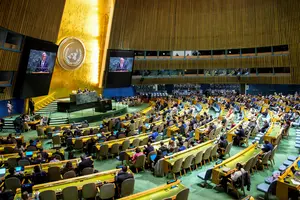
핵확산금지조약(NPT) 서명국들이 UN에서 월요일 회의를 시작했으며, 원자력국가들 간의 안전장치를 둘러싼 갈등이 심화되면서 재개된 군비경쟁에 대한 우려가 고조되고 있다.
랜드마크적 핵확산금지조약의 서명국들이 월요일 UN에서 회의를 시작했으며, 원자력 국가들이 안전장치를 둘러싸고 다시 대립하면서 재개된 군비경쟁에 대한 우려가 고조되고 있다.
2022년, 조약의 마지막 검토 당시 UN 사무총장 안토니우 구테흐스는 인류가 "한 번의 오해, 한 번의 오판으로부터 핵 전멸까지 한 발 떨어져 있다"고 경고했다.
월요일, 그는 "핵무기 확산의 동력"이 가속화되고 있다고 경고했다.
"너무 오랫동안 이 조약은 침식되어 왔다. 약속들은 이행되지 않았다. 신뢰와 신용성이 약해지고 있다. 확산의 동력이 가속화되고 있다. 우리는 이 조약에 다시 생명을 불어넣어야 한다"고 구테흐스가 개막 연설에서 말했다.
지난 회의 이후 글로벌 지정학적 마찰이 높아진 가운데, UN 본부에서의 이번 모임이 어떤 성과를 낼 수 있을지는 불명확했다.
프랑스의 장-노엘 바로 외교장관은 서명국들에게 "핵확산의 위험이 이토록 높았던 적이 없으며, 이란과 북한의 핵 프로그램이 초래하는 위협은 이 조약의 모든 당사국에게 용납할 수 없다"고 말했다.
회의 의장인 베트남의 UN 대사 도훙비에트는 기대를 낮추면서 "이 회의가 우리 시대의 근본적인 전략적 긴장을 해결할 것으로 기대해서는 안 된다"고 말했다.
"하지만 핵심 약속을 재확인하고 실질적인 전진 방안을 제시하는 균형잡힌 결과는 NPT의 무결성을 강화할 것이다"라고 그는 말했다.
"이 회의의 성공 또는 실패는 이 회의장을 훨씬 넘어선 영향을 미칠 것이다"라고 비에트는 덧붙였다. "새로운 핵군비경쟁의 전망이 우리 위에 임박해 있다." 거의 모든 국가들이 서명한 핵확산금지조약(이스라엘, 인도, 파키스탄 등 주목할 만한 예외 제외)은 핵무기 확산을 방지하고, 완전한 군축을 촉진하며, 민간 핵 프로젝트에서의 협력을 장려하는 것을 목표로 한다.
9개의 핵무장국가들 - 러시아, 미국, 프랑스, 영국, 중국, 인도, 파키스탄, 이스라엘, 북한 - 은 2025년 1월에 12,241개의 핵탄두를 보유하고 있었다고 스톡홀름 국제평화연구소가 보고했다.
미국과 러시아는 전 세계 핵무기의 거의 90퍼센트를 보유하고 있으며 최근 수년간 이를 현대화하기 위한 주요 프로그램을 추진해왔다고 SIPRI에 따르면.
중국도 핵탄두를 빠르게 증가시켰으며, G7이 금요일 모스크바와 베이징의 핵 능력 강화에 대해 경고를 울렸다고 SIPRI는 말했다.
미국의 도널드 트럼프 대통령은 새로운 핵실험을 실시할 의향을 나타냈으며, 다른 국가들이 비밀리에 그렇게 하고 있다고 비난했다.
3월에, 프랑스의 에마뉘엘 마크롱 대통령은 핵 억지력의 극적인 변화를 발표했으며, 특히 현재 290개의 탄두로 이루어진 원자 무기고의 증가를 발표했다.
국제원자력기구 사무총장 라파엘 그로시는 체르노빌 핵재해 40주년 행사에서 돌아온 직후, "아마도 핵무기를 가지는 것이 국가 안보에 좋을 수 있다는 인식이 증가하고 있다"고 말했다.
"이것보다 더 거짓인 것은 없다"고 그는 말했다.
노벨평화상 수상자인 국제핵무기폐지캠페인의 세스 셀든은 Agence France-Presse에 "신뢰가 NPT 내부와 외부 모두에서 침식되고 있는 것이 명백하다"고 말했다.
그는 4주간의 정상회담의 가능한 결과에 의문을 제기했다.
NPT에 대한 결정은 합의를 요구하며, 이전의 두 회의는 최종 정치 선언 채택에 실패했다.
2015년, 교착 상태는 주로 중동 핵무기 금지 지역 설립에 대한 이스라엘의 주요 동맹인 워싱턴의 반대로 인해 발생했다. 2022년의 교착 상태는 주로 모스크바가 점령한 우크라이나의 자포리자 핵발전소에 대한 언급에 러시아의 반대로 인해 발생했다. 올해의 정상회담은 수많은 걸림돌에 부딪힐 수 있다.
우크라이나에서의 계속되는 전쟁, 이란의 핵 프로그램과 그곳의 전쟁, 확산 우려 및 평양의 발전하는 무기고는 모두 거래 중단자가 될 수 있다.
미국과 영국, UAE, 호주 동맹국들은 이란의 회의 부의장 임명에 대해 목소리를 높였다. 워싱턴의 회의 특사는 테헤란에 지도자 역할을 부여하는 것이 NPT를 "진지하게" 받아들이는 국가들에 대한 "모욕"이라고 말했다.
인공지능은 일부 국가들이 모든 측이 핵무기에 대한 인간의 통제를 유지하도록 요구하면서 주요 쟁점이 될 수 있다. (AFP)
2022년, 조약의 마지막 검토 당시 UN 사무총장 안토니우 구테흐스는 인류가 "한 번의 오해, 한 번의 오판으로부터 핵 전멸까지 한 발 떨어져 있다"고 경고했다.
월요일, 그는 "핵무기 확산의 동력"이 가속화되고 있다고 경고했다.
"너무 오랫동안 이 조약은 침식되어 왔다. 약속들은 이행되지 않았다. 신뢰와 신용성이 약해지고 있다. 확산의 동력이 가속화되고 있다. 우리는 이 조약에 다시 생명을 불어넣어야 한다"고 구테흐스가 개막 연설에서 말했다.
지난 회의 이후 글로벌 지정학적 마찰이 높아진 가운데, UN 본부에서의 이번 모임이 어떤 성과를 낼 수 있을지는 불명확했다.
프랑스의 장-노엘 바로 외교장관은 서명국들에게 "핵확산의 위험이 이토록 높았던 적이 없으며, 이란과 북한의 핵 프로그램이 초래하는 위협은 이 조약의 모든 당사국에게 용납할 수 없다"고 말했다.
회의 의장인 베트남의 UN 대사 도훙비에트는 기대를 낮추면서 "이 회의가 우리 시대의 근본적인 전략적 긴장을 해결할 것으로 기대해서는 안 된다"고 말했다.
"하지만 핵심 약속을 재확인하고 실질적인 전진 방안을 제시하는 균형잡힌 결과는 NPT의 무결성을 강화할 것이다"라고 그는 말했다.
"이 회의의 성공 또는 실패는 이 회의장을 훨씬 넘어선 영향을 미칠 것이다"라고 비에트는 덧붙였다. "새로운 핵군비경쟁의 전망이 우리 위에 임박해 있다." 거의 모든 국가들이 서명한 핵확산금지조약(이스라엘, 인도, 파키스탄 등 주목할 만한 예외 제외)은 핵무기 확산을 방지하고, 완전한 군축을 촉진하며, 민간 핵 프로젝트에서의 협력을 장려하는 것을 목표로 한다.
9개의 핵무장국가들 - 러시아, 미국, 프랑스, 영국, 중국, 인도, 파키스탄, 이스라엘, 북한 - 은 2025년 1월에 12,241개의 핵탄두를 보유하고 있었다고 스톡홀름 국제평화연구소가 보고했다.
미국과 러시아는 전 세계 핵무기의 거의 90퍼센트를 보유하고 있으며 최근 수년간 이를 현대화하기 위한 주요 프로그램을 추진해왔다고 SIPRI에 따르면.
중국도 핵탄두를 빠르게 증가시켰으며, G7이 금요일 모스크바와 베이징의 핵 능력 강화에 대해 경고를 울렸다고 SIPRI는 말했다.
미국의 도널드 트럼프 대통령은 새로운 핵실험을 실시할 의향을 나타냈으며, 다른 국가들이 비밀리에 그렇게 하고 있다고 비난했다.
3월에, 프랑스의 에마뉘엘 마크롱 대통령은 핵 억지력의 극적인 변화를 발표했으며, 특히 현재 290개의 탄두로 이루어진 원자 무기고의 증가를 발표했다.
국제원자력기구 사무총장 라파엘 그로시는 체르노빌 핵재해 40주년 행사에서 돌아온 직후, "아마도 핵무기를 가지는 것이 국가 안보에 좋을 수 있다는 인식이 증가하고 있다"고 말했다.
"이것보다 더 거짓인 것은 없다"고 그는 말했다.
노벨평화상 수상자인 국제핵무기폐지캠페인의 세스 셀든은 Agence France-Presse에 "신뢰가 NPT 내부와 외부 모두에서 침식되고 있는 것이 명백하다"고 말했다.
그는 4주간의 정상회담의 가능한 결과에 의문을 제기했다.
NPT에 대한 결정은 합의를 요구하며, 이전의 두 회의는 최종 정치 선언 채택에 실패했다.
2015년, 교착 상태는 주로 중동 핵무기 금지 지역 설립에 대한 이스라엘의 주요 동맹인 워싱턴의 반대로 인해 발생했다. 2022년의 교착 상태는 주로 모스크바가 점령한 우크라이나의 자포리자 핵발전소에 대한 언급에 러시아의 반대로 인해 발생했다. 올해의 정상회담은 수많은 걸림돌에 부딪힐 수 있다.
우크라이나에서의 계속되는 전쟁, 이란의 핵 프로그램과 그곳의 전쟁, 확산 우려 및 평양의 발전하는 무기고는 모두 거래 중단자가 될 수 있다.
미국과 영국, UAE, 호주 동맹국들은 이란의 회의 부의장 임명에 대해 목소리를 높였다. 워싱턴의 회의 특사는 테헤란에 지도자 역할을 부여하는 것이 NPT를 "진지하게" 받아들이는 국가들에 대한 "모욕"이라고 말했다.
인공지능은 일부 국가들이 모든 측이 핵무기에 대한 인간의 통제를 유지하도록 요구하면서 주요 쟁점이 될 수 있다. (AFP)
처리 완료
3,948 tokens · $0.0113
기사 수집 완료 · 11:01
매체 피드에서 기사 메타데이터 수집
헤드라인 번역 완료 · 11:15
제목/요약 한국어 번역 (fetch 시점 inline)
claude-haiku-4-5-20251001
115 tokens
$0.00026
1.3s
본문 추출 완료
4,409자 추출 완료
본문 한국어 번역 완료 · 11:15
2,081자 번역 완료
claude-haiku-4-5-20251001
3,833 tokens
$0.01106
21.6s
지정학적 엔티티 추출 완료 · 11:15
8개 엔티티 추출 완료
지정학적 맥락 & R-Scanner
R-Scanner · 상승
z=1.07
평소보다 보도량이 증가 추세 — 기준: United Nations
(🇺🇸 US)
최근 6시간 17건
7일 평균 13건 / 6h
7개국 매체
8개 매체
본문에서 추출된 지명 (8)
위치 지도
지도 로딩 중…
같은 주제의 다른 기사 (최근 7일)
Signatories of the landmark nuclear non-proliferation treaty began a meeting Monday at the UN as fears of a renewed arms race escalate, with atomic powers again at loggerheads over safeguards.
In 2022, during the last review of the treaty considered the cornerstone of non-proliferation, UN Secretary-General Antonio Guterres warned humanity was "one misunderstanding, one miscalculation away from nuclear annihilation."
On Monday, he warned "the drivers" of nuclear weapons proliferation were accelerating.
"For too long, the treaty has been eroding. Commitments remain unfulfilled. Trust and credibility are wearing thin. The drivers of proliferation are accelerating. We need to breathe life into the treaty once more," Guterres said in opening remarks.
With global geopolitical friction only heightened since the last meeting, it was unclear what the gathering at UN headquarters could achieve.
France's Foreign Minister Jean-Noel Barrot told signatories that "never has the risk of nuclear proliferation been so high, and the threat posed by Iran's and North Korea's programs is intolerable for each and every state party to this treaty."
Tempering expectations, Do Hung Viet, Vietnam's UN ambassador and president of the conference, said "we should not expect this conference to resolve the underlying strategic tensions of our time."
"But a balanced outcome that reaffirms core commitments and set out practical steps forward would strengthen the integrity of the NPT," he said.
"The success or failure of this conference will have implications way beyond these halls," Viet added. "The prospects of a new nuclear arms race are looming over us." The nuclear non-proliferation treaty, signed by almost all countries on the planet -- with notable exceptions including Israel, India and Pakistan -- aims to prevent the spread of nuclear weapons, promote complete disarmament, and encourage cooperation on civilian nuclear projects.
The nine nuclear-armed states -- Russia, the US, France, the United Kingdom, China, India, Pakistan, Israel and North Korea -- possessed 12,241 nuclear warheads in January 2025, the Stockholm International Peace Research Institute reported.
The US and Russia hold nearly 90 percent of nuclear weapons globally and have carried out major programs to modernize them in recent years, according to SIPRI.
China has also rapidly increased its nuclear stockpile, SIPRI said, with the G7 raising the alarm Friday over Moscow and Beijing boosting their nuclear capabilities.
US President Donald Trump has indicated his intention to conduct new nuclear tests, accusing others of doing so clandestinely.
In March, French President Emmanuel Macron announced a dramatic shift in nuclear deterrence, notably an increase in the atomic arsenal, currently numbering 290 warheads.
International Atomic Energy Agency chief Rafael Grossi, just returned from 40th anniversary events at Chernobyl to mark the nuclear disaster there, said "there is a growing perception that perhaps having nuclear weapons could be good for national security."
"Nothing is further from the truth," he said.
"It is obvious that trust is eroding, both inside and outside the NPT," Seth Shelden of the International Campaign to Abolish Nuclear Weapons, a Nobel Peace Prize laureate, told Agence France-Presse.
He questioned the likely outcome of the four-week summit.
Decisions on the NPT require agreement by consensus, with the previous two conferences failing to adopt final political declarations.
In 2015, the deadlock was largely due to opposition by Israel's arch-ally Washington to creation of a nuclear-weapon-free zone in the Middle East.
A 2022 impasse was due mainly to Russian opposition to references to Ukraine's nuclear power plant at Zaporizhzhia, occupied by Moscow. This year's summit could hit any number of stumbling blocks.
The ongoing war in Ukraine, Iran's nuclear program and the war there, proliferation fears and Pyongyang's developing arsenal could all be deal-breakers.
The US along with its allies Britain, the UAE and Australia spoke out at Iran's appointment as a conference vice president. Washington's meeting envoy said conferring a leadership role on Tehran was an "affront" to countries that take the NPT "seriously."
Artificial intelligence could be a prominent issue as some countries call for all sides to keep human control over nuclear weapons. (AFP)
In 2022, during the last review of the treaty considered the cornerstone of non-proliferation, UN Secretary-General Antonio Guterres warned humanity was "one misunderstanding, one miscalculation away from nuclear annihilation."
On Monday, he warned "the drivers" of nuclear weapons proliferation were accelerating.
"For too long, the treaty has been eroding. Commitments remain unfulfilled. Trust and credibility are wearing thin. The drivers of proliferation are accelerating. We need to breathe life into the treaty once more," Guterres said in opening remarks.
With global geopolitical friction only heightened since the last meeting, it was unclear what the gathering at UN headquarters could achieve.
France's Foreign Minister Jean-Noel Barrot told signatories that "never has the risk of nuclear proliferation been so high, and the threat posed by Iran's and North Korea's programs is intolerable for each and every state party to this treaty."
Tempering expectations, Do Hung Viet, Vietnam's UN ambassador and president of the conference, said "we should not expect this conference to resolve the underlying strategic tensions of our time."
"But a balanced outcome that reaffirms core commitments and set out practical steps forward would strengthen the integrity of the NPT," he said.
"The success or failure of this conference will have implications way beyond these halls," Viet added. "The prospects of a new nuclear arms race are looming over us." The nuclear non-proliferation treaty, signed by almost all countries on the planet -- with notable exceptions including Israel, India and Pakistan -- aims to prevent the spread of nuclear weapons, promote complete disarmament, and encourage cooperation on civilian nuclear projects.
The nine nuclear-armed states -- Russia, the US, France, the United Kingdom, China, India, Pakistan, Israel and North Korea -- possessed 12,241 nuclear warheads in January 2025, the Stockholm International Peace Research Institute reported.
The US and Russia hold nearly 90 percent of nuclear weapons globally and have carried out major programs to modernize them in recent years, according to SIPRI.
China has also rapidly increased its nuclear stockpile, SIPRI said, with the G7 raising the alarm Friday over Moscow and Beijing boosting their nuclear capabilities.
US President Donald Trump has indicated his intention to conduct new nuclear tests, accusing others of doing so clandestinely.
In March, French President Emmanuel Macron announced a dramatic shift in nuclear deterrence, notably an increase in the atomic arsenal, currently numbering 290 warheads.
International Atomic Energy Agency chief Rafael Grossi, just returned from 40th anniversary events at Chernobyl to mark the nuclear disaster there, said "there is a growing perception that perhaps having nuclear weapons could be good for national security."
"Nothing is further from the truth," he said.
"It is obvious that trust is eroding, both inside and outside the NPT," Seth Shelden of the International Campaign to Abolish Nuclear Weapons, a Nobel Peace Prize laureate, told Agence France-Presse.
He questioned the likely outcome of the four-week summit.
Decisions on the NPT require agreement by consensus, with the previous two conferences failing to adopt final political declarations.
In 2015, the deadlock was largely due to opposition by Israel's arch-ally Washington to creation of a nuclear-weapon-free zone in the Middle East.
A 2022 impasse was due mainly to Russian opposition to references to Ukraine's nuclear power plant at Zaporizhzhia, occupied by Moscow. This year's summit could hit any number of stumbling blocks.
The ongoing war in Ukraine, Iran's nuclear program and the war there, proliferation fears and Pyongyang's developing arsenal could all be deal-breakers.
The US along with its allies Britain, the UAE and Australia spoke out at Iran's appointment as a conference vice president. Washington's meeting envoy said conferring a leadership role on Tehran was an "affront" to countries that take the NPT "seriously."
Artificial intelligence could be a prominent issue as some countries call for all sides to keep human control over nuclear weapons. (AFP)