이란 위기를 재생에너지 혁명의 계기로 활용하려는 한국의 계획
How South Korea plans to use the Iran crisis to spur a renewables revolution
The Guardian
· 🇬🇧 London, GB
Raphael Rashid in Seoul
EN
2026-04-16 12:09
Translated
중동에서 벌어지고 있는 에너지 위기가 한국의 태양광 산업을 변화시킬 정치적 긴급성과 더 많은 자금을 더했다
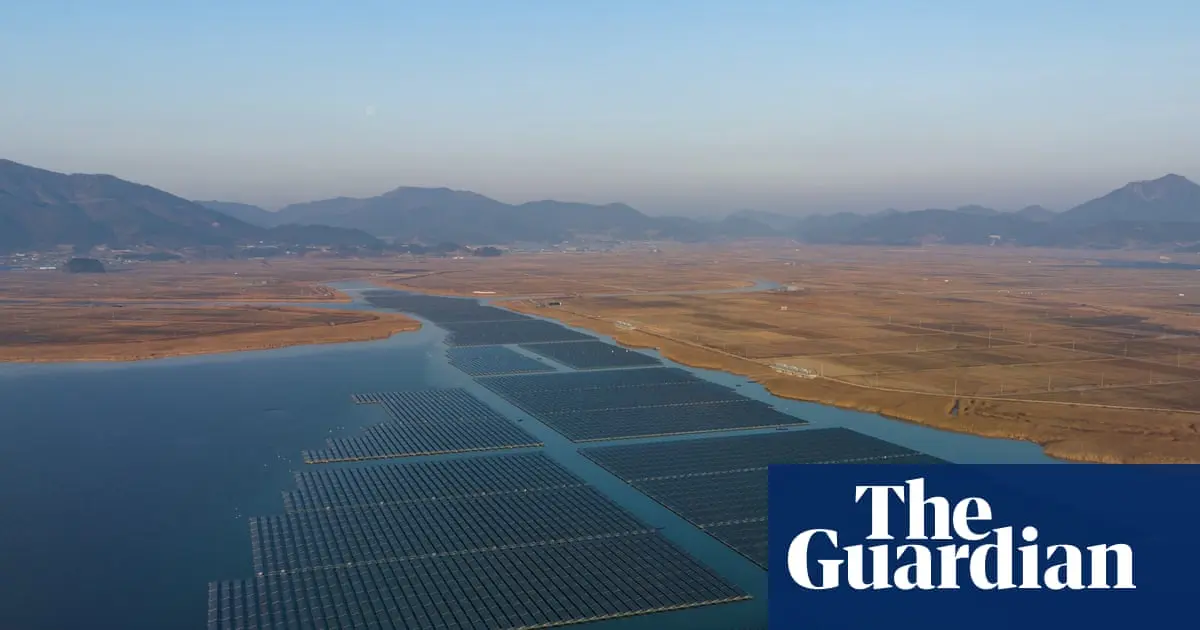
서울에서 남동쪽으로 약 90분 거리에 있는 70가구의 농촌 마을 구양리에서는 주 6일 무료 공동 점심이 열린다. 이 식사는 마을의 1메가와트 태양광 설비가 제공하는 자금으로 마련되며, 이 설비는 매월 약 1,000만 원(6,800달러)의 순이익을 창출한다.
"주민들이 매일 함께 점심을 먹으면서 서로의 얼굴을 보고 대화를 나눕니다"라고 전주영 이장이 말한다. "주민들 사이의 유대와 연대가 훨씬 강해집니다. 삶이 더 즐거워집니다."
변화는 극적이었다. 2022년 태양광 사업이 시작되기 전, 약 130명의 마을에는 식당도 없었고, 이동 수단도 부족했으며, 공동 인프라도 거의 없었다. 이제 태양광 수익으로 식사, 노인을 위한 마을 '행복 버스', 탁구 시설, 문화 활동이 제공된다.
마을은 태양광 수익을 개인 배당금이 아닌 복지에 의도적으로 사용하기로 선택했으며, 전 이장은 이 결정이 주민들 스스로 내렸다고 말한다.
"돈을 개인 소득으로 나누면 사람들은 소외감을 느낍니다. 수년간 몰랐던 사람들이 식당을 통해 며칠 만에 서로를 알게 됩니다"라고 그는 말한다.
구양리는 2030년까지 2,500개 마을을 목표로 하는 한국의 급속히 확대되는 '태양광 소득 마을' 프로그램의 전국적 시범 사례다. 정부는 올해 700개를 만들 계획이며, 이는 약 150개에서 급증한 수치다.
이 가속화는 이재명 대통령이 이란 위기를 더 빠른 청정에너지 전환의 촉매제로 활용하려는 노력의 일환이다. 한국은 1차 에너지의 90% 이상을 수입하며, 이 중 원유의 약 70%를 호르무즈 해협을 통해 수입한다.
이 대통령은 화석연료 의존을 위험한 취약점으로 반복해서 규정하며, 내각에게 "국가의 운명"이 에너지 전환에 달려 있다고 말했다.
많은 재생에너지 목표는 위기 이전부터 있었으며, 2030년까지 전력의 20%를 재생에너지로 생산하고 2040년까지 석탄을 퇴출하는 목표를 포함하지만, 관리들은 속도와 정치적 긴급성이 급격히 변화했고 자금이 증가했다고 말한다.
추가 예산은 약 5,000억 원을 에너지 전환에 할당하여 전력망 인프라 업그레이드를 자금 지원하고 재생에너지 프로젝트에 대한 전체 연간 지원을 기록적인 1.1조 원(6억 7,000만 달러)으로 증가시킨다.
또한, 배치 가속화를 위해 마을 프로그램에 4,000억 원의 저금리 대출이 제공될 예정이다.
김성환 기후·에너지·환경부 장관은 "전 세계적으로 중동 전쟁이 재생에너지 전환을 더욱 가속화시키고 있으므로, 한국도 속도를 내야 한다"고 말했다.
그러나 재생에너지 프로그램이 확대됨에 따라, 전력망 용량과 충돌하고 있다. 태양광과 풍력 개발이 집중된 남부와 남서부의 대부분은 이미 용량 한계에 도달하거나 근접해 있다. 기가와트 규모의 재생에너지 프로젝트가 전력망 연결을 기다리고 있으며, 일부 재생에너지 용량은 사실상 낭비되고 있다.
홍종호 서울대학교 에너지 경제학자는 한국의 에너지 위기가 이란 전쟁 훨씬 이전에 시작되었다고 주장한다.
국영 발전·송배전·배전을 사실상 독점적으로 통제하고 대부분의 석탄 및 원자력 발전소를 운영하는 국영 기업의 지분을 보유한 한국전력공사(KEPCO)는 전기 가격을 인위적으로 낮추고 재생에너지 인프라 투자를 억제한다고 홍은 말한다.
"수십 년간 정부 보조금을 받은 전기로 인해 많은 한국인들은 정부가 값싸고 풍부하게 제공해야 하는 공공재로 전력을 인식하게 되었다"고 그는 말하며, 이는 차례로 전환 비용에 대한 대중의 수용을 약화시킨다.
한전은 재생에너지가 풍부한 남부 지역에서 서울로 고압 송전선을 건설할 계획에 집중해 왔지만, 건설에는 10년 이상 소요되며 한국의 전국 통일 가격 체제 하에서 수도에 전력을 공급하기 위해 농촌 지역이 토지를 희생하면서 가격 혜택은 받지 못한다는 주민들의 불공정하다는 인식과 함께 증가하는 지역 저항에 직면하고 있다.
태양광 확대 추진은 또한 한국이 중국 공급망에 의존하고 있음을 드러내고 있다. 중국은 한국에 설치된 대부분의 태양광 패널을 차지하며, 이는 글로벌 제조업의 지배력과 훨씬 낮은 비용을 반영한다.
정부는 태양광 마을의 국내 모듈 요건과 수입품에 대한 탄소발자국 인증 도입 계획 등의 조치로 대응했다. 그러나 환경 단체들은 에너지 전환에 대한 전반적인 대응이 부족하다고 주장한다.
우리기후솔루션의 가희 한은 이재명 대통령이 전환 가속화에 "진정한 정치적 의지"를 보였다는 점을 인정한다. 그녀가 말하는 우려는 이 모멘텀이 실제 실행으로 전환될 수 있느냐는 것이다. 추가 예산에서 약 5,000억 원이 에너지 전환에 할당된 반면, 동시에 약 5조 원이 석유 가격 상한제를 통한 정유소 직접 보조금을 포함한 화석연료 가격 상승 흡수로 향했다.
"가격 신호를 억제하는 정부가 대중에게 에너지 절약을 요구하는 정부"라고 한은 말한다. "이 모순은 화석연료 기존 기업을 시장 현실로부터 계속 보호하는 더 깊은 제도적 사고방식을 반영한다."
정부는 중동 위기 상황에서 전력망 안정성을 유지하기 위한 임시 조치로 일부 석탄 발전소 폐쇄를 연기하고 원자력 발전소 재가동을 가속화했다고 관리들은 설명한다. 그러나 최근 내각 회의에서 "용량 요금" 또는 보장된 수입 흐름이 2040년 이후에도 21개 석탄 화력 발전소에 비상 에너지 비축물로 계속 흘러갈 것임이 확인되었다.
"변혁적 변화의 창이 지금 열려 있다"고 한은 말한다. "이 정부가 이를 활용할 제도적 용기가 있는지가 한국의 에너지 미래를 결정할 질문이다."
"주민들이 매일 함께 점심을 먹으면서 서로의 얼굴을 보고 대화를 나눕니다"라고 전주영 이장이 말한다. "주민들 사이의 유대와 연대가 훨씬 강해집니다. 삶이 더 즐거워집니다."
변화는 극적이었다. 2022년 태양광 사업이 시작되기 전, 약 130명의 마을에는 식당도 없었고, 이동 수단도 부족했으며, 공동 인프라도 거의 없었다. 이제 태양광 수익으로 식사, 노인을 위한 마을 '행복 버스', 탁구 시설, 문화 활동이 제공된다.
마을은 태양광 수익을 개인 배당금이 아닌 복지에 의도적으로 사용하기로 선택했으며, 전 이장은 이 결정이 주민들 스스로 내렸다고 말한다.
"돈을 개인 소득으로 나누면 사람들은 소외감을 느낍니다. 수년간 몰랐던 사람들이 식당을 통해 며칠 만에 서로를 알게 됩니다"라고 그는 말한다.
구양리는 2030년까지 2,500개 마을을 목표로 하는 한국의 급속히 확대되는 '태양광 소득 마을' 프로그램의 전국적 시범 사례다. 정부는 올해 700개를 만들 계획이며, 이는 약 150개에서 급증한 수치다.
이 가속화는 이재명 대통령이 이란 위기를 더 빠른 청정에너지 전환의 촉매제로 활용하려는 노력의 일환이다. 한국은 1차 에너지의 90% 이상을 수입하며, 이 중 원유의 약 70%를 호르무즈 해협을 통해 수입한다.
이 대통령은 화석연료 의존을 위험한 취약점으로 반복해서 규정하며, 내각에게 "국가의 운명"이 에너지 전환에 달려 있다고 말했다.
많은 재생에너지 목표는 위기 이전부터 있었으며, 2030년까지 전력의 20%를 재생에너지로 생산하고 2040년까지 석탄을 퇴출하는 목표를 포함하지만, 관리들은 속도와 정치적 긴급성이 급격히 변화했고 자금이 증가했다고 말한다.
추가 예산은 약 5,000억 원을 에너지 전환에 할당하여 전력망 인프라 업그레이드를 자금 지원하고 재생에너지 프로젝트에 대한 전체 연간 지원을 기록적인 1.1조 원(6억 7,000만 달러)으로 증가시킨다.
또한, 배치 가속화를 위해 마을 프로그램에 4,000억 원의 저금리 대출이 제공될 예정이다.
김성환 기후·에너지·환경부 장관은 "전 세계적으로 중동 전쟁이 재생에너지 전환을 더욱 가속화시키고 있으므로, 한국도 속도를 내야 한다"고 말했다.
그러나 재생에너지 프로그램이 확대됨에 따라, 전력망 용량과 충돌하고 있다. 태양광과 풍력 개발이 집중된 남부와 남서부의 대부분은 이미 용량 한계에 도달하거나 근접해 있다. 기가와트 규모의 재생에너지 프로젝트가 전력망 연결을 기다리고 있으며, 일부 재생에너지 용량은 사실상 낭비되고 있다.
홍종호 서울대학교 에너지 경제학자는 한국의 에너지 위기가 이란 전쟁 훨씬 이전에 시작되었다고 주장한다.
국영 발전·송배전·배전을 사실상 독점적으로 통제하고 대부분의 석탄 및 원자력 발전소를 운영하는 국영 기업의 지분을 보유한 한국전력공사(KEPCO)는 전기 가격을 인위적으로 낮추고 재생에너지 인프라 투자를 억제한다고 홍은 말한다.
"수십 년간 정부 보조금을 받은 전기로 인해 많은 한국인들은 정부가 값싸고 풍부하게 제공해야 하는 공공재로 전력을 인식하게 되었다"고 그는 말하며, 이는 차례로 전환 비용에 대한 대중의 수용을 약화시킨다.
한전은 재생에너지가 풍부한 남부 지역에서 서울로 고압 송전선을 건설할 계획에 집중해 왔지만, 건설에는 10년 이상 소요되며 한국의 전국 통일 가격 체제 하에서 수도에 전력을 공급하기 위해 농촌 지역이 토지를 희생하면서 가격 혜택은 받지 못한다는 주민들의 불공정하다는 인식과 함께 증가하는 지역 저항에 직면하고 있다.
태양광 확대 추진은 또한 한국이 중국 공급망에 의존하고 있음을 드러내고 있다. 중국은 한국에 설치된 대부분의 태양광 패널을 차지하며, 이는 글로벌 제조업의 지배력과 훨씬 낮은 비용을 반영한다.
정부는 태양광 마을의 국내 모듈 요건과 수입품에 대한 탄소발자국 인증 도입 계획 등의 조치로 대응했다. 그러나 환경 단체들은 에너지 전환에 대한 전반적인 대응이 부족하다고 주장한다.
우리기후솔루션의 가희 한은 이재명 대통령이 전환 가속화에 "진정한 정치적 의지"를 보였다는 점을 인정한다. 그녀가 말하는 우려는 이 모멘텀이 실제 실행으로 전환될 수 있느냐는 것이다. 추가 예산에서 약 5,000억 원이 에너지 전환에 할당된 반면, 동시에 약 5조 원이 석유 가격 상한제를 통한 정유소 직접 보조금을 포함한 화석연료 가격 상승 흡수로 향했다.
"가격 신호를 억제하는 정부가 대중에게 에너지 절약을 요구하는 정부"라고 한은 말한다. "이 모순은 화석연료 기존 기업을 시장 현실로부터 계속 보호하는 더 깊은 제도적 사고방식을 반영한다."
정부는 중동 위기 상황에서 전력망 안정성을 유지하기 위한 임시 조치로 일부 석탄 발전소 폐쇄를 연기하고 원자력 발전소 재가동을 가속화했다고 관리들은 설명한다. 그러나 최근 내각 회의에서 "용량 요금" 또는 보장된 수입 흐름이 2040년 이후에도 21개 석탄 화력 발전소에 비상 에너지 비축물로 계속 흘러갈 것임이 확인되었다.
"변혁적 변화의 창이 지금 열려 있다"고 한은 말한다. "이 정부가 이를 활용할 제도적 용기가 있는지가 한국의 에너지 미래를 결정할 질문이다."
처리 완료
471 tokens · $0.0010
기사 수집 완료 · 12:30
매체 피드에서 기사 메타데이터 수집
헤드라인 번역 완료 · 12:46
제목/요약 한국어 번역 (fetch 시점 inline)
kimi-k2.5
471 tokens
$0.00096
15.1s
본문 추출 완료
5,843자 추출 완료
본문 한국어 번역 완료 · 12:46
2,661자 번역 완료
지정학적 엔티티 추출 완료 · 12:46
7개 엔티티 추출 완료
지정학적 맥락 & R-Scanner
R-Scanner · 핫스팟
z=2.77
평소보다 훨씬 많은 매체가 집중 보도 중 — 기준: South Korea
(🇰🇷 KR)
최근 6시간 22건
7일 평균 12건 / 6h
4개국 매체
5개 매체
본문에서 추출된 지명 (7)
위치 지도
지도 로딩 중…
같은 주제의 다른 기사 (최근 7일)
Energy crisis unfolding in Middle East has added political urgency, and more funding, to transform South Korea’s solar industryIn Guyang-ri, a farming village of 70 households about 90 minutes south-east of Seoul, people gather for communal free lunches six days a week. The meals are funded by the village’s one-megawatt solar installation, which generates roughly 10m won ($6,800) in net profit each month.“Residents eat lunch together every day, so we see each other’s faces, talk together,” says Jeon Joo-young, the village chief. “Bonds and solidarity between residents become much stronger. Life becomes more enjoyable.”
In Guyang-ri, a farming village of 70 households about 90 minutes south-east of Seoul, people gather for communal free lunches six days a week. The meals are funded by the village’s one-megawatt solar installation, which generates roughly 10m won ($6,800) in net profit each month.“Residents eat lunch together every day, so we see each other’s faces, talk together,” says Jeon Joo-young, the village chief. “Bonds and solidarity between residents become much stronger. Life becomes more enjoyable.”
The shift has been dramatic. Before the solar project launched in 2022, the village of about 130 people had no restaurant, no easy way to move around, and little communal infrastructure. Now solar revenue pays for meals, a village “happiness bus” for elderly people, a table-tennis facility and cultural activities.
The village deliberately chose to spend solar income on welfare rather than individual dividends, a decision Jeon says residents made themselves rather than being persuaded.
“If you divide money as individual income, people feel disconnected. People who didn’t know each other for years now get to know each other within days” through the restaurant, he says.
Guyang-ri serves as the national prototype for South Korea’s rapidly expanding “solar income village” programme, which aims to reach 2,500 villages by 2030. The government is aiming to create 700 this year – up sharply from roughly 150.
The acceleration is part of President Lee Jae Myung’s effort to use the Iran crisis as a catalyst for a faster clean energy transition. South Korea imports more than 90% of its primary energy, including roughly 70% of crude oil through the strait of Hormuz.
Lee has repeatedly framed fossil fuel dependency as a dangerous vulnerability, telling his cabinet that the “nation’s fate” depends on energy transition.
Many of the renewable targets predate the crisis, including a goal to generate 20% of electricity from renewables by 2030 and phase out coal by 2040, but officials say the pace and political urgency have shifted sharply, and funding increased.
A supplementary budget allocates about 500bn won to energy transition, funding grid infrastructure upgrades and increasing overall annual support for renewable energy projects to a record 1.1tn won ($670m).
Additionally, 400bn won in low-interest loans will be provided to the villages programme to accelerate deployment.
Kim Sung-whan, the minister of climate, energy and environment, said: “Around the world, the Middle East war is driving even faster acceleration of renewable energy transition, so Korea too must pick up the pace.”
But as renewable programmes scale up, they are colliding with the electricity grid’s capacity. Large parts of the south and south-west, where solar and wind development has concentrated, are already at or near capacity limits. Gigawatts of renewable projects are waiting for grid connection, with some renewable capacity in effect going to waste.
Hong Jong Ho, an energy economist at Seoul National University, argues South Korea’s energy crisis began long before the Iran war.
The state utility Korea Electric Power Corporation (Kepco), which controls national generation, transmission and distribution as a de facto monopoly and holds stakes in the state-owned companies operating most coal and nuclear plants, keeps electricity prices artificially low and discourages investment in renewable infrastructure, according to Hong.
“Decades of government-subsidised electricity have led many Koreans to view power as a public good that the government should provide cheaply and abundantly,” he says, which, in turn, erodes public acceptance of the costs of transition.
Kepco has focused on plans to build high-voltage transmission lines from renewable-rich southern regions to Seoul, but construction takes over a decade and faces growing local resistance from residents who view it as unfair: rural areas sacrificing land to supply the capital, while receiving no price benefit under South Korea’s uniform national pricing system.
The push to expand solar is also exposing South Korea’s reliance on Chinese supply chains. China accounts for most solar panels installed in the country, reflecting its dominance in global manufacturing and significantly lower costs.
The government has responded with measures including domestic module requirements for solar villages and plans to introduce carbon footprint certification for imports. But environmental groups argue the overall response to energy transition falls short.
Gahee Han, from group Solutions for Our Climate, acknowledges that President Lee has signalled “genuine political intent” in accelerating the transition. The concern, she says, is whether momentum can translate into delivery. While about 500bn won was allocated to energy transition in the supplementary budget, around 5tn won was simultaneously directed toward absorbing fossil fuel price hikes, including direct subsidies to oil refineries through a petroleum price cap system.
“The government that suppresses price signals is the same government asking the public to conserve energy,” Han says. “This contradiction reflects a deeper institutional mindset that continues to shield fossil fuel incumbents from market reality.”
The government has delayed some coal plant closures and accelerated nuclear reactor restarts, which officials describe as temporary measures to maintain grid stability amid the Middle East crisis. But a recent cabinet meeting confirmed that “capacity payments”, or guaranteed income streams, will continue flowing to 21 coal-fired power plants beyond 2040 as emergency energy reserves.
“The window for transformative change is open now,” Han says. “Whether this government has the institutional courage to use it is the question that will define Korea’s energy future.”