3월 다운타운 라인과 톰슨-이스트 코스트 라인 신뢰도 하락; 서클 라인 개선
Downtown Line and Thomson-East Coast Line reliability fell in March; Circle Line improved
The Straits Times
· 🇸🇬 Singapore, SG
Aqil Hamzah
EN
2026-04-17 14:23
Translated
전체적으로 모든 노선을 통틀어 MRT 네트워크의 신뢰도는 2월과 유지되었다.
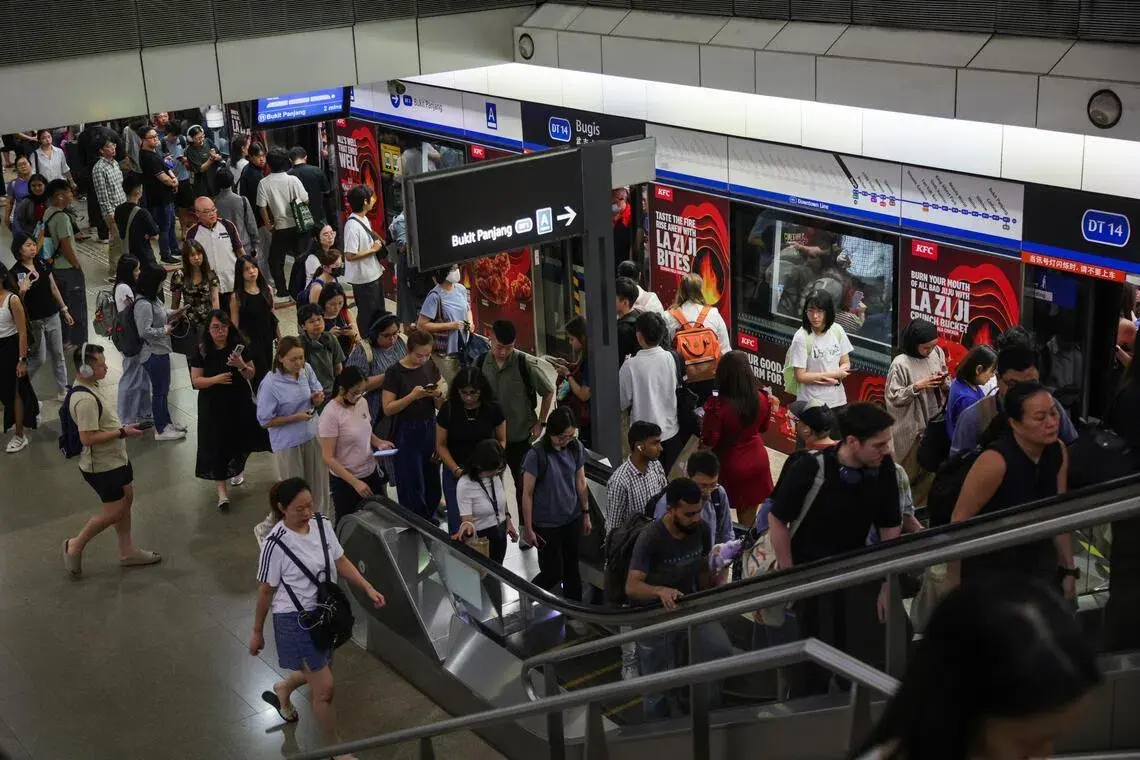
2월에 두 번째로 신뢰도가 높았던 다운타운 라인이 3월에는 3위로 하락했다.
ST 사진: 진 테이
딥다이브는 베타 AI 기능입니다. 사실 확인을 위해 원문 기사를 참조하십시오.
발행 2026년 4월 17일 오후 1:23
수정 2026년 4월 17일 오후 1:28
싱가포르 – 5분 이상 지연으로 인해 3월 다운타운 라인(DTL)의 신뢰도가 하락한 반면, 서클 라인(CCL)의 성능은 개선되었다.
4월 17일 육상교통청(LTA)이 발표한 데이터에 따르면, 전체적으로 모든 노선을 통틀어 MRT 네트워크의 신뢰도는 2월과 변함없이 유지되었다.
12개월 이동평균을 기준으로, 2025년 4월부터 2026년 3월 사이 MRT 열차는 평균 174만 열차-km마다 5분 이상 지연이 발생했다.
이 수치는 전체 MRT 네트워크에 대한 공화국의 철도 신뢰도 목표인 100만 열차-km, 즉 평균 고장 간 주행거리(MKBF)를 상회한다.
5분 이상 지연을 겪기 전 열차가 주행한 거리를 반영하는 MKBF는 철도 신뢰도를 측정하는 널리 사용되는 공학적 지표이다.
SBS 트랜짓이 운영하는 노스이스트 라인(NEL)은 여전히 가장 신뢰도가 높은 MRT 노선으로, 2월의 442만 열차-km에서 445만 열차-km로 소폭 개선되었다.
2위는 SMRT가 운영하는 CCL로, 180만 열차-km에서 237만 열차-km로 상승했다.
3위는 SBS 트랜짓이 운영하는 DTL로, 평균 280만 열차-km에서 210만 열차-km로 성능이 하락했다.
SMRT의 이스트-웨스트 라인(EWL)과 노스-사우스 라인(NSL)은 각각 4위와 꼴찌를 기록했다. 이들은 싱가포르에서 가장 오래된 열차 노선이다.
EWL은 144만 열차-km에서 145만 열차-km로 상승했고, NSL은 1월 이후 동일한 124만 열차-km를 유지했다.
SMRT가 운영하는 톰슨-이스트 코스트 라인(TEL)은 3월에 5분 이상 지속된 3건의 지연으로 인해 성능이 하락했다.
지연 간 평균 37만4천 열차-km를 기록해, 이전의 41만5천 열차-km에서 감소했다. 그러나 그 성능은 전체 철도 신뢰도 결과에 포함되지 않는다.
초기 단계에 있는 MRT 노선, 즉 MRT 네트워크에서 가장 새로운 노선인 TEL의 경우, 상대적으로 낮은 승객 수와 열차가 일반적인 빈도로 운행되지 않기 때문에 주행거리가 현저히 낮은 경향이 있다.
베독 사우스와 순게이 베독 역을 포함하는 해당 노선의 5단계 마지막 구간은 2026년 하반기에 개통될 예정이다. LTA는 해당 노선의 성능은 완전 개통되고 운영이 안정화된 후에야 다른 MRT 노선과 공정하게 비교될 수 있다고 밝혔다.
5개 노선 전체의 열차 정시성, 즉 예정 시간에서 2분 이내에 완료된 운행 비율은 99.46%에서 99.434%로 소폭 하락했다.
EWL과 NSL이 각각 99.17%에서 99.54%, 99.27%에서 99.35%로 개선되었지만, 다른 노선들은 모두 소폭 하락했다.
전체 네트워크 정시성 데이터에서 제외된 TEL은 99.37%에서 99.22%로 정시율을 기록했다.
3월 MRT 네트워크 전체에서 30분을 초과하는 주요 열차 지연은 없었다.
그러나 SBS 트랜짓이 운영하는 섕캉-퐁골 LRT에서 한 건의 주요 지연이 발생했다.
해당 노선은 86만 카-km에서 74만9천 카-km로 지연 간 주행거리가 감소했다.
SMRT가 관리하는 부킷 판장 LRT 역시 20만 카-km에서 18만6천 카-km로 하락했다.
전체적으로 LRT 네트워크의 신뢰도는 3월에 41만 카-km에서 37만4천 카-km로 하락했다.
아킬 함자는 더 스트레이츠 타임스의 교통 기자이다. 그는 또한 범죄와 기술 관련 이슈에 관심이 있다.
ST 사진: 진 테이
딥다이브는 베타 AI 기능입니다. 사실 확인을 위해 원문 기사를 참조하십시오.
발행 2026년 4월 17일 오후 1:23
수정 2026년 4월 17일 오후 1:28
싱가포르 – 5분 이상 지연으로 인해 3월 다운타운 라인(DTL)의 신뢰도가 하락한 반면, 서클 라인(CCL)의 성능은 개선되었다.
4월 17일 육상교통청(LTA)이 발표한 데이터에 따르면, 전체적으로 모든 노선을 통틀어 MRT 네트워크의 신뢰도는 2월과 변함없이 유지되었다.
12개월 이동평균을 기준으로, 2025년 4월부터 2026년 3월 사이 MRT 열차는 평균 174만 열차-km마다 5분 이상 지연이 발생했다.
이 수치는 전체 MRT 네트워크에 대한 공화국의 철도 신뢰도 목표인 100만 열차-km, 즉 평균 고장 간 주행거리(MKBF)를 상회한다.
5분 이상 지연을 겪기 전 열차가 주행한 거리를 반영하는 MKBF는 철도 신뢰도를 측정하는 널리 사용되는 공학적 지표이다.
SBS 트랜짓이 운영하는 노스이스트 라인(NEL)은 여전히 가장 신뢰도가 높은 MRT 노선으로, 2월의 442만 열차-km에서 445만 열차-km로 소폭 개선되었다.
2위는 SMRT가 운영하는 CCL로, 180만 열차-km에서 237만 열차-km로 상승했다.
3위는 SBS 트랜짓이 운영하는 DTL로, 평균 280만 열차-km에서 210만 열차-km로 성능이 하락했다.
SMRT의 이스트-웨스트 라인(EWL)과 노스-사우스 라인(NSL)은 각각 4위와 꼴찌를 기록했다. 이들은 싱가포르에서 가장 오래된 열차 노선이다.
EWL은 144만 열차-km에서 145만 열차-km로 상승했고, NSL은 1월 이후 동일한 124만 열차-km를 유지했다.
SMRT가 운영하는 톰슨-이스트 코스트 라인(TEL)은 3월에 5분 이상 지속된 3건의 지연으로 인해 성능이 하락했다.
지연 간 평균 37만4천 열차-km를 기록해, 이전의 41만5천 열차-km에서 감소했다. 그러나 그 성능은 전체 철도 신뢰도 결과에 포함되지 않는다.
초기 단계에 있는 MRT 노선, 즉 MRT 네트워크에서 가장 새로운 노선인 TEL의 경우, 상대적으로 낮은 승객 수와 열차가 일반적인 빈도로 운행되지 않기 때문에 주행거리가 현저히 낮은 경향이 있다.
베독 사우스와 순게이 베독 역을 포함하는 해당 노선의 5단계 마지막 구간은 2026년 하반기에 개통될 예정이다. LTA는 해당 노선의 성능은 완전 개통되고 운영이 안정화된 후에야 다른 MRT 노선과 공정하게 비교될 수 있다고 밝혔다.
5개 노선 전체의 열차 정시성, 즉 예정 시간에서 2분 이내에 완료된 운행 비율은 99.46%에서 99.434%로 소폭 하락했다.
EWL과 NSL이 각각 99.17%에서 99.54%, 99.27%에서 99.35%로 개선되었지만, 다른 노선들은 모두 소폭 하락했다.
전체 네트워크 정시성 데이터에서 제외된 TEL은 99.37%에서 99.22%로 정시율을 기록했다.
3월 MRT 네트워크 전체에서 30분을 초과하는 주요 열차 지연은 없었다.
그러나 SBS 트랜짓이 운영하는 섕캉-퐁골 LRT에서 한 건의 주요 지연이 발생했다.
해당 노선은 86만 카-km에서 74만9천 카-km로 지연 간 주행거리가 감소했다.
SMRT가 관리하는 부킷 판장 LRT 역시 20만 카-km에서 18만6천 카-km로 하락했다.
전체적으로 LRT 네트워크의 신뢰도는 3월에 41만 카-km에서 37만4천 카-km로 하락했다.
아킬 함자는 더 스트레이츠 타임스의 교통 기자이다. 그는 또한 범죄와 기술 관련 이슈에 관심이 있다.
처리 완료
2,960 tokens · $0.0056
기사 수집 완료 · 14:35
매체 피드에서 기사 메타데이터 수집
헤드라인 번역 완료 · 14:47
제목/요약 한국어 번역 (fetch 시점 inline)
kimi-k2.5
151 tokens
$0.00027
3.1s
본문 추출 완료
3,800자 추출 완료
본문 한국어 번역 완료 · 14:47
1,812자 번역 완료
kimi-k2.5
2,809 tokens
$0.00530
53.1s
지정학적 엔티티 추출 완료 · 14:47
1개 엔티티 추출 완료
지정학적 맥락 & R-Scanner
R-Scanner · 평상
z=-2.61
일상적인 보도 수준 — 기준: Singapore
(🇸🇬 SG)
최근 6시간 0건
7일 평균 7.71건 / 6h
0개국 매체
0개 매체
본문에서 추출된 지명 (1)
위치 지도
지도 로딩 중…
같은 주제의 다른 기사 (최근 7일)
Overall, the MRT network’s reliability across all lines held steady from February.
The Downtown Line, which was the second most reliable MRT line in February, dropped to third place in March.ST PHOTO: GIN TAY
DeeperDive is a beta AI feature. Refer to full articles for the facts.
Published Apr 17, 2026, 01:23 PM
Updated Apr 17, 2026, 01:28 PM
SINGAPORE – The reliability of the Downtown Line (DTL) fell in March due to a delay of more than five minutes, while the Circle Line’s (CCL) performance improved.
Overall, the MRT network’s reliability across all lines remains unchanged from February, according to data released by the Land Transport Authority (LTA) on April 17.
On average, MRT trains clocked 1.74 million train-km between delays that lasted more than five minutes between April 2025 and March 2026, based on a 12-month moving average.
This figure is above the Republic’s rail reliability target of one million train-km, or mean kilometres between failure (MKBF), for the entire MRT network.
Reflecting the distance travelled by a train before encountering a delay of more than five minutes, the MKBF is a widely used engineering measure of rail reliability.
The North East Line (NEL), operated by SBS Transit, was still the most reliable MRT line, with a slight improvement in performance to 4.45 million train-km from 4.42 million train-km in February.
In second place was the CCL, run by SMRT. It averaged 2.37 million train-km, up from 1.8 million train-km the month before.
The third most reliable line was the SBS Transit-operated DTL, which saw its performance drop from an average of 2.8 million train-km to 2.1 million train-km.
SMRT’s East-West Line (EWL) and North-South Line (NSL) took the fourth and last spot, respectively. They are Singapore’s oldest train lines.
EWL recorded 1.45 million train-km, up from 1.44 million train-km previously, while NSL held steady at 1.24 million train-km, the same figure since January.
The Thomson-East Coast Line (TEL), also operated by SMRT, saw a drop in performance due to three delays in March that lasted more than five minutes each.
It averaged 374,000 train-km between delays, down from 415,000 train-km. However, its performance is not included in the overall rail reliability results.
MRT lines in their early stages, such as in the case of the TEL, which is the newest on the MRT network, tend to see significantly lower mileage due to relatively low ridership and trains not running at typical frequencies.
The fifth and final stage of the line, which comprises Bedok South and Sungei Bedok stations, will open in the second half of 2026. LTA said the line’s performance can only be fairly compared with the other MRT lines once it is fully open and operations have stabilised.
Train punctuality across the five lines, measured as the percentage of trips completed within two minutes of the scheduled time, slipped slightly from 99.46 per cent to 99.434 per cent.
Although the EWL and NSL improved– from 99.17 per cent to 99.54 per cent and from 99.27 per cent to 99.35 per cent respectively – the other lines all saw marginal dips.
The TEL, which was excluded from overall network-wide punctuality data, had a punctuality rate of 99.22 per cent, down from 99.37 per cent a month earlier.
Across the MRT network in March, there were no major train delays that exceeded 30 minutes.
But the LRT network experienced one, on the Sengkang-Punggol LRT, which is operated by SBS Transit.
It recorded 749,000 car-km between delays, a drop from 860,000 car-km the month before.
The Bukit Panjang LRT, managed by SMRT also saw a dip from 200,000 car-km to 186,000 car-km.
Overall, the LRT network’s reliability dropped from 410,000 car-km to 374,000 car-km in March.
Aqil Hamzah is a transport journalist at The Straits Times. He is also interested in issues related to crime and technology.