체르노빌의 비극은 여전히 남아있으며, 이 사진들은 그 고통스러운 유산을 담아냅니다
Chernobyl’s tragedy still lingers, and these photos capture its painful legacy
Associated Press
· 🇺🇸 New York, US
https://apnews.com/author/efrem-lukatsky
EN
2026-04-23 14:35
Translated
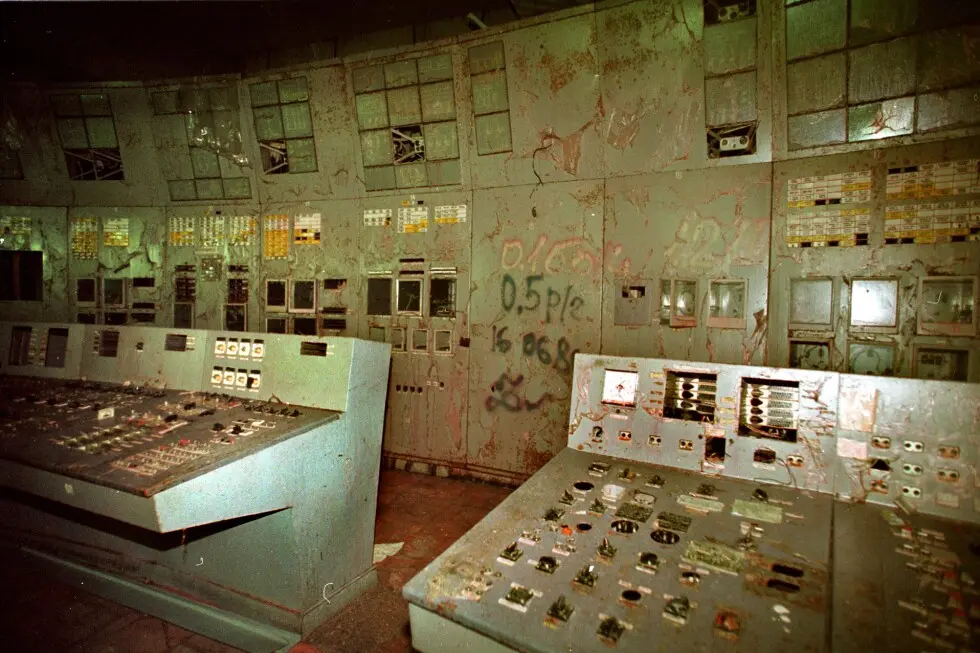
1986년 4월 26일 오전 1시 23분에 엔지니어들이 스위치를 던져 두 차례의 폭발과 세계 최악의 핵재해를 초래했습니다. 2000년 11월 10일 우크라이나 체르노빌의 체르노빌 원자력 발전소 내부에서 촬영된 4호 원자로의 고도로 오염된 제어실 사진입니다.
1991년 2호 원자로의 터빈홀에서 발생한 별도의 화재로 손상된 체르노빌 원자력발전소의 붕괴된 지붕 잔해. 1991년 10월 13일 우크라이나 체르노빌에서 촬영되었습니다.
현재 Associated Press 사진작가인 Efrem Lukatsky는 우크라이나 체르노빌의 체르노빌 원자력 발전소에서 파괴된 4호 원자로를 덮고 있는 관 외부에서 보호복을 입고 있습니다. 이 사진은 폭발 후 수년 후에 촬영된 것입니다.
1986년 가을, 체르노빌 발전소 폭발 이후 정화 작업에 참여한 군인들이 우크라이나 체르노빌의 "배제 구역" 내 텐트 캠프에서 휴식을 취하고 있습니다.
1989년 우크라이나 체르노빌의 체르노빌 원자력 발전소 입구 외부에서 경비원이 사진작가에게 손짓하고 있습니다.
"체르노빌 미스터리를 타도하라!"와 "체르노빌에 누가 책임이 있는가?"라고 쓰인 피켓을 들고 있는 사람들이 1989년 4월 26일 재해 3주년을 맞아 우크라이나 체르노빌의 경기장에서 체르노빌 원자력 발전소 사고의 진실을 요구하는 항의 집회를 벌이고 있습니다.
약 1,350대의 소련 군용 헬리콥터, 버스, 불도저, 유조차, 운송 장비, 소방차, 앰뷸런스가 모두 방사능에 오염되어 우크라이나 체르노빌의 폐기장에 방치되어 있습니다. 이들은 1986년 체르노빌 원자력 발전소 폭발 이후 정화 작업에 사용되었던 것들입니다.
2012년 11월 27일 우크라이나 프리피야트의 버려진 유치원 방에 놓인 침대들. 프리피야트는 체르노빌 원자력 발전소 근로자들과 그들의 가족들이 살았던 곳입니다.
1996년 3월 19일 벨라루스 고멜의 소아 암 병동에서 3살 손자 비탸를 방문하러 온 Ivan Kalenda가 눈물을 닦고 있습니다. 이는 체르노빌 원자력 발전소 폭발과 화재 후 거의 10년이 지난 시점으로, 방사능 구름이 우크라이나, 벨라루스 및 유럽의 다른 지역들로 퍼져나갔습니다.
1996년 3월 19일 벨라루스 고멜의 소아 암 병동에서 화학 치료 후 의사들이 표시한 자국이 있는 Alec Zhloba. 이는 체르노빌 원자력 발전소 폭발과 화재 후 거의 10년이 지난 시점입니다.
2000년 11월 30일 우크라이나 키이우의 내분비학 연구소 집중 치료 병동에서 갑상선암 제거 수술에서 회복 중인 17세 여아를 돌보고 있는 의료 종사자입니다. 체르노빌 원자력 발전소 폭발과 화재 후 거의 15년이 지난 시점입니다.
2004년 4월 26일 우크라이나 키이우의 희생자 추모비에서 1986년 체르노빌 원자력 발전소 폭발과 화재 이후 정화 작업 중 사망한 근로자의 형제자매인 Alehandra Lihova가 눈물을 닦고 있습니다.
2006년 4월 10일 우크라이나 프리피야트의 도시 클럽에 놓인 방사성 먼지로 덮인 소련 관리들의 초상화. 프리피야트는 체르노빌 원자력 발전소 근로자들이 살던 곳으로 치명적인 폭발과 화재 후 대피했습니다.
2000년 11월 10일 우크라이나 체르노빌의 체르노빌 원자력 발전소 내부에서 손상된 4호 원자로를 향해 손가락을 가리키고 있는 조사관입니다.
2016년 3월 23일 우크라이나 체르노빌의 체르노빌 원자력 발전소 핵폐기물 저장소에서 나온 후 방사능 수준을 확인하는 근로자입니다.
2017년 4월 5일 우크라이나 프리피야트의 버려진 마을의 학교 벽에 걸린 깨진 시계. 프리피야트는 한때 약 3킬로미터 떨어진 체르노빌 원자력 발전소와 관련된 삶을 살던 약 50,000명이 살던 곳입니다.
2017년 4월 5일 우크라이나 프리피야트의 버려진 마을의 학교 체육관에 놓인 안장 목마. 프리피야트는 한때 근처 체르노빌 원자력 발전소와 관련된 삶을 살던 사람들이 살던 곳입니다.
2012년 11월 27일 우크라이나 프리피야트의 버려진 마을 놀이터에 놓인 범퍼카. 프리피야트는 한때 근처 체르노빌 원자력 발전소와 관련된 삶을 살던 사람들이 살던 곳입니다.
2004년 4월 26일 키이우의 희생자 추도비에 1986년 체르노빌 원자력 발전소 사고 이후 정화 작업 중 사망한 아들 Viktor의 사진을 놓는 Praskoviya Nezhyvova입니다.
2021년 4월 15일 우크라이나 프리피야트의 버려진 마을에서 지평선상에 보이는 체르노빌 원자력 발전소의 손상된 원자로를 덮고 있는 돔 모양의 구조물. 프리피야트는 한때 발전소와 관련된 삶을 살던 약 50,000명이 살던 곳입니다.
2025년 2월 14일 우크라이나 체르노빌의 체르노빌 원자력 발전소에서 우크라이나 관계자들이 러시아 무인기 공격이라고 주장한 4호 원자로의 방사능 잔존물을 포함하도록 건설된 New Safe Confinement 구조물의 지붕 손상을 조사하는 근로자들입니다.
2022년 4월 16일 우크라이나 체르노빌의 체르노빌 원자력 발전소 근처에 있는 러시아군 소속 차량의 잔해 근처에 서 있는 방사능 표지판입니다.
2021년 4월 15일 우크라이나 프리피야트의 버려진 마을 도시공원에 서 있는 버려진 관람차. 프리피야트는 한때 근처 체르노빌 원자력 발전소와 관련된 삶을 살던 근로자들과 그 가족들이 살던 곳입니다.
1991년 2호 원자로의 터빈홀에서 발생한 별도의 화재로 손상된 체르노빌 원자력발전소의 붕괴된 지붕 잔해. 1991년 10월 13일 우크라이나 체르노빌에서 촬영되었습니다.
현재 Associated Press 사진작가인 Efrem Lukatsky는 우크라이나 체르노빌의 체르노빌 원자력 발전소에서 파괴된 4호 원자로를 덮고 있는 관 외부에서 보호복을 입고 있습니다. 이 사진은 폭발 후 수년 후에 촬영된 것입니다.
1986년 가을, 체르노빌 발전소 폭발 이후 정화 작업에 참여한 군인들이 우크라이나 체르노빌의 "배제 구역" 내 텐트 캠프에서 휴식을 취하고 있습니다.
1989년 우크라이나 체르노빌의 체르노빌 원자력 발전소 입구 외부에서 경비원이 사진작가에게 손짓하고 있습니다.
"체르노빌 미스터리를 타도하라!"와 "체르노빌에 누가 책임이 있는가?"라고 쓰인 피켓을 들고 있는 사람들이 1989년 4월 26일 재해 3주년을 맞아 우크라이나 체르노빌의 경기장에서 체르노빌 원자력 발전소 사고의 진실을 요구하는 항의 집회를 벌이고 있습니다.
약 1,350대의 소련 군용 헬리콥터, 버스, 불도저, 유조차, 운송 장비, 소방차, 앰뷸런스가 모두 방사능에 오염되어 우크라이나 체르노빌의 폐기장에 방치되어 있습니다. 이들은 1986년 체르노빌 원자력 발전소 폭발 이후 정화 작업에 사용되었던 것들입니다.
2012년 11월 27일 우크라이나 프리피야트의 버려진 유치원 방에 놓인 침대들. 프리피야트는 체르노빌 원자력 발전소 근로자들과 그들의 가족들이 살았던 곳입니다.
1996년 3월 19일 벨라루스 고멜의 소아 암 병동에서 3살 손자 비탸를 방문하러 온 Ivan Kalenda가 눈물을 닦고 있습니다. 이는 체르노빌 원자력 발전소 폭발과 화재 후 거의 10년이 지난 시점으로, 방사능 구름이 우크라이나, 벨라루스 및 유럽의 다른 지역들로 퍼져나갔습니다.
1996년 3월 19일 벨라루스 고멜의 소아 암 병동에서 화학 치료 후 의사들이 표시한 자국이 있는 Alec Zhloba. 이는 체르노빌 원자력 발전소 폭발과 화재 후 거의 10년이 지난 시점입니다.
2000년 11월 30일 우크라이나 키이우의 내분비학 연구소 집중 치료 병동에서 갑상선암 제거 수술에서 회복 중인 17세 여아를 돌보고 있는 의료 종사자입니다. 체르노빌 원자력 발전소 폭발과 화재 후 거의 15년이 지난 시점입니다.
2004년 4월 26일 우크라이나 키이우의 희생자 추모비에서 1986년 체르노빌 원자력 발전소 폭발과 화재 이후 정화 작업 중 사망한 근로자의 형제자매인 Alehandra Lihova가 눈물을 닦고 있습니다.
2006년 4월 10일 우크라이나 프리피야트의 도시 클럽에 놓인 방사성 먼지로 덮인 소련 관리들의 초상화. 프리피야트는 체르노빌 원자력 발전소 근로자들이 살던 곳으로 치명적인 폭발과 화재 후 대피했습니다.
2000년 11월 10일 우크라이나 체르노빌의 체르노빌 원자력 발전소 내부에서 손상된 4호 원자로를 향해 손가락을 가리키고 있는 조사관입니다.
2016년 3월 23일 우크라이나 체르노빌의 체르노빌 원자력 발전소 핵폐기물 저장소에서 나온 후 방사능 수준을 확인하는 근로자입니다.
2017년 4월 5일 우크라이나 프리피야트의 버려진 마을의 학교 벽에 걸린 깨진 시계. 프리피야트는 한때 약 3킬로미터 떨어진 체르노빌 원자력 발전소와 관련된 삶을 살던 약 50,000명이 살던 곳입니다.
2017년 4월 5일 우크라이나 프리피야트의 버려진 마을의 학교 체육관에 놓인 안장 목마. 프리피야트는 한때 근처 체르노빌 원자력 발전소와 관련된 삶을 살던 사람들이 살던 곳입니다.
2012년 11월 27일 우크라이나 프리피야트의 버려진 마을 놀이터에 놓인 범퍼카. 프리피야트는 한때 근처 체르노빌 원자력 발전소와 관련된 삶을 살던 사람들이 살던 곳입니다.
2004년 4월 26일 키이우의 희생자 추도비에 1986년 체르노빌 원자력 발전소 사고 이후 정화 작업 중 사망한 아들 Viktor의 사진을 놓는 Praskoviya Nezhyvova입니다.
2021년 4월 15일 우크라이나 프리피야트의 버려진 마을에서 지평선상에 보이는 체르노빌 원자력 발전소의 손상된 원자로를 덮고 있는 돔 모양의 구조물. 프리피야트는 한때 발전소와 관련된 삶을 살던 약 50,000명이 살던 곳입니다.
2025년 2월 14일 우크라이나 체르노빌의 체르노빌 원자력 발전소에서 우크라이나 관계자들이 러시아 무인기 공격이라고 주장한 4호 원자로의 방사능 잔존물을 포함하도록 건설된 New Safe Confinement 구조물의 지붕 손상을 조사하는 근로자들입니다.
2022년 4월 16일 우크라이나 체르노빌의 체르노빌 원자력 발전소 근처에 있는 러시아군 소속 차량의 잔해 근처에 서 있는 방사능 표지판입니다.
2021년 4월 15일 우크라이나 프리피야트의 버려진 마을 도시공원에 서 있는 버려진 관람차. 프리피야트는 한때 근처 체르노빌 원자력 발전소와 관련된 삶을 살던 근로자들과 그 가족들이 살던 곳입니다.
처리 완료
7,529 tokens · $0.0151
기사 수집 완료 · 14:35
매체 피드에서 기사 메타데이터 수집
헤드라인 번역 완료 · 13:13
제목/요약 한국어 번역 (fetch 시점 inline)
kimi-k2.5
0 tokens
$0.00000
0.2s
본문 추출 완료
36,991자 추출 완료
본문 한국어 번역 완료 · 13:13
2,602자 번역 완료
claude-haiku-4-5-20251001
7,529 tokens
$0.01510
23.0s
지정학적 엔티티 추출 완료 · 13:13
8개 엔티티 추출 완료
지정학적 맥락 & R-Scanner
R-Scanner · 평상
z=-1.84
일상적인 보도 수준 — 기준: Chernobyl
(🇺🇦 UA)
최근 6시간 0건
7일 평균 4.18건 / 6h
0개국 매체
0개 매체
본문에서 추출된 지명 (8)
위치 지도
지도 로딩 중…
같은 주제의 다른 기사 (최근 7일)
The highly contaminated control room for Reactor No. 4 is seen inside the Chernobyl nuclear power plant in Chernobyl, Ukraine, Nov. 10, 2000. Engineers threw a switch at 1:23 a.m. on April 26, 1986, that triggered two explosions and the world’s worst nuclear disaster. (AP Photo/Efrem Lukatsky, File)
Remains of the collapsed roof at the Chernobyl nuclear plant, damaged in the separate 1991 fire in a turbine hall for Reactor No. 2, in Chernobyl, Ukraine, Oct. 13, 1991. (AP Photo/Efrem Lukatsky, File)
Efrem Lukatsky, now an Associated Press photographer, wears protective clothes outside the sarcophagus that covers destroyed Reactor No. 4 in the Chernobyl nuclear power plant in Chernobyl, Ukraine, in this undated photo taken several years after the explosion. (AP Photo, File)
Soldiers taking part in cleanup operations following the Chernobyl power plant explosion rest in a tent camp inside the “exclusion zone” in the autumn of 1986, in Chernobyl, Ukraine. (AP Photo/Efrem Lukatsky)
A security officer gestures to a photographer outside the gates of the Chernobyl nuclear power plant in this 1989 photo, in Chernobyl, Ukraine. (AP Photo/Efrem Lukatsky)
People hold signs reading “Down with the Chernobyl mysteries!” and “Who is responsible for Chernobyl?” during a protest rally demanding the truth about the Chernobyl nuclear power plant accident at a stadium in Chernobyl, Ukraine, April 26, 1989, on the third anniversary of the disaster. (AP Photo/Efrem Lukatsky)
About 1,350 Soviet military helicopters, buses, bulldozers, tankers, transporters, fire engines and ambulances, all highly contaminated with radiation, sit abandoned in a junkyard, in Chernobyl, Ukraine, Nov. 10, 2000, after being used in cleanup operations following the 1986 explosion in the Chernobyl nuclear power plant. (AP Photo/Efrem Lukatsky, File )
Beds sit in a room of an abandoned kindergarten in the deserted town of Pripyat, Ukraine, Nov. 27, 2012, which housed Chernobyl nuclear power plant workers and their families. (AP Photo/Efrem Lukatsky, File)
Ivan Kalenda turns away to wipe his tears as he visits his 3-year-old grandson Vitya, right, in the children’s cancer hospital ward in Gomel, Belarus, March 19, 1996, nearly a decade after the explosion and fire at the Chernobyl nuclear power plant that sent radioactive clouds through Ukraine, Belarus and other parts of Europe. (AP Photo/Efrem Lukatsky, File)
Alec Zhloba sits in a children’s cancer ward with markings made by doctors on his head following chemotherapy in Gomel, Belarus, March 19, 1996, nearly 10 years after the explosion and fire at the Chernobyl nuclear power plant sent radioactive clouds through Ukraine, Belarus and other parts of Europe. (AP Photo/Efrem Lukatsky, File)
A medical worker attends to a 17-year-old girl recovering from surgery to remove her cancerous thyroid at the intensive therapy unit of the Endocrynology Institute in Kyiv, Ukraine, Nov. 30, 2000, nearly 15 years after the explosion and fire at the Chernobyl nuclear power plant. (AP Photo/Efrem Lukatsky, File)
Alehandra Lihova, sister of a worker who died following cleanup operations from the 1986 explosion and fire at the Chernobyl nuclear power plant, wipes away tears at a wreath-laying ceremony at a monument to victims in Kyiv, Ukraine, April 26, 2004. The monument depicts the plant and its inscription reads “Near the grave, near the Chernobyl nuclear power station, near the dead Prypiat, a tree is the cross.” (AP Photo/Efrem Lukatsky, File)
Portraits of Soviet officials covered by radioactive dust sit in a city club in Pripyat, Ukraine, April 10, 2006, where Chernobyl nuclear power plant workers lived and were evacuated after the deadly explosion and fire. (AP Photo/Efrem Lukatsky, File)
An investigator points toward damaged Reactor No. 4 inside the Chernobyl nuclear power plant in Chernobyl, Ukraine, Nov. 10, 2000. (AP Photo/Efrem Lukatsky, File)
A worker checks radiation levels after leaving a nuclear waste storage site at the Chernobyl nuclear power plant in Chernobyl, Ukraine, March 23, 2016. (AP Photo/Efrem Lukatsky, File)
A broken clock hangs on a wall in a school in the deserted town of Pripyat, Ukraine, April 5, 2017, once home to people whose lives were connected to the Chernobyl nuclear power plant about 3 kilometers (nearly 2 miles) away. (AP Photo/Efrem Lukatsky, File)
A pommel horse sits in a school gymnasium in the deserted town of Pripyat, Ukraine, April 5, 2017, once home to people whose lives were connected to the nearby Chernobyl nuclear power plant. (AP Photo/Efrem Lukatsky, File)
Bumper cars sit in a playground in the deserted town of Pripyat, Ukraine, Nov. 27, 2012, once home to people whose lives were connected to the nearby Chernobyl nuclear power plant. (AP Photo/Efrem Lukatsky, File)
Praskoviya Nezhyvova places a photo of her son, Viktor, who died following cleanup operations from the 1986 Chernobyl nuclear plant accident, at a monument to the victims in Kyiv, April 26, 2004. (AP Photo/Efrem Lukatsky, File)
A dome-shaped shelter covering the damaged reactor at the Chernobyl nuclear plant is seen on the horizon, April 15, 2021, from the abandoned town of Pripyat, Ukraine, once home to some 50,000 people whose lives were connected to the plant. (AP Photo/Efrem Lukatsky, File)
Workers examine the damage to the roof of the New Safe Confinement structure, which was built to contain the radioactive remains of Reactor No. 4 at the Chernobyl nuclear power plant, following what Ukrainian officials said was a Russian drone attack in Chernobyl, Ukraine, Feb. 14, 2025. (AP Photo/Efrem Lukatsky, File)
A radiation sign stands near the remains of a vehicle belonging to the Russian military near the Chernobyl nuclear power plant in Chernobyl, Ukraine, April 16, 2022. (AP Photo/Efrem Lukatsky, File)
An abandoned Ferris wheel stands in a city park, April 15, 2021, in the abandoned town of Pripyat, Ukraine, once home to workers and their families whose lives were connected to the nearby Chernobyl nuclear power plant. (AP Photo/Efrem Lukatsky, File)
The highly contaminated control room for Reactor No. 4 is seen inside the Chernobyl nuclear power plant in Chernobyl, Ukraine, Nov. 10, 2000. Engineers threw a switch at 1:23 a.m. on April 26, 1986, that triggered two explosions and the world’s worst nuclear disaster. (AP Photo/Efrem Lukatsky, File)
The highly contaminated control room for Reactor No. 4 is seen inside the Chernobyl nuclear power plant in Chernobyl, Ukraine, Nov. 10, 2000. Engineers threw a switch at 1:23 a.m. on April 26, 1986, that triggered two explosions and the world’s worst nuclear disaster. (AP Photo/Efrem Lukatsky, File)
Remains of the collapsed roof at the Chernobyl nuclear plant, damaged in the separate 1991 fire in a turbine hall for Reactor No. 2, in Chernobyl, Ukraine, Oct. 13, 1991. (AP Photo/Efrem Lukatsky, File)
Remains of the collapsed roof at the Chernobyl nuclear plant, damaged in the separate 1991 fire in a turbine hall for Reactor No. 2, in Chernobyl, Ukraine, Oct. 13, 1991. (AP Photo/Efrem Lukatsky, File)
Efrem Lukatsky, now an Associated Press photographer, wears protective clothes outside the sarcophagus that covers destroyed Reactor No. 4 in the Chernobyl nuclear power plant in Chernobyl, Ukraine, in this undated photo taken several years after the explosion. (AP Photo, File)
Efrem Lukatsky, now an Associated Press photographer, wears protective clothes outside the sarcophagus that covers destroyed Reactor No. 4 in the Chernobyl nuclear power plant in Chernobyl, Ukraine, in this undated photo taken several years after the explosion. (AP Photo, File)
Soldiers taking part in cleanup operations following the Chernobyl power plant explosion rest in a tent camp inside the “exclusion zone” in the autumn of 1986, in Chernobyl, Ukraine. (AP Photo/Efrem Lukatsky)
Soldiers taking part in cleanup operations following the Chernobyl power plant explosion rest in a tent camp inside the “exclusion zone” in the autumn of 1986, in Chernobyl, Ukraine. (AP Photo/Efrem Lukatsky)
A security officer gestures to a photographer outside the gates of the Chernobyl nuclear power plant in this 1989 photo, in Chernobyl, Ukraine. (AP Photo/Efrem Lukatsky)
A security officer gestures to a photographer outside the gates of the Chernobyl nuclear power plant in this 1989 photo, in Chernobyl, Ukraine. (AP Photo/Efrem Lukatsky)
People hold signs reading “Down with the Chernobyl mysteries!” and “Who is responsible for Chernobyl?” during a protest rally demanding the truth about the Chernobyl nuclear power plant accident at a stadium in Chernobyl, Ukraine, April 26, 1989, on the third anniversary of the disaster. (AP Photo/Efrem Lukatsky)
People hold signs reading “Down with the Chernobyl mysteries!” and “Who is responsible for Chernobyl?” during a protest rally demanding the truth about the Chernobyl nuclear power plant accident at a stadium in Chernobyl, Ukraine, April 26, 1989, on the third anniversary of the disaster. (AP Photo/Efrem Lukatsky)
About 1,350 Soviet military helicopters, buses, bulldozers, tankers, transporters, fire engines and ambulances, all highly contaminated with radiation, sit abandoned in a junkyard, in Chernobyl, Ukraine, Nov. 10, 2000, after being used in cleanup operations following the 1986 explosion in the Chernobyl nuclear power plant. (AP Photo/Efrem Lukatsky, File )
About 1,350 Soviet military helicopters, buses, bulldozers, tankers, transporters, fire engines and ambulances, all highly contaminated with radiation, sit abandoned in a junkyard, in Chernobyl, Ukraine, Nov. 10, 2000, after being used in cleanup operations following the 1986 explosion in the Chernobyl nuclear power plant. (AP Photo/Efrem Lukatsky, File )
Beds sit in a room of an abandoned kindergarten in the deserted town of Pripyat, Ukraine, Nov. 27, 2012, which housed Chernobyl nuclear power plant workers and their families. (AP Photo/Efrem Lukatsky, File)
Beds sit in a room of an abandoned kindergarten in the deserted town of Pripyat, Ukraine, Nov. 27, 2012, which housed Chernobyl nuclear power plant workers and their families. (AP Photo/Efrem Lukatsky, File)
Ivan Kalenda turns away to wipe his tears as he visits his 3-year-old grandson Vitya, right, in the children’s cancer hospital ward in Gomel, Belarus, March 19, 1996, nearly a decade after the explosion and fire at the Chernobyl nuclear power plant that sent radioactive clouds through Ukraine, Belarus and other parts of Europe. (AP Photo/Efrem Lukatsky, File)
Ivan Kalenda turns away to wipe his tears as he visits his 3-year-old grandson Vitya, right, in the children’s cancer hospital ward in Gomel, Belarus, March 19, 1996, nearly a decade after the explosion and fire at the Chernobyl nuclear power plant that sent radioactive clouds through Ukraine, Belarus and other parts of Europe. (AP Photo/Efrem Lukatsky, File)
Alec Zhloba sits in a children’s cancer ward with markings made by doctors on his head following chemotherapy in Gomel, Belarus, March 19, 1996, nearly 10 years after the explosion and fire at the Chernobyl nuclear power plant sent radioactive clouds through Ukraine, Belarus and other parts of Europe. (AP Photo/Efrem Lukatsky, File)
Alec Zhloba sits in a children’s cancer ward with markings made by doctors on his head following chemotherapy in Gomel, Belarus, March 19, 1996, nearly 10 years after the explosion and fire at the Chernobyl nuclear power plant sent radioactive clouds through Ukraine, Belarus and other parts of Europe. (AP Photo/Efrem Lukatsky, File)
A medical worker attends to a 17-year-old girl recovering from surgery to remove her cancerous thyroid at the intensive therapy unit of the Endocrynology Institute in Kyiv, Ukraine, Nov. 30, 2000, nearly 15 years after the explosion and fire at the Chernobyl nuclear power plant. (AP Photo/Efrem Lukatsky, File)
A medical worker attends to a 17-year-old girl recovering from surgery to remove her cancerous thyroid at the intensive therapy unit of the Endocrynology Institute in Kyiv, Ukraine, Nov. 30, 2000, nearly 15 years after the explosion and fire at the Chernobyl nuclear power plant. (AP Photo/Efrem Lukatsky, File)
Alehandra Lihova, sister of a worker who died following cleanup operations from the 1986 explosion and fire at the Chernobyl nuclear power plant, wipes away tears at a wreath-laying ceremony at a monument to victims in Kyiv, Ukraine, April 26, 2004. The monument depicts the plant and its inscription reads “Near the grave, near the Chernobyl nuclear power station, near the dead Prypiat, a tree is the cross.” (AP Photo/Efrem Lukatsky, File)
Alehandra Lihova, sister of a worker who died following cleanup operations from the 1986 explosion and fire at the Chernobyl nuclear power plant, wipes away tears at a wreath-laying ceremony at a monument to victims in Kyiv, Ukraine, April 26, 2004. The monument depicts the plant and its inscription reads “Near the grave, near the Chernobyl nuclear power station, near the dead Prypiat, a tree is the cross.” (AP Photo/Efrem Lukatsky, File)
Portraits of Soviet officials covered by radioactive dust sit in a city club in Pripyat, Ukraine, April 10, 2006, where Chernobyl nuclear power plant workers lived and were evacuated after the deadly explosion and fire. (AP Photo/Efrem Lukatsky, File)
Portraits of Soviet officials covered by radioactive dust sit in a city club in Pripyat, Ukraine, April 10, 2006, where Chernobyl nuclear power plant workers lived and were evacuated after the deadly explosion and fire. (AP Photo/Efrem Lukatsky, File)
An investigator points toward damaged Reactor No. 4 inside the Chernobyl nuclear power plant in Chernobyl, Ukraine, Nov. 10, 2000. (AP Photo/Efrem Lukatsky, File)
An investigator points toward damaged Reactor No. 4 inside the Chernobyl nuclear power plant in Chernobyl, Ukraine, Nov. 10, 2000. (AP Photo/Efrem Lukatsky, File)
A worker checks radiation levels after leaving a nuclear waste storage site at the Chernobyl nuclear power plant in Chernobyl, Ukraine, March 23, 2016. (AP Photo/Efrem Lukatsky, File)
A worker checks radiation levels after leaving a nuclear waste storage site at the Chernobyl nuclear power plant in Chernobyl, Ukraine, March 23, 2016. (AP Photo/Efrem Lukatsky, File)
A broken clock hangs on a wall in a school in the deserted town of Pripyat, Ukraine, April 5, 2017, once home to people whose lives were connected to the Chernobyl nuclear power plant about 3 kilometers (nearly 2 miles) away. (AP Photo/Efrem Lukatsky, File)
A broken clock hangs on a wall in a school in the deserted town of Pripyat, Ukraine, April 5, 2017, once home to people whose lives were connected to the Chernobyl nuclear power plant about 3 kilometers (nearly 2 miles) away. (AP Photo/Efrem Lukatsky, File)
A pommel horse sits in a school gymnasium in the deserted town of Pripyat, Ukraine, April 5, 2017, once home to people whose lives were connected to the nearby Chernobyl nuclear power plant. (AP Photo/Efrem Lukatsky, File)
A pommel horse sits in a school gymnasium in the deserted town of Pripyat, Ukraine, April 5, 2017, once home to people whose lives were connected to the nearby Chernobyl nuclear power plant. (AP Photo/Efrem Lukatsky, File)
Bumper cars sit in a playground in the deserted town of Pripyat, Ukraine, Nov. 27, 2012, once home to people whose lives were connected to the nearby Chernobyl nuclear power plant. (AP Photo/Efrem Lukatsky, File)
Bumper cars sit in a playground in the deserted town of Pripyat, Ukraine, Nov. 27, 2012, once home to people whose lives were connected to the nearby Chernobyl nuclear power plant. (AP Photo/Efrem Lukatsky, File)
Praskoviya Nezhyvova places a photo of her son, Viktor, who died following cleanup operations from the 1986 Chernobyl nuclear plant accident, at a monument to the victims in Kyiv, April 26, 2004. (AP Photo/Efrem Lukatsky, File)
Praskoviya Nezhyvova places a photo of her son, Viktor, who died following cleanup operations from the 1986 Chernobyl nuclear plant accident, at a monument to the victims in Kyiv, April 26, 2004. (AP Photo/Efrem Lukatsky, File)
A dome-shaped shelter covering the damaged reactor at the Chernobyl nuclear plant is seen on the horizon, April 15, 2021, from the abandoned town of Pripyat, Ukraine, once home to some 50,000 people whose lives were connected to the plant. (AP Photo/Efrem Lukatsky, File)
A dome-shaped shelter covering the damaged reactor at the Chernobyl nuclear plant is seen on the horizon, April 15, 2021, from the abandoned town of Pripyat, Ukraine, once home to some 50,000 people whose lives were connected to the plant. (AP Photo/Efrem Lukatsky, File)
Workers examine the damage to the roof of the New Safe Confinement structure, which was built to contain the radioactive remains of Reactor No. 4 at the Chernobyl nuclear power plant, following what Ukrainian officials said was a Russian drone attack in Chernobyl, Ukraine, Feb. 14, 2025. (AP Photo/Efrem Lukatsky, File)
Workers examine the damage to the roof of the New Safe Confinement structure, which was built to contain the radioactive remains of Reactor No. 4 at the Chernobyl nuclear power plant, following what Ukrainian officials said was a Russian drone attack in Chernobyl, Ukraine, Feb. 14, 2025. (AP Photo/Efrem Lukatsky, File)
A radiation sign stands near the remains of a vehicle belonging to the Russian military near the Chernobyl nuclear power plant in Chernobyl, Ukraine, April 16, 2022. (AP Photo/Efrem Lukatsky, File)
A radiation sign stands near the remains of a vehicle belonging to the Russian military near the Chernobyl nuclear power plant in Chernobyl, Ukraine, April 16, 2022. (AP Photo/Efrem Lukatsky, File)
An abandoned Ferris wheel stands in a city park, April 15, 2021, in the abandoned town of Pripyat, Ukraine, once home to workers and their families whose lives were connected to the nearby Chernobyl nuclear power plant. (AP Photo/Efrem Lukatsky, File)
An abandoned Ferris wheel stands in a city park, April 15, 2021, in the abandoned town of Pripyat, Ukraine, once home to workers and their families whose lives were connected to the nearby Chernobyl nuclear power plant. (AP Photo/Efrem Lukatsky, File)
KYIV, Ukraine (AP) — Efrem Lukatsky, a Kyiv-based photographer for The Associated Press, was living in the city on April 26, 1986, when the explosion and fire struck the Chernobyl nuclear power plant, about a two-hour drive away. He has visited the plant and the “exclusion zone” around it dozens of times. He recalls the disaster that has haunted him and Ukraine for 40 years.
Remains of the collapsed roof at the Chernobyl nuclear plant, damaged in the separate 1991 fire in a turbine hall for Reactor No. 2, in Chernobyl, Ukraine, Oct. 13, 1991. (AP Photo/Efrem Lukatsky, File)
Remains of the collapsed roof at the Chernobyl nuclear plant, damaged in the separate 1991 fire in a turbine hall for Reactor No. 2, in Chernobyl, Ukraine, Oct. 13, 1991. (AP Photo/Efrem Lukatsky, File)
There was no official announcement about the accident at the Chernobyl nuclear power plant when it happened in 1986 — only fragments of information passed quietly among colleagues.
I was in my late 20s at the time and was a specialized underwater welder for a Kyiv institute that sent me to offshore platforms and classified military bases across the Soviet Union.
Efrem Lukatsky, a photographer for The Associated Press, has chronicled the 1986 Chernobyl disaster from its earliest days, making many trips to the “exclusion zone” around the damaged nuclear power plant.
No one spoke openly about what happened at Chernobyl — which is transliterated as “Chornobyl” in Ukraine — but unease was growing. There was a metallic taste in my mouth and a dryness in my throat. Others had it, but no one understood why.
The first official, brief acknowledgment came two days later — that an accident had occurred. Nothing more. People spoke in hushed tones about plant firefighters being flown to hospitals in Moscow.
A security officer gestures to a photographer outside the gates of the Chernobyl nuclear power plant in this 1989 photo, in Chernobyl, Ukraine. (AP Photo/Efrem Lukatsky)
A security officer gestures to a photographer outside the gates of the Chernobyl nuclear power plant in this 1989 photo, in Chernobyl, Ukraine. (AP Photo/Efrem Lukatsky)
At night, we tuned in to Western broadcasts — still considered subversive in those days — for news the state would not provide. We learned the accident had spread a plume of radiation beyond the USSR’s borders. Experts urged people to seal windows, wear masks and give iodine to children. I followed their advice, placing an iodine drop each day on a sugar cube to protect my thyroid gland from absorbing contamination.
My family home was in Kyiv, where a neighbor warned me about radioactive dust. Later, I saw her husband, a policeman, strip off his clothes in the stairwell and seal them in a bag before going inside.
A friend, a nuclear physicist, called and urged me to leave Kyiv for good, and some residents sent their children to other regions. I didn’t go. My parents were here and it was my home.
Alec Zhloba sits in a children’s cancer ward with markings made by doctors on his head following chemotherapy in Gomel, Belarus, March 19, 1996, nearly 10 years after the explosion and fire at the Chernobyl nuclear power plant sent radioactive clouds through Ukraine, Belarus and other parts of Europe. (AP Photo/Efrem Lukatsky, File)
Alec Zhloba sits in a children’s cancer ward with markings made by doctors on his head following chemotherapy in Gomel, Belarus, March 19, 1996, nearly 10 years after the explosion and fire at the Chernobyl nuclear power plant sent radioactive clouds through Ukraine, Belarus and other parts of Europe. (AP Photo/Efrem Lukatsky, File)
Ivan Kalenda turns away to wipe his tears as he visits his 3-year-old grandson Vitya, right, in the children’s cancer hospital ward in Gomel, Belarus, March 19, 1996, nearly a decade after the explosion and fire at the Chernobyl nuclear power plant that sent radioactive clouds through Ukraine, Belarus and other parts of Europe. (AP Photo/Efrem Lukatsky, File)
Ivan Kalenda turns away to wipe his tears as he visits his 3-year-old grandson Vitya, right, in the children’s cancer hospital ward in Gomel, Belarus, March 19, 1996, nearly a decade after the explosion and fire at the Chernobyl nuclear power plant that sent radioactive clouds through Ukraine, Belarus and other parts of Europe. (AP Photo/Efrem Lukatsky, File)
A medical worker attends to a 17-year-old girl recovering from surgery to remove her cancerous thyroid at the intensive therapy unit of the Endocrynology Institute in Kyiv, Ukraine, Nov. 30, 2000, nearly 15 years after the explosion and fire at the Chernobyl nuclear power plant. (AP Photo/Efrem Lukatsky, File)
A medical worker attends to a 17-year-old girl recovering from surgery to remove her cancerous thyroid at the intensive therapy unit of the Endocrynology Institute in Kyiv, Ukraine, Nov. 30, 2000, nearly 15 years after the explosion and fire at the Chernobyl nuclear power plant. (AP Photo/Efrem Lukatsky, File)
I found an old military radiation meter and checked everything — my apartment, my clothes, the streets. The readings were unsettling. At a playground, they climbed far above normal. At home, they were even higher. I used tape to lift the dust off my clothes.
Five days after the explosion, the annual May Day parade went ahead in Kyiv as planned. Thousands filled the streets, many of them children. I marched too, past a monument to Soviet founder Vladimir Lenin, and was handed a banner praising the leadership.
Alehandra Lihova, sister of a worker who died following cleanup operations from the 1986 explosion and fire at the Chernobyl nuclear power plant, wipes away tears at a wreath-laying ceremony at a monument to victims in Kyiv, Ukraine, April 26, 2004. The monument depicts the plant and its inscription reads “Near the grave, near the Chernobyl nuclear power station, near the dead Prypiat, a tree is the cross.” (AP Photo/Efrem Lukatsky, File)
Alehandra Lihova, sister of a worker who died following cleanup operations from the 1986 explosion and fire at the Chernobyl nuclear power plant, wipes away tears at a wreath-laying ceremony at a monument to victims in Kyiv, Ukraine, April 26, 2004. The monument depicts the plant and its inscription reads “Near the grave, near the Chernobyl nuclear power station, near the dead Prypiat, a tree is the cross.” (AP Photo/Efrem Lukatsky, File)
Days later, the city hosted a cycling race, and spectators lined the streets as if nothing had happened. The state said nothing was wrong, but we already knew otherwise.
After the accident, long columns of buses moved slowly into Kyiv, carrying thousands of evacuees from Pripyat, the city adjacent to Chernobyl where most of its workers lived.
Beds sit in a room of an abandoned kindergarten in the deserted town of Pripyat, Ukraine, Nov. 27, 2012, which housed Chernobyl nuclear power plant workers and their families. (AP Photo/Efrem Lukatsky, File)
Beds sit in a room of an abandoned kindergarten in the deserted town of Pripyat, Ukraine, Nov. 27, 2012, which housed Chernobyl nuclear power plant workers and their families. (AP Photo/Efrem Lukatsky, File)
I remember their faces — uncertain but calm. They were told they’d be gone only a few days. They left behind homes, belongings and pets who died waiting for owners who never returned.
Three weeks after the disaster, Soviet leader Mikhail Gorbachev addressed the nation, giving no explanation for the delay or reporting fully what had happened.
A broken clock hangs on a wall in a school in the deserted town of Pripyat, Ukraine, April 5, 2017, once home to people whose lives were connected to the Chernobyl nuclear power plant about 3 kilometers (nearly 2 miles) away. (AP Photo/Efrem Lukatsky, File)
A broken clock hangs on a wall in a school in the deserted town of Pripyat, Ukraine, April 5, 2017, once home to people whose lives were connected to the Chernobyl nuclear power plant about 3 kilometers (nearly 2 miles) away. (AP Photo/Efrem Lukatsky, File)
In autumn 1986, I first visited what became known as Chernobyl’s “exclusion zone,” a 2,600-square-kilometer (1,000-square-mile) area, having been sent there as part of a team from my scientific institute, and later as a stringer photographer for the Soviet magazine, Ogonyok.
Silent apartment blocks stood beside schools, swimming pools and businesses that looked as if their occupants had just stepped out.
Soldiers taking part in cleanup operations following the Chernobyl power plant explosion rest in a tent camp inside the “exclusion zone” in the autumn of 1986, in Chernobyl, Ukraine. (AP Photo/Efrem Lukatsky)
Soldiers taking part in cleanup operations following the Chernobyl power plant explosion rest in a tent camp inside the “exclusion zone” in the autumn of 1986, in Chernobyl, Ukraine. (AP Photo/Efrem Lukatsky)
But what stayed with me most were those sent to contain the disaster. Firefighters, we learned, had dragged hoses across wreckage, trying to extinguish a blaze that water couldn’t quench. Tens of thousands of cleanup crews, or “liquidators,” were sent in to remove contaminated soil or seal the damaged reactor in concrete. Soldiers scraped radioactive debris from the plant’s roof, risking lethal exposure in minutes.
An investigator points toward damaged Reactor No. 4 inside the Chernobyl nuclear power plant in Chernobyl, Ukraine, Nov. 10, 2000. (AP Photo/Efrem Lukatsky, File)
An investigator points toward damaged Reactor No. 4 inside the Chernobyl nuclear power plant in Chernobyl, Ukraine, Nov. 10, 2000. (AP Photo/Efrem Lukatsky, File)
Then there were the coal miners. To prevent the plant’s radioactive fuel from reaching the groundwater, they dug tunnels beneath it through darkness and heat, often stripped to their shirts.
We had little protection — suits, boots and masks — that felt inadequate. Before leaving, we were inspected and washed down, as if that could undo any exposure. After each trip, I sealed my clothes in bags and discarded shoes and coats.
Information remained tightly controlled. Photographers had to hand over film after each assignment.
People hold signs reading “Down with the Chernobyl mysteries!” and “Who is responsible for Chernobyl?” during a protest rally demanding the truth about the Chernobyl nuclear power plant accident at a stadium in Chernobyl, Ukraine, April 26, 1989, on the third anniversary of the disaster. (AP Photo/Efrem Lukatsky)
People hold signs reading “Down with the Chernobyl mysteries!” and “Who is responsible for Chernobyl?” during a protest rally demanding the truth about the Chernobyl nuclear power plant accident at a stadium in Chernobyl, Ukraine, April 26, 1989, on the third anniversary of the disaster. (AP Photo/Efrem Lukatsky)
But the truth already was spreading. People spoke more openly in Kyiv. The first protests were small and tentative but soon grew into larger demonstrations demanding answers — rallies that in turn formed the nucleus of Ukraine’s independence movement.
That was when my career as a journalist began. My photos were shown at an amateur exhibition, then published abroad. I thought I might be arrested.
By then, however, the Soviet system itself was under strain.
Portraits of Soviet officials covered by radioactive dust sit in a city club in Pripyat, Ukraine, April 10, 2006, where Chernobyl nuclear power plant workers lived and were evacuated after the deadly explosion and fire. (AP Photo/Efrem Lukatsky, File)
Portraits of Soviet officials covered by radioactive dust sit in a city club in Pripyat, Ukraine, April 10, 2006, where Chernobyl nuclear power plant workers lived and were evacuated after the deadly explosion and fire. (AP Photo/Efrem Lukatsky, File)
After the USSR collapsed in 1991 and Ukraine gained independence, I returned to the exclusion zone many times, often with scientists, police and firefighters. I was hired by the AP in 1989.
A worker checks radiation levels after leaving a nuclear waste storage site at the Chernobyl nuclear power plant in Chernobyl, Ukraine, March 23, 2016. (AP Photo/Efrem Lukatsky, File)
A worker checks radiation levels after leaving a nuclear waste storage site at the Chernobyl nuclear power plant in Chernobyl, Ukraine, March 23, 2016. (AP Photo/Efrem Lukatsky, File)
Another lasting image was seeing people awaiting medical checks. I photographed them — the very old and the very young — standing quietly for examinations for signs of illness.
Immediately after the accident, 30 plant workers and firefighters died from acute radiation sickness. Later, thousands of people died from radiation-related illnesses. Six photographers and cameramen sent there in the first days all died of illness later.
Pripyat was frozen in time. At a hospital where the first victims were treated, radiation levels remained dangerously high.
Nearby was a vast machinery graveyard: Ambulances, buses, trucks, armored vehicles and helicopters used in the cleanup were abandoned as too contaminated. To photograph them, we moved quickly to minimize exposure.
About 1,350 Soviet military helicopters, buses, bulldozers, tankers, transporters, fire engines and ambulances, all highly contaminated with radiation, sit abandoned in a junkyard, in Chernobyl, Ukraine, Nov. 10, 2000, after being used in cleanup operations following the 1986 explosion in the Chernobyl nuclear power plant. (AP Photo/Efrem Lukatsky, File )
About 1,350 Soviet military helicopters, buses, bulldozers, tankers, transporters, fire engines and ambulances, all highly contaminated with radiation, sit abandoned in a junkyard, in Chernobyl, Ukraine, Nov. 10, 2000, after being used in cleanup operations following the 1986 explosion in the Chernobyl nuclear power plant. (AP Photo/Efrem Lukatsky, File )
Inside the power plant, dust hung thick in the air, catching the light. We moved quickly but carefully to the control room, where a routine test for Reactor No. 4 had gone wrong at 1:23 a.m. on April 26, 1986, triggering two explosions. Many buttons from the panels were missing — taken as souvenirs.
As we moved deeper into the plant, radiation levels rose, and we turned back. Some limits you do not cross.
Workers examine the damage to the roof of the New Safe Confinement structure, which was built to contain the radioactive remains of Reactor No. 4 at the Chernobyl nuclear power plant, following what Ukrainian officials said was a Russian drone attack in Chernobyl, Ukraine, Feb. 14, 2025. (AP Photo/Efrem Lukatsky, File)
Workers examine the damage to the roof of the New Safe Confinement structure, which was built to contain the radioactive remains of Reactor No. 4 at the Chernobyl nuclear power plant, following what Ukrainian officials said was a Russian drone attack in Chernobyl, Ukraine, Feb. 14, 2025. (AP Photo/Efrem Lukatsky, File)
As years passed, the original shelter over the reactor deteriorated, opening gaps where radiation leaked out. In 2019, the entire building was covered by an enormous arch-shaped shelter, designed to last generations. It seemed the situation finally was under control.
A radiation sign stands near the remains of a vehicle belonging to the Russian military near the Chernobyl nuclear power plant in Chernobyl, Ukraine, April 16, 2022. (AP Photo/Efrem Lukatsky, File)
A radiation sign stands near the remains of a vehicle belonging to the Russian military near the Chernobyl nuclear power plant in Chernobyl, Ukraine, April 16, 2022. (AP Photo/Efrem Lukatsky, File)
But Russia invaded Ukraine in 2022, and Moscow’s forces entered the exclusion zone, pushing toward Kyiv. The troops dug positions in contaminated soil, disturbing what had long been buried. Three years later, a Russian drone strike damaged the protective structure. There was no radiation leak, but it was a reminder that the danger persisted.
Without people, the still-contaminated exclusion zone has recovered in unexpected ways. Forests have spread. Wildlife has multiplied. Rare species now move through places once defined by disaster.
A dome-shaped shelter covering the damaged reactor at the Chernobyl nuclear plant is seen on the horizon, April 15, 2021, from the abandoned town of Pripyat, Ukraine, once home to some 50,000 people whose lives were connected to the plant. (AP Photo/Efrem Lukatsky, File)
A dome-shaped shelter covering the damaged reactor at the Chernobyl nuclear plant is seen on the horizon, April 15, 2021, from the abandoned town of Pripyat, Ukraine, once home to some 50,000 people whose lives were connected to the plant. (AP Photo/Efrem Lukatsky, File)
A pommel horse sits in a school gymnasium in the deserted town of Pripyat, Ukraine, April 5, 2017, once home to people whose lives were connected to the nearby Chernobyl nuclear power plant. (AP Photo/Efrem Lukatsky, File)
A pommel horse sits in a school gymnasium in the deserted town of Pripyat, Ukraine, April 5, 2017, once home to people whose lives were connected to the nearby Chernobyl nuclear power plant. (AP Photo/Efrem Lukatsky, File)
Bumper cars sit in a playground in the deserted town of Pripyat, Ukraine, Nov. 27, 2012, once home to people whose lives were connected to the nearby Chernobyl nuclear power plant. (AP Photo/Efrem Lukatsky, File)
Bumper cars sit in a playground in the deserted town of Pripyat, Ukraine, Nov. 27, 2012, once home to people whose lives were connected to the nearby Chernobyl nuclear power plant. (AP Photo/Efrem Lukatsky, File)
Praskoviya Nezhyvova places a photo of her son, Viktor, who died following cleanup operations from the 1986 Chernobyl nuclear plant accident, at a monument to the victims in Kyiv, April 26, 2004. (AP Photo/Efrem Lukatsky, File)
Praskoviya Nezhyvova places a photo of her son, Viktor, who died following cleanup operations from the 1986 Chernobyl nuclear plant accident, at a monument to the victims in Kyiv, April 26, 2004. (AP Photo/Efrem Lukatsky, File)
An abandoned Ferris wheel stands in a city park, April 15, 2021, in the abandoned town of Pripyat, Ukraine, once home to workers and their families whose lives were connected to the nearby Chernobyl nuclear power plant. (AP Photo/Efrem Lukatsky, File)
An abandoned Ferris wheel stands in a city park, April 15, 2021, in the abandoned town of Pripyat, Ukraine, once home to workers and their families whose lives were connected to the nearby Chernobyl nuclear power plant. (AP Photo/Efrem Lukatsky, File)
Pripyat remains frozen, but it’s no longer entirely empty, as animals roam through it.
After 40 years, that could be the clearest truth: Lives were upended, and for a long time, reality was kept hidden. But left alone, nature endures — even at Chernobyl.
This is a documentary photo story curated by AP photo editors.
Remains of the collapsed roof at the Chernobyl nuclear plant, damaged in the separate 1991 fire in a turbine hall for Reactor No. 2, in Chernobyl, Ukraine, Oct. 13, 1991. (AP Photo/Efrem Lukatsky, File)
Efrem Lukatsky, now an Associated Press photographer, wears protective clothes outside the sarcophagus that covers destroyed Reactor No. 4 in the Chernobyl nuclear power plant in Chernobyl, Ukraine, in this undated photo taken several years after the explosion. (AP Photo, File)
Soldiers taking part in cleanup operations following the Chernobyl power plant explosion rest in a tent camp inside the “exclusion zone” in the autumn of 1986, in Chernobyl, Ukraine. (AP Photo/Efrem Lukatsky)
A security officer gestures to a photographer outside the gates of the Chernobyl nuclear power plant in this 1989 photo, in Chernobyl, Ukraine. (AP Photo/Efrem Lukatsky)
People hold signs reading “Down with the Chernobyl mysteries!” and “Who is responsible for Chernobyl?” during a protest rally demanding the truth about the Chernobyl nuclear power plant accident at a stadium in Chernobyl, Ukraine, April 26, 1989, on the third anniversary of the disaster. (AP Photo/Efrem Lukatsky)
About 1,350 Soviet military helicopters, buses, bulldozers, tankers, transporters, fire engines and ambulances, all highly contaminated with radiation, sit abandoned in a junkyard, in Chernobyl, Ukraine, Nov. 10, 2000, after being used in cleanup operations following the 1986 explosion in the Chernobyl nuclear power plant. (AP Photo/Efrem Lukatsky, File )
Beds sit in a room of an abandoned kindergarten in the deserted town of Pripyat, Ukraine, Nov. 27, 2012, which housed Chernobyl nuclear power plant workers and their families. (AP Photo/Efrem Lukatsky, File)
Ivan Kalenda turns away to wipe his tears as he visits his 3-year-old grandson Vitya, right, in the children’s cancer hospital ward in Gomel, Belarus, March 19, 1996, nearly a decade after the explosion and fire at the Chernobyl nuclear power plant that sent radioactive clouds through Ukraine, Belarus and other parts of Europe. (AP Photo/Efrem Lukatsky, File)
Alec Zhloba sits in a children’s cancer ward with markings made by doctors on his head following chemotherapy in Gomel, Belarus, March 19, 1996, nearly 10 years after the explosion and fire at the Chernobyl nuclear power plant sent radioactive clouds through Ukraine, Belarus and other parts of Europe. (AP Photo/Efrem Lukatsky, File)
A medical worker attends to a 17-year-old girl recovering from surgery to remove her cancerous thyroid at the intensive therapy unit of the Endocrynology Institute in Kyiv, Ukraine, Nov. 30, 2000, nearly 15 years after the explosion and fire at the Chernobyl nuclear power plant. (AP Photo/Efrem Lukatsky, File)
Alehandra Lihova, sister of a worker who died following cleanup operations from the 1986 explosion and fire at the Chernobyl nuclear power plant, wipes away tears at a wreath-laying ceremony at a monument to victims in Kyiv, Ukraine, April 26, 2004. The monument depicts the plant and its inscription reads “Near the grave, near the Chernobyl nuclear power station, near the dead Prypiat, a tree is the cross.” (AP Photo/Efrem Lukatsky, File)
Portraits of Soviet officials covered by radioactive dust sit in a city club in Pripyat, Ukraine, April 10, 2006, where Chernobyl nuclear power plant workers lived and were evacuated after the deadly explosion and fire. (AP Photo/Efrem Lukatsky, File)
An investigator points toward damaged Reactor No. 4 inside the Chernobyl nuclear power plant in Chernobyl, Ukraine, Nov. 10, 2000. (AP Photo/Efrem Lukatsky, File)
A worker checks radiation levels after leaving a nuclear waste storage site at the Chernobyl nuclear power plant in Chernobyl, Ukraine, March 23, 2016. (AP Photo/Efrem Lukatsky, File)
A broken clock hangs on a wall in a school in the deserted town of Pripyat, Ukraine, April 5, 2017, once home to people whose lives were connected to the Chernobyl nuclear power plant about 3 kilometers (nearly 2 miles) away. (AP Photo/Efrem Lukatsky, File)
A pommel horse sits in a school gymnasium in the deserted town of Pripyat, Ukraine, April 5, 2017, once home to people whose lives were connected to the nearby Chernobyl nuclear power plant. (AP Photo/Efrem Lukatsky, File)
Bumper cars sit in a playground in the deserted town of Pripyat, Ukraine, Nov. 27, 2012, once home to people whose lives were connected to the nearby Chernobyl nuclear power plant. (AP Photo/Efrem Lukatsky, File)
Praskoviya Nezhyvova places a photo of her son, Viktor, who died following cleanup operations from the 1986 Chernobyl nuclear plant accident, at a monument to the victims in Kyiv, April 26, 2004. (AP Photo/Efrem Lukatsky, File)
A dome-shaped shelter covering the damaged reactor at the Chernobyl nuclear plant is seen on the horizon, April 15, 2021, from the abandoned town of Pripyat, Ukraine, once home to some 50,000 people whose lives were connected to the plant. (AP Photo/Efrem Lukatsky, File)
Workers examine the damage to the roof of the New Safe Confinement structure, which was built to contain the radioactive remains of Reactor No. 4 at the Chernobyl nuclear power plant, following what Ukrainian officials said was a Russian drone attack in Chernobyl, Ukraine, Feb. 14, 2025. (AP Photo/Efrem Lukatsky, File)
A radiation sign stands near the remains of a vehicle belonging to the Russian military near the Chernobyl nuclear power plant in Chernobyl, Ukraine, April 16, 2022. (AP Photo/Efrem Lukatsky, File)
An abandoned Ferris wheel stands in a city park, April 15, 2021, in the abandoned town of Pripyat, Ukraine, once home to workers and their families whose lives were connected to the nearby Chernobyl nuclear power plant. (AP Photo/Efrem Lukatsky, File)
The highly contaminated control room for Reactor No. 4 is seen inside the Chernobyl nuclear power plant in Chernobyl, Ukraine, Nov. 10, 2000. Engineers threw a switch at 1:23 a.m. on April 26, 1986, that triggered two explosions and the world’s worst nuclear disaster. (AP Photo/Efrem Lukatsky, File)
The highly contaminated control room for Reactor No. 4 is seen inside the Chernobyl nuclear power plant in Chernobyl, Ukraine, Nov. 10, 2000. Engineers threw a switch at 1:23 a.m. on April 26, 1986, that triggered two explosions and the world’s worst nuclear disaster. (AP Photo/Efrem Lukatsky, File)
Remains of the collapsed roof at the Chernobyl nuclear plant, damaged in the separate 1991 fire in a turbine hall for Reactor No. 2, in Chernobyl, Ukraine, Oct. 13, 1991. (AP Photo/Efrem Lukatsky, File)
Remains of the collapsed roof at the Chernobyl nuclear plant, damaged in the separate 1991 fire in a turbine hall for Reactor No. 2, in Chernobyl, Ukraine, Oct. 13, 1991. (AP Photo/Efrem Lukatsky, File)
Efrem Lukatsky, now an Associated Press photographer, wears protective clothes outside the sarcophagus that covers destroyed Reactor No. 4 in the Chernobyl nuclear power plant in Chernobyl, Ukraine, in this undated photo taken several years after the explosion. (AP Photo, File)
Efrem Lukatsky, now an Associated Press photographer, wears protective clothes outside the sarcophagus that covers destroyed Reactor No. 4 in the Chernobyl nuclear power plant in Chernobyl, Ukraine, in this undated photo taken several years after the explosion. (AP Photo, File)
Soldiers taking part in cleanup operations following the Chernobyl power plant explosion rest in a tent camp inside the “exclusion zone” in the autumn of 1986, in Chernobyl, Ukraine. (AP Photo/Efrem Lukatsky)
Soldiers taking part in cleanup operations following the Chernobyl power plant explosion rest in a tent camp inside the “exclusion zone” in the autumn of 1986, in Chernobyl, Ukraine. (AP Photo/Efrem Lukatsky)
A security officer gestures to a photographer outside the gates of the Chernobyl nuclear power plant in this 1989 photo, in Chernobyl, Ukraine. (AP Photo/Efrem Lukatsky)
A security officer gestures to a photographer outside the gates of the Chernobyl nuclear power plant in this 1989 photo, in Chernobyl, Ukraine. (AP Photo/Efrem Lukatsky)
People hold signs reading “Down with the Chernobyl mysteries!” and “Who is responsible for Chernobyl?” during a protest rally demanding the truth about the Chernobyl nuclear power plant accident at a stadium in Chernobyl, Ukraine, April 26, 1989, on the third anniversary of the disaster. (AP Photo/Efrem Lukatsky)
People hold signs reading “Down with the Chernobyl mysteries!” and “Who is responsible for Chernobyl?” during a protest rally demanding the truth about the Chernobyl nuclear power plant accident at a stadium in Chernobyl, Ukraine, April 26, 1989, on the third anniversary of the disaster. (AP Photo/Efrem Lukatsky)
About 1,350 Soviet military helicopters, buses, bulldozers, tankers, transporters, fire engines and ambulances, all highly contaminated with radiation, sit abandoned in a junkyard, in Chernobyl, Ukraine, Nov. 10, 2000, after being used in cleanup operations following the 1986 explosion in the Chernobyl nuclear power plant. (AP Photo/Efrem Lukatsky, File )
About 1,350 Soviet military helicopters, buses, bulldozers, tankers, transporters, fire engines and ambulances, all highly contaminated with radiation, sit abandoned in a junkyard, in Chernobyl, Ukraine, Nov. 10, 2000, after being used in cleanup operations following the 1986 explosion in the Chernobyl nuclear power plant. (AP Photo/Efrem Lukatsky, File )
Beds sit in a room of an abandoned kindergarten in the deserted town of Pripyat, Ukraine, Nov. 27, 2012, which housed Chernobyl nuclear power plant workers and their families. (AP Photo/Efrem Lukatsky, File)
Beds sit in a room of an abandoned kindergarten in the deserted town of Pripyat, Ukraine, Nov. 27, 2012, which housed Chernobyl nuclear power plant workers and their families. (AP Photo/Efrem Lukatsky, File)
Ivan Kalenda turns away to wipe his tears as he visits his 3-year-old grandson Vitya, right, in the children’s cancer hospital ward in Gomel, Belarus, March 19, 1996, nearly a decade after the explosion and fire at the Chernobyl nuclear power plant that sent radioactive clouds through Ukraine, Belarus and other parts of Europe. (AP Photo/Efrem Lukatsky, File)
Ivan Kalenda turns away to wipe his tears as he visits his 3-year-old grandson Vitya, right, in the children’s cancer hospital ward in Gomel, Belarus, March 19, 1996, nearly a decade after the explosion and fire at the Chernobyl nuclear power plant that sent radioactive clouds through Ukraine, Belarus and other parts of Europe. (AP Photo/Efrem Lukatsky, File)
Alec Zhloba sits in a children’s cancer ward with markings made by doctors on his head following chemotherapy in Gomel, Belarus, March 19, 1996, nearly 10 years after the explosion and fire at the Chernobyl nuclear power plant sent radioactive clouds through Ukraine, Belarus and other parts of Europe. (AP Photo/Efrem Lukatsky, File)
Alec Zhloba sits in a children’s cancer ward with markings made by doctors on his head following chemotherapy in Gomel, Belarus, March 19, 1996, nearly 10 years after the explosion and fire at the Chernobyl nuclear power plant sent radioactive clouds through Ukraine, Belarus and other parts of Europe. (AP Photo/Efrem Lukatsky, File)
A medical worker attends to a 17-year-old girl recovering from surgery to remove her cancerous thyroid at the intensive therapy unit of the Endocrynology Institute in Kyiv, Ukraine, Nov. 30, 2000, nearly 15 years after the explosion and fire at the Chernobyl nuclear power plant. (AP Photo/Efrem Lukatsky, File)
A medical worker attends to a 17-year-old girl recovering from surgery to remove her cancerous thyroid at the intensive therapy unit of the Endocrynology Institute in Kyiv, Ukraine, Nov. 30, 2000, nearly 15 years after the explosion and fire at the Chernobyl nuclear power plant. (AP Photo/Efrem Lukatsky, File)
Alehandra Lihova, sister of a worker who died following cleanup operations from the 1986 explosion and fire at the Chernobyl nuclear power plant, wipes away tears at a wreath-laying ceremony at a monument to victims in Kyiv, Ukraine, April 26, 2004. The monument depicts the plant and its inscription reads “Near the grave, near the Chernobyl nuclear power station, near the dead Prypiat, a tree is the cross.” (AP Photo/Efrem Lukatsky, File)
Alehandra Lihova, sister of a worker who died following cleanup operations from the 1986 explosion and fire at the Chernobyl nuclear power plant, wipes away tears at a wreath-laying ceremony at a monument to victims in Kyiv, Ukraine, April 26, 2004. The monument depicts the plant and its inscription reads “Near the grave, near the Chernobyl nuclear power station, near the dead Prypiat, a tree is the cross.” (AP Photo/Efrem Lukatsky, File)
Portraits of Soviet officials covered by radioactive dust sit in a city club in Pripyat, Ukraine, April 10, 2006, where Chernobyl nuclear power plant workers lived and were evacuated after the deadly explosion and fire. (AP Photo/Efrem Lukatsky, File)
Portraits of Soviet officials covered by radioactive dust sit in a city club in Pripyat, Ukraine, April 10, 2006, where Chernobyl nuclear power plant workers lived and were evacuated after the deadly explosion and fire. (AP Photo/Efrem Lukatsky, File)
An investigator points toward damaged Reactor No. 4 inside the Chernobyl nuclear power plant in Chernobyl, Ukraine, Nov. 10, 2000. (AP Photo/Efrem Lukatsky, File)
An investigator points toward damaged Reactor No. 4 inside the Chernobyl nuclear power plant in Chernobyl, Ukraine, Nov. 10, 2000. (AP Photo/Efrem Lukatsky, File)
A worker checks radiation levels after leaving a nuclear waste storage site at the Chernobyl nuclear power plant in Chernobyl, Ukraine, March 23, 2016. (AP Photo/Efrem Lukatsky, File)
A worker checks radiation levels after leaving a nuclear waste storage site at the Chernobyl nuclear power plant in Chernobyl, Ukraine, March 23, 2016. (AP Photo/Efrem Lukatsky, File)
A broken clock hangs on a wall in a school in the deserted town of Pripyat, Ukraine, April 5, 2017, once home to people whose lives were connected to the Chernobyl nuclear power plant about 3 kilometers (nearly 2 miles) away. (AP Photo/Efrem Lukatsky, File)
A broken clock hangs on a wall in a school in the deserted town of Pripyat, Ukraine, April 5, 2017, once home to people whose lives were connected to the Chernobyl nuclear power plant about 3 kilometers (nearly 2 miles) away. (AP Photo/Efrem Lukatsky, File)
A pommel horse sits in a school gymnasium in the deserted town of Pripyat, Ukraine, April 5, 2017, once home to people whose lives were connected to the nearby Chernobyl nuclear power plant. (AP Photo/Efrem Lukatsky, File)
A pommel horse sits in a school gymnasium in the deserted town of Pripyat, Ukraine, April 5, 2017, once home to people whose lives were connected to the nearby Chernobyl nuclear power plant. (AP Photo/Efrem Lukatsky, File)
Bumper cars sit in a playground in the deserted town of Pripyat, Ukraine, Nov. 27, 2012, once home to people whose lives were connected to the nearby Chernobyl nuclear power plant. (AP Photo/Efrem Lukatsky, File)
Bumper cars sit in a playground in the deserted town of Pripyat, Ukraine, Nov. 27, 2012, once home to people whose lives were connected to the nearby Chernobyl nuclear power plant. (AP Photo/Efrem Lukatsky, File)
Praskoviya Nezhyvova places a photo of her son, Viktor, who died following cleanup operations from the 1986 Chernobyl nuclear plant accident, at a monument to the victims in Kyiv, April 26, 2004. (AP Photo/Efrem Lukatsky, File)
Praskoviya Nezhyvova places a photo of her son, Viktor, who died following cleanup operations from the 1986 Chernobyl nuclear plant accident, at a monument to the victims in Kyiv, April 26, 2004. (AP Photo/Efrem Lukatsky, File)
A dome-shaped shelter covering the damaged reactor at the Chernobyl nuclear plant is seen on the horizon, April 15, 2021, from the abandoned town of Pripyat, Ukraine, once home to some 50,000 people whose lives were connected to the plant. (AP Photo/Efrem Lukatsky, File)
A dome-shaped shelter covering the damaged reactor at the Chernobyl nuclear plant is seen on the horizon, April 15, 2021, from the abandoned town of Pripyat, Ukraine, once home to some 50,000 people whose lives were connected to the plant. (AP Photo/Efrem Lukatsky, File)
Workers examine the damage to the roof of the New Safe Confinement structure, which was built to contain the radioactive remains of Reactor No. 4 at the Chernobyl nuclear power plant, following what Ukrainian officials said was a Russian drone attack in Chernobyl, Ukraine, Feb. 14, 2025. (AP Photo/Efrem Lukatsky, File)
Workers examine the damage to the roof of the New Safe Confinement structure, which was built to contain the radioactive remains of Reactor No. 4 at the Chernobyl nuclear power plant, following what Ukrainian officials said was a Russian drone attack in Chernobyl, Ukraine, Feb. 14, 2025. (AP Photo/Efrem Lukatsky, File)
A radiation sign stands near the remains of a vehicle belonging to the Russian military near the Chernobyl nuclear power plant in Chernobyl, Ukraine, April 16, 2022. (AP Photo/Efrem Lukatsky, File)
A radiation sign stands near the remains of a vehicle belonging to the Russian military near the Chernobyl nuclear power plant in Chernobyl, Ukraine, April 16, 2022. (AP Photo/Efrem Lukatsky, File)
An abandoned Ferris wheel stands in a city park, April 15, 2021, in the abandoned town of Pripyat, Ukraine, once home to workers and their families whose lives were connected to the nearby Chernobyl nuclear power plant. (AP Photo/Efrem Lukatsky, File)
An abandoned Ferris wheel stands in a city park, April 15, 2021, in the abandoned town of Pripyat, Ukraine, once home to workers and their families whose lives were connected to the nearby Chernobyl nuclear power plant. (AP Photo/Efrem Lukatsky, File)
KYIV, Ukraine (AP) — Efrem Lukatsky, a Kyiv-based photographer for The Associated Press, was living in the city on April 26, 1986, when the explosion and fire struck the Chernobyl nuclear power plant, about a two-hour drive away. He has visited the plant and the “exclusion zone” around it dozens of times. He recalls the disaster that has haunted him and Ukraine for 40 years.
Remains of the collapsed roof at the Chernobyl nuclear plant, damaged in the separate 1991 fire in a turbine hall for Reactor No. 2, in Chernobyl, Ukraine, Oct. 13, 1991. (AP Photo/Efrem Lukatsky, File)
Remains of the collapsed roof at the Chernobyl nuclear plant, damaged in the separate 1991 fire in a turbine hall for Reactor No. 2, in Chernobyl, Ukraine, Oct. 13, 1991. (AP Photo/Efrem Lukatsky, File)
There was no official announcement about the accident at the Chernobyl nuclear power plant when it happened in 1986 — only fragments of information passed quietly among colleagues.
I was in my late 20s at the time and was a specialized underwater welder for a Kyiv institute that sent me to offshore platforms and classified military bases across the Soviet Union.
Efrem Lukatsky, a photographer for The Associated Press, has chronicled the 1986 Chernobyl disaster from its earliest days, making many trips to the “exclusion zone” around the damaged nuclear power plant.
No one spoke openly about what happened at Chernobyl — which is transliterated as “Chornobyl” in Ukraine — but unease was growing. There was a metallic taste in my mouth and a dryness in my throat. Others had it, but no one understood why.
The first official, brief acknowledgment came two days later — that an accident had occurred. Nothing more. People spoke in hushed tones about plant firefighters being flown to hospitals in Moscow.
A security officer gestures to a photographer outside the gates of the Chernobyl nuclear power plant in this 1989 photo, in Chernobyl, Ukraine. (AP Photo/Efrem Lukatsky)
A security officer gestures to a photographer outside the gates of the Chernobyl nuclear power plant in this 1989 photo, in Chernobyl, Ukraine. (AP Photo/Efrem Lukatsky)
At night, we tuned in to Western broadcasts — still considered subversive in those days — for news the state would not provide. We learned the accident had spread a plume of radiation beyond the USSR’s borders. Experts urged people to seal windows, wear masks and give iodine to children. I followed their advice, placing an iodine drop each day on a sugar cube to protect my thyroid gland from absorbing contamination.
My family home was in Kyiv, where a neighbor warned me about radioactive dust. Later, I saw her husband, a policeman, strip off his clothes in the stairwell and seal them in a bag before going inside.
A friend, a nuclear physicist, called and urged me to leave Kyiv for good, and some residents sent their children to other regions. I didn’t go. My parents were here and it was my home.
Alec Zhloba sits in a children’s cancer ward with markings made by doctors on his head following chemotherapy in Gomel, Belarus, March 19, 1996, nearly 10 years after the explosion and fire at the Chernobyl nuclear power plant sent radioactive clouds through Ukraine, Belarus and other parts of Europe. (AP Photo/Efrem Lukatsky, File)
Alec Zhloba sits in a children’s cancer ward with markings made by doctors on his head following chemotherapy in Gomel, Belarus, March 19, 1996, nearly 10 years after the explosion and fire at the Chernobyl nuclear power plant sent radioactive clouds through Ukraine, Belarus and other parts of Europe. (AP Photo/Efrem Lukatsky, File)
Ivan Kalenda turns away to wipe his tears as he visits his 3-year-old grandson Vitya, right, in the children’s cancer hospital ward in Gomel, Belarus, March 19, 1996, nearly a decade after the explosion and fire at the Chernobyl nuclear power plant that sent radioactive clouds through Ukraine, Belarus and other parts of Europe. (AP Photo/Efrem Lukatsky, File)
Ivan Kalenda turns away to wipe his tears as he visits his 3-year-old grandson Vitya, right, in the children’s cancer hospital ward in Gomel, Belarus, March 19, 1996, nearly a decade after the explosion and fire at the Chernobyl nuclear power plant that sent radioactive clouds through Ukraine, Belarus and other parts of Europe. (AP Photo/Efrem Lukatsky, File)
A medical worker attends to a 17-year-old girl recovering from surgery to remove her cancerous thyroid at the intensive therapy unit of the Endocrynology Institute in Kyiv, Ukraine, Nov. 30, 2000, nearly 15 years after the explosion and fire at the Chernobyl nuclear power plant. (AP Photo/Efrem Lukatsky, File)
A medical worker attends to a 17-year-old girl recovering from surgery to remove her cancerous thyroid at the intensive therapy unit of the Endocrynology Institute in Kyiv, Ukraine, Nov. 30, 2000, nearly 15 years after the explosion and fire at the Chernobyl nuclear power plant. (AP Photo/Efrem Lukatsky, File)
I found an old military radiation meter and checked everything — my apartment, my clothes, the streets. The readings were unsettling. At a playground, they climbed far above normal. At home, they were even higher. I used tape to lift the dust off my clothes.
Five days after the explosion, the annual May Day parade went ahead in Kyiv as planned. Thousands filled the streets, many of them children. I marched too, past a monument to Soviet founder Vladimir Lenin, and was handed a banner praising the leadership.
Alehandra Lihova, sister of a worker who died following cleanup operations from the 1986 explosion and fire at the Chernobyl nuclear power plant, wipes away tears at a wreath-laying ceremony at a monument to victims in Kyiv, Ukraine, April 26, 2004. The monument depicts the plant and its inscription reads “Near the grave, near the Chernobyl nuclear power station, near the dead Prypiat, a tree is the cross.” (AP Photo/Efrem Lukatsky, File)
Alehandra Lihova, sister of a worker who died following cleanup operations from the 1986 explosion and fire at the Chernobyl nuclear power plant, wipes away tears at a wreath-laying ceremony at a monument to victims in Kyiv, Ukraine, April 26, 2004. The monument depicts the plant and its inscription reads “Near the grave, near the Chernobyl nuclear power station, near the dead Prypiat, a tree is the cross.” (AP Photo/Efrem Lukatsky, File)
Days later, the city hosted a cycling race, and spectators lined the streets as if nothing had happened. The state said nothing was wrong, but we already knew otherwise.
After the accident, long columns of buses moved slowly into Kyiv, carrying thousands of evacuees from Pripyat, the city adjacent to Chernobyl where most of its workers lived.
Beds sit in a room of an abandoned kindergarten in the deserted town of Pripyat, Ukraine, Nov. 27, 2012, which housed Chernobyl nuclear power plant workers and their families. (AP Photo/Efrem Lukatsky, File)
Beds sit in a room of an abandoned kindergarten in the deserted town of Pripyat, Ukraine, Nov. 27, 2012, which housed Chernobyl nuclear power plant workers and their families. (AP Photo/Efrem Lukatsky, File)
I remember their faces — uncertain but calm. They were told they’d be gone only a few days. They left behind homes, belongings and pets who died waiting for owners who never returned.
Three weeks after the disaster, Soviet leader Mikhail Gorbachev addressed the nation, giving no explanation for the delay or reporting fully what had happened.
A broken clock hangs on a wall in a school in the deserted town of Pripyat, Ukraine, April 5, 2017, once home to people whose lives were connected to the Chernobyl nuclear power plant about 3 kilometers (nearly 2 miles) away. (AP Photo/Efrem Lukatsky, File)
A broken clock hangs on a wall in a school in the deserted town of Pripyat, Ukraine, April 5, 2017, once home to people whose lives were connected to the Chernobyl nuclear power plant about 3 kilometers (nearly 2 miles) away. (AP Photo/Efrem Lukatsky, File)
In autumn 1986, I first visited what became known as Chernobyl’s “exclusion zone,” a 2,600-square-kilometer (1,000-square-mile) area, having been sent there as part of a team from my scientific institute, and later as a stringer photographer for the Soviet magazine, Ogonyok.
Silent apartment blocks stood beside schools, swimming pools and businesses that looked as if their occupants had just stepped out.
Soldiers taking part in cleanup operations following the Chernobyl power plant explosion rest in a tent camp inside the “exclusion zone” in the autumn of 1986, in Chernobyl, Ukraine. (AP Photo/Efrem Lukatsky)
Soldiers taking part in cleanup operations following the Chernobyl power plant explosion rest in a tent camp inside the “exclusion zone” in the autumn of 1986, in Chernobyl, Ukraine. (AP Photo/Efrem Lukatsky)
But what stayed with me most were those sent to contain the disaster. Firefighters, we learned, had dragged hoses across wreckage, trying to extinguish a blaze that water couldn’t quench. Tens of thousands of cleanup crews, or “liquidators,” were sent in to remove contaminated soil or seal the damaged reactor in concrete. Soldiers scraped radioactive debris from the plant’s roof, risking lethal exposure in minutes.
An investigator points toward damaged Reactor No. 4 inside the Chernobyl nuclear power plant in Chernobyl, Ukraine, Nov. 10, 2000. (AP Photo/Efrem Lukatsky, File)
An investigator points toward damaged Reactor No. 4 inside the Chernobyl nuclear power plant in Chernobyl, Ukraine, Nov. 10, 2000. (AP Photo/Efrem Lukatsky, File)
Then there were the coal miners. To prevent the plant’s radioactive fuel from reaching the groundwater, they dug tunnels beneath it through darkness and heat, often stripped to their shirts.
We had little protection — suits, boots and masks — that felt inadequate. Before leaving, we were inspected and washed down, as if that could undo any exposure. After each trip, I sealed my clothes in bags and discarded shoes and coats.
Information remained tightly controlled. Photographers had to hand over film after each assignment.
People hold signs reading “Down with the Chernobyl mysteries!” and “Who is responsible for Chernobyl?” during a protest rally demanding the truth about the Chernobyl nuclear power plant accident at a stadium in Chernobyl, Ukraine, April 26, 1989, on the third anniversary of the disaster. (AP Photo/Efrem Lukatsky)
People hold signs reading “Down with the Chernobyl mysteries!” and “Who is responsible for Chernobyl?” during a protest rally demanding the truth about the Chernobyl nuclear power plant accident at a stadium in Chernobyl, Ukraine, April 26, 1989, on the third anniversary of the disaster. (AP Photo/Efrem Lukatsky)
But the truth already was spreading. People spoke more openly in Kyiv. The first protests were small and tentative but soon grew into larger demonstrations demanding answers — rallies that in turn formed the nucleus of Ukraine’s independence movement.
That was when my career as a journalist began. My photos were shown at an amateur exhibition, then published abroad. I thought I might be arrested.
By then, however, the Soviet system itself was under strain.
Portraits of Soviet officials covered by radioactive dust sit in a city club in Pripyat, Ukraine, April 10, 2006, where Chernobyl nuclear power plant workers lived and were evacuated after the deadly explosion and fire. (AP Photo/Efrem Lukatsky, File)
Portraits of Soviet officials covered by radioactive dust sit in a city club in Pripyat, Ukraine, April 10, 2006, where Chernobyl nuclear power plant workers lived and were evacuated after the deadly explosion and fire. (AP Photo/Efrem Lukatsky, File)
After the USSR collapsed in 1991 and Ukraine gained independence, I returned to the exclusion zone many times, often with scientists, police and firefighters. I was hired by the AP in 1989.
A worker checks radiation levels after leaving a nuclear waste storage site at the Chernobyl nuclear power plant in Chernobyl, Ukraine, March 23, 2016. (AP Photo/Efrem Lukatsky, File)
A worker checks radiation levels after leaving a nuclear waste storage site at the Chernobyl nuclear power plant in Chernobyl, Ukraine, March 23, 2016. (AP Photo/Efrem Lukatsky, File)
Another lasting image was seeing people awaiting medical checks. I photographed them — the very old and the very young — standing quietly for examinations for signs of illness.
Immediately after the accident, 30 plant workers and firefighters died from acute radiation sickness. Later, thousands of people died from radiation-related illnesses. Six photographers and cameramen sent there in the first days all died of illness later.
Pripyat was frozen in time. At a hospital where the first victims were treated, radiation levels remained dangerously high.
Nearby was a vast machinery graveyard: Ambulances, buses, trucks, armored vehicles and helicopters used in the cleanup were abandoned as too contaminated. To photograph them, we moved quickly to minimize exposure.
About 1,350 Soviet military helicopters, buses, bulldozers, tankers, transporters, fire engines and ambulances, all highly contaminated with radiation, sit abandoned in a junkyard, in Chernobyl, Ukraine, Nov. 10, 2000, after being used in cleanup operations following the 1986 explosion in the Chernobyl nuclear power plant. (AP Photo/Efrem Lukatsky, File )
About 1,350 Soviet military helicopters, buses, bulldozers, tankers, transporters, fire engines and ambulances, all highly contaminated with radiation, sit abandoned in a junkyard, in Chernobyl, Ukraine, Nov. 10, 2000, after being used in cleanup operations following the 1986 explosion in the Chernobyl nuclear power plant. (AP Photo/Efrem Lukatsky, File )
Inside the power plant, dust hung thick in the air, catching the light. We moved quickly but carefully to the control room, where a routine test for Reactor No. 4 had gone wrong at 1:23 a.m. on April 26, 1986, triggering two explosions. Many buttons from the panels were missing — taken as souvenirs.
As we moved deeper into the plant, radiation levels rose, and we turned back. Some limits you do not cross.
Workers examine the damage to the roof of the New Safe Confinement structure, which was built to contain the radioactive remains of Reactor No. 4 at the Chernobyl nuclear power plant, following what Ukrainian officials said was a Russian drone attack in Chernobyl, Ukraine, Feb. 14, 2025. (AP Photo/Efrem Lukatsky, File)
Workers examine the damage to the roof of the New Safe Confinement structure, which was built to contain the radioactive remains of Reactor No. 4 at the Chernobyl nuclear power plant, following what Ukrainian officials said was a Russian drone attack in Chernobyl, Ukraine, Feb. 14, 2025. (AP Photo/Efrem Lukatsky, File)
As years passed, the original shelter over the reactor deteriorated, opening gaps where radiation leaked out. In 2019, the entire building was covered by an enormous arch-shaped shelter, designed to last generations. It seemed the situation finally was under control.
A radiation sign stands near the remains of a vehicle belonging to the Russian military near the Chernobyl nuclear power plant in Chernobyl, Ukraine, April 16, 2022. (AP Photo/Efrem Lukatsky, File)
A radiation sign stands near the remains of a vehicle belonging to the Russian military near the Chernobyl nuclear power plant in Chernobyl, Ukraine, April 16, 2022. (AP Photo/Efrem Lukatsky, File)
But Russia invaded Ukraine in 2022, and Moscow’s forces entered the exclusion zone, pushing toward Kyiv. The troops dug positions in contaminated soil, disturbing what had long been buried. Three years later, a Russian drone strike damaged the protective structure. There was no radiation leak, but it was a reminder that the danger persisted.
Without people, the still-contaminated exclusion zone has recovered in unexpected ways. Forests have spread. Wildlife has multiplied. Rare species now move through places once defined by disaster.
A dome-shaped shelter covering the damaged reactor at the Chernobyl nuclear plant is seen on the horizon, April 15, 2021, from the abandoned town of Pripyat, Ukraine, once home to some 50,000 people whose lives were connected to the plant. (AP Photo/Efrem Lukatsky, File)
A dome-shaped shelter covering the damaged reactor at the Chernobyl nuclear plant is seen on the horizon, April 15, 2021, from the abandoned town of Pripyat, Ukraine, once home to some 50,000 people whose lives were connected to the plant. (AP Photo/Efrem Lukatsky, File)
A pommel horse sits in a school gymnasium in the deserted town of Pripyat, Ukraine, April 5, 2017, once home to people whose lives were connected to the nearby Chernobyl nuclear power plant. (AP Photo/Efrem Lukatsky, File)
A pommel horse sits in a school gymnasium in the deserted town of Pripyat, Ukraine, April 5, 2017, once home to people whose lives were connected to the nearby Chernobyl nuclear power plant. (AP Photo/Efrem Lukatsky, File)
Bumper cars sit in a playground in the deserted town of Pripyat, Ukraine, Nov. 27, 2012, once home to people whose lives were connected to the nearby Chernobyl nuclear power plant. (AP Photo/Efrem Lukatsky, File)
Bumper cars sit in a playground in the deserted town of Pripyat, Ukraine, Nov. 27, 2012, once home to people whose lives were connected to the nearby Chernobyl nuclear power plant. (AP Photo/Efrem Lukatsky, File)
Praskoviya Nezhyvova places a photo of her son, Viktor, who died following cleanup operations from the 1986 Chernobyl nuclear plant accident, at a monument to the victims in Kyiv, April 26, 2004. (AP Photo/Efrem Lukatsky, File)
Praskoviya Nezhyvova places a photo of her son, Viktor, who died following cleanup operations from the 1986 Chernobyl nuclear plant accident, at a monument to the victims in Kyiv, April 26, 2004. (AP Photo/Efrem Lukatsky, File)
An abandoned Ferris wheel stands in a city park, April 15, 2021, in the abandoned town of Pripyat, Ukraine, once home to workers and their families whose lives were connected to the nearby Chernobyl nuclear power plant. (AP Photo/Efrem Lukatsky, File)
An abandoned Ferris wheel stands in a city park, April 15, 2021, in the abandoned town of Pripyat, Ukraine, once home to workers and their families whose lives were connected to the nearby Chernobyl nuclear power plant. (AP Photo/Efrem Lukatsky, File)
Pripyat remains frozen, but it’s no longer entirely empty, as animals roam through it.
After 40 years, that could be the clearest truth: Lives were upended, and for a long time, reality was kept hidden. But left alone, nature endures — even at Chernobyl.
This is a documentary photo story curated by AP photo editors.