체르노빌의 방사능 오염지는 자연의 회복력과 생존 정신의 증거
Chernobyl's radioactive landscape is a testament to nature’s resilience and survival spirit
Associated Press
· 🇺🇸 New York, US
https://apnews.com/author/derek-gatopoulos
EN
2026-04-20 17:15
Translated
40년이 지난 지금, 체르노빌은 여전히 인간에게 너무 위험하다. 하지만 야생동물들이 돌아왔다. 늑대들은 우크라이나와 벨라루스에 걸친 광활한 비무장지대를 돌아다니고 있으며, 불곰은 1세기 이상 만에 돌아왔다. 스라소니, 무스, 붉은 사슴의 개체군과 심지어 자유로이 떠도는 개 무리들도 개체 수가 증가했다. 체르노빌 방사능·생태 생물권 보호구역을 관리하는 사람들에 따르면, 인간의 압력이 사라지면서 배제 구역의 일부는 지금 수세기 전의 유럽 풍경과 유사해졌다.
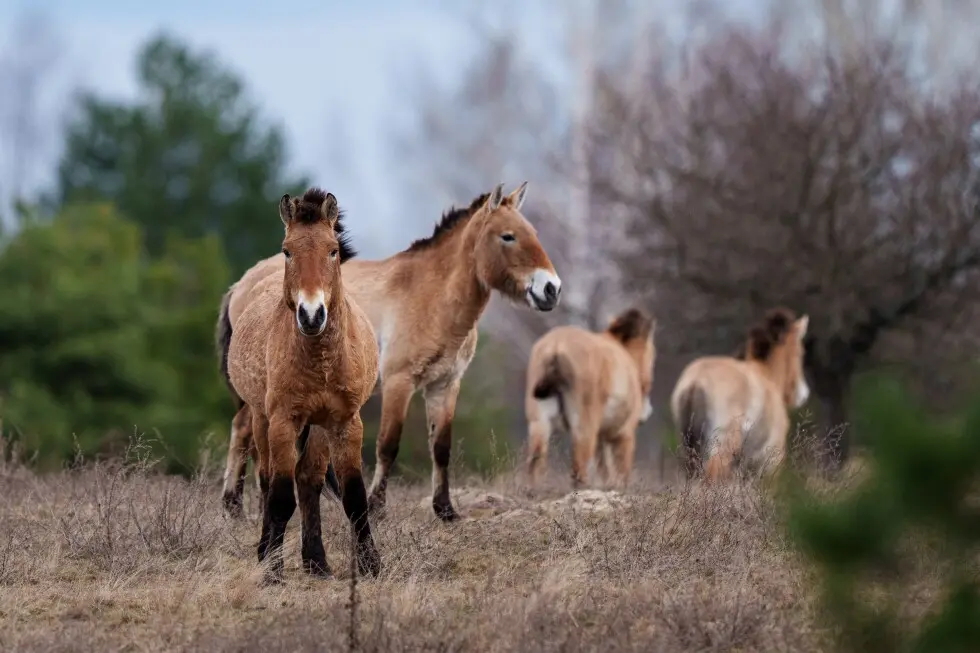
체르노빌 배제 구역 내 숲에서 야생 프르제발스키 말들이 풀을 뜯고 있다. 체르노빌은 우크라이나식 이름이다.
체르노빌 방사능·생태 생물권 보호구역의 연구원인 데니스 비슈네프스키는 체르노빌 배제 구역 내 숲에서 죽은 야생 프르제발스키 말 앞에 서 있다.
1986년 4월 26일, 우크라이나의 핵발전소 폭발로 방사능이 유럽 전역에 퍼졌고 전체 도시의 대피를 강요했으며, 수만 명을 이재민으로 만들었다. 이는 역사상 최악의 핵 재앙이었다.
프르제발스키 말은 몽골이 원산지이며 한때 멸종 위기에 처했던 종으로, 1998년 실험으로 이곳에 도입되었다.
몽골에서는 "타흐"("정신")로 알려진 이 말들은 국내 품종과 다르며, 33쌍의 염색체를 가지고 있다 (사육마는 32쌍). 현대의 이름은 이들을 처음으로 공식적으로 확인한 러시아 탐험가에서 유래했다.
"우크라이나가 이제 자유롭게 떠도는 개체군을 갖고 있다는 사실은 일종의 기적입니다"라고 배제 구역의 수석 자연과학자인 데니스 비슈네프스키는 말했다.
인간의 압력이 사라지면서 배제 구역의 일부는 이제 수세기 전의 유럽 풍경과 유사해졌다고 그는 말했으며, "자연은 비교적 빠르고 효과적으로 회복된다"고 덧붙였다.
이 변화는 어디서나 볼 수 있다. 나무들이 버려진 건물을 뚫고 자라고, 도로는 숲으로 녹아들며, 낡은 소비에트 시대 표지판들이 무성한 묘지의 기울어진 나무 십자가 옆에 서 있다.
숨겨진 카메라들은 말들이 예상 밖의 방식으로 적응하는 모습을 보여준다. 그들은 무너지는 헛간과 버려진 집에서 피난처를 찾으며, 혹독한 날씨와 곤충을 피하기 위해 이를 이용한다. 심지어 내부에서 잔다.
말들은 작은 사회 집단으로 산다 - 보통 한 마리의 수말과 여러 암말 및 새끼들 - 더 젊은 수말 무리들과 별개의 밴드를 이룬다. 도입 후 많은 말들이 죽었지만, 다른 말들은 적응했다.
1969년 야생에서 멸종 선언된 프르제발스키 말은 포획 번식을 통해서만 생존했으며, 재도입 노력을 통해 전 세계 개체군을 약 3,000마리로 재구성했다고 프랑스 남부 세번느 국립공원의 말 프로그램 운영 관리자인 플로리안 드루아르는 말했다.
"이 종은 성공적인 재도입의 놀라운 사례입니다"라고 그는 말했다. "완전히 안전하기까지는 아직 멀었지만, 적절한 준비를 통해 포획 상태의 종이 자유로이 살기 위해 필요한 사회적·생태적 행동을 다시 갖출 수 있음을 보여주었습니다."
러시아의 2022년 침략은 군대가 키이우를 향해 진격하면서 배제 구역을 통한 전투를 가져왔으며, 오염된 토양에 방어선을 파냈다. 군사 활동과 관련된 화재가 숲을 휩쓸었다.
혹독한 전시 겨울도 피해를 입혔다. 전력망 손상으로 주변 관리 지역이 자원을 잃었으며, 과학자들은 낙목과 죽은 동물의 증가를 보고했다 - 극단적 조건과 급히 지어진 보루로 인한 피해 모두이다.
"대부분의 산불은 추락한 드론으로 인해 발생합니다"라고 배제 구역의 소방 부대를 이끄는 올렉산드르 폴리슈크는 말했다. "때때로 우리는 그곳에 도달하기 위해 수십 킬로미터를 여행해야 합니다."
화재는 방사능 입자를 공기 중으로 보낼 수 있다.
오늘날, 배제 구역은 더 이상 야생동물을 위한 우연의 피난처일 뿐만 아니다. 그것은 콘크리트 장벽, 철조망과 지뢰밭으로 표시된 중전으로 모니터링되는 군사 회랑이 되었다 - 일부는 엄숙한 아름다움의 풍경이라고 묘사한다.
인원들은 방사능 노출을 제한하기 위해 교대로 출입한다. 체르노빌은 수십 년 동안 접근 금지 상태로 남을 가능성이 높다 - 사람들에게는 너무 위험하지만, 생명으로 가득 차 있다.
"우리 같은 보전 및 생태 전문가들에게 이것은 일종의 경이로움입니다"라고 비슈네프스키는 말했다. "이 땅은 한때 많이 사용되었습니다 - 농업, 도시, 기반시설. 하지만 자연은 효과적으로 공장 리셋을 수행했습니다."
체르노빌 배제 구역 내 숲에서 야생 프르제발스키 말들이 풀을 뜯고 있다. 체르노빌은 우크라이나식 이름이다.
체르노빌 방사능·생태 생물권 보호구역의 연구원인 데니스 비슈네프스키는 체르노빌 배제 구역 내 숲에서 죽은 야생 프르제발스키 말 앞에 서 있다.
1986년 4월 26일, 우크라이나의 핵발전소 폭발로 방사능이 유럽 전역에 퍼졌고 전체 도시의 대피를 강요했으며, 수만 명을 이재민으로 만들었다. 이는 역사상 최악의 핵 재앙이었다.
프르제발스키 말은 몽골이 원산지이며 한때 멸종 위기에 처했던 종으로, 1998년 실험으로 이곳에 도입되었다.
몽골에서는 "타흐"("정신")로 알려진 이 말들은 국내 품종과 다르며, 33쌍의 염색체를 가지고 있다 (사육마는 32쌍). 현대의 이름은 이들을 처음으로 공식적으로 확인한 러시아 탐험가에서 유래했다.
"우크라이나가 이제 자유롭게 떠도는 개체군을 갖고 있다는 사실은 일종의 기적입니다"라고 배제 구역의 수석 자연과학자인 데니스 비슈네프스키는 말했다.
인간의 압력이 사라지면서 배제 구역의 일부는 이제 수세기 전의 유럽 풍경과 유사해졌다고 그는 말했으며, "자연은 비교적 빠르고 효과적으로 회복된다"고 덧붙였다.
이 변화는 어디서나 볼 수 있다. 나무들이 버려진 건물을 뚫고 자라고, 도로는 숲으로 녹아들며, 낡은 소비에트 시대 표지판들이 무성한 묘지의 기울어진 나무 십자가 옆에 서 있다.
숨겨진 카메라들은 말들이 예상 밖의 방식으로 적응하는 모습을 보여준다. 그들은 무너지는 헛간과 버려진 집에서 피난처를 찾으며, 혹독한 날씨와 곤충을 피하기 위해 이를 이용한다. 심지어 내부에서 잔다.
말들은 작은 사회 집단으로 산다 - 보통 한 마리의 수말과 여러 암말 및 새끼들 - 더 젊은 수말 무리들과 별개의 밴드를 이룬다. 도입 후 많은 말들이 죽었지만, 다른 말들은 적응했다.
1969년 야생에서 멸종 선언된 프르제발스키 말은 포획 번식을 통해서만 생존했으며, 재도입 노력을 통해 전 세계 개체군을 약 3,000마리로 재구성했다고 프랑스 남부 세번느 국립공원의 말 프로그램 운영 관리자인 플로리안 드루아르는 말했다.
"이 종은 성공적인 재도입의 놀라운 사례입니다"라고 그는 말했다. "완전히 안전하기까지는 아직 멀었지만, 적절한 준비를 통해 포획 상태의 종이 자유로이 살기 위해 필요한 사회적·생태적 행동을 다시 갖출 수 있음을 보여주었습니다."
러시아의 2022년 침략은 군대가 키이우를 향해 진격하면서 배제 구역을 통한 전투를 가져왔으며, 오염된 토양에 방어선을 파냈다. 군사 활동과 관련된 화재가 숲을 휩쓸었다.
혹독한 전시 겨울도 피해를 입혔다. 전력망 손상으로 주변 관리 지역이 자원을 잃었으며, 과학자들은 낙목과 죽은 동물의 증가를 보고했다 - 극단적 조건과 급히 지어진 보루로 인한 피해 모두이다.
"대부분의 산불은 추락한 드론으로 인해 발생합니다"라고 배제 구역의 소방 부대를 이끄는 올렉산드르 폴리슈크는 말했다. "때때로 우리는 그곳에 도달하기 위해 수십 킬로미터를 여행해야 합니다."
화재는 방사능 입자를 공기 중으로 보낼 수 있다.
오늘날, 배제 구역은 더 이상 야생동물을 위한 우연의 피난처일 뿐만 아니다. 그것은 콘크리트 장벽, 철조망과 지뢰밭으로 표시된 중전으로 모니터링되는 군사 회랑이 되었다 - 일부는 엄숙한 아름다움의 풍경이라고 묘사한다.
인원들은 방사능 노출을 제한하기 위해 교대로 출입한다. 체르노빌은 수십 년 동안 접근 금지 상태로 남을 가능성이 높다 - 사람들에게는 너무 위험하지만, 생명으로 가득 차 있다.
"우리 같은 보전 및 생태 전문가들에게 이것은 일종의 경이로움입니다"라고 비슈네프스키는 말했다. "이 땅은 한때 많이 사용되었습니다 - 농업, 도시, 기반시설. 하지만 자연은 효과적으로 공장 리셋을 수행했습니다."
처리 완료
5,660 tokens · $0.0125
기사 수집 완료 · 17:15
매체 피드에서 기사 메타데이터 수집
헤드라인 번역 완료 · 19:52
제목/요약 한국어 번역 (fetch 시점 inline)
kimi-k2.5
0 tokens
$0.00000
0.2s
본문 추출 완료
10,678자 추출 완료
본문 한국어 번역 완료 · 19:52
2,121자 번역 완료
claude-haiku-4-5-20251001
5,660 tokens
$0.01245
26.0s
지정학적 엔티티 추출 완료 · 19:52
8개 엔티티 추출 완료
지정학적 맥락 & R-Scanner
R-Scanner · 평상
z=-1.84
일상적인 보도 수준 — 기준: Chernobyl
(🇺🇦 UA)
최근 6시간 0건
7일 평균 4.18건 / 6h
0개국 매체
0개 매체
본문에서 추출된 지명 (8)
위치 지도
지도 로딩 중…
같은 주제의 다른 기사 (최근 7일)
Four decades on, Chernobyl remains too dangerous for humans. But the wildlife has moved back in. Wolves now prowl the vast no-man’s-land spanning Ukraine and Belarus, and brown bears have returned after more than a century. Populations of lynx, moose, red deer and even free-roaming packs of dogs have rebounded. With human pressure gone, parts of the exclusion zone now resemble European landscapes from centuries past, according to those managing the Chernobyl Radiation and Ecological Biosphere Reserve. (AP Video: Vasilisa Stepanenko)
Wild Przewalski horses graze in a forest inside the Chernobyl exclusion zone, Ukraine, Wednesday, April 8, 2026. Chornobyl is the Ukrainian name for the city. (AP Photo/Evgeniy Maloletka)
Denys Vyshnevskyi, researcher at the Chornobyl Radiation and Ecological Biosphere Reserve, stands in front of a dead wild Przewalski horse in a forest inside the Chernobyl exclusion zone, Ukraine, Wednesday, April 8, 2026. Chornobyl is the Ukrainian name for the city. (AP Photo/Evgeniy Maloletka)
In this undated photo taken by a camera trap and provided by the Chornobyl Radiation and Ecological Biosphere Reserve on Wednesday, April 15, 2026, a wild lynx walks in a forest inside the Chernobyl exclusion zone, Ukraine. Chornobyl is the Ukrainian name for the city. (Chornobyl Radiation and Ecological Biosphere Reserve via AP)
In this undated photo taken by a camera trap and provided by the Chornobyl Radiation and Ecological Biosphere Reserve on Wednesday, April 15, 2026, a wild deer walks on snow in a forest inside the Chernobyl exclusion zone, Ukraine. Chornobyl is the Ukrainian name for the city. (Chornobyl Radiation and Ecological Biosphere Reserve via AP)
Abandoned houses are seen overgrown with vegetation at the Chernobyl exclusion zone in Prypiat, Ukraine, Monday, April 6, 2026. Chornobyl is the Ukrainian name for the city. (AP Photo/Evgeniy Maloletka)
Four decades on, Chernobyl remains too dangerous for humans. But the wildlife has moved back in. Wolves now prowl the vast no-man’s-land spanning Ukraine and Belarus, and brown bears have returned after more than a century. Populations of lynx, moose, red deer and even free-roaming packs of dogs have rebounded. With human pressure gone, parts of the exclusion zone now resemble European landscapes from centuries past, according to those managing the Chernobyl Radiation and Ecological Biosphere Reserve. (AP Video: Vasilisa Stepanenko)
Wild Przewalski horses graze in a forest inside the Chernobyl exclusion zone, Ukraine, Wednesday, April 8, 2026. Chornobyl is the Ukrainian name for the city. (AP Photo/Evgeniy Maloletka)
Wild Przewalski horses graze in a forest inside the Chernobyl exclusion zone, Ukraine, Wednesday, April 8, 2026. Chornobyl is the Ukrainian name for the city. (AP Photo/Evgeniy Maloletka)
Denys Vyshnevskyi, researcher at the Chornobyl Radiation and Ecological Biosphere Reserve, stands in front of a dead wild Przewalski horse in a forest inside the Chernobyl exclusion zone, Ukraine, Wednesday, April 8, 2026. Chornobyl is the Ukrainian name for the city. (AP Photo/Evgeniy Maloletka)
Denys Vyshnevskyi, researcher at the Chornobyl Radiation and Ecological Biosphere Reserve, stands in front of a dead wild Przewalski horse in a forest inside the Chernobyl exclusion zone, Ukraine, Wednesday, April 8, 2026. Chornobyl is the Ukrainian name for the city. (AP Photo/Evgeniy Maloletka)
In this undated photo taken by a camera trap and provided by the Chornobyl Radiation and Ecological Biosphere Reserve on Wednesday, April 15, 2026, a wild lynx walks in a forest inside the Chernobyl exclusion zone, Ukraine. Chornobyl is the Ukrainian name for the city. (Chornobyl Radiation and Ecological Biosphere Reserve via AP)
In this undated photo taken by a camera trap and provided by the Chornobyl Radiation and Ecological Biosphere Reserve on Wednesday, April 15, 2026, a wild lynx walks in a forest inside the Chernobyl exclusion zone, Ukraine. Chornobyl is the Ukrainian name for the city. (Chornobyl Radiation and Ecological Biosphere Reserve via AP)
In this undated photo taken by a camera trap and provided by the Chornobyl Radiation and Ecological Biosphere Reserve on Wednesday, April 15, 2026, a wild deer walks on snow in a forest inside the Chernobyl exclusion zone, Ukraine. Chornobyl is the Ukrainian name for the city. (Chornobyl Radiation and Ecological Biosphere Reserve via AP)
In this undated photo taken by a camera trap and provided by the Chornobyl Radiation and Ecological Biosphere Reserve on Wednesday, April 15, 2026, a wild deer walks on snow in a forest inside the Chernobyl exclusion zone, Ukraine. Chornobyl is the Ukrainian name for the city. (Chornobyl Radiation and Ecological Biosphere Reserve via AP)
Abandoned houses are seen overgrown with vegetation at the Chernobyl exclusion zone in Prypiat, Ukraine, Monday, April 6, 2026. Chornobyl is the Ukrainian name for the city. (AP Photo/Evgeniy Maloletka)
Abandoned houses are seen overgrown with vegetation at the Chernobyl exclusion zone in Prypiat, Ukraine, Monday, April 6, 2026. Chornobyl is the Ukrainian name for the city. (AP Photo/Evgeniy Maloletka)
CHERNOBYL, Ukraine (AP) — On contaminated land that is too dangerous for human life, the world’s wildest horses roam free.
Across the Chernobyl exclusion zone, Przewalski’s horses — stocky, sand-colored and almost toy-like in appearance — graze in a radioactive landscape larger than Luxembourg.
On April 26, 1986, an explosion at the nuclear power plant in Ukraine sent radiation across Europe and forced the evacuation of entire towns, displacing tens of thousands. It was the worst nuclear disaster in history.
Four decades on, Chernobyl — which is transliterated as “Chornobyl” in Ukraine — remains too dangerous for humans. But the wildlife has moved back in.
Wolves now prowl the vast no-man’s-land spanning Ukraine and Belarus, and brown bears have returned after more than a century. Populations of lynx, moose, red deer and even free-roaming packs of dogs have rebounded.
Przewalski’s horses, native to Mongolia and once on the brink of disappearing, were introduced here in 1998 as an experiment.
Known as “takhi” in Mongolia (“spirit”), the horses are distinct from domestic breeds, with 33 pairs of chromosomes, compared with 32 in domesticated horses. The modern name comes from the Russian explorer who first formally identified them.
“The fact that Ukraine now has a free-ranging population is something of a small miracle,” said Denys Vyshnevskyi, the zone’s lead nature scientist.
With human pressure gone, parts of the exclusion zone now resemble European landscapes from centuries past, he said, adding: “Nature recovers relatively quickly and effectively.”
The transformation is visible everywhere. Trees pierce abandoned buildings, roads dissolve into forest, and weathered Soviet-era signs stand beside leaning wooden crosses in overgrown cemeteries.
Abandoned houses are seen overgrown with vegetation at the Chernobyl exclusion zone in Prypiat, Ukraine, Monday, April 6, 2026. Chornobyl is the Ukrainian name for the city. (AP Photo/Evgeniy Maloletka)
Abandoned houses are seen overgrown with vegetation at the Chernobyl exclusion zone in Prypiat, Ukraine, Monday, April 6, 2026. Chornobyl is the Ukrainian name for the city. (AP Photo/Evgeniy Maloletka)
Hidden cameras show the horses adapting in unexpected ways. They seek shelter in crumbling barns and deserted homes, using them to escape harsh weather and insects — even bedding down inside.
The horses live in small social groups — typically one stallion with several mares and their young — alongside separate bands of younger males. Many died after their introduction, but others adapted.
Declared extinct in the wild in 1969, Przewalski’s horses survived only through captive breeding before reintroduction efforts rebuilt a global population of about 3,000, according to Florian Drouard, an operations manager at a program for the horses at Cevennes National Park in southern France.
“This species is a remarkable example of successful reintroduction,” he said. “While it is still far from being fully secure, it has shown that with proper preparation, a species kept in captivity can regain the social and ecological behaviors needed to live freely.”
Wild Przewalski horses graze in a forest inside the Chernobyl exclusion zone, Ukraine, Wednesday, April 8, 2026. Chornobyl is the Ukrainian name for the city. (AP Photo/Evgeniy Maloletka)
Wild Przewalski horses graze in a forest inside the Chernobyl exclusion zone, Ukraine, Wednesday, April 8, 2026. Chornobyl is the Ukrainian name for the city. (AP Photo/Evgeniy Maloletka)
The horse, he said, has proved unexpectedly adaptable, adapted to open landscapes but now also thriving in Ukraine’s partly forested environment.
Tracking the animals at Chernobyl takes time. Vyshnevskyi often drives alone for hours, setting motion-sensitive camera traps in camouflaged casings attached to trees.
Despite persistent radiation, scientists have not recorded widespread die-offs, though subtler effects are evident. Some frogs have developed darker skin, and birds in higher-radiation areas are more likely to develop cataracts.
Russia’s 2022 invasion brought fighting through the exclusion zone as troops advanced toward Kyiv, digging defenses into contaminated soil. Fires linked to military activity swept through forests.
Harsh wartime winters have also taken a toll. Damage to the power grid left surrounding managed areas without resources, and scientists report increases in fallen trees and dead animals — casualties of both extreme conditions and hastily built fortifications.
“Most forest fires are caused by downed drones,” said Oleksandr Polischuk, who leads a firefighting unit in the zone. “Sometimes we have to travel dozens of kilometers to reach them.”
Fires can send radioactive particles back into the air.
Today, the zone is no longer just an accidental refuge for wildlife. It has become a heavily monitored military corridor, marked by concrete barriers, barbed wire and minefields — a landscape of what some describe as grim beauty.
Personnel rotate in and out to limit radiation exposure. Chernobyl is likely to remain off-limits for generations — too dangerous for people, yet full of life.
“For those of us in conservation and ecology, it’s kind of a wonder,” Vyshnevskyi said. “This land was once heavily used — agriculture, cities, infrastructure. But nature has effectively performed a factory reset.”
Associated Press writers Dmytro Zhyhinas and Vasilisa Stepanenko in Chernobyl, Ukraine, contributed to this report.
Wild Przewalski horses graze in a forest inside the Chernobyl exclusion zone, Ukraine, Wednesday, April 8, 2026. Chornobyl is the Ukrainian name for the city. (AP Photo/Evgeniy Maloletka)
Denys Vyshnevskyi, researcher at the Chornobyl Radiation and Ecological Biosphere Reserve, stands in front of a dead wild Przewalski horse in a forest inside the Chernobyl exclusion zone, Ukraine, Wednesday, April 8, 2026. Chornobyl is the Ukrainian name for the city. (AP Photo/Evgeniy Maloletka)
In this undated photo taken by a camera trap and provided by the Chornobyl Radiation and Ecological Biosphere Reserve on Wednesday, April 15, 2026, a wild lynx walks in a forest inside the Chernobyl exclusion zone, Ukraine. Chornobyl is the Ukrainian name for the city. (Chornobyl Radiation and Ecological Biosphere Reserve via AP)
In this undated photo taken by a camera trap and provided by the Chornobyl Radiation and Ecological Biosphere Reserve on Wednesday, April 15, 2026, a wild deer walks on snow in a forest inside the Chernobyl exclusion zone, Ukraine. Chornobyl is the Ukrainian name for the city. (Chornobyl Radiation and Ecological Biosphere Reserve via AP)
Abandoned houses are seen overgrown with vegetation at the Chernobyl exclusion zone in Prypiat, Ukraine, Monday, April 6, 2026. Chornobyl is the Ukrainian name for the city. (AP Photo/Evgeniy Maloletka)
Four decades on, Chernobyl remains too dangerous for humans. But the wildlife has moved back in. Wolves now prowl the vast no-man’s-land spanning Ukraine and Belarus, and brown bears have returned after more than a century. Populations of lynx, moose, red deer and even free-roaming packs of dogs have rebounded. With human pressure gone, parts of the exclusion zone now resemble European landscapes from centuries past, according to those managing the Chernobyl Radiation and Ecological Biosphere Reserve. (AP Video: Vasilisa Stepanenko)
Wild Przewalski horses graze in a forest inside the Chernobyl exclusion zone, Ukraine, Wednesday, April 8, 2026. Chornobyl is the Ukrainian name for the city. (AP Photo/Evgeniy Maloletka)
Wild Przewalski horses graze in a forest inside the Chernobyl exclusion zone, Ukraine, Wednesday, April 8, 2026. Chornobyl is the Ukrainian name for the city. (AP Photo/Evgeniy Maloletka)
Denys Vyshnevskyi, researcher at the Chornobyl Radiation and Ecological Biosphere Reserve, stands in front of a dead wild Przewalski horse in a forest inside the Chernobyl exclusion zone, Ukraine, Wednesday, April 8, 2026. Chornobyl is the Ukrainian name for the city. (AP Photo/Evgeniy Maloletka)
Denys Vyshnevskyi, researcher at the Chornobyl Radiation and Ecological Biosphere Reserve, stands in front of a dead wild Przewalski horse in a forest inside the Chernobyl exclusion zone, Ukraine, Wednesday, April 8, 2026. Chornobyl is the Ukrainian name for the city. (AP Photo/Evgeniy Maloletka)
In this undated photo taken by a camera trap and provided by the Chornobyl Radiation and Ecological Biosphere Reserve on Wednesday, April 15, 2026, a wild lynx walks in a forest inside the Chernobyl exclusion zone, Ukraine. Chornobyl is the Ukrainian name for the city. (Chornobyl Radiation and Ecological Biosphere Reserve via AP)
In this undated photo taken by a camera trap and provided by the Chornobyl Radiation and Ecological Biosphere Reserve on Wednesday, April 15, 2026, a wild lynx walks in a forest inside the Chernobyl exclusion zone, Ukraine. Chornobyl is the Ukrainian name for the city. (Chornobyl Radiation and Ecological Biosphere Reserve via AP)
In this undated photo taken by a camera trap and provided by the Chornobyl Radiation and Ecological Biosphere Reserve on Wednesday, April 15, 2026, a wild deer walks on snow in a forest inside the Chernobyl exclusion zone, Ukraine. Chornobyl is the Ukrainian name for the city. (Chornobyl Radiation and Ecological Biosphere Reserve via AP)
In this undated photo taken by a camera trap and provided by the Chornobyl Radiation and Ecological Biosphere Reserve on Wednesday, April 15, 2026, a wild deer walks on snow in a forest inside the Chernobyl exclusion zone, Ukraine. Chornobyl is the Ukrainian name for the city. (Chornobyl Radiation and Ecological Biosphere Reserve via AP)
Abandoned houses are seen overgrown with vegetation at the Chernobyl exclusion zone in Prypiat, Ukraine, Monday, April 6, 2026. Chornobyl is the Ukrainian name for the city. (AP Photo/Evgeniy Maloletka)
Abandoned houses are seen overgrown with vegetation at the Chernobyl exclusion zone in Prypiat, Ukraine, Monday, April 6, 2026. Chornobyl is the Ukrainian name for the city. (AP Photo/Evgeniy Maloletka)
CHERNOBYL, Ukraine (AP) — On contaminated land that is too dangerous for human life, the world’s wildest horses roam free.
Across the Chernobyl exclusion zone, Przewalski’s horses — stocky, sand-colored and almost toy-like in appearance — graze in a radioactive landscape larger than Luxembourg.
On April 26, 1986, an explosion at the nuclear power plant in Ukraine sent radiation across Europe and forced the evacuation of entire towns, displacing tens of thousands. It was the worst nuclear disaster in history.
Four decades on, Chernobyl — which is transliterated as “Chornobyl” in Ukraine — remains too dangerous for humans. But the wildlife has moved back in.
Wolves now prowl the vast no-man’s-land spanning Ukraine and Belarus, and brown bears have returned after more than a century. Populations of lynx, moose, red deer and even free-roaming packs of dogs have rebounded.
Przewalski’s horses, native to Mongolia and once on the brink of disappearing, were introduced here in 1998 as an experiment.
Known as “takhi” in Mongolia (“spirit”), the horses are distinct from domestic breeds, with 33 pairs of chromosomes, compared with 32 in domesticated horses. The modern name comes from the Russian explorer who first formally identified them.
“The fact that Ukraine now has a free-ranging population is something of a small miracle,” said Denys Vyshnevskyi, the zone’s lead nature scientist.
With human pressure gone, parts of the exclusion zone now resemble European landscapes from centuries past, he said, adding: “Nature recovers relatively quickly and effectively.”
The transformation is visible everywhere. Trees pierce abandoned buildings, roads dissolve into forest, and weathered Soviet-era signs stand beside leaning wooden crosses in overgrown cemeteries.
Abandoned houses are seen overgrown with vegetation at the Chernobyl exclusion zone in Prypiat, Ukraine, Monday, April 6, 2026. Chornobyl is the Ukrainian name for the city. (AP Photo/Evgeniy Maloletka)
Abandoned houses are seen overgrown with vegetation at the Chernobyl exclusion zone in Prypiat, Ukraine, Monday, April 6, 2026. Chornobyl is the Ukrainian name for the city. (AP Photo/Evgeniy Maloletka)
Hidden cameras show the horses adapting in unexpected ways. They seek shelter in crumbling barns and deserted homes, using them to escape harsh weather and insects — even bedding down inside.
The horses live in small social groups — typically one stallion with several mares and their young — alongside separate bands of younger males. Many died after their introduction, but others adapted.
Declared extinct in the wild in 1969, Przewalski’s horses survived only through captive breeding before reintroduction efforts rebuilt a global population of about 3,000, according to Florian Drouard, an operations manager at a program for the horses at Cevennes National Park in southern France.
“This species is a remarkable example of successful reintroduction,” he said. “While it is still far from being fully secure, it has shown that with proper preparation, a species kept in captivity can regain the social and ecological behaviors needed to live freely.”
Wild Przewalski horses graze in a forest inside the Chernobyl exclusion zone, Ukraine, Wednesday, April 8, 2026. Chornobyl is the Ukrainian name for the city. (AP Photo/Evgeniy Maloletka)
Wild Przewalski horses graze in a forest inside the Chernobyl exclusion zone, Ukraine, Wednesday, April 8, 2026. Chornobyl is the Ukrainian name for the city. (AP Photo/Evgeniy Maloletka)
The horse, he said, has proved unexpectedly adaptable, adapted to open landscapes but now also thriving in Ukraine’s partly forested environment.
Tracking the animals at Chernobyl takes time. Vyshnevskyi often drives alone for hours, setting motion-sensitive camera traps in camouflaged casings attached to trees.
Despite persistent radiation, scientists have not recorded widespread die-offs, though subtler effects are evident. Some frogs have developed darker skin, and birds in higher-radiation areas are more likely to develop cataracts.
Russia’s 2022 invasion brought fighting through the exclusion zone as troops advanced toward Kyiv, digging defenses into contaminated soil. Fires linked to military activity swept through forests.
Harsh wartime winters have also taken a toll. Damage to the power grid left surrounding managed areas without resources, and scientists report increases in fallen trees and dead animals — casualties of both extreme conditions and hastily built fortifications.
“Most forest fires are caused by downed drones,” said Oleksandr Polischuk, who leads a firefighting unit in the zone. “Sometimes we have to travel dozens of kilometers to reach them.”
Fires can send radioactive particles back into the air.
Today, the zone is no longer just an accidental refuge for wildlife. It has become a heavily monitored military corridor, marked by concrete barriers, barbed wire and minefields — a landscape of what some describe as grim beauty.
Personnel rotate in and out to limit radiation exposure. Chernobyl is likely to remain off-limits for generations — too dangerous for people, yet full of life.
“For those of us in conservation and ecology, it’s kind of a wonder,” Vyshnevskyi said. “This land was once heavily used — agriculture, cities, infrastructure. But nature has effectively performed a factory reset.”
Associated Press writers Dmytro Zhyhinas and Vasilisa Stepanenko in Chernobyl, Ukraine, contributed to this report.