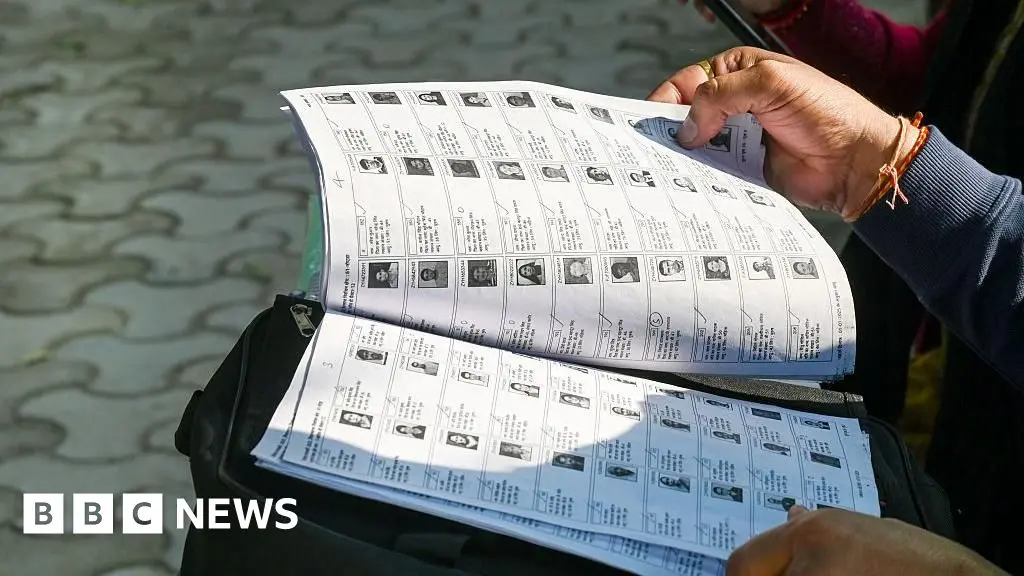
인도 국경 주에서 900만 명의 투표권 상실로 정치적 혼란
Political turmoil in Indian border state as nine million lose voting rights
BBC News
· 🇬🇧 London, GB
EN
2026-04-13 08:59
Translated
서벵갈에서 900만 명의 유권자가 명부에서 삭제되면서 배제와 공정성에 대한 우려가 커지고 있다.
전 인도군 기술자인 무함마드 다우드 알리는 최근 자신이 고향인 서벵갈 주의 유권자가 더 이상 아니라는 사실을 알게 됐다.
여권과 복무 기록을 포함한 유효한 서류에도 불구하고, 그의 이름과 세 자녀의 이름이 선거 명부에서 삭제됐다. 유일하게 그의 아내 만이 명부에 남아 있었다.
65세의 알리와 그의 자녀들은 특별 집중 개정(SIR) 작업의 일환으로 2026년 명부에서 삭제된 900만 명의 유권자—서벵갈 7,600만 명 유권자의 약 12%—중 하나다. 이 동인도 주에서 새 주 정부를 선출하기 위한 투표는 이달 말에 열릴 예정이다.
이 900만 명 중 600만 명 이상이 부재 또는 사망 유권자로 삭제됐고, 알리의 가족처럼 다른 270만 명의 운명은 아직 미정이며 재판소에서 결정될 것이다.
13개 주와 연방 직할 영토가 지금까지 SIR 절차를 거쳤지만, 서벵갈은 유일하게 특별 심판이라는 추가 절차가 뒤따른 곳이다.
인도 선거관리위원회는 이 개정이 중복되거나 오래된 기록을 제거하고 진정한 유권자를 추가하기 위한 것이라고 말한다. 하지만 이 작업은 지난해 비하르 주에서 처음 실시된 이래 논란에 휩싸여 법적 도전을 받아왔다.
집권당인 트리놀무르 의회당(TMC)이 선거 관리 기관과 격렬한 대립 상태에 있는 서벵갈에서 이 문제는 특히 논란이 되고 있다.
자니시 쿠마르 선거관리위원장은 개정 작업의 목적이 적격 유권자를 배제하지 않고 부적격자를 포함하지 않는 "순수한 선거 명부"를 보장하는 것이라고 말했다.
긴장은 나렌드라 모디 총리를 포함한 정치 지도자들의 발언으로 고조됐는데, 그들은 유세 연설에서 이 정리 작업이 이른바 "불법 방글라데시 침입자"를 식별하기 위한 것이라고 시사했다—TMC는 이 용어가 무슬림을 지칭하는 데 사용되고 있다고 말한다. 하지만 많은 힌두교 유권자들도 명부에서 제외됐다.
인도는 방글라데시와 4,096km(2,545마일)의 대부분 다공성이며 부분적으로 하천을 이루는 국경을 공유하고 있으며, 그 상당 부분이 서벵갈을 통과한다. 이는 이 주에서 이주와 유권자 명부에 대한 논쟁에 불안한 정치적 색채를 더했다.
서벵갈은 또한 인도에서 두 번째로 큰 무슬림 인구의 고향으로, 2011년 인구조사에 따르면 이 나라 1억 7,200만 명의 무슬림의 약 14%를 차지한다.
7,000만 명 이상의 유권자를 보유한 이 주는 2011년부터 마마타 바네르지 주장관의 TMC에 의해 통치돼 왔으며, 모디의 인도인민당(BJP)이 주요 도전자다.
인도 의회 의석 수에서 네 번째로 많은 서벵갈은 BJP가 아직 차지하지 못한 주요 전략적 지역으로 남아 있다. 2021년 주 의회 선거에서 BJP는 이 주 294개 의석 중 약 4분의 1을 확보했다.
바네르지의 당은 명부 개정 작업이 특히 무슬림들의 선거권을 박탈해 BJP에 유리하게 만들었다고 주장하며, 이 혐의는 당과 선거관리위원회 모두 부인한다.
반복된 법적 도전 끝에, 최고법원은 선거관리위원회가 삭제에 대한 모든 분쟁을 해결하지 않고 4월 투표를 진행할 수 있도록 허용했다. 결과적으로 270만 명 유권자의 운명은 여전히 미정으로 남아 있다.
그들의 사건은 이 논란의 핵심에 있다.
이 유권자들은 2002년 선거 명부—널리 마지막 "깨끗한" 명부로 여겨지는—에 자신들을 연결하는 조사 양식을 제출했다.
그러나 선거관리위원회는 AI 기반의 새로운 절차를 사용해 그들의 기록에서 이른바 "논리적 불일치"를 표시해 의심스러운 유권자로 취급했다.
후속 재확인에도 불구하고, 알리 같은 사람들은 배제됐다.
지역구별 데이터
전체적으로 무슬림은 삭제된 900만 명 중 311만 명—약 34%—을 차지해, 2011년 인구조사에 따른 서벵갈 인구의 27% 점유율보다 상당히 높다.
알리와 그의 자녀들은 이제 최고법원의 지시로 설립된 재판소에 접근해야 한다. 하지만 명부가 동결되고 이달 말—4월 23일과 29일—선거가 예정되어 있어, 그들은 제때 투표권을 회복할 가능성이 거의 없다고 본다.
"저는 말문이 막혔습니다. 깊이 상처받고 모욕당한 느낌입니다. 우리의 분쟁을 해결하지 않고 어떻게 선거를 치를 수 있나요? 저는 정말 누구에게 정의를 구해야 할지 모르겠습니다"라고 알리는 BBC에 말했다.
이렇게 많은 수의 이름 삭제는 오류, 배제 위험, 그리고 "유효한" 유권자를 결정하는 기준에 대한 우려를 날카롭게 했다.
"유권자의 권리가 정지된 상태에서 선거가 치러지는 인도의 사례는 없다"고 정치학자 시바지 프라팀 바수는 말했다.
그는 270만 명의 유권자를 제외하는 것이 너무나 "터무니없는 제안"이라고 한다.
"이것은 민주주의에 대한 수치"라고 그는 덧붙였다.
하지만 연방 장관이자 이 주 출신 BJP 지도자인 수친타 마줌다르는 개정 작업이 국익을 위해 필요했다고 말한다.
"헌법은 인도 시민만이 총리와 주장관을 선출할 수 있다고 규정하고 있습니다. 따라서 비시민을 제거하는 것이 중요했습니다"라고 그는 BBC에 말했다.
270만 명 유권자의 지위가 해결되지 않은 채 선거가 치러지는 것에 대해 묻자, 마줌다르는 주 정부를 비난하며 이 문제를 최고법원에 제기해 "절차를 지연시켰다"고 주장했다. 그는 또한 선거관리위원회가 BJP에 유리하게 작용한다는 혐의를 일축했다.
전체 개정의 영향은 고르지 않았으며, 이 주의 일부 도시 지역에서 급격한 감소가 있었다.
주도인 콜카타 시에서는 북부에서 29.6%, 남부에서 27.5%의 유권자가 명부에서 삭제돼 이 주에서 가장 높은 비율 중 하나를 기록했다.
파스침 바르다만 지구는 두 번째로 큰 감소를 겪어 유권자가 16.9% 줄었다. 삭제된 사람의 약 80%는 북인도에 뿌리를 둔 힌디어 사용 공동체 출신의 힌두교도들이다.
방글라데시와의 국경 지구—노스 24-파르가나스, 나디아, 무르시다바드, 말다, 우타르 디나지푸르, 쿠치 비하르—에서도 많은 삭제가 있었다.
노스 24-파르가나스만 126만 명(15%)의 유권자를 잃었으며, 대부분의 삭제는 힌두교 다수 인구 구성을 반영했다.
인도에서 가장 무슬림 인구가 많은 지구인 무르시다바드에서는 74만 9,000명(13%)의 이름이 삭제돼 대체로 인구 구성을 반영했다.
이 국경 지구들은 대부분의 배제가 마지막 단계—"논리적 불일치" 범주에서—발생한 논란의 중심지가 됐다.
무슬림은 무르시다바드와 말다 같은 지구에서 가장 큰 타격을 입었고, 방글라데시 이주민 마투아 공동체 출신의 달리트 힌두교도들은 노스 24-파르가나스와 나디아에서 가장 큰 피해를 봤다.
중인도의 마디아 프라데시 주에서도 많은 수가 "논리적 불일치"로 표시됐다. 하지만 2028년까지 선거가 예정되어 있지 않아 그곳 유권자들은 지위를 해결할 시간이 더 있다.
이 문제는 이후 거의 모든 다른 선거 주제를 뒤로 밀어냈다.
바네르지는 선거 유세에서 인도 최고법원에 다시 진정서를 제출하겠다고 말했다.
"270만 명 유권자의 사건을 해결하지 않고 어떻게 선거를 시작할 수 있나요?"라고 그녀는 물었다.
금요일, 법원은 4월 13일에 이 사건을 심리하겠다고 밝혀 구제를 위한 좁고 불확실한 기회를 제공했다.
런던정경대학의 인류학자 무쿨리카 바네르지는 서벵갈의 배제 패턴이 특정 인구 범주가 "선택적으로 표적이 됐을 수 있음"을 나타낸다고 말한다.
바네르지는 투표가 단순한 절차적 권리가 아니라 소외된 공동체에게 특히 깊은 의미를 지닌 행위라고 말한다.
"그들의 투표권을 거부함으로써, 사람은 그들의 기본권 중 하나를 빼앗는 것이며, 그것은 그들에게 매우 의미 있고 자신들의 목소리를 주장할 수 있게 해주는 권리입니다."
그녀는 서벵갈 순더반스의 한 유권자가 자신에게 "우리가 투표하지 않으면, 가난한 사람들이 존재한다는 것을 아무도 기억하지 않을 것"이라고 말한 것을 회상한다.
방글라데시 국경을 따라 말다 지구의 하리스찬드라푸르 선거구에서 35세의 하스나라 카툰은 분노하고 있다.
"저는 매우 화가 났어요"라고 그녀는 말하며, 그녀의 아버지, 할아버지, 증조할아버지가 모두 유권자였다고 덧붙인다.
이제 그들 가족 7명 중 5명의 투표권이 정지됐다.
"우리는 효과적으로 비시민으로 전락했어요. 다음에 무슬림이 올지 누가 알겠어요?
"이제 시스템을 신뢰할 수 없어요. 따라서 법적 투쟁은 계속되겠지만, 우리는 시위도 멈추지 않을 것"이라고 카툰은 말한다.
스니그덴두 바타차르야는 콜카타 기반의 독립 기자다
여권과 복무 기록을 포함한 유효한 서류에도 불구하고, 그의 이름과 세 자녀의 이름이 선거 명부에서 삭제됐다. 유일하게 그의 아내 만이 명부에 남아 있었다.
65세의 알리와 그의 자녀들은 특별 집중 개정(SIR) 작업의 일환으로 2026년 명부에서 삭제된 900만 명의 유권자—서벵갈 7,600만 명 유권자의 약 12%—중 하나다. 이 동인도 주에서 새 주 정부를 선출하기 위한 투표는 이달 말에 열릴 예정이다.
이 900만 명 중 600만 명 이상이 부재 또는 사망 유권자로 삭제됐고, 알리의 가족처럼 다른 270만 명의 운명은 아직 미정이며 재판소에서 결정될 것이다.
13개 주와 연방 직할 영토가 지금까지 SIR 절차를 거쳤지만, 서벵갈은 유일하게 특별 심판이라는 추가 절차가 뒤따른 곳이다.
인도 선거관리위원회는 이 개정이 중복되거나 오래된 기록을 제거하고 진정한 유권자를 추가하기 위한 것이라고 말한다. 하지만 이 작업은 지난해 비하르 주에서 처음 실시된 이래 논란에 휩싸여 법적 도전을 받아왔다.
집권당인 트리놀무르 의회당(TMC)이 선거 관리 기관과 격렬한 대립 상태에 있는 서벵갈에서 이 문제는 특히 논란이 되고 있다.
자니시 쿠마르 선거관리위원장은 개정 작업의 목적이 적격 유권자를 배제하지 않고 부적격자를 포함하지 않는 "순수한 선거 명부"를 보장하는 것이라고 말했다.
긴장은 나렌드라 모디 총리를 포함한 정치 지도자들의 발언으로 고조됐는데, 그들은 유세 연설에서 이 정리 작업이 이른바 "불법 방글라데시 침입자"를 식별하기 위한 것이라고 시사했다—TMC는 이 용어가 무슬림을 지칭하는 데 사용되고 있다고 말한다. 하지만 많은 힌두교 유권자들도 명부에서 제외됐다.
인도는 방글라데시와 4,096km(2,545마일)의 대부분 다공성이며 부분적으로 하천을 이루는 국경을 공유하고 있으며, 그 상당 부분이 서벵갈을 통과한다. 이는 이 주에서 이주와 유권자 명부에 대한 논쟁에 불안한 정치적 색채를 더했다.
서벵갈은 또한 인도에서 두 번째로 큰 무슬림 인구의 고향으로, 2011년 인구조사에 따르면 이 나라 1억 7,200만 명의 무슬림의 약 14%를 차지한다.
7,000만 명 이상의 유권자를 보유한 이 주는 2011년부터 마마타 바네르지 주장관의 TMC에 의해 통치돼 왔으며, 모디의 인도인민당(BJP)이 주요 도전자다.
인도 의회 의석 수에서 네 번째로 많은 서벵갈은 BJP가 아직 차지하지 못한 주요 전략적 지역으로 남아 있다. 2021년 주 의회 선거에서 BJP는 이 주 294개 의석 중 약 4분의 1을 확보했다.
바네르지의 당은 명부 개정 작업이 특히 무슬림들의 선거권을 박탈해 BJP에 유리하게 만들었다고 주장하며, 이 혐의는 당과 선거관리위원회 모두 부인한다.
반복된 법적 도전 끝에, 최고법원은 선거관리위원회가 삭제에 대한 모든 분쟁을 해결하지 않고 4월 투표를 진행할 수 있도록 허용했다. 결과적으로 270만 명 유권자의 운명은 여전히 미정으로 남아 있다.
그들의 사건은 이 논란의 핵심에 있다.
이 유권자들은 2002년 선거 명부—널리 마지막 "깨끗한" 명부로 여겨지는—에 자신들을 연결하는 조사 양식을 제출했다.
그러나 선거관리위원회는 AI 기반의 새로운 절차를 사용해 그들의 기록에서 이른바 "논리적 불일치"를 표시해 의심스러운 유권자로 취급했다.
후속 재확인에도 불구하고, 알리 같은 사람들은 배제됐다.
지역구별 데이터
전체적으로 무슬림은 삭제된 900만 명 중 311만 명—약 34%—을 차지해, 2011년 인구조사에 따른 서벵갈 인구의 27% 점유율보다 상당히 높다.
알리와 그의 자녀들은 이제 최고법원의 지시로 설립된 재판소에 접근해야 한다. 하지만 명부가 동결되고 이달 말—4월 23일과 29일—선거가 예정되어 있어, 그들은 제때 투표권을 회복할 가능성이 거의 없다고 본다.
"저는 말문이 막혔습니다. 깊이 상처받고 모욕당한 느낌입니다. 우리의 분쟁을 해결하지 않고 어떻게 선거를 치를 수 있나요? 저는 정말 누구에게 정의를 구해야 할지 모르겠습니다"라고 알리는 BBC에 말했다.
이렇게 많은 수의 이름 삭제는 오류, 배제 위험, 그리고 "유효한" 유권자를 결정하는 기준에 대한 우려를 날카롭게 했다.
"유권자의 권리가 정지된 상태에서 선거가 치러지는 인도의 사례는 없다"고 정치학자 시바지 프라팀 바수는 말했다.
그는 270만 명의 유권자를 제외하는 것이 너무나 "터무니없는 제안"이라고 한다.
"이것은 민주주의에 대한 수치"라고 그는 덧붙였다.
하지만 연방 장관이자 이 주 출신 BJP 지도자인 수친타 마줌다르는 개정 작업이 국익을 위해 필요했다고 말한다.
"헌법은 인도 시민만이 총리와 주장관을 선출할 수 있다고 규정하고 있습니다. 따라서 비시민을 제거하는 것이 중요했습니다"라고 그는 BBC에 말했다.
270만 명 유권자의 지위가 해결되지 않은 채 선거가 치러지는 것에 대해 묻자, 마줌다르는 주 정부를 비난하며 이 문제를 최고법원에 제기해 "절차를 지연시켰다"고 주장했다. 그는 또한 선거관리위원회가 BJP에 유리하게 작용한다는 혐의를 일축했다.
전체 개정의 영향은 고르지 않았으며, 이 주의 일부 도시 지역에서 급격한 감소가 있었다.
주도인 콜카타 시에서는 북부에서 29.6%, 남부에서 27.5%의 유권자가 명부에서 삭제돼 이 주에서 가장 높은 비율 중 하나를 기록했다.
파스침 바르다만 지구는 두 번째로 큰 감소를 겪어 유권자가 16.9% 줄었다. 삭제된 사람의 약 80%는 북인도에 뿌리를 둔 힌디어 사용 공동체 출신의 힌두교도들이다.
방글라데시와의 국경 지구—노스 24-파르가나스, 나디아, 무르시다바드, 말다, 우타르 디나지푸르, 쿠치 비하르—에서도 많은 삭제가 있었다.
노스 24-파르가나스만 126만 명(15%)의 유권자를 잃었으며, 대부분의 삭제는 힌두교 다수 인구 구성을 반영했다.
인도에서 가장 무슬림 인구가 많은 지구인 무르시다바드에서는 74만 9,000명(13%)의 이름이 삭제돼 대체로 인구 구성을 반영했다.
이 국경 지구들은 대부분의 배제가 마지막 단계—"논리적 불일치" 범주에서—발생한 논란의 중심지가 됐다.
무슬림은 무르시다바드와 말다 같은 지구에서 가장 큰 타격을 입었고, 방글라데시 이주민 마투아 공동체 출신의 달리트 힌두교도들은 노스 24-파르가나스와 나디아에서 가장 큰 피해를 봤다.
중인도의 마디아 프라데시 주에서도 많은 수가 "논리적 불일치"로 표시됐다. 하지만 2028년까지 선거가 예정되어 있지 않아 그곳 유권자들은 지위를 해결할 시간이 더 있다.
이 문제는 이후 거의 모든 다른 선거 주제를 뒤로 밀어냈다.
바네르지는 선거 유세에서 인도 최고법원에 다시 진정서를 제출하겠다고 말했다.
"270만 명 유권자의 사건을 해결하지 않고 어떻게 선거를 시작할 수 있나요?"라고 그녀는 물었다.
금요일, 법원은 4월 13일에 이 사건을 심리하겠다고 밝혀 구제를 위한 좁고 불확실한 기회를 제공했다.
런던정경대학의 인류학자 무쿨리카 바네르지는 서벵갈의 배제 패턴이 특정 인구 범주가 "선택적으로 표적이 됐을 수 있음"을 나타낸다고 말한다.
바네르지는 투표가 단순한 절차적 권리가 아니라 소외된 공동체에게 특히 깊은 의미를 지닌 행위라고 말한다.
"그들의 투표권을 거부함으로써, 사람은 그들의 기본권 중 하나를 빼앗는 것이며, 그것은 그들에게 매우 의미 있고 자신들의 목소리를 주장할 수 있게 해주는 권리입니다."
그녀는 서벵갈 순더반스의 한 유권자가 자신에게 "우리가 투표하지 않으면, 가난한 사람들이 존재한다는 것을 아무도 기억하지 않을 것"이라고 말한 것을 회상한다.
방글라데시 국경을 따라 말다 지구의 하리스찬드라푸르 선거구에서 35세의 하스나라 카툰은 분노하고 있다.
"저는 매우 화가 났어요"라고 그녀는 말하며, 그녀의 아버지, 할아버지, 증조할아버지가 모두 유권자였다고 덧붙인다.
이제 그들 가족 7명 중 5명의 투표권이 정지됐다.
"우리는 효과적으로 비시민으로 전락했어요. 다음에 무슬림이 올지 누가 알겠어요?
"이제 시스템을 신뢰할 수 없어요. 따라서 법적 투쟁은 계속되겠지만, 우리는 시위도 멈추지 않을 것"이라고 카툰은 말한다.
스니그덴두 바타차르야는 콜카타 기반의 독립 기자다
처리 완료
150 tokens · $0.0003
기사 수집 완료 · 09:10
매체 피드에서 기사 메타데이터 수집
헤드라인 번역 완료 · 09:27
제목/요약 한국어 번역 (fetch 시점 inline)
kimi-k2.5
150 tokens
$0.00027
9.5s
본문 추출 완료
8,262자 추출 완료
본문 한국어 번역 완료 · 09:27
4,085자 번역 완료
지정학적 엔티티 추출 완료 · 09:27
8개 엔티티 추출 완료
지정학적 맥락 & R-Scanner
R-Scanner · 평상
z=-1.38
일상적인 보도 수준 — 기준: India
(🇮🇳 IN)
최근 6시간 23건
7일 평균 30.79건 / 6h
6개국 매체
7개 매체
본문에서 추출된 지명 (8)
India
🇮🇳
West Bengal
🇮🇳
Bangladesh
🇧🇩
Bihar
🇮🇳
Kolkata
🇮🇳
Madhya Pradesh
🇮🇳
Paschim Bardhaman
🇮🇳
North 24-Parganas
🇮🇳
위치 지도
지도 로딩 중…
같은 주제의 다른 기사 (최근 7일)
Nine million voters have been dropped from rolls in West Bengal, raising concerns over exclusion and fairness.
Muhammad Daud Ali, a former Indian army technician, recently discovered that he was no longer a voter in his home state of West Bengal.His name - and those of his three children - had been struck off the electoral rolls despite valid documents, including his passport and service records. Only his wife remained on the list.
Ali, 65, and his children are among nine million voters - about 12% of West Bengal's 76 million electorate - who have been removed from the 2026 rolls as part of the Special Intensive Revision (SIR) exercise. Voting to elect a new state government will take place later this month in this eastern Indian state.
Of these nine million, more than six million names were struck off as absentee or deceased voters, while the fate of another 2.7 million - including families like Ali's - remains undecided and will be determined by tribunals.
Thirteen states and federally-administered territories have undergone the SIR process so far, but West Bengal is the only one where it was followed by an additional layer of special adjudication.
India's Election Commission says the revision is meant to weed out duplicate or outdated entries and add genuine voters. But the exercise has been mired in controversy and faced legal challenges ever since it was first held in the state of Bihar last year.
It has become particularly contentious in West Bengal, where the ruling Trinamool Congress party (TMC) is locked in a bitter standoff with the poll body.
Gyanesh Kumar, the chief election commissioner, has said the revision exercise's aim is to ensure a "pure electoral roll" with no eligible voters excluded and no ineligible persons included.
The tensions have been fuelled by remarks from political leaders, including from Prime Minister Narendra Modi, who have suggested in campaign speeches that the clean-up is aimed at identifying so-called "illegal Bangladeshi infiltrators" - a term the TMC says is being used to refer to Muslims. However, many Hindu voters have also been left out from the list.
India shares a 4,096km (2,545-mile) largely porous and partly riverine border with Bangladesh and a significant stretch of it runs through West Bengal. This has added a fraught political edge to debates over migration and voter rolls in the state.
West Bengal is also home to India's second-largest Muslim population, accounting for roughly 14% of the country's 172 million Muslims, according to the 2011 census.
Home to more than 70 million voters, the state has been governed by Chief Minister Mamata Banerjee's TMC since 2011, with Modi's Bharatiya Janata Party (BJP) as its main challenger.
With the fourth-highest number of India's parliamentary seats, West Bengal remains a key prize the BJP has yet to win. In the 2021 assembly polls, it secured about a quarter of the state's 294 seats.
Banerjee's party alleges the roll revision exercise has disenfranchised millions - particularly Muslims - to benefit the BJP, a charge both the party and the Election Commission deny.
After repeated legal challenges, the Supreme Court allowed the Election Commission to proceed with the April polls without settling all disputes over the deletions. As a result, the fate of 2.7 million voters remains undecided.
Their cases lie at the heart of the controversy.
These voters had submitted enumeration forms linking them to the 2002 electoral roll - widely regarded as the last "clean" list.
Yet the poll panel used a new, AI-driven process to flag what it called "logical discrepancies" in their records, treating them as doubtful voters.
Despite subsequent re-verification, people like Ali were excluded.
Constituency-wide data
Overall, Muslims account for 3.11 million - about 34% - of the nine million removed, significantly higher than their 27% share in West Bengal's population, according to the 2011 census.
Ali and his children must now approach a tribunal set up on the Supreme Court's direction. But with the rolls frozen and elections due later this month - on 23 and 29 April - they see little chance of restoring their voting rights in time.
"I am dumbstruck. I feel deeply hurt and insulted. How can they conduct the elections without solving our disputes? I simply have no idea who to seek justice from," Ali told the BBC.
The deletion of such a large number of names has sharpened concerns over errors, exclusion risks and the criteria used to determine "valid" voters.
"There is no example of an election happening in India with voters' rights remaining suspended," said political scientist Sibaji Pratim Basu.
He says leaving out 2.7 million voters is such an "absurd proposition".
"This is a shame for democracy," he added.
But federal minister Sukanta Majumdar, a BJP leader from the state, says the revision exercise was necessary in the national interest.
"The constitution says only Indian citizens can choose prime ministers and chief ministers. Therefore, purging non-citizens was important," he told the BBC.
Asked about elections taking place while the status of 2.7 million voters remains unresolved, Majumdar blamed the state government, alleging it had "slowed the process" by taking the matter to the Supreme Court. He also dismissed allegations that the poll panel was favouring the BJP.
The impact of the overall revision has been uneven, with sharp cuts in some urban pockets in the state.
In the state capital, Kolkata city, nearly 29.6% of voters were struck off the rolls in the north and 27.5% in the south - among the highest rates in the state.
Paschim Bardhaman district saw the second-highest drop, with the electorate shrinking 16.9%. About 80% of those deleted are Hindus, many from Hindi-speaking communities with roots in northern India.
Border districts with Bangladesh - North 24-Parganas, Nadia, Murshidabad, Malda, Uttar Dinajpur and Cooch Behar - also saw heavy deletions.
North 24-Parganas alone lost 1.26 million voters (15%), with most deletions mirroring its Hindu-majority profile.
Murshidabad, India's most Muslim-populous district, saw 749,000 names (13%) struck off, broadly reflecting its demographics.
These border districts have become the epicentre of the controversy, where most exclusions occurred in the final phase - under the "logical discrepancy" category.
Muslims bore the brunt in districts like Murshidabad and Malda, while Dalit Hindus - especially from the Bangladeshi migrant Matua community - were hardest hit in North 24-Parganas and Nadia.
In the central Indian state of Madhya Pradesh, too, large numbers were flagged under "logical discrepancy". But with no elections due until 2028, voters there have more time to resolve their status.
The issue has since eclipsed almost every other campaign theme.
At her election rallies, Banerjee said she would move the Supreme Court of India again.
"How can the elections start without solving the cases of 2.7 million voters?" she asked.
On Friday, the court said they would hear the case on 13 April, offering a narrow and uncertain window for relief.
Mukulika Banerjee, an anthropologist at the London School of Economics, says the pattern of exclusion in West Bengal indicates that certain categories of the population may have been "selectively targeted".
Banerjee says voting is not just a procedural right but a deeply meaningful act - especially for marginalised communities.
"By denying them their right to vote, one takes away one of their fundamental rights, and one that is hugely meaningful to them and allows them to assert their voice."
She recalls a voter in West Bengal's Sundarbans telling her: "If we don't vote, no-one will even bother to remember that poor people exist."
In Harishchandrapur, a constituency in Malda district along the Bangladesh border, 35-year-old Hasnara Khatun is furious.
"I am very angry," she says, adding that her father, grandfather and great grandfather have been voters.
Now, five of the seven members of their family have their voting rights suspended.
"We have been effectively turned into non-citizens. Who knows what comes next?
"The system can't be trusted anymore. Therefore, the legal battle will go on, but we won't stop protests either," says Khatun.
Snigdhendu Bhattacharya is a Kolkata-based independent journalist