전쟁, 인도의 청정 에너지 추진의 허점 드러내
War Exposes Gaps in India’s Clean Energy Push
The New York Times
· 🇺🇸 New York, US
Alex Travelli and Suhasini Raj
EN
2026-04-15 13:00
Translated
인도의 낡은 전력망은 재생에너지원 추진에 뒤처져 있으며, 바로 그때 성장하는 경제가 전쟁으로 고립된 석유를 갈망하고 있다.
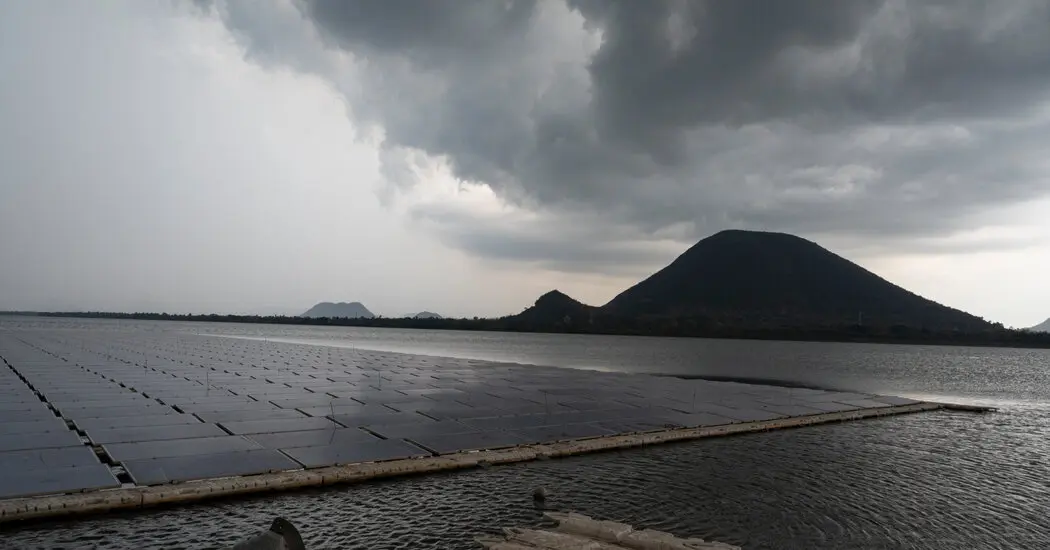
인도 비샤카파트남의 부유식 태양광 발전소. 크레딧... 뉴욕타임스를 위한 사우먀 칸델왈
알렉스 트라벨리와 수하시니 라지 작성
뉴델리에서 보도
지난해 인도는 에너지 자립 추진에서 이정표를 세웠다: 수년간 태양광 공원과 풍력 발전소를 건설한 후, 이 나라는 재생에너지원으로 전기의 절반 이상을 생산할 수 있다고 밝혔다.
그 전기를 가정과 기업에 공급하는 것은 전혀 다른 과제다.
이란의 전쟁은 인도를 재생에너지에 점점 더 의존하게 만들었는데, 이 분쟁으로 인해 수입 가스와 석유의 흐름이 막혔기 때문이다. 그리고 이는 14억 인구에게 안정적이고 저렴한 전력을 공급하기 위해 고군분투하는 이 나라의 낡고 불안정한 전력망의 한계를 드러냈다.
인도의 재생에너지, 특히 태양광에 대한 투자는 엄청났다. 지난해 말까지 55개의 태양광 공원을 보유했는데, 그중 하나는 14,000에이커의 사막을 가로질러 펼쳐져 있었다. 태양광 발전소만으로도 40기가와트를 생산했는데, 이는 약 8,000만 농촌 가정에 전력을 공급할 수 있는 양이다. 더 작은 옥상 태양광 시설은 마치 어디에나 있는 것처럼 우후죽순 생겨났다.
인도는 지난 여름, 재생에너지만으로 전기 수요의 50%를 충족할 수 있다고 발표했는데, 이는 예정보다 수년 앞당긴 것이다. 그러나 태양광과 풍력은 수요에 따라 흐르지 않는다.
인도의 핵심 과제는 생산량이 많을 때 남는 에너지를 저장하고 사람들이 사업을 운영하거나 스토브를 켤 때 꾸준히 공급하는 것이다. 배터리 시스템과 송전선은 충분히 빨리 건설될 수 없다.
인도의 새로운 에너지원에서 생산된 전력의 약 4분의 1만이 실제로 소비자에게 도달하는데, 중국에서는 절반 이상에 달한다. 결과적으로 인도는 여전히 페르시아만에서 수입한 석유와 가스에 의존하여 이 격차를 메우고 있으며, 공급이 중단되면서 이 취약성이 경제 전반에 파급되고 있다.
인도의 통화는 석유 비용이 배럴당 평균 120달러로 상승함에 따라 약화되었다. 이 위기는 국가의 장기 성장 전망에 부담을 주어 에너지 집약적 산업들이 노동자를 해고하고 철강을 주조하고, 도자기를 주조하고, 직물을 짜는 공장들이 생산을 늦추게 하고 있다.
구루그램의 이주 노동자 우질 시크다르와 그의 아내 밋투에게 연료 접근권을 잃는다는 것은 장작으로 요리하는 것을 의미한다. 구루그램은 뉴델리의 고층 빌딩이 즐비한 위성 도시다.
월 220달러를 벌어들이는 가정부인 시크다르 씨는, 암시장 가스 가격이 4배로 뛰면서 남편이 이제 요리용 나뭇가지를 모으기 위해 도시 밖으로 걸어 나간다고 말했다.
"연기, 그을음, 걸리는 시간 — 너무 지치게 해요," 시크다르 씨가 말했다. 그녀는 더 이상 남편과 아들을 위해 납작한 빵을 만들지 않고, 쌀과 렌즈콩만 한다.
일부 이웃들은 구루그램의 삶을 포기하고 고향 마을로 돌아갔다. 도시에서 농촌으로의 역이주는 인도가 팬데믹 기간에 경험했던 것처럼, 더 넓은 경제에 재앙적인 영향을 미칠 수 있다.
그러나 시크다르 가족 같은 가정에게 전기 버너로 전환하는 것은 에너지 요금이 너무 비싸고 공급이 너무 불규칙하여 필수적인 필요를 충족할 수 없기 때문에 선택지가 아니다.
정부 싱크탱크의 전 수장인 아미타브 칸트는 지난주 인도의 재생에너지로의 전환이 인상적이었지만 "전쟁, 해운 중단, 해상 대치의 위험에 대한 노출을 고려할 때 너무 신중했다"고 썼다.
인도는 1990년보다 — 심지어 10년 전보다도 — 수입 석유에 더 의존하고 있는데, 매년 도로의 자동차 수가 국내 석유 생산보다 더 빨리 증가하기 때문이다.
전기차가 그 의존도를 완화할 것으로 예상되지만, 항공유, 플라스틱, 비료를 만들기 위해 여전히 수입 석유와 가스가 필요할 것이다. 그러나 구루그램에 본사를 둔 거대한 청정 에너지 기업 리뉴의 창립자이자 최고경영자인 수만트 신하에 따르면, 수입은 총 에너지 소비의 31%를 차지하여 1990년의 38%에서 감소했다.
신하 씨가 말하는 다음 단계는 전기가 "풍부할 뿐만 아니라 항상 켜져 있고 정확히 시간에 맞아야 한다"는 것을 보장하는 것이다. 그때에야 인도는 수입 에너지 의존도를 줄이기 시작할 수 있다고 그는 말했다.
석탄은 여전히 인도의 전력 공급을 지배한다. 잘 운영되는 태양광 발전소는 화석연료 시설의 75%에서 100%에 비해 용량의 약 20%만 공급한다.
인도는 전력 공급과 수요 사이의 병목 현상을 완화하기 위한 여러 방법을 추구하고 있다. 가장 야심 찬 초점은 풍부한 태양광 에너지를 저장하여 나중에 사용할 수 있는 형태로 전환하는 것이다. 일부 프로젝트는 수요에 따라 수력 발전을 생산하기 위해 저수지에 물을 펌프질하고, 다른 프로젝트는 햇빛이 쨍쨍할 때 에너지를 화학적 형태로 저장하는 "그린 암모니아"를 생산한다.
어떤 형태로든 대부분의 해결책은 배터리에 의존한다고 뉴욕에 본부를 둔 비영리 단체 글로벌 에너지 얼라이언스의 최고투자책임자인 아그네스 다세비츠가 말했다. 그녀의 조직은 지난해 뉴델리의 킬로크리 지역에 인도 최초의 유틸리티 규모 배터리 시스템을 설치하는 데 도움을 주었다. 그 이후로 그녀는 전국적으로 공공사업체들이 어떻게 같은 일을 할 수 있는지 물어보러 왔다고 말했다.
최근 현장 방문 중 맑은 날 정오에, 현지 엔지니어가 다세비츠 씨에게 윙윙거리는 배터리 뱅크를 향해 고개를 끄덕였다. "그게 돈 소리예요," 그는 세계에서 가장 저렴한 전기 중 일부로 배터리가 충전되는 소리를 들으며 말했다. 글로벌 에너지 얼라이언스에 따르면 소비자들의 연간 비용은 약 55% 감소했다.
다세비츠 씨는 절약은 배터리를 전기가 가장 저렴할 때 충전하고 밤에 수요가 정점에 달할 때 방전하여 지역 발전소가 공급하는 12,000가정에 공급함으로써 이루어진다고 말했다.
그러나 더 효율적인 전력망과 에너지 자립을 달성하려면 중국의 장비가 필요하다. 중국 기업들은 태양광 패널, 고압 케이블, 변압기, 배터리를 포함한 현대 전력망의 거의 모든 구성 요소 제조를 지배하고 있다.
많은 다른 나라들처럼 인도는 곤경에 처해 있다. 중동 석유 의존도를 줄이고 싶어하면서도, 중국에 과도하게 의존하는 것이 경제적, 국가 안보를 훼손할 수 있다는 불안이 커지고 있다.
"인도는 하나의 의존에서 벗어나 다른 의존으로 들어가는 것을 바라지 말아야 한다,"고 전 싱크탱크 수장인 칸트 씨가 경고했다.
알렉스 트라벨리는 뉴델리에 기반을 둔 특파원으로, 인도와 남아시아 나머지 지역의 비즈니스 및 경제 발전에 대해 글을 쓴다.
수하시니 라지는 2014년부터 뉴욕타임스를 위해 인도를 취재해 온 뉴델리 기반의 기자다.
알렉스 트라벨리와 수하시니 라지 작성
뉴델리에서 보도
지난해 인도는 에너지 자립 추진에서 이정표를 세웠다: 수년간 태양광 공원과 풍력 발전소를 건설한 후, 이 나라는 재생에너지원으로 전기의 절반 이상을 생산할 수 있다고 밝혔다.
그 전기를 가정과 기업에 공급하는 것은 전혀 다른 과제다.
이란의 전쟁은 인도를 재생에너지에 점점 더 의존하게 만들었는데, 이 분쟁으로 인해 수입 가스와 석유의 흐름이 막혔기 때문이다. 그리고 이는 14억 인구에게 안정적이고 저렴한 전력을 공급하기 위해 고군분투하는 이 나라의 낡고 불안정한 전력망의 한계를 드러냈다.
인도의 재생에너지, 특히 태양광에 대한 투자는 엄청났다. 지난해 말까지 55개의 태양광 공원을 보유했는데, 그중 하나는 14,000에이커의 사막을 가로질러 펼쳐져 있었다. 태양광 발전소만으로도 40기가와트를 생산했는데, 이는 약 8,000만 농촌 가정에 전력을 공급할 수 있는 양이다. 더 작은 옥상 태양광 시설은 마치 어디에나 있는 것처럼 우후죽순 생겨났다.
인도는 지난 여름, 재생에너지만으로 전기 수요의 50%를 충족할 수 있다고 발표했는데, 이는 예정보다 수년 앞당긴 것이다. 그러나 태양광과 풍력은 수요에 따라 흐르지 않는다.
인도의 핵심 과제는 생산량이 많을 때 남는 에너지를 저장하고 사람들이 사업을 운영하거나 스토브를 켤 때 꾸준히 공급하는 것이다. 배터리 시스템과 송전선은 충분히 빨리 건설될 수 없다.
인도의 새로운 에너지원에서 생산된 전력의 약 4분의 1만이 실제로 소비자에게 도달하는데, 중국에서는 절반 이상에 달한다. 결과적으로 인도는 여전히 페르시아만에서 수입한 석유와 가스에 의존하여 이 격차를 메우고 있으며, 공급이 중단되면서 이 취약성이 경제 전반에 파급되고 있다.
인도의 통화는 석유 비용이 배럴당 평균 120달러로 상승함에 따라 약화되었다. 이 위기는 국가의 장기 성장 전망에 부담을 주어 에너지 집약적 산업들이 노동자를 해고하고 철강을 주조하고, 도자기를 주조하고, 직물을 짜는 공장들이 생산을 늦추게 하고 있다.
구루그램의 이주 노동자 우질 시크다르와 그의 아내 밋투에게 연료 접근권을 잃는다는 것은 장작으로 요리하는 것을 의미한다. 구루그램은 뉴델리의 고층 빌딩이 즐비한 위성 도시다.
월 220달러를 벌어들이는 가정부인 시크다르 씨는, 암시장 가스 가격이 4배로 뛰면서 남편이 이제 요리용 나뭇가지를 모으기 위해 도시 밖으로 걸어 나간다고 말했다.
"연기, 그을음, 걸리는 시간 — 너무 지치게 해요," 시크다르 씨가 말했다. 그녀는 더 이상 남편과 아들을 위해 납작한 빵을 만들지 않고, 쌀과 렌즈콩만 한다.
일부 이웃들은 구루그램의 삶을 포기하고 고향 마을로 돌아갔다. 도시에서 농촌으로의 역이주는 인도가 팬데믹 기간에 경험했던 것처럼, 더 넓은 경제에 재앙적인 영향을 미칠 수 있다.
그러나 시크다르 가족 같은 가정에게 전기 버너로 전환하는 것은 에너지 요금이 너무 비싸고 공급이 너무 불규칙하여 필수적인 필요를 충족할 수 없기 때문에 선택지가 아니다.
정부 싱크탱크의 전 수장인 아미타브 칸트는 지난주 인도의 재생에너지로의 전환이 인상적이었지만 "전쟁, 해운 중단, 해상 대치의 위험에 대한 노출을 고려할 때 너무 신중했다"고 썼다.
인도는 1990년보다 — 심지어 10년 전보다도 — 수입 석유에 더 의존하고 있는데, 매년 도로의 자동차 수가 국내 석유 생산보다 더 빨리 증가하기 때문이다.
전기차가 그 의존도를 완화할 것으로 예상되지만, 항공유, 플라스틱, 비료를 만들기 위해 여전히 수입 석유와 가스가 필요할 것이다. 그러나 구루그램에 본사를 둔 거대한 청정 에너지 기업 리뉴의 창립자이자 최고경영자인 수만트 신하에 따르면, 수입은 총 에너지 소비의 31%를 차지하여 1990년의 38%에서 감소했다.
신하 씨가 말하는 다음 단계는 전기가 "풍부할 뿐만 아니라 항상 켜져 있고 정확히 시간에 맞아야 한다"는 것을 보장하는 것이다. 그때에야 인도는 수입 에너지 의존도를 줄이기 시작할 수 있다고 그는 말했다.
석탄은 여전히 인도의 전력 공급을 지배한다. 잘 운영되는 태양광 발전소는 화석연료 시설의 75%에서 100%에 비해 용량의 약 20%만 공급한다.
인도는 전력 공급과 수요 사이의 병목 현상을 완화하기 위한 여러 방법을 추구하고 있다. 가장 야심 찬 초점은 풍부한 태양광 에너지를 저장하여 나중에 사용할 수 있는 형태로 전환하는 것이다. 일부 프로젝트는 수요에 따라 수력 발전을 생산하기 위해 저수지에 물을 펌프질하고, 다른 프로젝트는 햇빛이 쨍쨍할 때 에너지를 화학적 형태로 저장하는 "그린 암모니아"를 생산한다.
어떤 형태로든 대부분의 해결책은 배터리에 의존한다고 뉴욕에 본부를 둔 비영리 단체 글로벌 에너지 얼라이언스의 최고투자책임자인 아그네스 다세비츠가 말했다. 그녀의 조직은 지난해 뉴델리의 킬로크리 지역에 인도 최초의 유틸리티 규모 배터리 시스템을 설치하는 데 도움을 주었다. 그 이후로 그녀는 전국적으로 공공사업체들이 어떻게 같은 일을 할 수 있는지 물어보러 왔다고 말했다.
최근 현장 방문 중 맑은 날 정오에, 현지 엔지니어가 다세비츠 씨에게 윙윙거리는 배터리 뱅크를 향해 고개를 끄덕였다. "그게 돈 소리예요," 그는 세계에서 가장 저렴한 전기 중 일부로 배터리가 충전되는 소리를 들으며 말했다. 글로벌 에너지 얼라이언스에 따르면 소비자들의 연간 비용은 약 55% 감소했다.
다세비츠 씨는 절약은 배터리를 전기가 가장 저렴할 때 충전하고 밤에 수요가 정점에 달할 때 방전하여 지역 발전소가 공급하는 12,000가정에 공급함으로써 이루어진다고 말했다.
그러나 더 효율적인 전력망과 에너지 자립을 달성하려면 중국의 장비가 필요하다. 중국 기업들은 태양광 패널, 고압 케이블, 변압기, 배터리를 포함한 현대 전력망의 거의 모든 구성 요소 제조를 지배하고 있다.
많은 다른 나라들처럼 인도는 곤경에 처해 있다. 중동 석유 의존도를 줄이고 싶어하면서도, 중국에 과도하게 의존하는 것이 경제적, 국가 안보를 훼손할 수 있다는 불안이 커지고 있다.
"인도는 하나의 의존에서 벗어나 다른 의존으로 들어가는 것을 바라지 말아야 한다,"고 전 싱크탱크 수장인 칸트 씨가 경고했다.
알렉스 트라벨리는 뉴델리에 기반을 둔 특파원으로, 인도와 남아시아 나머지 지역의 비즈니스 및 경제 발전에 대해 글을 쓴다.
수하시니 라지는 2014년부터 뉴욕타임스를 위해 인도를 취재해 온 뉴델리 기반의 기자다.
처리 완료
195 tokens · $0.0004
기사 수집 완료 · 13:10
매체 피드에서 기사 메타데이터 수집
헤드라인 번역 완료 · 13:26
제목/요약 한국어 번역 (fetch 시점 inline)
kimi-k2.5
195 tokens
$0.00038
4.2s
본문 추출 완료
6,353자 추출 완료
본문 한국어 번역 완료 · 13:26
3,211자 번역 완료
지정학적 엔티티 추출 완료 · 13:26
8개 엔티티 추출 완료
지정학적 맥락 & R-Scanner
R-Scanner · 평상
z=-1.04
일상적인 보도 수준 — 기준: India
(🇮🇳 IN)
최근 6시간 25건
7일 평균 30.89건 / 6h
6개국 매체
8개 매체
본문에서 추출된 지명 (8)
위치 지도
지도 로딩 중…
같은 주제의 다른 기사 (최근 7일)
The country’s creaking electricity grid is lagging behind its push for renewable sources — just as its growing economy hungers for oil stranded by war.
A floating solar farm in Visakhapatnam, India.Credit...Saumya Khandelwal for The New York TimesBy Alex Travelli and Suhasini Raj
Reporting from New Delhi
Last year, India hit a milestone in its push for energy independence: After years of building solar parks and wind farms, the country said it could generate more than half of its electricity from renewable sources.
Getting that electricity to homes and businesses is a whole other challenge.
The war in Iran has made India increasingly reliant on renewable energy, as the conflict has choked the flow of imported gas and oil. And it has exposed the limits of the country’s outdated, rickety grid, which is struggling to deliver reliable, affordable power for its 1.4 billion people.
India’s investments in renewable energy, especially solar, have been staggering. By the end of last year, it had 55 solar parks, including one that stretched across 14,000 acres of desert. The solar farms alone were producing 40 gigawatts — enough energy to power about 80 million rural households. Smaller rooftop arrays sprouted seemingly everywhere.
India announced last summer that it could meet 50 percent of its electricity requirements with renewables alone, years ahead of schedule. But solar and wind power don’t flow on demand.
India’s critical challenge is storing surplus energy from peak production and delivering it consistently when people need it to run businesses or turn on a stove. Battery systems and transmission lines can’t be built fast enough.
Only about a quarter of the power generated by India’s new sources actually reaches consumers, compared with more than half in China. As a result, India is still relying on oil and gas imported from the Persian Gulf to bridge the gap, a vulnerability rippling across the economy as supplies are disrupted.
India’s currency has weakened as oil costs have risen, averaging $120 a barrel for its buyers. The crisis is weighing on the country’s long-term growth prospects, forcing energy-intensive industries to lay off workers and factories that pour steel, cast ceramics and weave fabric to slow production.
For Ujjwal Sikdar and his wife, Mitthu, migrant laborers in Gurugram, a skyscraper-studded satellite city of New Delhi, losing access to fuel means cooking over firewood.
Ms. Sikdar, who earns $220 a month as a house cleaner, said her husband now walks outside the city to gather sticks for cooking because black-market gas prices have quadrupled.
“The smoke, the soot, the time it takes — it’s exhausting me,” Ms. Sikdar said. She no longer makes flatbreads for her husband and son, only rice and dal.
Some neighbors have given up on life in Gurugram and returned to their villages. Reverse migration from city to countryside, as India experienced during the pandemic, can have catastrophic effects on the broader economy.
Yet switching to an electric burner is not an option for families like the Sikdars because energy bills are too high and the supply is too erratic to meet their essential needs.
Amitabh Kant, a former head of a government think tank, wrote last week that India’s shift to renewable energy had been impressive but “too cautious” given its exposure to the risk of “wars, shipping disruptions and maritime standoffs.”
India is more dependent on imported oil than it was in 1990 — or even a decade ago — as the number of cars on the road every year rises faster than domestic oil production.
While electric vehicles are expected to ease that reliance, imported oil and gas will still be needed to make jet fuel, plastics and fertilizer. But Sumant Sinha, the founder and chief executive of ReNew, a giant clean energy company based in Gurugram, said imports accounted for 31 percent of total energy consumption, down from 38 percent in 1990.
The next step, Mr. Sinha said, is ensuring that electricity “not just be abundant, but must be always on and precisely timed.” Only then can India begin to reduce its dependence on imported energy, he said.
Coal still dominates India’s electricity supply. A well-run solar plant delivers only about 20 percent of its capacity, compared with 75 percent to 100 percent for fossil-fuel facilities.
India is pursuing multiple ways to ease the bottlenecks between power supply and demand. The most ambitious focus is on converting abundant solar energy into forms that can be stored and used later. Some projects pump water into reservoirs to generate hydroelectric power on demand, while others produce “green ammonia,” storing energy in a chemical form when the sun is shining.
In one form or another, most solutions depend on batteries, said Agnes Dasewicz, chief investment officer at the Global Energy Alliance, a nonprofit based in New York. Her organization helped set up India’s first utility-scale battery system in Kilokri, a neighborhood in New Delhi, less than a year ago. Since then, she said, utilities across the country have come asking how they can do the same.
At noon on a sunny day during a recent site visit, a local engineer turned to Ms. Dasewicz and nodded at the humming battery banks. “That’s the sound of money,” he said, listening to the batteries fill up with some of the cheapest electricity in the world. Annual costs to consumers have come down by about 55 percent, according to the G.E.A.
The savings, Ms. Dasewicz said, come from charging the batteries when electricity is cheapest and then discharging it at night, when demand peaks, to the 12,000 homes that the local power station serves.
However, achieving a more efficient grid and energy independence requires equipment from China. Chinese companies dominate the manufacturing of nearly every component of a modern grid, including solar panels, high-voltage cables, transformers and batteries.
Like many other countries, India is in a bind. While it wants to reduce its reliance on Middle Eastern oil, there is growing unease that overreliance on China could undermine economic and national security.
“India must not look toward escaping from one dependency only to walk into another,” warned Mr. Kant, the former think tank leader.
Alex Travelli is a correspondent based in New Delhi, writing about business and economic developments in India and the rest of South Asia.
Suhasini Raj is a reporter based in New Delhi who has covered India for The Times since 2014.