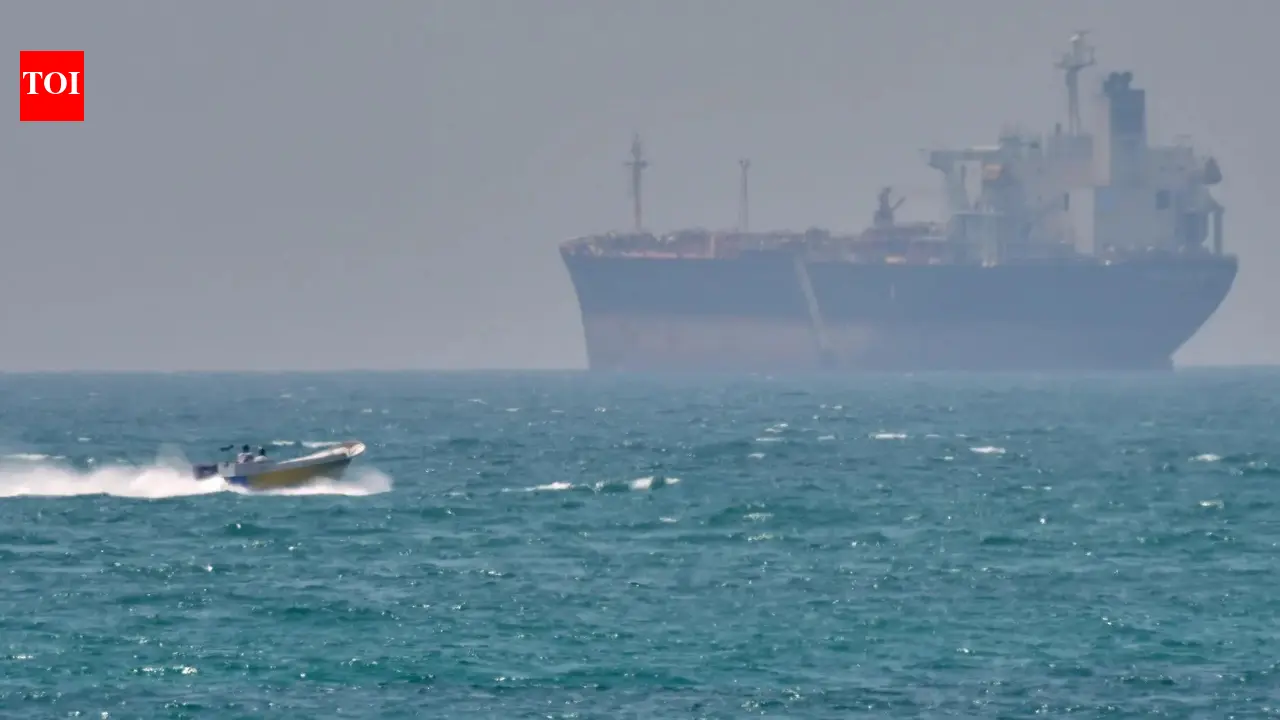
'위협의 계층화된 체계': 이란의 '고속 공격선' 사용이 호르무즈를 어떻게 질식시키고 있는가
'Layered system of threats': How Iran’s use of 'fast-attack ships' is choking Hormuz
The Times of India
· 🇮🇳 Mumbai, IN
TOI WORLD DESK
EN
2026-04-24 12:25
Translated
호르무즈 해협 근처에서 이란이 고속 보트 떼를 이용해 컨테이너선을 나포한 것이 새로운 해양 보안 우려를 일으키고 있다. 이러한 작전들은 계층화된 위협 체계의 일부이며, 테헤란의 해군 능력에 대한 이전 평가에 도전하고 중요한 석유 운송로 확보의 어려움을 드러낸다.
이란이 고속 보트 떼를 이용해 호르무즈 해협 근처의 두 컨테이너선을 나포한 것이 해양 보안에 대한 새로운 우려를 일으키고 있다. 또한 미군이 테헤란의 해군 위협을 무력화했다는 주장에 도전하며 중요한 글로벌 석유 운송로를 다시 열기 위한 어려움을 부각시킨다. 고속보트 작전은 이제 그리스 해양 보안 회사 디아플로스가 로이터에 보도한 바에 따르면 "해안 기반 미사일, 드론, 지뢰 및 전자 간섭과 함께 불확실성을 조성하고 의사결정을 지연시키는" 더 광범위한 "위협의 계층화된 체계"의 일부가 되었다. 이란의 사법부 수장 골람호세인 모흐세니 에제이는 X에 게시한 글에서 이란의 군대가 호르무즈에서의 힘을 과시하고 있다고 말했으며, 혁명수비대의 고속보트와 수중 드론으로 이루어진 "모기 함대"와 최근의 3척 선박에 대한 조치를 언급했다. 그는 "이슬람혁명수비대의 모기 함대는 고속보트와 드론으로 파로르 섬의 해안 동굴에서 미국의 침략자 전함을 기다리고 있으며, 그들의 방공 체계를 포화시키고 침략자에게 완전한 파멸을 가할 준비가 되어 있다"고 덧붙였다. 이전의 사건들과 달리, 이 보트들은 대형의 무장하지 않은 상업 선박을 목표로 하지 않았으며 훨씬 덜 무장했다. 대조적으로, 이란의 혁명수비대는 중기관총, 로켓 발사기, 그리고 어떤 경우에는 대함 미사일로 무장하고 있다. 2월 28일에 분쟁이 시작된 이후, 해양 보안 회사 드라이어드 글로벌의 최고경영자 코리 란슬렘에 따르면 약 100척 이상의 이러한 보트들이 파괴되었을 수 있다. 도널드 트럼프 미국 대통령은 이전에 이란의 재래식 해군이 대부분 파괴되었지만 "고속 공격선"이 이전에는 중대한 위협으로 여겨지지 않았다고 인정했으며, 최근의 진전으로 인해 이 평가가 이제 의문의 대상이 되고 있다. 그는 해협 외부의 미국 봉쇄에 접근하는 그러한 선박이 "즉시 제거될" 것이라고 경고했으며, 미국이 의약품 보트를 목표로 한 카리브해와 태평양에서 사용한 "동일한 살상 체계"를 사용하여 최소 110명을 죽였다. 전쟁 이전, 이란은 해양 보안 전문가들에 따르면 수백 척, 아니면 수천 척의 이러한 소형 고속 보트를 소유하고 있었으며, 종종 해안 터널, 해군 기지 또는 민간 선박 사이에 숨겨져 있었다. 영국 해양 보안 회사 앰브레이의 선임 분석가 다니엘 뮬러가 로이터를 인용하여 말한 바에 따르면 "민간 해운 산업은 이란 군대가 선박을 나포하는 것을 방지할 수 없다"고 했다. 이번 주의 사건을 포함하여, 이란은 2019년 이후 최소 7차례의 작전에서 소형 고속 보트를 배치했다고 뮬러는 말했다. 이러한 고속 보트는 이란의 해군 전략의 "척추"가 되었으며, 높은 수준의 이란 보안 관리자가 로이터에 밝힌 바에 따르면 "비대칭 전쟁"의 일부로 빠른 배치를 가능하게 한다. "이 보트들의 매우 높은 속도 때문에, 이 보트들은 탐지되지 않고 기습 공격을 성공적으로 수행할 수 있다"고 익명의 조건으로 말한 관리자는 말했다. 이번 주 이전에, 이란은 주로 호르무즈 해협 근처의 해운을 목표로 미사일과 드론 공격에 의존했다.
처리 완료
3,392 tokens · $0.0096
기사 수집 완료 · 13:10
매체 피드에서 기사 메타데이터 수집
헤드라인 번역 완료 · 13:21
제목/요약 한국어 번역 (fetch 시점 inline)
claude-haiku-4-5-20251001
359 tokens
$0.00099
2.9s
본문 추출 완료
3,069자 추출 완료
본문 한국어 번역 완료 · 13:21
1,485자 번역 완료
claude-haiku-4-5-20251001
3,033 tokens
$0.00862
17.0s
지정학적 엔티티 추출 완료 · 13:21
6개 엔티티 추출 완료
지정학적 맥락 & R-Scanner
R-Scanner · 평상
z=-3.12
일상적인 보도 수준 — 기준: Strait of Hormuz
(🇮🇷 IR)
최근 6시간 12건
7일 평균 29.14건 / 6h
7개국 매체
9개 매체
본문에서 추출된 지명 (6)
위치 지도
지도 로딩 중…
같은 주제의 다른 기사 (최근 7일)
Iran's recent use of swarms of fast boats to seize container ships near the Strait of Hormuz is raising new maritime security concerns. These operations, part of a layered threat system, challenge previous assessments of Tehran's naval capabilities and highlight difficulties in securing the vital oil route.
Iran’s use of swarms of small, fast boats to seize two container ships near the Strait of Hormuz is raising fresh concerns over maritime security. It also challenges claims that US forces have neutralised Tehran’s naval threat and highlights the difficulties in reopening a vital global oil route.Speedboat operations are now part of a broader “layered system of threats,” alongside “shore-based missiles, drones, mines and electronic interference to create uncertainty and slow decision-making,” Greek maritime security firm Diaplous told Reuters.Iran’s judiciary chief, Gholamhossein Mohseni Ejehi, said through a post on X that the country’s armed forces were showcasing their strength in Hormuz, pointing to a Revolutionary Guard “mosquito fleet” of speedboats and underwater drones, as well as recent action against three vessels.He added that “the IRGC’s mosquito fleet, with speedboats and drones, lies in wait from the sea caves of Faror Island for the American aggressor warships, ready to saturate their air defenses and bring utter ruin upon the invaders.”Unlike earlier incidents, these boats were not targeting large, unarmed commercial vessels and were far less heavily armed. In contrast, Iran’s Revolutionary Guards are equipped with heavy machine guns, rocket launchers and, in some cases, anti-ship missiles.Since the conflict began on February 28, around 100 or more of these boats may have been destroyed, said Corey Ranslem, chief executive of maritime security firm Dryad Global.US president Donald Trump had earlier acknowledged that while Iran’s conventional navy had been largely destroyed, its “fast-attack ships” had not previously been viewed as a significant threat, an assessment now being called into question by the latest developments.He warned that any such vessels approaching a US blockade outside the strait would be “immediately ELIMINATED,” using the “same system of kill” employed in the Caribbean and Pacific, where US air strikes have targeted suspected drug boats and killed at least 110 people.Before the war, Iran was believed to possess hundreds, if not thousands, of these small, fast boats, often concealed in coastal tunnels, naval bases or among civilian vessels, according to maritime security experts."The civilian shipping industry is not equipped to prevent Iranian armed forces from seizing vessels," said Daniel Mueller, a senior analyst at British maritime security company Ambrey, as cited by Reuters.Including this week’s incidents, Iran has deployed small, fast boats in at least seven operations since 2019, Mueller said.These fast boats have become the “backbone” of its naval strategy, enabling rapid deployment as part of its “asymmetrical war against the enemy,” a senior Iranian security official told Reuters.“Because of their very high speeds, these boats can successfully carry out hit-and-run attacks without being detected,” the official said, speaking on condition of anonymity.Prior to this week, Iran had largely relied on missile and drone strikes to target shipping near the Strait of Hormuz.