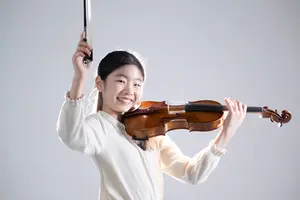
12살의 김연아, 이미 자신만의 음악을 만들어가다
At 12, Kim Yeonah is already shaping her own sound
The Korea Herald
· 🇰🇷 Seoul, KR
Park Ga-young
EN
2026-04-30 15:35
Translated
프랑스 피아니스트 줄리앙 코헨과의 유튜브 이중주는 1700만 회 이상 조회되었다. 그녀는 로봇과 함께 APEC에서 세계 지도자들을 위해 공연했고, 여러 대륙의 경쟁에서 대상을 수상했으며, 거리 이름을 발음할 수 없는 도시들에서 스탠딩 오베이션을 받았다. 그녀는 4월에 겨우 12살이 되었다.
그녀의 이름은 김연아로, 남한의 첫 올림픽 피겨스케이팅 금메달리스트인 사랑받는 피겨스케이터 김연아와 같은 한국 이름이다. 그녀의 어머니가 의도적으로 선택했다.
원하는 음향
월요일 오후, 그녀는 같은 날 받은 바이올린을 들고 인터뷰를 위해 나타났다 — 4분의 3 사이즈에서 전환하는 두 번째 풀사이즈 악기였다.
"G현이 예전 악기보다 훨씬 좋은 소리가 난다"고 그녀는 말한다.
E현은 다른 문제다. 그녀는 줄리아 피셔의 밝고 날카로운 음색을 좋아한다 — "오케스트라를 관통하는 종류" — 이 악기는 그것에 못 미친다.
그녀의 손은 여전히 악기와 조화를 이루기 위해 자라야 한다. 그녀의 귀는 그렇지 않다.
그녀가 사라사테의 "카르멘 판타지"를 연주할 때, 그녀의 선생님은 메조소프라노가 그 역할을 부르는 방식으로 프레이징하도록 지시한다 — 모차르트를 생각하고, 오페라를 생각하고, 바이올린이 아닌 성악을 생각하도록. 그래서 그녀는 듣는다. 집에서, 택시에서, 연습 사이사이에.
2024년, 이탈리아의 콘서트 후 휴식 중에 베로나 경기장에서 공연되는 "카르멘"을 보러 갔다.
"무대가 정말 장관이었다"고 그녀는 회상한다. "그리고 그 진정한 오페라 가수들이 노래할 때, 그 소리는 진동처럼 파도처럼 퍼져서 전체 공간을 통해 퍼진다. 나는 정말 감동했다."
이제 그녀는 그 작품을 연습할 때마다 그 프로덕션을 생각한다.
그녀는 바이올린에서 줄리아 피셔의 음향을 원한다고 결정했다. 그녀는 기록을 들으며 해석을 비교해왔다 — "이 사람은 비브라토가 좋고, 이 사람은 다른 것에 좋다" — 그리고 자신의 버전을 엮어냈다.
그 새로운 음향은 5월 2일에 공개적으로 시험될 것이다. 그때 그녀는 21년 역사의 서울 봄 실내악 축제에서 가장 어린 공연자가 되어 서울 예술의 전당 무대에 올라 "카르멘 판타지"와 멘델스존의 피아노 삼중주 1번 D단조 첫 악장을 연주할 것이다. 그녀는 할아버지가 될 수 있을 나이의 베테랑들과 프로그램을 공유할 것이다 — 축제 설립자인 바이올리니스트 강동석을 포함하여, 그는 그녀의 연주를 "기술적으로 확실하고, 음악적으로 균형 있으며, 비상하게 성숙하다"고 불렀다.
그녀는 이 모든 것을 위한 시간을 만들기 위해 홈스쿨링을 한다. 전형적인 하루는 오전 7시 전에 시작된다 — 점심 전 스케일과 부분 연습, 오후의 수업과 레퍼토리 작업, 저녁의 공부와 운동.
"피곤하지만 재미있다"고 그녀는 말한다. 연습이 너무 어려워질 때, 그녀는 어머니와 함께 누워 있기 위해 나가거나 인형으로 논다. "하지만 나는 절대 멈추고 싶지 않았다."
큰 무대를 위해 태어나다
테이블 너머에서 그녀는 차분하게, 거의 항상 미소를 지으며 대답한다. 같은 침착함이 무대로 옮겨진다.
"나는 무대 뒤에서 긴장한다"고 그녀는 말한다. "하지만 바이올린을 들고 첫 음을 연주하는 순간, 나는 집중한다. 홀이 클수록 나는 더 진정된다."
10월 31일 경주 APEC 정상회담 2025에서 세계 지도자들을 위한 공연에서도, 그녀는 네 다리 로봇과 함께 나타났고, 관객이 아니라 그것이 그녀를 불안하게 했다.
"처음에는 로봇이 좀 무서웠지만, 우리가 연주할 때 그들을 강아지로 생각하기 시작하니 재미있어졌다."
무대는 음악 이상의 것이 되었다 — 그것은 기술과 젊은 창의적 재능이 동기화되어 움직이는 남한의 미래를 엿볼 수 있게 했다.
김은 4살 때 바이올린을 집어 들었다. 그녀는 동네 쇼핑몰 음악학교를 지나가다가 네 명의 나이 많은 여자아이들이 연주하는 것을 봤다 — 그녀의 눈에는 언니들 — 그리고 그 자리에서 결정했다.
"정말 멋있어 보였다"고 그녀는 말한다. "엄마를 졸라서 배우게 해달라고 했어."
1년 후, 많은 어린 한국 재능을 키운 바이올리니스트 선미리가 그녀를 보살피기 시작했다. 오늘날 그녀는 바이올리니스트 양성식과 공부한다.
김은 일찍 무대에 빠졌다. 그녀는 5살 때 바이올린 선생님이 그녀를 처음 대회에 데려갔다. 그녀는 연주하며 심사위원들을 바라보고 그들이 자신을 보는 것을 봤다는 것을 기억한다.
그녀는 대회가 무엇인지 몰랐다. 무대에서 나오며 1등상을 받고는 오직 한 가지만 알았다: "나는 이것을 사랑한다"고 그녀는 기억한다.
그녀는 그 이후로 계속 우승해 왔다 — 하지만 항상 그런 것은 아니다. 승리는 쉽게 나열할 수 있다: 2023년 주하이 국제 모차르트 대회에서 역대 최연소 1등상, 같은 해 벨기에 아르튀르 그뤼미오 대회에서 2등상, 그리고 지난해 프라하 안토닌 드보르작 국제 라디오 대회에서 역대 최연소 1등상. 패배는 더 조용하다. 몇 년 전 그녀의 첫 주요 국제 대회에서 3등을 했을 때, 그녀의 어머니의 회상에 따르면, 그녀는 새벽까지 울었다 — 그리고 아침에 어머니를 깨우며 "엄마, 빨리 연습하자"고 말했다.
"그때 나는 생각했다"고 그녀의 어머니는 말한다. "그 아이는 괜찮을 거야."
그녀는 시작한 이후 두 명의 선생님을 가져왔다. 선미리는 그녀에게 음악은 절대 지루해서는 안 된다고 가르쳤다. 그녀의 현재 선생님, 양성식은 기술을 다르게 틀지었다.
"그는 매우 논리적이고, 태도에 대해 가장 많이 말한다"고 김은 말한다. "그는 나에게 '사람들에게 더 많은 것을 주고 싶다면, 이것이 필요한 기술이다'라고 말해. 그때 나는 생각하기 시작했다 — 과시하는 것이 아니다. 주는 것이다."
지난 1월, 침착함이 깨졌다. 그녀는 콘체르토를 연주하고 있었을 때 전에 놓쳐본 적이 없는 구절을 놓쳤다. 지휘자는 무대 뒤에서 그녀를 안심시켰다. 오케스트라는 나중에 알게 된 그녀가 어떻게 끝냈는지에 조용히 감탄했다. 지휘자는 다음 날까지 전화를 했다. 그녀는 아무튼 새벽까지 울었다.
"나는 연습이 부족했다고 생각한다"고 그녀는 간단히 말한다.
그녀는 그 이후로 더 열심히 연습하고 있다. 5월 2일 서울 예술의 전당 공연이 바로 다음 목표다. 7월에, 그녀는 덴마크로 여행을 떠나 7월 24일 코펜하겐 여름 축제에서 그녀의 첫 해외 솔로 리사이틀을 한다. 그곳에서 그녀는 베토벤의 바이올린 소나타 3번 에플랫 장조, 비탈리의 G단조 샤콘, 그리고 비니아우스키의 "스케르초-타란텔라"를 앙코르로 하는 악스만의 "카르멘 판타시"를 연주할 것이다. 그녀의 피아노 파트너는 율리아 하모스다.
"무언가 화려한 것으로 끝내고 싶었다"고 그녀는 말한다. "그리고 중간의 샤콘은 슬프기 때문에. 빠른 곡들만 연주할 수 없다."
그리고 그녀는 이미 다음 곡을 목록에 올려놨다, 브람스 바이올린 협주곡, 줄리아 피셔가 연주하기 때문이다. 그녀가 시작할 수 있는지 선생님에게 물었을 때, 답은 거래였다: 먼저 브람스의 전기를 읽어 끝내자. "두껍다"고 김은 손가락으로 깊이를 흉내내며 말한다. "그리고 어려운 단어들이 있다. 나는 몇 페이지만 읽었다."
그녀가 어떤 바이올리니스트가 되고 싶은지 물었을 때 — 1년 안에, 5년 안에, 20년 안에 — 그녀는 잠깐만 멈췄다.
"사람들에게 위로와 행복을 주는 바이올리니스트"라고 그녀는 말한다. "음악을 통해 사람들과 소통하는."
많은 사람들의 설명에 따르면, 그녀는 이미 그렇게 하고 있다 — 그녀가 정확히 어떻게 할지 결정하기 훨씬 전부터.
그녀의 이름은 김연아로, 남한의 첫 올림픽 피겨스케이팅 금메달리스트인 사랑받는 피겨스케이터 김연아와 같은 한국 이름이다. 그녀의 어머니가 의도적으로 선택했다.
원하는 음향
월요일 오후, 그녀는 같은 날 받은 바이올린을 들고 인터뷰를 위해 나타났다 — 4분의 3 사이즈에서 전환하는 두 번째 풀사이즈 악기였다.
"G현이 예전 악기보다 훨씬 좋은 소리가 난다"고 그녀는 말한다.
E현은 다른 문제다. 그녀는 줄리아 피셔의 밝고 날카로운 음색을 좋아한다 — "오케스트라를 관통하는 종류" — 이 악기는 그것에 못 미친다.
그녀의 손은 여전히 악기와 조화를 이루기 위해 자라야 한다. 그녀의 귀는 그렇지 않다.
그녀가 사라사테의 "카르멘 판타지"를 연주할 때, 그녀의 선생님은 메조소프라노가 그 역할을 부르는 방식으로 프레이징하도록 지시한다 — 모차르트를 생각하고, 오페라를 생각하고, 바이올린이 아닌 성악을 생각하도록. 그래서 그녀는 듣는다. 집에서, 택시에서, 연습 사이사이에.
2024년, 이탈리아의 콘서트 후 휴식 중에 베로나 경기장에서 공연되는 "카르멘"을 보러 갔다.
"무대가 정말 장관이었다"고 그녀는 회상한다. "그리고 그 진정한 오페라 가수들이 노래할 때, 그 소리는 진동처럼 파도처럼 퍼져서 전체 공간을 통해 퍼진다. 나는 정말 감동했다."
이제 그녀는 그 작품을 연습할 때마다 그 프로덕션을 생각한다.
그녀는 바이올린에서 줄리아 피셔의 음향을 원한다고 결정했다. 그녀는 기록을 들으며 해석을 비교해왔다 — "이 사람은 비브라토가 좋고, 이 사람은 다른 것에 좋다" — 그리고 자신의 버전을 엮어냈다.
그 새로운 음향은 5월 2일에 공개적으로 시험될 것이다. 그때 그녀는 21년 역사의 서울 봄 실내악 축제에서 가장 어린 공연자가 되어 서울 예술의 전당 무대에 올라 "카르멘 판타지"와 멘델스존의 피아노 삼중주 1번 D단조 첫 악장을 연주할 것이다. 그녀는 할아버지가 될 수 있을 나이의 베테랑들과 프로그램을 공유할 것이다 — 축제 설립자인 바이올리니스트 강동석을 포함하여, 그는 그녀의 연주를 "기술적으로 확실하고, 음악적으로 균형 있으며, 비상하게 성숙하다"고 불렀다.
그녀는 이 모든 것을 위한 시간을 만들기 위해 홈스쿨링을 한다. 전형적인 하루는 오전 7시 전에 시작된다 — 점심 전 스케일과 부분 연습, 오후의 수업과 레퍼토리 작업, 저녁의 공부와 운동.
"피곤하지만 재미있다"고 그녀는 말한다. 연습이 너무 어려워질 때, 그녀는 어머니와 함께 누워 있기 위해 나가거나 인형으로 논다. "하지만 나는 절대 멈추고 싶지 않았다."
큰 무대를 위해 태어나다
테이블 너머에서 그녀는 차분하게, 거의 항상 미소를 지으며 대답한다. 같은 침착함이 무대로 옮겨진다.
"나는 무대 뒤에서 긴장한다"고 그녀는 말한다. "하지만 바이올린을 들고 첫 음을 연주하는 순간, 나는 집중한다. 홀이 클수록 나는 더 진정된다."
10월 31일 경주 APEC 정상회담 2025에서 세계 지도자들을 위한 공연에서도, 그녀는 네 다리 로봇과 함께 나타났고, 관객이 아니라 그것이 그녀를 불안하게 했다.
"처음에는 로봇이 좀 무서웠지만, 우리가 연주할 때 그들을 강아지로 생각하기 시작하니 재미있어졌다."
무대는 음악 이상의 것이 되었다 — 그것은 기술과 젊은 창의적 재능이 동기화되어 움직이는 남한의 미래를 엿볼 수 있게 했다.
김은 4살 때 바이올린을 집어 들었다. 그녀는 동네 쇼핑몰 음악학교를 지나가다가 네 명의 나이 많은 여자아이들이 연주하는 것을 봤다 — 그녀의 눈에는 언니들 — 그리고 그 자리에서 결정했다.
"정말 멋있어 보였다"고 그녀는 말한다. "엄마를 졸라서 배우게 해달라고 했어."
1년 후, 많은 어린 한국 재능을 키운 바이올리니스트 선미리가 그녀를 보살피기 시작했다. 오늘날 그녀는 바이올리니스트 양성식과 공부한다.
김은 일찍 무대에 빠졌다. 그녀는 5살 때 바이올린 선생님이 그녀를 처음 대회에 데려갔다. 그녀는 연주하며 심사위원들을 바라보고 그들이 자신을 보는 것을 봤다는 것을 기억한다.
그녀는 대회가 무엇인지 몰랐다. 무대에서 나오며 1등상을 받고는 오직 한 가지만 알았다: "나는 이것을 사랑한다"고 그녀는 기억한다.
그녀는 그 이후로 계속 우승해 왔다 — 하지만 항상 그런 것은 아니다. 승리는 쉽게 나열할 수 있다: 2023년 주하이 국제 모차르트 대회에서 역대 최연소 1등상, 같은 해 벨기에 아르튀르 그뤼미오 대회에서 2등상, 그리고 지난해 프라하 안토닌 드보르작 국제 라디오 대회에서 역대 최연소 1등상. 패배는 더 조용하다. 몇 년 전 그녀의 첫 주요 국제 대회에서 3등을 했을 때, 그녀의 어머니의 회상에 따르면, 그녀는 새벽까지 울었다 — 그리고 아침에 어머니를 깨우며 "엄마, 빨리 연습하자"고 말했다.
"그때 나는 생각했다"고 그녀의 어머니는 말한다. "그 아이는 괜찮을 거야."
그녀는 시작한 이후 두 명의 선생님을 가져왔다. 선미리는 그녀에게 음악은 절대 지루해서는 안 된다고 가르쳤다. 그녀의 현재 선생님, 양성식은 기술을 다르게 틀지었다.
"그는 매우 논리적이고, 태도에 대해 가장 많이 말한다"고 김은 말한다. "그는 나에게 '사람들에게 더 많은 것을 주고 싶다면, 이것이 필요한 기술이다'라고 말해. 그때 나는 생각하기 시작했다 — 과시하는 것이 아니다. 주는 것이다."
지난 1월, 침착함이 깨졌다. 그녀는 콘체르토를 연주하고 있었을 때 전에 놓쳐본 적이 없는 구절을 놓쳤다. 지휘자는 무대 뒤에서 그녀를 안심시켰다. 오케스트라는 나중에 알게 된 그녀가 어떻게 끝냈는지에 조용히 감탄했다. 지휘자는 다음 날까지 전화를 했다. 그녀는 아무튼 새벽까지 울었다.
"나는 연습이 부족했다고 생각한다"고 그녀는 간단히 말한다.
그녀는 그 이후로 더 열심히 연습하고 있다. 5월 2일 서울 예술의 전당 공연이 바로 다음 목표다. 7월에, 그녀는 덴마크로 여행을 떠나 7월 24일 코펜하겐 여름 축제에서 그녀의 첫 해외 솔로 리사이틀을 한다. 그곳에서 그녀는 베토벤의 바이올린 소나타 3번 에플랫 장조, 비탈리의 G단조 샤콘, 그리고 비니아우스키의 "스케르초-타란텔라"를 앙코르로 하는 악스만의 "카르멘 판타시"를 연주할 것이다. 그녀의 피아노 파트너는 율리아 하모스다.
"무언가 화려한 것으로 끝내고 싶었다"고 그녀는 말한다. "그리고 중간의 샤콘은 슬프기 때문에. 빠른 곡들만 연주할 수 없다."
그리고 그녀는 이미 다음 곡을 목록에 올려놨다, 브람스 바이올린 협주곡, 줄리아 피셔가 연주하기 때문이다. 그녀가 시작할 수 있는지 선생님에게 물었을 때, 답은 거래였다: 먼저 브람스의 전기를 읽어 끝내자. "두껍다"고 김은 손가락으로 깊이를 흉내내며 말한다. "그리고 어려운 단어들이 있다. 나는 몇 페이지만 읽었다."
그녀가 어떤 바이올리니스트가 되고 싶은지 물었을 때 — 1년 안에, 5년 안에, 20년 안에 — 그녀는 잠깐만 멈췄다.
"사람들에게 위로와 행복을 주는 바이올리니스트"라고 그녀는 말한다. "음악을 통해 사람들과 소통하는."
많은 사람들의 설명에 따르면, 그녀는 이미 그렇게 하고 있다 — 그녀가 정확히 어떻게 할지 결정하기 훨씬 전부터.
처리 완료
6,338 tokens · $0.0185
기사 수집 완료 · 15:35
매체 피드에서 기사 메타데이터 수집
헤드라인 번역 완료 · 15:46
제목/요약 한국어 번역 (fetch 시점 inline)
claude-haiku-4-5-20251001
131 tokens
$0.00033
2.0s
본문 추출 완료
7,088자 추출 완료
본문 한국어 번역 완료 · 15:46
3,670자 번역 완료
claude-haiku-4-5-20251001
6,207 tokens
$0.01815
42.7s
지정학적 엔티티 추출 완료 · 15:46
8개 엔티티 추출 완료
지정학적 맥락 & R-Scanner
R-Scanner · 핫스팟
z=4.11
평소보다 훨씬 많은 매체가 집중 보도 중 — 기준: South Korea
(🇰🇷 KR)
최근 6시간 25건
7일 평균 10.86건 / 6h
4개국 매체
4개 매체
본문에서 추출된 지명 (8)
위치 지도
지도 로딩 중…
같은 주제의 다른 기사 (최근 7일)
Violinist talks about her chamber music debut, first overseas recital in Copenhagen, human-robot ensemble at APEC
Her YouTube duet with French pianist Julien Cohen has been viewed more than 17 million times. She has performed for world leaders at APEC alongside robots, won grand prizes at competitions across continents, and earned standing ovations in cities where she could not pronounce the street names. She just turned 12 in April.
Her name is Kim Yeonah, the same Korean name as the beloved figure skater Kim Yuna, who won South Korea's first Olympic gold in figure skating. Her mother chose it on purpose.
The sound she wants
On Monday afternoon, she came for an interview with a violin she had received earlier that day — the second full-size instrument she is testing — a transition from a three-quarter.
"The G-string sounds much better than my old one," she says.
The E-string is another matter. She loves the bright, piercing tone of Julia Fischer — "the kind that cuts through an orchestra" — and this one falls short.
Her hands still have some growing to do to harmonize with the instrument. Her ear does not.
When she plays Sarasate's "Carmen Fantasy," her teacher tells her to phrase it the way a mezzo-soprano would sing the role — to think of Mozart, of opera, of a voice rather than a violin. So she listens. At home, in taxis, between practice sessions.
In 2024, on a break after a concert in Italy, she went to see "Carmen" performed at the Verona Arena.
"The stage was so spectacular," she recalls. "And when those real opera singers sing, the sound just spreads out in waves, like a vibrato, and travels through the whole space. I was so moved."
She now thinks about the production every time she practices the piece.
She has decided that Julia Fischer's sound is what she wants from a violin. She has been listening to recordings to compare interpretations — "this person has a good vibrato, this one is good at something else" — and stitching her own version together.
That new sound will be tested publicly on May 2 when she will become the youngest performer at the 21-year-old Seoul Spring Festival of Chamber Music, taking the stage at the Seoul Arts Center to play "Carmen Fantasy" and the first movement of Mendelssohn's Piano Trio No. 1 in D minor. She will share the program with veterans old enough to be her grandfather — including the festival's founder, violinist Kang Dong-suk, who has called her playing "technically assured, musically balanced and unusually mature."
She homeschools to make room for it all. A typical day begins before 7 a.m. — scales and sectional practice before lunch, lessons and repertoire work in the afternoon, study and exercise in the evening.
"It's tiring, but it's fun," she says. When practice gets too hard, she steps out to lie down with her mother for a bit, or plays with her dolls. "But I've never wanted to stop."
Born for the big stage
Across the table, she answers calmly, almost always smiling. The same composure carries onto the stage.
“I get nervous backstage,” she says. “But the moment I lift the violin and play the first note, I focus. The bigger the hall, the calmer I feel.”
Even at the performance for world leaders at the Gyeongju APEC Summit 2025 on Oct. 31, where she appeared alongside four-legged robots, it wasn’t the audience that unsettled her.
“At first I was a little scared of the robots, but once I started thinking of them as puppies while we played, it became fun.”
The stage became more than music — it offered a glimpse of South Korea’s future, where technology and young creative talent move in sync.
Kim picked up the violin at the age of 4. She had walked past a strip-mall music school in her neighborhood and seen four older girls playing — older sisters, in her eyes — and decided on the spot.
"It looked so cool," she says. "I begged my mom to let me learn."
A year later, violinist Sunny Lee, who has trained many young Korean talents, took her under her wing. Today, she studies with violinist Yang Sung-sic.
Kim fell in love with the stage early. She was 5when her violin teacher took her to her first competition. She remembers staring at the judges as she played, watching them watch her.
She did not know what a competition was. Walking offstage with the first prize, she only knew one thing: "I love this," she remembers thinking.
She has been winning ever since — but not always. The triumphs are easy to list: Youngest-ever first prize at the Zhuhai International Mozart Competition in 2023, second prize at the Arthur Grumiaux Competition in Belgium the same year, and youngest-ever first prize at the Antonin Dvorak International Radio Competition in Prague last year. The defeats are quieter. When she placed third at her first major international competition years ago, her mother recalls, she cried until dawn — and woke her mother in the morning saying, "Mom, let's go practice quickly."
"That's when I thought," her mother says, "she'll be okay."
She has had two teachers since starting. Lee Sunny taught her that music must never be boring. Her current teacher, Yang Sung-sic, frames technique differently.
"He's very logical, and talks the most about attitude," Kim says. "He tells me, 'If you want to give people more, this is the technique you need.' That's when I started to think — it's not about showing off. It's about giving."
Last January, the calm broke. She was performing a concerto when she missed a passage she had never missed before. The conductor reassured her backstage. The orchestra, she later learned, had been quietly impressed by how she finished. The conductor even called the next day. She cried until dawn anyway.
"I think it was a lack of practice," she says simply.
She is practicing harder since. May 2 performance at the Seoul Arts Center is the immediate goal. In July, she travels to Demark for her first overseas solo recital at the Copenhagen Summer Festival on July 24, where she will play Beethoven's Violin Sonata No. 3 in E-flat major, Vitali's Chaconne in G minor, and Waxman's "Carmen Fantasie," with Wieniawski's "Scherzo-Tarantella" as an encore. Her piano partner is Julia Hamos.
"I wanted to end with something brilliant," she says. "And the Chaconne in the middle, because it's sad. You can't only play fast pieces."
And she already has the next piece on her list, the Brahms Violin Concerto, because Julia Fischer plays it. When she asked her teacher if she could start, the answer was a deal: finish reading a biography of Brahms first. "It's thick," Kim says, miming the depth with her fingers. "And there are difficult words. I've only gotten through a few pages."
Asked what kind of violinist she wants to become — in a year, in five, in 20 — she pauses only briefly.
"A violinist who gives people comfort and happiness," she says. "Who communicates with people through music."
By many accounts, she already does — long before she has decided exactly how.
"Rising Virtuosos" introduces the next generation of talented and accomplished classical musicians in Korea. — Ed.
Her YouTube duet with French pianist Julien Cohen has been viewed more than 17 million times. She has performed for world leaders at APEC alongside robots, won grand prizes at competitions across continents, and earned standing ovations in cities where she could not pronounce the street names. She just turned 12 in April.
Her name is Kim Yeonah, the same Korean name as the beloved figure skater Kim Yuna, who won South Korea's first Olympic gold in figure skating. Her mother chose it on purpose.
The sound she wants
On Monday afternoon, she came for an interview with a violin she had received earlier that day — the second full-size instrument she is testing — a transition from a three-quarter.
"The G-string sounds much better than my old one," she says.
The E-string is another matter. She loves the bright, piercing tone of Julia Fischer — "the kind that cuts through an orchestra" — and this one falls short.
Her hands still have some growing to do to harmonize with the instrument. Her ear does not.
When she plays Sarasate's "Carmen Fantasy," her teacher tells her to phrase it the way a mezzo-soprano would sing the role — to think of Mozart, of opera, of a voice rather than a violin. So she listens. At home, in taxis, between practice sessions.
In 2024, on a break after a concert in Italy, she went to see "Carmen" performed at the Verona Arena.
"The stage was so spectacular," she recalls. "And when those real opera singers sing, the sound just spreads out in waves, like a vibrato, and travels through the whole space. I was so moved."
She now thinks about the production every time she practices the piece.
She has decided that Julia Fischer's sound is what she wants from a violin. She has been listening to recordings to compare interpretations — "this person has a good vibrato, this one is good at something else" — and stitching her own version together.
That new sound will be tested publicly on May 2 when she will become the youngest performer at the 21-year-old Seoul Spring Festival of Chamber Music, taking the stage at the Seoul Arts Center to play "Carmen Fantasy" and the first movement of Mendelssohn's Piano Trio No. 1 in D minor. She will share the program with veterans old enough to be her grandfather — including the festival's founder, violinist Kang Dong-suk, who has called her playing "technically assured, musically balanced and unusually mature."
She homeschools to make room for it all. A typical day begins before 7 a.m. — scales and sectional practice before lunch, lessons and repertoire work in the afternoon, study and exercise in the evening.
"It's tiring, but it's fun," she says. When practice gets too hard, she steps out to lie down with her mother for a bit, or plays with her dolls. "But I've never wanted to stop."
Born for the big stage
Across the table, she answers calmly, almost always smiling. The same composure carries onto the stage.
“I get nervous backstage,” she says. “But the moment I lift the violin and play the first note, I focus. The bigger the hall, the calmer I feel.”
Even at the performance for world leaders at the Gyeongju APEC Summit 2025 on Oct. 31, where she appeared alongside four-legged robots, it wasn’t the audience that unsettled her.
“At first I was a little scared of the robots, but once I started thinking of them as puppies while we played, it became fun.”
The stage became more than music — it offered a glimpse of South Korea’s future, where technology and young creative talent move in sync.
Kim picked up the violin at the age of 4. She had walked past a strip-mall music school in her neighborhood and seen four older girls playing — older sisters, in her eyes — and decided on the spot.
"It looked so cool," she says. "I begged my mom to let me learn."
A year later, violinist Sunny Lee, who has trained many young Korean talents, took her under her wing. Today, she studies with violinist Yang Sung-sic.
Kim fell in love with the stage early. She was 5when her violin teacher took her to her first competition. She remembers staring at the judges as she played, watching them watch her.
She did not know what a competition was. Walking offstage with the first prize, she only knew one thing: "I love this," she remembers thinking.
She has been winning ever since — but not always. The triumphs are easy to list: Youngest-ever first prize at the Zhuhai International Mozart Competition in 2023, second prize at the Arthur Grumiaux Competition in Belgium the same year, and youngest-ever first prize at the Antonin Dvorak International Radio Competition in Prague last year. The defeats are quieter. When she placed third at her first major international competition years ago, her mother recalls, she cried until dawn — and woke her mother in the morning saying, "Mom, let's go practice quickly."
"That's when I thought," her mother says, "she'll be okay."
She has had two teachers since starting. Lee Sunny taught her that music must never be boring. Her current teacher, Yang Sung-sic, frames technique differently.
"He's very logical, and talks the most about attitude," Kim says. "He tells me, 'If you want to give people more, this is the technique you need.' That's when I started to think — it's not about showing off. It's about giving."
Last January, the calm broke. She was performing a concerto when she missed a passage she had never missed before. The conductor reassured her backstage. The orchestra, she later learned, had been quietly impressed by how she finished. The conductor even called the next day. She cried until dawn anyway.
"I think it was a lack of practice," she says simply.
She is practicing harder since. May 2 performance at the Seoul Arts Center is the immediate goal. In July, she travels to Demark for her first overseas solo recital at the Copenhagen Summer Festival on July 24, where she will play Beethoven's Violin Sonata No. 3 in E-flat major, Vitali's Chaconne in G minor, and Waxman's "Carmen Fantasie," with Wieniawski's "Scherzo-Tarantella" as an encore. Her piano partner is Julia Hamos.
"I wanted to end with something brilliant," she says. "And the Chaconne in the middle, because it's sad. You can't only play fast pieces."
And she already has the next piece on her list, the Brahms Violin Concerto, because Julia Fischer plays it. When she asked her teacher if she could start, the answer was a deal: finish reading a biography of Brahms first. "It's thick," Kim says, miming the depth with her fingers. "And there are difficult words. I've only gotten through a few pages."
Asked what kind of violinist she wants to become — in a year, in five, in 20 — she pauses only briefly.
"A violinist who gives people comfort and happiness," she says. "Who communicates with people through music."
By many accounts, she already does — long before she has decided exactly how.
"Rising Virtuosos" introduces the next generation of talented and accomplished classical musicians in Korea. — Ed.