28번째 마오리 부대의 유산을 보존하기 위해 수십 년을 헌신한 딸
Daughter dedicates decades to preserving the legacy of the 28th Māori Battalion
RNZ
· 🇳🇿 Wellington, NZ
Layla Bailey-McDowell
EN
2026-04-25 02:13
Translated
줄리아나 키프는 25년 이상 아버지와 전우들을 기록해 그들의 이야기가 잊혀지지 않도록 결심했다.
줄리아나 키프는 28번째 마오리 부대의 유산을 25년 이상 보존해왔으며, 자신의 아버지, 그의 세 형제, 그리고 전우들의 이야기가 잊혀지지 않도록 보장하고 있다.
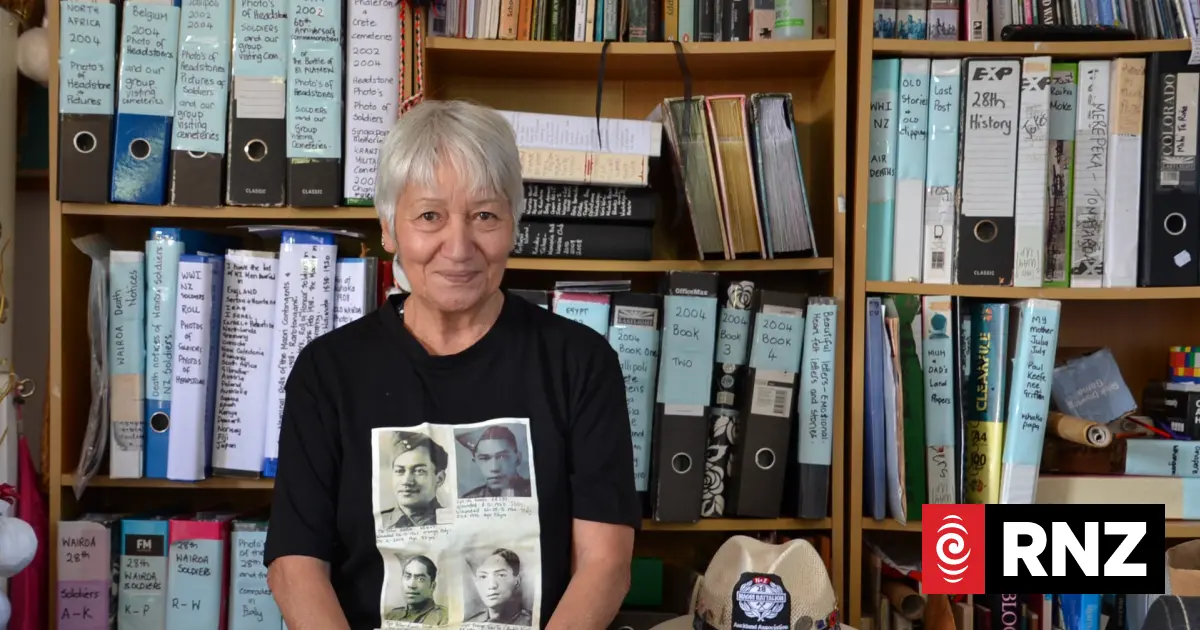
줄리아나 키프의 집 안에는 수십 년의 역사를 담은 앨범 선반들이 있다. 병사들의 사진들은 손으로 쓴 메모, 묘지 기록, 그리고 신중하게 표시된 이름들과 함께 나란히 놓여 있다. 각 페이지는 28번째 마오리 부대의 남자들, 즉 자신의 아버지 일병 존 키프를 포함한 25년 이상의 기록 작업을 반영하고 있다.
"나는 이것을 살려두고 싶다"고 키프는 말했다. "우리 가족이 알 수 있도록, 그리고 그들이 잊혀지지 않도록. 왜냐하면 그들이 없었다면 우리가 어디에 있었을까?"
어린 시절 아버지의 전쟁 경험에 대한 이해는 집으로 돌아온 흉터 하나라는 세부 사항으로 제한되어 있었다.
"우리가 어렸을 때 아버지는 셔츠를 입지 않고 밖에 나가곤 했고, 우리는 그의 흉터를 가지고 놀곤 했다"고 그녀는 말했다. "그리고 우리는 '아빠, 어디서 그런 상처를 입었어?'라고 묻곤 했고, 아버지는 '전쟁에서'라고 말씀하셨다."
1980년대 마오리 부대 재회에서야 그 의미가 무엇인지 이해하기 시작했다.
"그때부터 나는 아버지와 그의 형제들에 대해 배우기 시작했다. 그리고 나는 여러 재회에 참석하기 시작했고 많은 병사들을 만났다. 그 후로 나는 이것에 관심을 갖기 시작했다."
존 키프 일병은 크레타 전투 중 부상당한 독일군 병사를 우군 진지로 옮길 때 부상을 당했다.
아버지 존 키프는 20세의 나이에 1941년에 입대했다. 그는 파파쿠라 육군 진지에서 훈련을 받은 후 북아프리카로 배치되었으며, 여기서 연합군은 에르윈 롬멜 장군이 지휘하는 독일군을 상대로 작전을 펼쳤다.
그의 형 세 명인 위 키프, 피터 키프, 조지 타우 타(앤디) 키프도 복무했다.
"나는 그에게 왜 해외로 나갔냐고 물었다. 그는 새로운 것을 보고 경험하는 흥분 때문이라고 말했다."
그 모험심은 곧 전쟁의 현실로 바뀌었다.
"그는 총알이 벌처럼 당신을 지나가간다고 말했다"고 그녀는 말했다. "그리고 그는 '나냐 그냥 쟤냐'라고 말했다."
키프는 1995년 자신의 아버지에 관한 와이로아 스타 기사를 꺼낸다. 이 기사는 그의 복무 초기에 평생 그와 함께할 한 순간을 전한다. 한 밤의 음주로 호송대를 놓친 후, 그는 나중에 그것이 폭격당했다는 것을 알게 된다.
"날짜는 1941년 10월 23일이었다. 내가 놓친 호송대는 폭격당했고 많은 병사들이 죽었다"고 기사에서 그는 말했다. "모든 전투를 통해 나는 운이 좋았다고 할 수 있다. 나는 몇 번의 아찬 위기를 겪었다."
그의 복무는 북아프리카에서 이탈리아까지 이어졌으며, 그곳에서 그는 어려운 지형과 근접 전투에서 싸웠다. 테바가 갭에서 그는 전투에서 전사한 제2중위 테 모아나누이-아-키와 응아리무 VC의 시신을 발견했다.
"당신은 그가 살아있다고 생각할 수 있었지만, 그는 전투에서 전사했다. 그의 전체 연대는 용감한 병사들의 밴드였다"고 그는 말했다.
이탈리아의 오르소냐에서 키프는 화력 아래 강을 건너는 것과 독일 탱크와의 마주침을 포함한 최전선 전투의 강도를 경험했다.
"우리는 그들의 탱크를 상대로는 희망이 없었기 때문에 후퇴하고 재집결해야 했다"고 그는 기사에서 말했다.
줄리아나에게 이러한 세부 사항의 많은 부분은 나중에 대화와 아버지가 공유하기로 선택한 이야기를 통해 나타났다.
"그는 주로 자신의 친구들에 대해 말했다"고 그녀는 말했다. "그들이 무엇을 했는지, 어디로 갔는지에 대해 말했다."
그녀는 아버지가 와이로아 출신의 가까운 친구 존 하페타가 독일군과의 교차 사격에 걸렸다는 것에 대해 이야기하는 것을 회상한다.
"하지만 애도할 시간이 없었다. 죽이거나 죽는 것이었다. 친구들을 애도하는 것은 나중이다"고 그는 기사에서 말했다.
그가 말한 가장 중요한 순간 중 하나는 1943년 크리스마스 이브였다.
그와 몇몇 전우들은 자신들의 진지로 거의 돌아왔을 때 소름끼치는 비명을 들었다. 자신들의 사람이라고 생각하고 조사하러 갔다. 그러나 그것은 심하게 부상당한 독일군 병사였다. 그들은 그를 들것에 실어 우군 진지로 옮기고 있었을 때 박격포탄이 근처에서 폭발했다.
키프는 등에 파편을 맞아 의식을 잃었고, 나중에 이탈리아의 병원으로 옮겨진 후 1944년 3월 병원선 마웅가누이를 타고 아오테아로아로 돌아왔다.
"그는 자신이 죽음을 맞닥뜨렸다고 생각했다"고 키프는 말했다. "그는 독일군을 봤지만, 그들은 여전히 그들에게 총을 쏟았다."
전쟁 후 존 키프는 목수로 훈련받았다. 먼지가 폐에 미친 영향으로 그는 무역을 떠나 철도에 입사했으며, 와이코코푸, 마히아에서 많은 해 동안 일했다. 그는 1949년 율리아 그리핀과 결혼하여 세 딸을 낳았다.
키프는 아버지를 조용하고 근면한 사람으로 묘사한다.
"그는 매우 조용한 사람이었다. 그냥 혼자만의 세계에 머물렀다"고 그녀는 말했다. "그는 낚시를 사랑했다. 그리고 그는 우리에게 카드 놀이를 하는 방법을 가르쳐주곤 했다. 우리는 절대 그를 이길 수 없었다. 왜냐하면 그는 부정행위를 하는 방법을 알고 있었기 때문이다"고 그녀는 웃으며 말했다.
비록 인생 후반에는 공개적으로 말했지만, 어린 시절에는 그의 경험이 항상 공유되지 않았다고 그녀는 말했다.
"어머니가 1984년에 돌아가신 후에야 집에 돌아올 때마다 아버지가 이야기를 하기 시작했다"고 그녀는 말했다. "그렇게 나는 글을 쓰기 시작했다."
그 이야기들은 수십 년 동안 계속 성장해온 개인 아카이브의 기초가 되었다.
2000년 키프는 제2차 세계 대전을 통한 마오리 부대의 발자국을 따라가기 위해 이탈리아로 여행했다.
"특히 카시노에 가는 것은 매우 감정적이었다"고 그녀는 말했다.
몬테 카시노에서 그녀는 폐허가 된 수도원 아래 흰 묘비들이 줄지어 있는 곳에 섰다.
"그것들은 내가 본 것 중 가장 슬픈 광경들이었다"고 그녀는 말했다. "내가 절대 잊지 못할 경건한 광경이었다."
그 이후로 그녀는 이탈리아, 그리스, 이집트 및 부대의 복무와 관련된 기타 장소를 여러 번 여행했다. 각 여행은 그녀의 사진과 기록 수집에 추가되었다.
"내가 간 모든 묘지에서 사진을 찍었고, 남자들과 그들의 묘비의 사진을 얻으려고 노력했다"고 그녀는 말했다.
그녀의 작업은 또한 그녀를 다른 와하우, 사랑하는 사람들에 대한 답을 찾고 있는 사람들을 포함한 다른 와하우와 연결시켰다.
어떤 경우에는 이름이 묘지보다는 추모 벽에서 발견된다.
"그들이 추모 벽을 가지고 있을 때, 그것은 그들이 시신을 찾을 수 없다는 의미다"고 그녀는 말했다. "그것은 슬프다. 정말 슬프다."
집으로 돌아와서 그녀는 자신의 와하우를 포함한 귀향 군인의 삶을 기록하는 것을 계속했다.
그녀는 많은 마오리 병사들이 집으로 돌아왔을 때 직면한 혹독한 현실에 대해 이야기한다. 그들의 팍케하 상대방들이 토지와 주택을 받은 반면, 마오리는 "아무것도 받지 못했다".
"내 삼촌들... 그들은 취했고, 나는 가게에 숨어 그들이 지나갈 때까지 기다렸다"고 그녀는 말했다. "나는 무엇이 잘못되었는지 이해하지 못했다. 지금 나는 이해한다. 그들에게는 힘들었을 것이고, 도움이 없었다. 그 시대에는 그것이 없었다."
그녀는 전쟁의 영향이 전장을 넘어 돌아온 사람들의 삶으로 확장되었다고 말했다.
그녀의 아버지는 그러한 경험들을 조용히 지니고 있었고, 시간이 지남에 따라 그것들의 조각을 공유했다.
"그는 말이 적은 사람이었다"고 그녀는 말했다. "하지만 그가 말할 때는 나는 확실히 들었다. 하지만 내가 더 많이 물어볼 수 있었을 텐데... 이제는 너무 늦었다. 젊을 때는 그것을 생각하지 않는다."
그녀는 아버지와 공유한 한 순간을 회상한다. 그는 그녀의 앨범 중 하나를 들어보고 있었고 그의 친한 친구의 묘비 사진을 발견했다.
"나는 그를 올려다보았고, 그의 눈빛이 멀리를 보고 있었다. 그리고 나는 '뭐가 잘못됐어, 아빠?'라고 말했다. 그리고 그는 '정말 낭비다'라고 말했다. '우리 둘 다 북아프리카에 갔다. 이집트에 가서 이탈리아에서 죽어야 했다.'"
인생 후반에 키프는 집으로 돌아와 아버지를 돌보았다. 단기 계획으로 시작된 것은 거의 3년까지 연장되었다.
"그를 돌보는 것은 놀라웠다"고 그녀는 말했다. "그는 나에게 잘해주었다."
존 키프는 2004년 12월 31일에 사망했다.
오늘날 그의 이야기는 딸의 작업을 통해 살아있다.
그녀의 수집품은 이제 묘지, 아카이브, 와하우에서 수집한 수천 장의 사진과 문서를 포함한다.
그녀는 물자를 박물관에 기증하여 미래 세대를 위해 접근 가능하게 유지되도록 할 것을 고려하고 있다.
28번째 마오리 부대의 생존 회원이 없으므로, 그녀는 기억할 책임이 이제 와하우와 지역사회에 있다고 말했다.
"[안작은 모두] 기억, 그 모든 남자, 여자를 생각하는 것이다. 여성들도 남자들처럼 고통받았다. 남자들이 전쟁에 갔지만, 여성들은 힘든 일을 했다. 그리고 나는 가장 힘든 사람들이 동쪽 해안이라는 것을 안다. 그래서 그 모든 여성들이 강하다."
포리루아 RSA에서 그녀의 아버지와 형제들의 사진은 이제 매 안작의 날마다 전시된다.
"그것은 그곳에서 처음으로 그런 일이 일어난 것이다"고 그녀는 말했다. "나는 훌륭함을 느낀다. 나는 자랑스럽다."
키프가 건설한 아카이브는 그녀의 일곱 명의 모꼬푸나와 네 명의 증조 모꼬푸나를 위한 것이며, 앞으로 올 세대를 위한 것이다.
Ka maumahara tonu tātou ki a rātou - 우리는 그들을 기억할 것이다.
줄리아나 키프의 집 안에는 수십 년의 역사를 담은 앨범 선반들이 있다. 병사들의 사진들은 손으로 쓴 메모, 묘지 기록, 그리고 신중하게 표시된 이름들과 함께 나란히 놓여 있다. 각 페이지는 28번째 마오리 부대의 남자들, 즉 자신의 아버지 일병 존 키프를 포함한 25년 이상의 기록 작업을 반영하고 있다.
"나는 이것을 살려두고 싶다"고 키프는 말했다. "우리 가족이 알 수 있도록, 그리고 그들이 잊혀지지 않도록. 왜냐하면 그들이 없었다면 우리가 어디에 있었을까?"
어린 시절 아버지의 전쟁 경험에 대한 이해는 집으로 돌아온 흉터 하나라는 세부 사항으로 제한되어 있었다.
"우리가 어렸을 때 아버지는 셔츠를 입지 않고 밖에 나가곤 했고, 우리는 그의 흉터를 가지고 놀곤 했다"고 그녀는 말했다. "그리고 우리는 '아빠, 어디서 그런 상처를 입었어?'라고 묻곤 했고, 아버지는 '전쟁에서'라고 말씀하셨다."
1980년대 마오리 부대 재회에서야 그 의미가 무엇인지 이해하기 시작했다.
"그때부터 나는 아버지와 그의 형제들에 대해 배우기 시작했다. 그리고 나는 여러 재회에 참석하기 시작했고 많은 병사들을 만났다. 그 후로 나는 이것에 관심을 갖기 시작했다."
존 키프 일병은 크레타 전투 중 부상당한 독일군 병사를 우군 진지로 옮길 때 부상을 당했다.
아버지 존 키프는 20세의 나이에 1941년에 입대했다. 그는 파파쿠라 육군 진지에서 훈련을 받은 후 북아프리카로 배치되었으며, 여기서 연합군은 에르윈 롬멜 장군이 지휘하는 독일군을 상대로 작전을 펼쳤다.
그의 형 세 명인 위 키프, 피터 키프, 조지 타우 타(앤디) 키프도 복무했다.
"나는 그에게 왜 해외로 나갔냐고 물었다. 그는 새로운 것을 보고 경험하는 흥분 때문이라고 말했다."
그 모험심은 곧 전쟁의 현실로 바뀌었다.
"그는 총알이 벌처럼 당신을 지나가간다고 말했다"고 그녀는 말했다. "그리고 그는 '나냐 그냥 쟤냐'라고 말했다."
키프는 1995년 자신의 아버지에 관한 와이로아 스타 기사를 꺼낸다. 이 기사는 그의 복무 초기에 평생 그와 함께할 한 순간을 전한다. 한 밤의 음주로 호송대를 놓친 후, 그는 나중에 그것이 폭격당했다는 것을 알게 된다.
"날짜는 1941년 10월 23일이었다. 내가 놓친 호송대는 폭격당했고 많은 병사들이 죽었다"고 기사에서 그는 말했다. "모든 전투를 통해 나는 운이 좋았다고 할 수 있다. 나는 몇 번의 아찬 위기를 겪었다."
그의 복무는 북아프리카에서 이탈리아까지 이어졌으며, 그곳에서 그는 어려운 지형과 근접 전투에서 싸웠다. 테바가 갭에서 그는 전투에서 전사한 제2중위 테 모아나누이-아-키와 응아리무 VC의 시신을 발견했다.
"당신은 그가 살아있다고 생각할 수 있었지만, 그는 전투에서 전사했다. 그의 전체 연대는 용감한 병사들의 밴드였다"고 그는 말했다.
이탈리아의 오르소냐에서 키프는 화력 아래 강을 건너는 것과 독일 탱크와의 마주침을 포함한 최전선 전투의 강도를 경험했다.
"우리는 그들의 탱크를 상대로는 희망이 없었기 때문에 후퇴하고 재집결해야 했다"고 그는 기사에서 말했다.
줄리아나에게 이러한 세부 사항의 많은 부분은 나중에 대화와 아버지가 공유하기로 선택한 이야기를 통해 나타났다.
"그는 주로 자신의 친구들에 대해 말했다"고 그녀는 말했다. "그들이 무엇을 했는지, 어디로 갔는지에 대해 말했다."
그녀는 아버지가 와이로아 출신의 가까운 친구 존 하페타가 독일군과의 교차 사격에 걸렸다는 것에 대해 이야기하는 것을 회상한다.
"하지만 애도할 시간이 없었다. 죽이거나 죽는 것이었다. 친구들을 애도하는 것은 나중이다"고 그는 기사에서 말했다.
그가 말한 가장 중요한 순간 중 하나는 1943년 크리스마스 이브였다.
그와 몇몇 전우들은 자신들의 진지로 거의 돌아왔을 때 소름끼치는 비명을 들었다. 자신들의 사람이라고 생각하고 조사하러 갔다. 그러나 그것은 심하게 부상당한 독일군 병사였다. 그들은 그를 들것에 실어 우군 진지로 옮기고 있었을 때 박격포탄이 근처에서 폭발했다.
키프는 등에 파편을 맞아 의식을 잃었고, 나중에 이탈리아의 병원으로 옮겨진 후 1944년 3월 병원선 마웅가누이를 타고 아오테아로아로 돌아왔다.
"그는 자신이 죽음을 맞닥뜨렸다고 생각했다"고 키프는 말했다. "그는 독일군을 봤지만, 그들은 여전히 그들에게 총을 쏟았다."
전쟁 후 존 키프는 목수로 훈련받았다. 먼지가 폐에 미친 영향으로 그는 무역을 떠나 철도에 입사했으며, 와이코코푸, 마히아에서 많은 해 동안 일했다. 그는 1949년 율리아 그리핀과 결혼하여 세 딸을 낳았다.
키프는 아버지를 조용하고 근면한 사람으로 묘사한다.
"그는 매우 조용한 사람이었다. 그냥 혼자만의 세계에 머물렀다"고 그녀는 말했다. "그는 낚시를 사랑했다. 그리고 그는 우리에게 카드 놀이를 하는 방법을 가르쳐주곤 했다. 우리는 절대 그를 이길 수 없었다. 왜냐하면 그는 부정행위를 하는 방법을 알고 있었기 때문이다"고 그녀는 웃으며 말했다.
비록 인생 후반에는 공개적으로 말했지만, 어린 시절에는 그의 경험이 항상 공유되지 않았다고 그녀는 말했다.
"어머니가 1984년에 돌아가신 후에야 집에 돌아올 때마다 아버지가 이야기를 하기 시작했다"고 그녀는 말했다. "그렇게 나는 글을 쓰기 시작했다."
그 이야기들은 수십 년 동안 계속 성장해온 개인 아카이브의 기초가 되었다.
2000년 키프는 제2차 세계 대전을 통한 마오리 부대의 발자국을 따라가기 위해 이탈리아로 여행했다.
"특히 카시노에 가는 것은 매우 감정적이었다"고 그녀는 말했다.
몬테 카시노에서 그녀는 폐허가 된 수도원 아래 흰 묘비들이 줄지어 있는 곳에 섰다.
"그것들은 내가 본 것 중 가장 슬픈 광경들이었다"고 그녀는 말했다. "내가 절대 잊지 못할 경건한 광경이었다."
그 이후로 그녀는 이탈리아, 그리스, 이집트 및 부대의 복무와 관련된 기타 장소를 여러 번 여행했다. 각 여행은 그녀의 사진과 기록 수집에 추가되었다.
"내가 간 모든 묘지에서 사진을 찍었고, 남자들과 그들의 묘비의 사진을 얻으려고 노력했다"고 그녀는 말했다.
그녀의 작업은 또한 그녀를 다른 와하우, 사랑하는 사람들에 대한 답을 찾고 있는 사람들을 포함한 다른 와하우와 연결시켰다.
어떤 경우에는 이름이 묘지보다는 추모 벽에서 발견된다.
"그들이 추모 벽을 가지고 있을 때, 그것은 그들이 시신을 찾을 수 없다는 의미다"고 그녀는 말했다. "그것은 슬프다. 정말 슬프다."
집으로 돌아와서 그녀는 자신의 와하우를 포함한 귀향 군인의 삶을 기록하는 것을 계속했다.
그녀는 많은 마오리 병사들이 집으로 돌아왔을 때 직면한 혹독한 현실에 대해 이야기한다. 그들의 팍케하 상대방들이 토지와 주택을 받은 반면, 마오리는 "아무것도 받지 못했다".
"내 삼촌들... 그들은 취했고, 나는 가게에 숨어 그들이 지나갈 때까지 기다렸다"고 그녀는 말했다. "나는 무엇이 잘못되었는지 이해하지 못했다. 지금 나는 이해한다. 그들에게는 힘들었을 것이고, 도움이 없었다. 그 시대에는 그것이 없었다."
그녀는 전쟁의 영향이 전장을 넘어 돌아온 사람들의 삶으로 확장되었다고 말했다.
그녀의 아버지는 그러한 경험들을 조용히 지니고 있었고, 시간이 지남에 따라 그것들의 조각을 공유했다.
"그는 말이 적은 사람이었다"고 그녀는 말했다. "하지만 그가 말할 때는 나는 확실히 들었다. 하지만 내가 더 많이 물어볼 수 있었을 텐데... 이제는 너무 늦었다. 젊을 때는 그것을 생각하지 않는다."
그녀는 아버지와 공유한 한 순간을 회상한다. 그는 그녀의 앨범 중 하나를 들어보고 있었고 그의 친한 친구의 묘비 사진을 발견했다.
"나는 그를 올려다보았고, 그의 눈빛이 멀리를 보고 있었다. 그리고 나는 '뭐가 잘못됐어, 아빠?'라고 말했다. 그리고 그는 '정말 낭비다'라고 말했다. '우리 둘 다 북아프리카에 갔다. 이집트에 가서 이탈리아에서 죽어야 했다.'"
인생 후반에 키프는 집으로 돌아와 아버지를 돌보았다. 단기 계획으로 시작된 것은 거의 3년까지 연장되었다.
"그를 돌보는 것은 놀라웠다"고 그녀는 말했다. "그는 나에게 잘해주었다."
존 키프는 2004년 12월 31일에 사망했다.
오늘날 그의 이야기는 딸의 작업을 통해 살아있다.
그녀의 수집품은 이제 묘지, 아카이브, 와하우에서 수집한 수천 장의 사진과 문서를 포함한다.
그녀는 물자를 박물관에 기증하여 미래 세대를 위해 접근 가능하게 유지되도록 할 것을 고려하고 있다.
28번째 마오리 부대의 생존 회원이 없으므로, 그녀는 기억할 책임이 이제 와하우와 지역사회에 있다고 말했다.
"[안작은 모두] 기억, 그 모든 남자, 여자를 생각하는 것이다. 여성들도 남자들처럼 고통받았다. 남자들이 전쟁에 갔지만, 여성들은 힘든 일을 했다. 그리고 나는 가장 힘든 사람들이 동쪽 해안이라는 것을 안다. 그래서 그 모든 여성들이 강하다."
포리루아 RSA에서 그녀의 아버지와 형제들의 사진은 이제 매 안작의 날마다 전시된다.
"그것은 그곳에서 처음으로 그런 일이 일어난 것이다"고 그녀는 말했다. "나는 훌륭함을 느낀다. 나는 자랑스럽다."
키프가 건설한 아카이브는 그녀의 일곱 명의 모꼬푸나와 네 명의 증조 모꼬푸나를 위한 것이며, 앞으로 올 세대를 위한 것이다.
Ka maumahara tonu tātou ki a rātou - 우리는 그들을 기억할 것이다.
처리 완료
8,202 tokens · $0.0235
기사 수집 완료 · 02:46
매체 피드에서 기사 메타데이터 수집
헤드라인 번역 완료 · 02:52
제목/요약 한국어 번역 (fetch 시점 inline)
claude-haiku-4-5-20251001
227 tokens
$0.00059
2.0s
본문 추출 완료
9,407자 추출 완료
본문 한국어 번역 완료 · 02:52
4,684자 번역 완료
claude-haiku-4-5-20251001
7,975 tokens
$0.02292
52.3s
지정학적 엔티티 추출 완료 · 02:52
8개 엔티티 추출 완료
지정학적 맥락 & R-Scanner
R-Scanner · 평상
z=0.19
일상적인 보도 수준 — 기준: New Zealand
(🇳🇿 NZ)
최근 6시간 9건
7일 평균 8.43건 / 6h
2개국 매체
3개 매체
본문에서 추출된 지명 (8)
위치 지도
지도 로딩 중…
같은 주제의 다른 기사 (최근 7일)
Juliana Keefe has spent over 25 years documenting her father and fellow soldiers, determined their stories are not lost.
Juliana Keefe has spent more than 25 years preserving the legacy of the 28th Māori Battalion, ensuring the stories of her father, his three brothers and fellow soldiers are not lost.Photo: RNZ / Layla Bailey-McDowell
This story is part of a series sharing the voices of whānau of the 28th Māori Battalion, keeping their memories alive.
Inside Juliana Keefe's home, shelves of albums hold decades of history.
Photographs of soldiers sit alongside handwritten notes, cemetery records, and carefully labelled names. Each page reflects more than 25 years of work documenting men of the 28th Māori Battalion - including her father, Private John Keefe.
"I want to keep it alive," Keefe said.
"So my family know, and they can't be forgotten. Because if it wasn't for them, where would we be?"
As a child, her understanding of her father's wartime experience was limited to a single detail, the scar he carried home.
"When we were little kids, he used to go outside with no shirt on, and we used to play with his scar," she said.
"And we used to say, 'where did you get this, Dad?' And he would say 'war'."
It was not until decades later, at a Māori Battalion reunion in the 1980s, that she began to understand what that meant.
"That's when I started learning about him and his brothers … and then I started going to several reunions and meeting lots of soldiers. After that, I got interested in it."
Private John Keefe was injured during the Battle of Crete while carrying a wounded German soldier to friendly lines.
Photo: Supplied / Juliana Keefe
Her father John Keefe enlisted in 1941 at the age of 20. He trained at Papakura Army Camp before being deployed to North Africa, where Allied forces engaged in campaigns against German troops led by General Erwin Rommel.
Three of his brothers, Wi Keefe, Peter Keefe, and George Tau Ta (Andy) Keefe, also served.
"I asked him, why did you go overseas? He said, it was the excitement of going and seeing something new."
That sense of adventure soon gave way to the realities of war.
"He said the bullets were like bees flying past you," she said.
"And he said, 'it was either me or him'."
Keefe pulls out a Wairoa Star article from 1995 about her father. It recounts one moment early in his service that would stay with him forever. After missing a convoy due to a night of drinking, he later learned it had been bombed.
"I remember the date was October 23, 1941, the convoy I missed was bombed and many soldiers were killed," he said in the article.
"All through the battles you could say I was pretty lucky, I had some very close shaves."
His service took him from North Africa to Italy, where he fought in difficult terrain and close combat. At Tebaga Gap, he came across the body of Second Lieutenant Te Moananui-a-Kiwa Ngārimu VC, who had been killed in action.
"You could have sworn he was alive, but he had been killed in action. His whole regiment were a band of courageous soldiers," he said.
In Italy, at Orsogna, Keefe experienced the intensity of frontline combat, including river crossings under fire and encounters with German tanks.
"We had to back-track and re-group as we didn't have a hope against their tanks," he said in the article.
Juliana Keefe says preserving these histories is important, because "if it wasn’t for them, where would we be?”
Photo: RNZ / Layla Bailey-McDowell
For Juliana, many of these details came later, through conversations and the stories her father chose to share.
"He mainly talked about his mates," she said.
"He talked about what they did and where they went."
She recalls her father telling her about losing one of his close friends from Wairoa, John Hapeta, who was caught in a cross-fire with the Germans.
"But you never had time to mourn, it was kill or be killed, mourning for mates comes later," he said in the article.
One of the most significant moments he spoke about was Christmas Eve, 1943.
He and a few of his comrades were nearly back at their line when they heard a horrifying scream. Thinking it was one of their own, they went to investigate. However, it was a German soldier who was badly wounded. They loaded him onto a stretcher and were carrying him to friendly lines when a mortar shell exploded nearby.
Keefe was struck by shrapnel in the back and knocked unconscious, before being transported to a hospital in Italy and later returned to Aotearoa aboard the hospital ship Maunganui in March 1944.
"He thought he had met his maker," Keefe said.
"He saw them, he saw the Germans, but they still fired on them."
After the war, John Keefe trained as a joiner. The impact of dust on his lungs led him to leave the trade and join the railways, where he worked for many years in Waikōkopu, Māhia. He married Julia Griffin in 1949 and raised three daughters.
Keefe describes her father as a quiet and hardworking man.
"He was a very quiet man … just kept to himself," she said.
"He loved fishing … and he used to teach us how to play cards. We could never beat him, because he knew how to cheat," she laughed.
Although he spoke openly later in life, she said his experiences were not always shared during her childhood.
"It wasn't until Mum passed in 1984 that every time I'd go back, he'd start telling me stories," she said.
"That's how I started writing."
For more than 25 years, Juliana Keefe has been compiling the history of the 28th Māori Battalion, including records of her father, John Keefe and his three brothers.
Photo: RNZ / Layla Bailey-McDowell
Those stories became the foundation of a personal archive that has continued to grow over decades.
In 2000, Keefe travelled to Italy to retrace the footsteps of the Māori Battalion through the Second World War.
"It was very emotional, especially going to Cassino," she said.
At Monte Cassino, she stood among rows of white headstones beneath the ruined abbey.
"Those were some of the saddest sights that I've ever seen," she said. "It was a sobering sight that I will never forget."
Since then, she has travelled multiple times to Italy, Greece, Egypt and other locations connected to the Battalion's service. Each trip has added to her collection of photographs and records.
"Every cemetery I've gone to, I've done pictures, and I've tried to get photos of the men and their headstones," she said.
Her work has also connected her with other whānau, including those still searching for answers about loved ones.
In some cases, names are found on memorial walls rather than graves.
"When they have memorial walls, that means they can't find the bodies," she said.
"It's sad … really sad."
- any way we can have this along the side?
Photo: RNZ / Layla Bailey-McDowell
Back home, she continued documenting the lives of returned servicemen, including members of her own whānau.
She speaks about the harsh realities many Māori soldiers faced when they returned home. While their Pākehā counterparts were given land and homes, Māori "got nothing".
"My uncles ...They'd be drunk, and I'd hide in the shop till they went past," she said.
"I didn't understand what was wrong ... now I understand. It would have been hard for them, and there was no help for them. They didn't have it in those times."
She said the effects of war extended beyond the battlefield and into the lives of those who returned.
Her father carried those experiences quietly, sharing pieces of them over time.
"He was a man of few words," she said.
"But when he did talk, well, I certainly listened. But I could have asked more ... but it's too late. You don't think about that when you're young."
She recounts a moment shared with her father. He was looking through one of her albums and came across a photo of one of his dear friends headstone.
"I looked up at him, and he had this faraway look in his eye. And I said, what's wrong, Dad? And he said, what a waste.
"We both went to North Africa. We went to Egypt, and had to go and get killed in Italy."
Juliana Keefe says her father "was a man of few words… but when he did talk, I listened.”
Photo: Supplied / Juliana Keefe
In his later years, Keefe returned home to care for him. What began as a short-term plan extended to nearly three years.
"It was amazing looking after him," she said.
"He was good to me."
John Keefe passed away on 31 December, 2004.
Today, his story lives on through his daughter's work.
Her collection now includes thousands of photographs and documents, gathered from cemeteries, archives and whānau.
She is considering donating the material to a museum to ensure it remains accessible for future generations.
With no surviving members of the 28th Māori Battalion, she said the responsibility to remember now sits with whānau and communities.
"[Anzac is all about] memories, thinking about all those men, women. You know, the women suffered just as well as the men. The men might have gone to war, but the women had a hard job. And I know the people who had the hardest was the East Coast, that's why all those women are strong."
At the Porirua RSA, photographs of her father and his brothers are now displayed each Anzac Day.
"That's the first time something like that has happened there," she said.
"I feel brilliant. I feel proud."
The archive Keefe has built is for her seven mokopuna and four great mokopuna, and for the generations that follow.
Ka maumahara tonu tātou ki a rātou - we will remember them.