네안데르탈인들이 코끼리를 사냥할 수 있었는가? 증거는 고대 뼈에 있다
Were Neanderthals Able to Hunt Elephants? The Proof Is in an Ancient Bone
The New York Times
· 🇺🇸 New York, US
Franz Lidz
EN
2026-04-25 03:42
Translated
새로운 연구에 따르면 수십 년간 중요하지 않은 것으로 간주되어온 포유류 골격이 신중한 계획, 팀워크, 그리고 계산된 사냥의 증거를 제공한다.
1948년 독일의 고대 호수 바닥에서 목재 창에 찔린 125,000년 된 코끼리 골격이 발견되었을 때, 당시 유럽에 거주했던 네안데르탈인들은 그렇게 거대한 거대동물을 사냥할 만큼 정교하지 못했다고 가정되었다.
회의론자들은 레링겐 호수 바닥에서 뼈와 함께 발견된 창이 아마도 인간의 손이 아닌 지질학적 우연에 의해 배치되었을 것이라고 주장했다. 그리고 그 다음 78년 동안 그 유해는 획기적인 발견보다는 호기심의 대상으로 취급되었다.
그러나 지난달 학술지 네이처에 발표된 증거의 재평가는 다른 이야기를 말해준다. 골격에는 뚜렷한 도구 자국이 있으며, 계획된 사냥의 명백한 흔적이다.
새로운 논문은 소위 레링겐 코끼리를 연구한 원래의 연구자들이 표본에서 분해의 모든 흔적이 지워졌다는 결함 있는 가정으로 작업했다고 제안한다. 독일 하노버의 저지색스 주(州) 문화유산청의 동물고고학자이자 논문의 주저자인 이보 페르하이젠은 "아무도 진정으로 찾지 않았기 때문에 아무도 아무것도 발견하지 못했다"고 말하며, 과학적 간과의 전형적인 사례라고 했다.
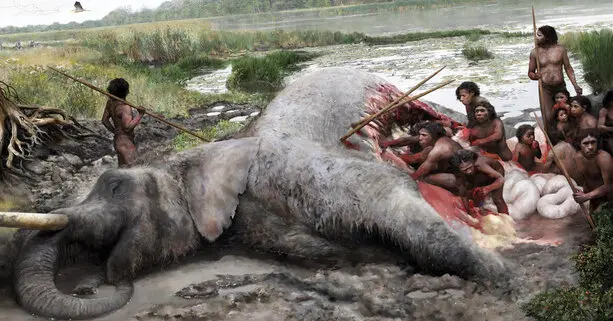
당시 최대 육상동물이었던 거대한 곧은 엄니 코끼리를 사냥한 것은 네안데르탈인들이 단순하고 기회주의적인 폭력배에서 멀리 떨어져 있었다는 증거를 제공한다. 이 발견들은 이 초기 인류가 호모 사피엔스가 유럽에 도착하기 75,000년 전에 조직된 팀워크를 사용하여 대형 게임을 사냥했음을 보여준다.
같은 저지색스 주 문화유산청의 고고학자이자 이 프로젝트의 공동 연구자인 토마스 터버거는 증거가 네안데르탈인을 이해하는 데 있어 "중요한 구성 요소"를 강조한다고 말했다. 이는 그들이 현대 인류에게만 고유한 것으로 여겨졌던 신중한 계획과 풍경에 대한 깊은 지식을 가지고 있었음을 보여준다.
수십 년 전의 사체 발굴은 처음부터 엉망이었으며, 과학자들이 아닌 지역 광부들이 퇴적층을 파헤친 후 지역 학교장 출신의 아마추어 고고학자가 혼란스러운 현장에 나타났다.
광부들에 의해 주머니에 들어간 뼈들과 사진 기록이 없는 가운데, 그 발견은 유물의 권리를 놓고 7년간의 심한 소송에 의해 효과적으로 다시 매장되었다. 인접한 페르덴의 작은 박물관 다락방에 골판지 상자 속에 잊혀진 채 유해(또는 적어도 유해의 유해)는 먼지를 쌓아가며 놓여있었다.
결국 지난해 페르하이젠이 방치된 상자들을 자세히 살펴보면서 획기적인 발견이 일어났다. 그는 코끼리가 고대 사냥꾼들에 의해 체계적으로 해체된 흔적을 보였음을 빠르게 깨달았다. 페르하이젠은 "일부 절단 자국은 의심의 여지가 없었다"고 말하며, 그러한 명백한 플라이스토세 시대 잔치의 증거가 눈에 띄지 않았다는 것에 대해 불신을 표현했다.
그의 조사는 코끼리가 30대 수컷이었으며, 어깨에서 아마도 13피트 높이였음을 나타냈다. 이 외로운 수컷이 암컷이 아닌 목표로 선택된 이유는 아마도 더 안전하고 고립된 먹이 선택지를 제공했기 때문이었을 것이다.
동물의 갈비뼈 사이에 끼인 8피트 길이의 주목나무 창은 높은 위험의 근거리 전투 장면을 연상시켰다고 페르하이젠은 말했다. 거리를 위해 고안된 가벼운 자바린과 달리, 이 무기의 특정한 무게중심은 그것이 막대한 힘으로 쥐고 관통하도록 설계되었음을 암시했다.
터버거 박사는 네안데르탈인들이 주변부의 안전에서 사냥하지 않았지만 대신 그들의 거대한 먹이와의 대담한 대면에 참여했다고 추론했다. 그는 추적자들이 상처 입은 코끼리를 호수로 추격하는 시나리오를 상상했으며, 그곳에서 그 동물의 붕괴가 창을 땅에 고정시켰다. 그의 재구성에서, 그 장소는 분주한 고기 가공 중심지가 되었다.
사체의 절단 자국, 특히 흉강 내부는 네안데르탈인들이 의도적인 해부학적 분해를 수행했음을 보여주었다. 정확하고 패턴화된 절개 자국들은 내부 장기와 고가치 조직의 체계적인 추출을 나타내며, 무작위적이거나 자연스럽기에는 너무 일치한다. 통제되고 노동 집약적인 노력을 가리키는 이러한 결론들은 우리의 가장 가까운 친척들이 전략적 선견지명을 가지고 있었으며 가장 큰 게임을 다룰 수 있는 더 큰 사회 집단에서 살았을 수 있음을 시사한다.
레링겐 호수 바닥에서 발굴된 수십 개의 날카로운 부싯돌 조각들은 분해된 곰, 비버, 야생소의 유해와 함께 정교한 집단적 노력을 가리킨다. 사냥꾼들은 약 7,700파운드의 고기, 지방, 장기를 수확했으며, 보존되면 이 수확량은 한 시즌 동안 작은 공동체를 먹일 수 있었을 것이다.
이 연구에 참여하지 않은 네바다 주립대학교 리노 캠퍼스의 명예 인류학 교수인 게리 헤인스는 이 발견들을 주요 유적지에 대한 중요한 재평가로 본다고 말했다. "그것은 네안데르탈인들, 한때 무거운 야만인으로 생각되며 큰 포유류 사체의 청소부질로 사는 인간 종족에 대한 상당한 새로운 지식을 제공한다"고 그는 말했다.
네이처 연구는 초기 인류가 생존을 보장하기 위해 기울인 창의적인 방법을 보여주는 eLife와 사이언스의 새로운 연구와 일치한다. 증거는 180만 년 전부터 125,000년 전까지 호미닌들이 전략적으로 코끼리를 활용했으며, 고칼로리 식단을 위해 대규모 집단 협력을 활용했음을 보여준다. eLife 연구에서 연구자들은 호모 에렉투스의 탄자니아 올두바이 협곡에서의 분해가 코끼리와 같은 거대동물의 거대하고 신뢰할 수 있는 고영양 에너지 원(고기와 지방)을 제공함으로써 뇌 발달을 촉진했다고 주장한다. 사이언스 논문은 화석화된 어금니의 에나멜의 동위원소 서명을 여행 일지로 사용하여 독일의 네안데르탈인들이 외로운 수컷 코끼리의 장거리 이동을 추적했음을 보여준다.
125,000년 전에 만들어진 날카롭고 의도적인 도구 자국을 보는 것은 연구자들이 인류의 선사시대 조상들을 다시 구성하고 그들의 삶에 대한 이해를 심화하는 것을 가능하게 했다. 단 하나의 코끼리 뼈에서 나온 나쁘지 않은 수확이다.
회의론자들은 레링겐 호수 바닥에서 뼈와 함께 발견된 창이 아마도 인간의 손이 아닌 지질학적 우연에 의해 배치되었을 것이라고 주장했다. 그리고 그 다음 78년 동안 그 유해는 획기적인 발견보다는 호기심의 대상으로 취급되었다.
그러나 지난달 학술지 네이처에 발표된 증거의 재평가는 다른 이야기를 말해준다. 골격에는 뚜렷한 도구 자국이 있으며, 계획된 사냥의 명백한 흔적이다.
새로운 논문은 소위 레링겐 코끼리를 연구한 원래의 연구자들이 표본에서 분해의 모든 흔적이 지워졌다는 결함 있는 가정으로 작업했다고 제안한다. 독일 하노버의 저지색스 주(州) 문화유산청의 동물고고학자이자 논문의 주저자인 이보 페르하이젠은 "아무도 진정으로 찾지 않았기 때문에 아무도 아무것도 발견하지 못했다"고 말하며, 과학적 간과의 전형적인 사례라고 했다.
당시 최대 육상동물이었던 거대한 곧은 엄니 코끼리를 사냥한 것은 네안데르탈인들이 단순하고 기회주의적인 폭력배에서 멀리 떨어져 있었다는 증거를 제공한다. 이 발견들은 이 초기 인류가 호모 사피엔스가 유럽에 도착하기 75,000년 전에 조직된 팀워크를 사용하여 대형 게임을 사냥했음을 보여준다.
같은 저지색스 주 문화유산청의 고고학자이자 이 프로젝트의 공동 연구자인 토마스 터버거는 증거가 네안데르탈인을 이해하는 데 있어 "중요한 구성 요소"를 강조한다고 말했다. 이는 그들이 현대 인류에게만 고유한 것으로 여겨졌던 신중한 계획과 풍경에 대한 깊은 지식을 가지고 있었음을 보여준다.
수십 년 전의 사체 발굴은 처음부터 엉망이었으며, 과학자들이 아닌 지역 광부들이 퇴적층을 파헤친 후 지역 학교장 출신의 아마추어 고고학자가 혼란스러운 현장에 나타났다.
광부들에 의해 주머니에 들어간 뼈들과 사진 기록이 없는 가운데, 그 발견은 유물의 권리를 놓고 7년간의 심한 소송에 의해 효과적으로 다시 매장되었다. 인접한 페르덴의 작은 박물관 다락방에 골판지 상자 속에 잊혀진 채 유해(또는 적어도 유해의 유해)는 먼지를 쌓아가며 놓여있었다.
결국 지난해 페르하이젠이 방치된 상자들을 자세히 살펴보면서 획기적인 발견이 일어났다. 그는 코끼리가 고대 사냥꾼들에 의해 체계적으로 해체된 흔적을 보였음을 빠르게 깨달았다. 페르하이젠은 "일부 절단 자국은 의심의 여지가 없었다"고 말하며, 그러한 명백한 플라이스토세 시대 잔치의 증거가 눈에 띄지 않았다는 것에 대해 불신을 표현했다.
그의 조사는 코끼리가 30대 수컷이었으며, 어깨에서 아마도 13피트 높이였음을 나타냈다. 이 외로운 수컷이 암컷이 아닌 목표로 선택된 이유는 아마도 더 안전하고 고립된 먹이 선택지를 제공했기 때문이었을 것이다.
동물의 갈비뼈 사이에 끼인 8피트 길이의 주목나무 창은 높은 위험의 근거리 전투 장면을 연상시켰다고 페르하이젠은 말했다. 거리를 위해 고안된 가벼운 자바린과 달리, 이 무기의 특정한 무게중심은 그것이 막대한 힘으로 쥐고 관통하도록 설계되었음을 암시했다.
터버거 박사는 네안데르탈인들이 주변부의 안전에서 사냥하지 않았지만 대신 그들의 거대한 먹이와의 대담한 대면에 참여했다고 추론했다. 그는 추적자들이 상처 입은 코끼리를 호수로 추격하는 시나리오를 상상했으며, 그곳에서 그 동물의 붕괴가 창을 땅에 고정시켰다. 그의 재구성에서, 그 장소는 분주한 고기 가공 중심지가 되었다.
사체의 절단 자국, 특히 흉강 내부는 네안데르탈인들이 의도적인 해부학적 분해를 수행했음을 보여주었다. 정확하고 패턴화된 절개 자국들은 내부 장기와 고가치 조직의 체계적인 추출을 나타내며, 무작위적이거나 자연스럽기에는 너무 일치한다. 통제되고 노동 집약적인 노력을 가리키는 이러한 결론들은 우리의 가장 가까운 친척들이 전략적 선견지명을 가지고 있었으며 가장 큰 게임을 다룰 수 있는 더 큰 사회 집단에서 살았을 수 있음을 시사한다.
레링겐 호수 바닥에서 발굴된 수십 개의 날카로운 부싯돌 조각들은 분해된 곰, 비버, 야생소의 유해와 함께 정교한 집단적 노력을 가리킨다. 사냥꾼들은 약 7,700파운드의 고기, 지방, 장기를 수확했으며, 보존되면 이 수확량은 한 시즌 동안 작은 공동체를 먹일 수 있었을 것이다.
이 연구에 참여하지 않은 네바다 주립대학교 리노 캠퍼스의 명예 인류학 교수인 게리 헤인스는 이 발견들을 주요 유적지에 대한 중요한 재평가로 본다고 말했다. "그것은 네안데르탈인들, 한때 무거운 야만인으로 생각되며 큰 포유류 사체의 청소부질로 사는 인간 종족에 대한 상당한 새로운 지식을 제공한다"고 그는 말했다.
네이처 연구는 초기 인류가 생존을 보장하기 위해 기울인 창의적인 방법을 보여주는 eLife와 사이언스의 새로운 연구와 일치한다. 증거는 180만 년 전부터 125,000년 전까지 호미닌들이 전략적으로 코끼리를 활용했으며, 고칼로리 식단을 위해 대규모 집단 협력을 활용했음을 보여준다. eLife 연구에서 연구자들은 호모 에렉투스의 탄자니아 올두바이 협곡에서의 분해가 코끼리와 같은 거대동물의 거대하고 신뢰할 수 있는 고영양 에너지 원(고기와 지방)을 제공함으로써 뇌 발달을 촉진했다고 주장한다. 사이언스 논문은 화석화된 어금니의 에나멜의 동위원소 서명을 여행 일지로 사용하여 독일의 네안데르탈인들이 외로운 수컷 코끼리의 장거리 이동을 추적했음을 보여준다.
125,000년 전에 만들어진 날카롭고 의도적인 도구 자국을 보는 것은 연구자들이 인류의 선사시대 조상들을 다시 구성하고 그들의 삶에 대한 이해를 심화하는 것을 가능하게 했다. 단 하나의 코끼리 뼈에서 나온 나쁘지 않은 수확이다.
처리 완료
5,303 tokens · $0.0152
기사 수집 완료 · 04:55
매체 피드에서 기사 메타데이터 수집
헤드라인 번역 완료 · 05:06
제목/요약 한국어 번역 (fetch 시점 inline)
claude-haiku-4-5-20251001
251 tokens
$0.00066
1.8s
본문 추출 완료
5,868자 추출 완료
본문 한국어 번역 완료 · 05:06
2,808자 번역 완료
claude-haiku-4-5-20251001
5,052 tokens
$0.01456
35.3s
지정학적 엔티티 추출 완료 · 05:06
8개 엔티티 추출 완료
지정학적 맥락 & R-Scanner
R-Scanner · 평상
z=-0.94
일상적인 보도 수준 — 기준: Germany
(🇩🇪 DE)
최근 6시간 6건
7일 평균 8.96건 / 6h
5개국 매체
5개 매체
본문에서 추출된 지명 (8)
위치 지도
지도 로딩 중…
같은 주제의 다른 기사 (최근 7일)
A new study found that a pachyderm skeleton, dismissed for decades as unimportant, offers evidence of careful planning, teamwork and a calculated kill.
When a 125,000-year-old elephant skeleton, pierced by a wooden spear, was discovered in an ancient lake bed in Germany in 1948, it was assumed that the Neanderthals who inhabited Europe at that time were not sophisticated enough to hunt such massive megafauna.Skeptics argued that the spear found with the bones in the Lehringen lake bed had probably been placed there by geological chance rather than human hands. And for the next 78 years, the remains were treated more as a curiosity than a breakthrough.
But a reassessment of the evidence, published last month in the journal Nature, tells a different story: The skeleton bears distinct tool marks, the unmistakable signs of a calculated kill.
The new paper proposes that the original researchers who studied the so-called Lehringen elephant operated on the flawed assumption that any sign of butchery had been erased from the specimen. It was a classic case of scientific oversight, said Ivo Verheijen, a zooarchaeologist at the Lower Saxony State Office for Cultural Heritage in Hanover, Germany, and the lead author of the paper, adding, “Nobody found anything because nobody was truly looking.”
The taking down of a massive, straight-tusked elephant — the largest land mammal of its time — offers proof that Neanderthals were far from simple, opportunistic thugs. The findings show that these early humans used coordinated teamwork to hunt big game 75,000 years before Homo sapiens arrived in Europe.
Thomas Terberger, an archaeologist, also at the Lower Saxony state office, who collaborated on the project, said the evidence highlights a “crucial building block” in understanding Neanderthals. It shows they must have had the careful planning and profound knowledge of a landscape once thought unique to modern humans.
The excavation of the carcass decades ago was a mess from the start, beginning not with scientists but with local miners hacking away at layers of sediment, before a local school-principal-turned-amateur-archaeologist appeared at the chaotic scene.
With bones pocketed by workers and no photographic records, the find was effectively reburied by seven years of bitter litigation over the rights to the relic. Forgotten in cardboard boxes within the attic of a tiny museum in neighboring Verden, the remains — or at least the remains of the remains — sat gathering dust.
The breakthrough finally came last year when Mr. Verheijen took a closer look at the neglected crates. He quickly realized that the elephant showed signs of having been systematically dismantled by the ancient hunters. “Some of the cut marks were unmistakable,” Mr. Verheijen said, expressing disbelief that such obvious proof of a Pleistocene-epoch feast had gone unnoticed.
His investigation indicated that the elephant was a 30-something male, standing perhaps 13 feet tall at the shoulders. This solitary bull, rather than a female in the herd, was probably targeted because it offered a safer, more isolated prey option.
An eight-foot yew spear lodged between the creature’s ribs conjured a scene of high-stakes, close-quarters combat, Mr. Verheijen said. Unlike a light javelin meant for distance, the weapon’s specific balance point implied that it had been designed to be gripped and driven home with immense force.
Dr. Terberger inferred that Neanderthals had not hunted from the safety of the periphery but had instead engaged in a daring confrontation with their colossal quarry. He envisioned a scenario in which trackers pursued the wounded elephant to a lake, where its collapse pinned the spear to the earth. In his retelling, the site then became a bustling meat-processing hub.
Cut marks on the carcass, particularly inside the chest cavity, revealed that Neanderthals had performed deliberate anatomical butchery. The precise, patterned incision marks, which indicate the systematic extraction of internal organs and high-value tissues, are too consistent to be random or natural. These conclusions, which point to a controlled, labor-intensive undertaking, suggest that our closest relatives had strategic foresight and might have lived in larger social groups capable of tackling the biggest game.
Dozens of sharp, flint flakes unearthed at the Lehringen lakeside site, alongside the remnants of butchered bear, beaver and aurochs, point to a sophisticated, collective effort. The hunters harvested an estimated 7,700 pounds of meat, fat and organs, a haul that, once preserved, could feed a small community through an entire season.
Gary Haynes, an emeritus anthropology professor at the University of Nevada, Reno, who was not involved with the research, said he views the findings as a vital reappraisal of a key site. “It provides substantial new knowledge about Neanderthals, a hominin species once thought to be lumbering brutes, living by scavenging large-mammal carcasses,” he said.
The Nature study chimes with new research in eLife and Science that reveals the creative ways early humans endeavored to ensure their survival. Evidence shows that from 1.8 million years ago to 125,000 years ago, hominins strategically exploited elephants, leveraging complex, large-group cooperation for high-calorie diets. In the eLife study, the researchers argue that the Homo erectus butchery at Olduvai Gorge in Tanzania fueled brain development by providing an immense and reliable source of nutrient-dense energy — meat and fat — from megafauna like elephants. The Science paper uses isotopic signatures in the enamel of fossilized molars as a travel diary, revealing that Neanderthals in Germany tracked the long-distance migrations of lone male elephants.
Looking at the sharp, deliberate tool marks, made 125,000 years ago, has allowed researchers to reframe humans’ prehistoric ancestors and deepen the understanding of their lives. Not a bad haul from a single elephant’s bones.