트럼프, 남미 마약 밀매 차단 시도…밀매자들은 새로운 전술 개발
Trump Tries to Stop Drug Smuggling From South America. Drug Smugglers Invent New Tactics.
The New York Times
· 🇺🇸 New York, US
Ana Ionova, Max Bearak and Federico Rios
EN
2026-04-17 18:00
Translated
당국은 드론, 군대, AI를 동원해 코카인 밀매 단속에 나섰지만, 갱단들은 전례 없는 양의 마약을 전 세계로 옮기는 새로운 방법을 찾아내고 있다.
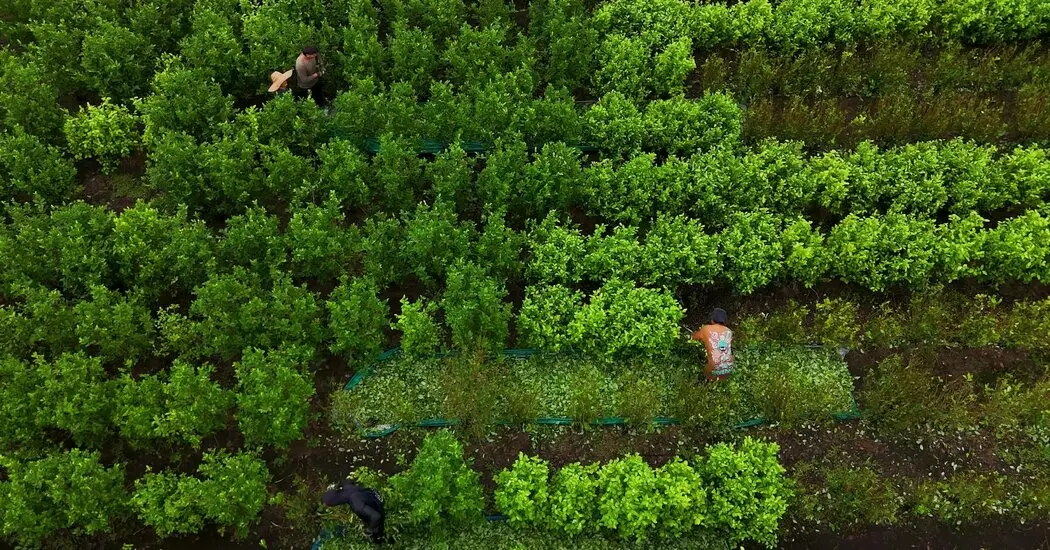
콜롬비아 푸투마요에서 코카 잎을 수확하는 농부들. 크레딧...
아나 이오노바, 맥스 베라크 기자
페데리코 리오스 시각 자료
아나 이오노바는 브라질 산토스에서, 맥스 베라크는 콜롬비아 푸투마요에서 보도했다.
남미의 분주한 항구들이 그 어느 때보다 감시받고 있다.
무장한 군인들이 순찰하고 수천 개의 카메라가 감시한다. 드론은 배에 코카인을 숨기는 잠수부를 찾는다. 인공지능으로 구동되는 탐지견, 특수 요원, 스캐너들이 커피와 쇠고기가 든 컨테이너를 훑어 마약 흔적을 찾는다.
그러나 코카인이 남미를 떠나 세계로 나가기 전에 차단하려는 이 치밀한 작업은 종종 무의미한 숨바꼭질이 된다.
"우리가 경로를 발견하면 다른 곳으로 바꾼다"고 브라질 산토스 항구의 세관 요원인 호물루 페레이라 브랑당 네투가 말했다. 산토스 항구는 라틴아메리카에서 가장 분주한 항구다. "우리가 절차를 개선하면, 그들도 개선한다."
남미 국가들은 첨단 기술에서 군사력에 이르기까지 그 어느 때보다 강력한 도구를 갖추고 있다. 하지만 당국들은 세계적 규모를 자랑하며 코카인에 대한 역대 최대 수요로 막대한 이익을 챙기는 자금력 있는 범죄 조직과의 힘겨운 싸움을 하고 있다고 말한다.
마약 밀매를 분쇄하겠다고 다짐한 트럼프 행정부는 지난해 이후 남미 연안에서 수십 척의 배를 공격해 미국으로 마약을 운반했다고 주장하며 177명 이상이 사망했다.
하지만 전문가들은 미국 도시에 유입되는 코카인 대부분이 실제로는 화물선을 통해 태평양을 건너 중미나 멕시코로 먼저 밀반입된 뒤, 미국 남부 국경을 넘어 밀매된다고 말한다.
전문가와 당국자들은 남미 마약 갱단이 멕시코 카르텔과 동맹을 맺고 새로운 경로와 방법을 사용해 미국으로 대량의 코카인을 보내는 동시에 유럽, 아시아, 호주로도 엄청난 양을 옮기고 있다고 말한다.
밀매자들이 단속을 피하는 수많은 새로운 방법들은 마약 밀매를 라틴아메리카 정책의 핵심으로 삼은 미국 대통령을 달랠려는 남미 국가들이 직면한 도전을 여실히 드러낸다.
범죄 조직이 법 집행 전략을 우회하는 쉬움은 또한 배 공격이 마약 거래에 실질적인 타격을 입히는 데 얼마나 효과적일지에 대한 의문을 제기한다.
"두더지 잡기 전략"이라고 바이든과 오바마 행정부에서 근무했던 전 미국 국방부 고위 관료 자나 넬슨이 말했다. "표적이 되는 사람들은 최하위 계층"이라며 배 공격을 언급했다. "그래서 실제로 아무도 단념시키지 못한다."
우선, 트럼프 행정부가 해상 작전을 시작한 후 밀매자들은 가이아나와 수리남의 열대우림 경로를 통해 더 많은 코카인을 옮기기 시작해, 이들 국가의 감시가 덜한 항구에서 북쪽으로 보낸다고 민감한 정보를 논의하기 위해 익명으로 발언한 남미 정보 당국자가 말했다.
"범죄 조직들은 코카인 생산에 막대한 투자를 했다"고 브루킹스 연구소의 조직 범죄 전문가 반다 펠밥-브라운이 말했다. "그리고 그것을 그냥 버리지는 않을 것이다."
세계 코카인 대부분은 콜롬비아, 볼리비아, 페루에서 생산된 뒤, 트럭, 배, 소형 비행기를 통해 남미 전역을 횡단해 에콰도르 과야킬과 브라질 산토스 같은 주요 항구로 운송된다.
그곳에서 마약은 종종 오렌지주스나 대두 같은 합법 화물에 숨겨지거나, 화물선 선체에 몰래 부착된다.
세계 대부분의 코카인은 이런 방식으로 남미에서 밀반출되며, 매일 상업 항구를 통과하는 수천 개의 컨테이너와 함께 수출된다고 법 집행 당국과 유엔 마약범죄사무소 데이터에 따른다.
"이것이 그들에게 가장 편리한 방법"이라고 펠밥-브라운 여사가 말하며, 당국이 매일 컨테이너의 2~3%만 검사할 수 있다고 추정했다. "탐지 위험이 매우 낮다."
(마약 조직들은 잠수정을 사용해 마약을 운반하기도 한다.)
지난 10년간 주요 세계 항구에서의 코카인 압수는 3배 이상 증가했는데, 전문가들은 이를 더 효과적인 치안 활동에 기인한다고 본다. 동시에 역대 최대의 코카인이 생산되고 있으며, 2023년 글로벌 생산량은 3,708톤으로 유엔 데이터가 있는 가장 최근 해에 기록을 경신했다.
"압수량이 늘고 있다는 인상을 받는다"고 브라질 검사 실비우 로베가 말했다. 그는 산토스가 위치한 상파울루 주의 마약 단속 특별팀을 이끌고 있다. "하지만 그것은 그들이 더 많은 마약을 보내고 있기 때문이기도 하다."
코카인 사용도 전 세계적으로 급증해 2023년 2,500만 명의 사용자를 기록하며 10년 전보다 거의 50% 증가했다고 유엔 데이터에 따른다. 미국은 세계 최대의 코카인 소비국이며, 유럽이 바로 뒤를 잇는다.
콜롬비아 푸투마요 지역에서는 마약이 경제를 움직이게 하며, 이 마약 호황이 분명하게 드러난다. 코카 식물은 날카로운 가지로부터 손을 보호하기 위해 포장 테이프로 감싼 노동자들에 의해 재빨리 잎이 뜯겨 나간다. 수천 개의 조잡한 실험실이 숲에 흩어져 있으며, 다른 노동자들은 코카 잎을 갈아 가루에 화학물질을 섞고 증류해 비누 모양의 코카인 페이스트 벽돌로 만든다.
높은 빈곤률이 지속되고 합법적인 생계 수단이 거의 없는 상황에서, 이곳 많은 사람들은 코카인 거래 외에 선택의 여지가 없다고 말한다. "전체 경제를 움직인다"고 비영리 단체 아마존 워치의 현지 대표 카를로스 페르난데스가 말했다. "그래서 이곳 사람들에게 코카인 가격이 얼마나 받히는지는 매우 중요하다."
전문가들은 코카인 1kg의 제조 비용이 약 2,000달러이지만, 유럽이나 미국에서는 20배 이상에 팔릴 수 있다고 말한다.
"화물을 톤 단위로 잃어도, 단 하나만 통과하면 모든 손실을 커버한다"고 브라질 검사 로베가 말했다. "그리고 남는 돈도 있다."
이러한 코카인 홍수 속에서 트럼프는 국가들에게 마약 유출을 중단하라고 경고했다—그렇지 않으면 미국의 군사 개입 위험이 있다고.
세계 코카인의 3분의 2가 생산되는 콜롬비아에서 당국은 최근 몇 달간 푸투마요의 그러한 임시 실험실 수백 개를 파괴하고 미국과 힘을 합쳐 정보 공유와 군사 작전을 수행했다.
에콰도르도 최근 트럼프 행정부가 테러 조직으로 지정한 마약 카르텔을 겨냥한 미국과의 합동 군사 작전을 시작했다. 그러나 한 경우에서 뉴욕타임스는 에콰도르군이 실제로는 가동 중인 낙농장을 표적 삼았다는 것을 발견했다.
미국은 브라질에도 관심을 집중했다: 미국과 브라질 당국자들에 따르면, 미국은 국내 최강의 마약 밀매 조직인 '퍼스트 캐피털 커맨드'와 '레드 커맨드'를 테러 조직으로 지정하는 것을 검토 중이다.
이러한 브라질 갱단들은 미국으로 보내는 코카인은 거의 없지만, 유럽으로 향하는 코카인의 주요 경유지다. 그럼에도 트럼프에게 자신들의 역할을 하고 있음을 보여주기 위해 열렬히, 브라질은 마약 밀매 조직에 대한 대대적인 작전을 수행하고 5,000마일 해안선을 따라 주요 항구의 감시를 강화했다.
최근 평일 산토스 항구에서 이러한 확대된 노력이 유감없이 드러났다. 두 명의 연방 요원이 AI로 분석가들의 도움을 받아 의심스러운 것으로 표시된 6개 컨테이너 앞에서 짖는 두 마리의 탐지견을 이끌었다. 커피, 종이, 가죽이 담긴 화물은 이탈리아, 독일, 토고, 콜롬비아로 향하고 있었다.
"건초더미에서 바늘 찾기 같다"고 세관 요원 네투가 말했다. "모두를 막는 것은 불가능하다. 하지만 최선을 다할 뿐이다."
(타임스가 항구를 방문한 날, 당국은 검사한 컨테이너에서 마약을 찾지 못했다. 하지만 며칠 후, 그들은 포르투갈로 향하는 대두유 컨테이너에 숨겨진 540파운드의 코카인을 차단했다.)
탐지를 피하기 위해, 네투는 덧붙여 범죄 조직들이 더 작은 양의 마약을 숨기거나 위장하는 방법을 찾기 시작했다고 말했다. 요원들이 압수한 한 화물에서는 코카인이 쇠고기 컨테이너의 냉각 시스템에 숨겨져 있었다. 또 다른 화물에서는 가죽에 화학적으로 주입되어 있었다.
미국과 유럽으로의 잘 알려진 경로가 더 감시받게 되면서, 밀매자들은 또한 감시가 더 느슨하고 코카인이 더 희소해 더 큰 이익을 낼 수 있는 아시아와 호주로 관심을 돌리는 것으로 보인다. 한 예로, 에콰도르 남자 네 명이 수주 전 고국에서 거의 7,000마일 떨어진 피지에서 체포되었는데, 경찰이 2톤 이상의 코카인을 압수한 후였다.
"지금이 밀매자들이 다른 목적지를 탐색할 때"라고 유엔 마약 기관의 연구관 앙투안 벨라가 말했다.
시몬 포사다가 보고타에서, 리스 모리코니가 리우데자네이루에서 연구에 기여했다.
아나 이오노바는 리우데자네이루에 거주하며 브라질과 이웃 국가들을 보도하는 타임스 기고가다.
맥스 베라크는 속보 및 국제 뉴스를 전문으로 하는 타임스 특파원이다.
아나 이오노바, 맥스 베라크 기자
페데리코 리오스 시각 자료
아나 이오노바는 브라질 산토스에서, 맥스 베라크는 콜롬비아 푸투마요에서 보도했다.
남미의 분주한 항구들이 그 어느 때보다 감시받고 있다.
무장한 군인들이 순찰하고 수천 개의 카메라가 감시한다. 드론은 배에 코카인을 숨기는 잠수부를 찾는다. 인공지능으로 구동되는 탐지견, 특수 요원, 스캐너들이 커피와 쇠고기가 든 컨테이너를 훑어 마약 흔적을 찾는다.
그러나 코카인이 남미를 떠나 세계로 나가기 전에 차단하려는 이 치밀한 작업은 종종 무의미한 숨바꼭질이 된다.
"우리가 경로를 발견하면 다른 곳으로 바꾼다"고 브라질 산토스 항구의 세관 요원인 호물루 페레이라 브랑당 네투가 말했다. 산토스 항구는 라틴아메리카에서 가장 분주한 항구다. "우리가 절차를 개선하면, 그들도 개선한다."
남미 국가들은 첨단 기술에서 군사력에 이르기까지 그 어느 때보다 강력한 도구를 갖추고 있다. 하지만 당국들은 세계적 규모를 자랑하며 코카인에 대한 역대 최대 수요로 막대한 이익을 챙기는 자금력 있는 범죄 조직과의 힘겨운 싸움을 하고 있다고 말한다.
마약 밀매를 분쇄하겠다고 다짐한 트럼프 행정부는 지난해 이후 남미 연안에서 수십 척의 배를 공격해 미국으로 마약을 운반했다고 주장하며 177명 이상이 사망했다.
하지만 전문가들은 미국 도시에 유입되는 코카인 대부분이 실제로는 화물선을 통해 태평양을 건너 중미나 멕시코로 먼저 밀반입된 뒤, 미국 남부 국경을 넘어 밀매된다고 말한다.
전문가와 당국자들은 남미 마약 갱단이 멕시코 카르텔과 동맹을 맺고 새로운 경로와 방법을 사용해 미국으로 대량의 코카인을 보내는 동시에 유럽, 아시아, 호주로도 엄청난 양을 옮기고 있다고 말한다.
밀매자들이 단속을 피하는 수많은 새로운 방법들은 마약 밀매를 라틴아메리카 정책의 핵심으로 삼은 미국 대통령을 달랠려는 남미 국가들이 직면한 도전을 여실히 드러낸다.
범죄 조직이 법 집행 전략을 우회하는 쉬움은 또한 배 공격이 마약 거래에 실질적인 타격을 입히는 데 얼마나 효과적일지에 대한 의문을 제기한다.
"두더지 잡기 전략"이라고 바이든과 오바마 행정부에서 근무했던 전 미국 국방부 고위 관료 자나 넬슨이 말했다. "표적이 되는 사람들은 최하위 계층"이라며 배 공격을 언급했다. "그래서 실제로 아무도 단념시키지 못한다."
우선, 트럼프 행정부가 해상 작전을 시작한 후 밀매자들은 가이아나와 수리남의 열대우림 경로를 통해 더 많은 코카인을 옮기기 시작해, 이들 국가의 감시가 덜한 항구에서 북쪽으로 보낸다고 민감한 정보를 논의하기 위해 익명으로 발언한 남미 정보 당국자가 말했다.
"범죄 조직들은 코카인 생산에 막대한 투자를 했다"고 브루킹스 연구소의 조직 범죄 전문가 반다 펠밥-브라운이 말했다. "그리고 그것을 그냥 버리지는 않을 것이다."
세계 코카인 대부분은 콜롬비아, 볼리비아, 페루에서 생산된 뒤, 트럭, 배, 소형 비행기를 통해 남미 전역을 횡단해 에콰도르 과야킬과 브라질 산토스 같은 주요 항구로 운송된다.
그곳에서 마약은 종종 오렌지주스나 대두 같은 합법 화물에 숨겨지거나, 화물선 선체에 몰래 부착된다.
세계 대부분의 코카인은 이런 방식으로 남미에서 밀반출되며, 매일 상업 항구를 통과하는 수천 개의 컨테이너와 함께 수출된다고 법 집행 당국과 유엔 마약범죄사무소 데이터에 따른다.
"이것이 그들에게 가장 편리한 방법"이라고 펠밥-브라운 여사가 말하며, 당국이 매일 컨테이너의 2~3%만 검사할 수 있다고 추정했다. "탐지 위험이 매우 낮다."
(마약 조직들은 잠수정을 사용해 마약을 운반하기도 한다.)
지난 10년간 주요 세계 항구에서의 코카인 압수는 3배 이상 증가했는데, 전문가들은 이를 더 효과적인 치안 활동에 기인한다고 본다. 동시에 역대 최대의 코카인이 생산되고 있으며, 2023년 글로벌 생산량은 3,708톤으로 유엔 데이터가 있는 가장 최근 해에 기록을 경신했다.
"압수량이 늘고 있다는 인상을 받는다"고 브라질 검사 실비우 로베가 말했다. 그는 산토스가 위치한 상파울루 주의 마약 단속 특별팀을 이끌고 있다. "하지만 그것은 그들이 더 많은 마약을 보내고 있기 때문이기도 하다."
코카인 사용도 전 세계적으로 급증해 2023년 2,500만 명의 사용자를 기록하며 10년 전보다 거의 50% 증가했다고 유엔 데이터에 따른다. 미국은 세계 최대의 코카인 소비국이며, 유럽이 바로 뒤를 잇는다.
콜롬비아 푸투마요 지역에서는 마약이 경제를 움직이게 하며, 이 마약 호황이 분명하게 드러난다. 코카 식물은 날카로운 가지로부터 손을 보호하기 위해 포장 테이프로 감싼 노동자들에 의해 재빨리 잎이 뜯겨 나간다. 수천 개의 조잡한 실험실이 숲에 흩어져 있으며, 다른 노동자들은 코카 잎을 갈아 가루에 화학물질을 섞고 증류해 비누 모양의 코카인 페이스트 벽돌로 만든다.
높은 빈곤률이 지속되고 합법적인 생계 수단이 거의 없는 상황에서, 이곳 많은 사람들은 코카인 거래 외에 선택의 여지가 없다고 말한다. "전체 경제를 움직인다"고 비영리 단체 아마존 워치의 현지 대표 카를로스 페르난데스가 말했다. "그래서 이곳 사람들에게 코카인 가격이 얼마나 받히는지는 매우 중요하다."
전문가들은 코카인 1kg의 제조 비용이 약 2,000달러이지만, 유럽이나 미국에서는 20배 이상에 팔릴 수 있다고 말한다.
"화물을 톤 단위로 잃어도, 단 하나만 통과하면 모든 손실을 커버한다"고 브라질 검사 로베가 말했다. "그리고 남는 돈도 있다."
이러한 코카인 홍수 속에서 트럼프는 국가들에게 마약 유출을 중단하라고 경고했다—그렇지 않으면 미국의 군사 개입 위험이 있다고.
세계 코카인의 3분의 2가 생산되는 콜롬비아에서 당국은 최근 몇 달간 푸투마요의 그러한 임시 실험실 수백 개를 파괴하고 미국과 힘을 합쳐 정보 공유와 군사 작전을 수행했다.
에콰도르도 최근 트럼프 행정부가 테러 조직으로 지정한 마약 카르텔을 겨냥한 미국과의 합동 군사 작전을 시작했다. 그러나 한 경우에서 뉴욕타임스는 에콰도르군이 실제로는 가동 중인 낙농장을 표적 삼았다는 것을 발견했다.
미국은 브라질에도 관심을 집중했다: 미국과 브라질 당국자들에 따르면, 미국은 국내 최강의 마약 밀매 조직인 '퍼스트 캐피털 커맨드'와 '레드 커맨드'를 테러 조직으로 지정하는 것을 검토 중이다.
이러한 브라질 갱단들은 미국으로 보내는 코카인은 거의 없지만, 유럽으로 향하는 코카인의 주요 경유지다. 그럼에도 트럼프에게 자신들의 역할을 하고 있음을 보여주기 위해 열렬히, 브라질은 마약 밀매 조직에 대한 대대적인 작전을 수행하고 5,000마일 해안선을 따라 주요 항구의 감시를 강화했다.
최근 평일 산토스 항구에서 이러한 확대된 노력이 유감없이 드러났다. 두 명의 연방 요원이 AI로 분석가들의 도움을 받아 의심스러운 것으로 표시된 6개 컨테이너 앞에서 짖는 두 마리의 탐지견을 이끌었다. 커피, 종이, 가죽이 담긴 화물은 이탈리아, 독일, 토고, 콜롬비아로 향하고 있었다.
"건초더미에서 바늘 찾기 같다"고 세관 요원 네투가 말했다. "모두를 막는 것은 불가능하다. 하지만 최선을 다할 뿐이다."
(타임스가 항구를 방문한 날, 당국은 검사한 컨테이너에서 마약을 찾지 못했다. 하지만 며칠 후, 그들은 포르투갈로 향하는 대두유 컨테이너에 숨겨진 540파운드의 코카인을 차단했다.)
탐지를 피하기 위해, 네투는 덧붙여 범죄 조직들이 더 작은 양의 마약을 숨기거나 위장하는 방법을 찾기 시작했다고 말했다. 요원들이 압수한 한 화물에서는 코카인이 쇠고기 컨테이너의 냉각 시스템에 숨겨져 있었다. 또 다른 화물에서는 가죽에 화학적으로 주입되어 있었다.
미국과 유럽으로의 잘 알려진 경로가 더 감시받게 되면서, 밀매자들은 또한 감시가 더 느슨하고 코카인이 더 희소해 더 큰 이익을 낼 수 있는 아시아와 호주로 관심을 돌리는 것으로 보인다. 한 예로, 에콰도르 남자 네 명이 수주 전 고국에서 거의 7,000마일 떨어진 피지에서 체포되었는데, 경찰이 2톤 이상의 코카인을 압수한 후였다.
"지금이 밀매자들이 다른 목적지를 탐색할 때"라고 유엔 마약 기관의 연구관 앙투안 벨라가 말했다.
시몬 포사다가 보고타에서, 리스 모리코니가 리우데자네이루에서 연구에 기여했다.
아나 이오노바는 리우데자네이루에 거주하며 브라질과 이웃 국가들을 보도하는 타임스 기고가다.
맥스 베라크는 속보 및 국제 뉴스를 전문으로 하는 타임스 특파원이다.
처리 완료
6,329 tokens · $0.0134
기사 수집 완료 · 19:15
매체 피드에서 기사 메타데이터 수집
헤드라인 번역 완료 · 19:35
제목/요약 한국어 번역 (fetch 시점 inline)
kimi-k2.5
214 tokens
$0.00041
4.9s
본문 추출 완료
8,986자 추출 완료
본문 한국어 번역 완료 · 19:35
4,158자 번역 완료
kimi-k2.5
6,115 tokens
$0.01300
126.1s
지정학적 엔티티 추출 완료 · 19:35
8개 엔티티 추출 완료
지정학적 맥락 & R-Scanner
R-Scanner · 평상
z=-0.13
일상적인 보도 수준 — 기준: South America
(🇸🇦 SA)
최근 6시간 0건
7일 평균 0.14건 / 6h
0개국 매체
0개 매체
본문에서 추출된 지명 (8)
위치 지도
지도 로딩 중…
같은 주제의 다른 기사 (최근 7일)
Authorities are using drones, troops and A.I. to crack down on cocaine smuggling. But gangs are finding new ways to move record amounts of drugs across the world.
Farmers harvesting coca leaves in Putumayo, Colombia.Credit...By Ana Ionova and Max Bearak
Visuals by Federico Rios
Ana Ionova reported from Santos, Brazil, and Max Bearak reported from Putumayo, Colombia.
South America’s bustling seaports have never been under more watchful eyes.
They are patrolled by armed soldiers and monitored by thousands of cameras. Drones look for divers stashing cocaine onto ships. Sniffer dogs, special agents and scanners powered by artificial intelligence sweep containers stuffed with coffee and beef for signs of drugs.
Yet, the painstaking work of intercepting cocaine before it leaves South America for the rest of the world is often a futile cat-and-mouse chase.
“We discover a route, and they’ll change to another," said Rômulo Pereira Brandão Neto, a customs agent at the Santos port in Brazil, the busiest in Latin America. “We improve our process, they improve theirs.”
South American nations have never had a more powerful arsenal of tools, from advanced technology to military might. But the authorities say they are fighting an uphill battle against deep-pocketed criminal groups that are global in scale and that reap enormous windfalls from record demand for cocaine.
Vowing to crush drug trafficking, the Trump administration has struck dozens of boats off the coast of South America since last year, claiming they carried drugs to the United States. The attacks have killed at least 177 people.
But experts say much of the cocaine that winds up in American cities is actually smuggled largely aboard cargo ships, first to Central America or Mexico across the Pacific Ocean, then trafficked over the southern U.S. border.
Forging alliances with Mexican cartels, South American drug gangs are using new routes and methods to send vast amounts of cocaine to the United States, experts and officials say, while also moving huge quantities to Europe, Asia and Australia.
The many novel ways smugglers avoid detection lay bare the challenges facing South American nations trying to placate a U.S. president who has made drug smuggling a centerpiece of his Latin America policy.
The ease with which criminal groups circumvent law enforcement strategies also raises questions about how effective U.S. strikes on boats will prove in making any meaningful dent in the drug trade.
“It’s a Whac-a-Mole strategy,” said Jana Nelson, a former top U.S. defense official who served in the Biden and Obama administrations. “The people you’re targeting are at the bottom of the totem pole,” she added, referring to the boat strikes. “So it’s not really dissuading anyone.”
For one, after the Trump administration began its maritime campaign, traffickers started moving more cocaine through rainforest routes in Guyana and Suriname before sending it north from less monitored ports in those countries, said a South American intelligence official speaking anonymously to discuss sensitive information.
“Criminal groups have made large investments in cocaine production,” said Vanda Felbab-Brown, an expert on organized crime at the Brookings Institution. “And they’re not going to just throw that away.”
Most of the world’s cocaine is produced in Colombia, Bolivia and Peru, before it is transported by truck, boat and small plane across South America to major ports like Guayaquil in Ecuador and Santos in Brazil.
There, the drugs are often stashed with legitimate cargo, like orange juice or soybeans, or surreptitiously attached to the hulls of freight vessels.
The vast majority of cocaine is smuggled out of South America this way, exported together with thousands of containers passing through commercial ports each day, according to law enforcement and data from the United Nations Office for Drugs and Crime.
“This is by far the most convenient method for them,” said Ms. Felbab-Brown, estimating that authorities can only inspect 2 to 3 percent of containers each day. “It’s a really low risk of detection.”
(Drug groups also use submersible vessels to transport drugs.)
Cocaine seizures at major global ports have more than tripled over the last decade, according to U.N. data, a rise experts attribute to more effective policing. At the same time, more cocaine than ever is being made, with global production reaching a record 3,708 tons in 2023, the most recent year for which U.N. data is available.
“The impression you get is that we’re seizing more,” said Silvio Loubeh, a Brazilian prosecutor leading the counternarcotics task force in São Paulo state, where Santos is located. “But it’s also because they’re sending more drugs.”
Cocaine use has also risen sharply worldwide, reaching 25 million users in 2023, up nearly 50 percent from a decade earlier, according to U.N. data. The United States is the world’s biggest consumer of cocaine, closely followed by Europe.
In the Putumayo region of Colombia, where cocaine drives the economy, this drug boon is unmistakable. The coca plant is swiftly stripped of its leaves by workers whose hands are wrapped in packing tape to shield them from jagged branches. In thousands of rudimentary labs dotting the forest, other workers grind coca leaves, mix the powder with chemicals and distill it into bricks of cocaine paste resembling bars of soap.
With persistently high poverty rates and few legal ways to earn a living, many people here say they have no other choice but the cocaine trade. “It runs the entire economy,” said Carlos Fernández, a local representative of Amazon Watch, a nonprofit. “And so, it matters very much to people here what prices cocaine is fetching.”
Experts say a kilogram of cocaine typically costs about $2,000 to make, but can be sold for more than 20 times that in Europe or the United States.
“You can lose a ton of cargo but, if just one gets through, it covers all the losses,” said Mr. Loubeh, the Brazilian prosecutor. “And there will still be cash left over.”
Amid this flood of cocaine, Mr. Trump has warned countries to stop the flow of drugs — or risk U.S. military intervention.
In Colombia, where two-thirds of the world’s cocaine is produced, authorities have destroyed hundreds of makeshift labs like those in Putumayo in recent months and joined forces with the United States to share intelligence and carry out military operations.
Ecuador also recently launched a joint military campaign with the United States, aimed at drug cartels the Trump administration has designated as terrorist organizations. In one case, however, The New York Times found that Ecuadorean forces targeted what appeared to be a working dairy farm.
The United States has also set its sights on Brazil: it is considering designating the nation’s most powerful drug trafficking groups, the First Capital Command and the Red Command, as terrorist organizations, according to U.S. and Brazilian officials.
These Brazilian gangs send very little cocaine to the United States, but the country is a major transit route for cocaine heading to Europe. Still, eager to show Mr. Trump it is doing its part, Brazil has conducted sweeping operations against drug trafficking groups and ramped up surveillance on major seaports along its 5,000-mile coastline.
On a recent weekday in the Santos port, these expanded efforts were on full display. A pair of federal agents led two sniffer dogs who whined in front of six containers flagged as suspicious by analysts with the help of A.I. Packed with coffee, paper and leather, the cargo was headed to Italy, Germany, Togo and Colombia.
“It’s like looking for a needle in a haystack,” said Mr. Neto, the customs agent. “It’s impossible to stop them all. But you do your best.”
(On the day that The Times visited the port, authorities didn’t find drugs in the containers inspected. But days later, they intercepted 540 pounds of cocaine hidden in a container of soy oil heading to Portugal.)
To avoid detection, Mr. Neto added, criminal groups have begun hiding smaller amounts of drugs or finding ways to disguise them. In one cargo seized by agents, cocaine was stashed in the cooling system of a beef container. In another, it was chemically infused into leather.
With well-trodden routes to the United States and Europe under closer watch, smugglers also appear to be turning their attention to Asia and Australia, where surveillance is often more lax and cocaine less plentiful, fetching larger profits. In one example, four Ecuadorean men were arrested several weeks ago in Fiji, nearly 7,000 miles from home, after the police seized over two tons of cocaine.
“Now is the time for traffickers to be exploring other destinations,” said Antoine Vella, a research officer at the U.N. drugs agency.
Simón Posada contributed reporting from Bogotá and Lis Moriconi contributed research from Rio de Janeiro.
Ana Ionova is a contributor to The Times based in Rio de Janeiro, covering Brazil and neighboring countries.
Max Bearak is a correspondent for The Times focusing on breaking and international news.