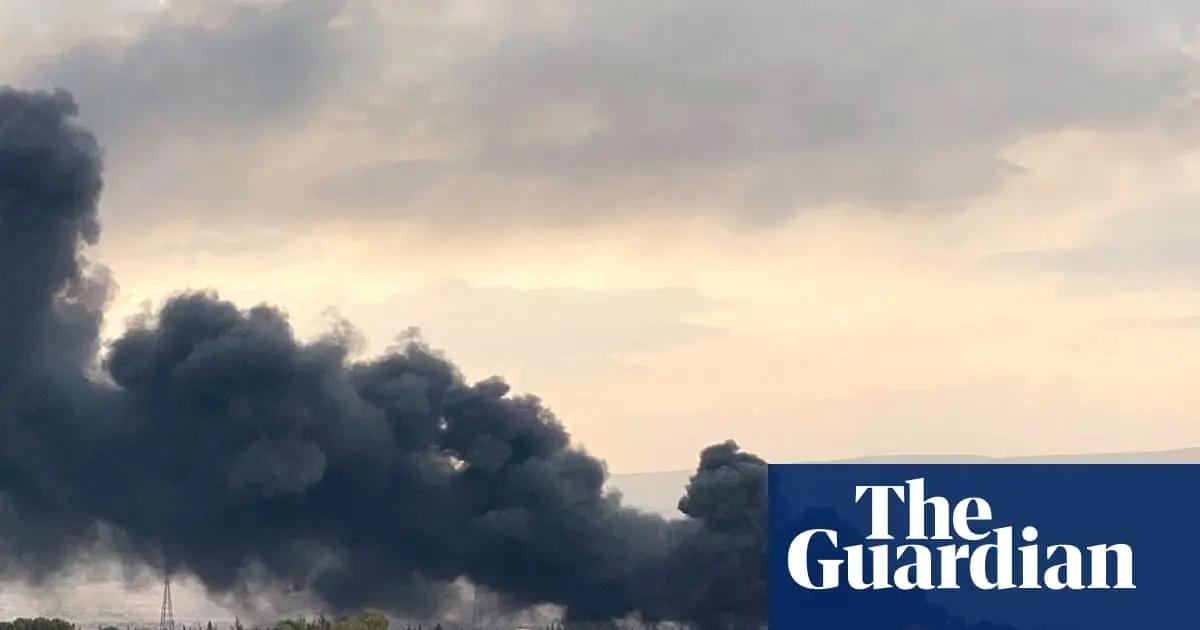
레바논, 2023년 이후 이스라엘의 '생태 대학살' 혐의 제기
Lebanon accuses Israel of committing ‘ecocide’ in country since 2023
보고서에 따르면 이스라엘 군부의 침략은 남부 레바논의 "물리적, 생태적 경관을 재편성"했으며, 이 보고서는 올 봄 이스라엘의 최신 공격의 영향을 고려하지 않는다.
휴전 상황이 이어지는 가운데 발표된 이 106페이지 보고서는 이스라엘의 최신 침략에서 벗어난 난민들이 파괴된 주택과 공동체로 돌아오면서 남부 레바논이 심각한 생태 파괴와 필수 생태계 서비스의 손실을 겪었음을 밝히고 있다.
타마라 엘 자인 장관은 서문에서 "산림, 농업용지, 해양 생태계, 수자원, 대기질에 대한 피해의 규모와 의도성은 즉각적인 파괴를 넘어 영향을 미치는 생태 대학살 행위로 인식되어야 한다"고 밝혔다.
보고서에 따르면 이스라엘군의 공격으로:
- 활엽수림, 소나무, 스톤 파인 숲을 포함한 5,000헥타르(12,350에이커)의 산림 피복 손상, 서식지 파괴, 지역 기후 변화 및 토양 침식 야기
- 농작물, 축산 시설, 산림 자원, 어업 및 양식 기반시설을 포함한 1억 1,800만 달러(8,700만 파운드)의 물리적 농업 자산 파괴
- 수확 중단 및 수확량 감소로 인한 5억 8,600만 달러(4억 3,300만 파운드)의 농업 생산 손실 초래
- 올리브 그루브 814헥타르와 감귤 농장 637헥타르를 포함한 2,154헥타르(5,320에이커)의 과수원 파괴 및 바나나 농장에 대한 광범위한 피해 야기
- 토양을 백만 부분당 1,858의 인 농도로 오염, 특히 남부 레바논과 동부 베카 계곡에서 오염 핫스팟 발생
- 즉각적인 공격 지역을 넘어 광범위한 대기 오염 에피소드 야기 및 미립자, 황산화물과 질소산화물, 다이옥신과 다환방향족탄화수소 같은 독성 화합물 방출
이스라엘 비판자들은 이스라엘이 현재 남부 레바논에서 "가자 플레이북"을 반복하고 있다고 주장하며, 민간인 추방령을 발행하고, 병원과 의료 인력을 표적으로 삼고, 전체 마을을 철거하고, 수도 기반시설을 파괴하고, 언론인을 살해하고 있다고 지적한다.
2023년 가자에 대한 전쟁을 시작한 지 수개월 만에 이스라엘군은 약 38-48%의 나무 피복과 농경지를 파괴했으며, 올리브 그루브와 농지는 다진 흙으로 축소되었고 지하수는 탄약과 독성 물질로 오염되었으며 공기는 연기와 미립자로 오염되었다.
2023년 10월부터 2024년 12월까지의 기간을 다루는 레바논의 국립과학연구위원회(CNRS-L)가 작성한 새 보고서에 따르면 남부 레바논도 이스라엘군으로부터 유사한 대우를 받았다.
"전쟁의 환경 발자국은 생물다양성 핫스팟 및 탄소 싱크 역할을 했던 많은 산림과 삼림지의 파괴, 고가치 과수원과 주식 작물 밭을 포함한 농지의 소각에서 명백하며, 생계와 국가 식량 안보를 훼손하고 있다"고 보고서는 명시한다.
총액으로 국가에 미친 금전적 비용은 약 250억 달러(180억 달러)로 추산되며, 이는 68억 달러의 물리적 피해, 72억 달러의 경제 손실, 110억 달러의 회복 및 재건 필요로 구성된다.
엘 자인은 "레바논은 이 부담을 혼자 짊어질 수 없다"며 "환경 회복의 책임을 공유하기 위한 국제적 연대와 지원을 촉구한다. 피해 규모와 복구 비용은 집단 행동과 장기적 파트너십을 요구한다"고 말했다.
전쟁의 환경 영향을 연구하는 분쟁 및 환경 관측소 소장 더그 웨어는 "보고서가 더 나은 방식의 재건과 국가 환경 모니터링 역량 강화에 초점을 맞춘 것은 분쟁 영향을 받은 국가의 두 가지 중요한 우선순위에 대한 환영할 만한 인식"이라고 말했다.
그는 "안타깝게도 보고서의 일부 결과는 이스라엘이 연구 기간 이후에 저지른 황폐화로 인해 이미 구식이 되었으며, 특히 리타니 강 남쪽의 불법 점령 지역에서 더욱 그러하다"고 덧붙였다.
이스라엘 방위군 대변인은 "IDF는 이 지역에서의 작전의 잠재적 환경 영향을 인식하고 있다. IDF는 이스라엘 국민을 보호하고 주변 지역의 보안과 안전을 보장하기 위해 활동한다. 모든 IDF 행동은 민간인과 환경에 미치는 피해를 최소화하기 위한 예방 조치를 취하면서 수행된다"고 말했다.
claude-haiku-4-5-20251001
785 tokens
$0.00221
4.9s
claude-haiku-4-5-20251001
4,115 tokens
$0.01081
22.0s
Claim by environment minister opens new report into profound ecological damage allegedly done by IDF forces Lebanon’s minister for the environment has accused Israel’s military of committing “an act of ecocide” in the foreword to a report detailing the harm done to the country’s natural resources during the invasion of 2023 to 2024.Israeli military aggression “reshaped both the physical and ecological landscape” of southern Lebanon, according to the report, which does not consider the impacts of Israel’s latest barrage of attacks this spring.Damaged 5,000 hectares (12,350 acres) of forest cover, including broadleaf, pine and stone pine stands, destroying habitats, disregulating local climates and causing soil erosion.Destroyed $118m (£87m) of physical agriculture assets, including crops, livestock facilities, forestry resources, fisheries and aquaculture infrastructure.Caused further losses of $586m (£433m) in lost agricultural production as a result of disrupted harvests and reduced yields.Destroyed 2,154 hectares (5,320 acres) of orchards, including 814 hectares of olive groves and 637 hectares of citrus plantations, and caused extensive damage to banana plantations.Contaminated soils with phosphorus concentrations up to 1,858 parts a million, with particular contamination hotspots in south Lebanon and Bekaa valley in the east.Caused widespread air pollution episodes extending well beyond immediate strike zones and releasing particulates; sulphur and nitrogen oxides; and toxic compounds such as dioxins and polycyclic aromatic hydrocarbons.
Lebanon’s minister for the environment has accused Israel’s military of committing “an act of ecocide” in the foreword to a report detailing the harm done to the country’s natural resources during the invasion of 2023 to 2024.Israeli military aggression “reshaped both the physical and ecological landscape” of southern Lebanon, according to the report, which does not consider the impacts of Israel’s latest barrage of attacks this spring.
Published amid a patchy ceasefire, as refugees from Israel’s latest invasion return to shattered homes and communities, the 106-page report outlines how southern Lebanon has suffered profound ecological disruption and the loss of essential ecosystem services.
In her foreword, Tamara el Zein said: “The scale and intentionality of the damage to forests, agricultural lands, marine ecosystems, water resources, and atmospheric quality constitute what must be recognised as an act of ecocide, with consequences that extend far beyond immediate destruction.
“The environmental damage we face is not simply ecological – it is a matter of public health, food security, livelihoods, social fabric, and national resilience.”
According to the report, attacks by Israeli forces:
Damaged 5,000 hectares (12,350 acres) of forest cover, including broadleaf, pine and stone pine stands, destroying habitats, disregulating local climates and causing soil erosion.
Destroyed $118m (£87m) of physical agriculture assets, including crops, livestock facilities, forestry resources, fisheries and aquaculture infrastructure.
Caused further losses of $586m (£433m) in lost agricultural production as a result of disrupted harvests and reduced yields.
Destroyed 2,154 hectares (5,320 acres) of orchards, including 814 hectares of olive groves and 637 hectares of citrus plantations, and caused extensive damage to banana plantations.
Contaminated soils with phosphorus concentrations up to 1,858 parts a million, with particular contamination hotspots in south Lebanon and Bekaa valley in the east.
Caused widespread air pollution episodes extending well beyond immediate strike zones and releasing particulates; sulphur and nitrogen oxides; and toxic compounds such as dioxins and polycyclic aromatic hydrocarbons.
Israel’s critics argue that it is currently repeating “the Gaza playbook” in southern Lebanon by issuing the civilian population with expulsion orders, targeting hospitals and medical staff, demolishing entire villages, destroying water infrastructure and killing media workers.
Within months of beginning its war on Gaza in 2023, Israel’s forces had destroyed about 38-48% of tree cover and farmland, with olive groves and farms reduced to packed earth and groundwater contaminated by munitions and toxins, and air polluted by smoke and particulate matter.
According to the new report, prepared by Lebanon’s National Council for Scientific Research (CNRS-L) and covering the period between October 2023 and December 2024, southern Lebanon was similarly treated by the Israeli military.
“The environmental footprint of the war is evident in the destruction of forests and woodlands, many of which served as biodiversity hotspots and carbon sinks, and in the burning of agricultural lands, including high-value orchards and staple crop fields, undermining both livelihoods and national food security,” the report states.
In total, it estimates the monetary cost to the country amounts to an estimated $25bn ($18bn), comprising $6.8bn in physical damages, $7.2bn in economic losses ands $11bn in recovery and reconstruction needs.
“Lebanon cannot carry this burden alone,” El Zein said. “We call for international solidarity and support to share the responsibility of environmental recovery. The scale of the damage and the costs of restoration demand collective action and long-term partnerships.”
Doug Weir, the director of the Conflict and Environment Observatory, which studies the environmental impact of war, said: “The report’s focus on building back better, and on strengthening national environmental monitoring capacities, are welcome recognition of two critical priorities for any conflict-affected state.
“Sadly, elements of the report’s findings are already out of date due to the devastation wrought by Israel since the study period, particularly in the area it is illegally occupying south of the Litani River,” he added.
A spokesperson for the Israel Defense Forces said: “The IDF is aware of the potential environmental impacts of its operations in the region. The IDF operates to protect the citizens of Israel and to ensure the security and safety of the surrounding areas. All IDF actions are carried out with precautions taken to minimise harm to civilians and the environment.”