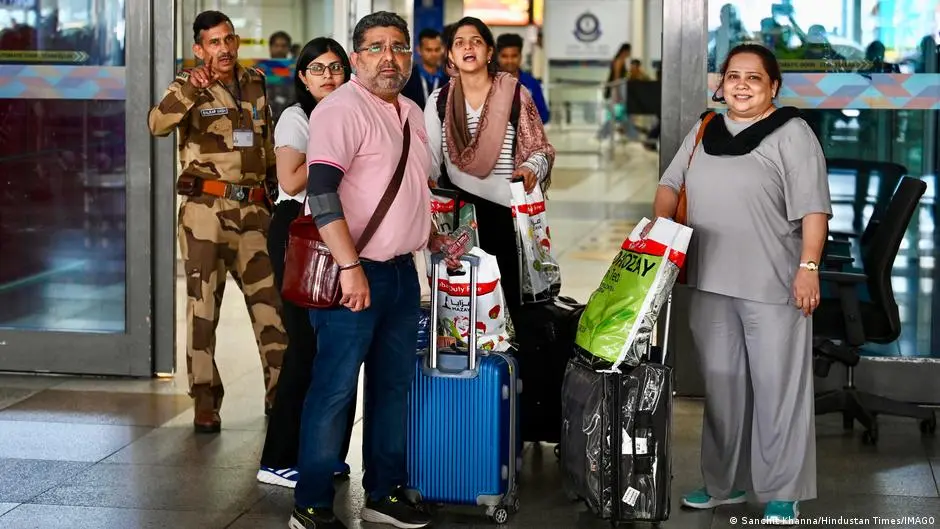
이란 전쟁으로 흔들리는 걸프만 경제, 인도 노동자들 귀국 강요
Indians forced to return home as Iran war rocks Gulf economy
Deutsche Welle
· 🇩🇪 Bonn, DE
Murali Krishnan Journalist based in New Delhi, focusing on Indian politics, society and business@mkrish11
DE
2026-04-24 22:24
Translated
수천 명의 인도 노동자들이 이란 전쟁으로 인해 걸프만 국가들의 일자리를 떠나 귀국하게 됐다. 그들의 미래는 불투명하며, 이제 인도 자체도 경제적 영향을 받고 있다.
46세의 미라 쿠리안은 두바이에서 오래 일해왔다. 이달 초, 그녀가 일하던 호텔은 이란 전쟁 발발 이후 숙박률이 급격히 떨어지자 그녀를 해고했다.
그녀는 이에 대해 화내지 않으며, 이는 귀국하는 인도 노동자들의 전반적인 분위기를 잘 보여준다.
"모두가 같은 상황입니다"라고 쿠리안은 남인도의 항구 도시 코친에서 DW에 말했다.
"전쟁에 화낼 수는 없습니다."
걸프만 전역에서 이란 전쟁은 공역 폐쇄, 해운 혼란, 사업 중단을 초래했으며, 이 지역을 움직이는 신뢰도를 훼손했다.
쿠리안이 떠난 도시는 숨을 죽이고 있다. 호르무즈 해협을 통해 원활하게 이동하던 무역은 현재 둔화되고 우회하고 있다. 여행은 끊겼고, 호텔은 비워지고 있으며, 항공사들은 편수를 줄이고 있다. 심지어 슈퍼마켓 선반도 텅 비어가고 있다.
"사람들이 오지 않으면 그 영향이 퍼집니다... 소매, 물류, 모든 것입니다. 두바이는 방문객으로 운영됩니다. 그것을 빼앗으면 전체 기계가 느려집니다"라고 쿠리안은 말했다.
쿠리안은 올해 초 기준으로 걸프만 국가에서 일자리를 가진 약 900만 명의 인도 국민 중 한 명이다. 인도인들은 이 지역에서 가장 큰 외국인 커뮤니티를 구성하고 있다. 그들은 건설, 접객업에서 물류, 소매 및 서비스에 이르기까지 다양한 분야에서 일하고 있으며, 매년 모국으로 500억 달러(46억 유로) 이상의 송금을 보내고 있다.
인도 외교부에 따르면, 이란 전쟁이 발발한 2월 말부터 4월 중순까지 약 984,000명의 인도 국민이 귀국했으며, 이 수치에는 이주 노동자 외에도 학생 및 기타 취약 계층이 포함되어 있다.
"우리의 노력은 사람들의 안전을 유지하는 데 집중하고 있으며, 전담 통제실이 지방 정부 지침, 항공편 상태 및 여행 상황과 관련된 정보를 포함한 업데이트된 권고사항을 발표하고 있습니다"라고 외교부 고위 관계자 아심 마하잔은 기자들에게 말했다.
그럼에도 대부분의 인도 노동자들은 지금까지 수년에 걸쳐 구축한 일자리와 생활을 포기하려 하지 않으면서 머물기로 결정했다. 그들에게 선택은 고통스럽고 현실적이다. 귀국하는 것은 자신들이 온 모든 것을 포기하는 것을 의미한다. 머무르는 것은 조용히 수축하는 경제 속에서 사는 것을 의미한다.
끝이 보이지 않는 불확실한 대기 상태이다. 전쟁이 지속되면 그들은 정리해고나 무급 휴직을 맞게 될 것이다. 귀국하기로 결정한 사람들은 비싼 항공권과 이주 비용을 협상해야 하며, 직업 상실의 추가 위험에 직면하게 된다.
쿠리안은 두바이에서 코친으로 화물을 보내는 데 드는 비용이 이전보다 30% 더 많다고 DW에 말했다. 그리고 이제 자신의 모국으로 돌아왔음에도 불구하고, 그것이 정확히 집으로 돌아오는 기분은 아니다.
"아무도 크게 말하지 않습니다. 하지만 모두가 기다리고 있습니다"라고 그녀는 DW에 말했다.
경제적 혼란은 쿠리안과 함께 인도의 케랄라 주까지 따라왔다. 이 주는 약 220만 명의 케랄라인들이 해외에서 일하고 있으며 약 90%가 걸프만에 있는 인도의 최대 송금 수령 주이다.
"송금 감소도 케랄라와 같은 지역의 국내 소비와 기업들에 영향을 미치기 시작했으며, 그들은 특히 걸프만 이주민 가족들이 많은 지역에서 판매량 감소를 보고하고 있습니다"라고 케랄라 출신의 전직 외교관 베누 라자모니는 DW에 말했다.
"이 모든 추세들은 전쟁이 길어질수록 가속화될 것입니다. 다른 사람들이 걸프만 국가들을 안전한 피난처로 신뢰했던 것이 심각하게 훼손되었습니다"라고 그는 덧붙였다.
38세의 라메시 쿠마르 레디는 실직 상태이다.
그는 오만의 무스카트 외곽의 석유화학 공장에서 기계 기술자로 11년을 보냈지만, 3월 말에 단 2주의 통지로 무급 휴직을 가도록 요청받았다.
동부 안드라프라데시 주의 비샤카팟남으로 돌아온 그의 걸프만 압력 시스템, 위험 물질 및 안전 준수 자격증은 거의 무게를 두지 못한다. 가장 가까운 정유소는 채용하지 않고 있다. 그는 민간 보안 회사에 지원했다.
"오만에서는 전쟁이 모든 것을 방해할 때까지 저는 전문가였습니다"라고 레디는 DW에 말했다. "여기서는 아무도 나를 어떻게 해야 할지 모릅니다. 나는 다시 시작할 수 없습니다."
이는 장기 분쟁이 가져올 수 있는 초기 신호이다. 인도로 돌아오는 사람들은 단순한 육체 노동자가 아니라 기술자, 감독자, 소규모 사업가들이다. 그들 중 많은 사람들에게 걸프만으로부터의 퇴출은 갑작스럽고 무정했다.
분쟁이 계속 장기화되면, 인도의 소비, 주택 및 가계 부채에 영향을 미치기 시작할 것이며, 그 영향은 직접 영향을 받는 가족들을 훨씬 넘어 퍼질 것이다.
"이란과 관련된 서아시아의 장기 분쟁은 걸프만 경제를 점진적으로 긴장시킬 것이고, 결국 인도의 디아스포라를 긴장시킬 것입니다. 아직 갑작스러운 대탈출은 없지만, 장기전은 실업을 유발하고 많은 인도인, 특히 가족들이 귀국하도록 할 수 있습니다"라고 오만의 전직 대사 아닐 와드와는 DW에 말했다.
"더 장기적으로는 걸프만의 인도의 고용 '안전판' 역할이 분쟁과 전후 재건이 지역의 기회를 재편하면서 약해질 수 있습니다"라고 그는 덧붙였다.
국가 공공 재정 및 정책 연구소의 경제학자 레카 차크라보르티는 "노동 충격"을 경고한다.
"몇 개월 내에 전쟁으로 인한 노동 충격은 더 광범위한 지역적 스트레스로 확산될 수 있으며, 부채 증가, 불완전 고용 및 주 재정에 대한 압박이 발생할 수 있습니다"라고 그녀는 DW에 말했다. "그 시점에 이란 분쟁의 영향은 더 이상 걸프만에 국한되지 않습니다. 인도 경제 자체에 영향을 미치기 시작합니다."
대부분의 인도인들에게 이란 전쟁의 경제적 충격은 아직 지평선 위에 있다. 쿠리안에게는 이미 문 앞에 있다.
"우리는 거기서 생활했습니다. 이제 그것의 무엇이 남아 있는지 봅시다"라고 그녀는 말했다.
편집: 다르코 얀예비치
그녀는 이에 대해 화내지 않으며, 이는 귀국하는 인도 노동자들의 전반적인 분위기를 잘 보여준다.
"모두가 같은 상황입니다"라고 쿠리안은 남인도의 항구 도시 코친에서 DW에 말했다.
"전쟁에 화낼 수는 없습니다."
걸프만 전역에서 이란 전쟁은 공역 폐쇄, 해운 혼란, 사업 중단을 초래했으며, 이 지역을 움직이는 신뢰도를 훼손했다.
쿠리안이 떠난 도시는 숨을 죽이고 있다. 호르무즈 해협을 통해 원활하게 이동하던 무역은 현재 둔화되고 우회하고 있다. 여행은 끊겼고, 호텔은 비워지고 있으며, 항공사들은 편수를 줄이고 있다. 심지어 슈퍼마켓 선반도 텅 비어가고 있다.
"사람들이 오지 않으면 그 영향이 퍼집니다... 소매, 물류, 모든 것입니다. 두바이는 방문객으로 운영됩니다. 그것을 빼앗으면 전체 기계가 느려집니다"라고 쿠리안은 말했다.
쿠리안은 올해 초 기준으로 걸프만 국가에서 일자리를 가진 약 900만 명의 인도 국민 중 한 명이다. 인도인들은 이 지역에서 가장 큰 외국인 커뮤니티를 구성하고 있다. 그들은 건설, 접객업에서 물류, 소매 및 서비스에 이르기까지 다양한 분야에서 일하고 있으며, 매년 모국으로 500억 달러(46억 유로) 이상의 송금을 보내고 있다.
인도 외교부에 따르면, 이란 전쟁이 발발한 2월 말부터 4월 중순까지 약 984,000명의 인도 국민이 귀국했으며, 이 수치에는 이주 노동자 외에도 학생 및 기타 취약 계층이 포함되어 있다.
"우리의 노력은 사람들의 안전을 유지하는 데 집중하고 있으며, 전담 통제실이 지방 정부 지침, 항공편 상태 및 여행 상황과 관련된 정보를 포함한 업데이트된 권고사항을 발표하고 있습니다"라고 외교부 고위 관계자 아심 마하잔은 기자들에게 말했다.
그럼에도 대부분의 인도 노동자들은 지금까지 수년에 걸쳐 구축한 일자리와 생활을 포기하려 하지 않으면서 머물기로 결정했다. 그들에게 선택은 고통스럽고 현실적이다. 귀국하는 것은 자신들이 온 모든 것을 포기하는 것을 의미한다. 머무르는 것은 조용히 수축하는 경제 속에서 사는 것을 의미한다.
끝이 보이지 않는 불확실한 대기 상태이다. 전쟁이 지속되면 그들은 정리해고나 무급 휴직을 맞게 될 것이다. 귀국하기로 결정한 사람들은 비싼 항공권과 이주 비용을 협상해야 하며, 직업 상실의 추가 위험에 직면하게 된다.
쿠리안은 두바이에서 코친으로 화물을 보내는 데 드는 비용이 이전보다 30% 더 많다고 DW에 말했다. 그리고 이제 자신의 모국으로 돌아왔음에도 불구하고, 그것이 정확히 집으로 돌아오는 기분은 아니다.
"아무도 크게 말하지 않습니다. 하지만 모두가 기다리고 있습니다"라고 그녀는 DW에 말했다.
경제적 혼란은 쿠리안과 함께 인도의 케랄라 주까지 따라왔다. 이 주는 약 220만 명의 케랄라인들이 해외에서 일하고 있으며 약 90%가 걸프만에 있는 인도의 최대 송금 수령 주이다.
"송금 감소도 케랄라와 같은 지역의 국내 소비와 기업들에 영향을 미치기 시작했으며, 그들은 특히 걸프만 이주민 가족들이 많은 지역에서 판매량 감소를 보고하고 있습니다"라고 케랄라 출신의 전직 외교관 베누 라자모니는 DW에 말했다.
"이 모든 추세들은 전쟁이 길어질수록 가속화될 것입니다. 다른 사람들이 걸프만 국가들을 안전한 피난처로 신뢰했던 것이 심각하게 훼손되었습니다"라고 그는 덧붙였다.
38세의 라메시 쿠마르 레디는 실직 상태이다.
그는 오만의 무스카트 외곽의 석유화학 공장에서 기계 기술자로 11년을 보냈지만, 3월 말에 단 2주의 통지로 무급 휴직을 가도록 요청받았다.
동부 안드라프라데시 주의 비샤카팟남으로 돌아온 그의 걸프만 압력 시스템, 위험 물질 및 안전 준수 자격증은 거의 무게를 두지 못한다. 가장 가까운 정유소는 채용하지 않고 있다. 그는 민간 보안 회사에 지원했다.
"오만에서는 전쟁이 모든 것을 방해할 때까지 저는 전문가였습니다"라고 레디는 DW에 말했다. "여기서는 아무도 나를 어떻게 해야 할지 모릅니다. 나는 다시 시작할 수 없습니다."
이는 장기 분쟁이 가져올 수 있는 초기 신호이다. 인도로 돌아오는 사람들은 단순한 육체 노동자가 아니라 기술자, 감독자, 소규모 사업가들이다. 그들 중 많은 사람들에게 걸프만으로부터의 퇴출은 갑작스럽고 무정했다.
분쟁이 계속 장기화되면, 인도의 소비, 주택 및 가계 부채에 영향을 미치기 시작할 것이며, 그 영향은 직접 영향을 받는 가족들을 훨씬 넘어 퍼질 것이다.
"이란과 관련된 서아시아의 장기 분쟁은 걸프만 경제를 점진적으로 긴장시킬 것이고, 결국 인도의 디아스포라를 긴장시킬 것입니다. 아직 갑작스러운 대탈출은 없지만, 장기전은 실업을 유발하고 많은 인도인, 특히 가족들이 귀국하도록 할 수 있습니다"라고 오만의 전직 대사 아닐 와드와는 DW에 말했다.
"더 장기적으로는 걸프만의 인도의 고용 '안전판' 역할이 분쟁과 전후 재건이 지역의 기회를 재편하면서 약해질 수 있습니다"라고 그는 덧붙였다.
국가 공공 재정 및 정책 연구소의 경제학자 레카 차크라보르티는 "노동 충격"을 경고한다.
"몇 개월 내에 전쟁으로 인한 노동 충격은 더 광범위한 지역적 스트레스로 확산될 수 있으며, 부채 증가, 불완전 고용 및 주 재정에 대한 압박이 발생할 수 있습니다"라고 그녀는 DW에 말했다. "그 시점에 이란 분쟁의 영향은 더 이상 걸프만에 국한되지 않습니다. 인도 경제 자체에 영향을 미치기 시작합니다."
대부분의 인도인들에게 이란 전쟁의 경제적 충격은 아직 지평선 위에 있다. 쿠리안에게는 이미 문 앞에 있다.
"우리는 거기서 생활했습니다. 이제 그것의 무엇이 남아 있는지 봅시다"라고 그녀는 말했다.
편집: 다르코 얀예비치
처리 완료
5,372 tokens · $0.0154
기사 수집 완료 · 22:30
매체 피드에서 기사 메타데이터 수집
헤드라인 번역 완료 · 22:42
제목/요약 한국어 번역 (fetch 시점 inline)
claude-haiku-4-5-20251001
253 tokens
$0.00068
2.1s
본문 추출 완료
5,937자 추출 완료
본문 한국어 번역 완료 · 22:42
2,841자 번역 완료
claude-haiku-4-5-20251001
5,119 tokens
$0.01476
34.5s
지정학적 엔티티 추출 완료 · 22:42
8개 엔티티 추출 완료
지정학적 맥락 & R-Scanner
R-Scanner · 핫스팟
z=1.91
평소보다 훨씬 많은 매체가 집중 보도 중 — 기준: Dubai
(🇦🇪 AE)
최근 6시간 4건
7일 평균 1.18건 / 6h
3개국 매체
3개 매체
본문에서 추출된 지명 (8)
위치 지도
지도 로딩 중…
같은 주제의 다른 기사 (최근 7일)
Thousands of Indian workers were forced to leave their jobs in the Gulf nations behind and return home due to the Iran war. Their future remains unclear, and now India itself is feeling the economic impact.
Meera Kurian, 46, had worked in Dubai long enough to stop counting the years. Early this month, her hotel let her go. Occupancy had fallen sharply after the outbreak of the Iran war.She is not angry about it and that, more than anything, captures the overall mood of returning Indian workers.
"Everyone is in the same situation," Kurian told DW from the port city of Kochi, in southern India.
"You cannot be angry at a war."
Across the Gulf, the Iran war has triggered airspace closures, shipping disruptions and stalled projects, puncturing the confidence that keeps the region moving.
To view this video please enable JavaScript, and consider upgrading to a web browser that supports HTML5 video
The city Kurian left behind is holding its breath. Trade that once moved smoothly through the Strait of Hormuz is now slowed and rerouted. Travel has dried up, hotels are emptying, airlines are cutting flights. Even supermarket shelves are thinning.
"When people stop coming, it spreads… retail, logistics, everything. Dubai runs on visitors. Take that away and the whole machine slows down," said Kurian.
Kurian is one of some nine million Indian nationals who, as of earlier this year, held a job in the Gulf nations. Indians make up the largest expat community in the region. They are working in sectors ranging from construction and hospitality to logistics, retail and services and are sending over $50 billion (€46 billion) a year in remittances to their home country every year.
Some 984,000 Indian nationals flew home between the outbreak of the Iran war in late February and mid-April, according to India's Ministry of External Affairs, although this number also includes students and other vulnerable groups in addition to migrant workers.
"Our efforts are focused on keeping people safe, with dedicated control rooms issuing updated advisories containing information related to local government guidelines, flight status and travel situations," senior Ministry official Aseem Mahajan told reporters.
To view this video please enable JavaScript, and consider upgrading to a web browser that supports HTML5 video
Still, most of the Indian workers have so far decided to stay behind, unwilling to abandon jobs and lives built over years. For them, the calculation is painful and practical. Returning means giving up everything they came for. Staying means living inside an economy that is quietly contracting around them.
It's an uncertain wait with no end in sight. If the war persists, they will face layoffs or be put on unpaid leave. Those who decide to go back to India will have to negotiate expensive plane tickets and relocation costs amid a further risk to their jobs.
Kurian told DW that sending cargo home from Dubai to Kochi cost her 30% more than before. And even though she is now back in her home country, it does not exactly feel like returning home.
"Nobody is saying it out loud. But everyone is waiting," she told DW.
The economic disruption has also followed Kurian all the way to India's state of Kerala. The state is India's largest recipient of remittances with roughly 2.2 million Keralites working abroad. Nearly 90% are in the Gulf, according to the Kerala Migration Survey.
"Drop in remittances has also begun to impact domestic consumption and companies in places like Kerala who report that their sales have seen a dip, especially in areas dominated by families of Gulf migrants," Venu Rajamony, a former diplomat from Kerala, told DW.
"All these trends will accelerate the more war extends. The trust others had in the Gulf countries as a safe haven has been seriously eroded," he added.
Ramesh Kumar Reddy, 38, is out of work.
He had spent eleven years as an instrumentation technician at a petrochemical plant outside Muscat, in Oman, before being asked to go on unpaid leave in late March with just two weeks' notice.
Back in Visakhapatnam, in the eastern state of Andhra Pradesh, his Gulf certifications in pressure systems, hazardous materials and safety compliance carry little weight. The nearest refinery is not hiring. He has applied to a private security firm.
"In Oman, I was a specialist till the war disrupted everything," Reddy told DW. "Here, nobody knows what to do with me. I cannot start all over again."
To view this video please enable JavaScript, and consider upgrading to a web browser that supports HTML5 video
It is an early sign of what a prolonged conflict could bring. People returning to India are not just blue-collar workers, but technicians, supervisors and small business owners. For many of them, the exit from the Gulf has been sudden and unforgiving.
If the conflict continues to drag on, it will start to hit consumption, housing and household debt in India, with effects spreading far beyond the families directly affected.
"A prolonged Iran-linked conflict in West Asia will steadily strain Gulf economies and, in turn, India's diaspora. While there is no sudden exodus yet, a drawn-out war could trigger job losses and push many Indians, especially families, to return," Anil Wadhwa, a former ambassador to Oman, told DW.
"Even over the longer term, the Gulf's role as India's employment 'safety valve' may weaken as conflict and post-war rebuilding reshape opportunities in the region," added Wadhwa.
Lekha Chakraborty, economist at the National Institute of Public Finance and Policy, warns of a "labour shock."
"Within months, a war-driven labour shock could spill into wider regional stress, with rising debt, underemployment and pressure on state finances," she told DW. "At that point, the fallout from the Iran conflict is no longer confined to the Gulf. It begins to weigh on the Indian economy itself."
For most of India, the economic shock of the Iran war is still on the horizon. For Kurian, it is already at the door.
"We had a life there. Now we wait to see what is left of it," she said.
Edited by: Darko Janjevic