'디디 vs. 모디': 인도의 벵골 심장부에서 힌두 우파의 시험
‘Didi vs. Modi’: A Test for the Hindu Right in India’s Bengali Heartland
The New York Times
· 🇺🇸 New York, US
Anupreeta Das, Hari Kumar and Atul Loke
EN
2026-04-24 13:09
Translated
나렌드라 모디 총리의 정당이 과거에는 도달하지 못했던 한 주에서 이득을 보고 있지만, 많은 사람들이 900만 명의 유권자를 제거한 감시를 비난하고 있으며, 그 중 많은 수가 무슬림이다.
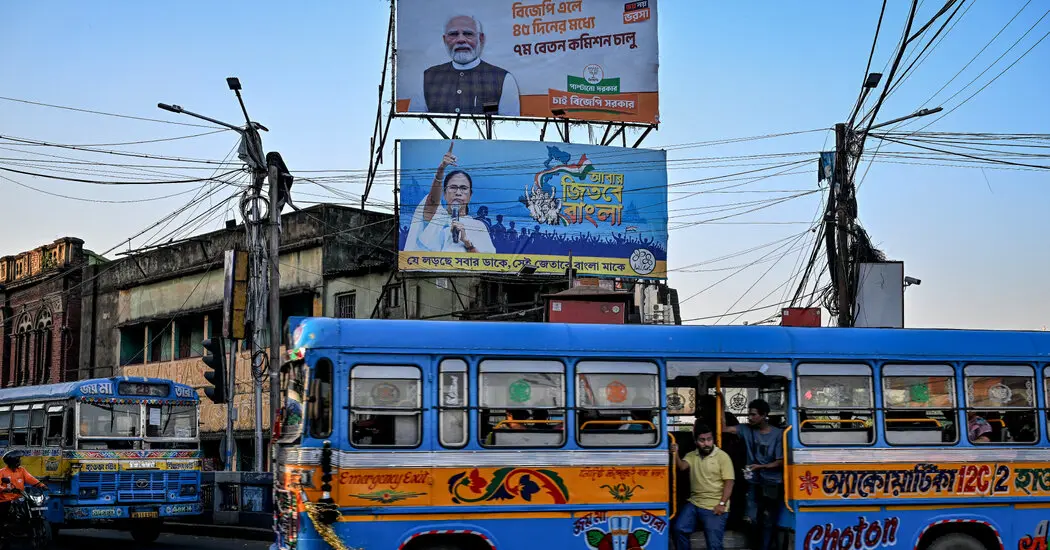
인도 나렌드라 모디 총리와 서벵갈 주의 수장이자 '디디'라는 별명으로도 알려진 마마타 반디즈 캠페인 포스터가 이번 달 콜카타에 전시되어 있다.
아누프리타 다스, 하리 쿠마르
비주얼: 아툴 로크
아누프리타 다스와 하리 쿠마르는 서벙갈의 주도인 콜카타와 모디의 정당이 상당한 진전을 이룬 주의 산악 지역인 쿠르세옹에서 수십 명의 유권자들과 대화했다.
세계 최대 민주주의 국가인 인도에서는 수년 전 단 한 번의 오타가 지금 사람의 투표권을 위협할 수 있다.
서벵갈의 63세 의류 제조업자 모하마드 알리 할더는 주 정부의 다음 정부를 선출하기 위한 선거 수개월 전 올해 초 걱정스러운 통지를 받은 후 이를 알게 되었다. 인도 선거위원회는 그의 아버지 이름이 유권자 기록 두 세트에서 다르게 철자되어 할더씨의 신원을 확인하기 어렵다고 알렸다. 그는 문제가 해결될 때까지 투표를 할 수 없었다.
주도에서 자신의 의류 사업을 운영하는 할더씨는 시민권을 증명하는 문서들(거의 100년 전으로 거슬러 올라가는 토지 기록, 여권 및 기타 정부 발행 신분증)을 모았고 항소를 제출했다. 그러나 그의 이름은 복구되지 않았으며 투표가 시작되었다.
"나는 살아있는 시체 같은 느낌이 든다"고 할더씨는 문서로 가득 찬 비닐봉지를 움켜쥐며 말했다.
할더씨는 인도 선거위원회의 최근 유권자 명부 개정에서 이름이 삭제되거나 "의심스러운" 것으로 표시된 약 900만 명의 유권자, 즉 서벵갈 유권자의 10% 이상 중 한 명이다. 이곳은 이달 투표를 하는 4개 인도 주와 1개 연방 영토 중 가장 인구가 많은 곳이며, 결과는 5월 4일에 나올 것으로 예상된다.
삭제된 많은 사람들은 무슬림이었으며, 야당들은 모디 총리의 정부가 무슬림 유권자들을 선거권을 박탈하기 위해 권력을 남용하고 있다고 비난했다. 모디는 위원회 의장을 선출하는 3인 위원회를 이끌고 있다.
모디의 힌두 민족주의자 bharatiya janata당은 오랫동안 무슬림을 자신의 힌두 국가 개념을 훼손하는 침략자로 묘사해왔다. 무슬림 이름을 유권자 목록에서 삭제함으로써 이 정당은 인도의 두 번째로 큰 무슬림 인구를 가진 주에서 자신의 기회를 높일 수 있으며, 이는 그들이 한 번도 이기지 못한 주이다.
이 문제는 71세의 지도자 마마타 반디즈가 4번째 재임을 위해 출마 중인 풀뿌리 정당인 트리나물 의회와 서벵갈에서 전직 트리나물 의원인 수벤두 아디카리가 이끌고 있는 인도인민당 간의 전투에서 중요한 쟁점이 되었다.
2011년 이후 서벵갈의 주 수장을 맡고 있는 반디즈는 모디의 가장 맹렬한 비평가이자 움직일 수 없는 적이다. 접근성 있고 보호적인 이미지는 그녀에게 "디디" 또는 누나라는 별명을 얻게 했다.
인도인민당과 선거위원회는 모두 작년에 수십 개 주와 영토에서 시작된 "특별 집중 개정"을 통한 유권자 명부 조작 주장을 부인했다. 위원회는 사망하거나 중복되었거나 주를 떠난 유권자들의 이름을 제거하는 것이 필요했다고 말했다. 마지막 그러한 행사는 2002년에 있었다.
인도인민당이 지속적으로 진전을 이루고 있기 때문에 서벵갈의 이해 관계가 특히 높다. 2016년 입법부 294석 중 3석만 획득한 것에서 2021년 마지막 선거에서 77석을 차지했다. 많은 선거 분석가들은 여전히 반디즈가 승리할 것으로 예상하지만, 그들은 더 작은 차이를 예측하고 모디의 정당이 100석 이상을 획득할 수 있을 것으로 예상한다.
서벵갈은 3개 국가와 국경을 공유하고 뒤에 중국이 있는 실리구리 회랑이 주를 통과하기 때문에 전략적으로 중요하다. 가장 좁은 지점에서 약 13마일 너비이기 때문에 "닭의 목"이라고도 불리는 이는 인도가 8개 북동부 주에 도달할 수 있는 유일한 육로이며, 민간인 및 군용품을 민감한 국경 지역에 전달하는 데 사용된다.
인도인민당의 증가하는 존재는 모디와 힌두 우파가 인도 지배 추구에서 이룬 진전의 지표이다. 인도가 국가 및 주 수준 모두에서 힌두교도를 먼저 배치할 때만 경제적으로 강력할 수 있다는 그들의 주장은 많은 벵갈인들에게 울려 퍼졌다. 힌두교도는 인도 인구의 대다수를 차지하며 무슬림은 약 15%이다.
무슬림 유권자들은 세속주의자이면서도 겉으로는 화려하지 않지만 상대방에 대한 비난에는 맹렬한 반디즈에게 충성하는 경향이 있다. 그녀는 또한 벵골 문화 정체성이 종교를 능가하는 많은 힌두 유권자들을 끌어당긴다. 벵갈인들은 인도 국가 국가 국가를 저술한 라빈드라나트 태고르를 포함한 여러 노벨상 수상자를 배출한 풍부한 지적 유산을 자랑한다.
"우리에게 그녀는 294석의 모든 후보자이다"고 최근 일요일 아침 트리나물 후보 데바시쉬 쿠마르의 문호간 캠페인에 참여한 사업가 아린담 두타로이가 말했다. 반디즈는 벵골을 진전의 길로 놓았으며, 두타로이는 말했다. "그녀는 거리 싸움꾼이고, 평민을 위해 말한다."
많은 유권자들은 인도인민당 주 정부가 벵골 정체성과 언어를 지울까봐 우려했다. 그들은 인도인민당이 힌디어 사용을 시도하거나 생선과 고기에 대한 사랑으로 알려진 지역에서 채식을 강제할 것이라는 우려를 표현했다. (그러한 우려를 완화하기 위해 인도인민당 후보는 최근 손에 생선을 들고 콜카타에서 캠페인을 펼쳤다.)
반디즈 정당의 일꾼들은 주사위로 모양을 낼 수 있는 컷아웃이 있는 "디디 vs. 모디" 뱀과 사다리 보드를 배포했다. 보드의 가장 큰 위협은 모디와 홈 장관 아밋 샤의 얼굴을 가진 두 개의 머리를 가진 뱀이었다. 그 칸에 내려앉으면 전체 주가 바닥으로 미끄러져 내려간다고 한 당 일꾼이 쾌활하게 설명했다.
그러나 반디즈의 통치는 불균형했다. 여성에게 현금을 전달하는 복지 프로그램이 인기 있었지만, 그녀의 정부는 부패 혐의로 인해 시달려왔다. 한 스캔들에서는 당 관료들이 정부 학교의 교직 위치를 판매한 혐의를 받았다. 일부 유권자들은 일자리 창출 속도가 느리다고 불만을 표했고, 여성 의사가 2024년에 강간 및 살해된 후 여성의 안전에 대해 걱정했다.
인도인민당은 여성에 대한 현금 지출을 두 배로 늘리기로 약속했으며 공공 안전을 캠페인 이슈로 만들었다. 의사의 어머니인 라트나 데브나토는 반디즈 치하에서 모든 가해자가 정의를 받지 못했다고 말하면서 인도인민당의 공직 후보가 되기로 결정했다.
인도인민당의 새로운 거점은 약 100명의 인구 중 약 5분의 1을 차지하고 있는 산악 국경 지역인 북벵골이다. 이 정당은 지역의 8개 구에서 54개 입법부 의석 중 30개를 보유하고 있다. 여기의 유권자들은 종교와 언어에 대해 덜 신경 쓴다. 그들은 더 높은 급여 일자리와 더 나은 도로를 원하며, 많은 사람들은 반디즈 정부가 그들의 이익을 간과했다고 비난한다.
다르질링으로 가는 길에 있는 쿠르세옹 마을에서 작은 찻집을 운영하는 레시마 무키야는 수개월 동안 수리되지 않은 움푹 패인 도로를 지적했다.
"지난 선거에서 우리는 디디를 지지했다"고 월 20,000루피, 즉 214달러를 버는 40세의 무키야는 말했으며, 여성 복지 프로그램에서 받는 1,500루피로 보충된다. 하지만 트리나물은 "거의 일을 하지 않는다"고 그녀는 말했다. "이제 어떤 변화가 있어야 한다."
이 불만족스러운 국경 지역에서 일자리를 놓고 경쟁하는 "침투자"를 제거하겠다는 인도인민당의 약속이 울려 퍼졌다. 홈 장관인 샤는 이 용어를 인접한 이슬람교 다수 방글라데시에서 온 불법 이민자를 설명하는 데 사용했다. 이는 오랫동안 인도의 문제였지만, 공식적인 그들의 수 추정은 구하기 어렵다.
유권자 명부 개정의 비평가들은 그것이 문제를 뒤섞어서 인도의 무슬림 시민을 목표로 한다고 말했다. 관계자들이 이름 삭제 사유로 제시한 것들은 자원과 신원을 증명할 시간이 제한된 사람들에게 혼란스러웠다고 콜카타 시립공사의 의원이자 트리나물 회원인 파리다 파르빈이 말했다. 무슬림들은 힌두교도보다 더 높은 비율로 삭제되었다.
수십만 개의 이름이 2002년에 유권자의 아버지가 여성으로 등재되거나 지금 6명의 자녀를 가진 4명 자녀가 있는 가족을 포함하여 다양한 이유로 "판정"에 배치되었다고 파르빈은 말했다.
27세의 동종요법 의사 SK Md. 아미르가 올해 초 유권자 등록 양식을 작성했을 때 그는 아버지의 세부 사항을 제공했지만 4월 6일 위원회에서 그의 머리를 긁적이게 한 통지를 받았다. 그것은 그를 이전 개정과 연결하는 세부 사항이 그의 할아버지의 것이며 나이 불일치가 있다고 말했다. "이는 내가 지금 투표권을 잃었다는 의미이다."
콜카타의 의류 제조업자 할더는 그의 아버지 이름의 철자 "리아스"가 2002년 개정에서 그가 이번 해에 신청서에 적은 이름 "리아수딘 할더"와 일치하지 않아 그의 이름과 세부 사항이 "부정확하게 연결"되었다고 말했다.
콜카타의 무슬림 다수 지역인 남쪽 24 판가나스에 있는 가족 집의 침대에 다리를 꼬고 앉아 있는 할더는 1928년으로 거슬러 올라가는 토지 기록을 보였다. 그는 특별 중재소를 통해 결정에 항소할 것을 바라고 있다고 말했지만, 그의 근처에는 아직 설정되지 않았다.
그는 투표 등록이 없으면 은행이 자신의 계좌를 폐쇄하거나 정부가 사업을 폐쇄할 것이 아닐까 걱정했다.
"나의 시민권이 사라질까봐 두렵다"고 그는 말했다.
챤드라세카르 바타차리 기고자
아누프리타 다스는 인도와 남아시아를 위해 타임즈를 취재하고 있다. 그녀는 뉴델리에 거주하고 있다.
하리 쿠마르는 뉴델리를 기반으로 인도를 취재하고 있다. 그는 20년 이상의 기자 경력을 가지고 있다.
아누프리타 다스, 하리 쿠마르
비주얼: 아툴 로크
아누프리타 다스와 하리 쿠마르는 서벙갈의 주도인 콜카타와 모디의 정당이 상당한 진전을 이룬 주의 산악 지역인 쿠르세옹에서 수십 명의 유권자들과 대화했다.
세계 최대 민주주의 국가인 인도에서는 수년 전 단 한 번의 오타가 지금 사람의 투표권을 위협할 수 있다.
서벵갈의 63세 의류 제조업자 모하마드 알리 할더는 주 정부의 다음 정부를 선출하기 위한 선거 수개월 전 올해 초 걱정스러운 통지를 받은 후 이를 알게 되었다. 인도 선거위원회는 그의 아버지 이름이 유권자 기록 두 세트에서 다르게 철자되어 할더씨의 신원을 확인하기 어렵다고 알렸다. 그는 문제가 해결될 때까지 투표를 할 수 없었다.
주도에서 자신의 의류 사업을 운영하는 할더씨는 시민권을 증명하는 문서들(거의 100년 전으로 거슬러 올라가는 토지 기록, 여권 및 기타 정부 발행 신분증)을 모았고 항소를 제출했다. 그러나 그의 이름은 복구되지 않았으며 투표가 시작되었다.
"나는 살아있는 시체 같은 느낌이 든다"고 할더씨는 문서로 가득 찬 비닐봉지를 움켜쥐며 말했다.
할더씨는 인도 선거위원회의 최근 유권자 명부 개정에서 이름이 삭제되거나 "의심스러운" 것으로 표시된 약 900만 명의 유권자, 즉 서벵갈 유권자의 10% 이상 중 한 명이다. 이곳은 이달 투표를 하는 4개 인도 주와 1개 연방 영토 중 가장 인구가 많은 곳이며, 결과는 5월 4일에 나올 것으로 예상된다.
삭제된 많은 사람들은 무슬림이었으며, 야당들은 모디 총리의 정부가 무슬림 유권자들을 선거권을 박탈하기 위해 권력을 남용하고 있다고 비난했다. 모디는 위원회 의장을 선출하는 3인 위원회를 이끌고 있다.
모디의 힌두 민족주의자 bharatiya janata당은 오랫동안 무슬림을 자신의 힌두 국가 개념을 훼손하는 침략자로 묘사해왔다. 무슬림 이름을 유권자 목록에서 삭제함으로써 이 정당은 인도의 두 번째로 큰 무슬림 인구를 가진 주에서 자신의 기회를 높일 수 있으며, 이는 그들이 한 번도 이기지 못한 주이다.
이 문제는 71세의 지도자 마마타 반디즈가 4번째 재임을 위해 출마 중인 풀뿌리 정당인 트리나물 의회와 서벵갈에서 전직 트리나물 의원인 수벤두 아디카리가 이끌고 있는 인도인민당 간의 전투에서 중요한 쟁점이 되었다.
2011년 이후 서벵갈의 주 수장을 맡고 있는 반디즈는 모디의 가장 맹렬한 비평가이자 움직일 수 없는 적이다. 접근성 있고 보호적인 이미지는 그녀에게 "디디" 또는 누나라는 별명을 얻게 했다.
인도인민당과 선거위원회는 모두 작년에 수십 개 주와 영토에서 시작된 "특별 집중 개정"을 통한 유권자 명부 조작 주장을 부인했다. 위원회는 사망하거나 중복되었거나 주를 떠난 유권자들의 이름을 제거하는 것이 필요했다고 말했다. 마지막 그러한 행사는 2002년에 있었다.
인도인민당이 지속적으로 진전을 이루고 있기 때문에 서벵갈의 이해 관계가 특히 높다. 2016년 입법부 294석 중 3석만 획득한 것에서 2021년 마지막 선거에서 77석을 차지했다. 많은 선거 분석가들은 여전히 반디즈가 승리할 것으로 예상하지만, 그들은 더 작은 차이를 예측하고 모디의 정당이 100석 이상을 획득할 수 있을 것으로 예상한다.
서벵갈은 3개 국가와 국경을 공유하고 뒤에 중국이 있는 실리구리 회랑이 주를 통과하기 때문에 전략적으로 중요하다. 가장 좁은 지점에서 약 13마일 너비이기 때문에 "닭의 목"이라고도 불리는 이는 인도가 8개 북동부 주에 도달할 수 있는 유일한 육로이며, 민간인 및 군용품을 민감한 국경 지역에 전달하는 데 사용된다.
인도인민당의 증가하는 존재는 모디와 힌두 우파가 인도 지배 추구에서 이룬 진전의 지표이다. 인도가 국가 및 주 수준 모두에서 힌두교도를 먼저 배치할 때만 경제적으로 강력할 수 있다는 그들의 주장은 많은 벵갈인들에게 울려 퍼졌다. 힌두교도는 인도 인구의 대다수를 차지하며 무슬림은 약 15%이다.
무슬림 유권자들은 세속주의자이면서도 겉으로는 화려하지 않지만 상대방에 대한 비난에는 맹렬한 반디즈에게 충성하는 경향이 있다. 그녀는 또한 벵골 문화 정체성이 종교를 능가하는 많은 힌두 유권자들을 끌어당긴다. 벵갈인들은 인도 국가 국가 국가를 저술한 라빈드라나트 태고르를 포함한 여러 노벨상 수상자를 배출한 풍부한 지적 유산을 자랑한다.
"우리에게 그녀는 294석의 모든 후보자이다"고 최근 일요일 아침 트리나물 후보 데바시쉬 쿠마르의 문호간 캠페인에 참여한 사업가 아린담 두타로이가 말했다. 반디즈는 벵골을 진전의 길로 놓았으며, 두타로이는 말했다. "그녀는 거리 싸움꾼이고, 평민을 위해 말한다."
많은 유권자들은 인도인민당 주 정부가 벵골 정체성과 언어를 지울까봐 우려했다. 그들은 인도인민당이 힌디어 사용을 시도하거나 생선과 고기에 대한 사랑으로 알려진 지역에서 채식을 강제할 것이라는 우려를 표현했다. (그러한 우려를 완화하기 위해 인도인민당 후보는 최근 손에 생선을 들고 콜카타에서 캠페인을 펼쳤다.)
반디즈 정당의 일꾼들은 주사위로 모양을 낼 수 있는 컷아웃이 있는 "디디 vs. 모디" 뱀과 사다리 보드를 배포했다. 보드의 가장 큰 위협은 모디와 홈 장관 아밋 샤의 얼굴을 가진 두 개의 머리를 가진 뱀이었다. 그 칸에 내려앉으면 전체 주가 바닥으로 미끄러져 내려간다고 한 당 일꾼이 쾌활하게 설명했다.
그러나 반디즈의 통치는 불균형했다. 여성에게 현금을 전달하는 복지 프로그램이 인기 있었지만, 그녀의 정부는 부패 혐의로 인해 시달려왔다. 한 스캔들에서는 당 관료들이 정부 학교의 교직 위치를 판매한 혐의를 받았다. 일부 유권자들은 일자리 창출 속도가 느리다고 불만을 표했고, 여성 의사가 2024년에 강간 및 살해된 후 여성의 안전에 대해 걱정했다.
인도인민당은 여성에 대한 현금 지출을 두 배로 늘리기로 약속했으며 공공 안전을 캠페인 이슈로 만들었다. 의사의 어머니인 라트나 데브나토는 반디즈 치하에서 모든 가해자가 정의를 받지 못했다고 말하면서 인도인민당의 공직 후보가 되기로 결정했다.
인도인민당의 새로운 거점은 약 100명의 인구 중 약 5분의 1을 차지하고 있는 산악 국경 지역인 북벵골이다. 이 정당은 지역의 8개 구에서 54개 입법부 의석 중 30개를 보유하고 있다. 여기의 유권자들은 종교와 언어에 대해 덜 신경 쓴다. 그들은 더 높은 급여 일자리와 더 나은 도로를 원하며, 많은 사람들은 반디즈 정부가 그들의 이익을 간과했다고 비난한다.
다르질링으로 가는 길에 있는 쿠르세옹 마을에서 작은 찻집을 운영하는 레시마 무키야는 수개월 동안 수리되지 않은 움푹 패인 도로를 지적했다.
"지난 선거에서 우리는 디디를 지지했다"고 월 20,000루피, 즉 214달러를 버는 40세의 무키야는 말했으며, 여성 복지 프로그램에서 받는 1,500루피로 보충된다. 하지만 트리나물은 "거의 일을 하지 않는다"고 그녀는 말했다. "이제 어떤 변화가 있어야 한다."
이 불만족스러운 국경 지역에서 일자리를 놓고 경쟁하는 "침투자"를 제거하겠다는 인도인민당의 약속이 울려 퍼졌다. 홈 장관인 샤는 이 용어를 인접한 이슬람교 다수 방글라데시에서 온 불법 이민자를 설명하는 데 사용했다. 이는 오랫동안 인도의 문제였지만, 공식적인 그들의 수 추정은 구하기 어렵다.
유권자 명부 개정의 비평가들은 그것이 문제를 뒤섞어서 인도의 무슬림 시민을 목표로 한다고 말했다. 관계자들이 이름 삭제 사유로 제시한 것들은 자원과 신원을 증명할 시간이 제한된 사람들에게 혼란스러웠다고 콜카타 시립공사의 의원이자 트리나물 회원인 파리다 파르빈이 말했다. 무슬림들은 힌두교도보다 더 높은 비율로 삭제되었다.
수십만 개의 이름이 2002년에 유권자의 아버지가 여성으로 등재되거나 지금 6명의 자녀를 가진 4명 자녀가 있는 가족을 포함하여 다양한 이유로 "판정"에 배치되었다고 파르빈은 말했다.
27세의 동종요법 의사 SK Md. 아미르가 올해 초 유권자 등록 양식을 작성했을 때 그는 아버지의 세부 사항을 제공했지만 4월 6일 위원회에서 그의 머리를 긁적이게 한 통지를 받았다. 그것은 그를 이전 개정과 연결하는 세부 사항이 그의 할아버지의 것이며 나이 불일치가 있다고 말했다. "이는 내가 지금 투표권을 잃었다는 의미이다."
콜카타의 의류 제조업자 할더는 그의 아버지 이름의 철자 "리아스"가 2002년 개정에서 그가 이번 해에 신청서에 적은 이름 "리아수딘 할더"와 일치하지 않아 그의 이름과 세부 사항이 "부정확하게 연결"되었다고 말했다.
콜카타의 무슬림 다수 지역인 남쪽 24 판가나스에 있는 가족 집의 침대에 다리를 꼬고 앉아 있는 할더는 1928년으로 거슬러 올라가는 토지 기록을 보였다. 그는 특별 중재소를 통해 결정에 항소할 것을 바라고 있다고 말했지만, 그의 근처에는 아직 설정되지 않았다.
그는 투표 등록이 없으면 은행이 자신의 계좌를 폐쇄하거나 정부가 사업을 폐쇄할 것이 아닐까 걱정했다.
"나의 시민권이 사라질까봐 두렵다"고 그는 말했다.
챤드라세카르 바타차리 기고자
아누프리타 다스는 인도와 남아시아를 위해 타임즈를 취재하고 있다. 그녀는 뉴델리에 거주하고 있다.
하리 쿠마르는 뉴델리를 기반으로 인도를 취재하고 있다. 그는 20년 이상의 기자 경력을 가지고 있다.
처리 완료
8,170 tokens · $0.0234
기사 수집 완료 · 13:25
매체 피드에서 기사 메타데이터 수집
헤드라인 번역 완료 · 13:32
제목/요약 한국어 번역 (fetch 시점 inline)
claude-haiku-4-5-20251001
258 tokens
$0.00067
2.7s
본문 추출 완료
9,682자 추출 완료
본문 한국어 번역 완료 · 13:32
4,589자 번역 완료
claude-haiku-4-5-20251001
7,912 tokens
$0.02273
56.8s
지정학적 엔티티 추출 완료 · 13:32
8개 엔티티 추출 완료
지정학적 맥락 & R-Scanner
R-Scanner · 핫스팟
z=3.33
평소보다 훨씬 많은 매체가 집중 보도 중 — 기준: West Bengal
(🇮🇳 IN)
최근 6시간 32건
7일 평균 17.64건 / 6h
2개국 매체
3개 매체
본문에서 추출된 지명 (8)
West Bengal
🇮🇳
Kolkata
🇮🇳
India
🇮🇳
Kurseong
🇮🇳
Siliguri Corridor
🇮🇳
Bangladesh
🇧🇩
South 24 Parganas
🇮🇳
China
🇨🇳
위치 지도
지도 로딩 중…
같은 주제의 다른 기사 (최근 7일)
The party of Prime Minister Narendra Modi has been making gains in a state once beyond its grasp, but many decry an audit that removed nine million voters, many of them Muslim.
Campaign posters featuring Prime Minister Narendra Modi of India, and Mamata Banerjee, the chief minister of West Bengal, who is also known by her moniker “Didi,” in Kolkata this month.Credit...By Anupreeta Das and Hari Kumar
Visuals by Atul Loke
Anupreeta Das and Hari Kumar spoke to dozens of voters in Kolkata, the capital of West Bengal, and Kurseong, in the state’s hilly region, where Mr. Modi’s party has made significant inroads.
In India, the world’s largest democracy, a single misspelling from years ago can now threaten a person’s right to vote.
Mohammad Ali Halder, a 63-year-old garment manufacturer in West Bengal, found that out after receiving a worrying notice earlier this year, months before elections to select the state’s next government. The Election Commission of India informed him that his father’s name had been spelled differently in two sets of voter records, making it tough to verify Mr. Halder’s identity. He would not be able to cast his ballot until the matter was resolved.
Mr. Halder, who runs his own garment business in Kolkata, the capital, gathered documents to prove his citizenship — land records going back almost 100 years, his passport and other government-issued identity cards — and filed an appeal. But his name has not been restored, and voting has started.
“I feel like a living dead body,” said Mr. Halder, clutching a plastic bag stuffed with the documents.
Mr. Halder is one of roughly nine million voters, or more than 10 percent of the electorate in West Bengal, whose names have been deleted or cast as “doubtful” in a recent voter roll revision by India’s Election Commission. It is the most populous of the four Indian states and one union territory where voters go to the polls this month, with results expected May 4.
Many of those deleted were Muslims, and opposition parties have accused Prime Minister Narendra Modi’s government of abusing its power to disenfranchise Muslim voters. Mr. Modi heads a three-member committee that selects the chief of the commission.
The Hindu nationalist Bharatiya Janata Party of Mr. Modi has long described Muslims as invaders who compromise its idea of a Hindu nation. By deleting Muslim names from the voter list, the party may raise its chances in a state that has India’s second-largest Muslim population, and which it has never won.
The issue has become a flashpoint in the battle between the Trinamool Congress, a grass-roots party whose leader Mamata Banerjee, 71, is running for her fourth term in office, and the B.J.P., led in West Bengal by Suvendu Adhikari, a former Trinamool member.
Ms. Banerjee, who has been the chief minister of West Bengal since 2011, is one of Mr. Modi’s fiercest critics and immovable foes. Her image as both accessible and protective has earned her the moniker “Didi,” or big sister.
Both the B.J.P. and the election commission have denied claims of manipulating the voter roll through its “special intensive revision,” which started last year in a dozen states and territories. The commission said it was necessary to remove the names of voters who have died, are duplicated or have left the state. The last such exercise happened in 2002.
The stakes are particularly high in West Bengal because the B.J.P. has been steadily making inroads. From winning only three of the 294 seats in the legislative assembly in 2016, it took 77 seats in the last election, in 2021. While many election analysts still expect Ms. Banerjee to win, they predict a smaller margin, and that Mr. Modi’s party could win more than 100 seats.
West Bengal is strategically important because the Siliguri Corridor, which shares borders with three countries and has China looming behind them, runs through the state. Sometimes called the “Chicken’s Neck” because it is around 13 miles wide at its narrowest, it is India’s only land route to its eight northeastern states, used for delivering civilian and army supplies to sensitive border regions.
The B.J.P.’s growing presence is a marker of the progress Mr. Modi and the Hindu right have made in their quest to dominate India. Their pitch that India can only be economically powerful if it places Hindus first at both the national and state level has resonated with many Bengalis. Hindus make up the majority of India’s population and Muslims around 15 percent.
Muslim voters tend to be loyal to Ms. Banerjee, an avowed secularist who is unflashy in her appearance but fiery in her missives against opponents. She also attracts many Hindu voters for whom the Bengali cultural identity trumps religion. Bengalis are proud of their rich intellectual heritage, having produced several Nobel laureates, including Rabindranath Tagore, who wrote the Indian national anthem.
“To us, she is a candidate for all 294 seats,” said Arindam Duttaroy, a businessman who joined a door-to-door campaign by Trinamool candidate Debasish Kumar on a recent Sunday morning. Ms. Banerjee had put Bengal on the path to progress, Mr. Duttaroy said. “She is a street fighter, she speaks for the common people.”
Many voters told us they fear that a B.J.P. state government would erase the Bengali identity and language. They expressed concern that the B.J.P. would try to impose speaking Hindi or enforce vegetarianism in a region known for its love of fish and meat. (To allay such fears, a B.J.P. candidate recently campaigned in Kolkata with a fish in his hand.)
Workers from Ms. Banerjee’s party distributed “Didi vs. Modi” snakes-and-ladders boards with a cutout that could be shaped into a die. The biggest threat on the board was a two-headed snake with the faces of Mr. Modi and Home Minister Amit Shah. Land on that square and the whole state would slide to the bottom, a party worker cheerfully explained.
But Ms. Banerjee’s governance has been uneven. While welfare programs that deliver cash to women have been popular, her government has been plagued by allegations of corruption. In one scandal, party officials were accused of selling teaching positions at government schools. Some voters said they were frustrated at the slow pace of job creation and worried about women’s safety after a female doctor was raped and murdered in 2024.
The B.J.P. has promised to double the cash handouts to women and made public safety a campaign issue: Ratna Debnath, the mother of the doctor, decided to run for office for the B.J.P., saying that not all the perpetrators had been brought to justice under Ms. Banerjee.
The B.J.P.’s emerging stronghold is in north Bengal, a hilly border region home to about a fifth of the state’s roughly 100 million people. The party holds 30 of the 54 assembly seats from the region’s eight districts. Voters here care less about religion and language. They want higher-paying jobs and better roads, and many accuse the Banerjee government of having overlooked their interests.
Reshma Mukhiya, who runs a small tea stall in Kurseong, a town on the way to Darjeeling, pointed to a potholed road that she said had not been repaired in months.
“In the last election, we supported Didi,” said Ms. Mukhiya, 40, who makes up to 20,000 rupees, or $214, a month from her shop, supplemented by the 1,500 rupees she receives from the welfare program for women. But the Trinamool does “little work,” she said. “There should be some change now.”
In these disaffected border areas, the B.J.P.’s promise to weed out “infiltrators” who compete for jobs has resonated. Mr. Shah, the home minister, has used the term to describe illegal immigrants from neighboring, Muslim-majority Bangladesh — long an issue in India, though formal estimates of their number are hard to come by.
Critics of the voter roll revision said it targets Muslim citizens of India by muddling the issues. The reasons officials have given for deleting names have been confusing to people with limited resources and time to prove their identities, said Farida Parvin, a councilor with the Kolkata Municipal Corporation and a Trinamool member. Muslims were deleted at higher rates than Hindus.
Tens of thousands of names were placed in “adjudication” for reasons ranging from a voter’s father being listed as female in 2002, or families with four children who now have six, Ms. Parvin said.
When SK Md. Amir, a 27-year-old homeopathic doctor, filled out his voter registration form earlier this year, he provided his father’s details, but he got a notice from the commission on April 6 that left him scratching his head. It said that the details linking him to the previous revision were that of his grandparents and there was an age discrepancy. “This means I have lost my voting right for now.”
Mr. Halder, the garment manufacturer in Kolkata, was told that his name and details were “incorrectly linked” because the spelling of his father’s name in the 2002 revision, “Rias,” did not match the name, “Riasuddin Halder,” which he put down in his application this year.
Sitting cross-legged on a bed in his family home in South 24 Parganas, a Muslim-majority district in Kolkata that has seen one of the highest deletions of voter names, Mr. Halder showed land records dating back to 1928. He said he was hoping to appeal the decision via special tribunals, except that one hadn’t been set up in his neighborhood yet.
He fretted that without his voter registration the bank might close his account, or the government shut his business.
“I fear my citizenship will be gone,” he said.
Chandrasekhar Bhattacharjee contributed reporting.
Anupreeta Das covers India and South Asia for The Times. She is based in New Delhi.
Hari Kumar covers India, based out of New Delhi. He has been a journalist for more than two decades.