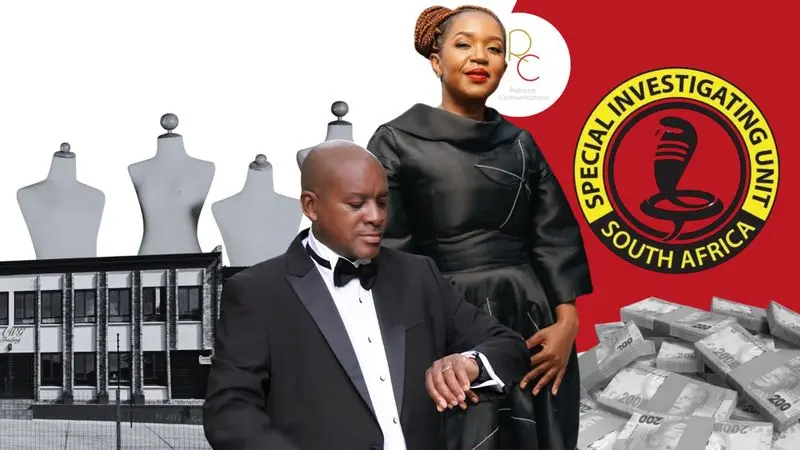
패션 아이콘, 남편, 국가기술기금, 특별수사단 — 음모가 더 진전되다
AMABHUNGANE: The fashion icon, her husband, the NSF and the SIU — The plot thickens
Daily Maverick
· 🇿🇦 Cape Town, ZA
Buyeleni Sibanyoni
EN
2026-04-19 14:30
Translated
루비콘 클로딩 디자이너 항와니 넹고브헬라는 국가기술기금 스캔들로 인해 100명의 학습자들을 R270만 규모로 좌절시켰으며, 이제 그녀를 따라잡았지만 여전히 책임을 전가하려고 시도하고 있다.
2019년 5월, 소웨토의 프로테아 글렌에서 온 젊은 학습자들의 그룹이 가우텡 정부에 편지를 보냈다. 그들은 심각하게 잘못된 의류 및 직물 제조 정부 자금 지원 교육 프로그램의 일부였다.
숙박시설, 장비 및 도착하지 않은 생활비에 문제가 있었다.
일부는 실제로 진행되지 않은 수업에 대해 사전에 출석 등록부에 서명하도록 요청받았다고 말했다.
그들은 인정된 자격을 약속받았다. 그들은 패션의 미래를 약속받았다. 그 대신 그들이 받은 것은 잠긴 건물과 유명 패션 디자이너 항와니 넹고브헬라가 약속한 자격의 흔적이 없었다.
그 편지는 선서 선언서 4장과 함께 2022년에 완료된 법의학적 조사 내부에 있다.
이 모든 것의 중심에 있는 여성 넹고브헬라는 고급 패션 브랜드 루비콘 클로딩뿐만 아니라 잘 알려지지 않은 교육 부서인 루비콘 커뮤니케이션즈의 소유자이며, 이 회사는 2018년 의류 산업 일자리를 위해 100명의 젊은 학습자들을 훈련시키기 위해 국가기술기금(NSF) 보조금을 받았다.
학습자들이 떠돌며 NSF가 돈을 되찾으려는 시도가 무시되는 동안, 넹고브헬라는 계속 패션 및 행사 회로에 나타났다.
디자이너로서, 그녀는 장관들과 유명 인사들을 드레싱했으며 남아프리카 패션 위크에서 그녀의 컬렉션을 선보였다. 루비콘 클로딩은 또한 2024년 SA 스타일 어워드의 후원사로 나열되었다.
지난주, 특별수사단(SIU)은 넹고브헬라가 채무 인정서에 서명했으며 월 R74,772의 할부금으로 전체 R270만 플러스 이자를 상환하기로 동의했다고 발표했다.
"특히 이 이니셔티브를 권한 부여와 경제 참여의 길로 신뢰를 두었던 학습자들을 포함하여 영향을 받은 모든 이해관계자들에게 진정한 유감을 표명하고 싶습니다"라고 넹고브헬라의 남편 차마노 넹고브헬라가 이번 주 4페이지 편지에서 우리에게 말했다.
"프로젝트의 도전에도 불구하고, 그것은 커뮤니티를 높이고, 기회를 창출하며, 국가의 사회 경제 발전에 의미 있게 기여하려는 진정한 의도에 근거했습니다."
메타데이터가 편지가 항와니에 의해 작성되었음을 시사하지만, 차마노는 우리에게 유명한 아내에게서 책임을 전가하려고 시도했으며, 우리에게 말했다: "루비콘 커뮤니케이션즈는 법적으로 기술적으로 항와니 넹고브헬라 부인(유일한 이사/회원)이 소유하고 있지만, 실제로는 남편인 차마노 넹고브헬라가 운영하고 [완전히] 프로젝트 관리합니다. 그녀는 루비콘 커뮤니케이션의 일상적인 활동에 참여하지 않으며, 이것이 널리 제안되었습니다."
그러나 차마노가 제공한 변명은 NSF가 의뢰한 넥서스 법의학 조사에서 발견한 세부 사항과 일치하지 않으며, 대신 항와니의 정직성에 대한 새로운 의문을 제기한다.
SIU 발표는 2025년 3월 시릴 라마포사 대통령이 서명한 광범위한 선포에서 비롯되며, SIU가 "국가기술기금과 관련된 심각한 행정 비위, 부패 및 부적절한 행위의 혐의"를 조사하도록 권한을 부여했다.
루비콘의 SIU 조사는 NSF 자금이 R270만이 루비콘 클로딩 계정에 지불된 후 2개월 미만인 2018년 12월 31일까지 고갈되었으며 첫 번째 학습자가 도착하기 전에 보여주었다.
SIU에 따르면, 돈은 "루비콘의 운영 비용, 물류, 기계 구매, 임차료, 대출 상환, 학비 및 개인 이체를 충당하기 위해 전용되었다".
한편, 이전의 넥서스 보고서(아마부응가네에서 취득)와 그것이 제공하는 루비콘의 사례 연구는 NSF가 보유한 수십억 개가 얼마나 부실하게 관리되었는지를 보여주며, 넥서스 조사관들이 찾아볼 때 발견한 것을 보여준다.
2017년 4월, 넹고브헬라는 농촌 개발 프로그램에서 돈을 찾아 NSF에 제안서를 제출했다. 이 제안은 의류 및 직물 제조 분야에서 3,000명의 학습자를 훈련시키는 것이었다.
수개월 후 톱 빌링과 인터뷰할 때, 넹고브헬라의 야심 많은 디자이너들에 대한 조언은 다음과 같았다: "당신이 이것을 할 소명을 받았다는 것을 알아야 하는데, 모든 사람이 디자이너가 될 수 있는 것은 아닙니다."
이 쇼는 약속으로 끝났다. 시청자들에게 넹고브헬라가 "자신의 브랜드를 가정용품으로 확장하고 신흥 디자이너들을 훈련시킬 것"이라고 말했으며, "그들은 운이 좋은 견습생일 것"이라고 덧붙였다.
2018년 6월 12일, NSF는 R410만을 조금 넘는 가격으로 프로젝트를 승인했다. 계획이 중단되기 전에 최종적으로 지급된 금액은 R270만이었다.
루비콘 커뮤니케이션즈는 12개월 동안 100명의 학습자를 훈련시켜야 했다. 그러나 단 한 명의 학습자도 등록되기 전에, NSF 공무원이 발견하지 못한 이미 문제가 있었다.
섬유 처리 및 제조 부문 교육 훈련 기관(FP&M 세타)을 가진 루비콘의 인증은 프로젝트가 승인되었을 때 만료되었다.
인증은 완료된 과정이 실제로 누군가가 일자리를 찾는 데 도움이 될 수 있는 인정된 자격을 생산하는 것을 보장하는 것이다. 없으면, 훈련은 종이 위에서 무가치할 것이다. NSF가 이를 제기했거나 넹고브헬라가 그녀의 인증을 갱신했거나 대안을 마련했다는 증거가 없다.
아마부응가네는 이것을 넹고브헬라에 제기했지만, 이것은 차마노가 그의 편지에서 회피한 문제 중 하나였다. "이 단계에서 자신을 해치지 않기 위해, 우리는 공개 영역에서 구체적인 혐의나 질문에 대해 응답하지 않을 것입니다"라고 그는 우리에게 말했다.
법의학적 조사는 결국 커튼을 열 것이다.
2021년, 고등교육 및 훈련부는 넥서스 법의학 서비스에 남아프리카 감사관이 표시한 10개의 NSF 프로젝트를 조사하도록 의뢰했다. 루비콘 커뮤니케이션즈가 그들 중 하나였다.
NSF가 돈을 풀기 전에, 프로젝트는 실사를 거쳐야 했으며, 넹고브헬라의 제안은 놀라운 주장을 했다: 윗츠 대학교는 "자문 및 네트워킹 역할"을 한다고 실사 보고서에 따르면.
윗츠는 패션 디자인 과정을 제공하지 않는다. NSF에 제공된 지원 계약, 대응 또는 대학의 확인이 없었다.
2022년 넥서스 조사관들이 이것을 넹고브헬라에 제기했을 때, 그녀는 그들에게 말했다: "윗츠 대학 각도는 실사 후 프로젝트 관리 수수료가 처음 계획된 대로 인력을 수용하기에는 너무 낮아서 비행하지 않았습니다."
그녀는 윗츠 교수 필립 하우프트를 멘토링하도록 초대했다고 덧붙였다. "불행히도 나는 적절하게 멘토링될 기회를 잃었고 내 프로젝트는 윗츠가 온라인 스토어 개발을 지원하기로 계획했기 때문에 성공했을 수 있으며, 이는 우리가 훈련하고 있던 학습자들을 흡수하도록 성장하기로 계획했습니다."
윗츠는 아마부응가네에 완전히 다른 이야기를 말했다.
"대학은 의류 프로젝트에서 루비콘 커뮤니케이션즈의 항와니 넹고브헬라 또는 루비콘 클로딩과의 어떤 거래도 하지 않았으며, 대학은 이 회사와 직물 산업 내에서 자문하거나 네트워킹하는 역할을 하지 않았습니다"라고 대변인 시로나 파텔이 말했다. "대학은 직물, 패션 또는 의류 산업을 전문으로 하지 않습니다. [...] 대학은 웹사이트, 마케팅 또는 기타 약속의 어떤 제안에 대해서도 알지 못합니다."
파텔은 윗츠의 전 국립항공우주 센터 이사인 하우프트가 자신이 알 수 없는 프로젝트에 자신의 이름이 붙여진 것에 불쾌감을 느낀다고 덧붙였다.
윗츠가 루비콘 커뮤니케이션즈와 찾을 수 있는 유일한 연락처는 2018년 제안으로, 항공 우주 산업에 연결된 차마노에 제출되었으며, 민간 항공 및 공항 관리 학생들을 위한 자금 조달을 제안했다. 그러나 이것은 더 나아가지 않았다.
파텔은 NSF의 누구도 넹고브헬라의 주장을 사실 확인하기 위해 대학에 접근하지 않았다고 덧붙였다.
루비콘의 NSF 제안은 또한 에너지 클로딩이라는 회사가 훈련 기간 동안 루비콘을 위한 공장 공간, 장비 및 기계를 임차하기로 동의했으며, 훈련이 완료되면 500명의 졸업생을 고용할 수 있다고 명시했다. 실업한 청소년을 위한 일자리 창출에 초점을 맞춘 NSF 공무원들에게, 이것은 매력적인 제안이었을 것이다.
그러나 NSF 공무원들이 이 계약을 확인했거나 지원 계약을 보도록 요청했다는 징후가 없다.
에너지 클로딩은 2019년 3월 28일에 자발적으로 청산되었으며, 프로젝트가 공식적으로 시작된 후 2개월도 채 되지 않았다. 넹고브헬라가 에너지 클로딩이 문제가 있다는 것을 알았는지 또는 NSF에 알렸는지는 불분명하다. 이것들은 그녀와 차마노가 답하지 않기로 선택한 우리가 보낸 질문 중 일부이다.
모든 NSF 자금 지원 프로젝트를 가지고, 회사는 NSF의 감사자들이 돈이 어떻게 지출되는지 추적할 수 있도록 프로젝트를 위한 전용 은행 계좌를 열어야 한다. 이것은 일어나지 않았다. 대신, NSF는 R270만의 첫 번째 분할금을 이미 루비콘의 의류 사업의 자금을 포함하는 기존 계좌로 이체했다.
넹고브헬라가 이것에 대해 물었을 때, 그녀는 조사관에게 말했다: "우리는 프로젝트의 재정을 어떻게 운영해야 하는지에 대한 지침을 받지 못했습니다. 또한 NSF를 위한 첫 번째 프로젝트였습니다. 나는 활동적인 계좌로 항상 사용해온 의류 은행 계좌를 사용하기가 쉬웠습니다."
SIU의 법의학적 분석에 따르면, 자금은 신속하게 지급되었으며 R947,000은 2일 내에 지출되었다.
전체적으로 약 R290,000이 기계에 지출되었다. 차마노는 약 R300,000을 받았다. 약 R700,000이 다양한 대출을 상환하는 데 사용되었다. 넹고브헬라는 약 R500,000의 현금 인출을 했으며, 모두 교육 프로젝트를 위한 자금에서 약 R164,000을 학비로 지불했다.
"자금의 오용은 리더십 프로그램이 이루어지지 않았음을 의미하며, 100명의 학습자는 그들의 생계를 개선할 수 있었던 중요한 기술을 얻을 수 있는 기회를 거부당했습니다"라고 SIU 미디어 성명에 추가했다.
루비콘의 프로젝트 관리자인 차마노는 돈이 오용되었다는 것을 부인한다: "돈이 단순히 다른 목적으로 사용되었다는 제안은 실제로 사실이 아닙니다. 루비콘 커뮤니케이션즈는 2019년 2월 프로젝트가 시작되었을 때부터 NSF가 5개월 후 그것을 취소할 때까지 훈련 장비를 구입하고 생활비를 지급했습니다."
하지만 이 주장 — NSF가 5개월 후 프로젝트를 취소했다 — 빠르게 풀렸다.
루비콘이 NSF에 프로젝트를 제시했을 때, 그것은 1,000대의 재봉틀이 있는 공장에 접근할 수 있다고 말했다.
학습자들이 발견한 것은 매우 달랐다: 루비콘은 NSF의 실사가 15-20명의 학생만 수용할 수 있다고 언급한 란드버그의 작은 건물에 공간을 확보했다.
2019년 6월 넥서스 조사관들을 만난 학습자들은 훈련 공간이 오후 2시에만 교대를 마친 다른 근로자들이 사용했으며, 그들에게 수업을 위한 시간이 거의 남지 않았다고 말했다. 이에 더해, 그들의 진행자는 불규칙하게 수업에 참석했으며 12대의 재봉틀만 배달되었으므로 공유해야 했다.
가장 걱정스러운 것은 학습자들이 출석 등록부에 대해 말한 것이다. 그들은 수업이 이루어지지 않은 2주간을 다루는 등록부에 서명하도록 요청받았다고 주장했다. 자신의 추정에 따르면, 의미 있는 지시는 전체 프로그램에 걸쳐 4-6주에 불과했으며, 이론적 내용이 적고, 그들은 말했다, 어떤 평가도 없었다.
2019년 6월, 프로젝트를 시작한 지 4개월 후, 넹고브헬라는 NSF 공무원 마우린 래니야마에게 훈련 장소가 없어서 훈련 프로그램을 중단해야 한다고 알렸다.
넥서스 보고서에 따르면: "넹고브헬라는 집주인이 미불 임차료에 대해 법적 조치를 취했으며, 건물이 잠겼으며, 장비와 가구가 압수되었다고 공개했다."
그녀는 돈을 갚겠다고 약속했지만, 시간이 필요했다.
2020년 2월, NSF는 넹고브헬라에게 그녀가 공식적으로 계약 위반 상태에 있으며 받은 R270만을 상환할 21일이 있다고 알렸다.
넥서스 보고서에 따르면, 넹고브헬라는 "특수 프로젝트 확장"을 요청했다. "넹고브헬라는 특히 NSF에 프로젝트를 완료하는 데 도움을 줄 의향이 있는 자금 조달자에게 접근했다고 알렸다."
NSF는 제안을 거절하고, 자발적으로 돈을 반환할 마지막 기회를 주었다.
차마노의 최근 아마부응가네에 대한 편지에서, 그는 루비콘이 프로젝트의 붕괴에 대해 고통받았음을 시사했다: "루비콘 커뮤니케이션즈는 특정 측면에서 우리가 부당하게 행동했음을 인정하며 프로젝트의 실행과 완료의 부족에 대한 책임을 진다. 우리는 SIU와의 채무 인정서에 서명하고 실제로 훈련 리소스, 훈련 자료 및 학습자에 대한 생활비에 사용된 돈을 포함하여 받은 모든 돈을 효과적으로 환불함으로써 이 문제를 얼마나 심각하게 받아들이는지 보여주었다."
차마노가 말하지 않는 것은 NSF가 넹고브헬라를 위해 4년 동안 돈을 추적했다는 것이다.
2022년, 넥서스 조사관들은 약 R270만의 전액 지급이 무익하고 낭비적인 지출로 분류될 것을 권고했으며, 자금이 회수되고 NSF가 호크스와의 형사 사건을 열 것을 고려할 것을 권고했다.
2022/23 연간 보고서에서 NSF는 국가 변호사 사무소가 변호사를 임명하는 과정에 있다고 공개했다. 또한 루비콘의 이사를 찾기 위해 추적 요원을 임명할 것이라고 말했다. 2023/24년까지, 국가 변호사 사무소는 "기본 판단을 시작하는 과정에 있었다".
그런 다음 지난해 대통령실이 NSF를 조사하기 위해 SIU에 앞으로 나갈 수 있도록 권한을 부여한 선포에 서명했다. 이름으로 요청된 프로젝트 중 하나는 루비콘이었다.
넹고브헬라가 2월에 SIU와의 거래에 서명했을 때, R270만을 상환하기로 동의했으며, 그녀는 그것을 뉴스에서 벗어나기를 희망했다. SIU의 보도 자료는 그녀의 사진과 화려한 그래픽과 함께 그녀를 놀라게 했다.
"우리는 SIU 보도 자료에 꽤 놀랐는데, 우리는 계약이 기밀이라는 인상을 받았습니다"라고 차마노가 우리에게 말했다.
NSF 대리 CEO 멜리사 에라는 결과를 환영했다. "이 자금의 회수는 기술 개발을 위해 할당된 공공 리소스가 의도한 수혜자에게 도달해야 하며 모든 비용으로 보호될 것이라는 명확하고 명백한 메시지를 보냅니다"라고 그녀는 말했다.
프로젝트의 붕괴에도 불구하고, 넹고브헬라의 별은 계속 상승했다. 그녀는 2025년과 2026년 국정 연설을 위해 국무총리 쿰부드조 츠하브헤니를 드레싱했으며, SA 패션 위크에 정기적으로 전시된 디자이너가 되었으며, 2025년 12월 아프리카 패션 및 미술 회의에서 고위 패션 패널에 대해 발언했으며, 아프리카 전역의 패션, 미술 및 창의 산업을 축하하는 연간 대륙 행사이다.
넹고브헬라가 이제 채무 인정서에 서명했으며 돈을 상환하기로 동의했지만, 이것이 그녀가 형사 고발을 당하지 않을 것이라는 의미는 아니다.
NSF는 2022년에 넥서스 보고서를 호크스에 넘겼으며, 형사 사건이 등록되었다고 우리에게 말했다. 호크스는 우리에게 업데이트를 제공할 수 없었지만, SIU는 형사 고발을 고려하기 위해 자신의 조사를 국가기소청에 회부할 것이라고 말했다.
"조사는 여전히 진행 중입니다"라고 SIU가 아마부응가네에 말했다. "최종화되면, 국가기소청에 회부될 것입니다 [...]"
숙박시설, 장비 및 도착하지 않은 생활비에 문제가 있었다.
일부는 실제로 진행되지 않은 수업에 대해 사전에 출석 등록부에 서명하도록 요청받았다고 말했다.
그들은 인정된 자격을 약속받았다. 그들은 패션의 미래를 약속받았다. 그 대신 그들이 받은 것은 잠긴 건물과 유명 패션 디자이너 항와니 넹고브헬라가 약속한 자격의 흔적이 없었다.
그 편지는 선서 선언서 4장과 함께 2022년에 완료된 법의학적 조사 내부에 있다.
이 모든 것의 중심에 있는 여성 넹고브헬라는 고급 패션 브랜드 루비콘 클로딩뿐만 아니라 잘 알려지지 않은 교육 부서인 루비콘 커뮤니케이션즈의 소유자이며, 이 회사는 2018년 의류 산업 일자리를 위해 100명의 젊은 학습자들을 훈련시키기 위해 국가기술기금(NSF) 보조금을 받았다.
학습자들이 떠돌며 NSF가 돈을 되찾으려는 시도가 무시되는 동안, 넹고브헬라는 계속 패션 및 행사 회로에 나타났다.
디자이너로서, 그녀는 장관들과 유명 인사들을 드레싱했으며 남아프리카 패션 위크에서 그녀의 컬렉션을 선보였다. 루비콘 클로딩은 또한 2024년 SA 스타일 어워드의 후원사로 나열되었다.
지난주, 특별수사단(SIU)은 넹고브헬라가 채무 인정서에 서명했으며 월 R74,772의 할부금으로 전체 R270만 플러스 이자를 상환하기로 동의했다고 발표했다.
"특히 이 이니셔티브를 권한 부여와 경제 참여의 길로 신뢰를 두었던 학습자들을 포함하여 영향을 받은 모든 이해관계자들에게 진정한 유감을 표명하고 싶습니다"라고 넹고브헬라의 남편 차마노 넹고브헬라가 이번 주 4페이지 편지에서 우리에게 말했다.
"프로젝트의 도전에도 불구하고, 그것은 커뮤니티를 높이고, 기회를 창출하며, 국가의 사회 경제 발전에 의미 있게 기여하려는 진정한 의도에 근거했습니다."
메타데이터가 편지가 항와니에 의해 작성되었음을 시사하지만, 차마노는 우리에게 유명한 아내에게서 책임을 전가하려고 시도했으며, 우리에게 말했다: "루비콘 커뮤니케이션즈는 법적으로 기술적으로 항와니 넹고브헬라 부인(유일한 이사/회원)이 소유하고 있지만, 실제로는 남편인 차마노 넹고브헬라가 운영하고 [완전히] 프로젝트 관리합니다. 그녀는 루비콘 커뮤니케이션의 일상적인 활동에 참여하지 않으며, 이것이 널리 제안되었습니다."
그러나 차마노가 제공한 변명은 NSF가 의뢰한 넥서스 법의학 조사에서 발견한 세부 사항과 일치하지 않으며, 대신 항와니의 정직성에 대한 새로운 의문을 제기한다.
SIU 발표는 2025년 3월 시릴 라마포사 대통령이 서명한 광범위한 선포에서 비롯되며, SIU가 "국가기술기금과 관련된 심각한 행정 비위, 부패 및 부적절한 행위의 혐의"를 조사하도록 권한을 부여했다.
루비콘의 SIU 조사는 NSF 자금이 R270만이 루비콘 클로딩 계정에 지불된 후 2개월 미만인 2018년 12월 31일까지 고갈되었으며 첫 번째 학습자가 도착하기 전에 보여주었다.
SIU에 따르면, 돈은 "루비콘의 운영 비용, 물류, 기계 구매, 임차료, 대출 상환, 학비 및 개인 이체를 충당하기 위해 전용되었다".
한편, 이전의 넥서스 보고서(아마부응가네에서 취득)와 그것이 제공하는 루비콘의 사례 연구는 NSF가 보유한 수십억 개가 얼마나 부실하게 관리되었는지를 보여주며, 넥서스 조사관들이 찾아볼 때 발견한 것을 보여준다.
2017년 4월, 넹고브헬라는 농촌 개발 프로그램에서 돈을 찾아 NSF에 제안서를 제출했다. 이 제안은 의류 및 직물 제조 분야에서 3,000명의 학습자를 훈련시키는 것이었다.
수개월 후 톱 빌링과 인터뷰할 때, 넹고브헬라의 야심 많은 디자이너들에 대한 조언은 다음과 같았다: "당신이 이것을 할 소명을 받았다는 것을 알아야 하는데, 모든 사람이 디자이너가 될 수 있는 것은 아닙니다."
이 쇼는 약속으로 끝났다. 시청자들에게 넹고브헬라가 "자신의 브랜드를 가정용품으로 확장하고 신흥 디자이너들을 훈련시킬 것"이라고 말했으며, "그들은 운이 좋은 견습생일 것"이라고 덧붙였다.
2018년 6월 12일, NSF는 R410만을 조금 넘는 가격으로 프로젝트를 승인했다. 계획이 중단되기 전에 최종적으로 지급된 금액은 R270만이었다.
루비콘 커뮤니케이션즈는 12개월 동안 100명의 학습자를 훈련시켜야 했다. 그러나 단 한 명의 학습자도 등록되기 전에, NSF 공무원이 발견하지 못한 이미 문제가 있었다.
섬유 처리 및 제조 부문 교육 훈련 기관(FP&M 세타)을 가진 루비콘의 인증은 프로젝트가 승인되었을 때 만료되었다.
인증은 완료된 과정이 실제로 누군가가 일자리를 찾는 데 도움이 될 수 있는 인정된 자격을 생산하는 것을 보장하는 것이다. 없으면, 훈련은 종이 위에서 무가치할 것이다. NSF가 이를 제기했거나 넹고브헬라가 그녀의 인증을 갱신했거나 대안을 마련했다는 증거가 없다.
아마부응가네는 이것을 넹고브헬라에 제기했지만, 이것은 차마노가 그의 편지에서 회피한 문제 중 하나였다. "이 단계에서 자신을 해치지 않기 위해, 우리는 공개 영역에서 구체적인 혐의나 질문에 대해 응답하지 않을 것입니다"라고 그는 우리에게 말했다.
법의학적 조사는 결국 커튼을 열 것이다.
2021년, 고등교육 및 훈련부는 넥서스 법의학 서비스에 남아프리카 감사관이 표시한 10개의 NSF 프로젝트를 조사하도록 의뢰했다. 루비콘 커뮤니케이션즈가 그들 중 하나였다.
NSF가 돈을 풀기 전에, 프로젝트는 실사를 거쳐야 했으며, 넹고브헬라의 제안은 놀라운 주장을 했다: 윗츠 대학교는 "자문 및 네트워킹 역할"을 한다고 실사 보고서에 따르면.
윗츠는 패션 디자인 과정을 제공하지 않는다. NSF에 제공된 지원 계약, 대응 또는 대학의 확인이 없었다.
2022년 넥서스 조사관들이 이것을 넹고브헬라에 제기했을 때, 그녀는 그들에게 말했다: "윗츠 대학 각도는 실사 후 프로젝트 관리 수수료가 처음 계획된 대로 인력을 수용하기에는 너무 낮아서 비행하지 않았습니다."
그녀는 윗츠 교수 필립 하우프트를 멘토링하도록 초대했다고 덧붙였다. "불행히도 나는 적절하게 멘토링될 기회를 잃었고 내 프로젝트는 윗츠가 온라인 스토어 개발을 지원하기로 계획했기 때문에 성공했을 수 있으며, 이는 우리가 훈련하고 있던 학습자들을 흡수하도록 성장하기로 계획했습니다."
윗츠는 아마부응가네에 완전히 다른 이야기를 말했다.
"대학은 의류 프로젝트에서 루비콘 커뮤니케이션즈의 항와니 넹고브헬라 또는 루비콘 클로딩과의 어떤 거래도 하지 않았으며, 대학은 이 회사와 직물 산업 내에서 자문하거나 네트워킹하는 역할을 하지 않았습니다"라고 대변인 시로나 파텔이 말했다. "대학은 직물, 패션 또는 의류 산업을 전문으로 하지 않습니다. [...] 대학은 웹사이트, 마케팅 또는 기타 약속의 어떤 제안에 대해서도 알지 못합니다."
파텔은 윗츠의 전 국립항공우주 센터 이사인 하우프트가 자신이 알 수 없는 프로젝트에 자신의 이름이 붙여진 것에 불쾌감을 느낀다고 덧붙였다.
윗츠가 루비콘 커뮤니케이션즈와 찾을 수 있는 유일한 연락처는 2018년 제안으로, 항공 우주 산업에 연결된 차마노에 제출되었으며, 민간 항공 및 공항 관리 학생들을 위한 자금 조달을 제안했다. 그러나 이것은 더 나아가지 않았다.
파텔은 NSF의 누구도 넹고브헬라의 주장을 사실 확인하기 위해 대학에 접근하지 않았다고 덧붙였다.
루비콘의 NSF 제안은 또한 에너지 클로딩이라는 회사가 훈련 기간 동안 루비콘을 위한 공장 공간, 장비 및 기계를 임차하기로 동의했으며, 훈련이 완료되면 500명의 졸업생을 고용할 수 있다고 명시했다. 실업한 청소년을 위한 일자리 창출에 초점을 맞춘 NSF 공무원들에게, 이것은 매력적인 제안이었을 것이다.
그러나 NSF 공무원들이 이 계약을 확인했거나 지원 계약을 보도록 요청했다는 징후가 없다.
에너지 클로딩은 2019년 3월 28일에 자발적으로 청산되었으며, 프로젝트가 공식적으로 시작된 후 2개월도 채 되지 않았다. 넹고브헬라가 에너지 클로딩이 문제가 있다는 것을 알았는지 또는 NSF에 알렸는지는 불분명하다. 이것들은 그녀와 차마노가 답하지 않기로 선택한 우리가 보낸 질문 중 일부이다.
모든 NSF 자금 지원 프로젝트를 가지고, 회사는 NSF의 감사자들이 돈이 어떻게 지출되는지 추적할 수 있도록 프로젝트를 위한 전용 은행 계좌를 열어야 한다. 이것은 일어나지 않았다. 대신, NSF는 R270만의 첫 번째 분할금을 이미 루비콘의 의류 사업의 자금을 포함하는 기존 계좌로 이체했다.
넹고브헬라가 이것에 대해 물었을 때, 그녀는 조사관에게 말했다: "우리는 프로젝트의 재정을 어떻게 운영해야 하는지에 대한 지침을 받지 못했습니다. 또한 NSF를 위한 첫 번째 프로젝트였습니다. 나는 활동적인 계좌로 항상 사용해온 의류 은행 계좌를 사용하기가 쉬웠습니다."
SIU의 법의학적 분석에 따르면, 자금은 신속하게 지급되었으며 R947,000은 2일 내에 지출되었다.
전체적으로 약 R290,000이 기계에 지출되었다. 차마노는 약 R300,000을 받았다. 약 R700,000이 다양한 대출을 상환하는 데 사용되었다. 넹고브헬라는 약 R500,000의 현금 인출을 했으며, 모두 교육 프로젝트를 위한 자금에서 약 R164,000을 학비로 지불했다.
"자금의 오용은 리더십 프로그램이 이루어지지 않았음을 의미하며, 100명의 학습자는 그들의 생계를 개선할 수 있었던 중요한 기술을 얻을 수 있는 기회를 거부당했습니다"라고 SIU 미디어 성명에 추가했다.
루비콘의 프로젝트 관리자인 차마노는 돈이 오용되었다는 것을 부인한다: "돈이 단순히 다른 목적으로 사용되었다는 제안은 실제로 사실이 아닙니다. 루비콘 커뮤니케이션즈는 2019년 2월 프로젝트가 시작되었을 때부터 NSF가 5개월 후 그것을 취소할 때까지 훈련 장비를 구입하고 생활비를 지급했습니다."
하지만 이 주장 — NSF가 5개월 후 프로젝트를 취소했다 — 빠르게 풀렸다.
루비콘이 NSF에 프로젝트를 제시했을 때, 그것은 1,000대의 재봉틀이 있는 공장에 접근할 수 있다고 말했다.
학습자들이 발견한 것은 매우 달랐다: 루비콘은 NSF의 실사가 15-20명의 학생만 수용할 수 있다고 언급한 란드버그의 작은 건물에 공간을 확보했다.
2019년 6월 넥서스 조사관들을 만난 학습자들은 훈련 공간이 오후 2시에만 교대를 마친 다른 근로자들이 사용했으며, 그들에게 수업을 위한 시간이 거의 남지 않았다고 말했다. 이에 더해, 그들의 진행자는 불규칙하게 수업에 참석했으며 12대의 재봉틀만 배달되었으므로 공유해야 했다.
가장 걱정스러운 것은 학습자들이 출석 등록부에 대해 말한 것이다. 그들은 수업이 이루어지지 않은 2주간을 다루는 등록부에 서명하도록 요청받았다고 주장했다. 자신의 추정에 따르면, 의미 있는 지시는 전체 프로그램에 걸쳐 4-6주에 불과했으며, 이론적 내용이 적고, 그들은 말했다, 어떤 평가도 없었다.
2019년 6월, 프로젝트를 시작한 지 4개월 후, 넹고브헬라는 NSF 공무원 마우린 래니야마에게 훈련 장소가 없어서 훈련 프로그램을 중단해야 한다고 알렸다.
넥서스 보고서에 따르면: "넹고브헬라는 집주인이 미불 임차료에 대해 법적 조치를 취했으며, 건물이 잠겼으며, 장비와 가구가 압수되었다고 공개했다."
그녀는 돈을 갚겠다고 약속했지만, 시간이 필요했다.
2020년 2월, NSF는 넹고브헬라에게 그녀가 공식적으로 계약 위반 상태에 있으며 받은 R270만을 상환할 21일이 있다고 알렸다.
넥서스 보고서에 따르면, 넹고브헬라는 "특수 프로젝트 확장"을 요청했다. "넹고브헬라는 특히 NSF에 프로젝트를 완료하는 데 도움을 줄 의향이 있는 자금 조달자에게 접근했다고 알렸다."
NSF는 제안을 거절하고, 자발적으로 돈을 반환할 마지막 기회를 주었다.
차마노의 최근 아마부응가네에 대한 편지에서, 그는 루비콘이 프로젝트의 붕괴에 대해 고통받았음을 시사했다: "루비콘 커뮤니케이션즈는 특정 측면에서 우리가 부당하게 행동했음을 인정하며 프로젝트의 실행과 완료의 부족에 대한 책임을 진다. 우리는 SIU와의 채무 인정서에 서명하고 실제로 훈련 리소스, 훈련 자료 및 학습자에 대한 생활비에 사용된 돈을 포함하여 받은 모든 돈을 효과적으로 환불함으로써 이 문제를 얼마나 심각하게 받아들이는지 보여주었다."
차마노가 말하지 않는 것은 NSF가 넹고브헬라를 위해 4년 동안 돈을 추적했다는 것이다.
2022년, 넥서스 조사관들은 약 R270만의 전액 지급이 무익하고 낭비적인 지출로 분류될 것을 권고했으며, 자금이 회수되고 NSF가 호크스와의 형사 사건을 열 것을 고려할 것을 권고했다.
2022/23 연간 보고서에서 NSF는 국가 변호사 사무소가 변호사를 임명하는 과정에 있다고 공개했다. 또한 루비콘의 이사를 찾기 위해 추적 요원을 임명할 것이라고 말했다. 2023/24년까지, 국가 변호사 사무소는 "기본 판단을 시작하는 과정에 있었다".
그런 다음 지난해 대통령실이 NSF를 조사하기 위해 SIU에 앞으로 나갈 수 있도록 권한을 부여한 선포에 서명했다. 이름으로 요청된 프로젝트 중 하나는 루비콘이었다.
넹고브헬라가 2월에 SIU와의 거래에 서명했을 때, R270만을 상환하기로 동의했으며, 그녀는 그것을 뉴스에서 벗어나기를 희망했다. SIU의 보도 자료는 그녀의 사진과 화려한 그래픽과 함께 그녀를 놀라게 했다.
"우리는 SIU 보도 자료에 꽤 놀랐는데, 우리는 계약이 기밀이라는 인상을 받았습니다"라고 차마노가 우리에게 말했다.
NSF 대리 CEO 멜리사 에라는 결과를 환영했다. "이 자금의 회수는 기술 개발을 위해 할당된 공공 리소스가 의도한 수혜자에게 도달해야 하며 모든 비용으로 보호될 것이라는 명확하고 명백한 메시지를 보냅니다"라고 그녀는 말했다.
프로젝트의 붕괴에도 불구하고, 넹고브헬라의 별은 계속 상승했다. 그녀는 2025년과 2026년 국정 연설을 위해 국무총리 쿰부드조 츠하브헤니를 드레싱했으며, SA 패션 위크에 정기적으로 전시된 디자이너가 되었으며, 2025년 12월 아프리카 패션 및 미술 회의에서 고위 패션 패널에 대해 발언했으며, 아프리카 전역의 패션, 미술 및 창의 산업을 축하하는 연간 대륙 행사이다.
넹고브헬라가 이제 채무 인정서에 서명했으며 돈을 상환하기로 동의했지만, 이것이 그녀가 형사 고발을 당하지 않을 것이라는 의미는 아니다.
NSF는 2022년에 넥서스 보고서를 호크스에 넘겼으며, 형사 사건이 등록되었다고 우리에게 말했다. 호크스는 우리에게 업데이트를 제공할 수 없었지만, SIU는 형사 고발을 고려하기 위해 자신의 조사를 국가기소청에 회부할 것이라고 말했다.
"조사는 여전히 진행 중입니다"라고 SIU가 아마부응가네에 말했다. "최종화되면, 국가기소청에 회부될 것입니다 [...]"
처리 완료
기사 수집 완료 · 12:40
매체 피드에서 기사 메타데이터 수집
헤드라인 번역 완료 · 22:18
제목/요약 한국어 번역 (fetch 시점 inline)
kimi-k2.5
0 tokens
$0.00000
0.1s
본문 추출 완료
15,124자 추출 완료
본문 한국어 번역 완료 · 22:18
7,284자 번역 완료
kimi-k2.5
0 tokens
$0.00000
0.1s
지정학적 엔티티 추출 완료 · 22:18
6개 엔티티 추출 완료
지정학적 맥락 & R-Scanner
R-Scanner · 평상
z=-2.46
일상적인 보도 수준 — 기준: South Africa
(🇿🇦 ZA)
최근 6시간 0건
7일 평균 6.93건 / 6h
0개국 매체
0개 매체
본문에서 추출된 지명 (6)
위치 지도
지도 로딩 중…
같은 주제의 다른 기사 (최근 7일)
Rubicon Clothing designer Hangwani Nengovhela left 100 learners in the lurch in a R2.7-million National Skills Fund scandal that has finally caught up with her – but she’s still trying to shift the blame.
In May 2019, a group of young learners from Protea Glen, Soweto, wrote a letter to the Gauteng government. They were part of a government-funded training programme in clothing and textile manufacturing that had gone horribly wrong.There were problems with accommodation, equipment and stipends that never arrived.
Some said they had been asked to sign attendance registers, in advance, for classes that never took place.
They had been promised a recognised qualification. They had been promised a future in fashion. What they got instead was a locked building and no sign of the qualifications they had been promised by celebrity fashion designer Hangwani Nengovhela.
That letter, along with four sworn affidavits, now sits inside a forensic investigation that was completed in 2022.
Nengovhela, the woman at the centre of it all, owns the high-end fashion brand Rubicon Clothing, as well as a little-known training arm, Rubicon Communications, which was the company that was given a National Skills Fund (NSF) grant in 2018 to train 100 young learners for jobs in the clothing industry.
While learners were left stranded and NSF attempts to recoup the money were ignored, Nengovhela continued to grace the fashion and event circuit.
As a designer, she has dressed ministers and celebrities and showcased her collections at the South African Fashion Week. Rubicon Clothing was also listed as a sponsor of the 2024 SA Style Awards.
Last week, the Special Investigating Unit (SIU) announced that Nengovhela had signed an acknowledgement of debt and agreed to repay the full R2.7-million, plus interest, in monthly instalments of R74,772.
“We wish to express our sincere regret to all affected stakeholders, particularly the learners who had placed their trust in this initiative as a pathway to empowerment and economic participation,” Nengovhela’s husband, Tshamano Nengovhela, told us in a four-page letter this week.
“Despite the challenges in the project, it was rooted in the genuine intention to uplift communities, create opportunities and contribute meaningfully to the country’s socio-economic development.”
Although metadata suggests that the letter was written by Hangwani, Tshamano tried to shift the blame away from his celebrity wife, telling us: “Rubicon Communication, although legally technically owned by Mrs Hangwani Nengovhela (as sole director/ member), is in actual fact run [and] entirely project-managed by her husband, Mr Tshamano Nengovhela. She has no participation in the day-to-day activities of Rubicon Communications as it has been widely suggested.”
But the excuses Tshamano offered don’t tally with the details uncovered by a Nexus Forensic investigation commissioned by the NSF, and instead raise fresh questions about Hangwani’s honesty.
The SIU announcement flows from a broader proclamation signed by President Cyril Ramaphosa in March 2025, authorising the SIU to probe “allegations of serious maladministration, corruption, and improper conduct regarding the National Skills Fund”.
The SIU investigation of Rubicon showed the NSF funds were depleted by 31 December 2018, just less than two months after R2.7-million was paid into the Rubicon Clothing account and before the first learner even arrived.
According to the SIU, the money “was diverted to cover Rubicon’s operational expenses, logistics, machinery purchases, rentals, loan repayments, school fees and personal transfers”.
Meanwhile, the earlier Nexus report (obtained by amaBhungane) and the case study of Rubicon it provides, demonstrate how badly managed the billions held by the NSF have been – and what Nexus investigators found when they went looking.
In April 2017, Nengovhela submitted a proposal to the NSF, looking for money from its rural development programme. The proposal was to train 3,000 learners in clothing and textile manufacturing.
When Nengovhela was interviewed by Top Billing a few months later, her advice to aspiring designers was: “It must be that you know that you are called to do this because not everyone can be a designer.”
The show ended with a promise. Nengovhela, viewers were told, “would be extending her brand into homeware and training new up-and-coming designers”, adding: “They will be lucky apprentices indeed.”
On 12 June 2018, the NSF approved the project at just in excess of R4.1-million. The amount eventually disbursed before the scheme ground to a halt was R2.7-million.
Rubicon Communications was to train 100 learners over a period of 12 months. But before a single learner was enrolled, there was already a problem that none of the NSF officials caught.
Rubicon’s accreditation with the Fibre Processing and Manufacturing Sector Education and Training Authority (FP&M Seta) had lapsed by the time the project was approved.
Accreditation is what ensures that a completed course produces a recognised qualification, one that can actually help someone find work. Without it, the training would be worthless on paper. There is no evidence that the NSF raised this, or that Nengovhela renewed her accreditation or put an alternative in place.
AmaBhungane put this to Nengovhela, but this was one of the issues Tshamano side-stepped in his letter. “In order not to prejudice ourselves at this stage, we will not be responding to any specific allegations or questions in the public domain,” he told us.
A forensic investigation would eventually pull back the curtain.
In 2021, the Department of Higher Education and Training commissioned Nexus Forensic Services to examine 10 NSF projects flagged by the Auditor-General of South Africa. Rubicon Communications was among them.
Before the NSF could release any money, the project had to undergo due diligence, and Nengovhela’s proposal made a striking claim: Wits University had agreed to play an “advisory and networking role”, according to the due diligence report.
Wits does not offer a course in fashion design. No supporting agreement, no correspondence and no confirmation from the university was provided to the NSF.
When Nexus investigators put this to Nengovhela in 2022, she told them: “The Wits University angle did not fly as after due diligence the project management fee was too low to accommodate the personnel as initially planned.”
She added that she had invited a Wits professor, Philip Haupt, to mentor her. “Unfortunately I lost an opportunity to be mentored appropriately and my project could have been a success as the plan was for Wits to assist with the development of an online store which was to grow big and absorb the learners we were training.”
Wits told amaBhungane a different story entirely.
“The university has not had any dealings with Ms Hangwani Nengovhela at Rubicon Communications or Rubicon Clothing on a clothing project, nor has the university played a role in advising or networking within the textile industry with this company,” spokesperson Shirona Patel said. “The university does not specialise in the textile, fashion or clothing industry. […] The university has no idea regarding the offer of any website, marketing or other commitments.”
Patel added that Haupt, the former director of the National Aerospace Centre at Wits, was disturbed to find his name attached to a project of which he had no knowledge.
The only contact Wits could find with Rubicon Communications was a 2018 proposal, submitted to Tshamano, who had connections in the aerospace industry, to fund students in civil aviation and airport management. But this never went further.
Patel added that no one from NSF approached the university to fact-check Nengovhela’s claims.
The Rubicon proposal to the NSF also stated that a company called Energy Clothing had agreed to lease factory space, equipment and machinery to Rubicon for the duration of the training, and that it could employ 500 graduates once training was complete. For NSF officials, who were focused on job creation for unemployed youth, this would have been an attractive proposition.
Yet there is no indication that NSF officials verified this arrangement or asked to see any supporting agreement.
Energy Clothing was voluntarily liquidated on 28 March 2019, barely two months after the project officially began. It is not clear whether Nengovhela knew that Energy Clothing was in trouble or whether she informed the NSF. These are among the questions we sent her that she and Tshamano chose not to answer.
With all NSF-funded projects, companies must open a dedicated bank account for the project so that NSF’s auditors can keep track of how the money is spent. This did not happen. Instead, the NSF transferred the first tranche of R2.7-million into an existing account that already contained funds from Rubicon’s clothing business.
When Nengovhela was asked about this, she told investigators: “We did not receive any guidance on how we should run the finances of the project. It was also the first project we did for NSF. I found it easy to use the clothing bank account as I have always been using it as an active account.”
According to the SIU’s forensic analysis, the funds were swiftly disbursed; R947,000 was spent within two days.
Overall about R290,000 was spent on machines. Tshamano received about R300,000. About R700,000 was used to repay various loans. Nengovhela made cash withdrawals of about R500,000 and paid about R164,000 in school fees, all apparently from funds meant for the training project.
“The misuse of funds meant that the leadership programme never took place, and 100 learners were denied the opportunity to gain critical skills that could have improved their livelihood,” the SIU media statement added.
Tshamano, Rubicon’s project manager, denies that money was misspent: “The suggestion that monies were simply used for other purposes is in actual fact not factually correct. Rubicon Communication purchased training equipment and paid out stipends from February 2019 when the project was kicked off until it was cancelled by the NSF five months later.”
But this claim – that NSF cancelled the project after five months – quickly unravelled.
When Rubicon pitched its project to the NSF, it said that it had access to a factory with 1,000 sewing machines.
What learners found was very different: Rubicon had secured space in a small building in Randburg, which NSF’s due diligence noted could only accommodate 15 to 20 students.
Learners who met with the Nexus investigators in June 2019 told them that the training space was used by other workers who only finished their shift at 2pm, leaving them with very little time for class. On top of this, their facilitator attended classes erratically and only 12 sewing machines were delivered, meaning they had to be shared.
Most troubling was what learners said about the attendance registers. They alleged they were asked to sign registers covering two weeks during which no classes had taken place. By their own estimate, meaningful instruction amounted to no more than four to six weeks across the entire programme, with little theoretical content and, they said, no assessments of any kind.
In June 2019, just four months into the project, Nengovhela wrote to NSF official Maureen Rannyama, informing her that the training programme had to be stopped because there were no training venues.
According to the Nexus report: “Nengovhela disclosed that her landlord had taken legal action over unpaid rent, that the premises had been locked and that equipment and furniture had been seized.”
She would pay back the money, she promised, but needed time.
In February 2020, NSF told Nengovhela that she was officially in breach of their agreement and had 21 days to repay the R2.7-million she had received.
According to the Nexus report, Nengovhela then asked for a “special project extension”. “Nengovhela informed the NSF, among others, that she has approached a funder who is willing to assist in completing the project.”
NSF declined the offer, giving her one last chance to voluntarily return the money.
In Tshamano’s recent letter to amaBhungane he suggested that Rubicon had been distressed about the collapse of the project: “Rubicon Communications acknowledges that in certain respects we have acted unreasonably and we take responsibility for the shortcomings in the execution and completion of the project. We have shown how serious we take the matter by signing an acknowledgment of debt with the SIU and will effectively refund all the monies received, including those monies that were actually used for training resources, training material and stipends for learners.”
What Tshamano doesn’t say is that NSF has spent four years chasing Nengovhela for the money.
In 2022, Nexus investigators recommended that the full payment of about R2.7-million be classified as fruitless and wasteful expenditure, that the funds be recovered and that NSF consider opening a criminal case with the Hawks.
In its 2022/23 annual report, NSF disclosed that the Office of the State Attorney was in the process of appointing an advocate. It also said it would appoint a tracing agent to locate Rubicon’s directors. By 2023/24, the State Attorney’s office was “in the process of initiating a default judgment”.
Then, last year, the Presidency signed the proclamation giving the SIU the go-ahead to investigate the NSF. One of the projects called out by name was Rubicon.
When Nengovhela signed a deal with the SIU in February, agreeing to repay the R2.7-million, she was hoping to keep it out of the news. The SIU’s press release, accompanied by her picture and flashy graphics, caught her off guard.
“We were quite surprised at the SIU press release as we were under the impression that the agreement was confidential,” Tshamano told us.
NSF acting CEO Melissa Erra welcomed the outcome. “The recovery of these funds sends a clear and unequivocal message that public resources allocated for skills development must reach their intended beneficiaries and will be protected at all costs,” she said.
Despite the project’s collapse, Nengovhela’s star has continued to rise. She dressed the Minister in the Presidency, Khumbudzo Ntshavheni, for the 2025 and 2026 State of the National Addresses, has become a regular designer exhibited at SA Fashion Week, and spoke on a high-level fashion panel at the Africa Fashion and Arts Conference in December 2025, an annual continental event celebrating fashion, arts and creative industries across Africa.
Although Nengovhela has now signed an acknowledgement of debt and agreed to pay back the money, this does not mean she won’t be criminally charged.
The NSF told us that it handed over the Nexus report to the Hawks in 2022 and a criminal case was registered. The Hawks were unable to provide us with an update, but the SIU says it will refer its own investigation to the NPA to consider criminal charges.
“The investigation is still ongoing,” the SIU told amaBhungane. “Once finalised, referrals will be made to the National Prosecuting Authority against the company and its directors.” DM
This story was produced by the amaBhungane Centre for Investigative Journalism.