아프리카: 당고트, 나이지리아 규모의 정유소를 동아프리카에 건설 계획, 루토, 무세베니와의 파트너십 추구
Africa: Dangote Plans Nigeria-Scale Refinery in East Africa, Seeks Partnership With Ruto, Museveni
AllAfrica
· 🇿🇦 Cape Town, ZA
Festus Akanbi in Nairobi, Emmanuel Addeh in Abuja and Peter Uzoho in Lagos
EN
2026-04-25 16:05
Translated
아프리카 최대 부자 알리코 당고트가 나이지리아를 넘어 정제 사업을 확장할 계획을 밝혔으며, 동아프리카 지역 정부들과 협력하여 같은 규모의 정유소 건설을 추진하고 있다.
아프리카 최대 부자 알리코 당고트가 어제 나이지리아를 넘어 정제 사업의 발판을 확대하기 위해 움직였으며, 동아프리카 지역 정부들과의 파트너십으로 동아프리카에 비슷한 규모의 정유소를 건설할 계획을 공개했다.
제안된 프로젝트는 특히 동아프리카 지역 지도자들의 협력이 있을 경우 4년 내에 완공될 것으로 예상되며, 당고트는 아프리카의 오랜 관행인 원자재 해외 수출에 반기를 들었다.
나이로비의 "우리가 건설하는 아프리카" 정상회담에서 열린 대통령 패널에서 당고트는 케냐의 윌리엄 루토 대통령과 우간다의 요웨리 무세베니 대통령과 함께 연설했으며, 자신의 그룹이 강력한 정책 지원과 지역 전체 정부의 일관성 있는 정렬이 있다면 나이지리아의 일일 65만 배럴 규모의 정유소와 비교할 수 있는 정유소를 동아프리카에 건설할 준비가 되어 있다고 말했다.
당고트의 정유소가 이미 약 11억 리터의 항공유를 유럽으로 수출하고 있는 가운데 아프리카 에너지 무역이 증가하고 있다.
한편, 강한 석유 수입 수요로 인해 남아프리카-나이지리아 무역량이 21억 6천만 달러에 달했다. 이는 라고스에서 개최된 남아프리카 주간 4회 행사에서 공개된 새로운 데이터에서 드러났다.
이 행사는 남아프리카 공사관, 브랜드 남아프리카, 남아프리카 개발 은행(DBSA)과의 파트너십으로 라고스의 남아프리카 총영사관이 주최했다.
당고트는 아프리카가 원자재를 수출하고 완성된 제품을 수입함으로써 14억 명이 넘는 인구를 더욱 빈곤하게 만들고 있다고 말했다. 이런 추세를 역전시키기 위한 노력의 일환으로, 그는 연료 공급을 재편성하고 지역 통합을 심화시키며 대륙의 산업적 자급자족을 향한 추진력을 가속화할 수 있는 이 새로운 움직임을 계획했다.
당고트는 "여기 있는 두 대통령(루토와 무세베니)에게 약속할 수 있습니다. 만약 그들이 정유소를 지원한다면, 우리는 나이지리아에 있는 것과 동일한 것, 일일 65만 배럴을 건설할 것입니다. 그것은 작동할 것입니다. 그것을 막을 수 있는 것은 없습니다. 우리가 나이지리아에서 한 것이 있기 때문에, 우리는 이미 시작한 대담한 조치를 취하고 있습니다."
"파일링이 시작되었습니다. 우리는 그것을 규모에 맞게 건설하고 있습니다. 일일 140만 배럴이 세계에서 가장 큰 정유소가 될 것입니다. 그것이 첫 번째입니다. 두 번째로, 우리는 미국 전체 정제 용량의 10%를 보유하게 될 것입니다. 이것은 많은 석유화학과 함께 옵니다."
완공되면, 합작 정유소는 탄자니아, 케냐, 우간다, 남수단, 콩고민주공화국을 섬길 것으로 예상된다. 이 시설은 지역 전체의 원유를 처리하도록 예상되며, 효율성을 개선하고 비용을 줄이기 위해 공유 파이프라인 인프라로 지원될 것이다.
당고트에 따르면 정부 정책의 일관성과 강력한 제도적 지원이 이러한 대규모 투자를 해제하는 데 중요할 것이다. 그는 불확실성과 정책 변경이 수년에 걸쳐 아프리카 전역의 장기 자본 배치를 방해했다고 강조했다.
그는 당고트 그룹이 2030년까지 정제, 석유화학, 비료, 제조를 포함한 여러 부문에 400억 달러를 투자할 계획이라고 말했다.
당고트는 "나는 단지 시장에 들어가고 싶고, 내가 서 있는 곳에서 모든 아프리카인이 당고트 정유소에 투자해야 한다고 생각합니다. 그리고 우리는 달러로 배당금을 지불할 것입니다. 하지만 오늘 여기서 내 약속은 우리가 여기 있는 3~4개 정부와 정유소에 대해 합의하면, 우리가 주도하고 향후 4~5년 내에 그 정유소가 건설되도록 확인할 것이라는 것입니다."
그는 또한 아프리카 전역의 자유로운 이동에 대한 자신의 입장을 다시 강조했으며, 대륙 전역의 지도자들에게 비자 면제 이동을 가속화하도록 촉구했으며, 현재 매우 제한된 시스템이 무역을 방해한다고 설명했다.
그는 "오늘날 외국, 유럽 여권으로 아프리카에서 아프리카인보다 더 빠르게 이동할 수 있으며, 이것은 우리가 정말로 멈춰야 한다고 생각합니다."
"우리가 모든 아프리카인을 위해 비자 면제를 허용할 수 없는 이유는 무엇입니까? 부탁합니다. 우리가 그렇게 해야 합니다. 우리가 정말로 그렇게 하지 않으면, 쉽게 드나들 수 없는 사람과 거래하기가 어려울 것이기 때문입니다."
케냐의 루토 대통령은 원자재를 수출하면서 완성된 제품을 수입하는 관행을 일자리와 장기 번영에 대한 방해로 묘사하면서 아프리카는 더 이상 이를 감수할 수 없다고 말했다.
"우리가 왜 실패할까요? 우리는 원자재가 있고, 우리는 시장이 있고, 우리는 자본이 있고, 우리는 이 프로젝트를 실행할 산업가들이 있습니다."라고 그는 말했다.
케냐 대통령에 따르면, 개별 국가의 인프라를 복제하기보다는 국경을 넘어 자원과 수요를 모으는 지역 정유소 모델에 대한 논의가 이미 진행 중이다.
그는 이러한 협력이 아프리카가 자산을 완전히 활용하면서 규모의 경제를 구축할 수 있게 할 것이라고 말했다.
우간다의 요웨리 무세베니 대통령은 자신의 발언에서 아프리카가 원자재 수출에서 완성된 제품의 수출로 나아가야 할 필요성을 강조했다. 그는 원자재가 가공 없이 수출될 때 손실되는 상당한 가치를 지적했다.
무세베니는 아프리카 국가들이 오직 원자재만 수출할 때 100%의 이득이 손실될 수 있다고 말했다.
"우리는 계속 원자재를 수출할 수 없습니다. 우리가 가치를 더할 능력이 있을 때 미처리된 자원을 수출하는 것은 거의 범죄에 가깝습니다."라고 그는 강조했다.
정제를 넘어, 정상회담의 지도자들은 지역 전체의 에너지, 광업, 제조, 물류를 연결하는 통합된 산업 생태계를 구축해야 할 필요성을 강조했다. 제안된 정유소는 특히 석유화학 및 관련 산업에서 이러한 개발의 촉매 역할을 하기를 기대하고 있다.
아프리카 금융 공사(AFC) 최고경영자 사마일라 주바이루는 대륙이 수조 달러의 연금과 보험 자산을 보유하고 있으며, 그 대부분은 현재 낮은 수익 수단이 아닌 인프라에 투자되고 있다고 말했다.
당고트: 지역 리더십 없이는 투자자가 아프리카에 올 것이 없다
당고트는 지역 리더십과 개발 및 성장에 대한 국내 약속이 없으면 투자자들이 아프리카에 끌려오지 않을 것이라고 말했다.
그는 아프리카의 발전이 수십 년 동안 외국 투자자에 대한 과도한 의존으로 훼손되었으며, 많은 경우 외국 투자자들은 주로 지역 경제 건설에 관심이 없었다고 말했다.
당고트는 "과거에 많은 국제 금융 기관들은 아프리카 개발에 초점을 맞추지 않았으며, 그들의 우선순위는 자신들의 이익이었습니다. 그러나 오늘날 우리는 아프리카 기업가들의 말을 듣고자 하는 기관들을 가지고 있습니다."라고 말했다.
당고트는 외부 구원을 기다리는 시대가 끝나야 한다고 주장하면서 지역 리더십과 약속 없이는 의미 있는 투자가 올 수 없다고 다시 강조했다.
그는 "우리는 외국 투자자에게 너무 많이 의존함으로써 심각한 실수를 했습니다. 지역 리더십과 국내 약속 없이는 투자자가 올 것이 없습니다. 우리는 스스로 위험을 감수하고 외부인을 기다리기보다는 우리 자신의 대륙을 건설해야 합니다."라고 말했다.
당고트는 자신의 그룹의 확장 움직임을 단순한 사업 아이디어가 아니라 의도의 선언, 아프리카가 마침내 자신의 산업적 미래의 소유권을 가져야 한다는 주장으로 틀지었다.
"여기 있는 두 명의 국가 원수의 협력으로, 우리는 3~4년 내에 케냐와 우간다에 정유소를 건설할 것입니다."라고 그는 말했으며, 정책 입안자, 금융가, 개발 파트너를 포함하는 청중으로부터 즉시 주의를 끌었다.
그의 선언은 아프리카의 지속적인 인프라 부족과 외부 자본에 대한 오랜 의존을 다루는 광범위하고 긴급한 대화의 배경에 대해 나왔으며, 이 세션에서의 심의를 지배했다.
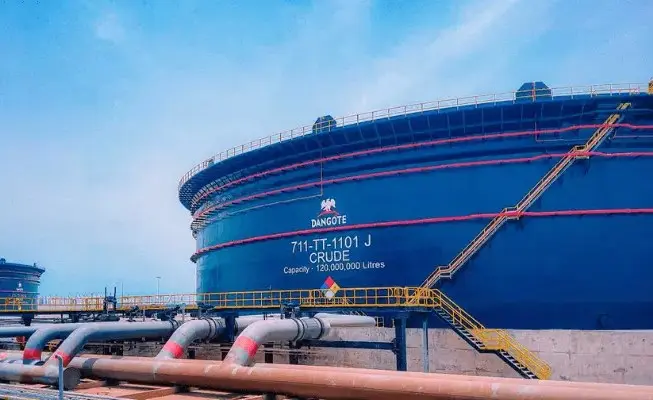
65만 배럴/일 정유소, 11억 리터의 항공유를 유럽으로 수출
나이지리아 항공사 운영자(AON)는 당고트 석유 및 석유화학 정유소를 나이지리아 항공 산업을 위한 중요한 지원 기둥으로 설명했다.
AON은 정유소가 현재 전국적으로 소비되는 제트유(Jet A1)의 95% 이상을 공급하고 있으며, 3월과 4월 20일 사이에 유럽으로 11억 리터의 항공유를 수출하고 있다고 공개했다.
원자재 연구 및 개발 위원회(RMRDC)의 국장 나나엘루고 이케 무온소 교수는 또한 200억 달러 규모의 당고트 정유소가 국내 부가가치의 힘을 보여주었다고 말했다.
이케 무온소는 나이지리아인들이 세계 수준의 정유소에 투자한 선각자 당고트에게 깊은 감사의 빚을 졌다고 선언했다.
방송 인터뷰 중 발언한 AON 대변인 오비오라 오콘크워는 정유소의 산출물이 중동 긴장으로 인한 글로벌 공급 차질과 상승하는 연료 비용의 시점에 국내 항공사 운영을 유지하는 데 중요한 역할을 했다고 말했다.
"나이지러 전역에서 공급되는 항공유의 95% 이상이 당고트 정유소에서 나온다는 것은 사실입니다. 나이지리아의 항공사 운영자들에게 당고트는 단순한 정유소가 아니라 게임 체인저이자 실제로 생명의 은인입니다."라고 오콘크워는 말했으며, 당고트 그룹의 성명에 따르면 이는 표현되었다.
오콘크워는 정유소의 일관된 공급에도 불구하고 항공사들은 중동 위기 이후 급증한 제트유 가격 상승으로 인해 심각한 운영 부담을 계속 겪고 있다고 밝혔으며, 이를 다운스트림 배포 체인 내 불공정한 관행에 탓했다.
오콘크워에 따르면, 일부 연료 판매업자들은 정유소에서 이용 가능한 공급에도 불구하고 인공 부족을 조성하고 있으며, 불균형한 가격 인상을 초래하고 있다.
그는 항공사 운영자들이 중동 위기 발발 이후 제트유 가격 인상을 300%까지 기록했다고 공개했다.
그는 "우리는 이것을 착취로 간주합니다. 정유소는 부족을 표시하지 않았으나 우리는 인공 부족과 정당하지 않은 가격 인상을 목격하고 있습니다. 항공사가 지불하는 것은 기지 가격을 반영하지 않습니다."라고 말했다.
AON과 연방 정부 간의 폐쇄된 회의 이후 유사한 우려를 반복한 에어피스 회장 겸 최고경영자 알렌 오냐마는 특히 당고트 정유소가 비교적 저렴한 가격으로 제품을 판매했다는 점을 감안할 때 상황이 매우 우려스럽다고 설명했다.
오냐마는 "사실은 판매업자들이 책임을 져야 한다는 것입니다. 당고트의 공급이 가장 저렴하고 일부 판매업자들이 정유소에서 직접 공급받을 때 가격이 300%까지 오를 수 있는 방법은 무엇입니까?"
"그렇다면 왜 천문학적인 증가일까요?"
당고트 정유소는 산업 데이터가 시설이 검토 기간 내 유럽으로 약 876,000 미터톤의 제트유를 수출했음을 나타내면서 국제 항공유 시장의 발판을 계속 확대하고 있습니다 - 3월에 약 456,000톤, 4월 20일까지 추가로 420,000톤입니다.
이러한 수출 규모는 정유소의 성장하는 용량과 개선된 물류를 강조하며, 국내 에너지 안보를 강화하면서 글로벌 다운스트림 석유 및 가스 시장에서 나이지리아의 emerging 역할을 더욱 강화한다.
RMRDC: 200억 달러 정유소는 국내 생산 능력의 힘을 보여준다
원자재 연구 및 개발 위원회(RMRDC)의 국장 이케 무온소는 200억 달러 규모의 당고트 정유소가 국내 부가가치의 힘을 입증한다고 말했다. 이케 무온소는 나이지리아인들이 세계 수준의 정유소에 투자한 당고트에게 깊은 감사의 빚을 졌다고 밝혔다.
그는 라고스의 금융 저널리즘 센터에서 진행된 2026 불리온 강연에서 연설했다. 행사에 참석한 다른 공공 정책 분석가들, 정부 관계자들, 이해관계자들도 당고트의 나이지리아에 대한 높은 영향의 투자를 칭찬했다.
그들은 당고트 산업 제한(DIL)의 회장 겸 최고경영자 당고트의 전략적 선견지명과 산업적 용기를 칭찬했으며, 당고트 석유 및 석유화학 정유소를 나이지리아인들의 집단적 감사에 마땅한 변혁적 국가 자산으로 설명했다.
행사의 기조연설을 전한 이케 무온소는 "자원에서 번영으로: 원자재 개발, 부가가치, 혁신이 나이지리아의 산업 르네상스를 촉발할 수 있는 방법"이라는 주제로 정유소가 나이지리아의 오랜 원유 수출에 대한 의존성으로부터 최소한의 국내 부가가치를 통해 결정적인 변화를 나타낸다고 말했다.
RMRDC 수장에 따르면, 나이지리아는 역사적으로 원유만 수출하다 정제 석유 제품(프리미엄 모터 스피릿(PMS) 등)을 다시 수입했으며, 원유 판매 이상의 경제적 이익이 거의 없었다.
그는 "그 이야기는 이제 바뀌었습니다. 원유를 수출하고 PMS만 수입하는 것 대신 당고트 석유 및 석유화학 정유소는 원유를 현지에서 처리하여 PMS, 디젤, 이중용도 등유(DPK), 그리고 폴리프로필렌과 같은 석유화학용 귀중한 부산물을 생산합니다."
"이는 완전한 국내 부가가치를 나타냅니다."
이케 무온소는 정유소를 나이지리아가 전략적 산업 투자가 국가의 자연 자원의 전체 가치를 해제할 수 있는 방법을 보여주는 가장 구체적인 예로 설명했다.
중동의 지속적인 불안정성과 그것의 글로벌 에너지 공급 및 가격 변동성에 대한 영향을 배경으로, RMRDC 수장은 당고트 석유 및 석유화학 정유소가 안정화 세력으로 그리고 글로벌 에너지 과제에 대한 아프리카 주도 솔루션으로 부상했다고 말했다.
그는 "중동 위기가 글로벌 에너지 시장에 미치는 광범위한 결과를 감안할 때, 당고트 석유 및 석유화학 정유소는 오늘날 전략적 선견지명, 산업적 용기, 아프리카 자립의 거대한 시연으로 서 있습니다."
"나이지리아는 실제로 지금 이 시간에 알리코 당고트를 기도하고 있어야 합니다."
이케 무온소는 또한 미국, 인도, 브라질, 남아프리카, 케냐를 포함한 국가들 전체의 원자재 부가가치에 대한 비교 데이터를 제시했으며, 나이지리아가 부가가치의 가장 낮은 백분율을 기록한다는 것을 드러냈다.
그는 국가가 부분적으로 에너지 부족으로 인해 가공 없이 원자재 수출로 인해 연간 약 290억 달러의 손실을 입고 있다고 공개했다.
"원자재를 수출하기보다는 나이지리아는 처리된 원자재와 완성된 제품을 수출해야 합니다."라고 그는 말했다.
전체 부가가치 달성의 장애물을 식별하면서, RMRDC 국장은 자체 발전 전력에 대한 회사의 의존으로 인한 민간 인프라 세금, 물류 간격, 그리고 산업 생태계 내 역량 간격을 포함한 주요 구조적 과제를 강조했다. 그는 나이지리아의 도로 네트워크 중 약 30%만 포장되어 있다고 말했다.
이케 무온소는 지속된 산업화가 나이지리아의 광범위한 경제 번영의 가장 실행 가능한 경로라고 강조하면서 당고트 산업의 투자를 모델로 인용했다.
앞서 경제 연구 및 윤리 위원회 회장 겸 나이지리아 상공회의소 협회(NACCIMA) 전 회장 오툰바 켈빈 델레 오예는 또한 당고트의 산업 기여를 칭찬했다.
그는 종종 지역 경제에 대한 의미 있는 부가가치 없이 외국 투자자에 의한 나이지리아 원자재 착취의 불균형을 개탄했다.
오예는 원자재 착취가 나이지리아인에게 이득이 되며 지역 투자자들이 외국 선수와 유리하게 경쟁할 수 있도록 의도적인 정부 정책과 더욱 엄격한 규제 감시를 촉구했다.
이 행사는 불리온 강연의 10주년을 기념했으며 [...]
제안된 프로젝트는 특히 동아프리카 지역 지도자들의 협력이 있을 경우 4년 내에 완공될 것으로 예상되며, 당고트는 아프리카의 오랜 관행인 원자재 해외 수출에 반기를 들었다.
나이로비의 "우리가 건설하는 아프리카" 정상회담에서 열린 대통령 패널에서 당고트는 케냐의 윌리엄 루토 대통령과 우간다의 요웨리 무세베니 대통령과 함께 연설했으며, 자신의 그룹이 강력한 정책 지원과 지역 전체 정부의 일관성 있는 정렬이 있다면 나이지리아의 일일 65만 배럴 규모의 정유소와 비교할 수 있는 정유소를 동아프리카에 건설할 준비가 되어 있다고 말했다.
당고트의 정유소가 이미 약 11억 리터의 항공유를 유럽으로 수출하고 있는 가운데 아프리카 에너지 무역이 증가하고 있다.
한편, 강한 석유 수입 수요로 인해 남아프리카-나이지리아 무역량이 21억 6천만 달러에 달했다. 이는 라고스에서 개최된 남아프리카 주간 4회 행사에서 공개된 새로운 데이터에서 드러났다.
이 행사는 남아프리카 공사관, 브랜드 남아프리카, 남아프리카 개발 은행(DBSA)과의 파트너십으로 라고스의 남아프리카 총영사관이 주최했다.
당고트는 아프리카가 원자재를 수출하고 완성된 제품을 수입함으로써 14억 명이 넘는 인구를 더욱 빈곤하게 만들고 있다고 말했다. 이런 추세를 역전시키기 위한 노력의 일환으로, 그는 연료 공급을 재편성하고 지역 통합을 심화시키며 대륙의 산업적 자급자족을 향한 추진력을 가속화할 수 있는 이 새로운 움직임을 계획했다.
당고트는 "여기 있는 두 대통령(루토와 무세베니)에게 약속할 수 있습니다. 만약 그들이 정유소를 지원한다면, 우리는 나이지리아에 있는 것과 동일한 것, 일일 65만 배럴을 건설할 것입니다. 그것은 작동할 것입니다. 그것을 막을 수 있는 것은 없습니다. 우리가 나이지리아에서 한 것이 있기 때문에, 우리는 이미 시작한 대담한 조치를 취하고 있습니다."
"파일링이 시작되었습니다. 우리는 그것을 규모에 맞게 건설하고 있습니다. 일일 140만 배럴이 세계에서 가장 큰 정유소가 될 것입니다. 그것이 첫 번째입니다. 두 번째로, 우리는 미국 전체 정제 용량의 10%를 보유하게 될 것입니다. 이것은 많은 석유화학과 함께 옵니다."
완공되면, 합작 정유소는 탄자니아, 케냐, 우간다, 남수단, 콩고민주공화국을 섬길 것으로 예상된다. 이 시설은 지역 전체의 원유를 처리하도록 예상되며, 효율성을 개선하고 비용을 줄이기 위해 공유 파이프라인 인프라로 지원될 것이다.
당고트에 따르면 정부 정책의 일관성과 강력한 제도적 지원이 이러한 대규모 투자를 해제하는 데 중요할 것이다. 그는 불확실성과 정책 변경이 수년에 걸쳐 아프리카 전역의 장기 자본 배치를 방해했다고 강조했다.
그는 당고트 그룹이 2030년까지 정제, 석유화학, 비료, 제조를 포함한 여러 부문에 400억 달러를 투자할 계획이라고 말했다.
당고트는 "나는 단지 시장에 들어가고 싶고, 내가 서 있는 곳에서 모든 아프리카인이 당고트 정유소에 투자해야 한다고 생각합니다. 그리고 우리는 달러로 배당금을 지불할 것입니다. 하지만 오늘 여기서 내 약속은 우리가 여기 있는 3~4개 정부와 정유소에 대해 합의하면, 우리가 주도하고 향후 4~5년 내에 그 정유소가 건설되도록 확인할 것이라는 것입니다."
그는 또한 아프리카 전역의 자유로운 이동에 대한 자신의 입장을 다시 강조했으며, 대륙 전역의 지도자들에게 비자 면제 이동을 가속화하도록 촉구했으며, 현재 매우 제한된 시스템이 무역을 방해한다고 설명했다.
그는 "오늘날 외국, 유럽 여권으로 아프리카에서 아프리카인보다 더 빠르게 이동할 수 있으며, 이것은 우리가 정말로 멈춰야 한다고 생각합니다."
"우리가 모든 아프리카인을 위해 비자 면제를 허용할 수 없는 이유는 무엇입니까? 부탁합니다. 우리가 그렇게 해야 합니다. 우리가 정말로 그렇게 하지 않으면, 쉽게 드나들 수 없는 사람과 거래하기가 어려울 것이기 때문입니다."
케냐의 루토 대통령은 원자재를 수출하면서 완성된 제품을 수입하는 관행을 일자리와 장기 번영에 대한 방해로 묘사하면서 아프리카는 더 이상 이를 감수할 수 없다고 말했다.
"우리가 왜 실패할까요? 우리는 원자재가 있고, 우리는 시장이 있고, 우리는 자본이 있고, 우리는 이 프로젝트를 실행할 산업가들이 있습니다."라고 그는 말했다.
케냐 대통령에 따르면, 개별 국가의 인프라를 복제하기보다는 국경을 넘어 자원과 수요를 모으는 지역 정유소 모델에 대한 논의가 이미 진행 중이다.
그는 이러한 협력이 아프리카가 자산을 완전히 활용하면서 규모의 경제를 구축할 수 있게 할 것이라고 말했다.
우간다의 요웨리 무세베니 대통령은 자신의 발언에서 아프리카가 원자재 수출에서 완성된 제품의 수출로 나아가야 할 필요성을 강조했다. 그는 원자재가 가공 없이 수출될 때 손실되는 상당한 가치를 지적했다.
무세베니는 아프리카 국가들이 오직 원자재만 수출할 때 100%의 이득이 손실될 수 있다고 말했다.
"우리는 계속 원자재를 수출할 수 없습니다. 우리가 가치를 더할 능력이 있을 때 미처리된 자원을 수출하는 것은 거의 범죄에 가깝습니다."라고 그는 강조했다.
정제를 넘어, 정상회담의 지도자들은 지역 전체의 에너지, 광업, 제조, 물류를 연결하는 통합된 산업 생태계를 구축해야 할 필요성을 강조했다. 제안된 정유소는 특히 석유화학 및 관련 산업에서 이러한 개발의 촉매 역할을 하기를 기대하고 있다.
아프리카 금융 공사(AFC) 최고경영자 사마일라 주바이루는 대륙이 수조 달러의 연금과 보험 자산을 보유하고 있으며, 그 대부분은 현재 낮은 수익 수단이 아닌 인프라에 투자되고 있다고 말했다.
당고트: 지역 리더십 없이는 투자자가 아프리카에 올 것이 없다
당고트는 지역 리더십과 개발 및 성장에 대한 국내 약속이 없으면 투자자들이 아프리카에 끌려오지 않을 것이라고 말했다.
그는 아프리카의 발전이 수십 년 동안 외국 투자자에 대한 과도한 의존으로 훼손되었으며, 많은 경우 외국 투자자들은 주로 지역 경제 건설에 관심이 없었다고 말했다.
당고트는 "과거에 많은 국제 금융 기관들은 아프리카 개발에 초점을 맞추지 않았으며, 그들의 우선순위는 자신들의 이익이었습니다. 그러나 오늘날 우리는 아프리카 기업가들의 말을 듣고자 하는 기관들을 가지고 있습니다."라고 말했다.
당고트는 외부 구원을 기다리는 시대가 끝나야 한다고 주장하면서 지역 리더십과 약속 없이는 의미 있는 투자가 올 수 없다고 다시 강조했다.
그는 "우리는 외국 투자자에게 너무 많이 의존함으로써 심각한 실수를 했습니다. 지역 리더십과 국내 약속 없이는 투자자가 올 것이 없습니다. 우리는 스스로 위험을 감수하고 외부인을 기다리기보다는 우리 자신의 대륙을 건설해야 합니다."라고 말했다.
당고트는 자신의 그룹의 확장 움직임을 단순한 사업 아이디어가 아니라 의도의 선언, 아프리카가 마침내 자신의 산업적 미래의 소유권을 가져야 한다는 주장으로 틀지었다.
"여기 있는 두 명의 국가 원수의 협력으로, 우리는 3~4년 내에 케냐와 우간다에 정유소를 건설할 것입니다."라고 그는 말했으며, 정책 입안자, 금융가, 개발 파트너를 포함하는 청중으로부터 즉시 주의를 끌었다.
그의 선언은 아프리카의 지속적인 인프라 부족과 외부 자본에 대한 오랜 의존을 다루는 광범위하고 긴급한 대화의 배경에 대해 나왔으며, 이 세션에서의 심의를 지배했다.
65만 배럴/일 정유소, 11억 리터의 항공유를 유럽으로 수출
나이지리아 항공사 운영자(AON)는 당고트 석유 및 석유화학 정유소를 나이지리아 항공 산업을 위한 중요한 지원 기둥으로 설명했다.
AON은 정유소가 현재 전국적으로 소비되는 제트유(Jet A1)의 95% 이상을 공급하고 있으며, 3월과 4월 20일 사이에 유럽으로 11억 리터의 항공유를 수출하고 있다고 공개했다.
원자재 연구 및 개발 위원회(RMRDC)의 국장 나나엘루고 이케 무온소 교수는 또한 200억 달러 규모의 당고트 정유소가 국내 부가가치의 힘을 보여주었다고 말했다.
이케 무온소는 나이지리아인들이 세계 수준의 정유소에 투자한 선각자 당고트에게 깊은 감사의 빚을 졌다고 선언했다.
방송 인터뷰 중 발언한 AON 대변인 오비오라 오콘크워는 정유소의 산출물이 중동 긴장으로 인한 글로벌 공급 차질과 상승하는 연료 비용의 시점에 국내 항공사 운영을 유지하는 데 중요한 역할을 했다고 말했다.
"나이지러 전역에서 공급되는 항공유의 95% 이상이 당고트 정유소에서 나온다는 것은 사실입니다. 나이지리아의 항공사 운영자들에게 당고트는 단순한 정유소가 아니라 게임 체인저이자 실제로 생명의 은인입니다."라고 오콘크워는 말했으며, 당고트 그룹의 성명에 따르면 이는 표현되었다.
오콘크워는 정유소의 일관된 공급에도 불구하고 항공사들은 중동 위기 이후 급증한 제트유 가격 상승으로 인해 심각한 운영 부담을 계속 겪고 있다고 밝혔으며, 이를 다운스트림 배포 체인 내 불공정한 관행에 탓했다.
오콘크워에 따르면, 일부 연료 판매업자들은 정유소에서 이용 가능한 공급에도 불구하고 인공 부족을 조성하고 있으며, 불균형한 가격 인상을 초래하고 있다.
그는 항공사 운영자들이 중동 위기 발발 이후 제트유 가격 인상을 300%까지 기록했다고 공개했다.
그는 "우리는 이것을 착취로 간주합니다. 정유소는 부족을 표시하지 않았으나 우리는 인공 부족과 정당하지 않은 가격 인상을 목격하고 있습니다. 항공사가 지불하는 것은 기지 가격을 반영하지 않습니다."라고 말했다.
AON과 연방 정부 간의 폐쇄된 회의 이후 유사한 우려를 반복한 에어피스 회장 겸 최고경영자 알렌 오냐마는 특히 당고트 정유소가 비교적 저렴한 가격으로 제품을 판매했다는 점을 감안할 때 상황이 매우 우려스럽다고 설명했다.
오냐마는 "사실은 판매업자들이 책임을 져야 한다는 것입니다. 당고트의 공급이 가장 저렴하고 일부 판매업자들이 정유소에서 직접 공급받을 때 가격이 300%까지 오를 수 있는 방법은 무엇입니까?"
"그렇다면 왜 천문학적인 증가일까요?"
당고트 정유소는 산업 데이터가 시설이 검토 기간 내 유럽으로 약 876,000 미터톤의 제트유를 수출했음을 나타내면서 국제 항공유 시장의 발판을 계속 확대하고 있습니다 - 3월에 약 456,000톤, 4월 20일까지 추가로 420,000톤입니다.
이러한 수출 규모는 정유소의 성장하는 용량과 개선된 물류를 강조하며, 국내 에너지 안보를 강화하면서 글로벌 다운스트림 석유 및 가스 시장에서 나이지리아의 emerging 역할을 더욱 강화한다.
RMRDC: 200억 달러 정유소는 국내 생산 능력의 힘을 보여준다
원자재 연구 및 개발 위원회(RMRDC)의 국장 이케 무온소는 200억 달러 규모의 당고트 정유소가 국내 부가가치의 힘을 입증한다고 말했다. 이케 무온소는 나이지리아인들이 세계 수준의 정유소에 투자한 당고트에게 깊은 감사의 빚을 졌다고 밝혔다.
그는 라고스의 금융 저널리즘 센터에서 진행된 2026 불리온 강연에서 연설했다. 행사에 참석한 다른 공공 정책 분석가들, 정부 관계자들, 이해관계자들도 당고트의 나이지리아에 대한 높은 영향의 투자를 칭찬했다.
그들은 당고트 산업 제한(DIL)의 회장 겸 최고경영자 당고트의 전략적 선견지명과 산업적 용기를 칭찬했으며, 당고트 석유 및 석유화학 정유소를 나이지리아인들의 집단적 감사에 마땅한 변혁적 국가 자산으로 설명했다.
행사의 기조연설을 전한 이케 무온소는 "자원에서 번영으로: 원자재 개발, 부가가치, 혁신이 나이지리아의 산업 르네상스를 촉발할 수 있는 방법"이라는 주제로 정유소가 나이지리아의 오랜 원유 수출에 대한 의존성으로부터 최소한의 국내 부가가치를 통해 결정적인 변화를 나타낸다고 말했다.
RMRDC 수장에 따르면, 나이지리아는 역사적으로 원유만 수출하다 정제 석유 제품(프리미엄 모터 스피릿(PMS) 등)을 다시 수입했으며, 원유 판매 이상의 경제적 이익이 거의 없었다.
그는 "그 이야기는 이제 바뀌었습니다. 원유를 수출하고 PMS만 수입하는 것 대신 당고트 석유 및 석유화학 정유소는 원유를 현지에서 처리하여 PMS, 디젤, 이중용도 등유(DPK), 그리고 폴리프로필렌과 같은 석유화학용 귀중한 부산물을 생산합니다."
"이는 완전한 국내 부가가치를 나타냅니다."
이케 무온소는 정유소를 나이지리아가 전략적 산업 투자가 국가의 자연 자원의 전체 가치를 해제할 수 있는 방법을 보여주는 가장 구체적인 예로 설명했다.
중동의 지속적인 불안정성과 그것의 글로벌 에너지 공급 및 가격 변동성에 대한 영향을 배경으로, RMRDC 수장은 당고트 석유 및 석유화학 정유소가 안정화 세력으로 그리고 글로벌 에너지 과제에 대한 아프리카 주도 솔루션으로 부상했다고 말했다.
그는 "중동 위기가 글로벌 에너지 시장에 미치는 광범위한 결과를 감안할 때, 당고트 석유 및 석유화학 정유소는 오늘날 전략적 선견지명, 산업적 용기, 아프리카 자립의 거대한 시연으로 서 있습니다."
"나이지리아는 실제로 지금 이 시간에 알리코 당고트를 기도하고 있어야 합니다."
이케 무온소는 또한 미국, 인도, 브라질, 남아프리카, 케냐를 포함한 국가들 전체의 원자재 부가가치에 대한 비교 데이터를 제시했으며, 나이지리아가 부가가치의 가장 낮은 백분율을 기록한다는 것을 드러냈다.
그는 국가가 부분적으로 에너지 부족으로 인해 가공 없이 원자재 수출로 인해 연간 약 290억 달러의 손실을 입고 있다고 공개했다.
"원자재를 수출하기보다는 나이지리아는 처리된 원자재와 완성된 제품을 수출해야 합니다."라고 그는 말했다.
전체 부가가치 달성의 장애물을 식별하면서, RMRDC 국장은 자체 발전 전력에 대한 회사의 의존으로 인한 민간 인프라 세금, 물류 간격, 그리고 산업 생태계 내 역량 간격을 포함한 주요 구조적 과제를 강조했다. 그는 나이지리아의 도로 네트워크 중 약 30%만 포장되어 있다고 말했다.
이케 무온소는 지속된 산업화가 나이지리아의 광범위한 경제 번영의 가장 실행 가능한 경로라고 강조하면서 당고트 산업의 투자를 모델로 인용했다.
앞서 경제 연구 및 윤리 위원회 회장 겸 나이지리아 상공회의소 협회(NACCIMA) 전 회장 오툰바 켈빈 델레 오예는 또한 당고트의 산업 기여를 칭찬했다.
그는 종종 지역 경제에 대한 의미 있는 부가가치 없이 외국 투자자에 의한 나이지리아 원자재 착취의 불균형을 개탄했다.
오예는 원자재 착취가 나이지리아인에게 이득이 되며 지역 투자자들이 외국 선수와 유리하게 경쟁할 수 있도록 의도적인 정부 정책과 더욱 엄격한 규제 감시를 촉구했다.
이 행사는 불리온 강연의 10주년을 기념했으며 [...]
처리 완료
268 tokens · $0.0008
기사 수집 완료 · 16:05
매체 피드에서 기사 메타데이터 수집
헤드라인 번역 완료 · 16:17
제목/요약 한국어 번역 (fetch 시점 inline)
claude-haiku-4-5-20251001
268 tokens
$0.00084
2.3s
본문 추출 완료
23,228자 추출 완료
본문 한국어 번역 완료 · 16:17
7,227자 번역 완료
지정학적 엔티티 추출 완료 · 16:17
8개 엔티티 추출 완료
지정학적 맥락 & R-Scanner
R-Scanner · 평상
z=-1.11
일상적인 보도 수준 — 기준: Nigeria
(🇳🇬 NG)
최근 6시간 0건
7일 평균 1.89건 / 6h
0개국 매체
0개 매체
본문에서 추출된 지명 (8)
Nigeria
🇳🇬
East Africa
🇴🇹
Kenya
🇰🇪
Uganda
🇺🇬
Tanzania
🇹🇿
South Sudan
🇸🇸
Democratic Republic of Congo
🇨🇩
South Africa
🇿🇦
위치 지도
지도 로딩 중…
같은 주제의 다른 기사 (최근 7일)
Aliko Dangote, Africa's richest person, yesterday pushed to expand his refining footprint beyond Nigeria, unveiling plans to build a refinery of comparable scale in East Africa in partnership with governments in the sub-region.
The proposed project is expected to be completed within four years, especially if East Africa's regional leaders cooperate, Dangote stressed, kicking against Africa's long-term practice of exporting raw materials abroad.
Speaking at a presidential panel at the "Africa We Build" summit in Nairobi, alongside Kenyan President, William Ruto, as well as Ugandan President, Yoweri Museveni, Dangote said his group was ready to build in East Africa a refinery comparable to the 650,000 barrels-per-day facility in Nigeria, provided there was strong policy backing and alignment from governments across the sub-region.
Keep up with the latest headlines on WhatsApp | LinkedIn
The move comes amid rising intra-African energy trade, with Dangote's refinery already exporting about 1.1 billion litres of aviation fuel to Europe.
Meanwhile, strong oil import demand lifted South Africa-Nigeria trade volumes to $2.16 billion. This was revealed in a new data released at the fourth edition of the South Africa Week held in Lagos.
The event was hosted by the South African Consulate General in Lagos, in partnership with Brand South Africa and Development Bank of Southern Africa (DBSA)
Dangote stated that by exporting raw materials and importing finished products, Africa was further impoverishing its population of over 1.4 billion people. As part of efforts to reverse the trend, he planned the new move, which could reshape fuel supply, deepen regional integration, and accelerate the continent's push towards industrial self-sufficiency,
Dangote stated, "I can give commitment to the two presidents (Ruto and Museveni) that are here. If they will support the refinery, we'll build the identical one that we have in Nigeria, 650,000 barrels. It will (work). There's nothing that can stop it. We have done the one in Nigeria, and that's why we're taking the bold move, which we have started already.
"Piling has started. We're building that one to a scale. 1.4 million barrels a day will be the largest refinery in the world. That's number one. Number two, we'll have 10 per cent of the entire United States of America's refining capacity. And this is coming with a lot of petrochemicals."
When completed, the joint refinery is expected to serve Tanzania, Kenya, Uganda, South Sudan, and the Democratic Republic of Congo. The facility is expected to process crude from across the region, supported by shared pipeline infrastructure to improve efficiency and reduce costs.
According to Dangote, consistency in government policy and strong institutional support would be critical to unlocking such large-scale investments. He stressed that uncertainty and reversals in policy had over the years discouraged long-term capital deployment across Africa.
He said Dangote Group planned to invest $40 billion across sectors, including refining, petrochemicals, fertiliser, and manufacturing, by 2030.
Dangote said, "I want to just go into the market, and where I stand, that all Africans should invest (in the Dangote refinery). And we'll be paying dividends in dollars. But my commitment today here is that if we agree with the three, four governments here about the refinery, we will lead and we'll make sure that that refinery is built within the next four or five years."
He also reiterated his position on free movement across Africa, urging leaders across the continent to accelerate visa-free movements, and explaining that the current heavily restricted system hinders trade.
He stated, "Today, with a foreign, with a European passport, you can move faster in Africa than being an African, which I think we must really stop.
"Why can't we allow visa-free for all Africans? Please, we need to do that, because if we don't really do that, it will be difficult to trade with somebody that you cannot get in and out easily."
Kenyan President, Ruto, said Africa could no longer afford to export raw materials while importing finished products, describing the practice as a drain on jobs and long-term prosperity.
"Why would we fail? We have the raw materials, we have the market, we have the capital, and we have the industrialists to run these projects," he stated.
According to the Kenyan president, discussions are already underway for a regional refinery model that pools resources and demand across borders, rather than duplicating infrastructure in individual countries.
He said such collaboration would allow Africa to fully utilise its assets while building economies of scale.
In his remarks, Ugandan President, Yoweri Museveni, reinforced the need for Africa to move from raw materials export to export of finished products. He pointed to the significant value lost when raw materials were exported without processing.
Museveni stated that as much as 100 per cent gain was lost when African nations exported only raw materials.
"We cannot continue exporting raw materials. It is near criminal to export unprocessed resources when we have the capacity to add value," he emphasised.
Beyond refining, leaders at the summit emphasised the need to build integrated industrial ecosystems, linking energy, mining, manufacturing, and logistics across the region. The proposed refinery is expected to serve as a catalyst for such development, particularly in petrochemicals and related industries.
Africa Finance Corporation (AFC) Chief Executive, Samaila Zubairu, stated that the continent held trillions of dollars in pension and insurance assets, much of which was currently invested in low-yield instruments rather than infrastructure.
Dangote: No Investor Will Come to Africa Without Local Leadership
Dangote said without local leadership and domestic commitment to development and growth investors would not be attracted to Africa.
He said Africa's development had been undermined for decades by overreliance on foreign investors, who, in many cases, were not primarily interested in building local economies.
Dangote stated, "In the past, many international financial institutions were not focused on developing Africa; their priority was their own interests. Today, however, we have institutions that are willing to listen to African entrepreneurs."
Dangote insisted that the era of waiting for external salvation must end, reiterating that no meaningful investment would come without domestic leadership and commitment.
He stated, "We have made serious mistakes by relying too heavily on foreign investors. No investor will come without local leadership and domestic commitment. We must take the risk ourselves and build our own continent rather than wait for outsiders."
Dangote framed the move for expansion by his group as not merely a business idea, but as a statement of intent, an assertion that Africa must finally take ownership of its industrial future.
"With the cooperation of the two heads of state here, we will build refineries in Kenya and Uganda within three to four years," he said, drawing immediate attention from an audience that included policymakers, financiers and development partners.
His declaration came against the backdrop of a broader, urgent conversation about Africa's persistent infrastructure deficit and its long-standing dependence on external capital, issues that dominated deliberations at the session.
650,000 Bpd Refinery Exports 1.1bn Litres of Aviation Fuel to Europe
Airline Operators of Nigeria (AON) described Dangote Petroleum Refinery and Petrochemicals as a critical pillar of support for Nigeria's aviation industry.
AON disclosed that the refinery currently supplied over 95 per cent of the Jet A1 fuel consumed nationwide, while also exporting 1.1 billion litres of aviation fuel to Europe between March and April 20.
Director General of Raw Materials Research and Development Council (RMRDC), Professor Nnanyelugo Ike Muonso, also said the $20 billion Dangote refinery had showcased the power of domestic value addition.
Ike Muonso declared that Nigerians owed the visioner, Dangote, a profound debt of gratitude for investing in the world class refinery.
Speaking during a televised interview, AON spokesperson, Obiora Okonkwo, said the refinery's output had played a vital role in sustaining domestic airline operations at a time of global supply disruptions arising from tensions in the Middle East and rising fuel costs.
"It is a matter of fact that over 95 per cent of aviation fuel supplied across the country comes from the Dangote refinery. To airline operators in Nigeria, Dangote is not just a refinery; it is a game changer and, indeed, a lifesaver," Okonkwo said, according to a statement by Dangote Group.
Okonkwo stated that despite the refinery's consistent supply, airlines continued to face severe operational strain due to escalating Jet A1 prices, which he attributed to sharp practices within the downstream distribution chain.
According to Okonkwo, some fuel marketers are allegedly creating artificial scarcity in spite of available supply from the refinery, leading to disproportionate price increases.
He disclosed that airline operators had recorded Jet A1 price hikes of up to 300 per cent since the onset of the Middle East crisis.
He stated, "We consider this exploitation. The refinery has not indicated any shortage, yet we are witnessing artificial scarcity and unjustifiable price increases. What airlines pay does not reflect depot prices."
Echoing similar concerns after a closed door meeting between AON and the federal government, Chairman and Chief Executive Officer of Air Peace, Allen Onyema, described the situation as deeply troubling, particularly given that the Dangote refinery sold its products at comparatively lower rates.
Onyema said, "The truth is that marketers must be called to account. How do prices rise by as much as 300 per cent when Dangote's supply remains the cheapest and some marketers source directly from the refinery?
"So, why the astronomical increase?"
The Dangote refinery continues to expand its footprint in the international aviation fuel market as industry data indicate that the facility exported approximately 876,000 metric tonnes of jet fuel to Europe within the period under review--about 456,000 tonnes in March and an additional 420,000 tonnes by April 20.
Those export volumes underscore the refinery's growing capacity and improved logistics, further reinforcing Nigeria's emerging role in the global downstream oil and gas market, even as it strengthens domestic energy security.
RMRDC: $20bn Refinery Showcases Power of Domestic Production
Director General of Raw Materials Research and Development Council (RMRDC), Ike Muonso, said the $20 billion Dangote Refinery was a testament to the power of domestic value addition. Ike Muonso stated that Nigerians owed Dangote a profound debt of gratitude for investing in the world class refinery.
He spoke in Lagos at the 2026 Bullion Lecture, powered by Centre for Financial Journalism. Other public policy analysts, government officials and stakeholders at the event also praised Dangote for his high impact investment in Nigeria.
They hailed the strategic foresight and industrial courage of President and Chief Executive of Dangote Industries Limited (DIL), Dangote, describing the Dangote Petroleum Refinery as a transformative national asset deserving of collective appreciation by Nigerians.
Delivering the keynote lecture at the event, themed, "From Resources to Prosperity: How Raw Materials Development, Value Addition and Innovation Can Catalyse Nigeria's Industrial Renaissance," Ike Muonso said the refinery represented a decisive break from Nigeria's long standing dependence on crude oil exports with minimal domestic value addition.
According to the RMRDC chief, Nigeria has historically exported crude oil only to re import refined petroleum products, such as Premium Motor Spirit (PMS), with little economic benefit beyond crude sales.
He said, "That narrative has now changed. Instead of exporting crude and importing PMS alone, the Dangote Petroleum Refinery processes crude locally to produce PMS, diesel, dual purpose kerosene (DPK), and valuable by products for petrochemicals, such as polypropylene.
"This represents complete domestic value addition."
Ike Muonso described the refinery as Nigeria's most concrete example yet of how strategic industrial investment could unlock the full value of the country's natural resources.
Against the backdrop of ongoing instability in the Middle East and its implications for global energy supply and price volatility, the RMRDC boss said Dangote Petroleum Refinery had emerged as a stabilising force and an African led solution to global energy challenges.
He stated, "With the far reaching consequences of the Middle East crisis on global energy markets, the Dangote Petroleum Refinery stands today as a monumental demonstration of strategic foresight, industrial courage and African self reliance.
"Nigeria should, in fact, be praying for Aliko Dangote at this time."
Ike Muonso also presented comparative data on raw material value addition across countries, including the United States, India, Brazil, South Africa, and Kenya, revealing that Nigeria records the lowest percentage of value addition.
He disclosed that the country lost an estimated $29 billion annually due to the export of raw materials without processing, partly, due to the energy deficit.
"Rather than exporting raw materials, Nigeria should be exporting processed raw materials and finished products," he stated.
Identifying obstacles to achieving full value addition, the RMRDC director-general highlighted key structural challenges, such as private infrastructure tax, resulting from companies' reliance on self generated power; Logistics gaps. He said only about 30 per cent of Nigeria's road network was paved; and there were capability gaps within the industrial ecosystem.
Ike Muonso stressed that sustained industrialisation remained Nigeria's most viable pathway to broad based economic prosperity, citing Dangote Industries' investments as a model for the country.
Earlier, in his remarks, Chairman of Economic Research and Ethics Committee and former President of the National Association of Chambers of Commerce, Industry, Mines and Agriculture (NACCIMA), Otunba Kelvin Dele Oye, also commended Dangote's industrial contributions.
He decried what he described as an imbalance in the exploitation of Nigeria's raw materials by foreign investors, often without meaningful value addition to the local economy.
Oye called for deliberate government policies and stricter regulatory vigilance to ensure that raw material exploitation benefited Nigerians, while enabling local investors to compete favourably with foreign players.
The event, which marked the 10th anniversary of the Bullion Lecture, also featured the unveiling and launch of a commemorative book, titled, "Pathways to Nigeria's Socio Economic Transformation."
The book, authored by Chief Executive of Centre for Financial Journalism, Mr. Ray Echebiri, documents all lectures delivered since the inception of the Bullion Lecture series.
High Oil Import Pushes S'Africa-Nigeria Trade Volumes to $2.16bn
The 2025 economic relationship between Nigeria and South Africa emerged as one of Africa's most strategically significant partnerships, with bilateral trade topping $2.16 billion despite a headline trade deficit for the Southern African nation.
New data released at the end of the fourth edition of the South Africa Week held in Lagos, showed the country exported $468.48 million worth of goods and services to Nigeria last year, while importing products worth $1.69 billion -- leaving a $1.22 billion deficit.
The forum was hosted by the South African Consulate General in Lagos, in partnership with Brand South Africa and the Development Bank of Southern Africa (DBSA). It is a strategic initiative aimed at fostering social cohesion between South Africans and Nigerians while positioning South Africa as a preferred destination for business, tourism, and education.
A statement by the organisers said, "The 2025 economic relationship between South Africa and Nigeria reflects a strategically significant, multi-dimensional partnership anchored in trade, energy security, investment flows, and strong institutional cooperation.
"While bilateral trade remains structurally imbalanced - with South Africa exporting US$468.48 million and importing $1.69 billion, resulting in a $1.22 billion deficit - this dynamic is largely driven by South Africa's reliance on Nigerian crude oil, positioning the relationship as one of strategic interdependence rather than imbalance alone.
"This partnership is further elevated by the relative economic weight of both countries",
According to the International Monetary Fund (IMF) projections, South Africa's economy is valued at approximately $443.6 billion, while Nigeria's stands around $334.3 billion in nominal terms for 2026.
As two of the largest economies on the continent, their bilateral engagement constitutes a central axis of African economic activity, with disproportionate influence on the success of continental integration efforts.
Beyond trade, the statement said the relationship was reinforced by deep two-way investment linkages - South African firms -including MTN Group, Shoprite, and Standard Bank - maintained a strong presence in Nigeria, while Nigerian companies, such as Access Bank and Paystack, established a growing footprint in South Africa.
Although investment flows were asymmetrical and some Nigerian firms had faced operational challenges, the organisers said these exchanges reflected an emerging bi-directional economic corridor that extended beyond goods trade into services, finance, and digital innovation.
Aligned with Brand South Africa's mandate to build the country's global reputation and competitiveness, the week-long programme would convene leaders from government, business, civil society, academia, and the media.
S'Africa Positions Nigeria as Primary Source of Fuel Supply
South Africa positioned Nigeria as its primary source of imports amid escalating geopolitical tensions in the Middle East. Director, Africa Bilateral Economic Relations, Department of Trade, Industry and Competition, South Africa, Mr. Calvin Phume, disclosed this at South Africa Energy Week 2026 in Lagos, with the theme, "Repositioning and Promoting Energy Investments Between South Africa and Nigeria."
Phume said the shift was already underway for refined products, driven by the Dangote refinery.
He said, "Due to the US Israel-Iran war, there are discussions that most of our oil will come from here (Nigeria). But the discussions are at the highest level. We get a huge amount of refined petroleum oil. So, it's because of the Dangote Refinery. It has been helping us a lot in South Africa and the continent as a whole."
Phume said bilateral trade between Africa's two largest economies had surged since Nigeria gazetted its provisional schedule of tariff concessions under the African Continental Free Trade Area (AfCFTA) on April 15, 2025.
He stated, "You will recall that I did indicate Nigeria gazetted its provisional schedule of terminal concession of the AfCFTA on 15th April, 2025, last year. So, we were able to add Nigeria into the list of the countries that will benefit under the AfCFTA in August last year.
"So, since then, up until now, we have seen that there's a huge increase of trade between South Africa and Nigeria, but it's heavily skewed to South Africa now."
He said between 2023 and 2025, South Africa's exports to Nigeria rose 24 per cent, from $355 million to $442 million. Last year alone, Phume said exports jumped 16 per cent, from $380 million in 2024, "which can be attributed to a rise in exports of goods, vehicles and fresh apples."
According to him, in 2025, South Africa's top exports to Nigeria included goods, vehicles, fresh apples, polypropylene, mixtures of odoriferous substances, and food preparations.
Phume said, "Iron and steel, because of our industrialised economy, we are able to manufacture the pipes that are required for the oil in Nigeria. So, it's number three. And we also do some miscellaneous chemical products that are very important in the Nigerian market."
Conversely, South Africa's imports from Nigeria fell 33 per cent, from $2.3 billion to $1.5 billion between 2023 and 2025. "This could be attributed to the drop in Nigeria's overall crude oil exports in 2025," he stated.
Despite the decline, he said crude remained dominant, explaining that in 2025, South Africa's top imported products from Nigeria were petroleum crude oil, urea, refined petroleum oil, natural rubber, aluminium containers, and aeroplanes.
He pointed out that AfCFTA had reshaped the balance of trade between the two nations, thwarting the historical advantage Nigeria used to have due to crude oil shipments.
Phume stated, "Before, it was very skewed to Nigeria because of the crude oil. But since we have started trading under the AfCFTA, number one is oil and seeds, and the oligosaccharides, fruits, malaise, grains, seeds, fruit, industrial and medicinal plants, straw and fodder."
He added, "While Nigeria enjoys a trade surplus in general, its trade with South Africa under the AfCFTA preference is heavily skewed in South Africa's favour.
"Both countries would need to increase efforts to encourage and support valued-added exports under the AfCFTA and maximise the new market."
In her keynote address, Deputy Minister of International Relations and Cooperation, South Africa, Ms. Thandi Moraka, emphasised the importance of strategic collaboration between Nigeria and South Africa to promote investment in energy infrastructure to catalyse production and guarantee energy security for their citizens.
Moraka pointed out that a noteworthy example of Africa's potential lay in the energy and industrial development showcased in the Dangote Refinery. According to her, as one of the largest oil refineries in the world, Dangote Refinery is a pivotal player in the Nigerian oil and gas industry.
She said the refinery was not only a project that benefited Nigeria by reducing dependence on imported petroleum products but it also continued to position Africa as a significant role player in the global energy market.
Moraka stated, "In the context of our current geopolitical tension, the ever-changing energy insecurity that we continue to find ourselves in, such as the ongoing war in the Middle East and its adverse impact on global oil and gas security, the Dangote refinery offers a strategic advantage for the continent of Africa and Nigeria as a country.
"It, therefore, enhances Africa's energy security and also provides a buffer against global supply disruptions and helps us to create opportunities for regional integration at an economic level.
"We need to start working towards scaling up these kinds of initiatives within the African continent."
Read the original article on This Day.
The proposed project is expected to be completed within four years, especially if East Africa's regional leaders cooperate, Dangote stressed, kicking against Africa's long-term practice of exporting raw materials abroad.
Speaking at a presidential panel at the "Africa We Build" summit in Nairobi, alongside Kenyan President, William Ruto, as well as Ugandan President, Yoweri Museveni, Dangote said his group was ready to build in East Africa a refinery comparable to the 650,000 barrels-per-day facility in Nigeria, provided there was strong policy backing and alignment from governments across the sub-region.
Keep up with the latest headlines on WhatsApp | LinkedIn
The move comes amid rising intra-African energy trade, with Dangote's refinery already exporting about 1.1 billion litres of aviation fuel to Europe.
Meanwhile, strong oil import demand lifted South Africa-Nigeria trade volumes to $2.16 billion. This was revealed in a new data released at the fourth edition of the South Africa Week held in Lagos.
The event was hosted by the South African Consulate General in Lagos, in partnership with Brand South Africa and Development Bank of Southern Africa (DBSA)
Dangote stated that by exporting raw materials and importing finished products, Africa was further impoverishing its population of over 1.4 billion people. As part of efforts to reverse the trend, he planned the new move, which could reshape fuel supply, deepen regional integration, and accelerate the continent's push towards industrial self-sufficiency,
Dangote stated, "I can give commitment to the two presidents (Ruto and Museveni) that are here. If they will support the refinery, we'll build the identical one that we have in Nigeria, 650,000 barrels. It will (work). There's nothing that can stop it. We have done the one in Nigeria, and that's why we're taking the bold move, which we have started already.
"Piling has started. We're building that one to a scale. 1.4 million barrels a day will be the largest refinery in the world. That's number one. Number two, we'll have 10 per cent of the entire United States of America's refining capacity. And this is coming with a lot of petrochemicals."
When completed, the joint refinery is expected to serve Tanzania, Kenya, Uganda, South Sudan, and the Democratic Republic of Congo. The facility is expected to process crude from across the region, supported by shared pipeline infrastructure to improve efficiency and reduce costs.
According to Dangote, consistency in government policy and strong institutional support would be critical to unlocking such large-scale investments. He stressed that uncertainty and reversals in policy had over the years discouraged long-term capital deployment across Africa.
He said Dangote Group planned to invest $40 billion across sectors, including refining, petrochemicals, fertiliser, and manufacturing, by 2030.
Dangote said, "I want to just go into the market, and where I stand, that all Africans should invest (in the Dangote refinery). And we'll be paying dividends in dollars. But my commitment today here is that if we agree with the three, four governments here about the refinery, we will lead and we'll make sure that that refinery is built within the next four or five years."
He also reiterated his position on free movement across Africa, urging leaders across the continent to accelerate visa-free movements, and explaining that the current heavily restricted system hinders trade.
He stated, "Today, with a foreign, with a European passport, you can move faster in Africa than being an African, which I think we must really stop.
"Why can't we allow visa-free for all Africans? Please, we need to do that, because if we don't really do that, it will be difficult to trade with somebody that you cannot get in and out easily."
Kenyan President, Ruto, said Africa could no longer afford to export raw materials while importing finished products, describing the practice as a drain on jobs and long-term prosperity.
"Why would we fail? We have the raw materials, we have the market, we have the capital, and we have the industrialists to run these projects," he stated.
According to the Kenyan president, discussions are already underway for a regional refinery model that pools resources and demand across borders, rather than duplicating infrastructure in individual countries.
He said such collaboration would allow Africa to fully utilise its assets while building economies of scale.
In his remarks, Ugandan President, Yoweri Museveni, reinforced the need for Africa to move from raw materials export to export of finished products. He pointed to the significant value lost when raw materials were exported without processing.
Museveni stated that as much as 100 per cent gain was lost when African nations exported only raw materials.
"We cannot continue exporting raw materials. It is near criminal to export unprocessed resources when we have the capacity to add value," he emphasised.
Beyond refining, leaders at the summit emphasised the need to build integrated industrial ecosystems, linking energy, mining, manufacturing, and logistics across the region. The proposed refinery is expected to serve as a catalyst for such development, particularly in petrochemicals and related industries.
Africa Finance Corporation (AFC) Chief Executive, Samaila Zubairu, stated that the continent held trillions of dollars in pension and insurance assets, much of which was currently invested in low-yield instruments rather than infrastructure.
Dangote: No Investor Will Come to Africa Without Local Leadership
Dangote said without local leadership and domestic commitment to development and growth investors would not be attracted to Africa.
He said Africa's development had been undermined for decades by overreliance on foreign investors, who, in many cases, were not primarily interested in building local economies.
Dangote stated, "In the past, many international financial institutions were not focused on developing Africa; their priority was their own interests. Today, however, we have institutions that are willing to listen to African entrepreneurs."
Dangote insisted that the era of waiting for external salvation must end, reiterating that no meaningful investment would come without domestic leadership and commitment.
He stated, "We have made serious mistakes by relying too heavily on foreign investors. No investor will come without local leadership and domestic commitment. We must take the risk ourselves and build our own continent rather than wait for outsiders."
Dangote framed the move for expansion by his group as not merely a business idea, but as a statement of intent, an assertion that Africa must finally take ownership of its industrial future.
"With the cooperation of the two heads of state here, we will build refineries in Kenya and Uganda within three to four years," he said, drawing immediate attention from an audience that included policymakers, financiers and development partners.
His declaration came against the backdrop of a broader, urgent conversation about Africa's persistent infrastructure deficit and its long-standing dependence on external capital, issues that dominated deliberations at the session.
650,000 Bpd Refinery Exports 1.1bn Litres of Aviation Fuel to Europe
Airline Operators of Nigeria (AON) described Dangote Petroleum Refinery and Petrochemicals as a critical pillar of support for Nigeria's aviation industry.
AON disclosed that the refinery currently supplied over 95 per cent of the Jet A1 fuel consumed nationwide, while also exporting 1.1 billion litres of aviation fuel to Europe between March and April 20.
Director General of Raw Materials Research and Development Council (RMRDC), Professor Nnanyelugo Ike Muonso, also said the $20 billion Dangote refinery had showcased the power of domestic value addition.
Ike Muonso declared that Nigerians owed the visioner, Dangote, a profound debt of gratitude for investing in the world class refinery.
Speaking during a televised interview, AON spokesperson, Obiora Okonkwo, said the refinery's output had played a vital role in sustaining domestic airline operations at a time of global supply disruptions arising from tensions in the Middle East and rising fuel costs.
"It is a matter of fact that over 95 per cent of aviation fuel supplied across the country comes from the Dangote refinery. To airline operators in Nigeria, Dangote is not just a refinery; it is a game changer and, indeed, a lifesaver," Okonkwo said, according to a statement by Dangote Group.
Okonkwo stated that despite the refinery's consistent supply, airlines continued to face severe operational strain due to escalating Jet A1 prices, which he attributed to sharp practices within the downstream distribution chain.
According to Okonkwo, some fuel marketers are allegedly creating artificial scarcity in spite of available supply from the refinery, leading to disproportionate price increases.
He disclosed that airline operators had recorded Jet A1 price hikes of up to 300 per cent since the onset of the Middle East crisis.
He stated, "We consider this exploitation. The refinery has not indicated any shortage, yet we are witnessing artificial scarcity and unjustifiable price increases. What airlines pay does not reflect depot prices."
Echoing similar concerns after a closed door meeting between AON and the federal government, Chairman and Chief Executive Officer of Air Peace, Allen Onyema, described the situation as deeply troubling, particularly given that the Dangote refinery sold its products at comparatively lower rates.
Onyema said, "The truth is that marketers must be called to account. How do prices rise by as much as 300 per cent when Dangote's supply remains the cheapest and some marketers source directly from the refinery?
"So, why the astronomical increase?"
The Dangote refinery continues to expand its footprint in the international aviation fuel market as industry data indicate that the facility exported approximately 876,000 metric tonnes of jet fuel to Europe within the period under review--about 456,000 tonnes in March and an additional 420,000 tonnes by April 20.
Those export volumes underscore the refinery's growing capacity and improved logistics, further reinforcing Nigeria's emerging role in the global downstream oil and gas market, even as it strengthens domestic energy security.
RMRDC: $20bn Refinery Showcases Power of Domestic Production
Director General of Raw Materials Research and Development Council (RMRDC), Ike Muonso, said the $20 billion Dangote Refinery was a testament to the power of domestic value addition. Ike Muonso stated that Nigerians owed Dangote a profound debt of gratitude for investing in the world class refinery.
He spoke in Lagos at the 2026 Bullion Lecture, powered by Centre for Financial Journalism. Other public policy analysts, government officials and stakeholders at the event also praised Dangote for his high impact investment in Nigeria.
They hailed the strategic foresight and industrial courage of President and Chief Executive of Dangote Industries Limited (DIL), Dangote, describing the Dangote Petroleum Refinery as a transformative national asset deserving of collective appreciation by Nigerians.
Delivering the keynote lecture at the event, themed, "From Resources to Prosperity: How Raw Materials Development, Value Addition and Innovation Can Catalyse Nigeria's Industrial Renaissance," Ike Muonso said the refinery represented a decisive break from Nigeria's long standing dependence on crude oil exports with minimal domestic value addition.
According to the RMRDC chief, Nigeria has historically exported crude oil only to re import refined petroleum products, such as Premium Motor Spirit (PMS), with little economic benefit beyond crude sales.
He said, "That narrative has now changed. Instead of exporting crude and importing PMS alone, the Dangote Petroleum Refinery processes crude locally to produce PMS, diesel, dual purpose kerosene (DPK), and valuable by products for petrochemicals, such as polypropylene.
"This represents complete domestic value addition."
Ike Muonso described the refinery as Nigeria's most concrete example yet of how strategic industrial investment could unlock the full value of the country's natural resources.
Against the backdrop of ongoing instability in the Middle East and its implications for global energy supply and price volatility, the RMRDC boss said Dangote Petroleum Refinery had emerged as a stabilising force and an African led solution to global energy challenges.
He stated, "With the far reaching consequences of the Middle East crisis on global energy markets, the Dangote Petroleum Refinery stands today as a monumental demonstration of strategic foresight, industrial courage and African self reliance.
"Nigeria should, in fact, be praying for Aliko Dangote at this time."
Ike Muonso also presented comparative data on raw material value addition across countries, including the United States, India, Brazil, South Africa, and Kenya, revealing that Nigeria records the lowest percentage of value addition.
He disclosed that the country lost an estimated $29 billion annually due to the export of raw materials without processing, partly, due to the energy deficit.
"Rather than exporting raw materials, Nigeria should be exporting processed raw materials and finished products," he stated.
Identifying obstacles to achieving full value addition, the RMRDC director-general highlighted key structural challenges, such as private infrastructure tax, resulting from companies' reliance on self generated power; Logistics gaps. He said only about 30 per cent of Nigeria's road network was paved; and there were capability gaps within the industrial ecosystem.
Ike Muonso stressed that sustained industrialisation remained Nigeria's most viable pathway to broad based economic prosperity, citing Dangote Industries' investments as a model for the country.
Earlier, in his remarks, Chairman of Economic Research and Ethics Committee and former President of the National Association of Chambers of Commerce, Industry, Mines and Agriculture (NACCIMA), Otunba Kelvin Dele Oye, also commended Dangote's industrial contributions.
He decried what he described as an imbalance in the exploitation of Nigeria's raw materials by foreign investors, often without meaningful value addition to the local economy.
Oye called for deliberate government policies and stricter regulatory vigilance to ensure that raw material exploitation benefited Nigerians, while enabling local investors to compete favourably with foreign players.
The event, which marked the 10th anniversary of the Bullion Lecture, also featured the unveiling and launch of a commemorative book, titled, "Pathways to Nigeria's Socio Economic Transformation."
The book, authored by Chief Executive of Centre for Financial Journalism, Mr. Ray Echebiri, documents all lectures delivered since the inception of the Bullion Lecture series.
High Oil Import Pushes S'Africa-Nigeria Trade Volumes to $2.16bn
The 2025 economic relationship between Nigeria and South Africa emerged as one of Africa's most strategically significant partnerships, with bilateral trade topping $2.16 billion despite a headline trade deficit for the Southern African nation.
New data released at the end of the fourth edition of the South Africa Week held in Lagos, showed the country exported $468.48 million worth of goods and services to Nigeria last year, while importing products worth $1.69 billion -- leaving a $1.22 billion deficit.
The forum was hosted by the South African Consulate General in Lagos, in partnership with Brand South Africa and the Development Bank of Southern Africa (DBSA). It is a strategic initiative aimed at fostering social cohesion between South Africans and Nigerians while positioning South Africa as a preferred destination for business, tourism, and education.
A statement by the organisers said, "The 2025 economic relationship between South Africa and Nigeria reflects a strategically significant, multi-dimensional partnership anchored in trade, energy security, investment flows, and strong institutional cooperation.
"While bilateral trade remains structurally imbalanced - with South Africa exporting US$468.48 million and importing $1.69 billion, resulting in a $1.22 billion deficit - this dynamic is largely driven by South Africa's reliance on Nigerian crude oil, positioning the relationship as one of strategic interdependence rather than imbalance alone.
"This partnership is further elevated by the relative economic weight of both countries",
According to the International Monetary Fund (IMF) projections, South Africa's economy is valued at approximately $443.6 billion, while Nigeria's stands around $334.3 billion in nominal terms for 2026.
As two of the largest economies on the continent, their bilateral engagement constitutes a central axis of African economic activity, with disproportionate influence on the success of continental integration efforts.
Beyond trade, the statement said the relationship was reinforced by deep two-way investment linkages - South African firms -including MTN Group, Shoprite, and Standard Bank - maintained a strong presence in Nigeria, while Nigerian companies, such as Access Bank and Paystack, established a growing footprint in South Africa.
Although investment flows were asymmetrical and some Nigerian firms had faced operational challenges, the organisers said these exchanges reflected an emerging bi-directional economic corridor that extended beyond goods trade into services, finance, and digital innovation.
Aligned with Brand South Africa's mandate to build the country's global reputation and competitiveness, the week-long programme would convene leaders from government, business, civil society, academia, and the media.
S'Africa Positions Nigeria as Primary Source of Fuel Supply
South Africa positioned Nigeria as its primary source of imports amid escalating geopolitical tensions in the Middle East. Director, Africa Bilateral Economic Relations, Department of Trade, Industry and Competition, South Africa, Mr. Calvin Phume, disclosed this at South Africa Energy Week 2026 in Lagos, with the theme, "Repositioning and Promoting Energy Investments Between South Africa and Nigeria."
Phume said the shift was already underway for refined products, driven by the Dangote refinery.
He said, "Due to the US Israel-Iran war, there are discussions that most of our oil will come from here (Nigeria). But the discussions are at the highest level. We get a huge amount of refined petroleum oil. So, it's because of the Dangote Refinery. It has been helping us a lot in South Africa and the continent as a whole."
Phume said bilateral trade between Africa's two largest economies had surged since Nigeria gazetted its provisional schedule of tariff concessions under the African Continental Free Trade Area (AfCFTA) on April 15, 2025.
He stated, "You will recall that I did indicate Nigeria gazetted its provisional schedule of terminal concession of the AfCFTA on 15th April, 2025, last year. So, we were able to add Nigeria into the list of the countries that will benefit under the AfCFTA in August last year.
"So, since then, up until now, we have seen that there's a huge increase of trade between South Africa and Nigeria, but it's heavily skewed to South Africa now."
He said between 2023 and 2025, South Africa's exports to Nigeria rose 24 per cent, from $355 million to $442 million. Last year alone, Phume said exports jumped 16 per cent, from $380 million in 2024, "which can be attributed to a rise in exports of goods, vehicles and fresh apples."
According to him, in 2025, South Africa's top exports to Nigeria included goods, vehicles, fresh apples, polypropylene, mixtures of odoriferous substances, and food preparations.
Phume said, "Iron and steel, because of our industrialised economy, we are able to manufacture the pipes that are required for the oil in Nigeria. So, it's number three. And we also do some miscellaneous chemical products that are very important in the Nigerian market."
Conversely, South Africa's imports from Nigeria fell 33 per cent, from $2.3 billion to $1.5 billion between 2023 and 2025. "This could be attributed to the drop in Nigeria's overall crude oil exports in 2025," he stated.
Despite the decline, he said crude remained dominant, explaining that in 2025, South Africa's top imported products from Nigeria were petroleum crude oil, urea, refined petroleum oil, natural rubber, aluminium containers, and aeroplanes.
He pointed out that AfCFTA had reshaped the balance of trade between the two nations, thwarting the historical advantage Nigeria used to have due to crude oil shipments.
Phume stated, "Before, it was very skewed to Nigeria because of the crude oil. But since we have started trading under the AfCFTA, number one is oil and seeds, and the oligosaccharides, fruits, malaise, grains, seeds, fruit, industrial and medicinal plants, straw and fodder."
He added, "While Nigeria enjoys a trade surplus in general, its trade with South Africa under the AfCFTA preference is heavily skewed in South Africa's favour.
"Both countries would need to increase efforts to encourage and support valued-added exports under the AfCFTA and maximise the new market."
In her keynote address, Deputy Minister of International Relations and Cooperation, South Africa, Ms. Thandi Moraka, emphasised the importance of strategic collaboration between Nigeria and South Africa to promote investment in energy infrastructure to catalyse production and guarantee energy security for their citizens.
Moraka pointed out that a noteworthy example of Africa's potential lay in the energy and industrial development showcased in the Dangote Refinery. According to her, as one of the largest oil refineries in the world, Dangote Refinery is a pivotal player in the Nigerian oil and gas industry.
She said the refinery was not only a project that benefited Nigeria by reducing dependence on imported petroleum products but it also continued to position Africa as a significant role player in the global energy market.
Moraka stated, "In the context of our current geopolitical tension, the ever-changing energy insecurity that we continue to find ourselves in, such as the ongoing war in the Middle East and its adverse impact on global oil and gas security, the Dangote refinery offers a strategic advantage for the continent of Africa and Nigeria as a country.
"It, therefore, enhances Africa's energy security and also provides a buffer against global supply disruptions and helps us to create opportunities for regional integration at an economic level.
"We need to start working towards scaling up these kinds of initiatives within the African continent."
Read the original article on This Day.