아르테미스 II 우주비행사들이 지구로 귀환
WATCH LIVE: Artemis II astronauts return to Earth
NPR
Amina Khan
EN
2026-04-11 07:48
Translated
NASA의 아르테미스 II 미션에 탑승한 4명의 우주비행사들이 달을 성공적으로 방문한 후 지구로의 극적인 귀환을 앞두고 있습니다.
달 주변을 여행하고 일식 앞에서, 그리고 이전의 인간보다 지구에서 더 멀리 떨어진 곳까지 간 약 10일간의 여행 후, NASA 미션은 극적인 귀가를 준비하고 있습니다.
승무원의 오리온 우주캡슐은 동부시간 오후 7시 53분에 대기권에 진입하여 15분 미만 후 오후 8시 7분에 샌디에이고 해안 근처에서 태평양으로 착수할 예정입니다.
이 짧은 시간 동안 우주캡슐은 시속 약 25,000마일(음속의 30배 이상)에서 시속 약 20마일의 부드러운 속도로 감속해야 합니다.
지구 대기권을 뚫고 들어가면서 우주선은 화씨 약 5,000도의 온도를 경험할 것으로 예상됩니다.
재진입 중 약 6분 동안 플라즈마가 우주선 주변에 축적되면서 캡슐의 통신이 단절됩니다.
NASA 우주비행사이자 아르테미스 II 승무원인 빅터 글로버는 기동 전에 지구로의 여행을 "대기권을 통해 불덩어리를 타는 것"이라고 표현했습니다.
하지만 그는 이것이 필요한 과정이라고 말했습니다.
"우리는 돌아가야 합니다"라고 글로버가 말했습니다. "이미 본 데이터가 많지만, 좋은 것들은 모두 우리와 함께 돌아옵니다."
글로버와 함께 NASA 우주비행사 리드 와이즈먼, 크리스티나 코흐, 그리고 캐나다 우주국 우주비행사 제레미 한센은 4월 6일 달 표면 위를 지나가면서 사진을 찍고 관찰을 했습니다. 승무원은 이 데이터와 더 많은 데이터를 지상 팀에 전달할 것이며, 이는 내년 초 발사 예정인 아르테미스 III 미션을 앞두고 중요한 통찰력을 제공할 수 있습니다.
넬 그린필드보이스와 센트럴 플로리다 공영 미디어의 브렌던 번이 이 보도에 기여했습니다.
승무원의 오리온 우주캡슐은 동부시간 오후 7시 53분에 대기권에 진입하여 15분 미만 후 오후 8시 7분에 샌디에이고 해안 근처에서 태평양으로 착수할 예정입니다.
이 짧은 시간 동안 우주캡슐은 시속 약 25,000마일(음속의 30배 이상)에서 시속 약 20마일의 부드러운 속도로 감속해야 합니다.
지구 대기권을 뚫고 들어가면서 우주선은 화씨 약 5,000도의 온도를 경험할 것으로 예상됩니다.
재진입 중 약 6분 동안 플라즈마가 우주선 주변에 축적되면서 캡슐의 통신이 단절됩니다.
NASA 우주비행사이자 아르테미스 II 승무원인 빅터 글로버는 기동 전에 지구로의 여행을 "대기권을 통해 불덩어리를 타는 것"이라고 표현했습니다.
하지만 그는 이것이 필요한 과정이라고 말했습니다.
"우리는 돌아가야 합니다"라고 글로버가 말했습니다. "이미 본 데이터가 많지만, 좋은 것들은 모두 우리와 함께 돌아옵니다."
글로버와 함께 NASA 우주비행사 리드 와이즈먼, 크리스티나 코흐, 그리고 캐나다 우주국 우주비행사 제레미 한센은 4월 6일 달 표면 위를 지나가면서 사진을 찍고 관찰을 했습니다. 승무원은 이 데이터와 더 많은 데이터를 지상 팀에 전달할 것이며, 이는 내년 초 발사 예정인 아르테미스 III 미션을 앞두고 중요한 통찰력을 제공할 수 있습니다.
넬 그린필드보이스와 센트럴 플로리다 공영 미디어의 브렌던 번이 이 보도에 기여했습니다.
The four astronauts aboard NASA's Artemis II mission are about to plunge through the atmosphere toward Earth, after a successful visit to the moon.
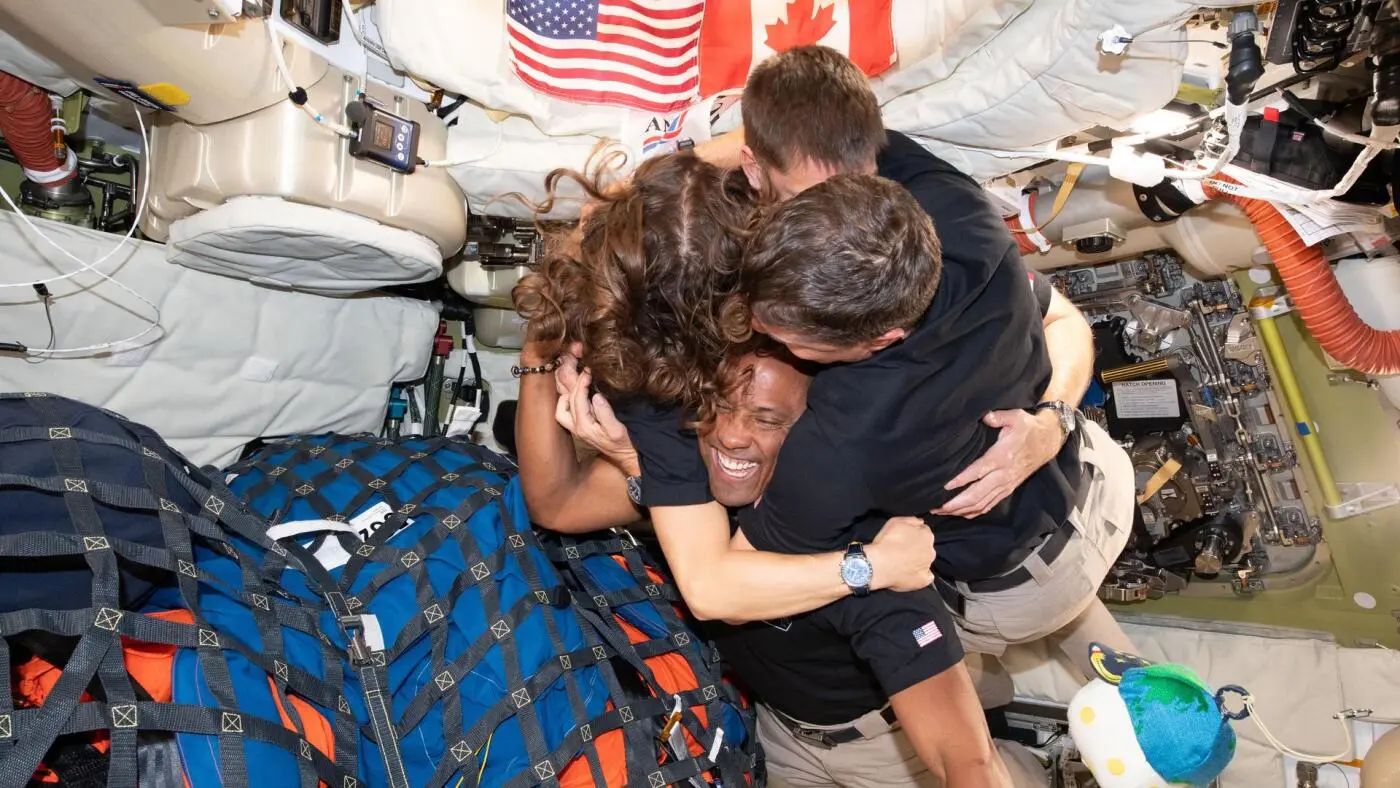
After a nearly 10-day journey that took the Artemis II astronauts around the moon, in front of an eclipse and farther away from Earth than any humans before them, the NASA mission is about to make a dramatic return home.The Artemis II astronauts share a group hug aboard the Orion capsule.
hide caption
The crew's Orion space capsule is set to enter the atmosphere at 7:53 p.m. ET and splash down less than a quarter-hour later, at 8:07 p.m., off the coast of San Diego.
In that short time, the space capsule will have to slow down from nearly 25,000 miles per hour — or more than 30 times the speed of sound — to a gentle 20 or so mph before dropping into the Pacific Ocean.
As it punches though Earth's atmosphere, the spacecraft will likely experience temperatures around 5,000 degrees Fahrenheit.
And for about six minutes during reentry, as plasma builds up around the vehicle, the capsule's communications will be cut off.
The journey to Earth is like "riding a fireball through the atmosphere," NASA astronaut and Artemis II crew member Victor Glover said before the maneuver.
But, he said, it's also a necessary one.
"We have to get back," Glover said. "There's so much data that you've seen already, but all the good stuff is coming back with us."
Glover, along with fellow NASA astronauts Reid Wiseman and Christina Koch and Canadian Space Agency astronaut Jeremy Hansen, took photos and made observations of the moon as they passed over its surface April 6. The crew will be bringing that data and more back to the team on the ground — data that may offer crucial insights ahead of the Artemis III mission, set to launch as early as next year.
Nell Greenfieldboyce and Central Florida Public Media's Brendan Byrne contributed to this report.