MMR 예방접종을 맞기에 너무 어린 영아들, 홍역 확산 중 '표적'이 되다
Too young for the MMR shot, babies become 'sitting ducks' in measles outbreaks
Associated Press
https://apnews.com/author/devi-shastri
EN
2026-04-11 06:05
Translated
예방접종을 받기에 너무 어린 영아들은 수십 년 만에 미국에서 가장 큰 규모의 홍역 확산 사태인 사우스캐롤라이나 주의 발병과 같은 홍역 유행 중 가장 취약한 집단이다. 사우스캐롤라이나의 발병은 둔화되었지만, 올해 17건의 발병 사태가 있으면서 많은 주에서 홍역이 확산되고 있다.
아서라는 아들이 홍역 백신 접종 대상이 되기에 너무 어리고 6월에 둘째 아이가 예정되어 있는 오트웰 가족은 전염성이 높은 바이러스의 위협이 식료품점 쇼핑에 영향을 미치기 시작하면서 긴장하게 되었다.
"우리는 일종의 발병 중심이었던 코스트코에 갔습니다"라고 존 오트웰은 말했다. 그는 매장에서의 공중 노출에 대한 주 보건부의 경고를 알고 있었다. "많은 사람들은 이것을 이해하지 못합니다. 그들은 그냥 감기라고 생각합니다. 그렇지 않습니다."
아서의 생후 9개월 검진 시점까지 사우스캐롤라이나 발병은 35년 이상 동안 미국에서 가장 심각한 상황으로 폭발했으며, 지난해 텍사스에서의 발병을 능가했다. 이는 주 지침에 따라 아서가 MMR 백신(홍역, 볼거리, 풍진)의 첫 번째 접종을 일반적인 생후 12~15개월보다 더 일찍 받을 수 있음을 의미했다. 새로운 아기는 최소 생후 6개월까지 접종을 받을 수 없을 것이며, 이는 홍역이 확산되는 곳의 영아 부모들을 걱정하게 만든다.
예방접종을 받기에 너무 어린 영아들은 홍역 유행 중 가장 취약한 집단이다. 이 질병은 그들의 약한 신체에 심각한 피해를 줄 수 있으며, 먹고 마시기를 중단할 정도로 심각하게 아프게 할 수 있다. 폐렴이나 뇌 부종이 발생할 수 있으며, 때로는 사망에 이를 수 있다.
영아들은 전적으로 집단 면역에 의존한다. 홍역 유행을 예방하기 위해서는 지역사회의 최소 95%가 예방접종을 받아야 한다. 그러나 감소하는 예방접종률은 사우스캐롤라이나 주와 전국의 보호를 약화시켰다. 발병의 중심지인 스파르탄버그 카운티에서는 학생의 90% 미만만이 필수 예방접종을 받았다.
"영아들은 표적이 됩니다"라고 컬럼비아 소아과 의사인 드보라 그린하우스 박사는 말했다. "우리 모두를 보호하는 책임은 우리 모두에게 있습니다."
그러나 점점 더 많은 정책 입안자들과 관료들은 예방접종을 공중 보건 문제보다는 개인의 자유와 부모의 권리 문제로 보는 입장을 취하고 있다.
연방 차원에서 오랫동안 반백신 운동을 해온 보건부 장관 로버트 F. 케네디 주니어는 백신 정책을 재편하려고 노력했으며 수십억 달러의 공중 보건 예산 삭감을 감독했다. 연방 판사의 임시 판결이 그의 추진력을 늦췄지만, 사우스캐롤라이나를 포함한 여러 주에서 예방접종률을 더욱 낮출 수 있는 많은 법안이 제출되었다.
사우스캐롤라이나의 홍역 발병은 약 1,000건으로 둔화되었다. 그러나 많은 주에서 홍역이 확산되고 있으며, 올해 17건의 발병 사태와 지난해 48건이 있었고, 미국은 홍역을 제거한 국가로서의 지위를 잃을 위기에 처해 있다.
소아과 의사인 제시카 어리 박사는 홍역을 다뤄야 할 것이라고 생각하지 않았지만, 그녀의 그리어 지역사회에 홍역이 나타났을 때 자신의 환자들과 자신의 아기를 위해 걱정했다. 그녀와 다른 의사들은 승인된 영아 MMR 접종을 생후 6개월 이르게 제공하기 시작했다. 그녀의 진료소는 또한 두 번째 MMR 접종을 보통 4~6세 연령층을 위해 일반적으로 제공되는 것보다 더 일찍 제공하기 시작했다.
많은 의사들의 불만에도 불구하고 사우스캐롤라이나에서 홍역에 걸린 영아가 몇 명인지, 또는 입원한 영아가 몇 명인지 아무도 알지 못한다.
주 관계자들은 997건 중 253건이 4세 이하의 아이들 중에 있었다고만 공개할 것이며, 개인정보 보호 이유로 사례를 더 자세히 분류하지 않겠다고 말한다. 통계를 이렇게 그룹화하는 것은 드문 일이 아니다.
관계자들은 또한 바이러스로 입원한 영아가 정확히 몇 명인지 모르고 있으며, 일부 다른 주에서와 마찬가지로 병원은 홍역 관련 입원을 보고할 의무가 없다.
전국의 의사들은 영아를 대기실이나 보육시설로 데려가도 되는지에 대한 많은 질문을 받았다고 말했다.
발병 지역 전역에서 운영되는 아동 보육 네트워크인 미스 태미스 리틀 러닝 센터의 지역 이사 토마스 컴프턴은 확인된 사례가 없었음에도 불구하고 18명의 부모가 자신의 시설에서 아이들을 데려갔다고 말했다. 일부는 자녀가 시작하기로 예정된 며칠 전에 보증금을 포기했으며, 이로 인해 회사가 교사 1명을 해고해야 했다.
허가된 보육시설은 주법에 따라 백신 접종을 요구해야 하지만, 가족들은 종교적 면제를 쉽게 받을 수 있다. 미스 태미스의 300명 아이 중 약 5분의 1이 백신 면제를 받았다.
홍역이 급증했을 때 컴프턴은 주 관계자들이 거의 지침을 제공하지 않았다고 말했다. 그의 직원들은 COVID-19가 극성을 부릴 때처럼 표면을 닦았고, 페이스북에서 지역 홍역 사례를 추적했으며, 질병에 대한 정보를 구글에 의존했다.
"많은 부모들이 정말 스트레스를 받았습니다"라고 컴프턴은 말했다. "약간의 병이 나거나 무언가가 있을 때마다 그들은 '홍역일까요?'라고 말했습니다."
지난해 연합뉴스 조사에 따르면 트럼프 행정부 관계자들이 활동가들에게 주의회에서 반과학 입법을 추진하도록 지시하고 있었다. 전국적으로 10월 말 기준 약 350건의 반백신 법안이 제출되었으며, 사우스캐롤라이나에서만 최소 8건이 제출되었다.
올해 주 법안은 2세 미만의 아동에 대한 백신 접종 의무를 금지할 것이다.
"즉, 보육시설의 이러한 요구 사항을 제거할 것입니다"라고 소아과 의사 그린하우스는 말했다. "그리고 저 같은 사람들에게 그것은 정말로 끔찍한 일입니다."
소위원회 토론에서 공화당 주 상원의원 칼리슬 케네디는 자신의 법안이 부모의 권리를 보호하는 것을 목표로 한다고 말했다. 그의 아기는 8월에 신장이 제대로 작동하지 않는 상태로 태어났고 의사와 조율하여 개인화된 일정에 따라 백신을 접종했다.
"우리는 그의 몸이 그것을 견딜 수 있기 전에 백신을 그의 몸에 넣고 싶지 않았습니다"라고 그는 말했다.
반대자들은 집단 면역이 이러한 상황의 아이들을 보호한다고 반박했다.
상원 소위원회는 입법을 진행했다. 그린하우스는 그것이 추진력을 가지고 있을 우려가 있다.
"우리가 현재 살고 있는 환경에서는 모든 법안이 잠재적으로 추진력을 가질 수 있다고 생각합니다"라고 그녀는 말했다. "그 추진력이 어디로도 가지 않도록 절대 최선을 다하는 것이 우리의 일입니다."
법안이 법이 되든 아니든 의사들은 이러한 종류의 입법이 백신 회의론과 혼란을 부추긴다고 말한다. 미국 소아과 학회가 영아에게 지난 몇 년 동안 받은 모든 백신을 투여하도록 조언하는 동안, 일부 부모들은 그린하우스에 정부가 더 적은 백신을 요구했다고 말한다.
"그들은 실제로 누가를 믿을 수 있는지 모릅니다"라고 그녀는 말했다.
다른 주와 마찬가지로 사우스캐롤라이나도 비의료 백신 면제를 더 쉽게 받을 수 있도록 했다고, 주의 미국 소아과 학회 지부 회장인 마사 에드워즈 박사는 지적했다. 발병 중심지에서 종교적 면제는 2020년 이후 두 배 이상 증가했다. 주 전역에서 2025-26학년도에 학령기 학생의 4%가 그러한 면제를 받았다.
"부모의 선택은 많은 남부 주들에서 큰 유행어입니다"라고 에드워즈는 말했다. 그러나 백신 접종을 하지 않기로 선택하는 것은 다른 부모들의 자녀를 안전하게 보호할 권리에 영향을 미친다고 그녀는 말했다.
의사들은 상황이 악화될 것만 예상한다.
2026년 처음 3개월 동안 미국은 1,671건의 홍역 확진자를 기록했다. 이는 2025년 총 확진자의 73%로, 30년 이상 동안 바이러스로 인한 최악의 해이다. 11월에 국제 보건 관계자들은 홍역이 여전히 미국에서 제거된 것으로 간주되는지 결정할 것이다.
국가 MMR 예방접종률은 2024-25 학년도 유치원생의 92.5%로 2019-20년의 95.2%에서 하락했으며, 특정 지역사회에서는 훨씬 낮은 비율을 가리고 있다. 스파르탄버그 카운티의 한 학교에서는 학생의 21%만이 모든 필수 백신을 접종받았다.
의사들은 100년 전처럼 백신으로 예방 가능한 모든 종류의 질병이 생명을 위협하는 것은 시간 문제라고 우려한다.
"면역의 전체 개념은 의학이 경험한 최고의 것 중 하나입니다"라고 그린하우스는 말했다. "우리가 실제로 뒤로 물러나고 있는 것을 보는 것은 그저 혼란스럽습니다."
발병 지역에 사는 헬렌 카이저는 쌍둥이 2세 아들을 보호하고 지역사회를 보호하기 위해 일찍 예방접종했다.
"나는 내 아들이 다른 아기를 매우 아프게 했고 그것이 내가 예방할 수 있었던 것이라는 것을 알았다면 절대 자신을 용서하지 못할 것입니다"라고 그녀는 말했다.
아서라는 아들이 홍역 백신 접종 대상이 되기에 너무 어리고 6월에 둘째 아이가 예정되어 있는 오트웰 가족은 전염성이 높은 바이러스의 위협이 식료품점 쇼핑에 영향을 미치기 시작하면서 긴장하게 되었다.
"우리는 일종의 발병 중심이었던 코스트코에 갔습니다"라고 존 오트웰은 말했다. 그는 매장에서의 공중 노출에 대한 주 보건부의 경고를 알고 있었다. "많은 사람들은 이것을 이해하지 못합니다. 그들은 그냥 감기라고 생각합니다. 그렇지 않습니다."
아서의 생후 9개월 검진 시점까지 사우스캐롤라이나 발병은 35년 이상 동안 미국에서 가장 심각한 상황으로 폭발했으며, 지난해 텍사스에서의 발병을 능가했다. 이는 주 지침에 따라 아서가 MMR 백신(홍역, 볼거리, 풍진)의 첫 번째 접종을 일반적인 생후 12~15개월보다 더 일찍 받을 수 있음을 의미했다. 새로운 아기는 최소 생후 6개월까지 접종을 받을 수 없을 것이며, 이는 홍역이 확산되는 곳의 영아 부모들을 걱정하게 만든다.
예방접종을 받기에 너무 어린 영아들은 홍역 유행 중 가장 취약한 집단이다. 이 질병은 그들의 약한 신체에 심각한 피해를 줄 수 있으며, 먹고 마시기를 중단할 정도로 심각하게 아프게 할 수 있다. 폐렴이나 뇌 부종이 발생할 수 있으며, 때로는 사망에 이를 수 있다.
영아들은 전적으로 집단 면역에 의존한다. 홍역 유행을 예방하기 위해서는 지역사회의 최소 95%가 예방접종을 받아야 한다. 그러나 감소하는 예방접종률은 사우스캐롤라이나 주와 전국의 보호를 약화시켰다. 발병의 중심지인 스파르탄버그 카운티에서는 학생의 90% 미만만이 필수 예방접종을 받았다.
"영아들은 표적이 됩니다"라고 컬럼비아 소아과 의사인 드보라 그린하우스 박사는 말했다. "우리 모두를 보호하는 책임은 우리 모두에게 있습니다."
그러나 점점 더 많은 정책 입안자들과 관료들은 예방접종을 공중 보건 문제보다는 개인의 자유와 부모의 권리 문제로 보는 입장을 취하고 있다.
연방 차원에서 오랫동안 반백신 운동을 해온 보건부 장관 로버트 F. 케네디 주니어는 백신 정책을 재편하려고 노력했으며 수십억 달러의 공중 보건 예산 삭감을 감독했다. 연방 판사의 임시 판결이 그의 추진력을 늦췄지만, 사우스캐롤라이나를 포함한 여러 주에서 예방접종률을 더욱 낮출 수 있는 많은 법안이 제출되었다.
사우스캐롤라이나의 홍역 발병은 약 1,000건으로 둔화되었다. 그러나 많은 주에서 홍역이 확산되고 있으며, 올해 17건의 발병 사태와 지난해 48건이 있었고, 미국은 홍역을 제거한 국가로서의 지위를 잃을 위기에 처해 있다.
소아과 의사인 제시카 어리 박사는 홍역을 다뤄야 할 것이라고 생각하지 않았지만, 그녀의 그리어 지역사회에 홍역이 나타났을 때 자신의 환자들과 자신의 아기를 위해 걱정했다. 그녀와 다른 의사들은 승인된 영아 MMR 접종을 생후 6개월 이르게 제공하기 시작했다. 그녀의 진료소는 또한 두 번째 MMR 접종을 보통 4~6세 연령층을 위해 일반적으로 제공되는 것보다 더 일찍 제공하기 시작했다.
많은 의사들의 불만에도 불구하고 사우스캐롤라이나에서 홍역에 걸린 영아가 몇 명인지, 또는 입원한 영아가 몇 명인지 아무도 알지 못한다.
주 관계자들은 997건 중 253건이 4세 이하의 아이들 중에 있었다고만 공개할 것이며, 개인정보 보호 이유로 사례를 더 자세히 분류하지 않겠다고 말한다. 통계를 이렇게 그룹화하는 것은 드문 일이 아니다.
관계자들은 또한 바이러스로 입원한 영아가 정확히 몇 명인지 모르고 있으며, 일부 다른 주에서와 마찬가지로 병원은 홍역 관련 입원을 보고할 의무가 없다.
전국의 의사들은 영아를 대기실이나 보육시설로 데려가도 되는지에 대한 많은 질문을 받았다고 말했다.
발병 지역 전역에서 운영되는 아동 보육 네트워크인 미스 태미스 리틀 러닝 센터의 지역 이사 토마스 컴프턴은 확인된 사례가 없었음에도 불구하고 18명의 부모가 자신의 시설에서 아이들을 데려갔다고 말했다. 일부는 자녀가 시작하기로 예정된 며칠 전에 보증금을 포기했으며, 이로 인해 회사가 교사 1명을 해고해야 했다.
허가된 보육시설은 주법에 따라 백신 접종을 요구해야 하지만, 가족들은 종교적 면제를 쉽게 받을 수 있다. 미스 태미스의 300명 아이 중 약 5분의 1이 백신 면제를 받았다.
홍역이 급증했을 때 컴프턴은 주 관계자들이 거의 지침을 제공하지 않았다고 말했다. 그의 직원들은 COVID-19가 극성을 부릴 때처럼 표면을 닦았고, 페이스북에서 지역 홍역 사례를 추적했으며, 질병에 대한 정보를 구글에 의존했다.
"많은 부모들이 정말 스트레스를 받았습니다"라고 컴프턴은 말했다. "약간의 병이 나거나 무언가가 있을 때마다 그들은 '홍역일까요?'라고 말했습니다."
지난해 연합뉴스 조사에 따르면 트럼프 행정부 관계자들이 활동가들에게 주의회에서 반과학 입법을 추진하도록 지시하고 있었다. 전국적으로 10월 말 기준 약 350건의 반백신 법안이 제출되었으며, 사우스캐롤라이나에서만 최소 8건이 제출되었다.
올해 주 법안은 2세 미만의 아동에 대한 백신 접종 의무를 금지할 것이다.
"즉, 보육시설의 이러한 요구 사항을 제거할 것입니다"라고 소아과 의사 그린하우스는 말했다. "그리고 저 같은 사람들에게 그것은 정말로 끔찍한 일입니다."
소위원회 토론에서 공화당 주 상원의원 칼리슬 케네디는 자신의 법안이 부모의 권리를 보호하는 것을 목표로 한다고 말했다. 그의 아기는 8월에 신장이 제대로 작동하지 않는 상태로 태어났고 의사와 조율하여 개인화된 일정에 따라 백신을 접종했다.
"우리는 그의 몸이 그것을 견딜 수 있기 전에 백신을 그의 몸에 넣고 싶지 않았습니다"라고 그는 말했다.
반대자들은 집단 면역이 이러한 상황의 아이들을 보호한다고 반박했다.
상원 소위원회는 입법을 진행했다. 그린하우스는 그것이 추진력을 가지고 있을 우려가 있다.
"우리가 현재 살고 있는 환경에서는 모든 법안이 잠재적으로 추진력을 가질 수 있다고 생각합니다"라고 그녀는 말했다. "그 추진력이 어디로도 가지 않도록 절대 최선을 다하는 것이 우리의 일입니다."
법안이 법이 되든 아니든 의사들은 이러한 종류의 입법이 백신 회의론과 혼란을 부추긴다고 말한다. 미국 소아과 학회가 영아에게 지난 몇 년 동안 받은 모든 백신을 투여하도록 조언하는 동안, 일부 부모들은 그린하우스에 정부가 더 적은 백신을 요구했다고 말한다.
"그들은 실제로 누가를 믿을 수 있는지 모릅니다"라고 그녀는 말했다.
다른 주와 마찬가지로 사우스캐롤라이나도 비의료 백신 면제를 더 쉽게 받을 수 있도록 했다고, 주의 미국 소아과 학회 지부 회장인 마사 에드워즈 박사는 지적했다. 발병 중심지에서 종교적 면제는 2020년 이후 두 배 이상 증가했다. 주 전역에서 2025-26학년도에 학령기 학생의 4%가 그러한 면제를 받았다.
"부모의 선택은 많은 남부 주들에서 큰 유행어입니다"라고 에드워즈는 말했다. 그러나 백신 접종을 하지 않기로 선택하는 것은 다른 부모들의 자녀를 안전하게 보호할 권리에 영향을 미친다고 그녀는 말했다.
의사들은 상황이 악화될 것만 예상한다.
2026년 처음 3개월 동안 미국은 1,671건의 홍역 확진자를 기록했다. 이는 2025년 총 확진자의 73%로, 30년 이상 동안 바이러스로 인한 최악의 해이다. 11월에 국제 보건 관계자들은 홍역이 여전히 미국에서 제거된 것으로 간주되는지 결정할 것이다.
국가 MMR 예방접종률은 2024-25 학년도 유치원생의 92.5%로 2019-20년의 95.2%에서 하락했으며, 특정 지역사회에서는 훨씬 낮은 비율을 가리고 있다. 스파르탄버그 카운티의 한 학교에서는 학생의 21%만이 모든 필수 백신을 접종받았다.
의사들은 100년 전처럼 백신으로 예방 가능한 모든 종류의 질병이 생명을 위협하는 것은 시간 문제라고 우려한다.
"면역의 전체 개념은 의학이 경험한 최고의 것 중 하나입니다"라고 그린하우스는 말했다. "우리가 실제로 뒤로 물러나고 있는 것을 보는 것은 그저 혼란스럽습니다."
발병 지역에 사는 헬렌 카이저는 쌍둥이 2세 아들을 보호하고 지역사회를 보호하기 위해 일찍 예방접종했다.
"나는 내 아들이 다른 아기를 매우 아프게 했고 그것이 내가 예방할 수 있었던 것이라는 것을 알았다면 절대 자신을 용서하지 못할 것입니다"라고 그녀는 말했다.
Babies too young to be vaccinated are among the most vulnerable in measles outbreaks like the one in South Carolina, which is the largest the U.S. has seen in decades. South Carolina’s outbreak has slowed, but measles is spreading in many states, with 17 outbreaks this year. (AP Video: Mary Conlon)
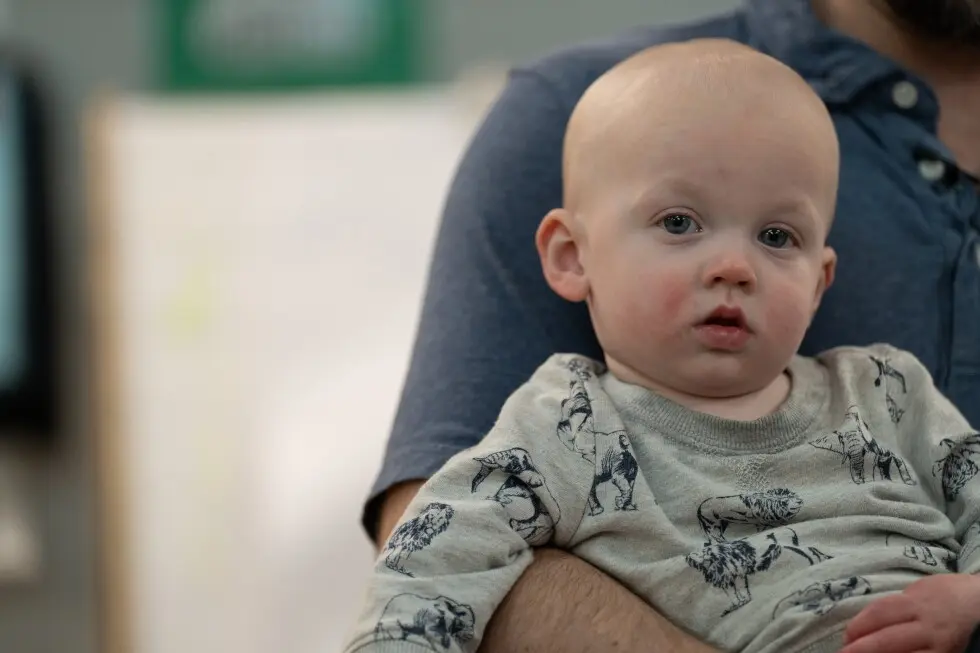
John Otwell holds his son, Arthur, at Miss Tammy’s Little Learning Center in Landrum, S.C., on March 18, 2026. (AP Photo/Mary Conlon)
Lauren Ellenburg, a nurse, prepares a combination measles, mumps and rubella vaccine for a 12-month-old at Tiger Pediatrics in Easley, S.C., on March 17, 2026. (AP Photo/Mary Conlon)
Daren Chandler holds his 12-month-old daughter as she has blood drawn for testing, before receiving a measles shot at Tiger Pediatrics in Easley, S.C., on March 17, 2026. (AP Photo/Mary Conlon)
Helen Kaiser holds her son at their home in Landrum, S.C., on March 19, 2026. (AP Photo/Mary Conlon)
Helen Kaiser watches her sons play at their home in Landrum, S.C., on March 19, 2026. (AP Photo/Mary Conlon)
Babies too young to be vaccinated are among the most vulnerable in measles outbreaks like the one in South Carolina, which is the largest the U.S. has seen in decades. South Carolina’s outbreak has slowed, but measles is spreading in many states, with 17 outbreaks this year. (AP Video: Mary Conlon)
John Otwell holds his son, Arthur, at Miss Tammy’s Little Learning Center in Landrum, S.C., on March 18, 2026. (AP Photo/Mary Conlon)
John Otwell holds his son, Arthur, at Miss Tammy’s Little Learning Center in Landrum, S.C., on March 18, 2026. (AP Photo/Mary Conlon)
Lauren Ellenburg, a nurse, prepares a combination measles, mumps and rubella vaccine for a 12-month-old at Tiger Pediatrics in Easley, S.C., on March 17, 2026. (AP Photo/Mary Conlon)
Lauren Ellenburg, a nurse, prepares a combination measles, mumps and rubella vaccine for a 12-month-old at Tiger Pediatrics in Easley, S.C., on March 17, 2026. (AP Photo/Mary Conlon)
Daren Chandler holds his 12-month-old daughter as she has blood drawn for testing, before receiving a measles shot at Tiger Pediatrics in Easley, S.C., on March 17, 2026. (AP Photo/Mary Conlon)
Daren Chandler holds his 12-month-old daughter as she has blood drawn for testing, before receiving a measles shot at Tiger Pediatrics in Easley, S.C., on March 17, 2026. (AP Photo/Mary Conlon)
Helen Kaiser holds her son at their home in Landrum, S.C., on March 19, 2026. (AP Photo/Mary Conlon)
Helen Kaiser holds her son at their home in Landrum, S.C., on March 19, 2026. (AP Photo/Mary Conlon)
Helen Kaiser watches her sons play at their home in Landrum, S.C., on March 19, 2026. (AP Photo/Mary Conlon)
Helen Kaiser watches her sons play at their home in Landrum, S.C., on March 19, 2026. (AP Photo/Mary Conlon)
LANDRUM, South Carolina (AP) — With baby Arthur too young for the measles vaccine and a sibling due in June, the Otwells grew nervous when the threat of the highly contagious virus started factoring into their grocery run.
“We go to the Costco that was kind of a hotbed,” said John Otwell, who knew about the state health department’s warnings of public exposures at the store. “A lot of people just don’t get it; they think it’s just a cold. It’s not.”
By Arthur’s 9-month checkup, the South Carolina outbreak had exploded into the nation’s worst in more than 35 years, surpassing last year’s in Texas. That meant that under state guidance, Arthur could get his first dose of the MMR vaccine — for measles, mumps and rubella — earlier than the usual 12 to 15 months old. Their new baby won’t be able to get the shot until at least 6 months — a prospect that worries parents of infants wherever measles spreads.
Babies too young to be vaccinated are among the most vulnerable in a measles outbreak. The disease can wreak havoc on their fragile bodies, making them so sick they stop eating and drinking. They can develop pneumonia or brain swelling, and sometimes die.
Babies depend entirely on herd immunity — at least 95% of a community must be vaccinated to prevent measles outbreaks. But dropping vaccination rates have eroded protection in South Carolina and across the nation. In Spartanburg County, the outbreak’s epicenter, less than 90% of students have gotten required vaccines.
“Babies become sitting ducks,” said Dr. Deborah Greenhouse, a Columbia pediatrician. “The burden is on all of us to protect all of us.”
But increasingly, some policymakers and officials push a view of vaccination as an issue of individual freedom and parents’ rights, rather than one of public health to safeguard the population as a whole.
At the federal level, Health Secretary Robert F. Kennedy Jr., a longtime anti-vaccine crusader, has sought to remake vaccine policy and oversaw billions in public health cuts. And though a temporary ruling from a federal judge has slowed his momentum, a raft of bills has been introduced in states, including South Carolina, that threaten to further reduce vaccination rates.
South Carolina’s measles outbreak, totaling about 1,000 cases, has slowed. But measles is spreading in many states, with 17 outbreaks this year and 48 last year, and the U.S. on the verge of losing its status as a country that has eliminated measles.
Dr. Jessica Early never thought she’d have to deal with measles, but the pediatrician feared for her patients and her own baby when it popped up in her Greer community. She and other doctors began offering an approved infant MMR dose as early as 6 months old. Her practice also started giving the second MMR dose — usually for ages 4 to 6 years old — early.
To the chagrin of many doctors, no one knows how many South Carolina infants have gotten measles or been hospitalized by it.
State officials will disclose only that 253 of the 997 cases were among children 4 and younger; they say they won’t break cases down further for confidentiality reasons. It’s not uncommon to group statistics this way.
Officials also don’t know exactly how many infants were hospitalized with the virus because, as in some other states, hospitals aren’t required to report measles-related admissions.
Across the state, doctors said they got many questions about whether it was safe to bring infants to waiting rooms or day care.
Thomas Compton — regional director of Miss Tammy’s Little Learning Center, a child care network operating across the outbreak region — said 18 parents pulled children out of his facilities, though they had no confirmed cases. Some abandoned deposits days before their kids were scheduled to start, forcing the company to lay off a teacher.
Although licensed day cares must require vaccines under state law, families can easily get religious exemptions. About a fifth of Miss Tammy’s 300 children have vaccine waivers.
When measles surged, Compton said state officials gave little guidance. His staff scrubbed down surfaces, as they did when COVID-19 was raging; tracked local measles cases on Facebook; and relied on Google for information about the disease.
“A lot of parents were really stressed out,” Compton said. “Anytime that we had a little sickness going on or something, they were like, ‘Do you think it’s the measles?’”
Last year, an Associated Press investigation found that Trump administration officials were directing activists to push anti-science legislation in statehouses. Nationally, around 350 anti-vaccine bills were introduced as of late October, AP found, including at least eight in South Carolina.
This year, a state bill would prohibit requiring vaccines for children under 2.
“In other words, it would get rid of those requirements in the day cares,” pediatrician Greenhouse said. “And for people like me, that is a gut punch that is terrifying.”
In a subcommittee discussion, Republican State Sen. Carlisle Kennedy said his bill aims to protect parents’ rights. His baby was born in August without working kidneys and got vaccines on a personalized schedule, in coordination with doctors.
“We didn’t want to put vaccines in his body before his body was able to survive them,” he said.
Opponents countered that herd immunity protects children in these situations.
The Senate subcommittee advanced the legislation. Greenhouse fears it has momentum.
“In the climate that we are currently living in, I think any bill potentially could have legs,” she said. “It is our job to do our absolute best to make sure that those legs don’t go anywhere.”
Whether the bill becomes law, doctors say this sort of legislation fuels vaccine skepticism and confusion. While the American Academy of Pediatrics advises giving babies all the vaccines they’ve gotten for years, some parents tell Greenhouse they know the government has called for fewer.
“They don’t actually know who they can trust,” she said.
South Carolina, like other states, has made nonmedical vaccine exemptions easier to get, noted Dr. Martha Edwards, president of the state’s American Academy of Pediatrics chapter. In the outbreak’s epicenter, religious exemptions have more than doubled since 2020. Statewide, 4% of school-age students have such exemptions in 2025-26.
“Parental choice is a big buzzword in a lot of the Southern states,” Edwards said. But the choice not to vaccinate, she said, impacts other parents’ rights to keep their children safe.
Doctors expect things will only get worse.
In the first three months of 2026, the U.S. logged 1,671 measles cases. That’s 73% of the total from 2025, the worst year for the virus in more than three decades. In November, international health officials will determine whether measles is still considered eliminated in the U.S.
National MMR vaccination rates – which dropped to 92.5% among kindergartners in the 2024-25 school year, from 95.2% in 2019-20 – obscure much lower rates in certain communities. At one Spartanburg County school, 21% of kids received all required vaccines.
Doctors worry it’s just a matter of time before all sorts of vaccine-preventable diseases threaten lives like they did a century ago.
“The whole concept of immunization is one of the best things that has ever happened to medicine,” Greenhouse said. “To see that we are actually going backwards is just confounding.”
Helen Kaiser, who lives in the outbreak area, vaccinated her twin 2-year-old boys early to protect them and the community.
“I would never forgive myself,” she said, “if I knew that my son had gotten another baby very sick and it was something I could have prevented.”
Ungar reported from Louisville, Kentucky.
The Associated Press Health and Science Department receives support from the Howard Hughes Medical Institute’s Department of Science Education and the Robert Wood Johnson Foundation. The AP is solely responsible for all content.
John Otwell holds his son, Arthur, at Miss Tammy’s Little Learning Center in Landrum, S.C., on March 18, 2026. (AP Photo/Mary Conlon)
Lauren Ellenburg, a nurse, prepares a combination measles, mumps and rubella vaccine for a 12-month-old at Tiger Pediatrics in Easley, S.C., on March 17, 2026. (AP Photo/Mary Conlon)
Daren Chandler holds his 12-month-old daughter as she has blood drawn for testing, before receiving a measles shot at Tiger Pediatrics in Easley, S.C., on March 17, 2026. (AP Photo/Mary Conlon)
Helen Kaiser holds her son at their home in Landrum, S.C., on March 19, 2026. (AP Photo/Mary Conlon)
Helen Kaiser watches her sons play at their home in Landrum, S.C., on March 19, 2026. (AP Photo/Mary Conlon)
Babies too young to be vaccinated are among the most vulnerable in measles outbreaks like the one in South Carolina, which is the largest the U.S. has seen in decades. South Carolina’s outbreak has slowed, but measles is spreading in many states, with 17 outbreaks this year. (AP Video: Mary Conlon)
John Otwell holds his son, Arthur, at Miss Tammy’s Little Learning Center in Landrum, S.C., on March 18, 2026. (AP Photo/Mary Conlon)
John Otwell holds his son, Arthur, at Miss Tammy’s Little Learning Center in Landrum, S.C., on March 18, 2026. (AP Photo/Mary Conlon)
Lauren Ellenburg, a nurse, prepares a combination measles, mumps and rubella vaccine for a 12-month-old at Tiger Pediatrics in Easley, S.C., on March 17, 2026. (AP Photo/Mary Conlon)
Lauren Ellenburg, a nurse, prepares a combination measles, mumps and rubella vaccine for a 12-month-old at Tiger Pediatrics in Easley, S.C., on March 17, 2026. (AP Photo/Mary Conlon)
Daren Chandler holds his 12-month-old daughter as she has blood drawn for testing, before receiving a measles shot at Tiger Pediatrics in Easley, S.C., on March 17, 2026. (AP Photo/Mary Conlon)
Daren Chandler holds his 12-month-old daughter as she has blood drawn for testing, before receiving a measles shot at Tiger Pediatrics in Easley, S.C., on March 17, 2026. (AP Photo/Mary Conlon)
Helen Kaiser holds her son at their home in Landrum, S.C., on March 19, 2026. (AP Photo/Mary Conlon)
Helen Kaiser holds her son at their home in Landrum, S.C., on March 19, 2026. (AP Photo/Mary Conlon)
Helen Kaiser watches her sons play at their home in Landrum, S.C., on March 19, 2026. (AP Photo/Mary Conlon)
Helen Kaiser watches her sons play at their home in Landrum, S.C., on March 19, 2026. (AP Photo/Mary Conlon)
LANDRUM, South Carolina (AP) — With baby Arthur too young for the measles vaccine and a sibling due in June, the Otwells grew nervous when the threat of the highly contagious virus started factoring into their grocery run.
“We go to the Costco that was kind of a hotbed,” said John Otwell, who knew about the state health department’s warnings of public exposures at the store. “A lot of people just don’t get it; they think it’s just a cold. It’s not.”
By Arthur’s 9-month checkup, the South Carolina outbreak had exploded into the nation’s worst in more than 35 years, surpassing last year’s in Texas. That meant that under state guidance, Arthur could get his first dose of the MMR vaccine — for measles, mumps and rubella — earlier than the usual 12 to 15 months old. Their new baby won’t be able to get the shot until at least 6 months — a prospect that worries parents of infants wherever measles spreads.
Babies too young to be vaccinated are among the most vulnerable in a measles outbreak. The disease can wreak havoc on their fragile bodies, making them so sick they stop eating and drinking. They can develop pneumonia or brain swelling, and sometimes die.
Babies depend entirely on herd immunity — at least 95% of a community must be vaccinated to prevent measles outbreaks. But dropping vaccination rates have eroded protection in South Carolina and across the nation. In Spartanburg County, the outbreak’s epicenter, less than 90% of students have gotten required vaccines.
“Babies become sitting ducks,” said Dr. Deborah Greenhouse, a Columbia pediatrician. “The burden is on all of us to protect all of us.”
But increasingly, some policymakers and officials push a view of vaccination as an issue of individual freedom and parents’ rights, rather than one of public health to safeguard the population as a whole.
At the federal level, Health Secretary Robert F. Kennedy Jr., a longtime anti-vaccine crusader, has sought to remake vaccine policy and oversaw billions in public health cuts. And though a temporary ruling from a federal judge has slowed his momentum, a raft of bills has been introduced in states, including South Carolina, that threaten to further reduce vaccination rates.
South Carolina’s measles outbreak, totaling about 1,000 cases, has slowed. But measles is spreading in many states, with 17 outbreaks this year and 48 last year, and the U.S. on the verge of losing its status as a country that has eliminated measles.
Dr. Jessica Early never thought she’d have to deal with measles, but the pediatrician feared for her patients and her own baby when it popped up in her Greer community. She and other doctors began offering an approved infant MMR dose as early as 6 months old. Her practice also started giving the second MMR dose — usually for ages 4 to 6 years old — early.
To the chagrin of many doctors, no one knows how many South Carolina infants have gotten measles or been hospitalized by it.
State officials will disclose only that 253 of the 997 cases were among children 4 and younger; they say they won’t break cases down further for confidentiality reasons. It’s not uncommon to group statistics this way.
Officials also don’t know exactly how many infants were hospitalized with the virus because, as in some other states, hospitals aren’t required to report measles-related admissions.
Across the state, doctors said they got many questions about whether it was safe to bring infants to waiting rooms or day care.
Thomas Compton — regional director of Miss Tammy’s Little Learning Center, a child care network operating across the outbreak region — said 18 parents pulled children out of his facilities, though they had no confirmed cases. Some abandoned deposits days before their kids were scheduled to start, forcing the company to lay off a teacher.
Although licensed day cares must require vaccines under state law, families can easily get religious exemptions. About a fifth of Miss Tammy’s 300 children have vaccine waivers.
When measles surged, Compton said state officials gave little guidance. His staff scrubbed down surfaces, as they did when COVID-19 was raging; tracked local measles cases on Facebook; and relied on Google for information about the disease.
“A lot of parents were really stressed out,” Compton said. “Anytime that we had a little sickness going on or something, they were like, ‘Do you think it’s the measles?’”
Last year, an Associated Press investigation found that Trump administration officials were directing activists to push anti-science legislation in statehouses. Nationally, around 350 anti-vaccine bills were introduced as of late October, AP found, including at least eight in South Carolina.
This year, a state bill would prohibit requiring vaccines for children under 2.
“In other words, it would get rid of those requirements in the day cares,” pediatrician Greenhouse said. “And for people like me, that is a gut punch that is terrifying.”
In a subcommittee discussion, Republican State Sen. Carlisle Kennedy said his bill aims to protect parents’ rights. His baby was born in August without working kidneys and got vaccines on a personalized schedule, in coordination with doctors.
“We didn’t want to put vaccines in his body before his body was able to survive them,” he said.
Opponents countered that herd immunity protects children in these situations.
The Senate subcommittee advanced the legislation. Greenhouse fears it has momentum.
“In the climate that we are currently living in, I think any bill potentially could have legs,” she said. “It is our job to do our absolute best to make sure that those legs don’t go anywhere.”
Whether the bill becomes law, doctors say this sort of legislation fuels vaccine skepticism and confusion. While the American Academy of Pediatrics advises giving babies all the vaccines they’ve gotten for years, some parents tell Greenhouse they know the government has called for fewer.
“They don’t actually know who they can trust,” she said.
South Carolina, like other states, has made nonmedical vaccine exemptions easier to get, noted Dr. Martha Edwards, president of the state’s American Academy of Pediatrics chapter. In the outbreak’s epicenter, religious exemptions have more than doubled since 2020. Statewide, 4% of school-age students have such exemptions in 2025-26.
“Parental choice is a big buzzword in a lot of the Southern states,” Edwards said. But the choice not to vaccinate, she said, impacts other parents’ rights to keep their children safe.
Doctors expect things will only get worse.
In the first three months of 2026, the U.S. logged 1,671 measles cases. That’s 73% of the total from 2025, the worst year for the virus in more than three decades. In November, international health officials will determine whether measles is still considered eliminated in the U.S.
National MMR vaccination rates – which dropped to 92.5% among kindergartners in the 2024-25 school year, from 95.2% in 2019-20 – obscure much lower rates in certain communities. At one Spartanburg County school, 21% of kids received all required vaccines.
Doctors worry it’s just a matter of time before all sorts of vaccine-preventable diseases threaten lives like they did a century ago.
“The whole concept of immunization is one of the best things that has ever happened to medicine,” Greenhouse said. “To see that we are actually going backwards is just confounding.”
Helen Kaiser, who lives in the outbreak area, vaccinated her twin 2-year-old boys early to protect them and the community.
“I would never forgive myself,” she said, “if I knew that my son had gotten another baby very sick and it was something I could have prevented.”
Ungar reported from Louisville, Kentucky.
The Associated Press Health and Science Department receives support from the Howard Hughes Medical Institute’s Department of Science Education and the Robert Wood Johnson Foundation. The AP is solely responsible for all content.