로열스, 할마크 카드와의 30억 달러 프로젝트의 일환으로 캔자스시티 다운타운에 19억 달러 규모의 야구장 건설
Royals will build a $1.9B downtown KC ballpark as part of a $3B project with Hallmark Cards
Associated Press
· 🇺🇸 New York, US
https://apnews.com/author/dave-skretta
EN
2026-04-23 12:15
Translated
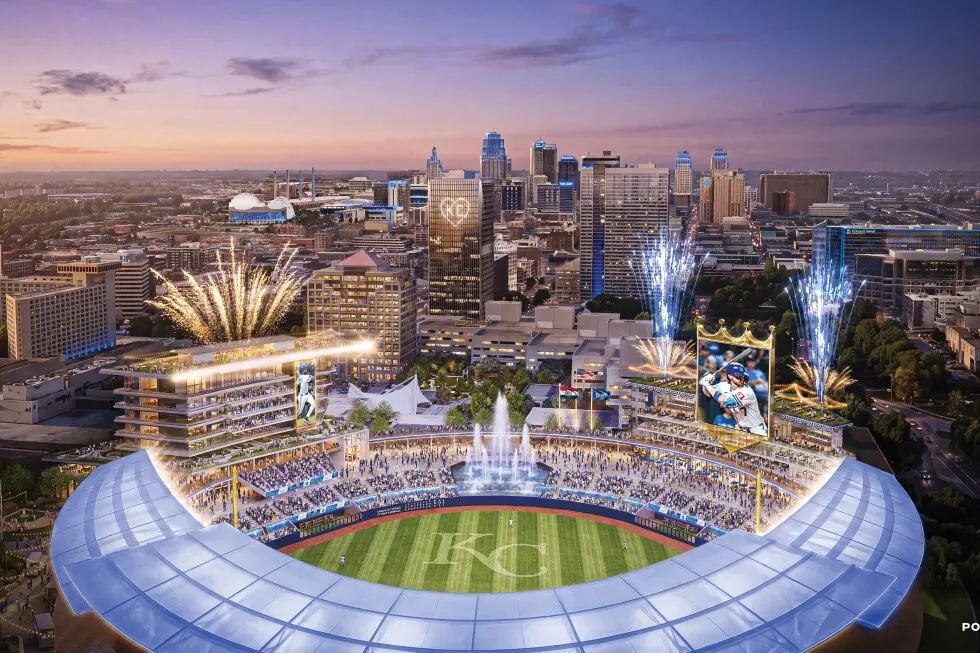
포플러스와 캔자스시티 로열스가 제공한 이 화가의 렌더링은 2026년 4월 22일 미주리주 캔자스시티 다운타운에 건설될 로열스의 새로운 야구장의 모습을 보여준다. (포플러스/캔자스시티 로열스 제공, AP)
볼티모어 오리올스의 테일러 워드(왼쪽)와 거너 헨더슨(2번)이 2026년 4월 22일 미주리주 캔자스시티에서 캔자스시티 로열스와의 야구 경기 전에 덕아웃에서 준비운동을 하고 있다. (AP 사진/찰리 리델)
캔자스시티 로열스의 코칭진이 2026년 4월 22일 미주리주 캔자스시티에서 볼티모어 오리올스와의 야구 경기 전에 카우프만 스타디움에서 국가 연주를 위해 일어서 있다. (AP 사진/찰리 리델)
포플러스와 캔자스시티 로열스가 제공한 이 화가의 렌더링은 2026년 4월 22일 미주리주 캔자스시티 다운타운에 건설될 로열스의 새로운 야구장의 모습을 보여준다. (포플러스/캔자스시티 로열스 제공, AP)
미주리주 캔자스시티 - 캔자스시티 로열스가 오랫동안의 터전인 카우프만 스타디움에서 다운타운 크라운 센터 지역으로 이전하며, 할마크 카드와 함께 새로운 야구장을 중심으로 한 혼합용도 개발이 포함된 30억 달러 규모의 프로젝트에 협력한다.
로열스 구단주 존 셔먼은 할마크 회장 돈 홀 주니어, 미주리주 주지사 마이크 케호, 캔자스시티 시장 퀸턴 루카스 및 기타 지역 및 주 인사들과 함께 수요일 할마크 본사 인근에서 이를 발표했다.
최종 기본 계획이 아직 완성되지 않은 가운데, 셔먼은 19억 달러 규모의 야구장이 85에이커 프로젝트의 첫 번째 단계의 일환으로 내년 크라운 센터 중앙에 착공될 것이라고 말했다. 자금의 3분의 2는 민간 출처에서, 나머지 3분의 1은 경기장 프로젝트를 위해 배정된 돈을 포함한 공공 파트너에서 나올 것이다.
셔먼은 "이것은 두 개의 소중한 캔자스시티 기관 간의 파트너십"이라며 "우리는 우리의 역사와 두 조직의 풍부한 과거를 존경하면서도 우리가 함께 할 수 있는 미래를 다시 활성화하고 재구상하는 비전을 만드는 데 전념하고 있다"고 말했다.
이 발표는 캔자스시티 관계자들이 로열스의 다운타운 이전을 돕기 위해 시 관리자 마리오 바스케스와 6억 달러 규모의 거래를 협상할 수 있도록 승인하는 조례를 통과시킨 약 1주일 후에 나왔다. 대부분은 야구장이 유니언 스테이션 옆에 있는 워싱턴 스퀘어 파크에 위치할 것으로 예상했지만, 대신 공원이 개발에 포함되어 있는 그 남쪽에 위치하게 될 것이다.
할마크는 이 지역에 새로운 본사를 건설할 의도를 가지고 있으며, 이는 T-모바일 센터가 앵커 역할을 하는 파워 & 라이트 지구로 스트릿카로 연결되어 있다. 다운타운 캔자스시티의 그 부분은 외야 펜스 너머의 배경을 제공할 것이다.
관계자들은 이 지역에 이미 있는 공용 주차장의 가용성과 근처 고속도로에서의 편리한 교통 흐름을 강조했다.
미주리주의 기여는 작년에 제정된 법으로부터 비롯되었으며, 이는 주의 새로운 또는 개조된 경기장 비용의 최대 50%를 커버하는 채권과 각 경기장에 대해 최대 5,000만 달러의 세금 공제 및 지역 정부로부터의 불특정 지원을 승인했다.
케호는 "우리는 이것이 우리 미주리 납세자들을 위한 훌륭한 투자라고 생각한다. 기존 프로그램에 영향을 주지 않기 때문이다"라며 "이 시설로부터의 파급 효과는 농촌 미주리와 주의 다른 지역으로 진정으로 멀리 미칠 것이다"고 말했다.
로열스는 2031년 트루먼 스포츠 컴플렉스에서의 임차가 만료될 때 카우프만 스타디움을 떠날 것이라고 주장했으며, 2019년 구단을 매입한 이후 셔먼의 의도는 그 대체로서 다운타운 야구장을 건설하는 것이었다.
그러나 수요일의 발표에 도달하는 것이 수많은 장애 없이 진행되지는 않았다.
가장 큰 걸림돌은 2024년 4월에 발생했으며, 당시 치프스는 로열스와 함께 애로우헤드 스타디움 개조 및 카우프만 스타디움 교체 계획에 참여했다. 이 계획은 경기장 유지비를 지불해온 판매세 연장에 달려 있었으며, 미주리주 잭슨 카운티의 유권자들은 이 제안을 압도적으로 거부했고, 양 구단이 각자의 길을 가도록 강요했다.
인접한 캔자스주의 입법부는 적극적으로 치프스를 추적했으며, 지난 12월 캔자스시티, 캔자스에 새로운 30억 달러 규모의 돔형 경기장 비용의 60%를 충당하는 24억 달러 규모의 채권 발행에 커밋했다. NFL 구단은 궁극적으로 주 경계를 넘어가기로 결정했으며, 여기서 또한 인근 오라더 캔자스 교외에 새로운 훈련 시설을 건설할 것이다.
캔자스의 관계자들은 잠시 로열스도 추적했지만, MLB 구단에 대한 그들의 관심은 항상 미지근했다.
로열스는 최근 몇 개월간 여러 옵션을 검토하고 있었다. 그러나 그들은 궁극적으로 캔자스주 오버랜드 파크 교외의 옵션을 거부했으며, 다운타운 북쪽과 미주리강을 건너 미주리주 클레이 카운티에 있는 부지에 대한 기한을 지나치도록 했다.
경제학자들은 오랫동안 경기장 보조가 전체 경제를 확장하기보다는 경제 활동을 지역의 다른 부분에서 끌어오기 때문에 지역사회에 비용의 가치가 없다고 결론지었다. 그러나 주와 도시는 계속해서 경기장을 개조하거나 새로운 경기장을 건설하기 위해 돈을 제공하고 있다 - MLB 또는 NFL이 사용하는 60개 중 49개가 공공 소유이거나 공공 토지에 있다.
셔먼이 캔자스시티에서 가능한 것의 사례로 인용한 경기장 중 하나는 애틀란타의 트루이스트 파크이다.
이 경기장은 콥-마리에타 콜로세움 & 전시관 당국이 최대 3억 9,700만 달러의 채권을 발행한 공민간 파트너십이었으며, 카운티는 교통세에서 더 많은 돈을 모금했고, 기업들은 현금에서 수백만 달러를 추가했다. 브레이브스는 공원과 배터리(혼합용도 개발)를 위한 나머지 돈을 기여했으며, 총 비용은 11억 달러 이상이었다.
셔먼은 "메이저 리그 베이스볼에는 많은 훌륭한 야구장 지역들이 있다"며 "하지만 이것은 더 많은 토지와 도시 중심부의 다운타운이 포함된 더 큰 프로젝트이다. 우리는 우리 팬들에게 현대적이고 최첨단의 야구장 경험을 제공하고 있으며, 우리의 대중 교통에 더 가깝고 더 많은 사람들이 일하고 사는 곳이다"라고 말했다.
볼티모어 오리올스의 테일러 워드(왼쪽)와 거너 헨더슨(2번)이 2026년 4월 22일 미주리주 캔자스시티에서 캔자스시티 로열스와의 야구 경기 전에 덕아웃에서 준비운동을 하고 있다. (AP 사진/찰리 리델)
캔자스시티 로열스의 코칭진이 2026년 4월 22일 미주리주 캔자스시티에서 볼티모어 오리올스와의 야구 경기 전에 카우프만 스타디움에서 국가 연주를 위해 일어서 있다. (AP 사진/찰리 리델)
포플러스와 캔자스시티 로열스가 제공한 이 화가의 렌더링은 2026년 4월 22일 미주리주 캔자스시티 다운타운에 건설될 로열스의 새로운 야구장의 모습을 보여준다. (포플러스/캔자스시티 로열스 제공, AP)
미주리주 캔자스시티 - 캔자스시티 로열스가 오랫동안의 터전인 카우프만 스타디움에서 다운타운 크라운 센터 지역으로 이전하며, 할마크 카드와 함께 새로운 야구장을 중심으로 한 혼합용도 개발이 포함된 30억 달러 규모의 프로젝트에 협력한다.
로열스 구단주 존 셔먼은 할마크 회장 돈 홀 주니어, 미주리주 주지사 마이크 케호, 캔자스시티 시장 퀸턴 루카스 및 기타 지역 및 주 인사들과 함께 수요일 할마크 본사 인근에서 이를 발표했다.
최종 기본 계획이 아직 완성되지 않은 가운데, 셔먼은 19억 달러 규모의 야구장이 85에이커 프로젝트의 첫 번째 단계의 일환으로 내년 크라운 센터 중앙에 착공될 것이라고 말했다. 자금의 3분의 2는 민간 출처에서, 나머지 3분의 1은 경기장 프로젝트를 위해 배정된 돈을 포함한 공공 파트너에서 나올 것이다.
셔먼은 "이것은 두 개의 소중한 캔자스시티 기관 간의 파트너십"이라며 "우리는 우리의 역사와 두 조직의 풍부한 과거를 존경하면서도 우리가 함께 할 수 있는 미래를 다시 활성화하고 재구상하는 비전을 만드는 데 전념하고 있다"고 말했다.
이 발표는 캔자스시티 관계자들이 로열스의 다운타운 이전을 돕기 위해 시 관리자 마리오 바스케스와 6억 달러 규모의 거래를 협상할 수 있도록 승인하는 조례를 통과시킨 약 1주일 후에 나왔다. 대부분은 야구장이 유니언 스테이션 옆에 있는 워싱턴 스퀘어 파크에 위치할 것으로 예상했지만, 대신 공원이 개발에 포함되어 있는 그 남쪽에 위치하게 될 것이다.
할마크는 이 지역에 새로운 본사를 건설할 의도를 가지고 있으며, 이는 T-모바일 센터가 앵커 역할을 하는 파워 & 라이트 지구로 스트릿카로 연결되어 있다. 다운타운 캔자스시티의 그 부분은 외야 펜스 너머의 배경을 제공할 것이다.
관계자들은 이 지역에 이미 있는 공용 주차장의 가용성과 근처 고속도로에서의 편리한 교통 흐름을 강조했다.
미주리주의 기여는 작년에 제정된 법으로부터 비롯되었으며, 이는 주의 새로운 또는 개조된 경기장 비용의 최대 50%를 커버하는 채권과 각 경기장에 대해 최대 5,000만 달러의 세금 공제 및 지역 정부로부터의 불특정 지원을 승인했다.
케호는 "우리는 이것이 우리 미주리 납세자들을 위한 훌륭한 투자라고 생각한다. 기존 프로그램에 영향을 주지 않기 때문이다"라며 "이 시설로부터의 파급 효과는 농촌 미주리와 주의 다른 지역으로 진정으로 멀리 미칠 것이다"고 말했다.
로열스는 2031년 트루먼 스포츠 컴플렉스에서의 임차가 만료될 때 카우프만 스타디움을 떠날 것이라고 주장했으며, 2019년 구단을 매입한 이후 셔먼의 의도는 그 대체로서 다운타운 야구장을 건설하는 것이었다.
그러나 수요일의 발표에 도달하는 것이 수많은 장애 없이 진행되지는 않았다.
가장 큰 걸림돌은 2024년 4월에 발생했으며, 당시 치프스는 로열스와 함께 애로우헤드 스타디움 개조 및 카우프만 스타디움 교체 계획에 참여했다. 이 계획은 경기장 유지비를 지불해온 판매세 연장에 달려 있었으며, 미주리주 잭슨 카운티의 유권자들은 이 제안을 압도적으로 거부했고, 양 구단이 각자의 길을 가도록 강요했다.
인접한 캔자스주의 입법부는 적극적으로 치프스를 추적했으며, 지난 12월 캔자스시티, 캔자스에 새로운 30억 달러 규모의 돔형 경기장 비용의 60%를 충당하는 24억 달러 규모의 채권 발행에 커밋했다. NFL 구단은 궁극적으로 주 경계를 넘어가기로 결정했으며, 여기서 또한 인근 오라더 캔자스 교외에 새로운 훈련 시설을 건설할 것이다.
캔자스의 관계자들은 잠시 로열스도 추적했지만, MLB 구단에 대한 그들의 관심은 항상 미지근했다.
로열스는 최근 몇 개월간 여러 옵션을 검토하고 있었다. 그러나 그들은 궁극적으로 캔자스주 오버랜드 파크 교외의 옵션을 거부했으며, 다운타운 북쪽과 미주리강을 건너 미주리주 클레이 카운티에 있는 부지에 대한 기한을 지나치도록 했다.
경제학자들은 오랫동안 경기장 보조가 전체 경제를 확장하기보다는 경제 활동을 지역의 다른 부분에서 끌어오기 때문에 지역사회에 비용의 가치가 없다고 결론지었다. 그러나 주와 도시는 계속해서 경기장을 개조하거나 새로운 경기장을 건설하기 위해 돈을 제공하고 있다 - MLB 또는 NFL이 사용하는 60개 중 49개가 공공 소유이거나 공공 토지에 있다.
셔먼이 캔자스시티에서 가능한 것의 사례로 인용한 경기장 중 하나는 애틀란타의 트루이스트 파크이다.
이 경기장은 콥-마리에타 콜로세움 & 전시관 당국이 최대 3억 9,700만 달러의 채권을 발행한 공민간 파트너십이었으며, 카운티는 교통세에서 더 많은 돈을 모금했고, 기업들은 현금에서 수백만 달러를 추가했다. 브레이브스는 공원과 배터리(혼합용도 개발)를 위한 나머지 돈을 기여했으며, 총 비용은 11억 달러 이상이었다.
셔먼은 "메이저 리그 베이스볼에는 많은 훌륭한 야구장 지역들이 있다"며 "하지만 이것은 더 많은 토지와 도시 중심부의 다운타운이 포함된 더 큰 프로젝트이다. 우리는 우리 팬들에게 현대적이고 최첨단의 야구장 경험을 제공하고 있으며, 우리의 대중 교통에 더 가깝고 더 많은 사람들이 일하고 사는 곳이다"라고 말했다.
처리 완료
5,356 tokens · $0.0149
기사 수집 완료 · 12:15
매체 피드에서 기사 메타데이터 수집
헤드라인 번역 완료 · 13:29
제목/요약 한국어 번역 (fetch 시점 inline)
kimi-k2.5
0 tokens
$0.00000
0.2s
본문 추출 완료
7,031자 추출 완료
본문 한국어 번역 완료 · 13:29
2,965자 번역 완료
claude-haiku-4-5-20251001
5,356 tokens
$0.01490
33.6s
지정학적 엔티티 추출 완료 · 13:29
8개 엔티티 추출 완료
지정학적 맥락 & R-Scanner
R-Scanner · 평상
z=-0.33
일상적인 보도 수준 — 기준: Kansas City
(🇺🇸 US)
최근 6시간 41건
7일 평균 43.18건 / 6h
9개국 매체
12개 매체
본문에서 추출된 지명 (8)
Kansas City
🇺🇸
Missouri
🇺🇸
Jackson County
🇺🇸
Kansas
🇺🇸
Kansas City
🇺🇸
Clay County
🇺🇸
Overland Park
🇺🇸
Atlanta
🇺🇸
위치 지도
지도 로딩 중…
같은 주제의 다른 기사 (최근 7일)
This artist’s rendering provided by Populous and the Kansas City Royals, Wednesday, April 22, 2026, shows a rendition of the Royals’ new baseball stadium to be constructed in downtown Kansas City, Mo. (Populous/Kansas City Royals via AP)
Baltimore Orioles’ Taylor Ward, left, and Gunnar Henderson (2) warm up on deck before a baseball game against the Kansas City Royals, Wednesday, April 22, 2026, in Kansas City, Mo. (AP Photo/Charlie Riedel)
Coaches for the Kansas City Royals stand for the national anthem at Kauffman Stadium before a baseball game against the Baltimore Orioles, Wednesday, April 22, 2026, in Kansas City, Mo. (AP Photo/Charlie Riedel)
This artist’s rendering provided by Populous and the Kansas City Royals, Wednesday, April 22, 2026, shows a rendition of the Royals’ new baseball stadium to be constructed in downtown Kansas City, Mo. (Populous/Kansas City Royals via AP)
This artist’s rendering provided by Populous and the Kansas City Royals, Wednesday, April 22, 2026, shows a rendition of the Royals’ new baseball stadium to be constructed in downtown Kansas City, Mo. (Populous/Kansas City Royals via AP)
Baltimore Orioles’ Taylor Ward, left, and Gunnar Henderson (2) warm up on deck before a baseball game against the Kansas City Royals, Wednesday, April 22, 2026, in Kansas City, Mo. (AP Photo/Charlie Riedel)
Baltimore Orioles’ Taylor Ward, left, and Gunnar Henderson (2) warm up on deck before a baseball game against the Kansas City Royals, Wednesday, April 22, 2026, in Kansas City, Mo. (AP Photo/Charlie Riedel)
Coaches for the Kansas City Royals stand for the national anthem at Kauffman Stadium before a baseball game against the Baltimore Orioles, Wednesday, April 22, 2026, in Kansas City, Mo. (AP Photo/Charlie Riedel)
Coaches for the Kansas City Royals stand for the national anthem at Kauffman Stadium before a baseball game against the Baltimore Orioles, Wednesday, April 22, 2026, in Kansas City, Mo. (AP Photo/Charlie Riedel)
KANSAS CITY, Mo. (AP) — The Kansas City Royals are moving from their longtime home at Kauffman Stadium to the downtown Crown Center area, partnering with Hallmark Cards on a $3 billion project that includes a mixed-used development with a new ballpark as its centerpiece.
Royals owner John Sherman was joined by Hallmark chairman Don Hall Jr., Missouri Gov. Mike Kehoe and Kansas City Mayor Quinton Lucas, along with other local and state dignitaries, in making the announcement Wednesday near Hallmark headquarters.
While the finalized master plan has yet to be complete, Sherman said the $1.9 billion stadium would break ground next year in the middle of Crown Center as part of the first phase of an 85-acre project. Two-thirds of the funding will come from private sources and the remaining one-third from public partners, including money earmarked by the state for stadium projects.
“This is a partnership between two treasured Kansas City institutions,” Sherman said. “We are committed to creating a vision which honors our history, the rich past of both organizations, while reinvigorating and reimagining what our future can be together.”
The announcement came about a week after Kansas City officials passed an ordinance authorizing City Manager Mario Vasquez to negotiate a $600 million deal to help the Royals move downtown. Most believed the stadium would sit on Washington Square Park, which is next to Union Station, but it will instead be located just south of it, with the park featured in the development.
Hallmark intends to build a new headquarters in the area, which is connected by a streetcar to the Power & Light District, where the T-Mobile Center serves as its anchor. That part of downtown Kansas City will provide the backdrop beyond the outfield fence.
Officials touted the availability of public parking already in the area and convenient traffic flow from nearby highways.
Missouri’s contribution comes from a law enacted last year that authorized bonds covering up to 50% of the cost of new or renovated stadiums in the state, plus up to $50 million of tax credits for each stadium and unspecified aid from local governments.
“We think it’s a great investment for our Missouri taxpayers, because this does not affect existing programs,” Kehoe said. “The ripple effect from this facility will truly be far-reaching into rural Missouri and other parts of the state.”
The Royals have insisted they would leave Kauffman Stadium when their lease expires at the Truman Sports Complex in 2031, and the intention of Sherman ever since purchasing the club in 2019 was to build a downtown ballpark as its replacement.
Yet reaching Wednesday’s announcement did not come without plenty of pitfalls.
The biggest stumbling block came in April 2024, when the Chiefs joined the Royals in a plan to renovate Arrowhead Stadium and replace Kauffman Stadium. The plan hinged on the extension of a sales tax that had been paying for stadium upkeep, and voters in Jackson County, Missouri, overwhelmingly rejected the proposal, forcing the franchises to go their own way.
The legislature in neighboring Kansas aggressively pursued the Chiefs, committing last December to issuing $2.4 billion in bonds to cover 60% of the cost of a new $3 billion domed stadium in Kansas City, Kansas. The NFL franchise ultimately decided to move across the state line, where it also will build a new training facility in the nearby suburb of Olathe, Kansas.
Officials in Kansas briefly pursued the Royals, too, but their interest in the MLB franchise had always been lukewarm.
The Royals had been weighing several options in recent months. But they ultimately rejected an option in the suburb of Overland Park, Kansas, and allowed a deadline to pass for a site north of downtown and across the Missouri River in Clay County, Missouri.
Economists have long concluded that subsidizing stadiums isn’t worth the cost for communities because the venues pull economic activity away from other parts of the area, rather than expanding the overall economy. Yet states and cities continually provide money to renovate stadiums or build new ones — 49 of the 60 used by MLB or NFL teams are publicly owned or sit on public land.
One of the stadiums that Sherman has cited as an example of what’s possible in Kansas City is Truist Park in Atlanta.
The stadium was a public-private partnership in which the Cobb-Marietta Coliseum & Exhibit Hall Authority issued up to $397 million in bonds, the county raised millions more from transportation taxes and businesses added millions in cash. The Braves contributed the remaining money for the park and The Battery, a mixed-used development, with a total cost of more than $1.1 billion.
“There are many great ballpark neighborhoods in Major League Baseball,” Sherman said, “but this is a bigger project with more land in downtown and in the heart of the city. We are bringing a modern, state-of-the-art ballpark experience to our fans, closer to our public transportation and where more people work and live.”
Baltimore Orioles’ Taylor Ward, left, and Gunnar Henderson (2) warm up on deck before a baseball game against the Kansas City Royals, Wednesday, April 22, 2026, in Kansas City, Mo. (AP Photo/Charlie Riedel)
Coaches for the Kansas City Royals stand for the national anthem at Kauffman Stadium before a baseball game against the Baltimore Orioles, Wednesday, April 22, 2026, in Kansas City, Mo. (AP Photo/Charlie Riedel)
This artist’s rendering provided by Populous and the Kansas City Royals, Wednesday, April 22, 2026, shows a rendition of the Royals’ new baseball stadium to be constructed in downtown Kansas City, Mo. (Populous/Kansas City Royals via AP)
This artist’s rendering provided by Populous and the Kansas City Royals, Wednesday, April 22, 2026, shows a rendition of the Royals’ new baseball stadium to be constructed in downtown Kansas City, Mo. (Populous/Kansas City Royals via AP)
Baltimore Orioles’ Taylor Ward, left, and Gunnar Henderson (2) warm up on deck before a baseball game against the Kansas City Royals, Wednesday, April 22, 2026, in Kansas City, Mo. (AP Photo/Charlie Riedel)
Baltimore Orioles’ Taylor Ward, left, and Gunnar Henderson (2) warm up on deck before a baseball game against the Kansas City Royals, Wednesday, April 22, 2026, in Kansas City, Mo. (AP Photo/Charlie Riedel)
Coaches for the Kansas City Royals stand for the national anthem at Kauffman Stadium before a baseball game against the Baltimore Orioles, Wednesday, April 22, 2026, in Kansas City, Mo. (AP Photo/Charlie Riedel)
Coaches for the Kansas City Royals stand for the national anthem at Kauffman Stadium before a baseball game against the Baltimore Orioles, Wednesday, April 22, 2026, in Kansas City, Mo. (AP Photo/Charlie Riedel)
KANSAS CITY, Mo. (AP) — The Kansas City Royals are moving from their longtime home at Kauffman Stadium to the downtown Crown Center area, partnering with Hallmark Cards on a $3 billion project that includes a mixed-used development with a new ballpark as its centerpiece.
Royals owner John Sherman was joined by Hallmark chairman Don Hall Jr., Missouri Gov. Mike Kehoe and Kansas City Mayor Quinton Lucas, along with other local and state dignitaries, in making the announcement Wednesday near Hallmark headquarters.
While the finalized master plan has yet to be complete, Sherman said the $1.9 billion stadium would break ground next year in the middle of Crown Center as part of the first phase of an 85-acre project. Two-thirds of the funding will come from private sources and the remaining one-third from public partners, including money earmarked by the state for stadium projects.
“This is a partnership between two treasured Kansas City institutions,” Sherman said. “We are committed to creating a vision which honors our history, the rich past of both organizations, while reinvigorating and reimagining what our future can be together.”
The announcement came about a week after Kansas City officials passed an ordinance authorizing City Manager Mario Vasquez to negotiate a $600 million deal to help the Royals move downtown. Most believed the stadium would sit on Washington Square Park, which is next to Union Station, but it will instead be located just south of it, with the park featured in the development.
Hallmark intends to build a new headquarters in the area, which is connected by a streetcar to the Power & Light District, where the T-Mobile Center serves as its anchor. That part of downtown Kansas City will provide the backdrop beyond the outfield fence.
Officials touted the availability of public parking already in the area and convenient traffic flow from nearby highways.
Missouri’s contribution comes from a law enacted last year that authorized bonds covering up to 50% of the cost of new or renovated stadiums in the state, plus up to $50 million of tax credits for each stadium and unspecified aid from local governments.
“We think it’s a great investment for our Missouri taxpayers, because this does not affect existing programs,” Kehoe said. “The ripple effect from this facility will truly be far-reaching into rural Missouri and other parts of the state.”
The Royals have insisted they would leave Kauffman Stadium when their lease expires at the Truman Sports Complex in 2031, and the intention of Sherman ever since purchasing the club in 2019 was to build a downtown ballpark as its replacement.
Yet reaching Wednesday’s announcement did not come without plenty of pitfalls.
The biggest stumbling block came in April 2024, when the Chiefs joined the Royals in a plan to renovate Arrowhead Stadium and replace Kauffman Stadium. The plan hinged on the extension of a sales tax that had been paying for stadium upkeep, and voters in Jackson County, Missouri, overwhelmingly rejected the proposal, forcing the franchises to go their own way.
The legislature in neighboring Kansas aggressively pursued the Chiefs, committing last December to issuing $2.4 billion in bonds to cover 60% of the cost of a new $3 billion domed stadium in Kansas City, Kansas. The NFL franchise ultimately decided to move across the state line, where it also will build a new training facility in the nearby suburb of Olathe, Kansas.
Officials in Kansas briefly pursued the Royals, too, but their interest in the MLB franchise had always been lukewarm.
The Royals had been weighing several options in recent months. But they ultimately rejected an option in the suburb of Overland Park, Kansas, and allowed a deadline to pass for a site north of downtown and across the Missouri River in Clay County, Missouri.
Economists have long concluded that subsidizing stadiums isn’t worth the cost for communities because the venues pull economic activity away from other parts of the area, rather than expanding the overall economy. Yet states and cities continually provide money to renovate stadiums or build new ones — 49 of the 60 used by MLB or NFL teams are publicly owned or sit on public land.
One of the stadiums that Sherman has cited as an example of what’s possible in Kansas City is Truist Park in Atlanta.
The stadium was a public-private partnership in which the Cobb-Marietta Coliseum & Exhibit Hall Authority issued up to $397 million in bonds, the county raised millions more from transportation taxes and businesses added millions in cash. The Braves contributed the remaining money for the park and The Battery, a mixed-used development, with a total cost of more than $1.1 billion.
“There are many great ballpark neighborhoods in Major League Baseball,” Sherman said, “but this is a bigger project with more land in downtown and in the heart of the city. We are bringing a modern, state-of-the-art ballpark experience to our fans, closer to our public transportation and where more people work and live.”