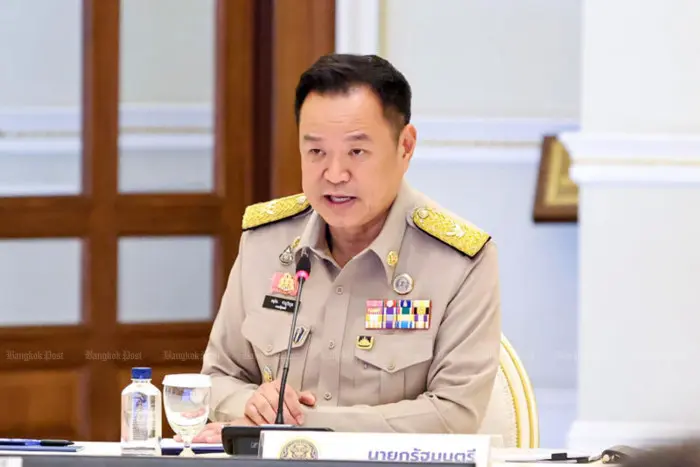
PM Anutin welcomes outlook upgrade by Moody’s
Bangkok Post
· 🇹🇭 Bangkok, TH
Bangkok Post Public Company Limited
EN
2026-04-22 20:09
Prime Minister Anutin Charnvirakul has welcomed the decision by Moody’s Investors Service to revise Thailand’s credit outlook from “negative” to “stable” while affirming its sovereign rating at Baa1.
Prime Minister Anutin Charnvirakul has welcomed the decision by Moody’s Investors Service to revise Thailand’s credit outlook from “negative” to “stable” while affirming its sovereign rating at Baa1.
Speaking on Wednesday at the Interior Ministry, Mr Anutin said the improved outlook underscores Thailand’s solid fundamentals and should help boost investor confidence across the board.
“Why wouldn’t it be good?” he remarked, adding that stronger ratings would encourage greater foreign investment and enhance international confidence in multiple dimensions.
The move by Moody’s came amid reports that the government was considering raising the public debt ceiling from 70% to 75% of gross domestic product to support more borrowing.
As of February, the public debt-to-GDP ratio was 66.09%.
However, Finance Minister Ekniti Nitithanprapas said on Wednesday that the government has room to borrow up to 500 billion baht between now and October without raising the debt ceiling.
Thailand’s capital and bond markets, as well as excess liquidity, were sufficient to support government borrowing, he said.
“If we do not borrow, it would be more dangerous for the economy because GDP would contract,” he told reporters.
The government on Wednesday also agreed to stick to its previously approved 2027 fiscal budget plan, projecting a 0.2% rise in spending to 3.788 trillion baht and an 8.4% drop in the deficit to 788 billion, compared with the current fiscal year.
In its assessment of the country’s economic and policy trajectory, Moody’s on Tuesday said political stability and continuity were major factors supporting the outlook upgrade.
Yutthaporn Isarachai, a political science lecturer at Sukhothai Thammathirat Open University, described the upgrade as a significant positive signal, likening it to a “certificate of confidence” in Thailand’s economy amid ongoing global volatility.
He said the shift from a negative to stable outlook shows not just statistical improvement but also the success of the government’s strategic policy direction — particularly in maintaining political stability and policy continuity, both of which Moody’s considers crucial in reducing structural risks.
Mr Yutthaporn noted that Thailand has historically faced policy disruptions due to political changes, but the current administration has been able to sustain structural reforms.
These include regulatory improvements being undertaken to create new growth engines and liberalisation in the energy sector, signalling a transition from short-term measures to long-term, sustainable development.
He also highlighted the “Thailand Fast Pass” — designed to streamline approvals for high-tech projects, including EVs, electronics and data centres, by resolving issues related to land, electricity, visas and work permits — as an example of policy innovation benefiting the private sector.
The initiative has contributed to a gradual recovery in investment and could help attract long-term foreign direct investment if expanded further.
Externally, Thailand continues to demonstrate structural resilience, supported by high international reserves — sufficient to cover approximately seven months of imports — and relatively low short-term external debt, strengthening its ability to withstand global uncertainties such as protectionist trade policies.
Despite the positive outlook revision, Mr Yutthaporn cautioned that challenges remain, particularly in translating policies into tangible outcomes and implementing targeted fiscal measures that effectively reach intended groups to achieve a broad-based economic recovery.
“The recognition from a global institution presents a vital opportunity for Thailand to build on this momentum,” he said. “If fiscal discipline and policy continuity are maintained, there is a real possibility of a future credit rating upgrade.”
Speaking on Wednesday at the Interior Ministry, Mr Anutin said the improved outlook underscores Thailand’s solid fundamentals and should help boost investor confidence across the board.
“Why wouldn’t it be good?” he remarked, adding that stronger ratings would encourage greater foreign investment and enhance international confidence in multiple dimensions.
The move by Moody’s came amid reports that the government was considering raising the public debt ceiling from 70% to 75% of gross domestic product to support more borrowing.
As of February, the public debt-to-GDP ratio was 66.09%.
However, Finance Minister Ekniti Nitithanprapas said on Wednesday that the government has room to borrow up to 500 billion baht between now and October without raising the debt ceiling.
Thailand’s capital and bond markets, as well as excess liquidity, were sufficient to support government borrowing, he said.
“If we do not borrow, it would be more dangerous for the economy because GDP would contract,” he told reporters.
The government on Wednesday also agreed to stick to its previously approved 2027 fiscal budget plan, projecting a 0.2% rise in spending to 3.788 trillion baht and an 8.4% drop in the deficit to 788 billion, compared with the current fiscal year.
In its assessment of the country’s economic and policy trajectory, Moody’s on Tuesday said political stability and continuity were major factors supporting the outlook upgrade.
Yutthaporn Isarachai, a political science lecturer at Sukhothai Thammathirat Open University, described the upgrade as a significant positive signal, likening it to a “certificate of confidence” in Thailand’s economy amid ongoing global volatility.
He said the shift from a negative to stable outlook shows not just statistical improvement but also the success of the government’s strategic policy direction — particularly in maintaining political stability and policy continuity, both of which Moody’s considers crucial in reducing structural risks.
Mr Yutthaporn noted that Thailand has historically faced policy disruptions due to political changes, but the current administration has been able to sustain structural reforms.
These include regulatory improvements being undertaken to create new growth engines and liberalisation in the energy sector, signalling a transition from short-term measures to long-term, sustainable development.
He also highlighted the “Thailand Fast Pass” — designed to streamline approvals for high-tech projects, including EVs, electronics and data centres, by resolving issues related to land, electricity, visas and work permits — as an example of policy innovation benefiting the private sector.
The initiative has contributed to a gradual recovery in investment and could help attract long-term foreign direct investment if expanded further.
Externally, Thailand continues to demonstrate structural resilience, supported by high international reserves — sufficient to cover approximately seven months of imports — and relatively low short-term external debt, strengthening its ability to withstand global uncertainties such as protectionist trade policies.
Despite the positive outlook revision, Mr Yutthaporn cautioned that challenges remain, particularly in translating policies into tangible outcomes and implementing targeted fiscal measures that effectively reach intended groups to achieve a broad-based economic recovery.
“The recognition from a global institution presents a vital opportunity for Thailand to build on this momentum,” he said. “If fiscal discipline and policy continuity are maintained, there is a real possibility of a future credit rating upgrade.”
한국어 번역이 곧 완료됩니다
새로고침하면 진행 상황이 업데이트됩니다
기사 수집 완료 · 20:35
매체 피드에서 기사 메타데이터 수집
헤드라인 번역 진행 중
다음 fetch 크론에서 실행 (보통 자동 처리됨)
처리 예정: KIMI K2.5 (Moonshot)
본문 추출 완료
3,873자 추출 완료
본문 한국어 번역 실패
번역 실패: API call failed
kimi-k2.5
0 tokens
$0.00000
0.2s
지정학적 엔티티 추출 대기
본문 번역과 함께 자동 실행