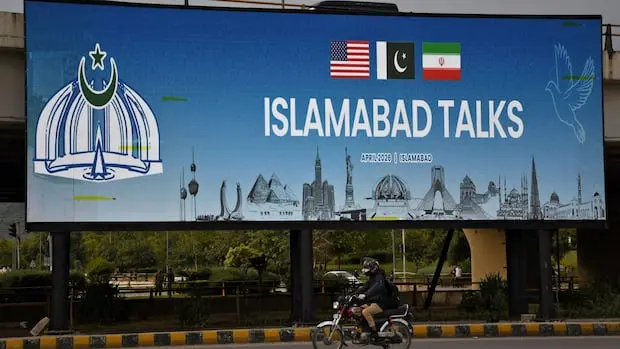
미국과 이란 대표단이 이슬라마바드로 향하다, 테헤란은 회담 시작 전 조치 요구
NewU.S., Iran delegations head to Islamabad as Tehran demands measures before talks startU.S. Vice-President JD Vance departed on Friday for "make-or-break" negotiations with Iran, even as Tehran insisted on measures before peace talks could take place, throwing last-minute doubt over the meetings scheduled in Pakistan.World |13 minutes ago
CBC News
Thomson Reuters · Posted: Apr 10, 2026 5:12 PM EDT | Last Updated: 16 minutes ago
EN
2026-04-11 06:12
Translated
미국 부통령 JD 밴스가 금요일 이란과의 "성패를 가르는" 협상을 위해 출발했으며, 테헤란은 평화 회담이 시작되기 전에 선행 조치를 요구하면서 파키스탄에서 예정된 회담에 대한 마지막 의혹을 제기했다.
미국 부통령 JD 밴스가 금요일 이란과의 "성패를 가르는" 협상을 위해 출발했으며, 테헤란은 평화 회담이 시작되기 전에 선행 조치를 요구하면서 파키스탄에서 예정된 회담에 대한 마지막 의혹을 제기했다.
미국 대통령 도널드 트럼프는 화요일 6주간의 전쟁에서 2주간의 휴전을 발표했으며, 이는 미국 대통령이 이란의 문명을 파괴하겠다고 위협한 기한이 지나기 단 몇 시간 전이었다.
휴전으로 미국과 이스라엘의 이란 공습이 중단되었다.
그러나 이는 이란의 호르무즈 해협 봉쇄를 끝내지 못했으며, 이는 글로벌 에너지 공급에 사상 최대의 혼란을 야기했으며, 또는 이스라엘과 이란 지원 헤즈볼라 간의 레바논에서의 평행 전쟁을 진정시키지 못했다.
이란 의회 의장 모하마드 바게르 칼리바프는 X에서 미국이 이란 자산 차단 해제 및 레바논 휴전에 동의했었으며, 회담은 이러한 약속이 이행될 때까지 시작되지 않을 것이라고 말했다.
그의 입장은 외교부 장관 아바스 아라크치가 반복했으며, 그는 또한 레바논에 대한 이스라엘 공습의 종료를 요구했다.
이스라엘과 미국은 레바논의 무장 단체 헤즈볼라에 대한 캠페인이 합의된 휴전의 일부가 아니라고 말했다.
이란은 금요일 칼리바프가 주도하는 대표단이 밴스보다 먼저 이슬라마바드에 도착했다고 발표했다. 회담을 위한 이란 대표단에는 외교부 장관 아라크치, 최고 국방 위원회 비서 알리 아크바르 아흐마디안, 중앙 은행 총재 압돌나세르 헤마티, 그리고 이란 국영 텔레비전에 따르면 여러 의원들이 포함된다.
백악관으로부터 즉각적인 논평은 없었지만, 트럼프는 소셜 미디어 게시물에서 이란인들이 살아있는 유일한 이유는 거래를 협상하기 위함이라고 말했다.
"이란인들은 자신들이 국제 수로를 이용한 단기 강탈 외에는 카드가 없다는 것을 깨닫지 못하는 것 같다. 그들이 오늘 살아있는 유일한 이유는 협상하기 위함이다!"라고 그는 말했다.
미국 대표단을 이끌 밴스는 파키스탄으로 향하면서 긍정적인 결과를 기대한다고 말했지만, "만약 그들이 우리를 놀리려고 하면, 그들은 협상 팀이 그렇게 수용적이지 않다는 것을 알게 될 것이다"라고 덧붙였다.
존스 홉킨스 대학교 고급 국제 연구 학교의 국제 문제 및 중동 연구 교수 발리 나스르는 이란인들이 밴스가 회의에 참석하기를 원한다고 믿으며, 이는 트럼프에게 자신들의 메시지를 전달하기 위함이라고 말한다.
"나는 이 회담에서의 참여 수준이 트럼프 행정부와 이란이 이전에 가진 것 중 가장 높다고 생각한다"고 그는 CBC의 Front Burner 팟캐스트에 말했다.
나스르는 이란이 이슬라마바드 회담에 참여하는 백악관 언론 담당관 캐롤린 리빗이 이번 주 초에 기자들에게 말한 미국 특사 스티브 위트코프와 대통령의 사위인 재러드 쿠슈너 위에 접근 수준을 원했다고 말한다.
나스르는 테헤란의 관점으로 보면 "그들은 문제를 파악하지 못했으며" "아마도" 제네바에서 이전 회담에서 달성된 것을 백악관에 "잘못 표현했을" 것으로 보인다고 말했다.
이란은 미국의 은행 및 에너지 부문 제재로 인해 주로 석유 및 가스 수출로부터 외국 은행에 보유한 수십억 달러의 자산을 획득하지 못했다.
파키스탄의 샤흐바즈 샤리프 총리는 금요일 밤 국가 연설에서 회담의 이해관계를 설명했다.
"영구적 휴전은 협상을 통해 복잡한 문제를 해결하는 것이 다음의 어려운 단계이다. 영어로는 성패를 가르는 단계라고 불린다"고 샤리프가 말했다.
회담 이전 이란 지도자들의 강경 입장은 목요일 새로운 최고 지도자 아야톨라 모즈타바 하메네이의 도발적인 메시지에 따른 것이었다.
전쟁 첫 날에 아버지를 살해한 자를 대체한 이후 공개적으로 모습을 나타낸 적이 없는 하메네이는 이란이 모든 전쟁 피해에 대한 보상을 요구할 것이라고 말했다.
"우리는 우리 나라를 공격한 범죄적 침략자들을 분명히 처벌하지 않고 내버려 두지 않을 것이다"라고 그는 말했다.
트럼프가 승리를 선언하고 이란의 군사력을 약화시켰지만, 전쟁은 그가 시작할 때 세운 많은 목표를 달성하지 못했다: 이란의 이웃을 공격할 능력을 박탈하고, 핵 프로그램을 해체하며, 국민이 정부를 전복하기 쉽게 만드는 것.
이란은 여전히 이웃을 공격할 수 있는 미사일과 드론을 보유하고 있으며 폭탄 제조에 필요한 수준 근처에 농축된 400킬로그램 이상의 우라늄 비축량을 보유하고 있다. 수개월 전 대중 봉기에 직면했던 성직자 통치자들은 조직된 반대의 징조 없이 포격을 견뎌냈다.
테헤란의 회담 의제에는 경제를 위기에 빠뜨린 제재의 종료 및 해협에 대한 자신의 권위 인정을 포함한 주요 새로운 양보가 포함되어 있으며, 이는 통과료를 징수하고 지역의 거대한 권력 이동이 될 접근을 통제하는 것을 목표로 한다.
이란의 배들은 금요일 해협을 통해 방해받지 않고 항해하고 있었으며, 다른 국가의 배들은 내부에 갇혀 있었다.
에너지 공급 중단은 인플레이션을 촉발했으며 글로벌 경제를 둔화시켰으며, 협상가들이 해협 재개에 성공하더라도 수개월 동안 지속될 것으로 예상되는 영향을 미쳤다.
AP 통신과 CBC 뉴스의 자료와 함께
미국 대통령 도널드 트럼프는 화요일 6주간의 전쟁에서 2주간의 휴전을 발표했으며, 이는 미국 대통령이 이란의 문명을 파괴하겠다고 위협한 기한이 지나기 단 몇 시간 전이었다.
휴전으로 미국과 이스라엘의 이란 공습이 중단되었다.
그러나 이는 이란의 호르무즈 해협 봉쇄를 끝내지 못했으며, 이는 글로벌 에너지 공급에 사상 최대의 혼란을 야기했으며, 또는 이스라엘과 이란 지원 헤즈볼라 간의 레바논에서의 평행 전쟁을 진정시키지 못했다.
이란 의회 의장 모하마드 바게르 칼리바프는 X에서 미국이 이란 자산 차단 해제 및 레바논 휴전에 동의했었으며, 회담은 이러한 약속이 이행될 때까지 시작되지 않을 것이라고 말했다.
그의 입장은 외교부 장관 아바스 아라크치가 반복했으며, 그는 또한 레바논에 대한 이스라엘 공습의 종료를 요구했다.
이스라엘과 미국은 레바논의 무장 단체 헤즈볼라에 대한 캠페인이 합의된 휴전의 일부가 아니라고 말했다.
이란은 금요일 칼리바프가 주도하는 대표단이 밴스보다 먼저 이슬라마바드에 도착했다고 발표했다. 회담을 위한 이란 대표단에는 외교부 장관 아라크치, 최고 국방 위원회 비서 알리 아크바르 아흐마디안, 중앙 은행 총재 압돌나세르 헤마티, 그리고 이란 국영 텔레비전에 따르면 여러 의원들이 포함된다.
백악관으로부터 즉각적인 논평은 없었지만, 트럼프는 소셜 미디어 게시물에서 이란인들이 살아있는 유일한 이유는 거래를 협상하기 위함이라고 말했다.
"이란인들은 자신들이 국제 수로를 이용한 단기 강탈 외에는 카드가 없다는 것을 깨닫지 못하는 것 같다. 그들이 오늘 살아있는 유일한 이유는 협상하기 위함이다!"라고 그는 말했다.
미국 대표단을 이끌 밴스는 파키스탄으로 향하면서 긍정적인 결과를 기대한다고 말했지만, "만약 그들이 우리를 놀리려고 하면, 그들은 협상 팀이 그렇게 수용적이지 않다는 것을 알게 될 것이다"라고 덧붙였다.
존스 홉킨스 대학교 고급 국제 연구 학교의 국제 문제 및 중동 연구 교수 발리 나스르는 이란인들이 밴스가 회의에 참석하기를 원한다고 믿으며, 이는 트럼프에게 자신들의 메시지를 전달하기 위함이라고 말한다.
"나는 이 회담에서의 참여 수준이 트럼프 행정부와 이란이 이전에 가진 것 중 가장 높다고 생각한다"고 그는 CBC의 Front Burner 팟캐스트에 말했다.
나스르는 이란이 이슬라마바드 회담에 참여하는 백악관 언론 담당관 캐롤린 리빗이 이번 주 초에 기자들에게 말한 미국 특사 스티브 위트코프와 대통령의 사위인 재러드 쿠슈너 위에 접근 수준을 원했다고 말한다.
나스르는 테헤란의 관점으로 보면 "그들은 문제를 파악하지 못했으며" "아마도" 제네바에서 이전 회담에서 달성된 것을 백악관에 "잘못 표현했을" 것으로 보인다고 말했다.
이란은 미국의 은행 및 에너지 부문 제재로 인해 주로 석유 및 가스 수출로부터 외국 은행에 보유한 수십억 달러의 자산을 획득하지 못했다.
파키스탄의 샤흐바즈 샤리프 총리는 금요일 밤 국가 연설에서 회담의 이해관계를 설명했다.
"영구적 휴전은 협상을 통해 복잡한 문제를 해결하는 것이 다음의 어려운 단계이다. 영어로는 성패를 가르는 단계라고 불린다"고 샤리프가 말했다.
회담 이전 이란 지도자들의 강경 입장은 목요일 새로운 최고 지도자 아야톨라 모즈타바 하메네이의 도발적인 메시지에 따른 것이었다.
전쟁 첫 날에 아버지를 살해한 자를 대체한 이후 공개적으로 모습을 나타낸 적이 없는 하메네이는 이란이 모든 전쟁 피해에 대한 보상을 요구할 것이라고 말했다.
"우리는 우리 나라를 공격한 범죄적 침략자들을 분명히 처벌하지 않고 내버려 두지 않을 것이다"라고 그는 말했다.
트럼프가 승리를 선언하고 이란의 군사력을 약화시켰지만, 전쟁은 그가 시작할 때 세운 많은 목표를 달성하지 못했다: 이란의 이웃을 공격할 능력을 박탈하고, 핵 프로그램을 해체하며, 국민이 정부를 전복하기 쉽게 만드는 것.
이란은 여전히 이웃을 공격할 수 있는 미사일과 드론을 보유하고 있으며 폭탄 제조에 필요한 수준 근처에 농축된 400킬로그램 이상의 우라늄 비축량을 보유하고 있다. 수개월 전 대중 봉기에 직면했던 성직자 통치자들은 조직된 반대의 징조 없이 포격을 견뎌냈다.
테헤란의 회담 의제에는 경제를 위기에 빠뜨린 제재의 종료 및 해협에 대한 자신의 권위 인정을 포함한 주요 새로운 양보가 포함되어 있으며, 이는 통과료를 징수하고 지역의 거대한 권력 이동이 될 접근을 통제하는 것을 목표로 한다.
이란의 배들은 금요일 해협을 통해 방해받지 않고 항해하고 있었으며, 다른 국가의 배들은 내부에 갇혀 있었다.
에너지 공급 중단은 인플레이션을 촉발했으며 글로벌 경제를 둔화시켰으며, 협상가들이 해협 재개에 성공하더라도 수개월 동안 지속될 것으로 예상되는 영향을 미쳤다.
AP 통신과 CBC 뉴스의 자료와 함께
U.S. Vice-President JD Vance departed on Friday for "make-or-break" negotiations with Iran, even as Tehran insisted on measures before peace talks could take place, throwing last-minute doubt over the meetings scheduled in Pakistan.
U.S. President Donald Trump announced a two-week ceasefire in the six-week war on Tuesday, just hours before a deadline after which the U.S. president had threatened to destroy Iran's civilization.
The ceasefire has halted U.S. and Israeli airstrikes on Iran.
But it has not ended Iran's blockade of the Strait of Hormuz, which has caused the biggest-ever disruption to global energy supplies, or calmed a parallel war between Israel and Iran-backed Hezbollah in Lebanon.
Has Trump proven himself unfit for the presidency? | About That
Iran's parliamentary Speaker Mohammad Baqer Qalibaf said on X that Washington had previously agreed to unblock Iranian assets and to a ceasefire in Lebanon, and added that talks would not start until those pledges are fulfilled.
His position was echoed by Foreign Minister Abbas Araqhchi, who also demanded an end to Israeli airstrikes on Lebanon.
Israel and the U.S. have said the campaign against militant group Hezbollah in Lebanon is not part of the agreed ceasefire.
Iran announced Friday that its delegation, led by Qalibaf, had arrived in Islamabad, ahead of Vance. The Iranian delegation for the talks also includes the foreign minister Araghchi; Ali Akbar Ahmadian, secretary of the Supreme National Defence Council; Central Bank Governor Abdolnasser Hemmati; and several lawmakers, according to Iranian state television.
While there was no immediate comment from the White House, Trump said in a social media post that the only reason the Iranians were alive was to negotiate a deal.
"The Iranians don’t seem to realize they have no cards, other than a short term extortion of the World by using International Waterways. The only reason they are alive today is to negotiate!" he said.
Vance, who will lead the U.S. delegation, said he expected a positive outcome as he headed to Pakistan, but added: "If they're going to try to play us, then they're going to find the negotiating team is not that receptive."
Vali Nasr, professor of international affairs and Middle East studies at Johns Hopkins University School of Advanced International Studies, says he believes the Iranians want Vance in the room, to ensure they are getting their message through to Trump.
"I think the level of participation in these talks is the highest that the Trump administration and Iran have had before," he told CBC's Front Burner podcast.
Nasr says Iran wanted a level of access above U.S. special envoy Steve Witkoff and Jared Kusher, the president's son-in-law, who are also part of the talks in Islamabad, as White House press secretary Karoline Leavitt told reporters earlier this week.
Nasr said it appears to be Tehran's perspective that "they didn't have grasp of the issues" and "perhaps misrepresented" to the White House what had been achieved in a prior round of talks in Geneva.
Iran has been unable to obtain tens of billions of dollars of its assets in foreign banks, mainly from exports of oil and gas, due to U.S. sanctions on its banking and energy sectors.
Pakistani Prime Minister Shehbaz Sharif, in a national address on Friday night, laid out the stakes of the talks.
"The permanent ceasefire is the next difficult phase, which is to resolve the complicated issues through negotiation. This, as called in English, is a make-or-break phase," Sharif said.
The hard line taken by Iran's leaders ahead of the negotiations followed a defiant message from its new Supreme Leader Ayatollah Mojtaba Khamenei on Thursday.
Khamenei, yet to be seen in public since taking over from his father, who was killed on the war's first day, said Iran would demand compensation for all wartime damage.
"We will certainly not leave unpunished the criminal aggressors who attacked our country," he said.
Although Trump has declared victory and degraded Iran's military capabilities, the war has not achieved many of the aims he set out at the start: to deprive Iran of the ability to strike its neighbours, dismantle its nuclear program, and make it easier for its people to overthrow their government.
Iran still possesses missiles and drones capable of hitting its neighbours and a stockpile of more than 400 kilograms of uranium enriched near the level needed to make a bomb. Its clerical rulers, who faced a popular uprising just months ago, withstood the onslaught with no sign of organized opposition.
Tehran's agenda at the talks includes major new concessions, including the end of sanctions that crippled its economy for years, and acknowledgment of its authority over the strait, where it aims to collect transit fees and control access in what would amount to a huge shift in regional power.
Iran's ships were sailing through the strait unimpeded on Friday, while those of other countries remained hemmed inside.
Disruption to energy supplies has fed inflation and slowed the global economy, with an impact expected to last for months even if negotiators succeed in reopening the strait.
With files from The Associated Press and CBC News
U.S. President Donald Trump announced a two-week ceasefire in the six-week war on Tuesday, just hours before a deadline after which the U.S. president had threatened to destroy Iran's civilization.
The ceasefire has halted U.S. and Israeli airstrikes on Iran.
But it has not ended Iran's blockade of the Strait of Hormuz, which has caused the biggest-ever disruption to global energy supplies, or calmed a parallel war between Israel and Iran-backed Hezbollah in Lebanon.
Has Trump proven himself unfit for the presidency? | About That
Iran's parliamentary Speaker Mohammad Baqer Qalibaf said on X that Washington had previously agreed to unblock Iranian assets and to a ceasefire in Lebanon, and added that talks would not start until those pledges are fulfilled.
His position was echoed by Foreign Minister Abbas Araqhchi, who also demanded an end to Israeli airstrikes on Lebanon.
Israel and the U.S. have said the campaign against militant group Hezbollah in Lebanon is not part of the agreed ceasefire.
Iran announced Friday that its delegation, led by Qalibaf, had arrived in Islamabad, ahead of Vance. The Iranian delegation for the talks also includes the foreign minister Araghchi; Ali Akbar Ahmadian, secretary of the Supreme National Defence Council; Central Bank Governor Abdolnasser Hemmati; and several lawmakers, according to Iranian state television.
While there was no immediate comment from the White House, Trump said in a social media post that the only reason the Iranians were alive was to negotiate a deal.
"The Iranians don’t seem to realize they have no cards, other than a short term extortion of the World by using International Waterways. The only reason they are alive today is to negotiate!" he said.
Vance, who will lead the U.S. delegation, said he expected a positive outcome as he headed to Pakistan, but added: "If they're going to try to play us, then they're going to find the negotiating team is not that receptive."
Vali Nasr, professor of international affairs and Middle East studies at Johns Hopkins University School of Advanced International Studies, says he believes the Iranians want Vance in the room, to ensure they are getting their message through to Trump.
"I think the level of participation in these talks is the highest that the Trump administration and Iran have had before," he told CBC's Front Burner podcast.
Nasr says Iran wanted a level of access above U.S. special envoy Steve Witkoff and Jared Kusher, the president's son-in-law, who are also part of the talks in Islamabad, as White House press secretary Karoline Leavitt told reporters earlier this week.
Nasr said it appears to be Tehran's perspective that "they didn't have grasp of the issues" and "perhaps misrepresented" to the White House what had been achieved in a prior round of talks in Geneva.
Iran has been unable to obtain tens of billions of dollars of its assets in foreign banks, mainly from exports of oil and gas, due to U.S. sanctions on its banking and energy sectors.
Pakistani Prime Minister Shehbaz Sharif, in a national address on Friday night, laid out the stakes of the talks.
"The permanent ceasefire is the next difficult phase, which is to resolve the complicated issues through negotiation. This, as called in English, is a make-or-break phase," Sharif said.
The hard line taken by Iran's leaders ahead of the negotiations followed a defiant message from its new Supreme Leader Ayatollah Mojtaba Khamenei on Thursday.
Khamenei, yet to be seen in public since taking over from his father, who was killed on the war's first day, said Iran would demand compensation for all wartime damage.
"We will certainly not leave unpunished the criminal aggressors who attacked our country," he said.
Although Trump has declared victory and degraded Iran's military capabilities, the war has not achieved many of the aims he set out at the start: to deprive Iran of the ability to strike its neighbours, dismantle its nuclear program, and make it easier for its people to overthrow their government.
Iran still possesses missiles and drones capable of hitting its neighbours and a stockpile of more than 400 kilograms of uranium enriched near the level needed to make a bomb. Its clerical rulers, who faced a popular uprising just months ago, withstood the onslaught with no sign of organized opposition.
Tehran's agenda at the talks includes major new concessions, including the end of sanctions that crippled its economy for years, and acknowledgment of its authority over the strait, where it aims to collect transit fees and control access in what would amount to a huge shift in regional power.
Iran's ships were sailing through the strait unimpeded on Friday, while those of other countries remained hemmed inside.
Disruption to energy supplies has fed inflation and slowed the global economy, with an impact expected to last for months even if negotiators succeed in reopening the strait.
With files from The Associated Press and CBC News