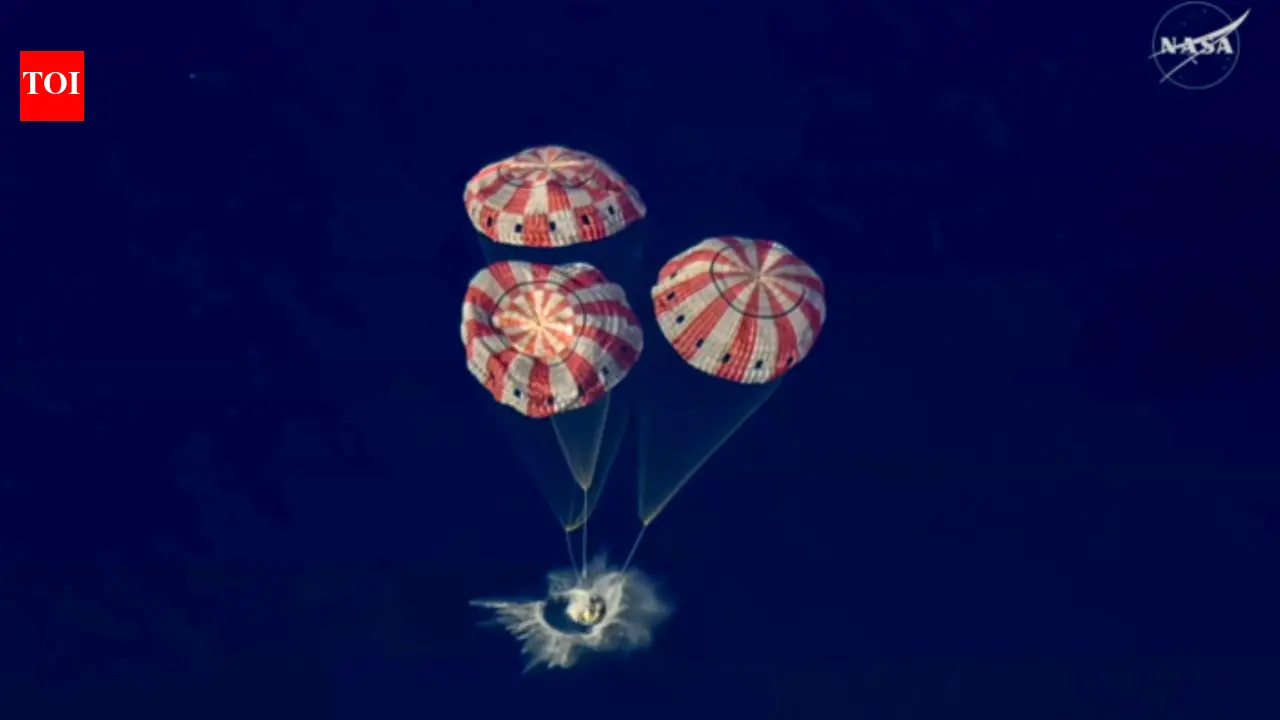
나사의 아르테미스 II 승무원, 캘리포니아 샌디에이고 근처 태평양 해상착륙으로 지구 귀환
Nasa's Artemis II crew returns to Earth with Pacific splashdown near California's San Diego
The Times of India
TOI SCIENCE DESK
EN
2026-04-11 09:11
Translated
아르테미스 II 우주비행사들이 달 주위 비행 후 샌디에이고 근처에 착수하여 지구로 성공적으로 귀환했습니다. 이 10일간의 임무는 심우주 시스템을 테스트했으며 인류가 지구에서 달성한 새로운 거리 기록을 세웠습니다. 승무원의 엄청난 속도로의 귀환은 향후 달 착륙을 위한 길을 열어주는 중요한 이정표입니다.
아르테미스 II 착수 (출처: 나사) 나사의 아르테미스 II 승무원이 달 주위 비행 임무 후 지구 귀환을 표시하며 토요일 이른 시간 캘리포니아 샌디에이고 근처 태평양에 착수했습니다. 승무원을 태운 오리온 우주선이 성공적인 착수를 완료했습니다. 나사와 미군 합동 구조팀이 현장에서 우주비행사들을 맞이하고 의료 지원을 제공했습니다. 4월 1일 발사 이후 10일간의 임무는 4명의 우주비행사를 달 주위 비행으로 보냈으며, 착륙 없이 심우주에서 생명유지, 항법 및 추진 시스템을 테스트했습니다(나사 발표). 이 임무는 2028년 잠재적 유인 달 착륙의 길을 닦고 있습니다. 이 임무는 인류가 지구에서 여행한 가장 먼 거리인 달의 뒷면에서 406,771킬로미터에 도달하여 역사를 기록했습니다. 이는 1970년 아폴로 13호가 세운 400,171킬로미터의 이전 기록을 초과합니다. 비행 중 우주비행사들은 달 주위를 한 바퀴 도는 동안 지구로의 귀환 여정을 시작하기 전에 여러 시간 동안 이미지를 캡처하고 풍경을 설명했습니다. 사령관 리드 위즈먼, 조종사 빅터 글로버, 임무 전담관 크리스티나 코흐, 캐나다의 제레미 한센은 음속의 33배인 마하 33까지의 속도로 지구 대기권에 재진입했으며, 이는 1960년대와 1970년대 나사의 아폴로 임무 이후로 볼 수 없었던 속도로의 귀환을 나타냅니다. 승무원은 비상 상황을 제외하고는 수동 제어를 취할 계획이 없었으며, 인테그리티라는 이름의 오리온 캡슐은 완전 자동 모드로 작동했습니다. 수석 비행 디렉터 제프 래디건은 특히 낙하산 배포 전 6분의 통신 두절 동안 "인간의 본성인 일종의 비합리적 두려움"을 예상했다고 밝혔습니다. 회수선 USS 존 P 머사는 샌디에이고 해안에 배치되어 군 항공기와 헬리콥터의 지원을 받으며 승무원을 맞이할 준비를 했습니다. 달 승무원을 위한 나사와 미 국방부의 마지막 합동 재진입 작전은 1972년 아폴로 17호 때였습니다.
Artemis II astronauts have successfully returned to Earth, splashing down near San Diego after a groundbreaking lunar flyby. This 10-day mission tested deep space systems and set a new record for human distance from our planet. The crew's return at incredible speeds marks a significant milestone, paving the way for future lunar landings.
Artemis II splashdown (Source: Nasa) Nasa’s Artemis II crew splashed down in the Pacific Ocean near San Diego, California early Saturday, marking their return to Earth after a lunar flyby mission.The Orion spacecraft carrying the crew completed a successful splashdown. A joint Nasa and US military recovery team was on site to receive the astronauts and provide medical support.Following liftoff on April 1, the 10-day mission sent four astronauts on a flyby around the Moon, testing life-support, navigation and propulsion systems in deep space without landing, Nasa said. The mission also paves the way for a potential crewed Moon landing in 2028.The mission made history by setting a new record for the farthest distance humans have travelled from Earth, reaching 406,771 kilometres on the far side of the Moon. This surpasses the previous record of 400,171 kilometres set by Apollo 13 in 1970.During the flyby, the astronauts spent several hours capturing images and describing views as they looped around the Moon before beginning their journey back to Earth.Commander Reid Wiseman, pilot Victor Glover, mission specialist Christina Koch and Canada’s Jeremy Hansen reentered Earth’s atmosphere at speeds of up to Mach 33 — 33 times the speed of sound — marking a return to velocities not seen since Nasa’s Apollo missions of the 1960s and 1970sThe crew did not plan to take manual control except in an emergency, with their Orion capsule, named Integrity, operating in a fully autonomous modeLead flight director Jeff Radigan said he expected a degree of “irrational fear that is human nature,” particularly during the six-minute communication blackout before parachute deploymentThe recovery ship USS John P Murtha was positioned off the coast of San Diego to receive the crew, supported by military aircraft and helicoptersThe last joint reentry operation by Nasa and the US Defense Department for a lunar crew was during Apollo 17 in 1972.