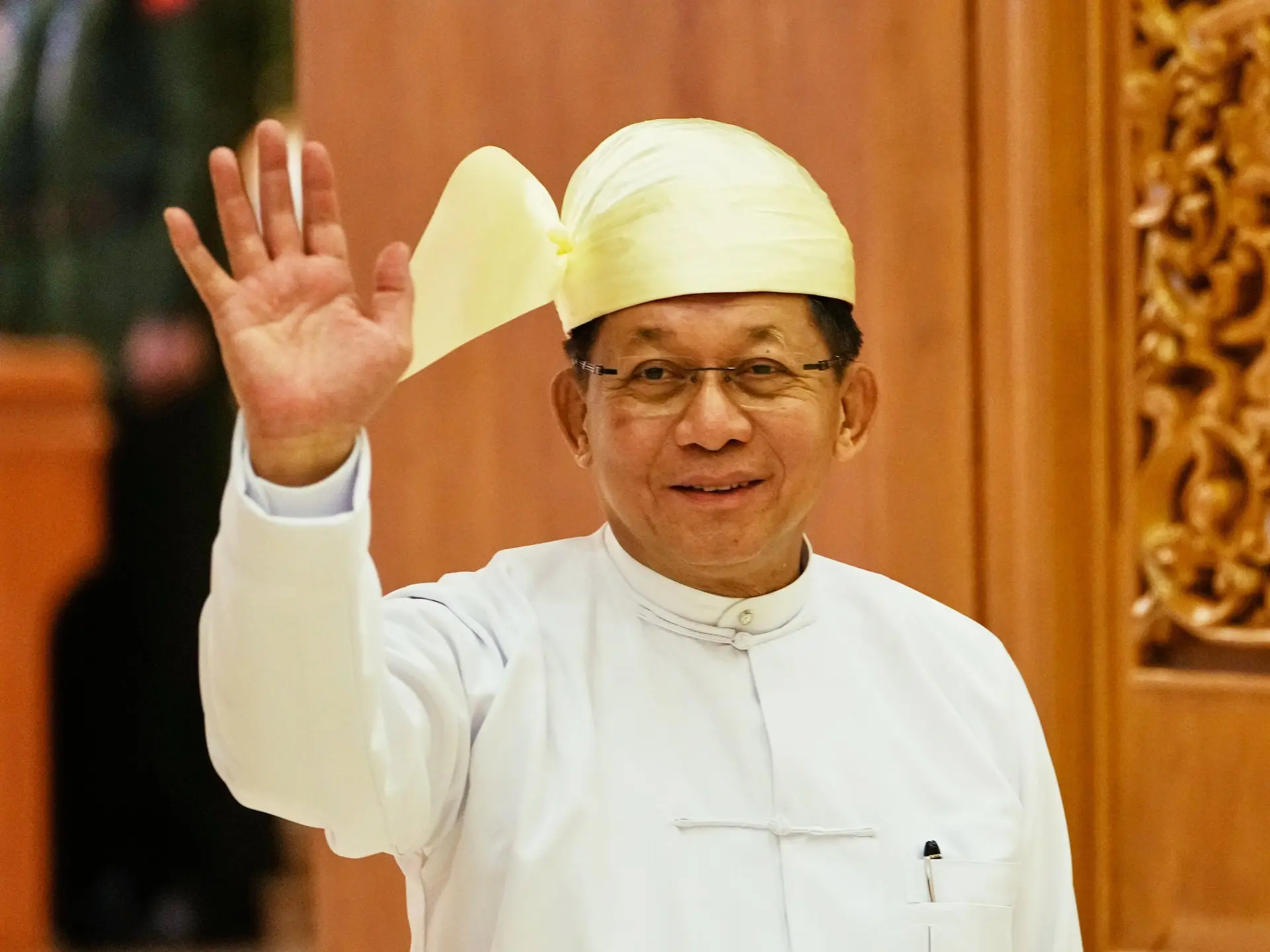
미얀마 쿠데타 지도자 민 아웅 흘라잉, 대통령으로 취임
Myanmar’s coup leader Min Aung Hlaing sworn in as president
Al Jazeera
AR
2026-04-10 16:36
Translated
민 아웅 흘라잉은 쿠데타 이후 미얀마를 혼란에 빠뜨린 후 국제 관계를 '강화'하고 아세안과의 관계를 회복하려고 한다.
미얀마의 쿠데타 지도자인 민 아웅 흘라잉 상급대장이 선출된 정부를 축출하고 내전을 촉발한 지 5년 만에 이 나라의 새로운 대통령으로 취임했다.
금요일 수도 네이피도에서의 취임식 연설에서 그는 "미얀마는 민주주의의 길로 돌아왔으며 더 나은 미래로 나아가고 있다"고 말했으며, 동시에 국가가 여전히 많은 "극복해야 할 과제"를 안고 있음을 인정했다.
민 아웅 흘라잉은 지난주 친군부 의회의 압도적 승리로 최고 직책에 선출되어 그의 권력 장악을 공식화했다. 그는 이 직책에 지명된 3명의 후보 중 한 명이었으며, 2명의 차점자들이 부통령이 되었다.
69세의 이 장군은 2021년 노벨평화상 수상자인 아웅산 수지로부터 권력을 장악했으며, 그녀를 체포하고 폭력, 시위 및 집회를 야기하여 미얀마를 혼란에 빠뜨렸다.
쿠데타는 대규모 시민 불복종 운동과 반쿠데타 무장 단체의 형성을 촉발했으며, 군부는 이에 극도로 가혹한 무력으로 대응했다. 미얀마는 이후 동남아시아국가연합(아세안)에서 제명되었다.
금요일 연설에서 민 아웅 흘라잉은 그들이 "국제 관계를 강화하고 아세안과의 정상 관계 회복을 위해 노력할 것"이라고 말했다.
금요일의 취임식에는 인접 국가인 중국, 인도, 태국의 대표와 AFP 통신에 따르면 20개국의 다른 국가들의 대표들이 참석했다.
민 아웅 흘라잉의 선출은 민주주의 감시 기구들에 의해 희극으로 비난받았다.
"사회적 화해, 정의, 평화를 지원하기 위해 적절한 특사를 부여"하겠다는 새 대통령의 약속은 정치 수감자들의 석방과 항의로 사직한 공무원들을 직책으로 복구하는 것을 포함하지만, 마찬가지로 표면적인 것으로 일축되었다.
민 아웅 흘라잉의 대장군에서 문민 대통령으로의 전환은 12월과 1월의 비대칭적 의회 선거에 뒤따랐으며, 군부 지원 정당이 압도적 승리를 거두었고 비평가들과 서방 정부들에 의해 사기극으로 비난받았다.
친군부 연방단결개발당은 경쟁한 의회 의석의 80% 이상을 획득했으며, 군 현역 의원들은 전체의 4분의 1을 구성하는 선출되지 않은 의석을 점유하고 있다.
투표는 군부와 싸우고 있으며 투표를 거부하는 반군이 장악한 국가의 광범위한 지역에서 실시되지 않았으며, 이는 민 아웅 흘라잉의 위임권을 더욱 약화시켰다(인권 감시 단체들에 따르면).
한편, 지난 5년 동안 대부분 미얀마를 괴롭혀온 내전은 계속되고 있으며, 아웅산 수지 정당의 유산과 오랫동안 계속된 소수민족 군대를 포함한 반군부 집단들이 군부에 대항하기 위해 새로운 연합 전선을 구성하고 있다.
그러나 인적 비용은 엄청나며, 국제 분쟁 모니터(ACLED)는 96,000명 이상이 사망했다고 추정하며, 유엔은 2021년 쿠데타 이후 최소 360만 명이 실향민이 되었다고 말한다.
금요일 수도 네이피도에서의 취임식 연설에서 그는 "미얀마는 민주주의의 길로 돌아왔으며 더 나은 미래로 나아가고 있다"고 말했으며, 동시에 국가가 여전히 많은 "극복해야 할 과제"를 안고 있음을 인정했다.
민 아웅 흘라잉은 지난주 친군부 의회의 압도적 승리로 최고 직책에 선출되어 그의 권력 장악을 공식화했다. 그는 이 직책에 지명된 3명의 후보 중 한 명이었으며, 2명의 차점자들이 부통령이 되었다.
69세의 이 장군은 2021년 노벨평화상 수상자인 아웅산 수지로부터 권력을 장악했으며, 그녀를 체포하고 폭력, 시위 및 집회를 야기하여 미얀마를 혼란에 빠뜨렸다.
쿠데타는 대규모 시민 불복종 운동과 반쿠데타 무장 단체의 형성을 촉발했으며, 군부는 이에 극도로 가혹한 무력으로 대응했다. 미얀마는 이후 동남아시아국가연합(아세안)에서 제명되었다.
금요일 연설에서 민 아웅 흘라잉은 그들이 "국제 관계를 강화하고 아세안과의 정상 관계 회복을 위해 노력할 것"이라고 말했다.
금요일의 취임식에는 인접 국가인 중국, 인도, 태국의 대표와 AFP 통신에 따르면 20개국의 다른 국가들의 대표들이 참석했다.
민 아웅 흘라잉의 선출은 민주주의 감시 기구들에 의해 희극으로 비난받았다.
"사회적 화해, 정의, 평화를 지원하기 위해 적절한 특사를 부여"하겠다는 새 대통령의 약속은 정치 수감자들의 석방과 항의로 사직한 공무원들을 직책으로 복구하는 것을 포함하지만, 마찬가지로 표면적인 것으로 일축되었다.
민 아웅 흘라잉의 대장군에서 문민 대통령으로의 전환은 12월과 1월의 비대칭적 의회 선거에 뒤따랐으며, 군부 지원 정당이 압도적 승리를 거두었고 비평가들과 서방 정부들에 의해 사기극으로 비난받았다.
친군부 연방단결개발당은 경쟁한 의회 의석의 80% 이상을 획득했으며, 군 현역 의원들은 전체의 4분의 1을 구성하는 선출되지 않은 의석을 점유하고 있다.
투표는 군부와 싸우고 있으며 투표를 거부하는 반군이 장악한 국가의 광범위한 지역에서 실시되지 않았으며, 이는 민 아웅 흘라잉의 위임권을 더욱 약화시켰다(인권 감시 단체들에 따르면).
한편, 지난 5년 동안 대부분 미얀마를 괴롭혀온 내전은 계속되고 있으며, 아웅산 수지 정당의 유산과 오랫동안 계속된 소수민족 군대를 포함한 반군부 집단들이 군부에 대항하기 위해 새로운 연합 전선을 구성하고 있다.
그러나 인적 비용은 엄청나며, 국제 분쟁 모니터(ACLED)는 96,000명 이상이 사망했다고 추정하며, 유엔은 2021년 쿠데타 이후 최소 360만 명이 실향민이 되었다고 말한다.
Min Aung Hlaing seeks to 'enhance' international relations and ties with ASEAN after coup plunged Myanmar into chaos.
Myanmar’s coup leader Senior General Min Aung Hlaing has been sworn in as the country’s new president, five years after he ousted an elected government and triggered a civil war.In his inauguration address in the capital Naypyidaw on Friday, he said that “Myanmar has returned to the path of democracy and is heading towards a better future”, while acknowledging the country still has many “challenges to overcome”.
Min Aung Hlaing was voted to the top office last week in a landslide victory by the pro-military parliament, formalising his grip on power. He was among three candidates nominated for the post; the two runners-up became vice presidents.
The 69-year-old general seized power in 2021 from Aung San Suu Kyi, a Nobel Peace Prize laureate, placing her under arrest and causing violence, protests and demonstrations that sent Myanmar spiralling into chaos.
The coup prompted a mass civil disobedience movement and the formation of anti-coup armed groups, to which the military responded with brutal force. Myanmar was subsequently suspended from the Association of Southeast Asian Nations (ASEAN).
In his address on Friday, Min Aung Hlaing said they “will enhance international relations and strive to restore normal relations” with ASEAN.
Friday’s inauguration ceremony was attended by representatives from the neighbouring nations of China, India and Thailand as well as 20 other countries, according to the AFP news agency.
Min Aung Hlaing’s election has been decried as a farce by democracy watchdogs.
The new president’s pledge to “grant appropriate amnesties to support social reconciliation, justice and peace”, with political prisoners pardoned and civil servants who quit in protest invited back to their posts, has similarly been dismissed as cosmetic.
Min Aung Hlaing’s transition from top general to civilian president followed a lopsided parliamentary election in December and January, won in a landslide by an army-backed party and derided by critics and Western governments as a sham.
The pro-military Union Solidarity and Development Party won more than 80 percent of parliamentary seats contested, while serving members of the armed forces occupy unelected seats making up a quarter of the total.
Voting did not take place in swaths of the country, which have been seized by rebels battling the military and rejecting the vote, further undermining Min Aung Hlaing’s mandate, according to rights monitors.
Meanwhile, the civil war that has racked Myanmar for much of the last five years rages on, with anti-military groups, including remnants of Aung San Suu Kyi’s party and longstanding ethnic minority armies, forming a new combined front to take on the military.
But the human cost is staggering; the International Conflict Monitor (ACLED estimates more than 96,000 people have been killed, while the United Nations says at least 3.6 million have been displaced since the coup in 2021.