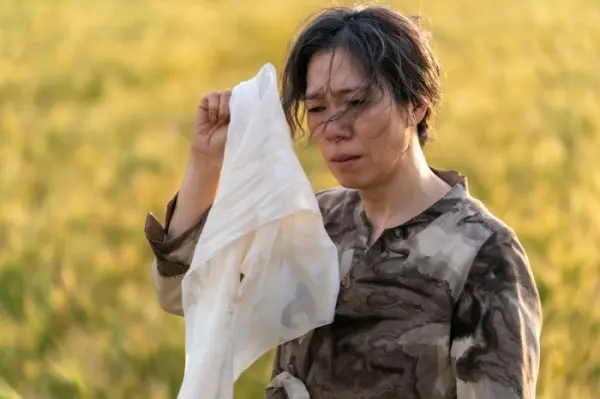
(Movie Review) 'My Name' weighs cost of name in shadow of historic tragedy
Yonhap News
Woo Jae-yeon
KO
2026-04-10 12:13
SEOUL, April 10 (Yonhap) -- Jung-soon (Yeom Hye-ran) struggles to breathe when s...
SEOUL, April 10 (Yonhap) -- Jung-soon (Yeom Hye-ran) struggles to breathe when spring arrives. The pain often comes with the image of a young girl whose name or face she no longer recalls, as she has locked the girl out of a tragedy too painful to revisit.
In a parallel storyline, her teenage son Young-ok (Shin Woo-bin) wrestles with his own brutal reality. At school, a transfer student from Seoul seizes control of the class dynamic, planting seeds of hatred among friends and igniting a chain of vicious fights.
Director Chung Ji-young's "My Name" weaves these two threads together, moving between the late 1940s and the 1990s, exposing the raw mechanics of violence and how it takes root when an outsider arrives, eager to set a new order.
The feature film marks the director-screenwriter's latest attempt to explore various episodes and tragedies of Korea's modern history, following works like "The Boys" (2022), "Black Money" (2019) and "Unbowed" (2012).
Set against the backdrop of the 1948 Jeju April 3 uprising, the mystery drama film follows Young-ok, 18, who does not like his name, which he thinks sounds too old-fashioned and feminine, and his mother who must protect that name at all costs.
The uprising began as a protest against the U.S. military-led administration following Korea's liberation from Japanese colonial rule. The newly established South Korean government labeled the unrest a communist revolt, carrying out brutal crackdowns where an estimated 14,000 to 30,000 civilians were killed. It remains one of the bloodiest government crackdowns on civilians in Korean history.
Woven into the main narrative are glimpses of other lives fractured by state violence: Jung-soon's husband, who was once a sincere and steadfast man, returns from the Vietnam War physically broken and emotionally unstable, while her daughter's life was upended by the chaos of the 1980 democratization movement.
Carrying the wounds in silence, her family becomes a vessel for the country's scarred history. They are victims of systemic violence, but also bystanders too, not by choice but by the desperate need to survive.
Actress Yeom brings Jung-soon to life with unwavering conviction. She feels less like a character and more like a real woman somewhere on Jeju, who has endured for decades, burying the secrets of her name and her son's in the deepest part of herself.
The parallel structure works well as a powerful means to illustrate how violence can easily and quickly tear apart people who were once close. That said, however, the school subplot goes a little too far at times and would have been more effective with a lighter touch. The teenagers and their behaviors, in particular, feel too mature for their age, straining the story's credibility.
Despite its shortcomings, the film serves its purpose of breaking society's silence on a painful past and honoring those crushed beneath unjust state power and ideological conflicts.
The ending credits drive this home, showing the film was crowd-funded by ordinary people willing to carry the weight of collective memory. For the director, it is this collective act that seems to make the film truly complete.
"My Name" had its world premiere at the Forum section of the Berlin International Film Festival in February. It is set for release at local theaters next Wednesday.
jaeyeon.woo@yna.co.kr(END)
In a parallel storyline, her teenage son Young-ok (Shin Woo-bin) wrestles with his own brutal reality. At school, a transfer student from Seoul seizes control of the class dynamic, planting seeds of hatred among friends and igniting a chain of vicious fights.
Director Chung Ji-young's "My Name" weaves these two threads together, moving between the late 1940s and the 1990s, exposing the raw mechanics of violence and how it takes root when an outsider arrives, eager to set a new order.
The feature film marks the director-screenwriter's latest attempt to explore various episodes and tragedies of Korea's modern history, following works like "The Boys" (2022), "Black Money" (2019) and "Unbowed" (2012).
Set against the backdrop of the 1948 Jeju April 3 uprising, the mystery drama film follows Young-ok, 18, who does not like his name, which he thinks sounds too old-fashioned and feminine, and his mother who must protect that name at all costs.
The uprising began as a protest against the U.S. military-led administration following Korea's liberation from Japanese colonial rule. The newly established South Korean government labeled the unrest a communist revolt, carrying out brutal crackdowns where an estimated 14,000 to 30,000 civilians were killed. It remains one of the bloodiest government crackdowns on civilians in Korean history.
Woven into the main narrative are glimpses of other lives fractured by state violence: Jung-soon's husband, who was once a sincere and steadfast man, returns from the Vietnam War physically broken and emotionally unstable, while her daughter's life was upended by the chaos of the 1980 democratization movement.
Carrying the wounds in silence, her family becomes a vessel for the country's scarred history. They are victims of systemic violence, but also bystanders too, not by choice but by the desperate need to survive.
Actress Yeom brings Jung-soon to life with unwavering conviction. She feels less like a character and more like a real woman somewhere on Jeju, who has endured for decades, burying the secrets of her name and her son's in the deepest part of herself.
The parallel structure works well as a powerful means to illustrate how violence can easily and quickly tear apart people who were once close. That said, however, the school subplot goes a little too far at times and would have been more effective with a lighter touch. The teenagers and their behaviors, in particular, feel too mature for their age, straining the story's credibility.
Despite its shortcomings, the film serves its purpose of breaking society's silence on a painful past and honoring those crushed beneath unjust state power and ideological conflicts.
The ending credits drive this home, showing the film was crowd-funded by ordinary people willing to carry the weight of collective memory. For the director, it is this collective act that seems to make the film truly complete.
"My Name" had its world premiere at the Forum section of the Berlin International Film Festival in February. It is set for release at local theaters next Wednesday.
jaeyeon.woo@yna.co.kr(END)
한국어 번역이 곧 완료됩니다
새로고침하면 진행 상황이 업데이트됩니다
기사 수집 완료 · 12:15
매체 피드에서 기사 메타데이터 수집
헤드라인 번역 제외
원문이 한국어라 번역 불필요
본문 추출 완료
3,378자 추출 완료
본문 한국어 번역 제외
원문이 한국어
지정학적 엔티티 추출 대기
본문 번역과 함께 자동 실행