근육 약화, 운동 장애 및 경련과 함께 살아가기
Living with growing muscle weakness, movement challenges and seizures
The Straits Times
Judith Tan
EN
2026-04-11 13:00
Translated
MERRF 증후군은 주로 신경계와 근육에 영향을 미치는 희귀 유전 질환입니다.
의료 미스터리
의료 미스터리는 희귀 질환이나 비정상적인 증상을 조명하는 시리즈입니다.
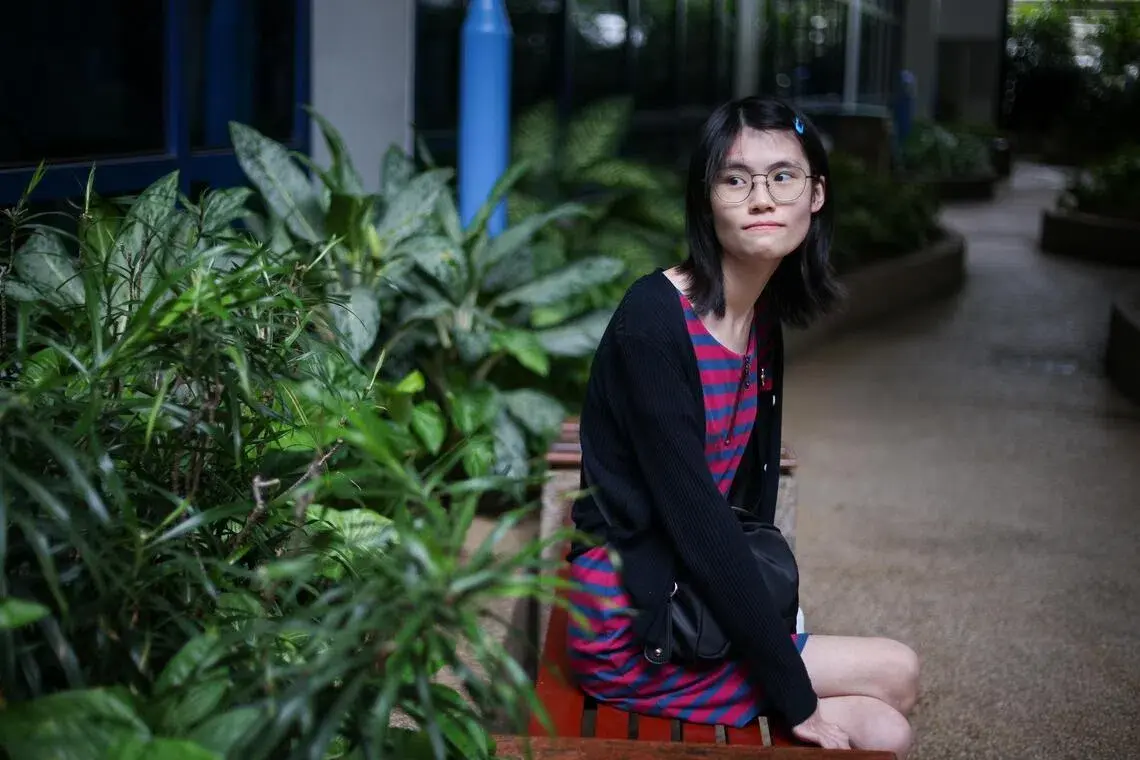
난양 예술 아카데미 학생 아비게일 추아(Abigail Chua), 20세는 어머니로부터 희귀 유전 질환을 물려받았습니다.
ST 사진: 제이슨 콰(JASON QUAH)
2026년 4월 11일 오후 12:00 발행
2026년 4월 11일 오후 12:00 업데이트됨
싱가포르 - 다리 부기가 1주일 이상 지속된 당시 13세였던 아비게일 추아는 의사를 찾아가 근본 원인을 파악하기 위해 여러 검사를 받았습니다.
2주간의 스캔과 검사 후, 그녀는 주로 신경계와 근육에 영향을 미치는 희귀 유전 질환인 불규칙한 적색 섬유를 동반한 근간대성 간질(MERRF) 증후군으로 진단받았습니다.
"이는 세포의 미토콘드리아 또는 '발전소'에 영향을 미쳐 신체가 제대로 기능하는 데 필요한 에너지를 빼앗아 가며, 특히 뇌와 근육 같은 에너지를 많이 소비하는 기관에 그렇습니다"라고 KK 여성아동병원(KKH)의 유전체 의학 부서 컨설턴트인 고 아이 링(Dr Koh Ai Ling) 박사가 스트레이츠 타임즈에 말했습니다.
그녀는 이 질환의 이름이 두 가지 "특징"에서 나온다고 덧붙였습니다: 갑작스럽고 불수의적인 근육 경련이나 발작을 야기하는 근간대성 간질; 그리고 현미경 아래에서 볼 때 빨강고 해진 실처럼 보이는 비정상적인 미토콘드리아 덩어리인 불규칙한 적색 섬유입니다.
MERRF 증후군의 정확한 환자 수는 "자주 과소 진단되기 때문에 파악하기 어렵지만", 의학 문헌에 따르면 전 세계적으로 10만 명 중 1명 미만에게 영향을 미칩니다.
"대부분의 임상의들에게 있어 '건초더미 속의 바늘' 진단으로 남아있습니다"라고 고 박사는 말했습니다.
고 박사는 MERRF 증후군이 미토콘드리아 DNA의 "결함" 또는 돌연변이로 인해 발생하며, 미토콘드리아 기능 장애로 이어진다고 말했습니다.
"우리의 대부분의 DNA는 양쪽 부모로부터 물려받지만, 미토콘드리아 DNA는 어머니로부터 자식에게 전달됩니다... 일부 미토콘드리아는 건강하고 다른 것들은 결함이 있는 '이질성(heteroplasmy)'이라는 현상 때문에 심각도가 다양합니다. 개인의 조직에서 기능하지 않는 미토콘드리아의 수가 많을수록 증상이 더 심한 경향이 있습니다"라고 그녀가 설명했습니다.
7년 전 MERRF 진단을 받았을 때, 현재 20세인 추아는 "충격을 받거나 놀라지" 않았습니다.
"제 어머니는 같은 증상, 같은 질환을 가지고 계시고, 그분이 제 기대를 낮추셨습니다. 어머니는 이것이 가족력이고 제가 그것을 물려받을 가능성이 있다고 설명하셨습니다. 단지 얼마나 심각한지에 따라 다를 뿐입니다"라고 난양 예술 아카데미의 시각 커뮤니케이션 전공 학생인 추아가 스트레이츠 타임즈에 말했습니다.
그녀는 항상 어머니의 질환을 알고 있었지만, "절대 그 이름이나 원인을 알지 못했습니다"라고 덧붙였습니다. 그녀는 어머니가 그것을 다루는 것을 봤으며 학교 방학 동안 탄 톡 센 병원(Tan Tock Seng Hospital)의 국립신경과학연구소(NNI)의 의사를 자주 따라갔습니다.
추아는 진단 후 처음에 화가 났지만, 유전 질환이므로 받아들일 수밖에 없다는 것을 이해했다고 말했습니다.
어머니처럼, 그녀는 근육의 갑작스럽고, 짧고, 불수의적인 경련 또는 떨림과 협응 부족을 포함한 신경학적 합병증을 개발했으며, 둘 다 그녀의 이동성을 제한합니다.
2024년부터, 그녀는 우연히 그녀의 어머니의 의사이기도 한 NNI의 뇌 전문가 탄 이 렝(Tan Yee-Leng) 박사의 진료를 받고 있습니다.
"그녀의 발작은 경고 없이 발생하는 빠르고 충격 같은 근육 움직임인 근간대성 경련이 발생했을 때 KKH에서 처음 진단되고 치료되었습니다. 이들은 항경련제인 레베티라세탐(levetiracetam)이 처방된 후 잘 통제되었습니다. 그녀는 또한 낙상 및 실신에 더 취약합니다"라고 탄 박사가 말했습니다.
추아는 "이 요즘 제가 하는 일에 조심합니다. 왜냐하면 저는 실려넘어지거나 경련을 일으킬 수 있기 때문입니다. 하지만 저는 친구들과 함께 지낼 만큼 충분히 건강한 날들을 감사합니다"라고 말했습니다.
그 같은 해, KKH의 내분비 서비스 선임 컨설턴트인 라시다 파르하드 바산왈라(Rashida Farhad Vasanwala) 부교수도 그녀의 치료 관리를 시작했습니다.
라시다 교수는 MERRF 증후군이 뼈 건강에 직접적으로 영향을 미치지는 않지만 근육 기능과 대사를 손상시키고 이동성을 감소시키며 사용 부족으로 인한 골다공증, 골절 및 골격 기형과 같은 이차적 뼈 문제로 이어진다고 말했습니다.
낮은 뼈 밀도에 대해 추아를 치료해 온 라시다 교수는 추아가 뼈 및 등 통증이나 골절의 증상이나 이전 병력이 없었지만, 그녀의 MERRF 증후군이 낮은 뼈 밀도에 대한 기여 요인이라고 말했습니다.
"그녀는 체중과 비타민 D 수치를 최적화하도록 조언을 받았습니다. 6개월마다 우리는 그녀의 체중, 비타민 D 섭취 준수, 뼈 및 등 통증의 증상을 추적하고 약하고 부서지기 쉬운 뼈를 평가합니다"라고 그녀가 말했습니다.
고 박사는 MERRF 증후군의 결함이 세포 수준에 있기 때문에 "의학계는 아직 문제의 근원을 해결할 수 없습니다"라고 말했습니다.
"의료 돌봄은 전적으로 증상을 관리하여 삶의 질을 개선하고 환자의 신체 에너지 생산을 지원하는 데 중점을 둡니다. 근육 경련과 간질을 줄이기 위해 특정 약물이 처방되며; 환자는 근육 강도, 유연성 및 가능한 한 오래 독립성을 유지하기 위해 물리 및 작업 치료를 받습니다; 그리고 영양 지원이 주어져 식이가 에너지 필요를 지원하고 대사 스트레스를 피하도록 합니다"라고 그녀가 말했습니다.
탄 박사는 MERRF 증후군 환자에 대한 치료 계획이 개별화되는 경향이 있다고 말했습니다. 예를 들어 근육 경련 및 발작을 해결하기 위해 항경련제를 사용한 증상 치료입니다.
"경련과 발작을 악화시키거나 미토콘드리아 독성을 유발할 수 있는 약물은 피합니다. 보충제는 미토콘드리아 기능을 향상시키고 산화 스트레스를 줄이는 데 지원 역할을 할 수 있습니다"라고 그녀가 말했습니다.
라시다 교수는 추아가 초기에 비타민 D3 2000 IU를 처방받았다고 덧붙였습니다. 이는 건강한 비타민 D 수치를 높이고, 면역 건강, 강한 뼈와 치아 및 근육 기능을 지원하는 데 사용되는 일반적인 일일 식이 보충제입니다.
이것은 추아의 신체에서 비타민 D 수치가 부족한 것을 고려한 것입니다.
"2년의 추적 관찰 후, 뼈 미네랄 밀도를 측정하는 그녀의 반복 스캔은 그것이 악화되었음을 보였으며, 약한 뼈로 인한 골절 위험을 증가시켰습니다. 그녀는 2월(2026)에 첫 번째 비스포스포네이트 주입을 위해 입원했으며, 뼈 조직 분해 과정을 늦추어 뼈 형성이 따라잡고 전반적으로 뼈를 강화하도록 낮은 뼈 밀도를 개선하는 데 도움이 됩니다"라고 라시다 교수가 말했습니다.
주입은 추아의 뼈 밀도가 개선되거나 정상화될 때까지 1~2년 동안 6개월마다 제공됩니다.
그녀는 이제 "하루 하루를 살아간다"고 말합니다.
"미술 학생으로서, 미술 작품의 여러 계층이 건조될 때 저는 일반적으로 기다리는 동안 짧은 차 휴식을 취합니다. 긴 그림 세션이 있을 경우, 더 안정성을 위해 팔을 테이블 위에 받칩니다. 하지만 때때로는 손목이 여전히 경련을 일으킬 수 있으므로 도움이 되지 않을 수 있습니다. 때때로 그림을 그릴 때는 완성하기 위해 시행착오가 걸릴 수 있습니다"라고 추아가 말했습니다.
"저는 미래가 정확히 무엇을 가질지 확실하지 않습니다. 그러나 저에게 삶은 무한한 가능성으로 채워진 빈 캔버스처럼 보이며, 제가 내리는 선택으로 형성됩니다."
ST 의료 미스터리
KK 여성아동병원
의료 미스터리는 희귀 질환이나 비정상적인 증상을 조명하는 시리즈입니다.
난양 예술 아카데미 학생 아비게일 추아(Abigail Chua), 20세는 어머니로부터 희귀 유전 질환을 물려받았습니다.
ST 사진: 제이슨 콰(JASON QUAH)
2026년 4월 11일 오후 12:00 발행
2026년 4월 11일 오후 12:00 업데이트됨
싱가포르 - 다리 부기가 1주일 이상 지속된 당시 13세였던 아비게일 추아는 의사를 찾아가 근본 원인을 파악하기 위해 여러 검사를 받았습니다.
2주간의 스캔과 검사 후, 그녀는 주로 신경계와 근육에 영향을 미치는 희귀 유전 질환인 불규칙한 적색 섬유를 동반한 근간대성 간질(MERRF) 증후군으로 진단받았습니다.
"이는 세포의 미토콘드리아 또는 '발전소'에 영향을 미쳐 신체가 제대로 기능하는 데 필요한 에너지를 빼앗아 가며, 특히 뇌와 근육 같은 에너지를 많이 소비하는 기관에 그렇습니다"라고 KK 여성아동병원(KKH)의 유전체 의학 부서 컨설턴트인 고 아이 링(Dr Koh Ai Ling) 박사가 스트레이츠 타임즈에 말했습니다.
그녀는 이 질환의 이름이 두 가지 "특징"에서 나온다고 덧붙였습니다: 갑작스럽고 불수의적인 근육 경련이나 발작을 야기하는 근간대성 간질; 그리고 현미경 아래에서 볼 때 빨강고 해진 실처럼 보이는 비정상적인 미토콘드리아 덩어리인 불규칙한 적색 섬유입니다.
MERRF 증후군의 정확한 환자 수는 "자주 과소 진단되기 때문에 파악하기 어렵지만", 의학 문헌에 따르면 전 세계적으로 10만 명 중 1명 미만에게 영향을 미칩니다.
"대부분의 임상의들에게 있어 '건초더미 속의 바늘' 진단으로 남아있습니다"라고 고 박사는 말했습니다.
고 박사는 MERRF 증후군이 미토콘드리아 DNA의 "결함" 또는 돌연변이로 인해 발생하며, 미토콘드리아 기능 장애로 이어진다고 말했습니다.
"우리의 대부분의 DNA는 양쪽 부모로부터 물려받지만, 미토콘드리아 DNA는 어머니로부터 자식에게 전달됩니다... 일부 미토콘드리아는 건강하고 다른 것들은 결함이 있는 '이질성(heteroplasmy)'이라는 현상 때문에 심각도가 다양합니다. 개인의 조직에서 기능하지 않는 미토콘드리아의 수가 많을수록 증상이 더 심한 경향이 있습니다"라고 그녀가 설명했습니다.
7년 전 MERRF 진단을 받았을 때, 현재 20세인 추아는 "충격을 받거나 놀라지" 않았습니다.
"제 어머니는 같은 증상, 같은 질환을 가지고 계시고, 그분이 제 기대를 낮추셨습니다. 어머니는 이것이 가족력이고 제가 그것을 물려받을 가능성이 있다고 설명하셨습니다. 단지 얼마나 심각한지에 따라 다를 뿐입니다"라고 난양 예술 아카데미의 시각 커뮤니케이션 전공 학생인 추아가 스트레이츠 타임즈에 말했습니다.
그녀는 항상 어머니의 질환을 알고 있었지만, "절대 그 이름이나 원인을 알지 못했습니다"라고 덧붙였습니다. 그녀는 어머니가 그것을 다루는 것을 봤으며 학교 방학 동안 탄 톡 센 병원(Tan Tock Seng Hospital)의 국립신경과학연구소(NNI)의 의사를 자주 따라갔습니다.
추아는 진단 후 처음에 화가 났지만, 유전 질환이므로 받아들일 수밖에 없다는 것을 이해했다고 말했습니다.
어머니처럼, 그녀는 근육의 갑작스럽고, 짧고, 불수의적인 경련 또는 떨림과 협응 부족을 포함한 신경학적 합병증을 개발했으며, 둘 다 그녀의 이동성을 제한합니다.
2024년부터, 그녀는 우연히 그녀의 어머니의 의사이기도 한 NNI의 뇌 전문가 탄 이 렝(Tan Yee-Leng) 박사의 진료를 받고 있습니다.
"그녀의 발작은 경고 없이 발생하는 빠르고 충격 같은 근육 움직임인 근간대성 경련이 발생했을 때 KKH에서 처음 진단되고 치료되었습니다. 이들은 항경련제인 레베티라세탐(levetiracetam)이 처방된 후 잘 통제되었습니다. 그녀는 또한 낙상 및 실신에 더 취약합니다"라고 탄 박사가 말했습니다.
추아는 "이 요즘 제가 하는 일에 조심합니다. 왜냐하면 저는 실려넘어지거나 경련을 일으킬 수 있기 때문입니다. 하지만 저는 친구들과 함께 지낼 만큼 충분히 건강한 날들을 감사합니다"라고 말했습니다.
그 같은 해, KKH의 내분비 서비스 선임 컨설턴트인 라시다 파르하드 바산왈라(Rashida Farhad Vasanwala) 부교수도 그녀의 치료 관리를 시작했습니다.
라시다 교수는 MERRF 증후군이 뼈 건강에 직접적으로 영향을 미치지는 않지만 근육 기능과 대사를 손상시키고 이동성을 감소시키며 사용 부족으로 인한 골다공증, 골절 및 골격 기형과 같은 이차적 뼈 문제로 이어진다고 말했습니다.
낮은 뼈 밀도에 대해 추아를 치료해 온 라시다 교수는 추아가 뼈 및 등 통증이나 골절의 증상이나 이전 병력이 없었지만, 그녀의 MERRF 증후군이 낮은 뼈 밀도에 대한 기여 요인이라고 말했습니다.
"그녀는 체중과 비타민 D 수치를 최적화하도록 조언을 받았습니다. 6개월마다 우리는 그녀의 체중, 비타민 D 섭취 준수, 뼈 및 등 통증의 증상을 추적하고 약하고 부서지기 쉬운 뼈를 평가합니다"라고 그녀가 말했습니다.
고 박사는 MERRF 증후군의 결함이 세포 수준에 있기 때문에 "의학계는 아직 문제의 근원을 해결할 수 없습니다"라고 말했습니다.
"의료 돌봄은 전적으로 증상을 관리하여 삶의 질을 개선하고 환자의 신체 에너지 생산을 지원하는 데 중점을 둡니다. 근육 경련과 간질을 줄이기 위해 특정 약물이 처방되며; 환자는 근육 강도, 유연성 및 가능한 한 오래 독립성을 유지하기 위해 물리 및 작업 치료를 받습니다; 그리고 영양 지원이 주어져 식이가 에너지 필요를 지원하고 대사 스트레스를 피하도록 합니다"라고 그녀가 말했습니다.
탄 박사는 MERRF 증후군 환자에 대한 치료 계획이 개별화되는 경향이 있다고 말했습니다. 예를 들어 근육 경련 및 발작을 해결하기 위해 항경련제를 사용한 증상 치료입니다.
"경련과 발작을 악화시키거나 미토콘드리아 독성을 유발할 수 있는 약물은 피합니다. 보충제는 미토콘드리아 기능을 향상시키고 산화 스트레스를 줄이는 데 지원 역할을 할 수 있습니다"라고 그녀가 말했습니다.
라시다 교수는 추아가 초기에 비타민 D3 2000 IU를 처방받았다고 덧붙였습니다. 이는 건강한 비타민 D 수치를 높이고, 면역 건강, 강한 뼈와 치아 및 근육 기능을 지원하는 데 사용되는 일반적인 일일 식이 보충제입니다.
이것은 추아의 신체에서 비타민 D 수치가 부족한 것을 고려한 것입니다.
"2년의 추적 관찰 후, 뼈 미네랄 밀도를 측정하는 그녀의 반복 스캔은 그것이 악화되었음을 보였으며, 약한 뼈로 인한 골절 위험을 증가시켰습니다. 그녀는 2월(2026)에 첫 번째 비스포스포네이트 주입을 위해 입원했으며, 뼈 조직 분해 과정을 늦추어 뼈 형성이 따라잡고 전반적으로 뼈를 강화하도록 낮은 뼈 밀도를 개선하는 데 도움이 됩니다"라고 라시다 교수가 말했습니다.
주입은 추아의 뼈 밀도가 개선되거나 정상화될 때까지 1~2년 동안 6개월마다 제공됩니다.
그녀는 이제 "하루 하루를 살아간다"고 말합니다.
"미술 학생으로서, 미술 작품의 여러 계층이 건조될 때 저는 일반적으로 기다리는 동안 짧은 차 휴식을 취합니다. 긴 그림 세션이 있을 경우, 더 안정성을 위해 팔을 테이블 위에 받칩니다. 하지만 때때로는 손목이 여전히 경련을 일으킬 수 있으므로 도움이 되지 않을 수 있습니다. 때때로 그림을 그릴 때는 완성하기 위해 시행착오가 걸릴 수 있습니다"라고 추아가 말했습니다.
"저는 미래가 정확히 무엇을 가질지 확실하지 않습니다. 그러나 저에게 삶은 무한한 가능성으로 채워진 빈 캔버스처럼 보이며, 제가 내리는 선택으로 형성됩니다."
ST 의료 미스터리
KK 여성아동병원
처리 완료 6,342 tokens · $0.0184
기사 수집 완료 · 13:05
매체 피드에서 기사 메타데이터 수집
헤드라인 번역 완료 · 13:16
제목/요약 한국어 번역 (fetch 시점 inline)
claude-haiku-4-5-20251001
166 tokens
$0.00041
1.7s
본문 추출 완료
7,161자 추출 완료
본문 한국어 번역 완료 · 13:16
3,772자 번역 완료
claude-haiku-4-5-20251001
6,176 tokens
$0.01798
38.1s
지정학적 엔티티 추출 완료 · 13:16
5개 엔티티 추출 완료
MERRF syndrome is a rare genetic disorder that primarily affects the nervous system and muscles.
Medical MysteriesMedical Mysteries is a series that spotlights rare diseases or unusual conditions.
Nanyang Academy of Fine Arts student Abigail Chua, 20, inherited her rare genetic condition from her mother.
ST PHOTO: JASON QUAH
Published Apr 11, 2026, 12:00 PM
Updated Apr 11, 2026, 12:00 PM
SINGAPORE – The swelling in her legs persisted for over a week, so Abigail Chua, then 13, went to the doctor and was put through a battery of tests to get to its root cause.
After two weeks of scans and tests, she was diagnosed with Myoclonic Epilepsy with Ragged-Red Fibres (MERRF) syndrome, a rare genetic disorder that primarily affects the nervous system and muscles.
“It affects the mitochondria or ‘power plants’ of our cells, robbing the body of the energy it needs to function properly, particularly in energy-hungry organs like the brain and muscles,” Dr Koh Ai Ling, a consultant with the Department of Genomic Medicine at KK Women’s and Children’s Hospital (KKH), told The Straits Times.
She added that the name of the condition comes from two of its “hallmark features”: myoclonic epilepsy which results in sudden, involuntary muscle twitches or seizures; and ragged-red fibres, the abnormal clumps of mitochondria that look like red, tattered threads when viewed under a microscope.
While the exact number of people with MERRF syndrome is “hard to pin down because it is often underdiagnosed”, medical literature suggests it affects fewer than one in 100,000 people worldwide.
“It remains a ‘needle in a haystack’ diagnosis for most clinicians,” Dr Koh said.
Dr Koh said MERRF syndrome happens because of a “glitch” or mutation in the mitochondrial DNA, leading to mitochondrial dysfunction.
“Unlike most of our DNA, which we inherit from both parents, mitochondrial DNA is passed down to the child from the mother... The severity varies because of a phenomenon called heteroplasmy, where some mitochondria in a cell might be healthy while others are faulty. The greater the number of non-functioning mitochondria in a person’s tissues, the more severe their symptoms tend to be,” she explained.
When she was told seven years ago that she had MERRF, Ms Chua, now 20, was not “shocked or surprised.”
“My mother has the same symptoms, the same condition, and she had (tempered my expectations). She explained that it runs in the family and it was possible I might have inherited it. It just depends on how severe,” Ms Chua, a student of visual communications at the Nanyang Academy of Fine Arts, told ST.
She added that she had always known of her mother’s condition, “but I never knew its name or the cause”. She had seen her mother dealing with it and had often accompanied her to the doctor at the National Neuroscience Institute (NNI) at Tan Tock Seng Hospital during the school holidays.
Ms Chua was initially upset following her diagnosis, but said she understood that there was nothing she could do but accept it, as it was a hereditary condition.
Like her mother, she developed neurological complications including sudden, brief and involuntary jerking or twitching of muscles and the lack of coordination, both limiting her mobility.
Since 2024, she has come under the care of brain specialist Tan Yee-Leng from NNI, who is, incidentally, her mother’s doctor as well.
“Her seizures were first diagnosed and treated in KKH when she developed myoclonic jerks, which are quick, shock-like muscle movements that occur without warning. These became well-controlled after she was prescribed levetiracetam, an anti-seizure medication. She is also more prone to falls as well as blackouts,” Dr Tan said.
Ms Chua said: “I am cautious about what I do these days because I might trip or jerk and fall, but I am grateful for the days that I am well enough to spend with my friends.”
That same year, Associate Professor Rashida Farhad Vasanwala, a senior consultant from the endocrinology service at KKH, started managing her care as well.
Prof Rashida said that although MERRF syndrome does not directly affect bone health, it impairs muscle function and metabolism, reducing mobility, and leads to secondary bone problems such as osteoporosis, fractures, and skeletal deformities from the lack of use.
Prof Rashida, who has been treating Ms Chua for low bone density, said that while Ms Chua had no symptoms or prior history of bone and back pain, or fractures, her MERRF syndrome was the contributing factor for her low bone density.
“She was advised to optimise her weight and vitamin D levels. Once every six months, we track her weight, compliance with vitamin D intake, and assess symptoms of bone and back pain and her weak and fragile bones,” she said.
Dr Koh said that as the defect behind MERRF syndrome is at the cellular level, “the medical world cannot yet fix the source of the problem”.
“Medical care focuses entirely on managing its symptom to improve the quality of life, and support the body’s energy production for the patient. Specific medications are prescribed to reduce muscle jerks and epilepsy; the patient is put through physical and occupational therapy to maintain muscle strength, flexibility and independence for as long as possible; and given nutritional support to ensure that the diet supports energy needs and avoids metabolic stress,” she said.
Dr Tan said treatment plans for MERRF syndrome patients tend to be individualised, such as symptomatic treatments with the use of anti-seizure medications to address the muscle jerks and seizures.
“Drugs that may worsen (the jerks and seizures) or give rise to mitochondrial toxicity are avoided. Supplements can play a supportive role to enhance mitochondrial function and reduce oxidative stress,” she said.
Prof Rashida added that Ms Chua was initially prescribed vitamin D3 2000 IU, a common daily dietary supplement used to boost healthy vitamin D levels, supporting immune health, strong bones and teeth and muscle function.
This was in view of insufficient levels of vitamin D in Ms Chua’s body.
“After two years of follow-up, her repeated scan that measures bone mineral density showed it had worsened, increasing her risk of fractures from weak bones. She was admitted for her first bisphosphonate infusion in February (2026), to help improve low bone density by slowing down the bone tissue breakdown process, allowing bone formation to catch up and strengthen the bones overall,” Prof Rashida said.
The infusions are given every six months for one to two years until Ms Chua’s bone density improves or normalises.
She said she now takes life “one day at a time”.
“As an art student, while the different layers (of the artwork) dry, I usually take a short tea break as I wait. If I have long painting sessions, I would support my arm on the table for more stability, but sometimes it may not help as my wrist will still jerk. Sometimes when I paint, it will take some trial and error to get it finished,” said Ms Chua.
“I am not exactly sure what the future holds. Yet to me, life is like an empty canvas filled with endless possibilities, and shaped by the choices I make.”
ST Medical Mysteries
KK Women's and Children's Hospital