미국-이란 휴전 직후 이스라엘의 레바논 폭격, 국제사회 규탄
Israel’s bombing of Lebanon after US-Iran ceasefire prompts condemnation
The Guardian
Julian Borger Senior international correspondent
EN
2026-04-09 13:41
Translated
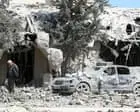
200명 이상 사망한 공습으로 휴전 유지 노력 위기중동 위기 - 실시간 업데이트미국-이란 휴전 발표 직후 이스라엘의 대규모 레바논 폭격이 국제사회의 광범위한 규탄을 받고 있다. 휴전 유지를 위한 국제적 노력이 위태로워지는 가운데 이루어진 공격이다. 이스라엘의 폭격으로 200명 이상이 사망했으며, 특히 인구 밀집 지역에 대한 중화기 공격은 국제적십자위원회와 다른 국제 인도주의 단체들의 분노를 초래했다.
Israel’s devastating bombardment of Lebanon in the hours after a US-Iranian ceasefire was announced has been widely condemned amid global efforts to salvage the truce.
More than 200 people were killed by Israeli bombing including strikes with heavy munitions on densely populated areas, which drew outrage from the International Committee of the Red Cross and other international humanitarian organisations.
Benjamin Netanyahu insisted that Lebanon was not included in the Tuesday night ceasefire agreed by Donald Trump, and vowed the Israeli military would continue to strike Hezbollah targets “wherever necessary”. The Israeli prime minister said Israeli forces had killed the secretary to Hezbollah’s leader, Naim Qassem.
The US vice-president, JD Vance, backed Netanyahu, claiming the US had never agreed to the inclusion of Lebanon in the truce.
“I think this comes from a legitimate misunderstanding,” Vance said. He is expected to lead a US delegation to Pakistan for talks on Saturday to try to salvage the ceasefire and turn it into a more durable peace agreement.
However, Iran’s president, Masoud Pezeshkian said that further Israeli strikes on Lebanon would render negotiations “meaningless”. Iran would not abandon the Lebanese people, Pezeshkian promised.
Pakistan, which led the efforts to broker a ceasefire after Trump threatened a civilisation-ending onslaught, has said that Lebanon had been part of the agreement.
“I would trust the Pakistani mediator that Lebanon was included. They put out a statement that it was included and we did not hear any American correct the Pakistani version for many hours,” Robert Malley, a former American envoy who led earlier US-Iranian negotiations, said.
“It looks like a case of the US reneging and giving the Israeli prime minister [permission] to go ahead [with bombing] for another 24 hours before they are ‘restrained’”.
Malley said the best-case scenario for peace talks in Pakistan was that they returned the region to the status quo before the US-Israeli attack on 28 February, with the Hormuz strait open, and options for limiting Iran’s nuclear programme on the table along with some form of financial compensation for Tehran.
Authorities in Islamabad began implementing strict security measures in Islamabad in anticipation of the arrival of delegations for talks, expected to begin on Saturday.
As the future of the ceasefire looked in peril, Trump issued his latest ultimatum on social media, vowing a return to US attacks (as he put it, the “Shootin’ Starts”) if Iran failed to comply with “the real agreement”. He made clear that Tehran had to reopen the strait of Hormuz fully to international shipping, and that Iran should have “no nuclear weapons”. He did not mention Lebanon.
US allies have been insistent that the ceasefire should be comprehensive. A joint statement by the UK, EU countries, Canada and Japan called on “all sides to implement the ceasefire, including in Lebanon”, where Israel is seeking to destroy the Iranian-backed Hezbollah movement.
“Hezbollah dragged Lebanon into the war, but Israel’s right to defend itself does not justify inflicting such massive destruction,” Kaja Kallas, the EU foreign policy chief, said on Thursday.
“Israeli strikes killed hundreds last night, making it hard to argue that such heavy-handed actions fall within self-defence.”
France’s foreign minister, Jean-Noël Barrot, condemned the Israeli strikes as “unacceptable” and his British counterpart, Yvette Cooper, described them as “deeply damaging”, adding that failure to include Lebanon in the ceasefire would “destabilise the whole region”.
Diplomatic efforts worldwide have focused on reopening the strait of Hormuz, gateway to a fifth of the global flow of oil and liquified natural gas.
Only 11 ships – four Iranian, four Greek, one Chinese, one Omani and one unknown – were allowed to pass through the Hormuz strait in the 24 hours after the ceasefire, less than a tenth of the prewar flow.
About 1,400 ships remain anchored in the Gulf, trapped first by the war then the uncertainty that has accompanied the vague and shaky truce. After an initial plunge in the global oil price following the announcement of the ceasefire, it began to creep up again towards $100 a barrel on Thursday, in line with the growing sense of uncertainty.
More than 200 people were killed by Israeli bombing including strikes with heavy munitions on densely populated areas, which drew outrage from the International Committee of the Red Cross and other international humanitarian organisations.
Benjamin Netanyahu insisted that Lebanon was not included in the Tuesday night ceasefire agreed by Donald Trump, and vowed the Israeli military would continue to strike Hezbollah targets “wherever necessary”. The Israeli prime minister said Israeli forces had killed the secretary to Hezbollah’s leader, Naim Qassem.
The US vice-president, JD Vance, backed Netanyahu, claiming the US had never agreed to the inclusion of Lebanon in the truce.
“I think this comes from a legitimate misunderstanding,” Vance said. He is expected to lead a US delegation to Pakistan for talks on Saturday to try to salvage the ceasefire and turn it into a more durable peace agreement.
However, Iran’s president, Masoud Pezeshkian said that further Israeli strikes on Lebanon would render negotiations “meaningless”. Iran would not abandon the Lebanese people, Pezeshkian promised.
Pakistan, which led the efforts to broker a ceasefire after Trump threatened a civilisation-ending onslaught, has said that Lebanon had been part of the agreement.
“I would trust the Pakistani mediator that Lebanon was included. They put out a statement that it was included and we did not hear any American correct the Pakistani version for many hours,” Robert Malley, a former American envoy who led earlier US-Iranian negotiations, said.
“It looks like a case of the US reneging and giving the Israeli prime minister [permission] to go ahead [with bombing] for another 24 hours before they are ‘restrained’”.
Malley said the best-case scenario for peace talks in Pakistan was that they returned the region to the status quo before the US-Israeli attack on 28 February, with the Hormuz strait open, and options for limiting Iran’s nuclear programme on the table along with some form of financial compensation for Tehran.
Authorities in Islamabad began implementing strict security measures in Islamabad in anticipation of the arrival of delegations for talks, expected to begin on Saturday.
As the future of the ceasefire looked in peril, Trump issued his latest ultimatum on social media, vowing a return to US attacks (as he put it, the “Shootin’ Starts”) if Iran failed to comply with “the real agreement”. He made clear that Tehran had to reopen the strait of Hormuz fully to international shipping, and that Iran should have “no nuclear weapons”. He did not mention Lebanon.
US allies have been insistent that the ceasefire should be comprehensive. A joint statement by the UK, EU countries, Canada and Japan called on “all sides to implement the ceasefire, including in Lebanon”, where Israel is seeking to destroy the Iranian-backed Hezbollah movement.
“Hezbollah dragged Lebanon into the war, but Israel’s right to defend itself does not justify inflicting such massive destruction,” Kaja Kallas, the EU foreign policy chief, said on Thursday.
“Israeli strikes killed hundreds last night, making it hard to argue that such heavy-handed actions fall within self-defence.”
France’s foreign minister, Jean-Noël Barrot, condemned the Israeli strikes as “unacceptable” and his British counterpart, Yvette Cooper, described them as “deeply damaging”, adding that failure to include Lebanon in the ceasefire would “destabilise the whole region”.
Diplomatic efforts worldwide have focused on reopening the strait of Hormuz, gateway to a fifth of the global flow of oil and liquified natural gas.
Only 11 ships – four Iranian, four Greek, one Chinese, one Omani and one unknown – were allowed to pass through the Hormuz strait in the 24 hours after the ceasefire, less than a tenth of the prewar flow.
About 1,400 ships remain anchored in the Gulf, trapped first by the war then the uncertainty that has accompanied the vague and shaky truce. After an initial plunge in the global oil price following the announcement of the ceasefire, it began to creep up again towards $100 a barrel on Thursday, in line with the growing sense of uncertainty.