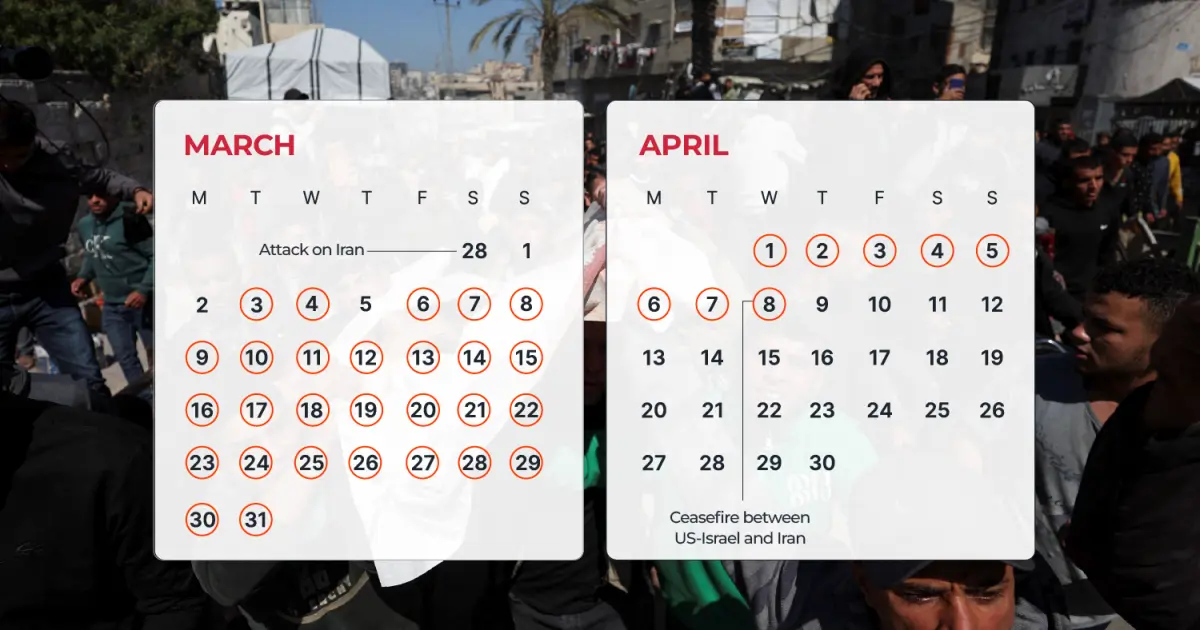
이스라엘, 이란 전쟁 중 지난 40일간 36일에 가자지구 폭격
Israel bombed Gaza on 36 of the past 40 days while the war raged in Iran
Al Jazeera
Alia Chughtai,Marium Ali
AR
2026-04-09 15:53
Translated
이스라엘이 107명 살해, 의료 소개 8% 만 허용, 화물차 20% 만 진입 허락
미국과 이란은 수요일 40일간의 전쟁 이후 2주간의 휴전에 합의했으며, 토요일 파키스탄 이슬라마바드에서 회담을 시작할 예정이다.
그러나 2월 28일 이스라엘과 미국이 이란 폭격을 시작한 이후, 이스라엘은 거의 매일 같이 레바논, 가자지구, 점령 지역인 요르단강 서안지구에 대한 공격을 전개해왔다.
세계 대부분의 관심이 이란에 쏠려 있는 사이, 가자지구에서 놓쳤을 수 있는 세 가지 주요 사항은 다음과 같다.
6개월 전 가자지구의 "휴전" 선언 이후, 이스라엘은 협정을 수천 번 위반했으며 거의 매일 공격을 감행했다.
지난 40일간 이스라엘은 가자지구에 대한 폭격을 계속했을 뿐만 아니라 라파 국경을 폐쇄하고 생명을 구하는 식량과 의료 물품을 중단했다.
알자지라 분석에 따르면 이스라엘은 지난 40일 중 36일간 가자지구를 공격했으며, 이는 폭력 공격, 사망 또는 부상이 보도되지 않은 날이 단 4일뿐임을 의미한다.
2월 28일부터 4월 8일 사이 이스라엘의 공격으로 가자지구에서 최소 107명이 사망하고 342명이 부상했다.
6개월 전 가자지구에서 "휴전"이 발효된 이후 이스라엘의 공격으로 최소 738명이 사망하고 2,000명 이상이 부상했다.
가자지구에서 대량학살 전쟁을 시작한 이후 이스라엘은 지구 인구의 최소 10%를 살해하거나 부상시켰으며, 대부분 여성과 어린이를 포함해 72,000명 이상을 살해했고 172,000명 이상을 부상시켰으며, 수천 명이 더 잔해 아래 묻혀 있고 사망한 것으로 추정된다.
수요일 미국, 이스라엘, 이란 간의 기대되는 공격 일시 중지를 세계가 기다리는 가운데, 이스라엘은 가자지구에서 또 다른 기자를 살해했다. 알자지라의 특파원 무함마드 위스와시가 표적 드론 공격으로 살해됐다.
같은 날 이스라엘은 레바논에 대해 하루 동안 감행한 최대 규모의 공격 중 하나를 단행했으며, 최소 254명을 살해하고 1,165명을 부상시킨 공격파를 퍼부었다.
2월 28일 이스라엘과 미국이 이란에 대한 공격을 시작한 당일, 이스라엘 당국은 가자지구로 진입하는 모든 국경을 폐쇄했으며 부상자의 해외 이송을 중단하고 의료 소개를 일시 중단했다.
그중에는 이집트를 통해 외부 세계로 가는 가자지구의 유일한 통로인 라파 국경이 포함되었으며, 이곳은 미국이 중재한 가자지구 20개 항목 휴전 계획에 따라 개방될 예정이었다. 합의에 따르면 하루에 50명의 환자와 그들의 동반자(일반적으로 환자당 1~2명)가 치료를 위해 지구 밖으로 나갈 수 있어야 했다.
2년 이상의 이스라엘 공격으로 수천 명이 부상당했으며 긴급 의료 치료가 필요한 상태다. 유엔 인도주의업무조정국(OCHA)에 따르면 4,000명의 어린이를 포함해 18,500명 이상의 중환자가 의료 소개가 필요하다.
3월 19일 이스라엘 당국은 라파를 통한 제한된 의료 소개 재개를 발표했다.
가자 미디어 사무소에 따르면 2월 28일 이후 7,800명의 여행자 중 625명이 치료를 위해 가자지구를 떠날 수 있도록 허용되었다. 이는 합의된 수치의 약 8%에 해당한다.
이스라엘은 긴급 식량 및 의료 물품 제한을 계속했으며, 심각한 부족을 악화시키고 인도주의적 위기를 심화시켰다.
세계 기아 모니터인 통합 기근 단계 분류(IPC)에 따르면 가자지구 인구의 3/4 이상(77%)이 높은 수준의 급성 식량 부족에 직면해 있다.
IPC가 분석한 160만 명 중:
가자 미디어 사무소에 따르면 미국-이스라엘의 이란 전쟁 시작 이후 이스라엘은 휴전 협정에 규정된 23,400대 중 4,999대의 화물차만 지구로 진입하도록 허용했다. 이는 약속된 배송의 1/5에 불과하다.
그러나 2월 28일 이스라엘과 미국이 이란 폭격을 시작한 이후, 이스라엘은 거의 매일 같이 레바논, 가자지구, 점령 지역인 요르단강 서안지구에 대한 공격을 전개해왔다.
세계 대부분의 관심이 이란에 쏠려 있는 사이, 가자지구에서 놓쳤을 수 있는 세 가지 주요 사항은 다음과 같다.
6개월 전 가자지구의 "휴전" 선언 이후, 이스라엘은 협정을 수천 번 위반했으며 거의 매일 공격을 감행했다.
지난 40일간 이스라엘은 가자지구에 대한 폭격을 계속했을 뿐만 아니라 라파 국경을 폐쇄하고 생명을 구하는 식량과 의료 물품을 중단했다.
알자지라 분석에 따르면 이스라엘은 지난 40일 중 36일간 가자지구를 공격했으며, 이는 폭력 공격, 사망 또는 부상이 보도되지 않은 날이 단 4일뿐임을 의미한다.
2월 28일부터 4월 8일 사이 이스라엘의 공격으로 가자지구에서 최소 107명이 사망하고 342명이 부상했다.
6개월 전 가자지구에서 "휴전"이 발효된 이후 이스라엘의 공격으로 최소 738명이 사망하고 2,000명 이상이 부상했다.
가자지구에서 대량학살 전쟁을 시작한 이후 이스라엘은 지구 인구의 최소 10%를 살해하거나 부상시켰으며, 대부분 여성과 어린이를 포함해 72,000명 이상을 살해했고 172,000명 이상을 부상시켰으며, 수천 명이 더 잔해 아래 묻혀 있고 사망한 것으로 추정된다.
수요일 미국, 이스라엘, 이란 간의 기대되는 공격 일시 중지를 세계가 기다리는 가운데, 이스라엘은 가자지구에서 또 다른 기자를 살해했다. 알자지라의 특파원 무함마드 위스와시가 표적 드론 공격으로 살해됐다.
같은 날 이스라엘은 레바논에 대해 하루 동안 감행한 최대 규모의 공격 중 하나를 단행했으며, 최소 254명을 살해하고 1,165명을 부상시킨 공격파를 퍼부었다.
2월 28일 이스라엘과 미국이 이란에 대한 공격을 시작한 당일, 이스라엘 당국은 가자지구로 진입하는 모든 국경을 폐쇄했으며 부상자의 해외 이송을 중단하고 의료 소개를 일시 중단했다.
그중에는 이집트를 통해 외부 세계로 가는 가자지구의 유일한 통로인 라파 국경이 포함되었으며, 이곳은 미국이 중재한 가자지구 20개 항목 휴전 계획에 따라 개방될 예정이었다. 합의에 따르면 하루에 50명의 환자와 그들의 동반자(일반적으로 환자당 1~2명)가 치료를 위해 지구 밖으로 나갈 수 있어야 했다.
2년 이상의 이스라엘 공격으로 수천 명이 부상당했으며 긴급 의료 치료가 필요한 상태다. 유엔 인도주의업무조정국(OCHA)에 따르면 4,000명의 어린이를 포함해 18,500명 이상의 중환자가 의료 소개가 필요하다.
3월 19일 이스라엘 당국은 라파를 통한 제한된 의료 소개 재개를 발표했다.
가자 미디어 사무소에 따르면 2월 28일 이후 7,800명의 여행자 중 625명이 치료를 위해 가자지구를 떠날 수 있도록 허용되었다. 이는 합의된 수치의 약 8%에 해당한다.
이스라엘은 긴급 식량 및 의료 물품 제한을 계속했으며, 심각한 부족을 악화시키고 인도주의적 위기를 심화시켰다.
세계 기아 모니터인 통합 기근 단계 분류(IPC)에 따르면 가자지구 인구의 3/4 이상(77%)이 높은 수준의 급성 식량 부족에 직면해 있다.
IPC가 분석한 160만 명 중:
가자 미디어 사무소에 따르면 미국-이스라엘의 이란 전쟁 시작 이후 이스라엘은 휴전 협정에 규정된 23,400대 중 4,999대의 화물차만 지구로 진입하도록 허용했다. 이는 약속된 배송의 1/5에 불과하다.
Israel killed 107 people, permitted only 8 percent of medical evacuations, and admitted just 20 percent of trucks.
The United States and Iran agreed on Wednesday to a two-week ceasefire following 40 days of war, with talks set to begin on Saturday in Islamabad, Pakistan.But since February 28, when Israel and the US began bombing Iran, Israel has also, on a near-daily basis, launched attacks on Lebanon, Gaza and the occupied West Bank.
While much of the world’s attention has been on Iran, here are three main things that you may have missed in Gaza.
Since the declaration of a “ceasefire” in the Gaza Strip six months ago, Israel has violated the agreement thousands of times, with attacks on a nearly daily basis.
Over the past 40 days, Israel has not only continued bombing Gaza, but has also closed the Rafah crossing and withheld life‑saving food and medical supplies.
According to an analysis by Al Jazeera, Israel has attacked Gaza on 36 out of the past 40 days, meaning there were only four days on which no violent attacks, deaths or injuries were reported in the Strip.
Between February 28 and April 8, Israeli attacks killed at least 107 people in Gaza and injured 342 others.
Since the “ceasefire” in Gaza took effect six months ago, Israeli attacks have killed at least 738 people and injured more than 2,000.
In total, since launching its genocidal war on Gaza, Israel has killed or injured at least 10 percent of the Strip’s population, killing more than 72,000 people, the majority of them women and children, and injuring at least 172,000 others, with thousands more buried under the rubble and presumed dead.
On Wednesday, as the world awaited the much-anticipated pause in attacks between the US, Israel and Iran, Israel killed another journalist in Gaza – Al Jazeera’s correspondent Mohammed Wiswash, who was killed in a targeted drone strike.
On the same day, Israel launched one of its largest-ever attacks on Lebanon in a single day, launching a wave of strikes that killed at least 254 people and injured 1,165.
On February 28, the day Israel and the US began strikes on Iran, Israeli authorities closed all crossings into Gaza, halting the transfer of wounded patients abroad and suspending medical evacuations.
Among them was Rafah crossing, Gaza’s sole gateway to the outside world through Egypt, which was supposed to open under the US-brokered 20-point ceasefire plan for the Strip. Based on the agreement, 50 patients per day, plus their companions – typically one or two per patient – were supposed to be allowed out of the enclave for treatment.
More than two years of Israeli attacks have left thousands injured and in need of urgent medical treatment. According to OCHA, more than 18,500 critical patients, including 4,000 children, require medical evacuations.
On March 19, Israeli authorities announced the resumption of limited medical evacuations through Rafah.
According to the Gaza Media Office, since February 28, 625 out of 7,800 travellers have been permitted to leave Gaza for treatment – about 8 percent of the agreed number.
Israel has continued to limit urgent food and medical supplies, exacerbating severe shortages and deepening a humanitarian crisis.
According to the Integrated Phase Classification (IPC), the global hunger monitor, more than three-quarters (77 percent) of the population in Gaza are facing high levels of acute food insecurity.
Of the 1.6 million people analysed by IPC:
According to the Gaza Media Office, since the US-Israel war on Iran began, Israel has allowed only 4,999 of the 23,400 trucks stipulated in the ceasefire agreement into the Strip – just one-fifth of the promised deliveries.