펜실베이니아 보수 지역 주민들, 계획된 ICE 구금시설 건설에 반발
In a Deep Red Town In Pennsylvania, Locals Vent Over a Planned ICE Detention Center
The New York Times
Chris Hippensteel
EN
2026-04-09 09:00
Translated
인구 약 2,000명의 펜실베이니아주 트레몬트 지역 주민들이 트럼프 행정부의 창고 개조 계획에 목소리를 높이고 있다. 행정부는 해당 창고를 현재 인구의 4배에 가까운 인원을 수용할 수 있는 이민단속국(ICE) 구금시설로 전환할 계획이다.
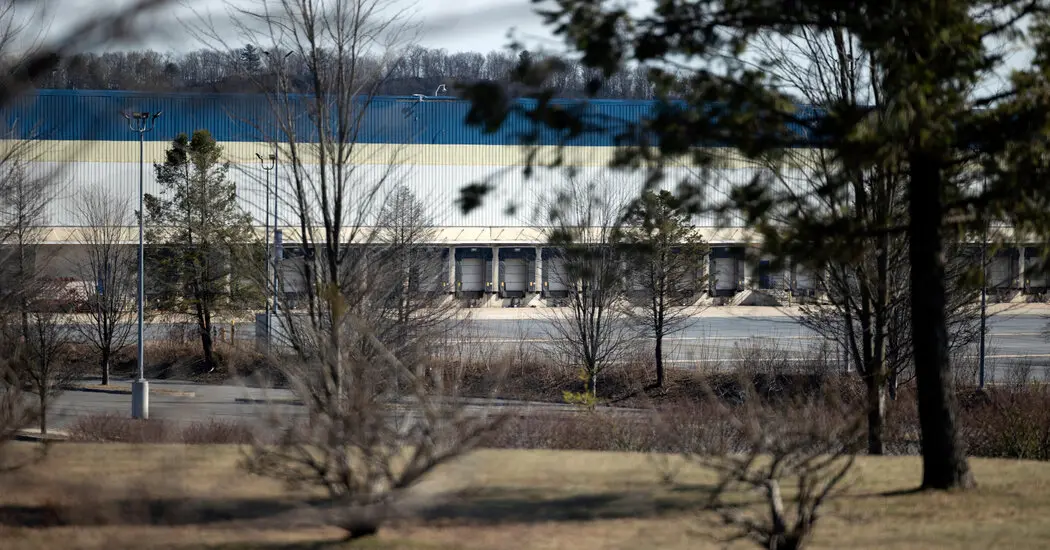
The Department of Homeland Security plans to turn a warehouse in Tremont, Pa., into an immigrant detention center, but many local residents complain that they have been given little input.Credit...Rachel Wisniewski for The New York Times
By Chris Hippensteel
Reporting from Tremont and Pottsville, Pa.
When the coal industry unraveled around Tremont, Pa., generations ago, it didn’t leave much behind. Nestled in the valleys of central Pennsylvania, the old mining town today has no hospital and no independent police force. A Family Dollar serves as its only grocery store. For years, the water supply has been so tight that trucks have at times hauled water in to keep the taps from running dry.
But this year, the Trump administration determined that the Tremont area — already creaking under the weight of its roughly 2,000 residents — could support one of its new mega immigrant detention centers, larger than any currently in operation.
In January, the Department of Homeland Security bought, without public notice, a vacant warehouse two miles down Tremont’s main street to house up to 7,500 detainees. With the site tentatively scheduled to open within the year, residents have been left to wonder how their area will sustain a captive population nearly four times its size, plus an accompanying work force.
“We don’t need that,” said Tom Pribilla, who has run a hardware store in Tremont for decades. “The community, the area, is not going to be able to absorb the costs.”
The Tremont warehouse is one of about a dozen that D.H.S. has purchased nationwide, all in an effort to build enough immigrant detention centers to support President Trump’s mass deportation pipeline. Another planned processing center, in Berks County, Pa., just 30 minutes from Tremont, would hold up to 1,500 additional people.
Across the country, the plans to convert warehouses into detention spaces have been met with fierce local blowback, even in deep-red areas, like Tremont, that have backed Mr. Trump. Recently, D.H.S. abandoned plans to purchase warehouses in places like Tennessee and Mississippi.
The Tremont project has become more muddled as D.H.S., under its new secretary, Markwayne Mullin, reviews the entire nationwide plan. But it has also maintained that it is still moving ahead with the warehouses it has acquired, as D.H.S. grapples with a shortage of detention space and an increase in apprehensions.
Whatever the outcome, the backlash in Tremont shows how the push to expand detention space is bringing the repercussions of the president’s mass deportation campaign to some of his typical strongholds. In Schuylkill County, Pa., (pronounced SKOOK-ul) which contains Tremont, more than 70 percent of the vote went to Mr. Trump in 2024, helping tip the scales in a critical swing state.
The resistance there has been largely divorced from the national debate around the president’s immigration policies. Instead, residents cite a raft of local concerns — water, sewer, health care and emergency response systems that could be overwhelmed.
And because the federal government typically doesn’t pay local property taxes, many in the broader area fear that school districts and municipalities would miss out on hundreds of thousands of dollars in revenue they might otherwise have received from a private land owner. (Although the warehouse was not in use, the previous owner was still paying taxes.)
Justin Moeller, a Republican who is the borough’s mayor and assistant fire chief, estimated that 60 percent of his constituents were against the facility. Tremont Borough, where most area residents live, is separate from Tremont Township, a municipality that abuts it and where the warehouse is located. The two share infrastructure and resources, meaning the detention center’s impacts would resonate across both.
The manner in which D.H.S. purchased the warehouse, without seeking input from residents, has also struck a nerve.
“Don’t just throw it in our backyard and say, ‘This is where it is, now you got to deal with it,’” Roger Adams, a former mayor of Tremont who is now on its borough council, said in an interview in March. “That’s not the way I do business.”
Events unfolded almost identically in Berks County, where D.H.S. bought a warehouse for use as a processing center. Michael Rivera, a Republican commissioner for the county, said it seemed as if D.H.S. wanted to pre-empt in Pennsylvania the kind of pushback that has killed warehouse sales elsewhere.
Immigration and Customs Enforcement, which would run the facilities under D.H.S., says that these centers would benefit local communities economically, including by bringing in thousands of jobs. And many Trump supporters in the area remain unwavering in their backing of his immigration crackdown.
At a fiery Schuylkill County Board of Commissioners meeting in March, Robert Caputo, a county resident, approached the lectern to say he was “sick of” illegal immigrants in the community, and he felt something had to be done.
“They should be in detention and shipped back to their country,” he said.
D.H.S. officials also say creating new detention centers would allow the agency to move away from using privately operated prison companies. There are reservations within D.H.S. about whether private prisons can deliver on Mr. Trump’s deportation promises, which would require over 100,000 beds, according to a U.S. official who asked to remain anonymous because the person is not authorized to talk about the planning. The agency currently detains around 60,000 immigrants nationwide, the official said.
Gov. Josh Shapiro, a Democrat, who both opposes the immigration crackdown and questions the choice of these sites, vowed at a February news conference to use “every tool at my disposal” to stop the warehouse plans, including the withholding of essential permits if D.H.S. does not comply with state environmental laws.
Some local Republican leaders seem content to let Mr. Shapiro fight the federal government, taking an official non-stance on the detention center, even as they voice similar reservations.
“If the governor thinks he can stop it, that’s on the governor’s level,” Larry Padora, a Republican who chairs the Schuylkill County Board of Commissioners, said in an interview. “My job is to make sure that if this facility comes here, that my residents and my taxpayers aren’t left holding the bag.”
Despite the state’s demand for information, D.H.S. has yet to provide detailed plans on how it will supply water, health care and a functional sewage system for its detainee population. What little has been revealed has come from conference calls between local leaders and D.H.S. officials arranged by the area’s congressman, Dan Meuser, a Republican.
In March, roughly a hundred people attended a town hall hosted by a local opposition group, seeking more answers.
To many of those gathered, D.H.S. seemed like just the latest outsider to treat Schuylkill County as a dumping ground. After the decline of the local coal industry, multiple landfills sprang up around the region. In the last several years, residents say, odors from a biosolids plant that processes treated domestic sewage have rendered the air so fetid at times that they won’t step outside.
There could be more of that, local leaders fear, if the detention center opens. Mr. Padora said that D.H.S. has proposed trucking out human waste to avoid overburdening the area’s sewage system.
“We actually have experience with trucks driving down our streets with human sewage, and it’s spilling out of the truck,” Joe Wiscount, a Tremont resident who helped organize the town hall, said of the borough’s experience with the biosolids plant.
“We don’t want more of it dumped on us,” he added.
Joyce Wetzel, 60, who has run a day care next door to the warehouse for decades, said she broadly supported the president’s immigration policies. But she worried about the possibility of escaped detainees or protests, and about the parents who say they’ll pull their kids out of her facility if the detention center opens.
Most people in ICE detention do not have criminal records. However, as existing detention centers have grown more crowded under the Trump administration, tensions inside — and, at times, outside — of them have mounted.
“I’d like to retire someday soon, put a for sale sign on,” Ms. Wetzel said of her day care in an interview. But if the detention center moves forward, she wonders, “Who’s going to buy it?”
Once all the residents spoke, Mr. Padora, one of several local leaders present, shared what he had learned from the county’s meetings with D.H.S. The agency seemed amenable to some of the county’s requests, he said, including payments in lieu of lost tax revenue, and making the detention center open for inspections by the local authorities. Mr. Padora said he would wait to see its promises in writing, however.
Many in attendance seemed skeptical that anyone in the room could prevent the detention center from opening.
“We can have our little groups and we can sit and complain about it,” Mr. Pribilla, the hardware store owner, said the next day. “But how much power do we actually have to stop the federal government?”
Hamed Aleaziz contributed reporting.
Chris Hippensteel is a reporter covering breaking news and a member of the 2025-26 Times Fellowship class, a program for journalists early in their careers.
By Chris Hippensteel
Reporting from Tremont and Pottsville, Pa.
When the coal industry unraveled around Tremont, Pa., generations ago, it didn’t leave much behind. Nestled in the valleys of central Pennsylvania, the old mining town today has no hospital and no independent police force. A Family Dollar serves as its only grocery store. For years, the water supply has been so tight that trucks have at times hauled water in to keep the taps from running dry.
But this year, the Trump administration determined that the Tremont area — already creaking under the weight of its roughly 2,000 residents — could support one of its new mega immigrant detention centers, larger than any currently in operation.
In January, the Department of Homeland Security bought, without public notice, a vacant warehouse two miles down Tremont’s main street to house up to 7,500 detainees. With the site tentatively scheduled to open within the year, residents have been left to wonder how their area will sustain a captive population nearly four times its size, plus an accompanying work force.
“We don’t need that,” said Tom Pribilla, who has run a hardware store in Tremont for decades. “The community, the area, is not going to be able to absorb the costs.”
The Tremont warehouse is one of about a dozen that D.H.S. has purchased nationwide, all in an effort to build enough immigrant detention centers to support President Trump’s mass deportation pipeline. Another planned processing center, in Berks County, Pa., just 30 minutes from Tremont, would hold up to 1,500 additional people.
Across the country, the plans to convert warehouses into detention spaces have been met with fierce local blowback, even in deep-red areas, like Tremont, that have backed Mr. Trump. Recently, D.H.S. abandoned plans to purchase warehouses in places like Tennessee and Mississippi.
The Tremont project has become more muddled as D.H.S., under its new secretary, Markwayne Mullin, reviews the entire nationwide plan. But it has also maintained that it is still moving ahead with the warehouses it has acquired, as D.H.S. grapples with a shortage of detention space and an increase in apprehensions.
Whatever the outcome, the backlash in Tremont shows how the push to expand detention space is bringing the repercussions of the president’s mass deportation campaign to some of his typical strongholds. In Schuylkill County, Pa., (pronounced SKOOK-ul) which contains Tremont, more than 70 percent of the vote went to Mr. Trump in 2024, helping tip the scales in a critical swing state.
The resistance there has been largely divorced from the national debate around the president’s immigration policies. Instead, residents cite a raft of local concerns — water, sewer, health care and emergency response systems that could be overwhelmed.
And because the federal government typically doesn’t pay local property taxes, many in the broader area fear that school districts and municipalities would miss out on hundreds of thousands of dollars in revenue they might otherwise have received from a private land owner. (Although the warehouse was not in use, the previous owner was still paying taxes.)
Justin Moeller, a Republican who is the borough’s mayor and assistant fire chief, estimated that 60 percent of his constituents were against the facility. Tremont Borough, where most area residents live, is separate from Tremont Township, a municipality that abuts it and where the warehouse is located. The two share infrastructure and resources, meaning the detention center’s impacts would resonate across both.
The manner in which D.H.S. purchased the warehouse, without seeking input from residents, has also struck a nerve.
“Don’t just throw it in our backyard and say, ‘This is where it is, now you got to deal with it,’” Roger Adams, a former mayor of Tremont who is now on its borough council, said in an interview in March. “That’s not the way I do business.”
Events unfolded almost identically in Berks County, where D.H.S. bought a warehouse for use as a processing center. Michael Rivera, a Republican commissioner for the county, said it seemed as if D.H.S. wanted to pre-empt in Pennsylvania the kind of pushback that has killed warehouse sales elsewhere.
Immigration and Customs Enforcement, which would run the facilities under D.H.S., says that these centers would benefit local communities economically, including by bringing in thousands of jobs. And many Trump supporters in the area remain unwavering in their backing of his immigration crackdown.
At a fiery Schuylkill County Board of Commissioners meeting in March, Robert Caputo, a county resident, approached the lectern to say he was “sick of” illegal immigrants in the community, and he felt something had to be done.
“They should be in detention and shipped back to their country,” he said.
D.H.S. officials also say creating new detention centers would allow the agency to move away from using privately operated prison companies. There are reservations within D.H.S. about whether private prisons can deliver on Mr. Trump’s deportation promises, which would require over 100,000 beds, according to a U.S. official who asked to remain anonymous because the person is not authorized to talk about the planning. The agency currently detains around 60,000 immigrants nationwide, the official said.
Gov. Josh Shapiro, a Democrat, who both opposes the immigration crackdown and questions the choice of these sites, vowed at a February news conference to use “every tool at my disposal” to stop the warehouse plans, including the withholding of essential permits if D.H.S. does not comply with state environmental laws.
Some local Republican leaders seem content to let Mr. Shapiro fight the federal government, taking an official non-stance on the detention center, even as they voice similar reservations.
“If the governor thinks he can stop it, that’s on the governor’s level,” Larry Padora, a Republican who chairs the Schuylkill County Board of Commissioners, said in an interview. “My job is to make sure that if this facility comes here, that my residents and my taxpayers aren’t left holding the bag.”
Despite the state’s demand for information, D.H.S. has yet to provide detailed plans on how it will supply water, health care and a functional sewage system for its detainee population. What little has been revealed has come from conference calls between local leaders and D.H.S. officials arranged by the area’s congressman, Dan Meuser, a Republican.
In March, roughly a hundred people attended a town hall hosted by a local opposition group, seeking more answers.
To many of those gathered, D.H.S. seemed like just the latest outsider to treat Schuylkill County as a dumping ground. After the decline of the local coal industry, multiple landfills sprang up around the region. In the last several years, residents say, odors from a biosolids plant that processes treated domestic sewage have rendered the air so fetid at times that they won’t step outside.
There could be more of that, local leaders fear, if the detention center opens. Mr. Padora said that D.H.S. has proposed trucking out human waste to avoid overburdening the area’s sewage system.
“We actually have experience with trucks driving down our streets with human sewage, and it’s spilling out of the truck,” Joe Wiscount, a Tremont resident who helped organize the town hall, said of the borough’s experience with the biosolids plant.
“We don’t want more of it dumped on us,” he added.
Joyce Wetzel, 60, who has run a day care next door to the warehouse for decades, said she broadly supported the president’s immigration policies. But she worried about the possibility of escaped detainees or protests, and about the parents who say they’ll pull their kids out of her facility if the detention center opens.
Most people in ICE detention do not have criminal records. However, as existing detention centers have grown more crowded under the Trump administration, tensions inside — and, at times, outside — of them have mounted.
“I’d like to retire someday soon, put a for sale sign on,” Ms. Wetzel said of her day care in an interview. But if the detention center moves forward, she wonders, “Who’s going to buy it?”
Once all the residents spoke, Mr. Padora, one of several local leaders present, shared what he had learned from the county’s meetings with D.H.S. The agency seemed amenable to some of the county’s requests, he said, including payments in lieu of lost tax revenue, and making the detention center open for inspections by the local authorities. Mr. Padora said he would wait to see its promises in writing, however.
Many in attendance seemed skeptical that anyone in the room could prevent the detention center from opening.
“We can have our little groups and we can sit and complain about it,” Mr. Pribilla, the hardware store owner, said the next day. “But how much power do we actually have to stop the federal government?”
Hamed Aleaziz contributed reporting.
Chris Hippensteel is a reporter covering breaking news and a member of the 2025-26 Times Fellowship class, a program for journalists early in their careers.