IMF maintains S. Korea's 2026 growth outlook at 1.9 pct, raises inflation forecast to 2.5 pct
Yonhap News
· 🇰🇷 Seoul, KR
Oh Seok-min
KO
2026-04-14 22:00
SEOUL, April 14 (Yonhap) -- The International Monetary Fund (IMF) on Tuesday kep...
SEOUL, April 14 (Yonhap) -- The International Monetary Fund (IMF) on Tuesday kept its 2026 growth forecast for South Korea unchanged at 1.9 percent despite the Middle East crisis, the finance ministry said.
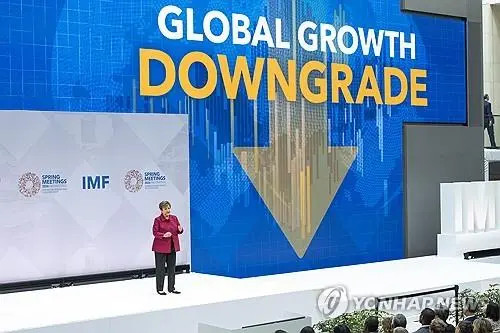
While keeping its outlook unchanged for Asia's fourth-largest economy, the institution revised down its growth projection for the global economy by 0.2 percentage point from its January forecast to 3.1 percent, according to the Ministry of Economy and Finance.
"Despite the impact of the Middle East situation, the country's growth outlook remained unchanged on the back of strong exports and offsetting effects from a supplementary budget," the ministry said, citing the IMF's latest World Economic Outlook report.
"The government will maintain the current emergency response system amid heightened uncertainties and swiftly implement measures to stabilize prices, supply chains and financial markets," it added.
As for prices, the IMF raised its inflation forecast for South Korea this year by 0.7 percentage point to 2.5 percent, citing rising global oil prices due to supply disruptions stemming from the Middle East crisis.
The projections are based on the assumption that the conflict, which began in late February following U.S.-Israeli strikes on Iran, will end within weeks, and the production and export of energy and other goods will normalize starting mid-2026.
The IMF's latest forecast for South Korea is higher than that of the Organization for Economic Cooperation and Development (OECD), which downgraded its growth outlook for the country to 1.7 percent in its latest projection released last month. The OECD had projected 2.1 percent growth for South Korea in its December forecast.
The South Korean government and the Bank of Korea (BOK) had earlier presented a 2.0 percent growth outlook, but the BOK said last week that growth momentum has slowed more than expected and that this year's growth will likely fall below its previous forecast due to the Mideast crisis.
The IMF releases its outlook reports four times a year -- in January, April, July and October. The April and October editions provide comprehensive forecasts for all member countries, while the January and July updates focus on about 30 major economies, including South Korea.
graceoh@yna.co.kr(END)
While keeping its outlook unchanged for Asia's fourth-largest economy, the institution revised down its growth projection for the global economy by 0.2 percentage point from its January forecast to 3.1 percent, according to the Ministry of Economy and Finance.
"Despite the impact of the Middle East situation, the country's growth outlook remained unchanged on the back of strong exports and offsetting effects from a supplementary budget," the ministry said, citing the IMF's latest World Economic Outlook report.
"The government will maintain the current emergency response system amid heightened uncertainties and swiftly implement measures to stabilize prices, supply chains and financial markets," it added.
As for prices, the IMF raised its inflation forecast for South Korea this year by 0.7 percentage point to 2.5 percent, citing rising global oil prices due to supply disruptions stemming from the Middle East crisis.
The projections are based on the assumption that the conflict, which began in late February following U.S.-Israeli strikes on Iran, will end within weeks, and the production and export of energy and other goods will normalize starting mid-2026.
The IMF's latest forecast for South Korea is higher than that of the Organization for Economic Cooperation and Development (OECD), which downgraded its growth outlook for the country to 1.7 percent in its latest projection released last month. The OECD had projected 2.1 percent growth for South Korea in its December forecast.
The South Korean government and the Bank of Korea (BOK) had earlier presented a 2.0 percent growth outlook, but the BOK said last week that growth momentum has slowed more than expected and that this year's growth will likely fall below its previous forecast due to the Mideast crisis.
The IMF releases its outlook reports four times a year -- in January, April, July and October. The April and October editions provide comprehensive forecasts for all member countries, while the January and July updates focus on about 30 major economies, including South Korea.
graceoh@yna.co.kr(END)
한국어 번역이 곧 완료됩니다
새로고침하면 진행 상황이 업데이트됩니다
기사 수집 완료 · 22:15
매체 피드에서 기사 메타데이터 수집
헤드라인 번역 제외
원문이 한국어라 번역 불필요
본문 추출 완료
2,303자 추출 완료
본문 한국어 번역 제외
원문이 한국어
지정학적 엔티티 추출 대기
본문 번역과 함께 자동 실행