유명한 중국 작가 루쉰이 어떻게 귀여운 공산주의 마스코트가 되었는가
How Lu Xun, a Famous Chinese Writer, Became a Cute Communist Mascot
The New York Times
Andrew Higgins and Qilai Shen
EN
2026-04-11 13:01
Translated
중국 공산당은 기득권을 맹렬히 비판했던 마오 시대의 영웅 루쉰을 밋밋한 디즈니식 캐릭터로 변모시켰다.
중국의 가장 유명한 현대 작가 루쉰은 100년 전 전통적 유교 문화, 외국의 횡포, 그리고 중국의 독재자들의 거창한 위선을 신랄하게 비판하는 비평가로 이름을 얻었다.
오늘날 그의 고향인 운하가 흐르는 번영하는 동부 중국 도시 샤오싱에서 루쉰은 불타는 반체제 반란자에서 친근한 공산당 마스코트로 변모했다. 그의 까칠한 성격과 날카로운 견해는 도시 전역에서 그를 기념하는 기념품으로 팔리는 냉장고 자석처럼 평평하게 다듬어졌다.
1936년 사망하기 직전 루쉰은 "중국인들이 누군가를 잠재적 문제 제조자로 의심할 때, 그들은 항상 두 가지 방법 중 하나를 사용한다: 그를 짓누르거나, 그를 높은 제단에 올려놓는다"고 썼다.
1940년 마오쩌둥이 루쉰을 "우리 역사에서 비할 데 없는 영웅"이라고 선언하면서 거대한 제단 위에 올려진 루쉰(발음: 루 슈운)은 수십 년 동안 중국의 가장 광범위한 문학-정치 숭배의 중심에 서 있었다.
마오가 선호했던 낡은 정통성의 아이콘클래스트적 적으로서의 루쉰 상은 최근 몇 년 동안 버려졌고, 더 순한 버전, 더 즐거운 버전으로 대체되었다 — 이는 중국의 현 지도자 시진핑이 국가의 과거의 "영광스러운 성취"를 축하함으로써 국가적 자부심을 높이려는 노력과 더 맞춰져 있다. 이와 같이 그 작가는 공산당의 공식 서사에 봉사하기 위해 중국의 복잡한 역사를 재포장하려는 노력의 사례 연구가 되었다.
시진핑 치하에서 당국은 부정성에 대해 강경하게 대처했으며, "지나치게 비관적인 감정"을 드러낸 블로거와 온라인 인플루언서들을 처벌했다 — 루쉰 자신이 자주 드러낸 것.
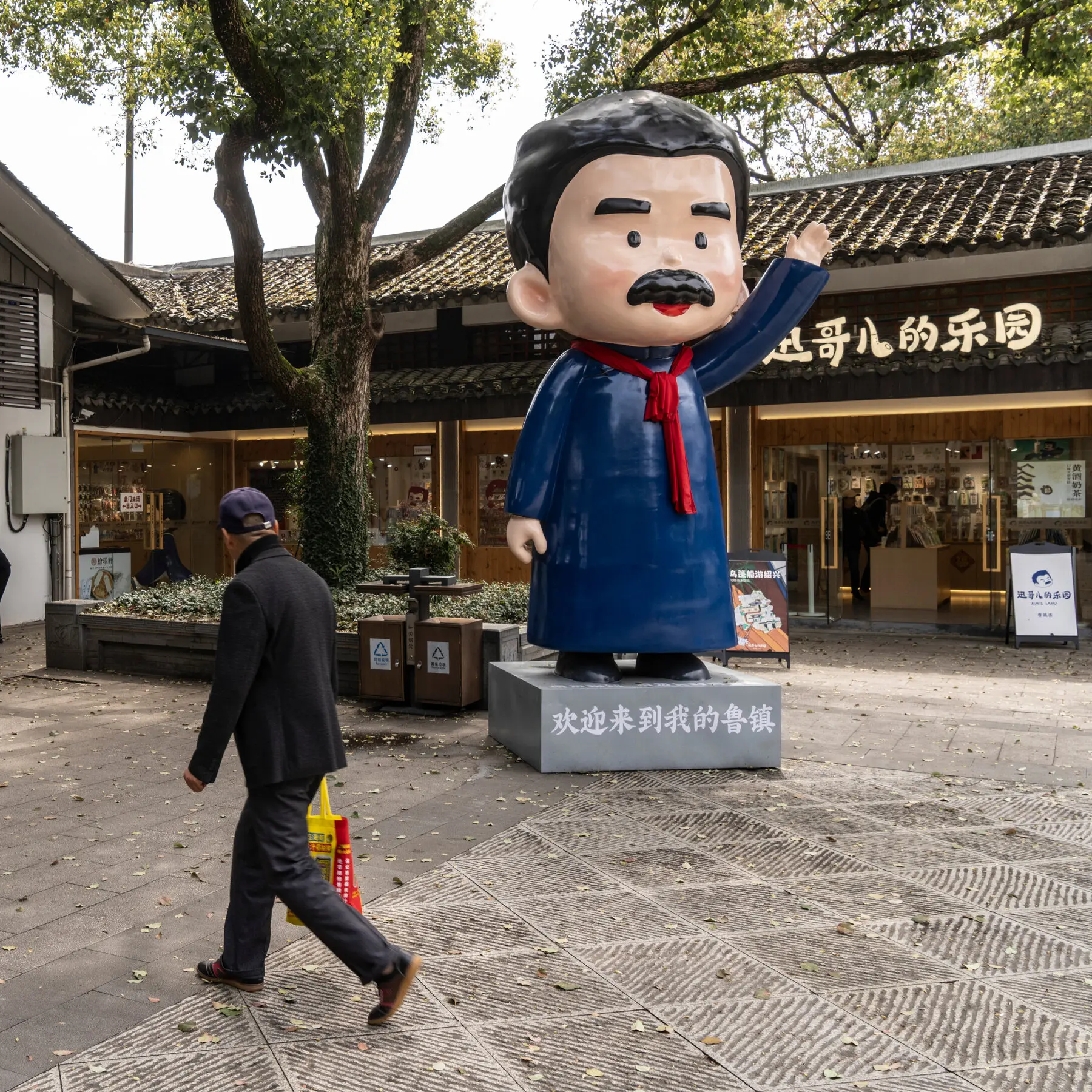
더 이상 공산당에 의해 신경질적인 반란자로 묘사되지 않으며, 작가는 이제 그의 모습을 담은 큰 유리섬유 인형이 그의 어린 시절 집 주변의 돌포장 거리에 점재하는 귀여운 디즈니식 만화 캐릭터로 표현된다.
샤오싱의 루쉰 어린 시절 학교에서, 그는 한때 그 학교를 지루함이 너무 심해서 선생님이 "병에 걸리고 — 이상적으로는 — 죽기를 원했던" 곳으로 회상했으며, 학교 밖의 표지판에는 학실에서 말해준 것을 열성적으로 흡수한 "부지런하고 성찰하는 학습자"로 기억되어 있다.
도로 건너편에는 루쉰 박물관의 외벽에 시진핑이 젊은이들을 겨냥해 자주 사용하는 표어 중 하나가 붙어 있다: "빨간 유전자를 계승하고 애국심을 발양하라."
그리고 관계자들이 작가의 이미지를 수정하기 위한 또 다른 가능한 조치로, 샤오싱의 큰 루쉰 기념 단지는 작년 말 이후로 "수리"를 위해 폐쇄되어 있으며, 상하이의 더욱 큰 단지도 마찬가지다.
루쉰은 1881년 형편이 어려워진 학자-신사 가문에 저우셔런이라는 이름으로 태어났다. 그는 1918년 백화문으로 쓰인 첫 번째 현대 단편소설인 그의 첫 번째 주요 작품 "광인일기"를 발표하기 위해 필명을 채택했다.
이 이야기의 주인공은 유교 전통이 식인을 조장했다고 확신하고, "4,000년 동안 인육을 먹어온 곳에서 모든 이 세월을 살아온" 자신에 대한 생각으로 미쳐간다.
중국 역사에 대한 이러한 어두운 해석은 시진핑의 "중국몽" — "국가 부흥" 프로그램으로 주로 국가의 과거 문제를 외국인들의 탓으로 돌리고 중국 전통을 찬양한다 — 과 불편하게 맞춘다.
"역사적 허무주의"에 적대적인 — 당이나 중국을 훼손하는 역사의 어떤 버전에 대한 암호 — 시진핑은 마오 시대에 중국에서 공부한 호주의 중국학자 제레미 바르메가 "지루함의 제국"이라고 부르는 것을 만들었으며, 루쉰 같은 심술궂은 문제 제조자들까지도 웃고 줄을 서도록 만드는 명랑한 마취된 평온함이다.
그러나 시진핑이 권력을 잡기 훨씬 전에, 루쉰의 신랄한 비관주의는 그를 식민지 시대 선교사들의 중국에 대한 고정 관념을 전달하는 혐의로 그를 비난한 일부 민족주의 지식인들로부터 비난을 받아왔다.
그의 손자 저우링페이는 이를 루쉰의 작품에 대한 "심각한 오독"이라고 일축했다. 그는 직접 인터뷰하기를 거절했지만, 질문에 대한 서면 답변에서 그의 할아버지의 "목표는 중국 인민이 일어서서 그들의 상황을 초월하도록 돕는 것이었지, 맹목적으로 서방을 복사하거나 편견에 아부하는 것이 아니었다"고 말했다.
루쉰에 대한 연구는 수십 년 동안 중국의 국가 교과 과정의 일부였으며, 필수 텍스트 목록은 정치적 변화에 발맞추기 위해 주기적으로 손질되었다. 예를 들어, 중국군의 1989년 천안문 광장 진압 이후로는 "류허전을 기억하며"라는 제목의, 1926년 베이징에서 정부군에 의해 총을 맞은 학생 항의자의 죽음을 애도하기 위해 그가 쓴 분노에 찬 에세이가 사라졌다.
또한 루쉰이 미국 기자 에드거 스노우에게 한 1912년 중국 마지막 제국의 붕괴에 대한 관찰도 학습에서 생략되었다: "혁명 전에 우리는 노예였다. 그리고 지금 우리는 전(前) 노예들의 노예이다."
마오가 "현대 중국의 성인"과 "참된 마르크스주의자이자 철저한 유물론자"로 추앙되었지만, 루쉰은 공산당에 절대 가입하지 않았으며 자신을 마르크스주의자로 여기지 않았다. 그는 그가 명목상 이끌던 좌파 작가 그룹을 탈취한 전횡한 당 위원들이 그의 개인주의적 방식을 포기하고 "프롤레타리아 문학"을 수용하도록 압박한 인생의 마지막, 질병으로 괴로워하는 시기에 고통받았다.
1928년부터 1949년까지 중국의 국민당 지도자 장개석에 반대했던 루쉰은 1920년대와 1930년대에 많은 젊은 공산주의 성향의 작가들을 지도했다. 그러나 시인이자 문학 이론가 후펑을 포함한 그의 가장 가까운 제자들은 1949년 마오가 권력을 잡은 후 끔찍한 박해를 받았다.
대부분의 해외 학자들과 많은 자유주의 성향의 중국인들은 루쉰이 공산당 통치를 보기에 충분히 오래 살았다면 같은 운명에 직면했을 것이라고 믿는다. 그는 아마도 일본으로 도피했을 가능성이 높으며, 젊은 의료 공부 시절에 공부했고 많은 친한 친구가 있었던 일본이 그 장소였을 것이라고 바르메는 말했다.
2001년에 출판된 상대적 개방의 시기에, 루쉰의 이미 작고한 아들 저우하이잉은 1949년 공산당 승리 후 심지어 마오까지도 작가가 "침묵했을 것이거나 감옥에 갔을 것"이라고 한 적이 있다고 보도했다. 이 책은 1957년 상하이 지식인들과의 마오와의 비공개 회의에서 그 말을 들었다고 한 중국 관료이자 번역가에 의해 마오의 언급에 귀속되었다.
당 역사가들은 2018년에 마오가 그런 말을 한 적이 없다고 주장했으며, "거짓 소문"을 중국이 "역사적 허무주의에 대항한 장기적이고 힘든 투쟁"에 몰두해야 하는 이유의 예로 인용했다.
샤오싱의 호수 가장자리에는 루타운이라는 문학 테마 파크가 루쉰의 가장 잘 알려진 이야기들의 배경을 재현했다. 입구의 작가 상 옆의 돌 비문은 그를 "중국의 영혼"으로 축하한다. 노점상들은 루쉰 테마의 아이스크림, 국수, 카디건, 그리고 잡동사니를 팔고 있다.
루쉰의 손자 저우는 그 공원의 "초기 의도" — 특이한 문체인 고전과 현대 중국의 혼합으로 종종 이해하기 어려운 오래전 저자와 젊은이들이 관여하도록 하는 것 — 는 환영했지만 "과도한 상업화와 값싼 오락에 강하게 반대한다."
"아Q정전"은, 주인공의 처형으로 끝나는 신랄한 풍자로, 루타운의 작은 극장에서 하루에 다섯 번의 짧은 공연을 펼치며 웃음 거리가 되었다.
루쉰이 1921년에 만든 캐릭터로, 원래의 아Q는 비겁한 중국 보통 사람을 절단했으며, 비참한 모습을 드러내며, 당국에 우굴거리면서 약자들을 괴롭힌다.
샤오싱 테마 파크는 이 황량한 이야기를 저스틱 코미디로 변모시켰다. 최근의 한 공연에서, 아Q를 연기하는 우편배달부 출신의 배우는 무대에서 과장되게 연기했고, 그 후 중국 관광객들과 셀카를 찍었다. 그 배우는 루쉰이 "중국이 아직 빈곤하고 약했던 매우 다른 시간"에 대해 쓰고 있었으며, 아Q 같은 사람들의 결점이 탓할 것이라는 점을 상기해야 했다고 말했다.
오늘날 그는 그 부끄러운 시대가 지나갔고 "아Q는 죽었다"고 덧붙였다.
자오 시이는 베이징에서 보도를 기여했다.
앤드류 히긴스는 타임스의 동유럽 국장으로 바르샤바에 기반을 두고 있으며 상하이에 임시로 파견되어 있다.
오늘날 그의 고향인 운하가 흐르는 번영하는 동부 중국 도시 샤오싱에서 루쉰은 불타는 반체제 반란자에서 친근한 공산당 마스코트로 변모했다. 그의 까칠한 성격과 날카로운 견해는 도시 전역에서 그를 기념하는 기념품으로 팔리는 냉장고 자석처럼 평평하게 다듬어졌다.
1936년 사망하기 직전 루쉰은 "중국인들이 누군가를 잠재적 문제 제조자로 의심할 때, 그들은 항상 두 가지 방법 중 하나를 사용한다: 그를 짓누르거나, 그를 높은 제단에 올려놓는다"고 썼다.
1940년 마오쩌둥이 루쉰을 "우리 역사에서 비할 데 없는 영웅"이라고 선언하면서 거대한 제단 위에 올려진 루쉰(발음: 루 슈운)은 수십 년 동안 중국의 가장 광범위한 문학-정치 숭배의 중심에 서 있었다.
마오가 선호했던 낡은 정통성의 아이콘클래스트적 적으로서의 루쉰 상은 최근 몇 년 동안 버려졌고, 더 순한 버전, 더 즐거운 버전으로 대체되었다 — 이는 중국의 현 지도자 시진핑이 국가의 과거의 "영광스러운 성취"를 축하함으로써 국가적 자부심을 높이려는 노력과 더 맞춰져 있다. 이와 같이 그 작가는 공산당의 공식 서사에 봉사하기 위해 중국의 복잡한 역사를 재포장하려는 노력의 사례 연구가 되었다.
시진핑 치하에서 당국은 부정성에 대해 강경하게 대처했으며, "지나치게 비관적인 감정"을 드러낸 블로거와 온라인 인플루언서들을 처벌했다 — 루쉰 자신이 자주 드러낸 것.
더 이상 공산당에 의해 신경질적인 반란자로 묘사되지 않으며, 작가는 이제 그의 모습을 담은 큰 유리섬유 인형이 그의 어린 시절 집 주변의 돌포장 거리에 점재하는 귀여운 디즈니식 만화 캐릭터로 표현된다.
샤오싱의 루쉰 어린 시절 학교에서, 그는 한때 그 학교를 지루함이 너무 심해서 선생님이 "병에 걸리고 — 이상적으로는 — 죽기를 원했던" 곳으로 회상했으며, 학교 밖의 표지판에는 학실에서 말해준 것을 열성적으로 흡수한 "부지런하고 성찰하는 학습자"로 기억되어 있다.
도로 건너편에는 루쉰 박물관의 외벽에 시진핑이 젊은이들을 겨냥해 자주 사용하는 표어 중 하나가 붙어 있다: "빨간 유전자를 계승하고 애국심을 발양하라."
그리고 관계자들이 작가의 이미지를 수정하기 위한 또 다른 가능한 조치로, 샤오싱의 큰 루쉰 기념 단지는 작년 말 이후로 "수리"를 위해 폐쇄되어 있으며, 상하이의 더욱 큰 단지도 마찬가지다.
루쉰은 1881년 형편이 어려워진 학자-신사 가문에 저우셔런이라는 이름으로 태어났다. 그는 1918년 백화문으로 쓰인 첫 번째 현대 단편소설인 그의 첫 번째 주요 작품 "광인일기"를 발표하기 위해 필명을 채택했다.
이 이야기의 주인공은 유교 전통이 식인을 조장했다고 확신하고, "4,000년 동안 인육을 먹어온 곳에서 모든 이 세월을 살아온" 자신에 대한 생각으로 미쳐간다.
중국 역사에 대한 이러한 어두운 해석은 시진핑의 "중국몽" — "국가 부흥" 프로그램으로 주로 국가의 과거 문제를 외국인들의 탓으로 돌리고 중국 전통을 찬양한다 — 과 불편하게 맞춘다.
"역사적 허무주의"에 적대적인 — 당이나 중국을 훼손하는 역사의 어떤 버전에 대한 암호 — 시진핑은 마오 시대에 중국에서 공부한 호주의 중국학자 제레미 바르메가 "지루함의 제국"이라고 부르는 것을 만들었으며, 루쉰 같은 심술궂은 문제 제조자들까지도 웃고 줄을 서도록 만드는 명랑한 마취된 평온함이다.
그러나 시진핑이 권력을 잡기 훨씬 전에, 루쉰의 신랄한 비관주의는 그를 식민지 시대 선교사들의 중국에 대한 고정 관념을 전달하는 혐의로 그를 비난한 일부 민족주의 지식인들로부터 비난을 받아왔다.
그의 손자 저우링페이는 이를 루쉰의 작품에 대한 "심각한 오독"이라고 일축했다. 그는 직접 인터뷰하기를 거절했지만, 질문에 대한 서면 답변에서 그의 할아버지의 "목표는 중국 인민이 일어서서 그들의 상황을 초월하도록 돕는 것이었지, 맹목적으로 서방을 복사하거나 편견에 아부하는 것이 아니었다"고 말했다.
루쉰에 대한 연구는 수십 년 동안 중국의 국가 교과 과정의 일부였으며, 필수 텍스트 목록은 정치적 변화에 발맞추기 위해 주기적으로 손질되었다. 예를 들어, 중국군의 1989년 천안문 광장 진압 이후로는 "류허전을 기억하며"라는 제목의, 1926년 베이징에서 정부군에 의해 총을 맞은 학생 항의자의 죽음을 애도하기 위해 그가 쓴 분노에 찬 에세이가 사라졌다.
또한 루쉰이 미국 기자 에드거 스노우에게 한 1912년 중국 마지막 제국의 붕괴에 대한 관찰도 학습에서 생략되었다: "혁명 전에 우리는 노예였다. 그리고 지금 우리는 전(前) 노예들의 노예이다."
마오가 "현대 중국의 성인"과 "참된 마르크스주의자이자 철저한 유물론자"로 추앙되었지만, 루쉰은 공산당에 절대 가입하지 않았으며 자신을 마르크스주의자로 여기지 않았다. 그는 그가 명목상 이끌던 좌파 작가 그룹을 탈취한 전횡한 당 위원들이 그의 개인주의적 방식을 포기하고 "프롤레타리아 문학"을 수용하도록 압박한 인생의 마지막, 질병으로 괴로워하는 시기에 고통받았다.
1928년부터 1949년까지 중국의 국민당 지도자 장개석에 반대했던 루쉰은 1920년대와 1930년대에 많은 젊은 공산주의 성향의 작가들을 지도했다. 그러나 시인이자 문학 이론가 후펑을 포함한 그의 가장 가까운 제자들은 1949년 마오가 권력을 잡은 후 끔찍한 박해를 받았다.
대부분의 해외 학자들과 많은 자유주의 성향의 중국인들은 루쉰이 공산당 통치를 보기에 충분히 오래 살았다면 같은 운명에 직면했을 것이라고 믿는다. 그는 아마도 일본으로 도피했을 가능성이 높으며, 젊은 의료 공부 시절에 공부했고 많은 친한 친구가 있었던 일본이 그 장소였을 것이라고 바르메는 말했다.
2001년에 출판된 상대적 개방의 시기에, 루쉰의 이미 작고한 아들 저우하이잉은 1949년 공산당 승리 후 심지어 마오까지도 작가가 "침묵했을 것이거나 감옥에 갔을 것"이라고 한 적이 있다고 보도했다. 이 책은 1957년 상하이 지식인들과의 마오와의 비공개 회의에서 그 말을 들었다고 한 중국 관료이자 번역가에 의해 마오의 언급에 귀속되었다.
당 역사가들은 2018년에 마오가 그런 말을 한 적이 없다고 주장했으며, "거짓 소문"을 중국이 "역사적 허무주의에 대항한 장기적이고 힘든 투쟁"에 몰두해야 하는 이유의 예로 인용했다.
샤오싱의 호수 가장자리에는 루타운이라는 문학 테마 파크가 루쉰의 가장 잘 알려진 이야기들의 배경을 재현했다. 입구의 작가 상 옆의 돌 비문은 그를 "중국의 영혼"으로 축하한다. 노점상들은 루쉰 테마의 아이스크림, 국수, 카디건, 그리고 잡동사니를 팔고 있다.
루쉰의 손자 저우는 그 공원의 "초기 의도" — 특이한 문체인 고전과 현대 중국의 혼합으로 종종 이해하기 어려운 오래전 저자와 젊은이들이 관여하도록 하는 것 — 는 환영했지만 "과도한 상업화와 값싼 오락에 강하게 반대한다."
"아Q정전"은, 주인공의 처형으로 끝나는 신랄한 풍자로, 루타운의 작은 극장에서 하루에 다섯 번의 짧은 공연을 펼치며 웃음 거리가 되었다.
루쉰이 1921년에 만든 캐릭터로, 원래의 아Q는 비겁한 중국 보통 사람을 절단했으며, 비참한 모습을 드러내며, 당국에 우굴거리면서 약자들을 괴롭힌다.
샤오싱 테마 파크는 이 황량한 이야기를 저스틱 코미디로 변모시켰다. 최근의 한 공연에서, 아Q를 연기하는 우편배달부 출신의 배우는 무대에서 과장되게 연기했고, 그 후 중국 관광객들과 셀카를 찍었다. 그 배우는 루쉰이 "중국이 아직 빈곤하고 약했던 매우 다른 시간"에 대해 쓰고 있었으며, 아Q 같은 사람들의 결점이 탓할 것이라는 점을 상기해야 했다고 말했다.
오늘날 그는 그 부끄러운 시대가 지나갔고 "아Q는 죽었다"고 덧붙였다.
자오 시이는 베이징에서 보도를 기여했다.
앤드류 히긴스는 타임스의 동유럽 국장으로 바르샤바에 기반을 두고 있으며 상하이에 임시로 파견되어 있다.
처리 완료 7,090 tokens · $0.0200
기사 수집 완료 · 13:15
매체 피드에서 기사 메타데이터 수집
헤드라인 번역 완료 · 13:27
제목/요약 한국어 번역 (fetch 시점 inline)
claude-haiku-4-5-20251001
223 tokens
$0.00055
1.7s
본문 추출 완료
8,343자 추출 완료
본문 한국어 번역 완료 · 13:27
3,908자 번역 완료
claude-haiku-4-5-20251001
6,867 tokens
$0.01948
50.5s
지정학적 엔티티 추출 완료 · 13:27
6개 엔티티 추출 완료
The Chinese Communist Party has turned Lu Xun, a Mao-era hero who excoriated the establishment, into a bland, Disney-style character.
Lu Xun, China’s best-known modern writer, has become a mascot in his hometown of Shaoxing, a city in eastern China.Credit...By Andrew Higgins
Visuals by Qilai Shen
Reporting from Shaoxing, China
China’s best-known modern writer, Lu Xun, made his name a century ago as a coruscating critic of traditional Confucian culture, foreign bullying and the grandiose pieties of Chinese despots old and new.
Today, in his hometown, Shaoxing, a prosperous city in eastern China laced with canals, the writer has transformed from a fiery anti-establishment rebel into a cuddly Communist Party mascot. His prickly character and sharp views have been smoothed as flat as the refrigerator magnets sold across town as souvenir tributes to him.
Shortly before his death in 1936, Lu Xun wrote that “when the Chinese suspect someone of being a potential troublemaker, they always resort to one of two methods: they crush him, or they hoist him on a pedestal.”
Hoisted atop a giant pedestal by Mao Zedong, who in 1940 declared the writer “a hero without parallel in our history,” Lu Xun (pronounced Loo SHWUN) has stood for decades at the center of China’s most expansive literary-political cult.
Mao’s preferred version of Lu Xun as an iconoclastic enemy of stale orthodoxies, however, has been cast aside in recent years to make way for a tamer, cheerier version — one that’s more in tune with the drive by China’s current leader, Xi Jinping, to promote national pride by celebrating the “glorious achievements” of the country’s past. As such, the author has become something of a case study in the Communist Party’s efforts to repackage China’s complex history to serve its official narrative.
Under Mr. Xi, the authorities have cracked down hard on negativity, punishing bloggers and online influencers for demonstrating “excessively pessimistic sentiment” — something that Lu Xun himself often displayed.
No longer portrayed by the Communist Party as an irascible rebel, the writer is now represented as a cute Disney-style cartoon character, the stone streets around his childhood home dotted with big fiberglass dolls bearing his likeness.
At Lu Xun’s boyhood school in Shaoxing, which he once recalled as a place of such mind-numbing tedium that he wanted his teacher to “fall ill and — ideally — die,” he is remembered on a sign outside as a “diligent and reflective learner” who eagerly soaked up what he was told in the classroom.
Across the road, the facade of a Lu Xun museum has been plastered with one of Mr. Xi’s favorite slogans aimed at young people: “Inherit the Red Gene and Promote Patriotism.”
And in another possible step by officials to revise the author’s image, a big Lu Xun memorial complex in Shaoxing has been closed since the end of last year for “repairs,” as has an even larger complex in Shanghai.
Lu Xun was born Zhou Shuren in 1881 into a scholar-gentry family that had fallen on hard times. He adopted the pseudonym to publish his first major work, “Diary of a Madman,” the first modern short story written in vernacular Chinese, in 1918.
The story’s protagonist, convinced that Confucian tradition encouraged cannibalism, is driven mad by the idea that he had been “living all these years in a place where for 4,000 years they have been eating human flesh.”
That dark reading of China’s history sits uneasily with Mr. Xi’s “China Dream,” a program of “national rejuvenation” that largely blames foreigners for the country’s past problems and exalts Chinese tradition.
Hostile to “historical nihilism” — code for any version of history that besmirches the party or China — Mr. Xi has created what Geremie Barmé, an Australian Sinologist who studied in China during the Mao era, calls an “empire of tedium,” a cheery chloroformed calm in which even grumpy troublemakers like Lu Xun are made to smile and fall into line.
But even before Mr. Xi came to power, Lu Xun’s mordant pessimism had drawn flak from some nationalist intellectuals who accused him of channeling colonial-era missionary stereotypes of China as backward and cruel.
His grandson, Zhou Lingfei, dismissed this as a “serious misreading” of Lu Xun’s works. He declined to be interviewed in person, but said, in a written response to questions, that his grandfather’s “aim was to help the Chinese people stand up and rise above their circumstances, not to blindly copy the West or pander to prejudice.”
The study of Lu Xun has been part of China’s national school curriculum for decades, though the list of his mandatory texts has been periodically pruned to keep up with shifting political winds. Gone since the Chinese army’s 1989 assault on Tiananmen Square, for example, is “In Memory of Miss Liu Hezhen,” a rage-filled essay he wrote to mourn the death of a student protester shot by government troops in Beijing in 1926.
Also omitted from study is Lu Xun’s observation to the American journalist Edgar Snow about the 1912 collapse of China’s last imperial dynasty: “Before the revolution we were slaves. And now we are the slaves of ex-slaves.”
Though hailed by Mao as the “saint of modern China” and a “true Marxist and thorough materialist,” Lu Xun never joined the Communist Party or considered himself a Marxist. He was tormented during the last, illness-plagued period of his life by overbearing party commissars who hijacked a group of left-wing writers that he nominally led, pressuring him to abandon his individualistic ways and embrace “proletarian literature.”
Opposed to Chiang Kai-shek, China’s Nationalist leader from 1928 until 1949, Lu Xun did mentor many young, Communist-inclined writers in the 1920s and ’30s. But his closest disciples, who included the poet and literary theorist Hu Feng, suffered terrible persecution after Mao took power in 1949.
Most foreign scholars and many liberal-minded Chinese believe that Lu Xun would have faced the same fate had he lived long enough to see Communist Party rule. He most likely would have fled China, possibly for Japan, where he had studied medicine as a young man and had many close friends, Mr. Barmé said.
In a book published in 2001, a time of relative openness, Lu Xun’s since-deceased son, Zhou Haiying, reported that even Mao had once acknowledged that the writer “would either have gone silent or gone to jail” if he had been alive after the 1949 Communist victory. The book attributed Mao’s remark to a Chinese official and translator who said he had heard it at a private meeting between the Chinese leader and Shanghai intellectuals in 1957.
Party historians insisted in 2018 that Mao never said any such thing, citing the “untrue rumor” as an example of why China must commit to a “long and arduous struggle against historical nihilism.”
On the edge of a lake in Shaoxing, a literary theme park called Lu Town has recreated the settings of Lu Xun’s best-known stories. A stone inscription next to a statue of the writer at the entrance celebrates him as “the soul of China.” Stalls hawk Lu Xun-themed ice cream, noodles, cardigans and knickknacks.
Lu Xun’s grandson, Mr. Zhou, said he welcomed the park’s “initial intention” — getting young people to engage with a long-dead author whose idiosyncratic prose, a mix of classical and modern Chinese, is often hard to understand — but “firmly opposes excessive commercialization and cheap entertainment.”
“The True Story of Ah-Q,” a biting satire that ends with the execution of its main character, is played for laughs in a small theater in Lu Town that stages five short shows a day.
A character created by Lu Xun in 1921 as a craven Chinese Everyman, the original Ah-Q cuts a pathetic figure, groveling to the authorities while bullying the powerless.
The Shaoxing theme park has turned this bleak story into slapstick comedy. During one recent show, the postal worker-turned-actor who plays Ah-Q hammed it up onstage and, afterward, posed for selfies with Chinese tourists. Lu Xun, the actor said, “was writing about a very different time” when China was still poor and weak, and needed to be reminded that the flaws of people like Ah-Q were to blame.
Today, he added, those shameful times have passed and “Ah-Q is dead.”
Siyi Zhao contributed reporting from Beijing.
Andrew Higgins is the East and Central Europe bureau chief for The Times based in Warsaw, on temporary assignment in Shanghai.