뉴욕타임스 기자가 불법 마약 거래를 취재하는 방법
How a New York Times Reporter Covers the Illegal Drug Trade
The New York Times
Matt Richtel
EN
2026-04-09 09:01
Translated
위험한 합성 마약에 관한 새로운 시리즈, 법 바깥의 인물들을 소식통으로 활용
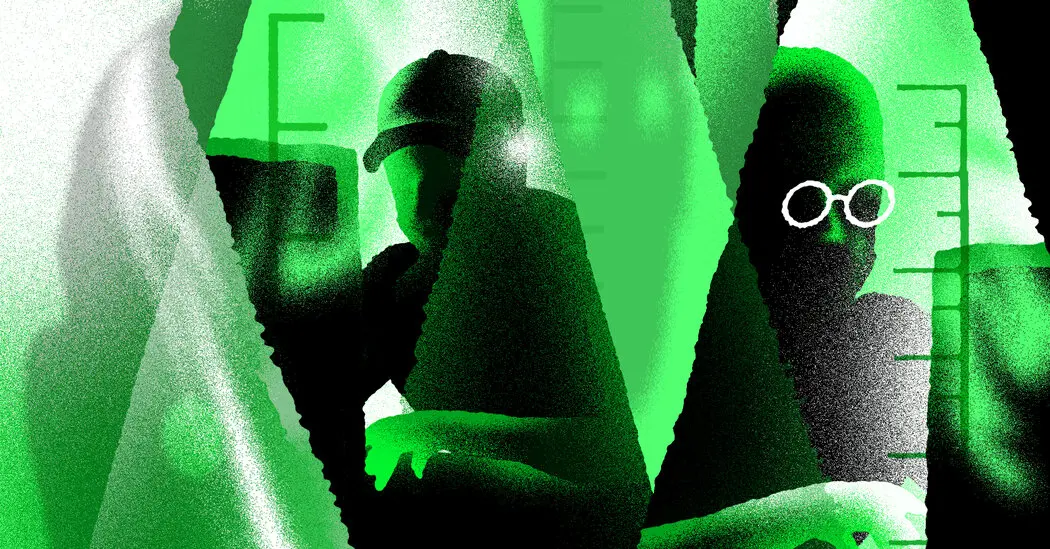
Credit...Daniel Zender
Matt Richtel, a health and science reporter, spent over a year reporting The New Drug War, a series for The New York Times on ultra-potent synthetic drugs.
I found Chemical Analyst, a user and dealer of ultra-potent drugs, on an online forum for “psychonauts,” people who experiment with novel psychoactive chemicals.
He stood out among the group as a particularly avid explorer of the new drug frontier. (He agreed to speak with me on the condition that I not identify him by his real name, so I will refer to him by his nickname, Chemical Analyst.) He shared that he regularly ingested, and sometimes sold, mind-bending drugs that even he acknowledged could be lethal.
Writing about illegal activity requires careful consideration. The challenge is heightened when that activity can be deadly.
For 18 months, I’ve been reporting a New York Times series about the rise of synthetic drugs. Lab-made chemicals have made the illicit drug supply the most dangerous, polluted and unpredictable it has ever been. The transformation helps explain why drug overdose deaths in the United States have soared: In 1971, when the war on drugs started, 6,771 Americans died of overdose. In 2024, that figure was 80,000.
The role of novel drugs in that spike is a story about public health, law enforcement and policy. It’s also tricky to learn about. That’s because the drug world is changing rapidly, and few experts have a full grasp on the issue.
Where do these drugs come from; why are suppliers making such potent — and potentially lethal — chemicals; and who decides what novel drugs will be introduced to the market next?
Answering those questions meant going beyond the usual sources, or looking for experts on LinkedIn. To get the most clear, up-to-date answers that reflect the whole truth, I had to talk to people on the other side of the law, including clandestine chemists, suppliers, street dealers and inmates. The hope is that by getting timely, accurate information to policymakers, law enforcement and the general public, society can make decisions about how to tackle the issues.
My interactions with Chemical Analyst began around a year ago on Signal, an encrypted communications platform where he requested we interact. As a felon on probation for larceny, he asked for anonymity because he did not want to risk further prosecution. He’s also someone who, from the start, seemed eager to share his story.
We spoke for several hours. He seemed thoughtful, informed, emotional and strung out. He said he had tried more than 100 substances. He was frank. It took little beyond authentic curiosity and informed questions to establish trust; I think that’s because he, like many people, wants to be heard without being judged.
“I really appreciate that you’re interested,” he told me. He added that he felt people didn’t understand what was happening on the drug frontier, and he wanted to contribute to the real explanation.
I asked to speak to his mother, whom he’d mentioned several times. I did this to verify what I was hearing, to understand his background and to make sure that I wasn’t taking advantage of him in some way that I didn’t understand. I came away from my conversation with her assured that I was observing someone steeped in this world.
Then I met him in person. We spent several hours walking around a noisy business district on the East Coast, and he spoke with great knowledge about new drugs, sounding like an armchair chemist and narcotics sommelier. He said he had learned a lot from trial and error and studying chemistry, which fascinated him. He mentioned specific subclasses of drugs that I had to have him spell so I could look them up, and spoke of a synthetic opioid that has variants far more potent than fentanyl.
I must concede that these conversations sometimes left me feeling uncertain about his motivations. I never felt he was lying, but I did wonder if his professed interest in chemistry was just a way to rationalize his substance use.
In late summer, Chemical Analyst informed me that he had started selling novel synthetic drugs from his apartment, which involved ordering drugs from China and packaging and redistributing them domestically. I had heard speculation from the authorities on how the business worked. Now, I was hearing about it firsthand.
One day in November, I got on a video call with Chemical Analyst and a colleague of mine, Jonathan Corum, who contributed to the series. Over the call we got a tour of Chemical Analyst’s apartment, which doubled as his lab and looked like both a pharmacy and a post office. His desk was covered with substances in containers, a digital scale, a heat sealer, rubber gloves and large mailing envelopes.
It was a small-time operation, but one that illuminated a big point for our reporting: A single person, without cartel backing, can order and redistribute potent chemicals.
I wanted to verify his account with others. But I also had to make good on my commitment not to reveal his identity. So I compared the information he was giving me with reporting I’d done with dozens of experts and law enforcement officials who told me what they understood about this market. I also spoke to people in his circle of friends and associates.
All along, I was keenly aware that the drugs Chemical Analyst was selling can be fatal. I asked him about this — as I’d asked other dealers and suppliers — and he professed here to be a libertarian. As a human, I find it terrifying the drugs he sells could kill people. It was painful to watch him use drugs himself, and I often feared for his safety. But as a reporter, I have a responsibility to explain to the public what’s really happening on the drug frontier.
I consulted almost daily with my editor, Alan Burdick, about my approach and sources. I also consulted with The Times’s lawyers about the reporting.
Through Chemical Analyst I met other sources, including a person who worked at a company in China that makes these drugs. I ask his fellow psychonauts about changing drug prices, a subject I’m continuing to investigate. (Our series will also include pieces by Azam Ahmed.)
As my reporting on this topic continues, I have kept in touch with Chemical Analyst, making sure I am accurately updating our facts and getting the latest developments.
Recently, I called him and could barely hear him. At first, I thought it was a bad connection. Then I realized he sounded out of it; he was very slow to respond and was slurring his words. I asked him if he needed medical help. He didn’t answer.
“Yes or no,” I asked him.
“Should I call 9-1-1?”
“Should I call your mother?”
He became more lucid. We moved to a video chat. He told me that he’d been on a heavy trip. By the time we hung up, he seemed to be OK.
Matt Richtel is a health and science reporter for The Times, based in Boulder, Colo.
Matt Richtel, a health and science reporter, spent over a year reporting The New Drug War, a series for The New York Times on ultra-potent synthetic drugs.
I found Chemical Analyst, a user and dealer of ultra-potent drugs, on an online forum for “psychonauts,” people who experiment with novel psychoactive chemicals.
He stood out among the group as a particularly avid explorer of the new drug frontier. (He agreed to speak with me on the condition that I not identify him by his real name, so I will refer to him by his nickname, Chemical Analyst.) He shared that he regularly ingested, and sometimes sold, mind-bending drugs that even he acknowledged could be lethal.
Writing about illegal activity requires careful consideration. The challenge is heightened when that activity can be deadly.
For 18 months, I’ve been reporting a New York Times series about the rise of synthetic drugs. Lab-made chemicals have made the illicit drug supply the most dangerous, polluted and unpredictable it has ever been. The transformation helps explain why drug overdose deaths in the United States have soared: In 1971, when the war on drugs started, 6,771 Americans died of overdose. In 2024, that figure was 80,000.
The role of novel drugs in that spike is a story about public health, law enforcement and policy. It’s also tricky to learn about. That’s because the drug world is changing rapidly, and few experts have a full grasp on the issue.
Where do these drugs come from; why are suppliers making such potent — and potentially lethal — chemicals; and who decides what novel drugs will be introduced to the market next?
Answering those questions meant going beyond the usual sources, or looking for experts on LinkedIn. To get the most clear, up-to-date answers that reflect the whole truth, I had to talk to people on the other side of the law, including clandestine chemists, suppliers, street dealers and inmates. The hope is that by getting timely, accurate information to policymakers, law enforcement and the general public, society can make decisions about how to tackle the issues.
My interactions with Chemical Analyst began around a year ago on Signal, an encrypted communications platform where he requested we interact. As a felon on probation for larceny, he asked for anonymity because he did not want to risk further prosecution. He’s also someone who, from the start, seemed eager to share his story.
We spoke for several hours. He seemed thoughtful, informed, emotional and strung out. He said he had tried more than 100 substances. He was frank. It took little beyond authentic curiosity and informed questions to establish trust; I think that’s because he, like many people, wants to be heard without being judged.
“I really appreciate that you’re interested,” he told me. He added that he felt people didn’t understand what was happening on the drug frontier, and he wanted to contribute to the real explanation.
I asked to speak to his mother, whom he’d mentioned several times. I did this to verify what I was hearing, to understand his background and to make sure that I wasn’t taking advantage of him in some way that I didn’t understand. I came away from my conversation with her assured that I was observing someone steeped in this world.
Then I met him in person. We spent several hours walking around a noisy business district on the East Coast, and he spoke with great knowledge about new drugs, sounding like an armchair chemist and narcotics sommelier. He said he had learned a lot from trial and error and studying chemistry, which fascinated him. He mentioned specific subclasses of drugs that I had to have him spell so I could look them up, and spoke of a synthetic opioid that has variants far more potent than fentanyl.
I must concede that these conversations sometimes left me feeling uncertain about his motivations. I never felt he was lying, but I did wonder if his professed interest in chemistry was just a way to rationalize his substance use.
In late summer, Chemical Analyst informed me that he had started selling novel synthetic drugs from his apartment, which involved ordering drugs from China and packaging and redistributing them domestically. I had heard speculation from the authorities on how the business worked. Now, I was hearing about it firsthand.
One day in November, I got on a video call with Chemical Analyst and a colleague of mine, Jonathan Corum, who contributed to the series. Over the call we got a tour of Chemical Analyst’s apartment, which doubled as his lab and looked like both a pharmacy and a post office. His desk was covered with substances in containers, a digital scale, a heat sealer, rubber gloves and large mailing envelopes.
It was a small-time operation, but one that illuminated a big point for our reporting: A single person, without cartel backing, can order and redistribute potent chemicals.
I wanted to verify his account with others. But I also had to make good on my commitment not to reveal his identity. So I compared the information he was giving me with reporting I’d done with dozens of experts and law enforcement officials who told me what they understood about this market. I also spoke to people in his circle of friends and associates.
All along, I was keenly aware that the drugs Chemical Analyst was selling can be fatal. I asked him about this — as I’d asked other dealers and suppliers — and he professed here to be a libertarian. As a human, I find it terrifying the drugs he sells could kill people. It was painful to watch him use drugs himself, and I often feared for his safety. But as a reporter, I have a responsibility to explain to the public what’s really happening on the drug frontier.
I consulted almost daily with my editor, Alan Burdick, about my approach and sources. I also consulted with The Times’s lawyers about the reporting.
Through Chemical Analyst I met other sources, including a person who worked at a company in China that makes these drugs. I ask his fellow psychonauts about changing drug prices, a subject I’m continuing to investigate. (Our series will also include pieces by Azam Ahmed.)
As my reporting on this topic continues, I have kept in touch with Chemical Analyst, making sure I am accurately updating our facts and getting the latest developments.
Recently, I called him and could barely hear him. At first, I thought it was a bad connection. Then I realized he sounded out of it; he was very slow to respond and was slurring his words. I asked him if he needed medical help. He didn’t answer.
“Yes or no,” I asked him.
“Should I call 9-1-1?”
“Should I call your mother?”
He became more lucid. We moved to a video chat. He told me that he’d been on a heavy trip. By the time we hung up, he seemed to be OK.
Matt Richtel is a health and science reporter for The Times, based in Boulder, Colo.