활동가 살해 후 기니비사우 긴장 고조
Guinea-Bissau on edge after activist's killing
Deutsche Welle
Antonio Cascais Award-winning documentary filmmaker and investigative journalisttwitter.com/antoniocascais
DE
2026-04-09 08:05
Translated
극단적 폭력의 흔적을 보인 채 발견된 활동가 비가리오 루이스 발란타의 사망으로 시위가 촉발됐으며, 기니비사우 군부 지도자들에 대한 비난이 제기되고 있어 억압과 언론의 자유에 대한 우려가 커지고 있다.
At the end of March, residents discovered a lifeless body in a remote, swampy area about 30 kilometers (19 miles) outside Bissau, the capital of Guinea-Bissau.
It was "covered in blood," "wounded all over with a bladed weapon" and there were "two bullet holes in the head," a witness told the AFP news agency.
The victim was Vigario Luis Balanta, a 35-year-old teacher and a prominent critic of Guinea-Bissau's military leadership that had seized power in a coup four months earlier, ousting outgoing President Umaro Sissoco Embalo.
Balanta was a leading figure in the civil society movement Po di Terra (Dust of the Earth) who, according to Radio France Internationale (RFI), had previously been reported missing before being released.
In late March, he was kidnapped in the Pilun district of Bissau. Two days later, his body was discovered. The UN called it a "brutal killing."
In Balanta's last public interview with DW in January, he remained defiant.
"We will keep going," he said. "We have to act strategically and mobilize the people."
He described Po di Terra as a movement rooted in love for the country and a determination to defend it.
"Despite the fear in the population, support is strong," Balanta told DW.
Civil society groups, including Po di Terra and the Bissau-Guinean League of Human Rights, have accused the transitional military regime — or forces aligned with it — of orchestrating Balanta's murder.
Seif Magango, spokesperson for the UN human rights office (OHCHR), said in a statement that Balanta's death "comes amid a progressive reduction of civic and democratic space, which has accelerated in Guinea-Bissau since the November 2025 coup."
"Members of the opposition and human rights defenders have been arbitrarily detained, assaulted, harassed and intimidated, demonstrations dispersed and radio stations suspended," Magango added.
Activist Sumaila Jalo described the killing as a warning to all who oppose the regime.
"We are afraid, but we will not be silent. The fight for justice continues," he told DW.
The military government condemned the killing, calling it a crime "under particularly violent circumstances" and pledging to investigate thoroughly, holding both the perpetrators and their potential backers accountable. The pledge has been met with skepticism from critics.
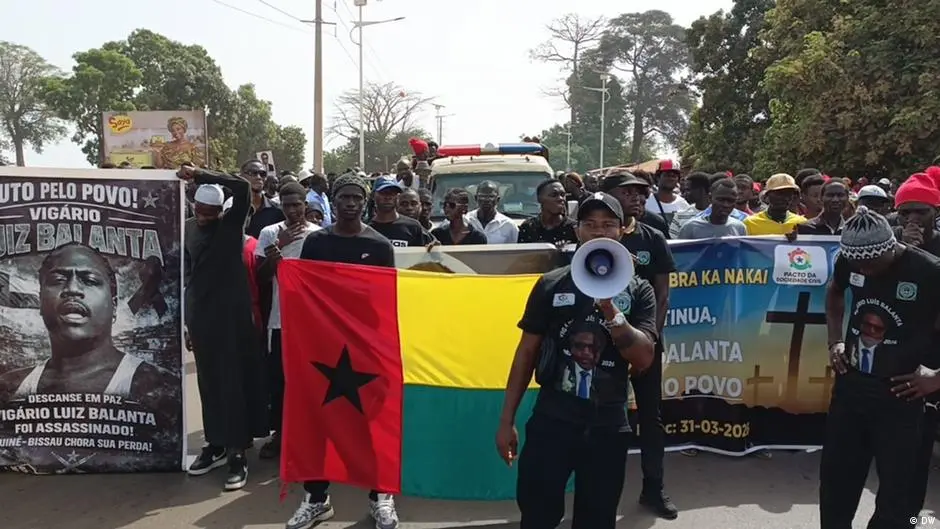
Balanta's funeral in early April became a protest against the military rulers. Hundreds gathered at Antula Cemetery in Bissau, chanting: "We are all Vigario," "We want justice," and "Down with the dictatorship."
The Guinean diaspora also organized solidarity demonstrations, including in the Portuguese capital, Lisbon, calling for accountability.
Political tensions have risen after the government ordered private radio stations in Bissau to close, citing unpaid licensing fees of 5 million CFA francs (around $9,000). While broadcasts resumed after talks with the prime minister, negotiations continue, leaving the state of press freedom uncertain.
At the same time, residents report severe fuel shortages, with long lines outside gas stations. The government denies there is a shortage. The PM has publicly warned against "misinformation," and observers say some citizens reporting shortages have faced intimidation. Tensions in Bissau remain high.
The military under General Horta N'Tam, has announced plans to hold presidential and legislative elections in December and return to civilian rule.
Embalo, the former president, whose current whereabouts are unknown, has been accused by opposition figures and observers of orchestrating the coup to avoid losing the election and stepping down.
Guinean economist and diplomat Carlos Lopes said several scenarios are possible, including that Embalo may have initiated the coup himself, but now has less control over the junta than he intended.
Such dynamics are not unusual: "Revolutions often consume their own children — especially in Guinea-Bissau," Lopes said.
This article has been adapted from German.
It was "covered in blood," "wounded all over with a bladed weapon" and there were "two bullet holes in the head," a witness told the AFP news agency.
The victim was Vigario Luis Balanta, a 35-year-old teacher and a prominent critic of Guinea-Bissau's military leadership that had seized power in a coup four months earlier, ousting outgoing President Umaro Sissoco Embalo.
Balanta was a leading figure in the civil society movement Po di Terra (Dust of the Earth) who, according to Radio France Internationale (RFI), had previously been reported missing before being released.
In late March, he was kidnapped in the Pilun district of Bissau. Two days later, his body was discovered. The UN called it a "brutal killing."
In Balanta's last public interview with DW in January, he remained defiant.
"We will keep going," he said. "We have to act strategically and mobilize the people."
He described Po di Terra as a movement rooted in love for the country and a determination to defend it.
"Despite the fear in the population, support is strong," Balanta told DW.
Civil society groups, including Po di Terra and the Bissau-Guinean League of Human Rights, have accused the transitional military regime — or forces aligned with it — of orchestrating Balanta's murder.
Seif Magango, spokesperson for the UN human rights office (OHCHR), said in a statement that Balanta's death "comes amid a progressive reduction of civic and democratic space, which has accelerated in Guinea-Bissau since the November 2025 coup."
"Members of the opposition and human rights defenders have been arbitrarily detained, assaulted, harassed and intimidated, demonstrations dispersed and radio stations suspended," Magango added.
Activist Sumaila Jalo described the killing as a warning to all who oppose the regime.
"We are afraid, but we will not be silent. The fight for justice continues," he told DW.
The military government condemned the killing, calling it a crime "under particularly violent circumstances" and pledging to investigate thoroughly, holding both the perpetrators and their potential backers accountable. The pledge has been met with skepticism from critics.
Balanta's funeral in early April became a protest against the military rulers. Hundreds gathered at Antula Cemetery in Bissau, chanting: "We are all Vigario," "We want justice," and "Down with the dictatorship."
The Guinean diaspora also organized solidarity demonstrations, including in the Portuguese capital, Lisbon, calling for accountability.
Political tensions have risen after the government ordered private radio stations in Bissau to close, citing unpaid licensing fees of 5 million CFA francs (around $9,000). While broadcasts resumed after talks with the prime minister, negotiations continue, leaving the state of press freedom uncertain.
At the same time, residents report severe fuel shortages, with long lines outside gas stations. The government denies there is a shortage. The PM has publicly warned against "misinformation," and observers say some citizens reporting shortages have faced intimidation. Tensions in Bissau remain high.
The military under General Horta N'Tam, has announced plans to hold presidential and legislative elections in December and return to civilian rule.
Embalo, the former president, whose current whereabouts are unknown, has been accused by opposition figures and observers of orchestrating the coup to avoid losing the election and stepping down.
Guinean economist and diplomat Carlos Lopes said several scenarios are possible, including that Embalo may have initiated the coup himself, but now has less control over the junta than he intended.
Such dynamics are not unusual: "Revolutions often consume their own children — especially in Guinea-Bissau," Lopes said.
This article has been adapted from German.