취약한 이란 휴전, 아프리카 시장에 일시적 안도감 가져와
Fragile Iran truce brings brief relief to African markets
Deutsche Welle
Benita van Eyssen is a digital content planner, producer and editor@benita_v_eyssen
DE
2026-04-09 14:06
Translated
미국, 이스라엘, 이란 간 휴전으로 아프리카 시장의 압박이 완화됐다. 다만 경제학자들은 근본적인 취약성으로 인해 반등이 단기에 그칠 수 있다고 경고하고 있다.
Cautious relief is what many countries in sub-Saharan Africa are experiencing after the announcement of a ceasefire between the United States, Israel and Iran and the reopening of the Strait of Hormuz to maritime trade.
But while markets responded quickly, economists are warning that a broader recovery will take time.
Daniel Silke, who heads the Cape Town-based Political Futures Consultancy, said after the pandemic many countries in the developing world had achieved some success in bringing down inflation but that is likely to be undone by rising global prices, "not just in terms of oil, but in terms of fertilizer costs, liquefied natural gas (LNG) costs and other critical energy supplies."
The situation is particularly dire among households that spend a big part of their income on energy and transportation, "and that will affect clearly and impact and depress demand across Africa that had been rising until this particular crisis," he told DW.
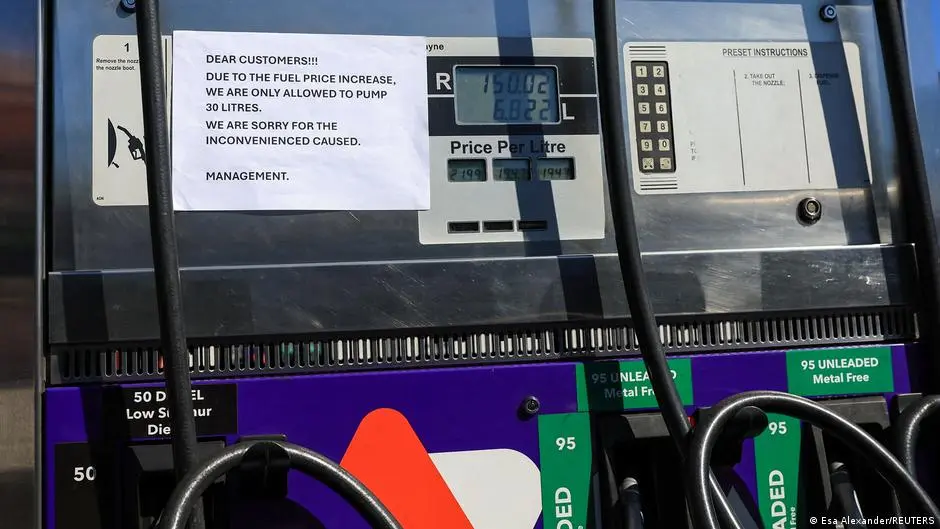
This is the case for South Africa, which announced historic fuel price increments on April 1. Earlier, the government had secured a deal that allowed its vessels carrying cargo and fuel shipments passage through the Strait.
In mid-March, Iran's Ambassador to South Africa, Mansour Shakib Mehr, signaled that South Africa was not a target as Tehran blocked the US, Israel, and their allies.
As the conflict drew out, Iran's embassy in South Africa issued a firm statement that read: "The Strait of Hormuz lies within the territorial waters of Iran and Oman. South African vessels can pass through the Strait of Hormuz."
But that did very little to ease prices. Many of those who tanked their cars ahead of a price hike at gas stations countrywide in early April were relieved.
"We were thinking it's going to be six rand, but at least it's just three rand for petrol, it's something at least. We shouldn't get involved in other regions when we have our own issues here," one Cape Town motorist who declined to be named told DW on April 1.
The diesel price, meanwhile, rose sharply by 7 rand ($0.41, €0.36) a liter.
To view this video please enable JavaScript, and consider upgrading to a web browser that supports HTML5 video
In Cape Town's under-resourced communities, some residents told DW they were worried that the worst was yet to come as the conflict in the Middle East continued.
"We'll need to pay extra electricity, extra food, extra transport to go to hospital," said Wela Lawrence, a pensioner in Mitchells Plain. "The government only sees to its own pockets. We, as the poor people are the people who suffer."
Now, however, there is some relief. The ceasefire news is impacting the country positively: the rand, government bonds, and stocks have surged. Silke expects consumers to feel the impact immediately at fuel pumps.
In the broader scheme of things, however, experts say that consumers should temper their expectations.
Dr. Abdul Hakim Ahmed, an expert on international political economy from the University of Winneba in Ghana, explains that given that the ceasefire agreement is still shaky, any decline in prices remains unpredictable. He said that once prices go up, they take time to come down.
Both experts say the crisis should trigger deeper reflection across the continent.
Silke argues that repeated global shocks are forcing African countries to reconsider their dependence on external energy hubs.
"I think African countries, again, will have another round of soul searching as to how they find themselves at the mercy of key economic hubs," he explained.
Ahmed echoes the need for structural change, pointing to domestic production and refining.
"We need to be able to revive our refining capability and then where it does not exist, [countries] need to invest in there to be able to refine a lot of the crude and take advantage of the huge reserves of oil and gas in Nigeria, Libya and Angola especially," he said, highlighting the need to diversify into alternative energy sources like nuclear energy.
For now, the ceasefire delivers immediate financial relief, but analysts note the broader outlook remains uncertain.
As negotiations continue and tensions persist, Africa's economies remain exposed — not only to the outcome of this conflict, but to the deeper structural challenges it once again brings into focus.
Despite the US-Israel war with Iran and Tehran's selective restrictions on the Strait of Hormuz, cargo and fuel shipments to South Africa have been allowed to transit.
In mid-March, Mansour Shakib Mahr, the Iranian envoy, signaled that South Africa was not a target as Tehran blocked the US, Israel, and their allies.
To view this video please enable JavaScript, and consider upgrading to a web browser that supports HTML5 video
At the outset of the conflict in the Middle East and as global energy supply chains became strained, Pretoria called for restraint and offered to mediate.
South Africa relies on gas and oil imports but its cargo ships carry very little via the strait. About 24% of the country's crude oil imports come from Saudi Arabia, with refined oil and petroleum products shipped via the Arabian Sea.
"Iran is part of a much wider base of source for South Africa to get oil. So, it gets part of its supplies from Iran, Nigeria, Algeria, as well as Angola amongst others," said Economist Dr. Lumkile Mondi, an economist and lecturer at Wits Business School.
"I think the announcement that the ship which was bringing oil to South Africa was allowed to pass was just a political statement really."
According to Mondi, food prices are likely to rise and South Africans can expect more hardships as a result of the US-Israel war with Iran.
The war with Iran has grabbed headlines in South Africa with much public speculation over the implications and fallout for the country that relies heavily on imported oil and gas.
There's also been much debate over whether or not Iran as a traditional ally has become a liability.
At a regional industry conference in Cape Town in March, Minerals and Petroleum Resources Minister Gwede Mantashe said Africa as a whole needs to focus on its very own oil and gas.
"We must harness these resources responsibly to drive inclusive economic growth, create empoloyment opportunities and eradicate poverty," Mantashe said.
South Africa's ties with Iran date back to the Cold War, when the African National Congress — a governing party today — was fighting Apartheid.
"The relations continue and I think they continue not only in terms of business," according to Mondi.
To view this video please enable JavaScript, and consider upgrading to a web browser that supports HTML5 video
Edited by: Keith Walker
But while markets responded quickly, economists are warning that a broader recovery will take time.
Daniel Silke, who heads the Cape Town-based Political Futures Consultancy, said after the pandemic many countries in the developing world had achieved some success in bringing down inflation but that is likely to be undone by rising global prices, "not just in terms of oil, but in terms of fertilizer costs, liquefied natural gas (LNG) costs and other critical energy supplies."
The situation is particularly dire among households that spend a big part of their income on energy and transportation, "and that will affect clearly and impact and depress demand across Africa that had been rising until this particular crisis," he told DW.
This is the case for South Africa, which announced historic fuel price increments on April 1. Earlier, the government had secured a deal that allowed its vessels carrying cargo and fuel shipments passage through the Strait.
In mid-March, Iran's Ambassador to South Africa, Mansour Shakib Mehr, signaled that South Africa was not a target as Tehran blocked the US, Israel, and their allies.
As the conflict drew out, Iran's embassy in South Africa issued a firm statement that read: "The Strait of Hormuz lies within the territorial waters of Iran and Oman. South African vessels can pass through the Strait of Hormuz."
But that did very little to ease prices. Many of those who tanked their cars ahead of a price hike at gas stations countrywide in early April were relieved.
"We were thinking it's going to be six rand, but at least it's just three rand for petrol, it's something at least. We shouldn't get involved in other regions when we have our own issues here," one Cape Town motorist who declined to be named told DW on April 1.
The diesel price, meanwhile, rose sharply by 7 rand ($0.41, €0.36) a liter.
To view this video please enable JavaScript, and consider upgrading to a web browser that supports HTML5 video
In Cape Town's under-resourced communities, some residents told DW they were worried that the worst was yet to come as the conflict in the Middle East continued.
"We'll need to pay extra electricity, extra food, extra transport to go to hospital," said Wela Lawrence, a pensioner in Mitchells Plain. "The government only sees to its own pockets. We, as the poor people are the people who suffer."
Now, however, there is some relief. The ceasefire news is impacting the country positively: the rand, government bonds, and stocks have surged. Silke expects consumers to feel the impact immediately at fuel pumps.
In the broader scheme of things, however, experts say that consumers should temper their expectations.
Dr. Abdul Hakim Ahmed, an expert on international political economy from the University of Winneba in Ghana, explains that given that the ceasefire agreement is still shaky, any decline in prices remains unpredictable. He said that once prices go up, they take time to come down.
Both experts say the crisis should trigger deeper reflection across the continent.
Silke argues that repeated global shocks are forcing African countries to reconsider their dependence on external energy hubs.
"I think African countries, again, will have another round of soul searching as to how they find themselves at the mercy of key economic hubs," he explained.
Ahmed echoes the need for structural change, pointing to domestic production and refining.
"We need to be able to revive our refining capability and then where it does not exist, [countries] need to invest in there to be able to refine a lot of the crude and take advantage of the huge reserves of oil and gas in Nigeria, Libya and Angola especially," he said, highlighting the need to diversify into alternative energy sources like nuclear energy.
For now, the ceasefire delivers immediate financial relief, but analysts note the broader outlook remains uncertain.
As negotiations continue and tensions persist, Africa's economies remain exposed — not only to the outcome of this conflict, but to the deeper structural challenges it once again brings into focus.
Despite the US-Israel war with Iran and Tehran's selective restrictions on the Strait of Hormuz, cargo and fuel shipments to South Africa have been allowed to transit.
In mid-March, Mansour Shakib Mahr, the Iranian envoy, signaled that South Africa was not a target as Tehran blocked the US, Israel, and their allies.
To view this video please enable JavaScript, and consider upgrading to a web browser that supports HTML5 video
At the outset of the conflict in the Middle East and as global energy supply chains became strained, Pretoria called for restraint and offered to mediate.
South Africa relies on gas and oil imports but its cargo ships carry very little via the strait. About 24% of the country's crude oil imports come from Saudi Arabia, with refined oil and petroleum products shipped via the Arabian Sea.
"Iran is part of a much wider base of source for South Africa to get oil. So, it gets part of its supplies from Iran, Nigeria, Algeria, as well as Angola amongst others," said Economist Dr. Lumkile Mondi, an economist and lecturer at Wits Business School.
"I think the announcement that the ship which was bringing oil to South Africa was allowed to pass was just a political statement really."
According to Mondi, food prices are likely to rise and South Africans can expect more hardships as a result of the US-Israel war with Iran.
The war with Iran has grabbed headlines in South Africa with much public speculation over the implications and fallout for the country that relies heavily on imported oil and gas.
There's also been much debate over whether or not Iran as a traditional ally has become a liability.
At a regional industry conference in Cape Town in March, Minerals and Petroleum Resources Minister Gwede Mantashe said Africa as a whole needs to focus on its very own oil and gas.
"We must harness these resources responsibly to drive inclusive economic growth, create empoloyment opportunities and eradicate poverty," Mantashe said.
South Africa's ties with Iran date back to the Cold War, when the African National Congress — a governing party today — was fighting Apartheid.
"The relations continue and I think they continue not only in terms of business," according to Mondi.
To view this video please enable JavaScript, and consider upgrading to a web browser that supports HTML5 video
Edited by: Keith Walker