호르무즈 해협 해운 재개를 둘러싼 혼란 가중, 이란 새로운 통과 조건 제시
Confusion reigns over Hormuz shipping reopening as Iran issues new passage conditions
Euronews
EN
2026-04-09 12:28
Translated
휴전 협정에 따른 호르무즈 해협의 정상 해운이 아직 재개되지 않은 가운데, 이란이 봉쇄 해제에 관한 강경하고 일방적인 입장을 고수하고 있으며, 이는 롤러코스터식 휴전 협정과 모순되는 양상을 보이고 있다.
More than 24 hours after the US-Iran ceasefire was announced, confusion continues to grow over the safe reopening of the Strait of Hormuz for vital maritime traffic as a central tenet of the ceasefire agreement, adding further uncertainty and disarray to the first sighs of relief that normal operations can now resume in the world’s vital energy shipping waterway.
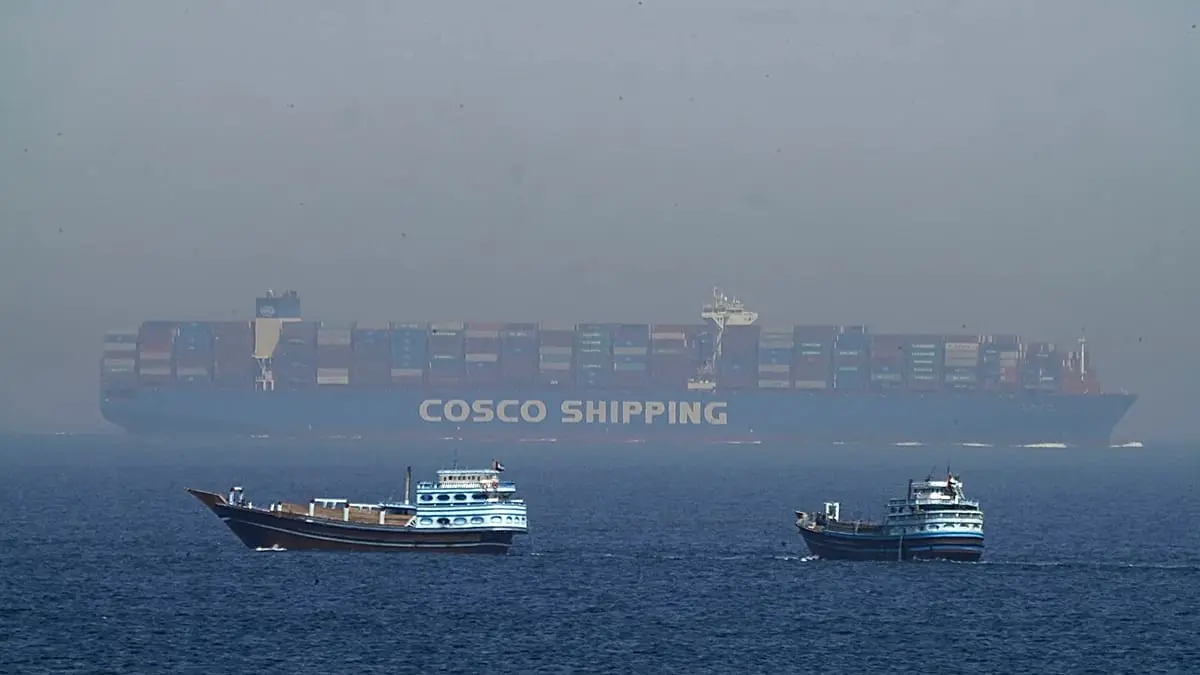
On the first day of the ceasefire and into Thursday, the expected oil and gas tanker traffic has not yet resumed, although Iran first announced on Tuesday that it would ensure safe navigation through the strait during the ceasefire.
Only four bulk cargo vessels with their Automatic Identification System trackers on passed through the Strait of Hormuz, according to ship-tracking data quoted by the Associated Press.
A separate dataset from AXSMarine showed that the confirmed number of ships passing the strait in the first 24 hours of the ceasefire stood at 11.
This data does not include the so-called “dark fleet ships”, which operate with their transponders turned off to evade Iranian crude oil sanctions, while other sources have warned of so-called "spoofing," meaning ships might be showing false positions.
Iran appears to be consolidating a firm unilateral position towards lifting its blockade of the Strait of Hormuz, which is set to contradict the ceasefire agreement amid Tehran’s apparent hardline positioning that it has the upper hand instead of the US and that it is Tehran who decides.
Iran’s Islamic Revolutionary Guard Corps (IRGC) released a statement on Thursday announcing what it calls alternative maritime routes through the strait as a precaution against what it claims could be “possible collisions with sea mines”.
Reports from multiple sources that Iran has laid sea mines in the Strait of Hormuz since the start of the war have not yet been independently confirmed.
“All ships intending to transit the Strait of Hormuz are hereby notified that in order to comply with the principles of maritime safety and to be protected from possible collisions with sea mines," the statement said
"They should take alternative routes for traffic in the Strait of Hormuz,” it concluded, indicating that the IRGC wants to direct maritime traffic through the strait.
The IRGC announcement was followed shortly after by Iran’s deputy Foreign Minister Saeed Khatibzadeh, who claimed the Strait of Hormuz is open and that due to sea mines, all ships must coordinate passage with Iran for safety.
“Anybody who communicates with the Iranian authority has got permission to pass” Khatibzadeh told a British television in Tehran.
The US and Iran both claimed victory on Wednesday after the two countries and Israel agreed to the two-week ceasefire, and all sides have been presenting vastly different versions of the terms, including the reopening of the strait traffic.
Confusion set in as Iran took the world by surprise, announcing that under the deal it would start charging ships for strait passage together with Oman, and that navigation would only be possible “via coordination with Iran’s Armed Forces and with due consideration to technical limitations.”
Iran’s announcement that it wants to collect transit fees was met with global furore, as ships have never paid to use the waterway and Iran’s plans violate the international agreement known as Law of the Sea (UNCLOS).
UNCLOS, short for the United Nations Convention on the Law of the Sea, was adopted in 1982 and establishes law and order for the world’s oceans and seas, including the allocation of states’ rights and jurisdictions with respect to maritime navigation.
Following Israel’s overwhelming strikes in Lebanon on Wednesday, Iran further hardened its position into an arm-twisting posture towards the United States and the rest of the world, that it would control and dictate conditions for the strait passage.
On Thursday, Iran’s Khatibzadeh announced that said his country will allow ships to pass through the Strait of Hormuz in accordance with “international norms and international law” once the US ends its “aggression” in the Middle East and Israel stops attacking Lebanon, calling Wednesday’s deadly bombing of Beirut an “intentional grave violation of the ceasefire.”
Iran’s announcements contradict US President Donald Trump’s announcement that through the ceasefire deal, “the Strait of Hormuz will be open and safe”.
“There will be lots of positive action! Big money will be made. Iran can start the reconstruction process,” Trump wrote in a surprising turnaround just hours after he threatened that a “whole civilisation will die” on Tuesday night if Tehran did not agree to lift its blockade of the strait.
Oman quickly rejected Iran’s claims that the two countries will be collecting transit fees during the two-week ceasefire to avoid suspicions of secret dealings with the Iranian regime, especially from its Gulf neighbours and to underline that it was respecting the Law of the Sea principles that ships do not have to pay to pass natural waterways.
Oman’s Transport Minister Saeed bin Hamoud bin Saeed al Maawali declared on Wednesday that it will respect all international agreements on maritime transport as “the Strait of Hormuz is a natural passage, not created by human intervention, and therefore, no fees can be imposed on it according to the international agreements signed by the Sultanate.“
Without Oman by its side, Iran’s declared actions would inevitably constitute a breach of the ceasefire agreement with the United States.
The Gulf countries are also adamant that there can be no Iranian control of the Strait of Hormuz.
Qatar’s Foreign Ministry spokesman Dr Majed al-Ansari said on Tuesday that “this is a naturally occuring open strait that all of us share and all of us should have a say on how it is run."
"We never had the need to do that because it is a natural opening and everybody was using it in the benefit of all the peoples in the region and beyond.”
Meanwhile, chief executive of Abu Dhabi’s state oil company Sultan Al Jaber issued an appeal to "unconditionally" open the Strait of Hormuz.
Al Jaber decidedly stated that “the Strait of Hormuz is not open."
"Access is being restricted, conditioned and controlled,” and “Iran has made clear," he said, "that passage is subject to permission, conditions and political leverage."
"That is not freedom of navigation. That is coercion.”
On the first day of the ceasefire and into Thursday, the expected oil and gas tanker traffic has not yet resumed, although Iran first announced on Tuesday that it would ensure safe navigation through the strait during the ceasefire.
Only four bulk cargo vessels with their Automatic Identification System trackers on passed through the Strait of Hormuz, according to ship-tracking data quoted by the Associated Press.
A separate dataset from AXSMarine showed that the confirmed number of ships passing the strait in the first 24 hours of the ceasefire stood at 11.
This data does not include the so-called “dark fleet ships”, which operate with their transponders turned off to evade Iranian crude oil sanctions, while other sources have warned of so-called "spoofing," meaning ships might be showing false positions.
Iran appears to be consolidating a firm unilateral position towards lifting its blockade of the Strait of Hormuz, which is set to contradict the ceasefire agreement amid Tehran’s apparent hardline positioning that it has the upper hand instead of the US and that it is Tehran who decides.
Iran’s Islamic Revolutionary Guard Corps (IRGC) released a statement on Thursday announcing what it calls alternative maritime routes through the strait as a precaution against what it claims could be “possible collisions with sea mines”.
Reports from multiple sources that Iran has laid sea mines in the Strait of Hormuz since the start of the war have not yet been independently confirmed.
“All ships intending to transit the Strait of Hormuz are hereby notified that in order to comply with the principles of maritime safety and to be protected from possible collisions with sea mines," the statement said
"They should take alternative routes for traffic in the Strait of Hormuz,” it concluded, indicating that the IRGC wants to direct maritime traffic through the strait.
The IRGC announcement was followed shortly after by Iran’s deputy Foreign Minister Saeed Khatibzadeh, who claimed the Strait of Hormuz is open and that due to sea mines, all ships must coordinate passage with Iran for safety.
“Anybody who communicates with the Iranian authority has got permission to pass” Khatibzadeh told a British television in Tehran.
The US and Iran both claimed victory on Wednesday after the two countries and Israel agreed to the two-week ceasefire, and all sides have been presenting vastly different versions of the terms, including the reopening of the strait traffic.
Confusion set in as Iran took the world by surprise, announcing that under the deal it would start charging ships for strait passage together with Oman, and that navigation would only be possible “via coordination with Iran’s Armed Forces and with due consideration to technical limitations.”
Iran’s announcement that it wants to collect transit fees was met with global furore, as ships have never paid to use the waterway and Iran’s plans violate the international agreement known as Law of the Sea (UNCLOS).
UNCLOS, short for the United Nations Convention on the Law of the Sea, was adopted in 1982 and establishes law and order for the world’s oceans and seas, including the allocation of states’ rights and jurisdictions with respect to maritime navigation.
Following Israel’s overwhelming strikes in Lebanon on Wednesday, Iran further hardened its position into an arm-twisting posture towards the United States and the rest of the world, that it would control and dictate conditions for the strait passage.
On Thursday, Iran’s Khatibzadeh announced that said his country will allow ships to pass through the Strait of Hormuz in accordance with “international norms and international law” once the US ends its “aggression” in the Middle East and Israel stops attacking Lebanon, calling Wednesday’s deadly bombing of Beirut an “intentional grave violation of the ceasefire.”
Iran’s announcements contradict US President Donald Trump’s announcement that through the ceasefire deal, “the Strait of Hormuz will be open and safe”.
“There will be lots of positive action! Big money will be made. Iran can start the reconstruction process,” Trump wrote in a surprising turnaround just hours after he threatened that a “whole civilisation will die” on Tuesday night if Tehran did not agree to lift its blockade of the strait.
Oman quickly rejected Iran’s claims that the two countries will be collecting transit fees during the two-week ceasefire to avoid suspicions of secret dealings with the Iranian regime, especially from its Gulf neighbours and to underline that it was respecting the Law of the Sea principles that ships do not have to pay to pass natural waterways.
Oman’s Transport Minister Saeed bin Hamoud bin Saeed al Maawali declared on Wednesday that it will respect all international agreements on maritime transport as “the Strait of Hormuz is a natural passage, not created by human intervention, and therefore, no fees can be imposed on it according to the international agreements signed by the Sultanate.“
Without Oman by its side, Iran’s declared actions would inevitably constitute a breach of the ceasefire agreement with the United States.
The Gulf countries are also adamant that there can be no Iranian control of the Strait of Hormuz.
Qatar’s Foreign Ministry spokesman Dr Majed al-Ansari said on Tuesday that “this is a naturally occuring open strait that all of us share and all of us should have a say on how it is run."
"We never had the need to do that because it is a natural opening and everybody was using it in the benefit of all the peoples in the region and beyond.”
Meanwhile, chief executive of Abu Dhabi’s state oil company Sultan Al Jaber issued an appeal to "unconditionally" open the Strait of Hormuz.
Al Jaber decidedly stated that “the Strait of Hormuz is not open."
"Access is being restricted, conditioned and controlled,” and “Iran has made clear," he said, "that passage is subject to permission, conditions and political leverage."
"That is not freedom of navigation. That is coercion.”